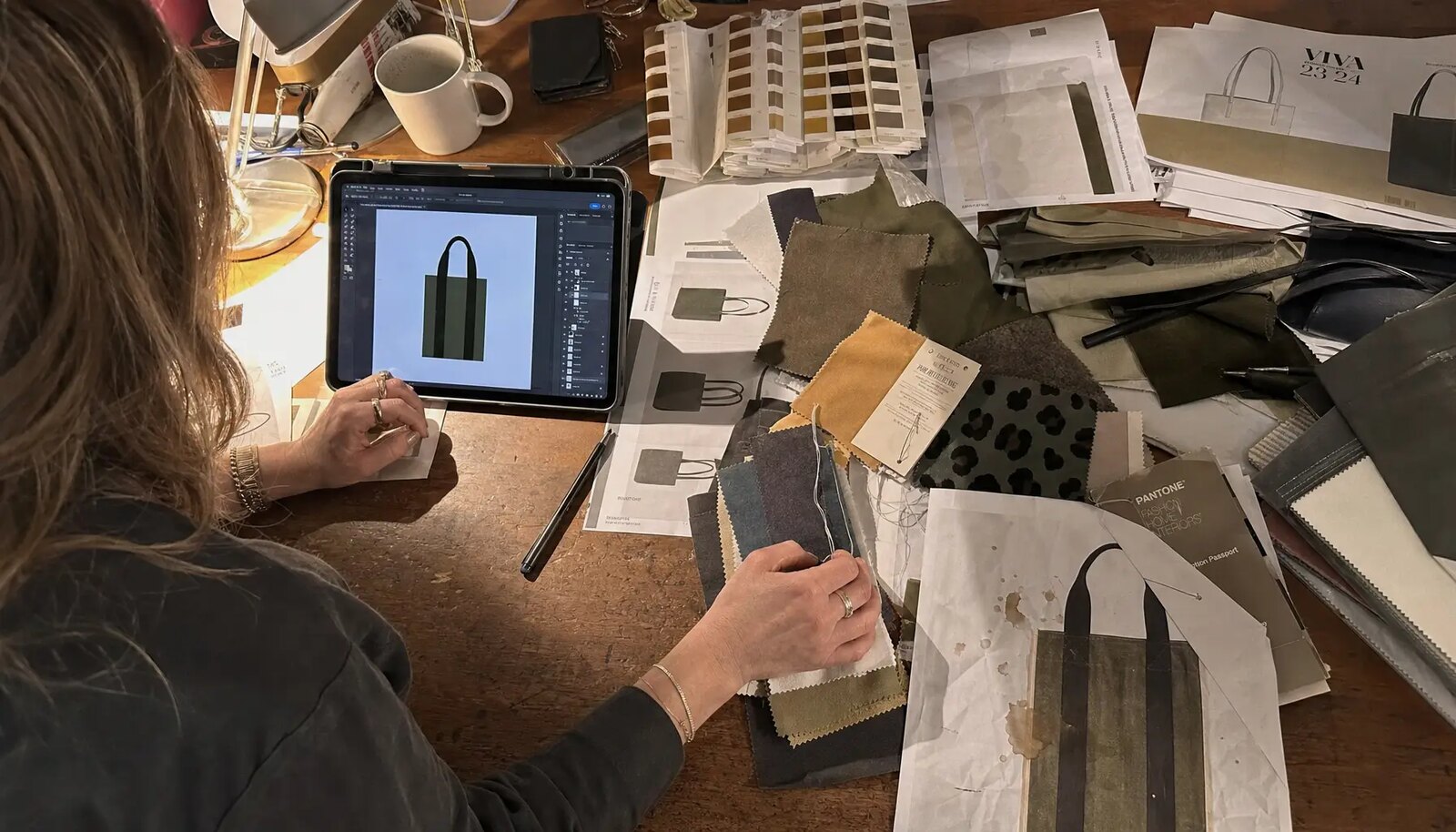
Start with the market job, not the logo
A useful RFQ for custom jute tote bags starts with the job the bag has to do in the market. Farmers market buyers usually need a tote that carries produce without collapsing, looks clean on the stall, and still feels practical enough for a customer to reuse on the next visit. If the brief only says custom jute tote bag with logo, suppliers will fill in the blanks with their own assumptions. The quote will drift, the sample may come back wrong, and the finished bag may be cheap in the wrong way.
Write the buying purpose into the first line of the RFQ. Say whether the bag is for retail resale, vendor use, a promotional giveaway, a wholesale pack-in, or a branded shopping program for repeat customers. Then state whether this is a test run, a seasonal launch, or the first release in a repeat program. That gives the factory context for fabric weight, handle construction, print method, packing method, and lead time instead of a generic price built on guesswork.
For procurement teams, the important discipline is to define the use case in operational terms. Does the bag need to survive wet produce, a long walk from car to market, repeated folding, or standing open on a countertop? Should it feel rustic, premium, lightweight, or structured? Those answers change construction choices more than the logo does.
- State the buyer, end user, and channel in one sentence.
- Name the commercial purpose: resale, vendor use, promotion, pack-in, or loyalty program.
- Write down the launch date or selling season so lead time can be tested against reality.
- Note whether the order is for one event, one season, or repeat replenishment.
Lock size, shape, and load capacity before you compare suppliers
The size of a jute tote is not just a measurement on paper. It affects usable volume, handle stress, carton pack, print area, and freight cost. For farmers market vendors, the most useful dimensions are the finished width, height, gusset depth, handle length, and handle drop. If the bag has to sit upright on a stall table, say that directly. If it needs to carry produce, bottled items, or mixed groceries, describe the load in plain language and estimate the weight range the bag should handle without distortion.
Do not compare quotes until every supplier is pricing the same finished spec. Many price gaps come from hidden differences in cut size, seam allowance, top hem, or gusset depth. A bag that is 5 cm smaller on paper may not be an acceptable substitute if it cannot stand open or carry a larger melon. Add a dimension sketch to the RFQ and insist that the supplier repeat the finished size back to you in writing. That simple step catches a surprising number of misquotes before sampling starts.
If the bag will be used for market stalls, ask one more question: what contents matter most? Apples and herbs create a different load profile from jars, bottled sauces, or bundled bouquets. That affects the base shape, the minimum gusset, and whether you need reinforcement at the bottom corners. A good RFQ turns that into measurable data, not a vague request for a sturdy tote.
- List finished width, height, and gusset depth in millimeters.
- State handle length and handle drop separately.
- Add a line drawing if the bag is not a standard rectangle.
- Name the heaviest typical contents so reinforcement can be sized correctly.
Specify the build: fabric, structure, and handle path
Jute looks simple, but the construction choices change the buying outcome quickly. As a working starting point, lighter promotional or giveaway bags often land around 240-280 GSM, general market bags often sit around 280-350 GSM, and heavier retail or reuse-focused bags may justify 350 GSM or more if the structure and freight still make sense. Treat those as starting points, not a universal rule. Weave density, yarn thickness, backing, and the handle design matter as much as the weight number.
Construction details should be written into the RFQ, not left for the factory to choose. Ask whether the bag is unlined, laminated, edge-bound, or reinforced at the base and side seams. Decide if the handles are self-fabric jute, cotton webbing, rope, or another material, and specify the attachment method, not just the handle length. If the bag will be exposed to moisture, damp produce, or repeated wiping, note whether you want lamination or an inner layer.
If durability is critical, ask how the factory reinforces the load path. That means the stitch pattern at the handle anchors, the seam construction along the side walls, and the finish at the top hem. The right question is not whether the bag is strong in general. It is whether the supplier can explain where the load transfers and how the construction supports it.
- Use 240-280 GSM for lighter use cases where cost and speed matter most.
- Use 280-350 GSM for everyday farmers market use where the bag must hold shape better.
- Use 350 GSM or higher when structure, shelf presence, or repeated heavier loading matters.
- Ask for handle material, width, and attachment method in writing.
Make artwork fit jute, not the other way around
Jute is an uneven, textured substrate, so the artwork has to be chosen for the material rather than for a flat screen. For most procurement programs, single-color screen print gives the best balance of clarity, repeatability, and cost control. It works well for simple logos, stall branding, and seasonal graphics where the message needs to be bold and readable from a distance. If the artwork depends on tiny type, gradients, or hairline elements, do not assume the same file that works on paper will work on jute.
Define the print area in millimeters and keep the file vector-based. If color consistency matters, provide Pantone references or a comparable brand standard, but also accept that natural jute will create visual variation in ink appearance. For farmers market programs, a clean logo and a short message often outperform a detailed illustration because the bag has to be seen quickly and repeated many times in use.
The RFQ should also say whether printing is required on one side or both sides, and whether the bag needs a print-safe zone near the seams or handles. Those details affect screen setup, position control, and waste. If you need consistent logo placement from reorder to reorder, ask the supplier to reference the approved sample by measurement, not just by eye.
- Send vector artwork, not a flattened screenshot.
- Define one-side or two-side print in the RFQ.
- Set the exact print area in millimeters.
- Approve a strike-off at true size before bulk production.
Compare sourcing routes on landed cost, not headline price
The source type changes the buying risk. A direct factory usually gives stronger control over construction and repeatability, especially if the bag will be reordered or expanded into a longer-running program. A trading company or sourcing agent can be useful when the buyer needs one point of contact for multiple categories, multiple countries, or a limited internal procurement team. Stock blanks with custom printing can be the right choice when timing matters more than full customization and the buyer needs to get to market quickly with lower setup risk.
Country of origin is not a branding footnote. It affects freight lanes, customs paperwork, lead time, and the documents you can ask for later. If you need traceability, ask where the jute is sourced, where weaving or fabric conversion happens, where the bags are cut and sewn, and who issues the shipping documents. If your channel requires a declaration or test report, name that requirement in the RFQ instead of assuming the factory will volunteer it later.
Do not let a low unit price decide the source route on its own. Direct factory pricing is not automatically better if the factory cannot hit your sample standard repeatedly. Trading company pricing is not automatically worse if it reduces coordination risk and gives you one accountable contact. The real comparison is landed cost: product price, sample fees, print setup, packing, carton volume, freight, duty, inbound handling, and the cost of a bad batch if the sample control is weak.
- Use direct factory sourcing when repeatability and construction control matter most.
- Use a trading company when you need coordination across multiple items or sites.
- Use stock blank plus print when lead time matters more than full customization.
- Ask who owns the sample, who performs final QC, and where the bags are actually made.
Ask for documents that let you compare suppliers cleanly
If the tote is going into retail, wholesale, or a branded customer program, ask for more than a price and a photo. You need a paper trail that makes the sample, the production run, and the shipment traceable. At minimum, request the factory name, production site, business registration if available, and the person who owns the approved sample. If the bag must meet a retailer standard or an import requirement, say that up front. It is easier to check an expectation early than to explain a missing report after production has started.
For jute tote bags, the most useful compliance questions are practical. Can the supplier provide a material specification sheet showing fabric weight, construction, and handle details? Can they provide any test report your channel requires, such as a pull test on the handles, a seam strength check, or a dimensional inspection sheet? If a buyer wants dye, ink, or material documentation, ask for it by name. The goal is not to make the factory guess which paper matters. The goal is to make the quote and the sample auditable.
The shipment file should also be traceable. Ask for lot or batch identification on the production run, carton marks that match the SKU, and the export documents your broker will need, such as the commercial invoice, packing list, bill of lading, and certificate of origin if applicable. That is the difference between a bag you can reorder and a bag you cannot source cleanly twice.
- Ask for factory name, production site, and who owns the approved sample.
- Request a material specification sheet with GSM, weave, and handle details.
- Ask for any required test report or in-house inspection sheet by name.
- Tie cartons or lots back to a shipment code for traceability.
Use a sample process that freezes the real spec
Treat the pre-production sample as the production standard, not a courtesy item. A useful approval process usually has more than one step. Start with the written spec, then approve the fabric swatch or material reference, then approve the strike-off or print sample, and only after that approve the full pre-production sample. If the supplier jumps straight to a finished sample without a confirmed spec sheet, you are not really controlling the order.
The sample should match the production materials and construction as closely as possible. If the sample uses a different fabric weight, a different handle, or a different print process, it is only a concept sample. That is useful for design review, but not enough for production sign-off. Limit revision rounds before bulk production starts. A buyer can lose time and money by refining a sample indefinitely when the real problem is that the spec is still incomplete.
Write the approval in a way a warehouse or sourcing team can use later. Save the signed spec sheet, the dated photo set, the marked sample, and the artwork version number in one file. If the order is repeated months later, the factory should be matching that file, not a memory of what was discussed on a call.
- Approve the spec sheet before any sample is treated as final.
- Use a strike-off or print sample to check artwork on the real substrate.
- Approve a full pre-production sample before mass production starts.
- Keep the approved sample, photo set, and artwork version number together.
Set inspection rules by defect class, not by feel
Quality control is stronger when the buyer defines component thresholds instead of asking for good quality in general. Start with size. A practical baseline is plus or minus 5 mm on body dimensions and plus or minus 10 mm on handle length unless the design needs tighter control. If the print is visually centered, set a separate placement tolerance for the logo instead of folding it into the size allowance. The more visible the artwork, the tighter the print position should be.
Then set defect rules by part. Body fabric should not have holes, contamination, damp packing, or excessive odor. Seams should not show skipped stitches, open edges, or obvious puckering that weakens the bag. Handles should not slip, twist badly, or pull free under a simple load test. Labels should match the approved artwork and SKU. Cartons should have the correct count, the correct mark, and the correct barcode if your receiving process depends on scanning.
Separate critical, major, and minor defects before inspection starts. Wrong artwork, wrong size, or failed handle attachment should be critical. Major issues can include print misalignment beyond the approved tolerance, significant fray, or missing reinforcement. Minor issues may include trimmed loose threads or small weave variation that does not affect use. If you use AQL, name the level in the RFQ; if you do not, define the sample size and pass or fail rules in writing before production starts.
- Agree the finished size tolerance before mass production starts.
- Inspect handle anchors, seam strength, and print placement against the approved sample.
- Set pass or fail rules for odor, damp packing, staining, loose threads, and frayed seams.
- Classify defects as critical, major, or minor before inspection begins.
Treat packing and carton data as part of the product
Packing changes both quality and cost, and jute bags are vulnerable to moisture, compression, and scuffing during transit. The RFQ should say whether the bags should ship bulk packed, individually polybagged, wrapped in paper, or retail ready. Bulk packing usually keeps cost down and works well for wholesale distribution or warehouse handling. Retail-ready packing increases labor and material cost, but it can be necessary if the bags are going straight to shelves or consumer fulfillment.
Carton details belong in the first quote, not in a follow-up email after pricing is approved. Ask for the number of bags per carton, carton size, gross weight, and the exact carton mark information you need for receiving. If the order will be distributed to several stores, a distributor warehouse, or a market support program, include barcode placement and SKU labeling requirements. Without those details, the factory may quote a product that is technically correct but operationally expensive because it arrives in the wrong pack format.
Moisture control deserves attention on jute. Ask whether cartons need inner protection, desiccant, or a dry warehouse hold before shipping. If the bags are headed to a humid market region, that matters more than many buyers expect. Also define whether handles should be folded inside, stuffed, or laid flat to avoid creasing. Those choices affect appearance on arrival, carton count, and whether the tote needs a quick rework before it can be sold.
- Choose bulk pack, retail-ready pack, or a mixed pack format up front.
- Ask for carton count, carton size, gross weight, and estimated CBM.
- Include barcode placement and carton marks if warehouse receiving depends on them.
- State any moisture protection or handling rule before production starts.
Lock lead time, then keep a reorder file that actually works
Jute tote orders get delayed most often when the buyer compresses the timeline between sample approval and final delivery. Production cannot be scheduled cleanly until the spec is frozen, the artwork is approved, the packing method is confirmed, and the deposit is received. If the bags are for a market season, a store launch, or a promotional calendar date, build time for sampling, bulk production, inspection, export paperwork, and transit. Those steps are separate, and each one can move the ship date if the order is not fully defined.
Ask the supplier which part of the schedule is the variable one. For some orders, print setup is the bottleneck; for others, handle sourcing or carton packing creates the delay. Seasonal demand matters too. When many buyers are ordering at the same time, the factory may still accept your MOQ but stretch the lead time. A strong RFQ asks for normal lead time, rush lead time if offered, and the specific conditions that would trigger a delay.
Keep a reorder file that contains the approved sample, spec sheet, artwork version, carton pack, and the supplier's final quote assumptions. When the next season comes around, you should be able to order from that file without rebuilding the spec. For farmers market vendors, that is what keeps a useful tote program from turning into a repeated sourcing exercise every time the calendar changes.
- Build time for sample approval, bulk production, inspection, and transit.
- Ask for normal lead time and rush lead time separately.
- Identify the step most likely to delay the order.
- Keep one reorder file with the approved sample and the final quote assumptions.
Specification comparison for buyers
| Sourcing route | Best fit | MOQ / flexibility | Landed-cost profile | Buyer control |
|---|---|---|---|---|
| Direct factory | Repeat runs where the bag spec is already stable | Medium to high MOQ, but strong repeatability once the line is set | Usually strongest on unit price at scale if freight and packing are stable | Highest control over materials, stitch pattern, and sample matching |
| Trading company or sourcing agent | Programs with multiple supply bases or limited internal procurement capacity | Often flexible on mix and order coordination, but with added margin layers | Headline price is usually higher, but admin load can be lower for complex programs | Moderate control; ask who the real maker is and who signs off QC |
| Stock blank plus custom print | Fast first buys, seasonal tests, or lower-risk launches | Lowest setup burden, but limited freedom on size, handles, and structure | Low first-order complexity, but not always the lowest total cost once print and packing are added | Lower control over construction, better for speed than precision |
| Regional or domestic production | Short lead times, smaller runs, or buyers who need easier oversight | Often more flexible for small orders if capacity is available | Higher labor cost is common, but freight, transit risk, and communication friction can be lower | Strong oversight and easier visits, with less exposure to long-distance supply chain issues |
| Integrated private-label supplier | Buyers who want one party to manage fabric, sewing, print, and packing | Good for defined repeat programs, but setup can take longer | Efficient when the same supplier owns more of the process and fewer handoffs are needed | High control if the supplier can document each step and keep samples consistent |
| Material | laminated or unlaminated jute, cotton-jute blend, inner coating, odor control, yarn thickness, and color shade variation | Before price comparison | Different cloth weights, backing, or certification claims make quotes hard to compare | |
| Construction | handle stitching, side gusset, lamination edge control, inner seam cover, and fiber shedding tolerance | Before sampling | Weak stress points create returns and failed inspections | |
| Decoration | screen print, transfer patch, cotton label, or embroidery selected for rough fiber texture and ink holdout | Before artwork approval | The wrong method can crack, bleed, pucker, or fail on the chosen fabric |
Buyer checklist before sampling
- Write the buyer, end user, and channel in one line: retail resale, vendor use, promo, wholesale pack-in, or loyalty program.
- Lock finished width, height, gusset depth, handle length, and handle drop before asking for quotes.
- State the heaviest typical contents and the expected carry load in kilograms.
- Add a simple sketch or reference photo if the bag is not a standard rectangle.
- Specify target fabric weight in GSM and whether the bag should be natural, laminated, lined, or reinforced.
- Name the print method, print area, number of colors, and any Pantone reference that matters.
- Decide the pack format: bulk, retail-ready, or mixed, and specify carton count per case.
- Ask for a pre-production sample that matches fabric, print, handle, stitching, and label details.
- Request sample photos, carton dimensions, gross weight, and estimated CBM before comparing quotes.
- Set the first delivery date, then work backward through sampling, approval, production, inspection, and transit.
Factory quote questions to send
- Is your price based on finished size or cut size, and what tolerance do you hold on each?
- What GSM do you recommend for this size and load, and what makes you choose it?
- What is the MOQ per color, per artwork version, and per handle style?
- Which print method is included, how many colors are covered, and is there a setup fee?
- What sample charge applies, how long does the sample take after artwork approval, and how many revision rounds are included?
- What reinforcement do you include at the handle anchors, side seams, and base corners?
- Are lamination, inner lining, edge binding, woven labels, or inserts included, or are they priced as upgrades?
- Can you confirm the production site, the country of origin, and who actually cuts, sews, and prints the bags?
- Can you share a material specification sheet with GSM, weave details, and handle specification?
- What inspection standard, load test, or pull test do you use on finished bags?
Quality-control points to confirm
- Agree the finished size tolerance before mass production starts. A practical baseline is plus or minus 5 mm on body dimensions and plus or minus 10 mm on handle length unless the design needs tighter control.
- Check fabric weight, weave density, and natural color variation against the approved sample, not against a catalog photo.
- Inspect handle attachment points for extra stitching, bar tacks, or other reinforcement where the load transfers into the bag body.
- Approve print position, color match, and edge sharpness on the real jute surface because texture changes how artwork lands.
- Run a simple load or pull test on the handle assembly using the buyer's target weight or an agreed equivalent test method.
- Set a pass or fail rule for odor, damp packing, staining, loose threads, broken stitches, and frayed seams.
- Review carton marks, label accuracy, SKU count, and barcode placement before shipment closes.
- If you use AQL, name the level in the RFQ. If you do not, define the sample size and defect thresholds in writing before production starts.
- Keep one signed approved sample and one signed spec sheet for the reorder file so the next run is checked against something real.
- Classify defects by severity: wrong artwork, wrong size, or failed handle attachment should be critical; trim issues and slight weave variation should not be treated the same way.