Start the RFQ from the event load, not the bag photo
A custom jute tote bag for a trade show is not just a natural-looking promotional item. It has to survive booth handling, visitor use, carton stacking, and often an event warehouse receiving process with strict labels and appointment windows. The strongest RFQ starts with the real contents: catalogs, samples, water bottles, folded apparel, boxed kits, or sponsor inserts. Once the contents are known, size, gusset, handle strength, and packing become easier to quote correctly.
Many quote gaps happen because buyers send a reference picture and a logo file, then receive several prices that look comparable but are built on different assumptions. One supplier may quote a light open-weave jute with basic jute handles, while another quotes a heavier laminated jute with cotton webbing and reinforced binding. The unit price difference may be real, but it is not an apples-to-apples comparison.
- For attendee giveaways, define the expected loaded weight per bag in kilograms.
- For exhibitor kits, list the largest flat item, such as A4 folder, US letter catalog, or product brochure.
- For sponsor bags, state whether the logo must look premium at close viewing distance.
- For direct event delivery, include the required arrival date, not just the show date.
Set the jute fabric specification clearly
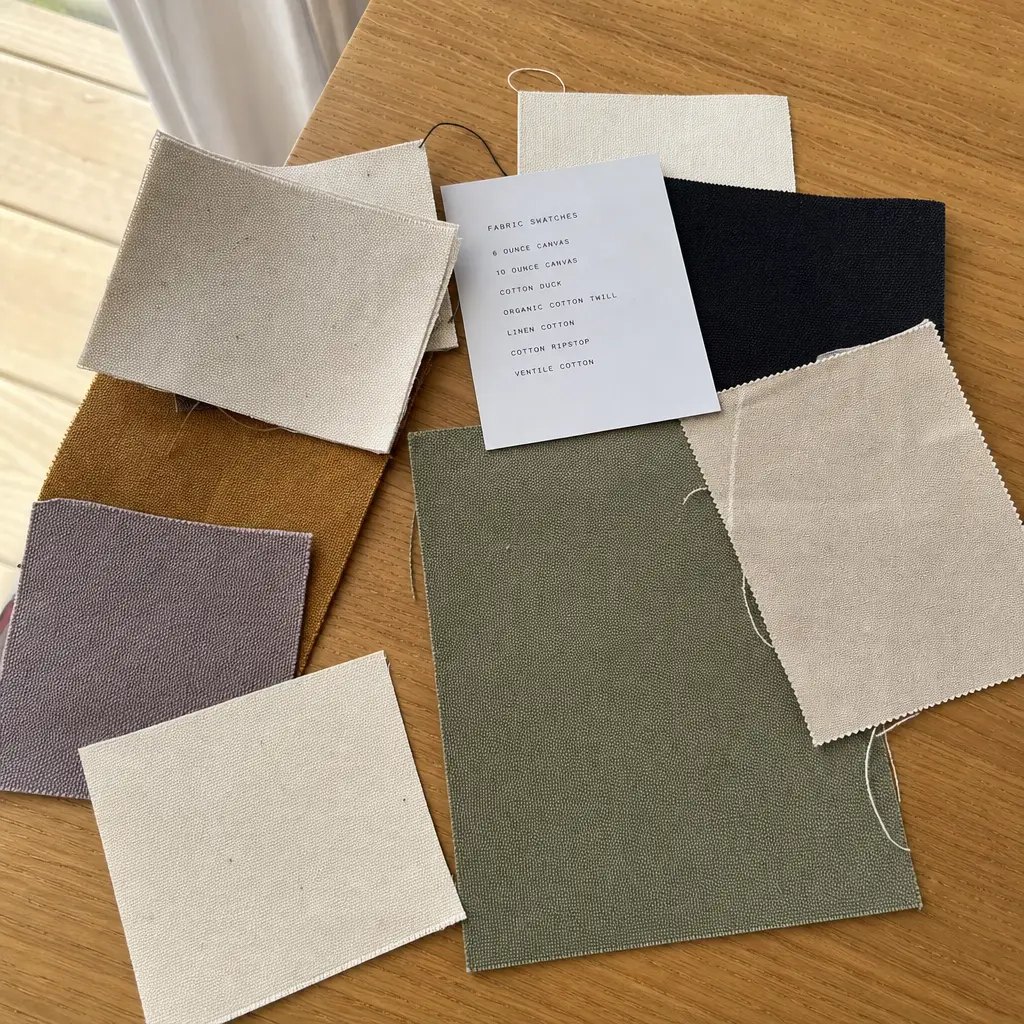
Jute tote quotes should include fabric weight and construction. For trade show bags, natural jute commonly falls around 13 oz to 16 oz, often roughly 310-420 GSM depending on weave and finishing. A lighter material may be acceptable for simple giveaways, but if the bag must hold heavy catalogs or retail samples, the RFQ should state a minimum weight range and require the factory to submit a swatch or sample using the same production material.
Jute is a natural fiber, so some shade variation, slubs, and texture changes are normal. The buyer problem is not natural variation itself; the problem is uncontrolled variation that affects branding or retail presentation. If the logo has fine lines or a clean corporate color, a very coarse, hairy weave can make print edges look broken. Your RFQ should separate acceptable rustic texture from defects such as oil stains, mold odor, hard creases, and broken yarn areas.
- Use a GSM or ounce range instead of saying only 'thick jute' or 'premium burlap'.
- State whether natural shade variation is acceptable across the order.
- Require pre-cut fabric inspection for stains, odor, yarn breaks, and inconsistent weave.
- For large orders, request a retained fabric swatch signed or labeled for bulk reference.
Choose the structure around the materials inside
A flat jute tote can work for a simple brochure or light giveaway, but trade show orders usually benefit from a gusseted structure. A 10 cm to 15 cm gusset gives the bag a more useful base for catalogs, drinkware, packaged samples, and folded apparel. If the exhibitor kit includes boxed items, a boxed bottom or reinforced bottom seam will reduce stress at the corners.
The RFQ should describe the finished size as width x height x gusset and should clarify whether the size is measured flat or as a finished three-dimensional bag. This avoids a common problem where the sample looks correct empty but loses usable capacity after sewing, binding, or bottom folding. When suppliers quote different measurement methods, cartons, freight volume, and usability all change.
- Typical event tote starting point: 38 x 35 x 10 cm for brochures and light samples.
- For heavier kits, consider 40 x 35 x 15 cm with stronger handle reinforcement.
- For wine or bottle sampling, use a dedicated bottle divider or narrower base instead of a generic tote.
- Avoid oversized bags unless the event content needs them; large jute bags increase CBM quickly.
Handle choice affects comfort and failure rate
The handle is often the weak point in a jute tote order. Jute handles can match the bag body, but they may feel rough and shed fibers on clothing. Cotton webbing handles are usually more comfortable for trade show visitors and can give the bag a cleaner retail appearance. The RFQ should specify handle material, width, length, color, and reinforcement stitch type.
For bags expected to carry brochures, samples, and drinkware, the handle attachment should use a box-X stitch or similar reinforced pattern. A low price based on a short straight stitch can pass a casual photo review but fail under booth conditions. It is better to define a practical load test in the PO, such as the bag carrying a stated weight for a set time without seam tearing or handle slippage.
- Short carry handles are cheaper but less comfortable over coats or suits.
- Shoulder-length cotton webbing, often around 55-65 cm, works better for event walking.
- Handle width around 2.5-3.8 cm usually feels more stable than narrow tape.
- Contrast handle colors may require separate MOQ or dye lot control.
Match the print method to jute texture
Screen printing is often the practical choice for custom jute tote bags with solid logos, bold text, and one to three colors. It can be cost-effective at trade show quantities, and it handles larger logo areas well. The limitation is that jute is not a smooth paper surface. Fine lines, small legal text, tight registration, and QR codes can break up on the weave.
Heat transfer or digital transfer can help when artwork has more colors or sharper edges, but it may create a different hand feel and may not suit every sustainability claim. Embroidery on jute is possible for some designs, but it adds cost and can pucker coarse fabric. A woven side label is useful when the buyer wants brand identification without forcing detailed artwork onto the jute panel.
- Use screen print for bold sponsor marks and simple event logos.
- Simplify fine artwork before sampling; do not judge only from the PDF proof.
- Avoid very small QR codes unless the factory tests scan performance on the actual bag.
- Request a print strike-off or pre-production sample using the final ink and fabric.
Understand MOQ before comparing unit prices
MOQ is not only a factory preference. It is tied to fabric purchasing, cutting efficiency, handle material, print setup, carton packing, and production scheduling. A single size, single handle color, and single print design is easier to quote than five sponsor versions with different artwork and different delivery labels. If your trade show program has several sponsors, keep the bag body common and separate the variable elements carefully.
When an RFQ says '5,000 bags assorted logos', the factory needs to know whether that means five designs of 1,000 pieces each or one base order with logo changes during printing. Each change can involve screen setup, color cleaning, registration time, and inspection separation. Your RFQ should request MOQ and price breaks by total quantity and by design quantity.
- Separate total order quantity from quantity per artwork.
- State whether every design uses the same bag size, jute weight, handle, and print color.
- Ask for price breaks at realistic levels, such as 1,000, 3,000, 5,000, and 10,000 pieces.
- For distributor programs, include whether split shipment or split carton marks are needed.
Build the quote sheet with all cost drivers visible
A useful jute tote quote should show more than a single FOB unit price. It should identify bag material, decoration method, setup charges, sample charges, packing, carton data, estimated CBM, lead time, and payment terms. Without carton dimensions and gross weight, the buyer cannot compare landed cost or event delivery cost correctly. A cheaper unit price may become expensive if the cartons are oversized or poorly packed.
Trade show exhibitors also need to understand what is included in the quote. Some suppliers include standard export cartons but not individual polybags, event labels, palletizing, or inland delivery. Others may quote a low base price and add screen charges after artwork review. The RFQ should request a line-by-line quote so purchasing, marketing, and logistics teams can all approve the same specification.
- Unit price by quantity and Incoterm, such as EXW, FOB, CIF, or DDP when available.
- Separate setup charges for screens, print plates, woven labels, or sampling.
- Carton quantity, carton size, gross weight, net weight, and total CBM.
- Packing costs for individual polybag, master polybag liner, pallet, or custom carton marks.
- Estimated sample lead time and bulk production lead time after final approval.
Approve the sample like a production control document
The pre-production sample should not be treated as a nice photo for internal approval. It is the control document for production. It should include the actual jute weight, handle material, stitching, print method, print size, print position, label, and packing method. If the sample uses substitute fabric or a different print process, the buyer should treat it as a reference sample only, not a production approval.
For trade show orders with fixed deadlines, approval notes must be specific. Instead of saying 'approved with changes', list the changes and require an updated photo or revised sample where necessary. If the logo position must move 2 cm lower, the factory needs that measurement. If the print color is too dark on natural jute, provide the target Pantone and accept that jute absorption may create a practical tolerance.
- Measure finished bag size, gusset, handle length, and print position on the sample.
- Load the sample with realistic event materials and check handle comfort.
- Rub the printed area with a dry white cloth after proper curing time.
- Take photos of approved details and attach them to the purchase order.
- Keep one approved sample with the buyer and one sealed sample at the factory.
Set QC thresholds before bulk production starts
Jute bags require quality control that fits the material. A perfectly uniform surface is not realistic, but heavy stains, strong odor, broken seams, loose handles, print smearing, and wrong dimensions are not acceptable. The purchase order should define major and minor defects so the inspection team and factory do not argue at the carton stage.
A practical inspection plan checks incoming fabric, sewing line output, printing, finishing, and packed cartons. For event orders, late discovery is expensive because there may be no time to remake. Buyers should require early production photos and, for larger orders, a mid-production or final random inspection based on an agreed AQL level or buyer-specific sampling method.
- Major defects: torn handle, open seam, wrong logo, heavy stain, mold odor, wrong size, unreadable print.
- Minor defects: small loose thread, slight natural yarn variation, minor print edge roughness within approved standard.
- Functional test: loaded hanging test and handle pull test based on expected event contents.
- Carton check: correct quantity, carton mark, label, carton strength, and no over-compression.
Plan packing for freight and event receiving
Packing is a commercial decision, not an afterthought. Individual polybags protect each tote and help with kit assembly, but they add cost, plastic use, packing time, and carton volume. Bulk packing with an inner liner is often enough for simple giveaways shipped to a distributor warehouse. For direct-to-event programs, carton marks and labels may matter more than individual bag wrapping.
Jute totes can deform if cartons are overloaded or compressed unevenly. Oversized cartons can also create high dimensional weight in air freight and awkward handling at event warehouses. The RFQ should ask for pieces per carton, carton dimensions, gross weight, and whether cartons can be palletized. If the event contractor has advance warehouse rules, include the label format before production packing begins.
- Use carton gross weight limits that warehouse teams can handle safely.
- Request carton dimensions early enough for freight quotation.
- Avoid mixed designs in one carton unless the receiving team needs that arrangement.
- Approve carton marks before final packing, especially for sponsor or booth-number sorting.
- For pallet delivery, define pallet height, stretch wrap, corner protection, and pallet labels.
Specification comparison for buyers
| Spec decision | Recommended option | When it fits | Buyer risk to check |
|---|---|---|---|
| Jute fabric weight | 13 oz to 16 oz natural jute, or about 310-420 GSM depending on weave density | Most trade show giveaways, sponsor bags, and exhibitor kit carriers needing a sturdy natural look | Very loose weave may look rustic but can distort print edges and reduce load stability |
| Bag structure | Gusseted tote with boxed bottom, reinforced mouth, and internal seam binding | Catalogs, flyers, bottles, samples, and mixed exhibitor materials | Flat totes save cost but become awkward when loaded with folders or boxed samples |
| Handle material | Cotton webbing or padded cotton rope handle, stitched with box-X reinforcement | Buyers want better hand feel than jute handles and lower shedding near clothing | Thin handles can fail pull tests or feel uncomfortable when bags carry brochures and giveaways |
| Printing method | Screen print for solid logos; heat transfer only for controlled artwork and smoother panels | One to three color sponsor logos, event branding, or retail-style natural bags | Fine text, gradients, and small QR codes are risky on coarse jute unless artwork is simplified |
| Inside lamination | Unlaminated for softer eco look; laminated jute when moisture resistance or stiffness matters | Unlaminated suits brand giveaways; laminated suits food, wine, and damp product samples | Lamination changes hand feel and may conflict with buyer sustainability claims |
| MOQ logic | One logo/colorway per MOQ; consolidate same body spec across sponsors where possible | Distributors managing several exhibitor sponsors with shared bag body and different prints | Splitting colors, handle types, or print positions can create multiple small production lots |
| Sample approval | Pre-production sample with final jute weight, handle, print ink, stitch color, and packing method | Orders tied to event dates where rework is not possible after mass production | Approving only a digital proof misses print bleeding, color absorption, handle comfort, and carton fit |
| Packing plan | Individual polybag only when required; otherwise bulk pack 50-100 pcs per export carton with liner | Trade show kits, warehouse receiving, or direct delivery to event contractor | Oversized cartons can crush corners, increase freight volume, and slow booth-kit assembly |
| Lead time control | Book fabric and handle materials after sample approval, with carton labels approved before final packing | Events with fixed delivery windows, advance warehouse deadlines, or international freight cutoff dates | Late artwork, changed sponsor logos, and unapproved carton marks are common schedule blockers |
Buyer checklist before sampling
- Define the final use: empty giveaway, attendee tote, exhibitor kit, retail gift, wine/sample carrier, or sponsor merchandise.
- State bag size in width x height x gusset, not only approximate capacity.
- Specify jute weight or target GSM range, and note whether natural color variation is acceptable.
- Confirm laminated or unlaminated construction before comparing quotes.
- List handle material, length, width, color, and reinforcement stitch requirement.
- Provide artwork as vector files and include Pantone references for each print color.
- Mark exact print size and print position on each panel; note if both sides are printed.
- Set acceptable print tolerance for position, color variation, and edge sharpness on jute texture.
- Request pre-production sample using actual bulk fabric and actual print method.
- Clarify MOQ by size, fabric, handle, print design, and delivery destination.
Factory quote questions to send
- What jute weight, weave density, and fabric width are included in the quote?
- Is the bag laminated or unlaminated, and what is the expected hand feel and stiffness?
- Are handles cotton webbing, jute, rope, or another material, and what are the handle dimensions?
- Is the quoted print method screen print, heat transfer, digital transfer, embroidery, woven label, or a mixed decoration method?
- How many print colors and positions are included before extra screen, setup, or handling charges apply?
- What is the MOQ per design, per size, per handle color, and per delivery split?
- Can the pre-production sample be made from the same jute lot planned for bulk production?
- What sample lead time and bulk lead time apply after artwork and deposit approval?
- What inspection standard will be used for stitching, load test, print registration, odor, stains, and carton packing?
- What carton dimensions, gross weight, pieces per carton, and estimated CBM will be used for freight costing?
Quality-control points to confirm
- Fabric weight must match the approved range and should be checked before cutting, not only after sewing.
- Jute panels should be free from heavy oil stains, strong odor, mold marks, broken yarn clusters, and excessive color banding.
- Bag dimensions should be measured flat with tolerance agreed in the PO, commonly plus or minus 0.5 cm to 1 cm depending on size.
- Handle length and handle placement must be consistent so bags hang evenly when loaded.
- Handle attachment should pass a practical pull test based on the expected loaded weight of brochures, samples, and event materials.
- Print position should stay within the approved tolerance and should not drift across the coarse weave.
- Print ink should not rub off easily after drying and should be tested on actual jute, not only on a smooth lab swatch.
- Seams, binding, and bottom corners need trimmed threads and secure backstitching.
- Cartons should hold the agreed quantity without over-compression, deformation, or unstable gross weight.
- Random inspection should include packed cartons, not only loose finished bags from the top of the production line.