What goes wrong in custom jute tote bag orders
Most buyer problems with custom jute tote bags start before production, not after. The quote may look simple, but the supplier can be pricing different fabric weights, different handle constructions, or even a different board-feel from the sample. For eco apparel brands, that mismatch is expensive because the bag is often used as a retail carrier, a gift-with-purchase item, or a branded merchandising piece that must feel consistent with the collection.
The biggest risk is treating jute like a commodity bag. Jute behaves differently from cotton canvas or non-woven PP. It frays more, it prints differently, and it reacts strongly to humidity and folding. A buyer who only compares unit price usually misses the real variables: GSM, lamination, handle reinforcement, print method, packing density, and the supplier's ability to keep the same fabric lot through the entire order.
- A cheap quote with unclear fabric weight often means higher claim risk later.
- Jute bags can look acceptable on a single sample but fail in bulk if the weave, dye lot, or cut consistency changes.
- The right QC plan starts with the bag structure, not with the logo.
Choose the right jute construction before you compare quotes
For custom jute tote bags, the first decision is whether you want a light promo bag or a structured retail bag. A 260–280 GSM body can work for handouts, event packs, or light apparel bundles. For retail use, gift sets, or anything that must stand upright and hold shape, a 300–320 GSM laminated jute body is the safer starting point. If the supplier does not state GSM clearly, the quote is incomplete.
Construction details matter as much as GSM. A self-fabric handle is usually cheaper but less comfortable under load. Cotton webbing handles, especially when stitched with a box-X or bartack reinforcement, improve carry comfort and durability. Lining is another cost item that should be intentional, not accidental. An unlined bag is fine for a simple natural look; lined bags are better when the brand wants a cleaner interior or reduced fiber shedding.
- State whether the bag must stand upright empty; this changes fabric and base construction.
- Confirm gusset depth, because a wider gusset changes cut efficiency and carton packing.
- If you want premium presentation, ask for lining, binding, or internal seam finishing in the sample stage.
Use the table to compare supplier routes, not just unit price
A useful jute sourcing comparison should separate direct factory sourcing from trader or broker sourcing. Direct factories usually offer better control over fabric lot, stitching, and packing, but they may need a higher MOQ or more rigid artwork lock. Trading companies can be useful for mixed orders, lower volumes, or fast sampling, but buyers should expect less visibility into production controls and more room for spec drift.
When you compare quotes, read the commercial terms alongside the sample promise. A factory that quotes a slightly higher unit price but gives a true pre-production sample, production photos, and clear defect criteria is often cheaper in the end than a lower quote that forces rework, shipping delay, or claim negotiation.
- Compare supplier route, not only price: factory, trader, or hybrid exporter.
- Look for documented QC photos, not just a polished sales sample.
- If the quote is unusually low, check whether print, packing, or reinforcement has been downgraded.
Set measurable quality thresholds for the bulk run
A factory can only inspect what the buyer defines. For custom jute tote bags, the most useful acceptance criteria are dimensional tolerance, seam quality, handle symmetry, print placement, and packing condition. If the bag is for retail, the appearance threshold should be tighter than for a one-time giveaway. Define whether a slight fabric slub, minor color variation, or small print shift is acceptable, because jute naturally carries more surface variation than smoother textiles.
A practical QC standard should separate major defects from minor defects. Major defects are the ones that affect usability or shelf appeal: open seams, broken handles, misaligned logos, excessive staining, or mold odor. Minor defects might include small thread tails, light natural fiber variation, or barely visible fold marks that do not affect use. The supplier should know which category triggers rework, sort, or replacement.
- Major defect examples: open seam, misprint, wrong logo placement, broken handle, damp carton, mold smell.
- Minor defect examples: small loose thread, slight jute fuzz, tiny fold line, small color shading within normal natural variation.
- Ask the factory to inspect against the approved sample, not against an internal standard that the buyer never saw.
How to inspect samples before you approve production
A blank sample only tells you that the bag can be made. It does not tell you that the order can be made correctly. For a real approval, the sample should use final fabric, final print method, final handle material, and final stitching pattern. If the supplier sends a pre-production sample without the correct carton style or polybag, you still do not know whether the finished goods will pack properly.
When reviewing samples, focus on three things: fit, finish, and function. Fit means the actual dimensions after sewing and folding. Finish means the print clarity, thread trimming, and edge neatness. Function means the bag carries weight without handle twist, seam strain, or panel distortion. If the sample passes on appearance but feels weak in the hand, the bulk order will likely repeat that weakness.
- Measure width, height, and gusset after the bag is fully assembled.
- Inspect handle placement from both sides for symmetry.
- Put a test load inside the sample to see how the handles and bottom panel behave.
- Check print under normal retail lighting, not only under factory inspection lights.
Print method decisions that affect jute inspection
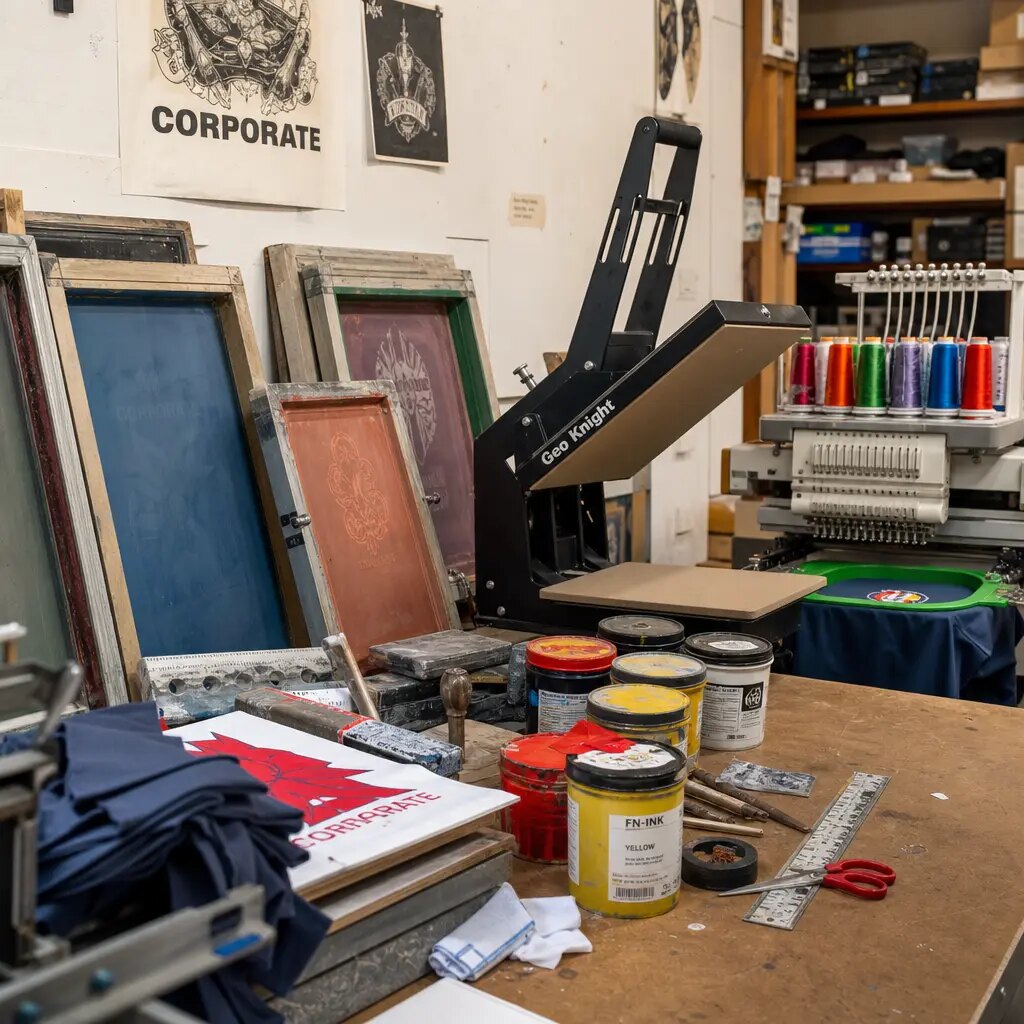
Jute is not a forgiving print substrate. Screen print is usually the best route for bold logos, simple graphics, and bulk volume because it gives cleaner unit economics and better consistency. Heat transfer can work for smaller runs or more detailed artwork, but buyers should understand that transfers can sit differently on the weave and may show edge lift or adhesion issues after folding. Embroidery can look premium, but it is usually a better choice for small logos and premium positioning than for large artwork.
The inspection standard should match the print method. On screen print orders, the key concerns are opacity, alignment, and cure quality. On transfer orders, inspect edge adhesion and the ability to survive repeated folding. If the logo includes thin lines or small text, require a print proof that shows the minimum line weight that still reads cleanly on textured jute. Fine detail often disappears once the ink settles into the weave.
- For simple logos, one or two colors are usually safer than complex gradients.
- Ask for logo placement dimensions in millimeters, not only a visual mockup.
- Confirm whether the print is on one side or both sides, because that changes labor and registration risk.
MOQ logic and why low minimums can hide weak production control
MOQ is not just a sales number. It tells you how a factory handles fabric buying, cutting efficiency, print setup, and packing labor. For custom jute tote bags, a lower MOQ can be useful for a launch test or seasonal activation, but it often comes with less flexible pricing and less room for revisions. If the supplier says yes to a very low MOQ without changing the price much, the buyer should look closely at what may have been removed from the spec.
A proper MOQ discussion should cover color, artwork, and construction. One color with one print position is easier to quote than multiple colors or different handles. If you need mixed artwork or customized retail packing, the MOQ may need to rise. That is not a problem if the quote is transparent. The problem is when the supplier hides the real MOQ by using the same price for a simplified sample build and a more complex bulk build.
- Separate MOQ by fabric color, print color, and packing style.
- Treat very low MOQ quotes as test orders unless the factory proves repeatability.
- Ask whether the supplier will reserve the same fabric lot for the entire run.
Packing, carton loading, and transit damage control
Jute bags are vulnerable to moisture, smell transfer, and crush marks. Packing must preserve the bag's shape without trapping humidity. For most export shipments, a clean bulk fold in a polybag with export cartons is enough, but the buyer should define the folding method and carton fill density. If the bags are over-compressed, the surface texture can flatten and the logo can crease. If the cartons are underfilled, the bags can shift and rub, causing dirty corners or handle deformation.
Carton planning should be part of the quote, not an afterthought. Ask for carton dimensions, quantity per carton, and gross weight range. For retail buyers, also confirm whether carton labels, barcode stickers, or inner pack marks are included. If the destination is humid or the lead time is long, consider moisture protection and warehouse-safe storage conditions before shipment. A good bag can still arrive with odor or spotting if packing is weak.
- Confirm the fold style so the logo lands in the same visible position in every pack.
- Use moisture protection if the route includes ocean transit, warehouse staging, or tropical storage.
- Do not let the factory compress cartons beyond a handling-safe weight just to save freight lines.
Lead time, production milestones, and schedule risk
A realistic schedule for custom jute tote bags is usually driven by raw material availability, print setup, and packing labor. If artwork is not final, the supplier may still give you a lead time, but that timing is only meaningful after sample approval. Buyers should separate sampling time from bulk production time. A production promise that sounds fast on paper can still slip if the supplier needs to source a specific fabric weight, handle type, or lining material.
Schedule risk is easiest to control when milestones are written into the PO or order confirmation. The buyer should know when the blank sample is due, when the pre-production sample is due, when bulk fabric is cut, and when final packed photos are due. That gives the sourcing team a chance to stop a wrong run early instead of discovering the issue only when cartons are ready for shipment.
- Split timing into sample, approval, production, and dispatch milestones.
- Ask whether raw materials are in stock or must be purchased after deposit.
- Require in-line photos once cutting and printing begin, especially on first orders.
A buyer workflow for comparing landed cost, not just FOB
For procurement teams, the useful number is landed cost, not unit price alone. A lower FOB quote can lose once you add sample rounds, rework, freight inefficiency, damage risk, and import claims. When comparing suppliers, build a simple landed-cost view that includes unit price, sample cost, carton count, estimated cubic volume, and expected defect risk. The best supplier is often the one that keeps dimensional consistency and packing discipline, because that reduces hidden cost in freight and warehousing.
This is especially true for eco apparel brands that sell through retail partners. Retailers often reject soft cartons, dirty bag surfaces, or inconsistent logo placement even if the bag technically functions. If the product must sit on a shelf or be used as a branded carrier in-store, appearance tolerance needs to be written into the purchasing logic. Otherwise the cheapest quote can become the most expensive stock.
- Compare unit price plus sample rounds plus freight volume plus expected claim risk.
- Ask whether the bag dimension affects carton quantity and cubic meter usage.
- Weigh retail appearance standards against pure carry function before approving the lowest quote.
Specification comparison for buyers
| Spec decision | Recommended option | When it fits | Buyer risk to check |
|---|---|---|---|
| Fabric weight | 300–320 GSM laminated jute for structured retail totes; 260–280 GSM for lighter promo bags | Choose higher GSM when the bag must hold shape, carry catalogs, or support printed branding on a flat panel | Low GSM can wrinkle badly, show stitching distortion, and fail load expectations after packing |
| Lining choice | Unlined for simple gift or trade-show use; cotton or non-woven lining for premium retail positioning | Use lining when the brand needs cleaner interior finish, better hand feel, or protection against loose fibers | Lining adds cost and lead time; poorly cut lining can twist inside the bag or hide weak seams |
| Handle build | Self-fabric handles or cotton webbing handles with reinforced box-X stitching | Best for heavier carry loads, repeated retail use, or products that will be merchandised as durable everyday bags | Short handle reinforcement can tear at stress points if bartacks are too small or thread tension is off |
| Print method | Screen print for bold one- to two-color logos; heat transfer only for small runs or detailed artwork; embroidery only for premium small panels | Screen print suits most bulk jute tote programs and gives the cleanest unit cost at scale | Jute texture can break fine lines; small text may fill in, crack, or sit unevenly on the weave |
| Closure | Open top for simplest cost; zip or magnetic closure only when the bag is sold as a higher-value retail item | Use closures when product protection or premium presentation matters more than lowest FOB | Closure hardware adds failure points and can shift the production schedule if approved samples are not locked early |
| MOQ route | Direct factory order for stable programs; trading company route for mixed SKUs or low-volume test launches | Direct sourcing works when artwork, size, and packing are fixed and volumes repeat | Low MOQ quotes may hide material downgrades, thin handles, or loose packing standards |
| Sample stage | Pre-production sample with confirmed fabric, print, handle length, and carton pack before bulk approval | Required for new artwork, first-time suppliers, or any order with tight retail launch timing | Skipping a true pre-production sample leads to surprise color shifts, incorrect sizing, and packing mismatches |
| Packing standard | Bulk polybag + export carton with clean fold and moisture protection; retail bag-in-bag only when required | Use protective packing for ocean shipments, humid destinations, or high-appearance retail orders | Overpacked cartons crush jute texture; underpacked cartons can pick up moisture and transit staining |
| Supplier route | Factory with jute bag experience and documented QC photos, or audited export partner with production control | Best when buyer needs repeatable quality and clear issue ownership | Brokered quotes may look cheaper but often give weaker claim handling and less visibility into fabric and stitching control |
Buyer checklist before sampling
- Confirm target fabric weight in GSM, not just 'heavy' or 'premium'; define whether the bag must stand upright empty.
- Lock bag size, gusset depth, handle length, and handle reinforcement method before sampling.
- Specify print method, number of colors, logo placement, and artwork minimum line thickness.
- Require a pre-production sample made with final fabric, final trim, and final packing style.
- Set acceptable sewing tolerance for size, seam straightness, and handle symmetry.
- State carton pack quantity, carton master size, gross weight target, and any pallet requirement.
- Ask for lead time split between sample approval, production, and booking/dispatch.
- Request production photos of cut panels, printing, stitching, and packed cartons before shipment.
Factory quote questions to send
- What exact jute fabric GSM are you quoting, and is it laminated, natural, or blended?
- Is the quoted price based on approved artwork, final size, and one full-color side or both sides?
- What handle material, handle width, and reinforcement stitch pattern are included in the unit price?
- What is the MOQ by color and by artwork version, and does MOQ change if we use different print positions?
- What sample stage is included: blank sample, printed sample, or pre-production sample with final packing?
- What carton packing quantity, carton dimensions, and master carton weight are used for the quote?
- What is the standard lead time after sample approval, and how many days are needed for raw material sourcing?
- Which defects are treated as major defects versus minor defects in your final inspection?
- Can you share recent production photos or in-line QC records for a similar jute tote order?
Quality-control points to confirm
- Fabric GSM and weave density match approved sample within agreed tolerance.
- Jute surface is evenly colored, with no mold smell, wet spots, oil stains, or excessive loose fibers.
- Bag dimensions are within tolerance for width, height, and gusset after stitching and folding.
- Handles are even in length, securely anchored, and reinforced with uniform box-X or bartack stitching.
- Print is centered, legible, and cured properly without cracking, bleeding, or patchy coverage.
- Seams are straight, no skipped stitches, no open seams, and no puckering at stress points.
- Edge finishing is clean with trimmed threads, no exposed raw cuts that shed excessively.
- Cartons are strong, labeled correctly, and packed to prevent crushing or moisture damage in transit.