Why craft fair jute tote quality fails in the last mile
Custom jute tote bags for craft fairs are often purchased on a tight seasonal timeline, then judged in a very public setting. The tote may be used as vendor checkout packaging, a paid retail bag, a sponsor giveaway, or a reusable merchandise item. Each use creates a different standard. A low-cost giveaway may only need to carry light paper goods, while a retail craft fair tote may be expected to hold glass jars, candle tins, soap bundles, small ceramics, books, and apparel without the handles twisting or the bottom collapsing.
The most common failures are not mysterious. Buyers leave the jute weight undefined, approve a sample made from substitute material, accept artwork that is too detailed for burlap texture, or treat packing as an afterthought. Jute has a coarse weave, natural shade variation, and more surface irregularity than cotton canvas. That does not make it unsuitable; it means the inspection standard must be written for the material instead of borrowed from smooth fabric bags.
A strong custom jute tote bags quality inspection checklist for craft fairs should answer two questions before production starts. First, what natural variation is acceptable for a rustic fiber product? Second, what defects make the bag unsaleable, unsafe to carry, or off-brand? When those answers are documented in the RFQ, approved sample, and pre-shipment inspection plan, the buyer has a clearer basis for supplier comparison and defect resolution.
- Typical craft fair load range to discuss: 3 kg to 8 kg depending on the product mix, handle design, and bag size
- High-risk failure points: handle pull-out, body seam opening, print distortion near seams, lamination odor, front-panel holes, and crushed handles from overpacking
- Procurement risk: a supplier may quote a visually similar tote that uses lighter jute, narrower handles, or post-stitch printing unless the RFQ locks the details
- Best control point: approve one physical production-standard sample and use it as the final inspection reference
Define the buyer use case before selecting the tote specification
The right jute tote specification starts with how the bag will be used at the fair. A sponsor giveaway can be lighter if it mainly holds brochures and small gifts. A vendor checkout bag needs faster packing, enough gusset depth for boxed goods, and comfortable handles for customers walking between stalls. A paid retail tote needs a cleaner front panel, more consistent printing, and stronger presentation because the bag itself is part of the merchandise.
This distinction matters in B2B procurement because a small specification change can create a real cost difference. A wider gusset, heavier laminated jute, cotton webbing handles, and reinforced stitching all add cost, but they may prevent complaints when end users carry fragile or heavy handmade products. On the other hand, specifying premium features for a light paper-goods giveaway can make the quote less competitive without improving the outcome.
Before requesting supplier pricing, list the main products the bag must carry. A candle seller may need a stable bottom gusset and higher carry confidence. A soap maker may care about moisture resistance and odor neutrality. A pottery booth may need stronger handle reinforcement, while an apparel vendor may prioritize size and print visibility. This use-case note should travel with the RFQ so factories understand that the bag is not just a generic promotional tote.
- Giveaway tote: lower load expectation, simple print, basic packing, and more flexible surface variation
- Vendor checkout bag: structured gusset, fast opening, reliable handle comfort, and carton sorting by event or seller
- Paid retail tote: cleaner display panel, tighter print alignment, better shade consistency, and stronger packing presentation
- Reusable merchandise bag: reinforced construction, better handle hand feel, durable print, and more disciplined inspection tolerances
Choose construction details that support real fair products
For most craft fair retail and vendor programs, a side-and-bottom-gusset jute tote is more practical than a flat bag. The gusset helps the tote stand on a table, makes checkout packing easier, and reduces the distorted look that appears when flat totes are loaded with jars or boxes. Common finished sizes include about 320 x 350 x 150 mm for medium purchases and 380 x 350 x 180 mm for larger mixed goods, but the best size should be checked against the buyer's actual product assortment.
Fabric weight needs equal discipline. Many supplier quotes use phrases such as standard jute, thick jute, or burlap tote without a measurable weight. Those descriptions are too vague for procurement comparison. A laminated jute around 13 oz to 14 oz, roughly 380 to 410 GSM equivalent depending on weave and coating, is a useful medium-duty starting point for craft fair totes. Lighter unlaminated jute can work for soft, dry, lightweight goods, but it will usually stand less neatly and may shed more fibers.
The handle specification should be written as carefully as the bag body. Cotton webbing handles in the 25 mm to 30 mm range are often preferred for comfort because fair visitors may carry the bag for several hours. Rolled jute handles can look rustic but may abrade faster and feel rougher under load. Whatever material is selected, the RFQ should specify handle drop, width, color, stitch pattern, and reinforcement method so the factory does not choose the lowest-cost attachment by default.
- Recommended medium-duty construction: laminated natural jute, side and bottom gusset, cotton webbing handles, reinforced handle stitching, and neat inside seams
- Finished-size fields to specify: width, height, bottom gusset, side gusset if applicable, handle drop, handle width, and top-opening width
- Construction checks: bag stands when filled, bottom is symmetrical, handles are balanced, top hem is clean, and internal edges do not peel or fray excessively
- Quote warning: if one supplier is much cheaper, confirm fabric weight, lamination, handle width, stitch reinforcement, and carton packing before comparing price
Write an RFQ that makes supplier quotes comparable
The biggest procurement mistake is asking several factories to quote a custom jute tote from a loose photo reference. One supplier may price laminated jute with cotton webbing and pre-stitch printing. Another may price lighter burlap, narrower handles, and a smaller print area. The result is a spreadsheet that looks comparable but is actually comparing different products. A strong RFQ removes those variables before pricing begins.
Start the RFQ with one quote basis. For example: price per piece FOB, 3,000 pieces, one size, natural laminated jute, one handle color, one front screen print, 10 pieces per inner bundle, 50 pieces per export carton. Then ask the supplier to show adders separately for extra print color, woven label, inside pocket, individual polybag, barcode label, carton upgrade, lower MOQ, and third-party inspection coordination. This gives the procurement team a cleaner view of where cost changes originate.
The RFQ should also separate commercial terms from quality terms. Commercial terms include MOQ, payment terms, Incoterm, lead time, sample fee, tooling or screen charges, and quote validity. Quality terms include approved sample requirements, measurement tolerances, defect classification, inspection sampling level, packing standard, and corrective action process. When these are bundled vaguely, disputes appear late, often after the event deadline leaves little time to replace goods.
- RFQ must lock: finished size, jute type, fabric weight, lamination, handle spec, print method, print size, print position, packing, and inspection standard
- Ask for itemized adders: screen charge, sample courier, label setup, carton upgrade, desiccant, barcode labeling, and lower-MOQ surcharge
- Require supplier confirmation of tolerances: body size, gusset, handle drop, print placement, print skew, shade variation, and carton quantity
- Attach buyer documents: artwork file, measurement drawing, approved color references, packing instruction, defect list, and target event date
Set print and branding standards for coarse jute
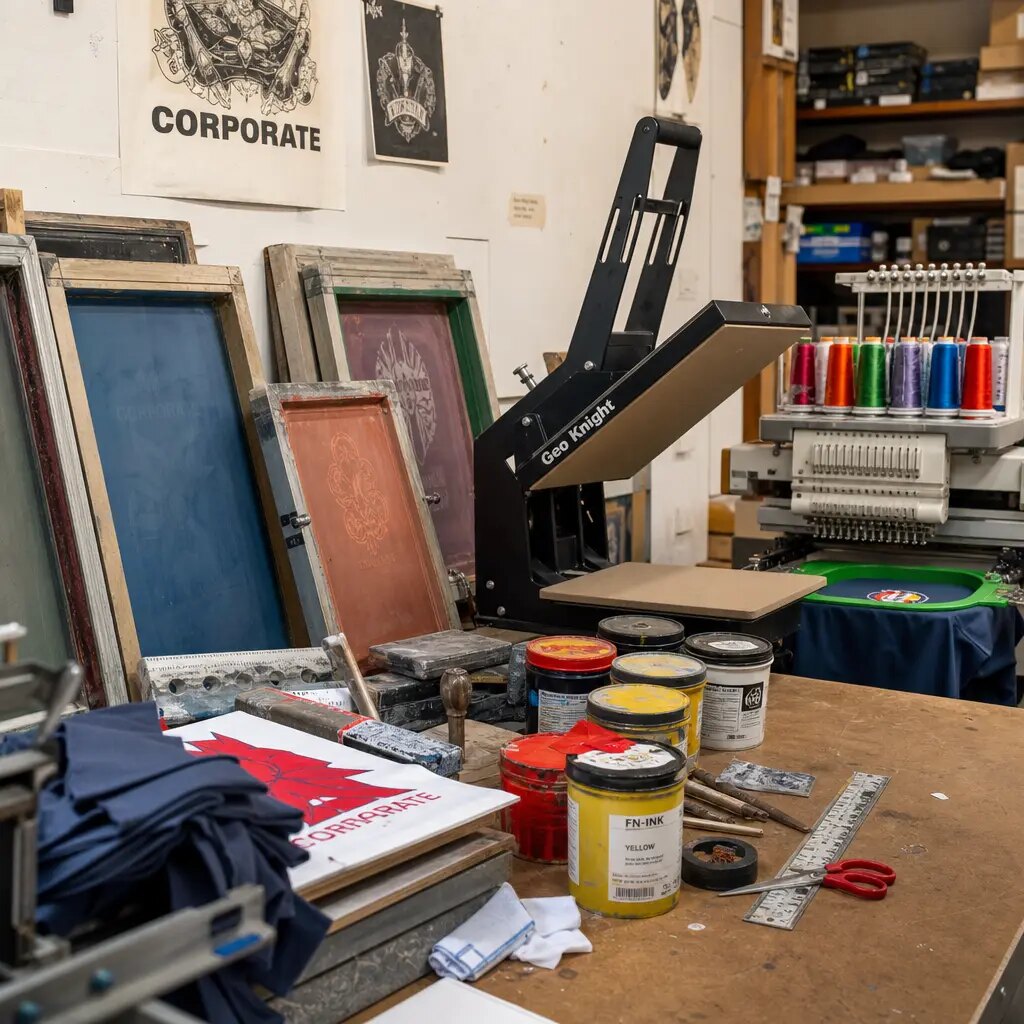
Jute is not a smooth print surface. Its yarn thickness, slubs, and open texture affect edge sharpness and ink coverage. For craft fair totes, screen printing is usually the most dependable option for bold one-color or two-color designs. It works well for event names, simple logos, sponsor marks, and vendor branding when the artwork has adequate stroke width and enough distance from seams.
The safest production method is usually printing on cut panels before stitching. This allows the print table to hold the fabric flatter and keeps artwork away from gusset folds and handle reinforcement. Printing on assembled bags may be possible for small runs or certain designs, but it raises the chance of uneven pressure, misalignment, and distortion near seams. Buyers should ask the supplier which method is included in the quote because the price and quality risk are not always the same.
The artwork approval should include more than a color reference. Define print size in millimeters, centerline location, safe area, minimum line width, smallest acceptable text height, and placement tolerance. For example, a logo centered on the front panel may allow a placement tolerance of plus or minus 5 mm to 8 mm depending on bag size and factory capability. If a logo contains very small text or fine illustration, a sewn woven label or cotton patch may be a cleaner solution than forcing detail onto coarse burlap.
- Best artwork fit: bold symbols, thick strokes, limited colors, large text, and generous clear space around the logo
- Higher-risk artwork: thin serif fonts, small registration marks, fine outlines, dense halftones, QR codes, and text close to seams
- Print approval checks: ink color, coverage, edge softness, logo legibility, placement, skew, curing, rub resistance, and absence of ghosting or offset
- Branding alternatives: woven label, cotton patch, printed cotton panel, leather-look patch, or smaller direct print paired with a stitched label
Use sample approval as the first inspection gate
A pre-production sample should not be treated as a design courtesy. It is the first inspection gate and should represent the production tote as closely as possible. The sample should show the actual jute weight, lamination, handle material, handle width, stitching method, print process, print color, top hem, inner seam finish, and overall shape. If the factory uses sample-room stock that differs from bulk production material, the buyer should record that limitation and require bulk material approval before cutting.
Sample review should include practical handling, not only photographs. Measure the tote flat, check the gusset depth, compare both handle drops, inspect the front panel under normal retail lighting, and load the bag with representative products. A bag that looks acceptable empty may collapse when filled with jars or boxes. A handle that feels comfortable for a few seconds may twist under a longer carry. These issues are easier to correct before bulk material is booked.
Odor and lamination checks are especially important for jute. Seal the sample in a clean polybag overnight, then open it and check for strong chemical, musty, or warehouse odor. Inspect inside corners and folds for peeling, bubbling, cracking, or sticky coating. For buyers supplying food-adjacent craft products such as jams, baked goods, soaps, candles, or cosmetics, odor can become a customer complaint even when the bag is structurally sound.
- Sample documents to keep: signed physical sample, measurement record, print artwork approval, material notes, packing approval, and defect tolerance notes
- Functional sample checks: representative load test, repeated lift test, handle comfort, standing shape, bag opening, and product fit
- Appearance sample checks: jute shade, surface slubs, front-panel cleanliness, logo legibility, print coverage, and edge sharpness within realistic jute limits
- Approval rule: do not release bulk production until every approved deviation is written down, because photos alone rarely settle later inspection disputes
Build a jute-specific inspection checklist instead of relying on generic textile terms
Generic bag inspection can miss the defects that matter most for jute. A standard textile checklist may capture stitching and size, but it may not clearly classify burlap holes, dark fiber contamination, lamination odor, front-panel slubs, or coating delamination. For craft fair orders, those details affect saleability. A tote displayed at a vendor booth has a front-facing retail surface, not just a functional carrying body.
The checklist should separate critical, major, and minor defects. Critical defects are safety or severe contamination issues, such as mold, sharp foreign objects, or handle failure under basic load. Major defects are problems that make the tote unsaleable or clearly inconsistent with the approved sample, such as wrong size beyond tolerance, severe print smudge, front-panel hole, seam opening, strong odor, or wrong artwork. Minor defects are small issues that do not affect function and are within the agreed rustic appearance, such as a small slub on a side gusset or slight print texture variation.
Inspection notes should also define display and non-display zones. A dark knot on the inside fold may be acceptable, while the same mark on the center front logo panel may not be. A slight lamination wrinkle inside the bottom may pass, while peeling lamination at the bag opening may fail. This zone-based language helps the inspector make consistent decisions and reduces the chance that every natural fiber mark becomes a dispute.
- Critical defects: mold, insect contamination, sharp foreign matter, unsafe handle attachment, severe chemical odor, or wet packed goods
- Major defects: front-panel hole, seam opening, wrong print, severe skew, wrong size, broken handle stitch, oil mark, mildew mark, lamination peeling, or mixed SKU packing
- Minor defects: small non-display slub, slight shade variation within approved range, light print texture variation, short loose thread that can be trimmed, or minor inner wrinkle
- Measurement examples: body width and height plus or minus 5 mm to 8 mm, handle pair difference within 5 mm, print placement plus or minus 5 mm to 8 mm when approved by sample
Inspect production in stages to catch drift before final packing
Final inspection is important, but it should not be the first time anyone checks the bulk order. Jute tote production can drift at several points: material shade may vary between rolls, printed panels may skew before sewing, handles may be attached with inconsistent stitch tension, and cartons may be packed before ink has cured. A staged quality plan catches these problems while rework is still realistic.
The first stage is incoming material approval. The factory should compare bulk jute against the approved sample for shade, weight, lamination, surface cleanliness, and odor. The second stage is print setup approval, where the first printed panels are checked for placement, color, coverage, and line clarity. The third stage is sewing inline inspection, focused on handle reinforcement, seam strength, gusset symmetry, top hem, and loose threads. The fourth stage is final inspection after packing, where the inspector verifies defect rate, carton count, assortment, labeling, and overall consistency.
For fixed-date craft fair orders, staged inspection is a schedule tool as much as a quality tool. If the buyer waits until cartons are sealed, a major print or handle issue can threaten the entire event. If the issue is found during print setup or early sewing, the supplier can adjust alignment, replace weak thread, retrain operators, or isolate one material lot before most of the order is affected.
- Incoming material checks: jute shade, weight, lamination, odor, roll cleanliness, moisture condition, and visible weave defects
- Print setup checks: artwork orientation, center placement, color, edge quality, ink coverage, drying time, and first-piece approval signoff
- Inline sewing checks: handle position, box or X stitch, back tack, gusset symmetry, seam allowance, top hem, and loose-thread trimming
- Final packed inspection checks: AQL result, approved sample match, carton marks, quantity, assortment, moisture condition, carton compression, and defect photos
Control packing so saleable bags arrive clean, dry, and easy to receive
Packing is part of product quality for jute bags. Jute can absorb moisture and odor, while printed panels and cotton handles can be damaged by excessive compression. If too many totes are forced into one carton, handles may crease sharply, gussets may deform, and the bags may not recover their retail shape before the event. If bags are packed before print curing, ink may offset onto adjacent panels.
A practical packing plan should define inner bundle quantity, carton quantity, carton dimensions, maximum gross weight, carton material, shipping marks, and mixed-carton rules. For many B2B orders, 10 to 20 pieces per inner bundle is easier to count and distribute than loose bulk packing. Cartons should be labeled by PO number, item code, artwork code, color, quantity, carton number, and destination mark if required. If the order includes several vendor designs, inner bundle labels can prevent sorting errors close to the event date.
Moisture control deserves attention for sea freight and humid-season shipping. The buyer should ask whether cartons are packed in a dry area, whether desiccant is included, whether cartons are lined, and how long finished goods may sit before loading. Desiccant is not a cure for wet goods, but it can help manage normal transit humidity when paired with dry production and storage. Any musty smell or damp carton at inspection should be treated seriously because jute can retain odor.
- Packing specification fields: inner bundle count, pieces per carton, carton size, carton wall strength, maximum gross weight, polybag or no polybag, desiccant, and carton liner
- Receiving-friendly labels: PO, SKU, artwork name or code, bag size, color, quantity, carton number, country of origin if needed, and gross or net weight
- Compression risks: crushed handles, distorted gussets, print abrasion, hard creases, and cartons splitting under warehouse handling
- Moisture checks: dry bags, dry cartons, no mold, no musty odor, no water marks, no damp inner bundles, and suitable storage before shipment
Plan lead time, MOQ, and cost drivers with inspection in mind
Lead time for custom jute tote bags is not just sewing time. The schedule usually includes artwork review, sample production, sample shipment, sample approval, bulk jute booking, lamination if required, cutting, printing, curing, sewing, trimming, inline inspection, packing, final inspection, and cargo booking. If the craft fair date is fixed, the buyer should build the timeline backward from the required delivery date, not forward from the supplier's best-case production estimate.
MOQ is driven by more than labor. Material lots, print screens, handle colors, label setup, packing assortments, and factory changeovers all affect minimum quantity and price. A supplier may accept a lower total quantity if the order uses one base construction and one handle color, then splits only the front print. Costs rise quickly when each vendor wants a different jute shade, handle color, label, size, or carton assortment. From a quality standpoint, too many small variations also make inspection and packing control harder.
The cleanest buying strategy for multi-vendor craft fair programs is to standardize the base tote and vary branding in a controlled way. Use one size, one natural jute material, one handle type, one carton plan, and one inspection checklist. Then manage artwork as a separate SKU field with clear labels and inner bundles. This approach gives vendors personalization without turning the order into many small unstable productions.
- Typical timeline buckets to request: artwork review, sample, courier transit, bulk material booking, print setup, sewing, packing, inspection, and cargo-ready date
- Common delay points: late artwork, sample revisions, material shade approval, lamination schedule, print screen changes, failed inspection, and carton labeling errors
- Cost drivers: heavier jute, lamination, wider handles, reinforcement, larger print area, extra print colors, labels, pockets, zippers, individual polybags, and carton upgrades
- MOQ control strategy: keep construction identical, limit body colors, consolidate handle color, group artwork runs, and use clear SKU labels for packing
Specification comparison for buyers
| Procurement decision | Recommended specification | Why it matters for craft fairs | Inspection or quote risk to control |
|---|---|---|---|
| Jute fabric weight | 13 oz to 14 oz laminated jute, roughly 380 to 410 GSM equivalent depending on weave and coating | A practical medium-duty range for candles, jars, soaps, paper goods, small ceramics, packaged foods, and apparel | Suppliers may quote oz, GSM, or finished fabric after lamination; require one measurable unit, tolerance, and confirmation that lamination is included or excluded |
| Fabric finish | Natural jute with thin PP lamination on the inside for structured retail totes | Helps the bag stand at a stall, reduces limp presentation, and gives some wipe-clean protection for minor leaks | Poor lamination can create odor, bubbling, peeling at folds, or a sticky inner surface; inspect inside corners and seam folds |
| Bag structure | Side gusset plus bottom gusset with neat internal seam finish | Improves filling volume, shelf display, and checkout speed compared with flat promotional totes | Gusset width can shrink after sewing; require finished-size measurement method and tolerance for bottom squareness |
| Handle material | Cotton webbing, 25 mm to 30 mm wide, with box or X reinforcement and back tack | Softer for customers carrying heavier mixed purchases and more consistent than rolled jute handles | Ask for handle pull test method, stitch pattern, webbing width tolerance, and whether handle drop is measured from bag mouth to handle peak |
| Handle placement | Matched pair with equal drop and balanced spacing from side seams | Prevents twisting, uneven carry, and a low-quality look when bags hang at a vendor booth | Check pair-to-pair handle length difference, stitch alignment, exposed raw ends, and skew from panel centerline |
| Print method | Screen print on cut panels before sewing for simple 1 to 2 color artwork | Best cost-to-quality option for bold logos, fair names, event dates, and vendor branding on coarse jute | Fine lines may bleed or break on burlap; define minimum line width, safe margin from seams, placement tolerance, and approved print sample |
| Branding alternative | Sewn woven label, cotton patch, or leather-look patch for detailed logos | Often cleaner than direct print when artwork has small text, fine icons, or premium retail positioning | Confirm label material, stitch color, placement, colorfastness, and whether the label is included in MOQ or priced as an add-on |
| MOQ strategy | One body size, one jute lot, one handle color, artwork split only where needed | Keeps shade, construction, and packing more consistent for multi-vendor craft fair programs | Low MOQ across many colors or constructions increases setup cost, shade mismatch, and carton sorting errors |
| Packing method | 10 to 20 pieces per inner bundle, export carton labeled by PO, item code, artwork, quantity, and carton number | Improves receiving speed before fixed event dates and reduces crushing when cartons are handled repeatedly | Overpacked cartons deform handles and can abrade print; confirm carton dimensions, max gross weight, moisture protection, and desiccant use |
Buyer checklist before sampling
- Define the commercial use first: free giveaway, paid retail bag, vendor checkout packaging, VIP gift bag, or reusable branded merchandise; the acceptable finish and load standard change by use case.
- State finished bag dimensions in millimeters, including width, height, bottom gusset, side gusset if different, handle drop, and measurement method on a flat surface.
- Specify jute type and finish: natural jute or dyed burlap, laminated or unlaminated, target fabric weight, tolerance, and whether the quoted weight includes coating.
- Set an expected carrying load and relate it to real fair products such as candle jars, glass preserves, soap boxes, pottery, apparel, notebooks, or mixed purchases.
- Define handle material, color, width, handle drop, attachment pattern, stitch color, back tack requirement, and minimum pull-test expectation.
- Attach print artwork with vector files, print size in millimeters, Pantone or approved color reference, print position, safe margin from seams, and the number of print colors.
- Confirm whether printing occurs on cut panels before sewing or on assembled bags, because this affects registration, distortion, and rejection risk.
- Approve a physical pre-production sample showing production jute, actual handle webbing, actual print method, inside finish, and representative packing, not only a digital mockup or photo sample.
- Set measurable tolerances for body width and height, gusset depth, handle drop, print placement, logo skew, seam allowance, carton count, and inner bundle quantity.
- Create a defect list that separates critical, major, and minor issues for jute-specific faults such as holes, mildew, oil marks, loose fibers, lamination peeling, strong odor, and severe shade variation.
Factory quote questions to send
- What exact jute specification are you quoting: natural or dyed, weave type, laminated or unlaminated, target weight, tolerance, and whether weight is measured before or after lamination?
- What finished size tolerance can you hold for width, height, gusset depth, handle drop, and print placement on this construction?
- Is the print applied before stitching on cut panels or after bag assembly, and what registration or skew tolerance can your factory maintain on coarse jute?
- What minimum line width, smallest text height, and safe margin from seams do you recommend for our artwork on this fabric?
- What is your standard MOQ by size, material color, handle color, print artwork, and carton assortment, and where do surcharge steps begin?
- Can you produce a pre-production sample using the same production jute lot, handle material, lamination, print ink, and reinforcement method that will be used in bulk?
- What handle attachment is included in the base price: box stitch, X stitch, back tack, rivet plus stitch, or another method, and do you perform pull testing internally?
- How do you control natural shade variation across one order, especially if bulk production uses more than one jute roll, weave lot, or dye lot?
- What inline checks are performed before packing for lamination bubbles, fiber contamination, weaving gaps, print smudging, skipped stitches, and seam opening?
- What final inspection standard do you normally accept, and can you follow our critical, major, and minor defect definitions for jute tote bags?
Quality-control points to confirm
- Finished dimensions match the approved tolerance when measured flat without stretching: width, height, gusset depth, handle drop, and handle spacing.
- Fabric weight, weave, jute shade, and lamination match the approved sample within agreed tolerance; no unapproved substitute material is used.
- Display panels are free from visible holes, broken yarns, severe slubs, dark fiber contamination, mildew marks, oil stains, water marks, or large color bands.
- Inside lamination is smooth enough for the approved standard with no strong odor, sticky feel, bubbling, peeling, cracking at folds, or sharp exposed coating edges.
- Print color, coverage, size, placement, and orientation match the approved artwork and sample; no major bleed, ghosting, missing logo areas, offset marks, or obvious skew.
- Print-safe margins are respected so the logo is not distorted by handle stitching, gusset folds, side seams, or bottom creases.
- Handles are the approved material, color, width, drop, and hand feel; paired handles are matched and not twisted, frayed, or stained.
- Handle attachment uses the approved stitch pattern and reinforcement; no skipped stitches, loose threads affecting strength, seam cracking, or raw webbing ends outside the approved finish.
- Side seams, bottom seams, gusset folds, and top hem are straight, secure, and symmetrical enough for the bag to stand and carry evenly.
- The bag opens cleanly, holds its intended shape, and supports representative product loading without immediate handle distortion or seam stress.