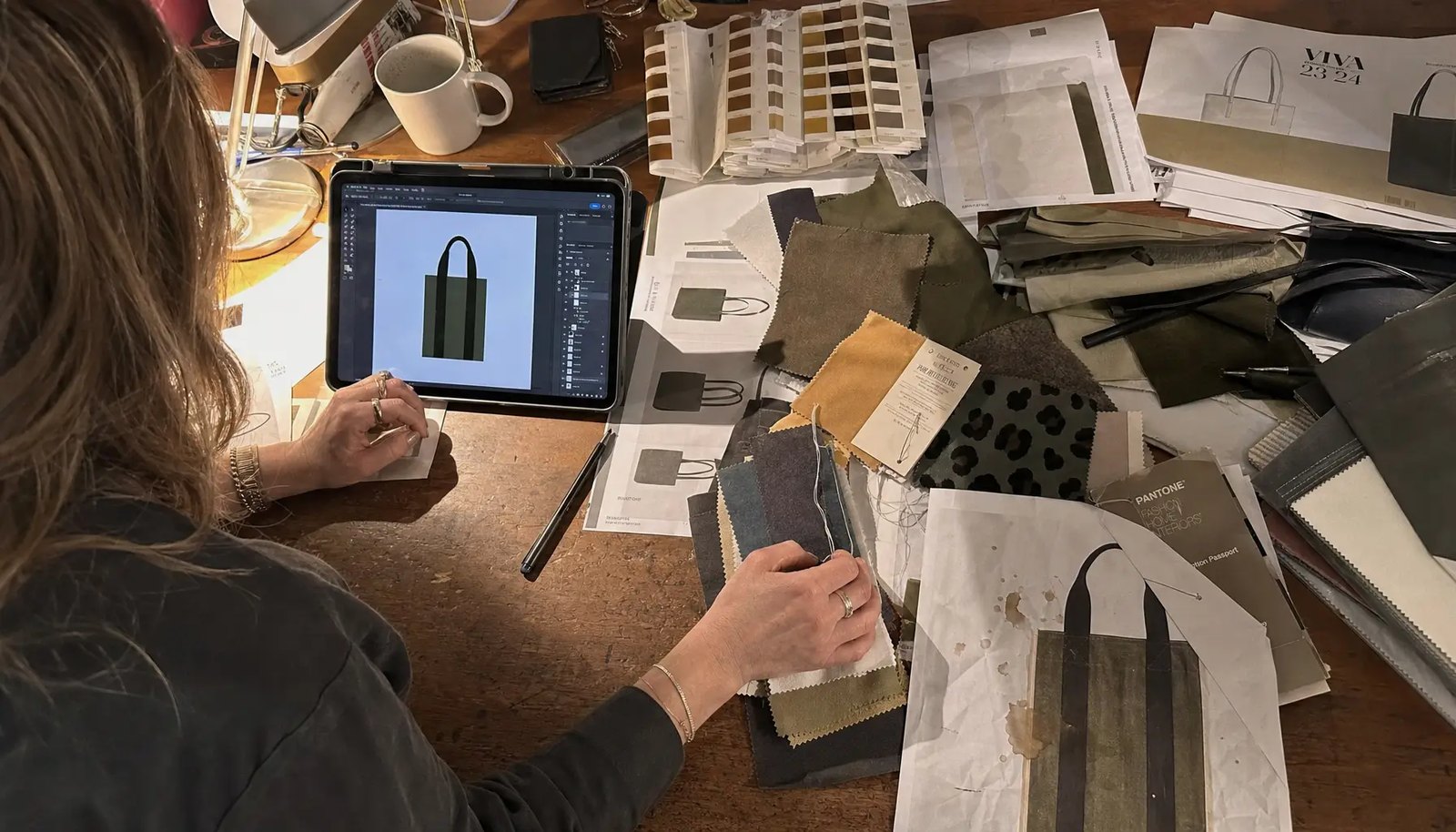
Start with the risk: a PDF is not a proof
Custom jute tote bags can look easy to buy because the product shape is familiar and the artwork usually appears simple. For a university bookstore, though, the order carries more pressure than a basic giveaway bag. The tote may be sold at checkout, packed into orientation kits, used for alumni events, or tied to licensed university marks. That means procurement is not only buying a bag. It is controlling brand presentation, retail quality, campus deadlines, warehouse handling, and repeat-use expectations.
The common mistake is approving a flat digital mockup as if jute were paper. It is not. Jute is coarse, naturally brown, and uneven from yarn to yarn. Ink does not land on it the way it lands on coated paper, white cotton canvas, or polyester. A bookstore logo that looks crisp in a PDF may look dull, broken, fuzzy, or low-contrast once it crosses raised fibers. Small trademark lines and thin serif letters are especially vulnerable.
For B2B procurement teams, the proof should function as a production standard, not a design preview. It should confirm the bag body, GSM, lamination, handle feel, sewing, print method, ink opacity, color appearance, odor, and packing method. If these details are left open, the supplier may still deliver something that resembles the mockup but fails the bookstore, licensing, or retail presentation standard.
The RFQ needs to make competing quotes comparable. One supplier may quote a 240 GSM unlaminated jute tote with narrow jute handles and a one-color print. Another may quote a 300 GSM laminated tote with cotton webbing handles, reinforced stitching, controlled packing, and a cleaner screen setup. Both may call the item a custom jute tote bag. They are not the same specification.
- Treat the proof as the production control standard, not just a visual mockup.
- Approve artwork, material, lamination, handles, sewing, and packing as separate checkpoints.
- Use a physical sample to control color appearance, print edge, stitch quality, odor, and carton effects.
- Do not approve licensed marks, mascot details, or trademark lines until readability is proven on actual jute.
- Require written approval before any change to GSM, lamination, handle material, ink system, print method, or packing.
Define the bookstore use before quoting
A tote for a university bookstore can serve very different jobs. A paid retail SKU near checkout needs clean presentation and a print that looks credible under store lighting. An orientation bag may prioritize count accuracy, schedule reliability, and practical unit cost. An alumni or donor gift often needs better finishing, hangtags, cleaner packing, and tighter brand review. A tote expected to carry course materials should be specified more conservatively than a light event giveaway.
This use case should appear in the RFQ before the factory recommends materials. If it does not, many suppliers will default to a lower-cost promotional construction. That may be fine for a one-day campus event, but it can feel wrong for a reusable bookstore item that must hold apparel, books, drinkware, notebooks, and gift bundles. Procurement should describe the intended contents instead of relying on broad words such as strong or premium.
Use also changes proofing standards. A free event bag may tolerate a simpler print and looser presentation. A paid bookstore tote will be judged by students, parents, alumni, retail staff, and licensing teams. If the artwork includes official marks, procurement should confirm whether the approval standard is for merchandise, event packaging, internal distribution, or a sponsor program. Those categories can carry different expectations for logo lockup, color, wording, and placement.
The best RFQs collect input early. Merchandising may care about how the tote stands, hangs, photographs, or fits on a shelf. Warehouse teams may care about carton quantity, carton weight, and SKU separation. Licensing may care about exact artwork use. Event owners may care most about delivery date and distribution speed. Pull those requirements together before sampling, not after the first proof arrives.
- Paid retail tote: prioritize print quality, structure, handle comfort, shelf shape, and repeat-use perception.
- Orientation kit: prioritize carton counts, distribution efficiency, acceptable strength, and on-time delivery.
- Alumni or donor gift: prioritize finishing, brand accuracy, hangtag presentation, and cleaner packing.
- Textbook or course-material tote: prioritize higher GSM, reinforced cotton handles, and conservative load assumptions.
- Department or event tote: prioritize split-design MOQ, carton marking, and delivery against a fixed campus date.
Specify GSM, lamination, weave, and finished size
Jute GSM drives cost, print stability, body feel, and perceived retail value. For many university bookstore totes, 260-320 GSM laminated jute is a practical range. A 240-260 GSM bag can work for lighter giveaway use, but it may feel thinner, wrinkle faster, shed more fiber, and give the print less support. Heavier constructions above 320 GSM can improve structure and hand feel, yet they may also raise material cost, sewing difficulty, carton weight, and freight cost.
Do not stop at the target GSM. Ask for the tolerance and clarify whether the figure is measured before or after lamination if that affects quote comparison. A quote that says 300 GSM with a defined acceptable range is more useful than a quote that says thick jute. The pre-production sample should use the same fabric quality planned for bulk. A good-looking sample made from a heavier leftover roll does not protect a buyer if bulk production switches to lighter jute.
Inside lamination is common for bookstore jute totes because it reduces shedding, stabilizes the panels, and helps the bag keep a cleaner shape. Still, lamination must be approved physically. Poor lamination can smell strong, feel too stiff, bubble, peel near folds, or crack when cartons are compressed. Avoid generic claims such as waterproof unless the actual construction and testing support them. Lamination may improve light handling resistance, but it does not automatically turn a jute tote into a waterproof product.
Finished dimensions matter as much as material. Common bookstore tote sizes include formats around 35 x 40 cm or 38 x 42 cm, with gusset depth specified separately. The quote should state finished size after sewing, not cutting size. Gusset depth affects capacity, shelf shape, carton volume, and logo behavior when the bag is filled. Before artwork is finalized, measure the printable flat panel so the mark stays away from side seams, bottom folds, and handle reinforcement.
- Ask for target GSM and acceptable range, not only the phrase heavy jute.
- Clarify whether GSM is measured before or after lamination when comparing suppliers.
- Specify finished width, height, gusset depth, seam allowance, and printable panel size.
- Approve lamination for odor, stiffness, peel resistance, crease behavior, and surface appearance.
- Keep bulk-equivalent fabric swatches with the approved sample record.
Choose the print method around the artwork
Screen printing is often the strongest starting point for bookstore wordmarks, simple mascots, bold department names, and one- to three-color event graphics. It can be efficient for repeat orders and can deliver good opacity when the ink system is selected for natural jute. Its weakness is detail. Fine serif type, thin outlines, small founding dates, reversed lines, sponsor logos, and registration symbols may fill in, break apart, or lose edge sharpness on the coarse surface.
Heat transfer and digital transfer can handle more colors, gradients, and fine mascot detail. They also create a different visual result. The decoration usually sits more visibly on the jute surface and may have a smoother patch edge, higher gloss, or firmer hand feel than direct print. That may be acceptable for athletics or alumni art, but it should never be assumed from a screen image. The physical proof needs to show the real edge, gloss, color, fold behavior, and feel.
Labels and patches can solve artwork problems when direct printing is too risky. Woven labels, cotton patches, leather-look patches, and sewn badges reduce some ink-edge issues and can support a more premium look. They also introduce their own controls: component size, base material, edge finish, stitch color, placement tolerance, and licensing approval. If a patch carries an official mark, it deserves the same review discipline as a direct print.
The factory should flag unsafe artwork before screens, transfers, or labels are produced. At the same time, brand responsibility stays with the buyer. University artwork cannot usually be simplified casually by a supplier. If the art is too detailed for jute, the better choices are to enlarge the mark, remove tiny elements, use a transfer, switch to a patch, or approve a separate simplified version through the proper campus process.
- Use screen print for bold solid marks, 1-3 color logos, bookstore names, and repeat SKUs.
- Use transfer methods for gradients, detailed mascots, multicolor art, and sponsor-heavy designs after sample approval.
- Avoid fine reversed text, thin outlines, halftones, and tiny registration symbols unless the proof proves readability.
- Approve transfer gloss, edge, hand feel, and fold behavior, not only color and placement.
- Write print method, color count, print size, print position, and setup charges into the quote.
Build a proof that can govern bulk production
A digital proof has a job: it checks spelling, logo scale, print location, artwork version, and basic layout. It cannot prove production quality on jute. It will not show ink absorption, fiber interference, opacity over brown yarn, lamination feel, handle comfort, sewing strength, odor, or carton compression. The physical pre-production sample is where those decisions become real.
The sample should be made from bulk-equivalent jute, final lamination, final handle material, final thread, final print method, and the intended finished dimensions. If the supplier plans to use production-size screens or production transfers, the proof should reflect that. A small lab strike-off may be helpful for color review, but it does not replace a full bag sample when placement, handle spacing, gusset behavior, and packing appearance matter.
Approve or reject the sample with measurable comments. Vague language such as make the logo cleaner in bulk is hard to enforce. Better comments are specific: increase print width to 24 cm, move logo 20 mm lower, change white ink for opacity, remove reversed text below 6 mm, shift artwork away from gusset fold, or use transfer instead of direct print. If the sample fails, require a corrected sample or written change confirmation before bulk release.
Each approved sample should be measured and recorded. Capture body width, body height, gusset depth, handle drop, handle width, handle spacing, print width, print height, distance from top opening, distance from side seam, and print angle reference. Photos help, but measurements make the proof enforceable. For multi-version orders, every artwork version needs a proof, strike-off, or documented print approval that confirms size, placement, and color appearance.
- Approve digital layout first, then approve a physical pre-production sample before bulk production.
- Require final material, lamination, print method, handle, thread, sewing, and packing approach in the sample.
- Measure print position from fixed edges and record print size, print angle, and allowed tolerance.
- Use the approved physical jute sample as the practical color control.
- Keep one approved sample with the buyer and one matched control sample with the factory.
- Do not release bulk until artwork, construction, handles, sewing, and packing standards are frozen.
Write tolerances and defects in plain numbers
Tolerances turn a good sample into an inspection standard. Jute is a natural material, so some fiber variation, yarn slubs, and shade irregularity should be expected. That does not excuse crooked logos, unreadable artwork, wrong handle length, weak stitching, peeling lamination, mixed cartons, mold, or strong odor. The purchase order should define the line between acceptable natural character and rejectable defect.
For many jute tote orders, finished body dimensions are controlled around plus or minus 1 cm, but the buyer should set the exact standard based on retail need. Print placement usually needs tighter control, often around plus or minus 5-10 mm depending on the bag construction, print size, and fixture control. Licensed wordmarks or premium retail SKUs may need tighter tolerances. If so, the supplier should confirm feasibility before pricing, because added control can affect setup and inspection time.
Color language should also be realistic. Pantone references are useful targets, but the approved physical sample is usually the workable standard on natural jute. Brown fiber changes white, cream, gold, navy, red, light blue, and other school colors. If the university needs strict brand approval, request a strike-off early and involve licensing or marketing before the full production sample is approved.
Defect classification keeps inspection from becoming a debate at the warehouse. Critical defects may include wrong artwork, wrong university mark, mold, strong chemical odor, unsafe contamination, mixed designs in cartons, or severe color mismatch. Major defects may include crooked print, unreadable text, broken handles, skipped stitching, peeling lamination, heavy stains, incorrect size, or wrong handle type. Minor defects may include small yarn slubs, slight shade variation, or light fiber irregularity that does not affect function or approved appearance.
- Body dimensions: define width, height, and gusset tolerances, commonly around plus or minus 1 cm unless tighter standards are required.
- Print placement: measure from top opening and side seam, with horizontal, vertical, and rotation limits stated.
- Color: use Pantone for target communication and the approved jute sample as final appearance control.
- Legibility: list the exact words, symbols, dates, mascot details, and sponsor marks that must remain readable.
- Defect levels: define critical, major, and minor defects before inspection.
- Sampling method: state buyer standard, AQL level if used, or a mutually agreed carton sampling plan.
Quote MOQ and cost drivers without guesswork
MOQ for custom jute tote bags is rarely just one total quantity. It may depend on fabric sourcing, lamination, cutting efficiency, handle material, screen setup, ink preparation, transfer sheet yield, label components, carton marks, and the number of artwork versions. A bookstore may want one common bag body with different artwork for athletics, alumni, orientation, colleges, departments, and seasonal promotions. The factory may still price or set MOQ per artwork version.
Separate quote lines make procurement decisions much cleaner. If all costs are buried in one unit price, the buyer cannot see whether a cheaper offer uses lighter GSM, narrower handles, fewer print colors, excluded setup fees, looser packing, or no inspection allowance. Separate costs also help future reorders. If one college reorders its version later, the bookstore can see which charges repeat and which screens, transfers, or artwork files may be reused.
Print color count and print position are major cost drivers. Each screen print color may require setup, registration, ink preparation, and cleanup. Two-sided printing adds handling and drying risk. Transfers follow a different cost structure based on transfer size, sheet yield, and application time. Labels and patches add component sourcing, sewing, and placement inspection. Ask for pricing by design, by print position, and by color count before final art is locked.
Landed cost matters more than factory unit price alone. Jute totes are bulky, and higher GSM or larger gussets increase carton volume and gross weight. Packing more units per carton may reduce CBM, but it can crease laminated panels, distort the logo, or cause ink transfer. A low quote can become expensive if it creates receiving errors, repacking, poor retail presentation, or expedited freight near a campus deadline.
- Request MOQ by total order quantity and by each artwork version.
- Separate base bag, setup, color count, sample, strike-off, label, hangtag, packing, carton mark, inspection, and freight costs.
- Compare GSM, lamination, size, gusset, handle width, print area, packing, and carton data before comparing unit price.
- Ask whether screens or artwork files can be reused for reorders and whether storage or remake fees apply.
- Confirm sample fees, refund rules, and whether revised samples are charged per design.
- Request carton dimensions, pieces per carton, gross weight, net weight, and CBM with the first quote.
Check handles, stitching, and real carrying use
University bookstore totes may carry more weight than ordinary event bags. A student or parent may add textbooks, notebooks, sweatshirts, drink bottles, gifts, and accessories to the same tote. A bag that looks fine when empty can feel uncomfortable or fail early when loaded. Handle construction should be specified as a functional requirement, not left as a cosmetic detail.
Cotton webbing handles are often a better bookstore choice than jute handles because they feel smoother and look cleaner. Common handle widths around 2.5-3.8 cm are practical, with wider handles improving comfort under load. Handle drop should match the use. Shorter drops work for hand carry and gift presentation. Longer drops are better for shoulder carry. The buyer should specify handle drop as a finished measurement.
Reinforcement needs to be visible in the sample and written into the purchase order. Box stitching, box-x stitching, cross stitching, or bar-tack reinforcement may be acceptable depending on construction, but the approved method should remain consistent in bulk. Stitch density, thread color, stitch placement, and handle spacing should be checked during inspection. Loose thread clusters, skipped stitches, broken threads, and uneven reinforcement are warning signs, not just cosmetic issues.
Avoid broad claims such as guaranteed heavy-duty performance unless testing and documentation support them. A better procurement approach is to define intended contents, ask the supplier to recommend construction, and approve the sample against that use. If textbooks or bottled products are likely, choose higher GSM, wider cotton webbing, reinforced stitching, and a conservative handle specification.
- Specify handle material, width, drop, color, attachment position, and reinforcement method.
- Use wider cotton webbing when comfort matters for books, apparel bundles, or campus carry.
- Check handle symmetry and distance from the print area so the logo is not pulled out of shape.
- Inspect skipped stitches, broken threads, loose clusters, uneven bartacks, and weak reinforcement.
- Confirm thread color and stitch method match the approved sample.
- Base carrying expectations on intended contents and sample construction, not generic promotional assumptions.
Control packing before it damages good bags
Jute totes can be damaged after they are sewn and printed if packing is treated as an afterthought. Fresh ink, coarse fiber, lamination, and carton pressure can cause print transfer, permanent creases, odor concentration, surface abrasion, or distorted panels. Flat packing is efficient, but cartons should not be so tight that the front logo is sharply folded. For a paid bookstore SKU, a creased print panel can reduce retail value before the tote reaches the sales floor.
Review packing during sample approval or with a separate packing sample. If the design uses heavy ink, glossy transfer, or large print coverage, the supplier may need curing time, tissue separation, paper interleaving, or print-facing rules. If jute or lamination odor is noticeable, bags may need airing before final sealing. Jute can absorb humidity, so dry cartons, sensible storage, and moisture awareness matter during transit and warehousing.
Carton marking is critical when one purchase order includes multiple campus designs. Receiving teams should not need to open every carton to identify athletics, alumni, orientation, department, sponsor, or bookstore versions. Carton marks should include purchase order, SKU or item code, artwork version, quantity, carton sequence, destination, and any receiving instruction. If cartons contain mixed inner bundles, the bundles should be clearly labeled.
Carton weight should be realistic for bookstore receiving. A carton that is too heavy slows unloading during semester rush. A carton that is too loose allows shifting and crushing. Ask for pieces per carton, carton dimensions, gross weight, net weight, and estimated CBM early enough to compare freight, storage, and campus delivery requirements.
- Confirm pieces per carton, carton size, gross weight, net weight, CBM, carton strength, and SKU sequence before packing.
- Avoid sealing totes while ink, lamination, or jute odor is still strong.
- Use separation or facing rules when print transfer, gloss marking, or abrasion is a risk.
- Mark cartons by PO, SKU, artwork version, quantity, destination, and carton number.
- Keep different campus designs separated by carton or clearly marked inner bundle.
- Inspect cartons for moisture, crushing, incorrect marks, mixed designs, and excessive compression before shipment release.
Plan lead time around fixed campus dates
University bookstore orders are often tied to dates that do not move: semester opening, orientation week, homecoming, graduation, admitted-student events, alumni weekends, or licensed merchandise launches. If the shipment misses the window, the order can lose much of its value even if the product eventually arrives. The timeline should include artwork preparation, licensing review, digital proof, physical sample, revision loop, bulk material preparation, printing, curing, sewing, packing, final inspection, and freight.
Do not read factory bulk production time as total lead time. Many suppliers start the production clock only after final artwork, deposit, sample approval, packing approval, and confirmed shipping details. If licensing review takes several days or the first proof fails because of small text, weak opacity, or poor color, the schedule can compress quickly. Detailed mascots and multiple artwork versions need a correction buffer.
Internal approval can be slower than factory work. Marketing may review color and brand rules. Athletics may control mascot use. Licensing may review official marks. The bookstore team may focus on retail presentation and launch timing. Procurement should assign one owner to consolidate feedback and send the supplier one clear approval or rejection. Scattered comments from multiple departments create delays and inconsistent samples.
Final inspection should happen before shipment release when the date matters. The inspection should compare bulk goods with the approved sample, then check print placement, artwork version separation, stitching, lamination, odor, packing, carton marks, and carton counts. Finding a major defect at the campus warehouse is far more disruptive than catching it before the shipment leaves the factory.
- Separate artwork proof time, sample time, revision time, bulk production time, inspection time, and freight time.
- Add buffer when artwork includes detailed mascots, strict color rules, small text, or multiple approval departments.
- Freeze artwork before screen making or transfer production to avoid restart cost and schedule loss.
- Assign one buyer-side owner for bookstore, marketing, athletics, licensing, and procurement comments.
- Schedule inspection before balance payment or shipment release for launch-sensitive orders.
- Confirm factory holidays, carrier cutoffs, and campus receiving blackout dates before approving the schedule.
Specification comparison for buyers
| Spec decision | Procurement recommendation | When it fits | Quote and QC risk to check |
|---|---|---|---|
| Jute body weight | Use 260-320 GSM laminated jute for most paid bookstore totes; reserve 240-260 GSM for lighter giveaway programs. | Checkout retail totes, orientation kits, alumni packs, apparel bundles, textbook-adjacent merchandise, and reusable campus bags. | The quote should state target GSM and tolerance. A vague phrase like thick jute can hide lower weight, more wrinkling, extra shedding, and weaker print support. |
| Lamination | Approve inside lamination by physical sample, commonly clear LDPE or similar backing, with odor, stiffness, and peel resistance checked. | Bookstore totes that need reduced fiber shedding, cleaner panels, better shelf shape, and light handling resistance. | Too much lamination can create shine, odor, fold cracking, bubbling, or stiffness. No lamination can make ink absorb unevenly and the bag feel rougher. |
| Bag size | Quote finished dimensions, such as 35 x 40 cm or 38 x 42 cm, with gusset depth listed as a separate measurement. | Retail carry bags, textbook totes, apparel bundles, graduation merchandise, donor kits, and campus event packs. | Cutting size is not finished size. Gusset variation changes capacity, logo position, carton count, shelf presentation, and freight volume. |
| Print method | Use screen print for bold 1-3 color marks; use heat or digital transfer for detailed multicolor artwork only after physical approval. | University wordmarks, bookstore logos, simple mascots, department names, sponsor panels, and event artwork. | Fine serif type, thin rules, gradients, halftones, metallic inks, reversed text, and small registration symbols are high risk on coarse jute. |
| Artwork size | Keep the main mark inside the flat printable panel, often 20-28 cm wide depending on bag size, seam layout, and handle placement. | Bookstore totes where the logo must read clearly from shelf, checkout, event, and campus walking distance. | Artwork that crosses gussets, bottom folds, side seams, or handle stitch zones may skew, crack, disappear into folds, or look off-center when filled. |
| Color control | Use Pantone references for communication, then approve a physical jute sample as the practical production control. | Licensed university marks where school colors require review before bulk production. | Natural brown fiber shifts color perception. Exact Pantone matching is less predictable than on coated paper, white cotton canvas, or polyester. |
| Handles | Specify cotton webbing handles, typically 2.5-3.8 cm wide, with box-x, cross, or reinforced stitching approved by sample. | Textbook carry, reusable retail totes, alumni gifts, orientation packs, and premium bookstore SKUs. | Narrow or rough handles reduce comfort. Weak stitching, uneven handle drop, or poor reinforcement can trigger functional rejection. |
| MOQ structure | Ask for MOQ by total order, artwork version, print color count, print position, and component change. | Orders split across athletics, alumni, orientation, colleges, departments, bookstore campaigns, and sponsor programs. | Each version may need separate screens, strike-offs, setup time, carton marks, inspection sorting, and reorder planning. |
| Packing | Flat pack in export cartons without over-compression; add print-facing protection if ink transfer, gloss marking, or abrasion is likely. | Warehouse storage before semester opening, campus receiving, retail backroom stock, and multi-SKU allocation. | Tight cartons can crease laminated panels, trap odor, transfer ink, distort the front logo, and make receiving counts harder to verify. |
Buyer checklist before sampling
- Define the commercial use: paid retail tote, orientation kit, alumni gift, apparel bundle, graduation item, donor pack, event tote, reusable bookstore SKU, or department campaign item.
- State finished width, height, gusset depth, handle drop, handle width, target contents, expected carry style, display method, and whether the tote must stand upright, hang, or ship flat.
- Specify jute GSM target and acceptable range, lamination requirement, printable panel size, inside finish, shedding expectation, and whether light moisture handling is relevant.
- Provide editable vector artwork with Pantone references, logo lockup rules, licensing restrictions, minimum clear space, final print size, approved print position, and artwork version names.
- Flag risky artwork before sampling: small serif type, reversed-out text, thin outlines, mascot detail, gradients, halftones, founding dates, sponsor marks, metallic ink, and registration symbols.
- Choose decoration by artwork need: screen print for bold solids, heat or digital transfer for fine multicolor art, woven label or patch for premium branding with less direct-ink risk.
- Require a physical pre-production sample made from bulk-equivalent fabric, final lamination, final handle, final thread, final ink or transfer, production-size screen or transfer, and planned packing method.
- Set written tolerances for finished dimensions, gusset depth, handle drop, handle spacing, print placement, print angle, print size, color appearance, stitching, odor, lamination, stains, and carton quantity.
- Request separate quote lines for base bag, print setup, color count, extra print positions, sample fee, strike-off fee, labels, hangtags, individual bags, carton marking, inspection, and freight term.
- Confirm MOQ and price impact when one purchase order includes multiple colleges, departments, athletics, alumni, orientation, bookstore, or sponsor designs.
Factory quote questions to send
- What exact jute GSM, GSM tolerance, weave appearance, and lamination type are included in the price, and can you provide swatches before sample approval?
- Are quoted dimensions finished bag dimensions after sewing, and what tolerances apply to width, height, gusset, handle drop, and handle spacing?
- Is the decoration price based on screen print, heat transfer, digital transfer, woven label, cotton patch, leather-look patch, or another method, and how many colors and positions are included?
- What maximum print area do you recommend for this bag size before the artwork risks crossing seams, gussets, bottom folds, or handle stitch zones?
- Which artwork elements are unsafe on natural jute: fine serif type, thin outlines, reversed text, gradients, halftones, mascot detail, small sponsor logos, metallic ink, or registration symbols?
- Will the pre-production sample use the same jute roll quality, lamination, handle material, thread, ink system, screen or transfer, sewing method, and packing method planned for bulk production?
- What is the MOQ per artwork version, per print color count, and per component change if the order is split across athletics, alumni, orientation, colleges, departments, or sponsor programs?
- What are your normal tolerances for print placement, print angle, print size, color appearance against the approved sample, ink opacity, handle length, stitch density, and carton quantity?
- Can the quotation separate base bag cost, setup charges, sample fees, strike-offs, extra artwork versions, labels, hangtags, individual polybags or paper wraps, carton marks, inspection, and freight?
- How many calendar days are needed for artwork review, digital proof, physical sample, revised sample if needed, material preparation, printing, curing, sewing, packing, final inspection, and shipment handoff?
Quality-control points to confirm
- Finished body width and height should be measured flat against the approved tolerance, commonly plus or minus 1 cm for many jute totes unless the purchase order requires a tighter retail standard.
- Gusset depth should be measured because shallow, uneven, or twisted gussets change usable capacity, shelf shape, carton quantity, and how the front logo sits when the bag is filled.
- Print placement should be measured from fixed reference points such as the top opening and side seam; do not accept visual alignment only, especially on wordmarks.
- Print angle should be checked against the top edge or side seam because even small rotation is visible on university names, rectangular logos, and bookstore lockups.
- Print size should be measured on sampled units to confirm the supplier did not scale the artwork to avoid registration, seam, or screen issues without approval.
- Color should be compared against the approved physical jute sample under consistent light, with Pantone used as the target reference rather than the only acceptance standard.
- Ink opacity should be checked for white, cream, gold, yellow, light blue, navy, and other school colors that can shift or appear dull over natural brown jute.
- Ink edges must remain legible around university names, founding dates, mascot outlines, bookstore location names, sponsor marks, licensing lines, and registration symbols approved in the proof.
- Transfers should be checked for edge lifting, gloss level, hand feel, cracking on folds, heat marks, and whether the transfer patch appearance matches the approved sample.
- Handle attachment should match the approved reinforcement method, with no skipped stitches, loose thread clusters, broken threads, weak bar-tack substitutes, or uneven handle spacing.