Why MOQ Negotiation Is Different for Hotel Retail Jute Totes
Hotel retail orders rarely behave like a single plain wholesale tote order. A buyer may need one base jute tote bag, but the commercial plan often includes several property names, spa versions, beach club versions, seasonal artwork, and gift shop replenishment quantities. The factory sees this as more than one production variable. MOQ negotiation works only when the buyer separates the base bag from the decoration and packing requirements.
For custom jute tote bags, the most negotiable part is usually the final artwork split, not the entire physical bag specification. Cutting, lamination, handle preparation, and sewing are more efficient when all versions share the same size, jute weight, handle, and construction. Printing becomes the flexible layer if the artwork is simple and the print setup cost is understood. A strong RFQ should therefore show the total program volume and then break down the SKU split.
- Use one base bag size for the first order if the hotel retail program is new.
- Group resort names or locations under the same jute color, handle color, and carton packing plan.
- Negotiate smaller per-artwork quantities only after the factory confirms the total base-bag quantity is workable.
- Avoid requesting five sizes, six prints, and three handle styles in one low-MOQ launch unless you accept surcharges.
Define the Base Bag Before Discussing MOQ
MOQ discussions become confusing when the specification is still open. A supplier may say the MOQ is 500 pieces, but that may mean 500 pieces of one size, one fabric lot, one handle type, one print color, and one packing method. If the buyer later adds a gusset, wider handle, inside lamination, barcode label, and three artwork versions, the original MOQ may no longer apply.
For hotel retail, a practical starting specification is a natural jute tote around 13-15 oz, roughly 360-420 GSM, with an inside clear lamination and cotton webbing handles. A common retail size might be around 35 x 40 x 15 cm, but the correct size depends on what the shop sells. A spa retail tote carrying robes needs a different gusset from a small welcome gift bag carrying soap, slippers, and a postcard.
- State finished dimensions as width x height x gusset, with handle drop measured from bag top to handle peak.
- Specify whether the bag must stand upright on a retail shelf when empty or lightly filled.
- Define jute as natural, bleached, dyed, or laminated; these choices affect MOQ and lead time.
- Include handle width, material, color, and stitching reinforcement in the same RFQ line.
Fabric Weight, Lamination, and Shelf Presentation
Jute is not a smooth engineered fabric. Natural slubs, color variation, and fiber smell are normal within limits, but low-grade material can look uneven under boutique lighting. For hotel retail, the bag is part of the property experience, not only a carrying item. A tote that folds badly, smells damp, or sheds fibers near apparel can create guest complaints even if the unit price looks attractive.
Fabric weight is one of the first cost drivers. Around 300 GSM may work for very light promotional use, but it usually lacks the body expected for retail display. Around 360-420 GSM gives better structure without making the bag too heavy. Heavier jute can look premium but increases cutting effort, sewing needle wear, carton gross weight, and ocean or air freight cost. Lamination adds structure and helps control dust, but poor lamination or rushed packing can trap odor.
- Use 300-340 GSM only for light gift packaging or short-use promotional totes.
- Use 360-420 GSM for most hotel retail totes where shelf shape and durability matter.
- Use heavier material only when the brand position justifies the higher freight and handling cost.
- Request a swatch photo plus physical swatch approval for color, smell, lamination feel, and stiffness.
Print Method Choices That Affect MOQ
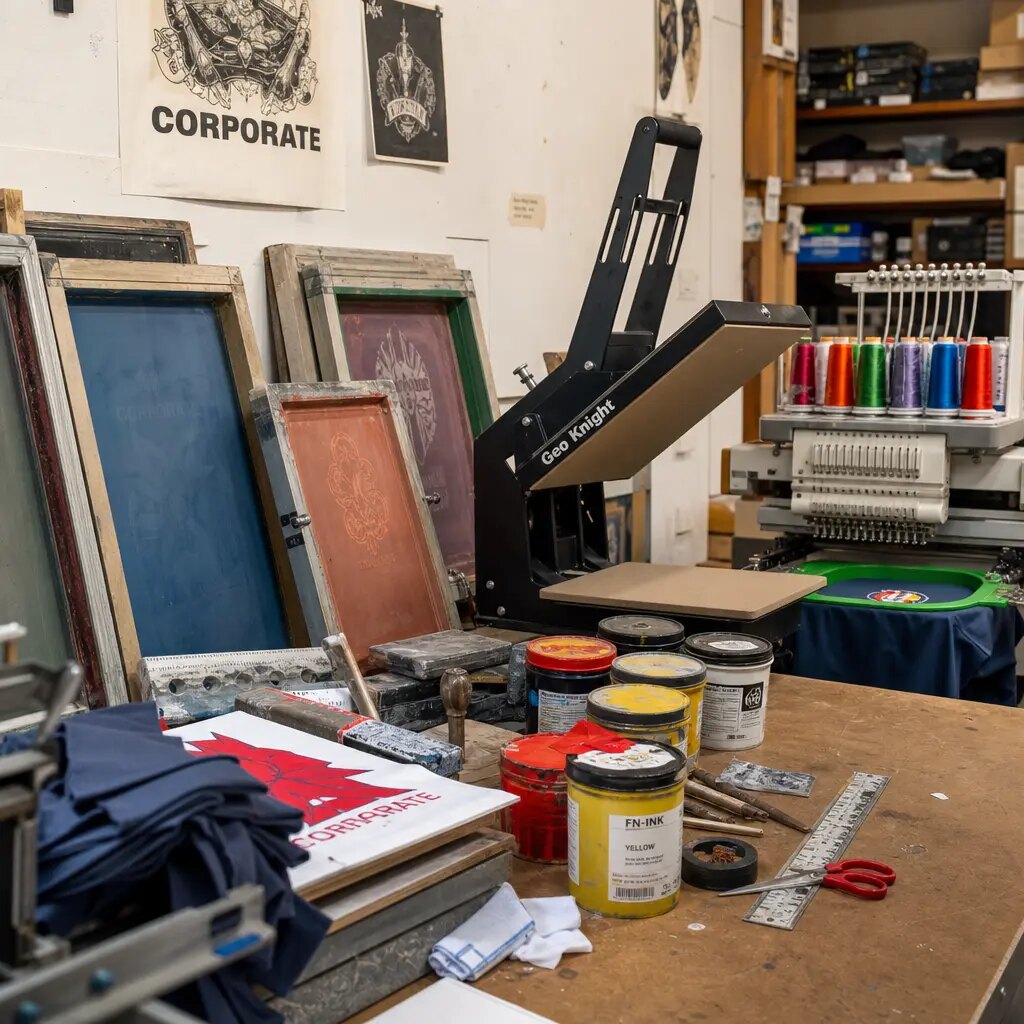
Screen printing is usually the most stable method for simple hotel logos, one-color destination graphics, and solid resort branding. It handles natural jute texture better than many buyers expect, but it still has limits. Very fine serif type, small registration marks, thin line icons, and detailed gradients can break up on the coarse surface. The factory should review the artwork before promising a low MOQ.
Heat transfer or digital transfer may be suitable for multi-color artwork, photographic graphics, or short runs with many versions. The tradeoff is hand feel and appearance. A glossy transfer patch on natural jute can look less integrated than direct ink. Embroidery on jute is possible for certain designs, but it adds cost, production time, and may require backing or tighter control to avoid puckering. For MOQ negotiation, fewer print colors and shared print size are easier to combine.
- For one to three solid colors, request screen print with Pantone or closest ink reference.
- For detailed graphics, request a transfer sample before approving the full order.
- Keep minimum text height conservative; tiny hotel address lines often print poorly on jute.
- Separate artwork setup charges from unit price so low-quantity versions are easier to compare.
How Factories Think About MOQ
A factory MOQ is not only a sales rule. It reflects material purchasing, cutting layout, print setup, sewing line efficiency, trimming, packing, and inspection time. If a buyer asks for 200 pieces with a unique dyed jute, custom handle, four-color print, individual retail packaging, and urgent delivery, the factory may either reject the order or hide the inefficiency in a high unit price. Neither result helps a procurement team compare offers accurately.
The strongest negotiation position is a clear volume ladder. Instead of asking only for the lowest MOQ, request prices at several quantities and ask which specification changes reduce the MOQ. For example, using stock natural jute instead of custom dyed jute, keeping one handle color, using one carton label format, and combining artwork versions under one base bag run can move the conversation from refusal to a workable surcharge.
- Base material MOQ is driven by jute roll availability, lamination batch, and cutting efficiency.
- Print MOQ is driven by screen setup, color changes, drying time, and artwork changeovers.
- Packing MOQ is affected by custom hangtags, barcode stickers, inserts, and individual polybags.
- Lower MOQ usually means higher unit price, setup charge, longer handling time, or reduced customization.
A Practical MOQ Negotiation Structure
For hotel retail, treat MOQ negotiation as a package of tradeoffs. Start with the total annual or seasonal need, then identify the confirmed first order and possible reorders. A factory may support a lower first order if the base design is repeatable and the buyer accepts a clear price break for reorders. This is more credible than requesting a very low trial order while also demanding full custom development.
One workable structure is to lock the base bag at a higher combined quantity, then split printed versions into smaller batches. For example, the buyer might order 1200 pieces total of one jute tote construction, split across three hotel properties at 400 pieces each. The factory still cuts and sews 1200 similar bags, then changes screens or print setups for each logo. This is often more feasible than three unrelated 400-piece orders.
- Offer one shared size, shared fabric weight, shared handle, and shared packing method across all hotel versions.
- Negotiate per-artwork MOQ separately from total bag MOQ.
- Accept a visible setup fee for small artwork versions instead of forcing the supplier to hide it in unit price.
- Use reorder commitments carefully; only include forecast quantities that procurement can realistically place.
Quote Data Needed to Compare Offers
A low unit price without quote details is not a reliable saving. Jute tote quotes can differ because one supplier includes heavier fabric, reinforced handles, print setup, export carton packing, and sample cost, while another quotes a lighter bag with basic stitching and excludes retail labels. Procurement teams should build a quote comparison sheet that captures the physical specification and the commercial assumptions behind each price.
The most useful quote data includes fabric weight, lamination, finished size, handle specification, print method, number of colors, MOQ by version, sample cost, tooling or screen charge, packing count, carton dimensions, gross weight, lead time, payment terms, and quote validity. For hotel retail, also include retail-facing items such as hangtag, barcode, care label, country-of-origin label, and whether individual polybagging is required by the destination warehouse.
- Compare cost per approved sellable bag, not only quoted FOB unit price.
- Add carton cube to estimate freight impact before selecting heavier jute or loose packing.
- Record whether quote prices include artwork setup, sample remake, or pre-production sample cost.
- Require suppliers to state assumptions when they quote from a photo or incomplete brief.
Sample Approval Should Protect the MOQ Deal
A low MOQ is not useful if the approved sample does not represent bulk production. For custom jute tote bags, the buyer should approve an actual-material sample whenever possible. A sample made from leftover jute or substitute handle webbing may look acceptable in photos but produce disputes when bulk material arrives with different stiffness, shade, smell, or print absorption.
The pre-production sample should confirm size, gusset shape, handle drop, stitch reinforcement, print size, ink color, print position, lamination, and packing fold. If the hotel logo has small text or fine lines, the sample should include the final artwork at production size. Do not approve a clean digital artwork proof and assume it will behave the same on jute. The sample is also the right time to confirm whether the tote stands upright and whether it fits the intended retail product set.
- Measure the sample against the RFQ dimensions and record tolerance before approving.
- Load the sample with the expected hotel retail contents for at least a basic handling check.
- Photograph approved sample details: front print, side gusset, inside lamination, handle stitching, and carton fold method.
- Keep one approved sample with the buyer and one sealed reference sample with the factory.
Packing and Lead Time Risks Often Decide the Real MOQ
Packing choices can quietly change the economics of a jute tote order. Flat packing saves space, but over-compression can crease laminated jute and damage shelf presentation. Individual polybags reduce dust and simplify retail handling, but they add material, labor, and sometimes sustainability objections. Hotel retail buyers should decide whether the bag is shipped to a central warehouse, directly to properties, or to a distributor that needs barcode scanning and carton sorting.
Lead time also affects MOQ strategy. A small urgent order may be harder for a factory to fit into production than a larger order with a normal schedule. Jute material availability, lamination drying, print curing, and carton packing all need time. For first orders, allow time for artwork review, sampling, sample shipping, approval, material purchasing, bulk production, final inspection, and export booking. Compressing this schedule often increases both defect risk and freight cost.
- Use 25-50 pieces per carton for many medium-size jute totes, then verify actual carton cube.
- Set a gross weight limit per carton so warehouse teams can handle cartons safely.
- Add moisture protection, especially for sea freight or humid storage routes.
- Do not book retail launch dates based only on sewing time; include sample approval and inspection buffers.
Landed-Cost Thinking for Hotel Retail Buyers
A hotel retail tote is usually judged by margin, guest perception, and replenishment reliability. The cheapest quote can become expensive if the bag has weak handles, high defect rates, poor carton utilization, or packaging that requires relabeling after arrival. Landed-cost comparison should include unit price, setup charges, sample cost, inspection, freight, duties if applicable, warehousing, relabeling, defect allowance, and the cost of missed launch dates.
MOQ negotiation should therefore aim for the best controllable cost, not the lowest opening quantity at any quality level. If the retail program is uncertain, a slightly higher unit price for a smaller first order may be reasonable. If the design is a core hotel shop item, a higher MOQ with a stronger price break may protect margin. The right decision depends on sell-through confidence, storage space, cash flow, and whether multiple properties can share the same base bag.
- For trial launches, prioritize controlled specification and sample accuracy over aggressive price breaks.
- For repeat retail items, negotiate reorder price tiers and reserve the option to repeat the same approved construction.
- For multi-property groups, consolidate the base bag and split decoration to improve factory efficiency.
- For distributors, request carton labeling that prevents mixed-SKU receiving errors.
Specification comparison for buyers
| Spec decision | Recommended option | When it fits | Buyer risk to check |
|---|---|---|---|
| Jute body weight | 13-15 oz natural jute or about 360-420 GSM | Most hotel retail totes carrying towels, sandals, amenities, small gifts, or local products | Very light jute may collapse on shelf; very heavy jute increases carton weight and freight cost |
| Lamination | Clear inside lamination for shape and dust control | Hotel boutiques that need a cleaner interior and better standing shape on display | Low-grade lamination can crack at folds or create odor if bags are packed too soon after production |
| Handle material | Cotton webbing 2.5-3.8 cm wide, sewn with reinforced X or box stitching | Premium hotel retail where comfort and appearance matter more than lowest unit price | Thin rope or narrow webbing can fail pull tests or feel cheap when the bag carries heavier merchandise |
| Print method | Screen print for 1-3 solid colors; heat transfer only for detailed artwork | Hotel logos, resort names, simple icons, and destination graphics | Ink spread on coarse jute can blur small text; transfer films can look too promotional if the finish is too glossy |
| MOQ structure | Negotiate by shared base material and staggered artwork versions | Hotels needing several property names, room categories, or resort shop designs | Splitting colorways, sizes, and prints too far can push each version below efficient cutting and printing quantities |
| Sample approval | Pre-production sample using actual jute, handle, print, and packing | Any first order, rebrand launch, or gift shop program with retail packaging | Approving only a digital mockup leaves color, handle feel, print edge, and bag stiffness unresolved |
| Packing style | Flat packed 25-50 pcs per export carton with moisture protection | Most importers balancing carton cube, shelf readiness, and warehouse handling | Over-compressed cartons can crease laminated jute; loose packing increases freight volume |
| Inspection threshold | AQL-based final inspection plus handle pull and seam stress checks | Retail orders where visual defects and functional failures both affect guest perception | Only checking print position misses weak seams, sharp jute fibers, odor, and carton damage |
Buyer checklist before sampling
- Define the retail use: gift shop sale, welcome amenity, spa package, beach tote, conference gift, or minibar merchandise bundle.
- Specify finished size with tolerance, not only capacity: width, height, gusset depth, handle drop, and whether the bag must stand upright.
- State jute weight target in GSM or oz, plus whether lamination is required inside, outside, or not at all.
- Limit first RFQ artwork versions to the real selling plan; separate must-have SKUs from optional resort or seasonal designs.
- Confirm print method, ink color reference, printable area, minimum text size, and expected print hand feel on coarse jute.
- Request MOQ by base bag, MOQ by print version, surcharge for low quantity, and price breaks at realistic reorder quantities.
- Require actual-material pre-production sample approval before bulk cutting or bulk printing.
- Set handle strength requirements using expected load weight, not vague wording such as strong handle or premium handle.
- Define packing: units per polybag if needed, carton quantity, carton dimensions, gross weight limit, barcode or hangtag position, and moisture protection.
- Compare quotes using landed cost per sellable bag after carton cube, inspection cost, defect allowance, and rework risk are considered.
Factory quote questions to send
- What is your MOQ for the same base jute tote bag if we use multiple hotel logos or print colors?
- What fabric weight, lamination type, and handle material are included in the quoted price?
- Can you quote price breaks at 500, 1000, 2000, and 5000 pieces with the same specification?
- What surcharge applies if one artwork version is below your normal print MOQ?
- Is the sample made from stock jute or the same bulk fabric lot planned for production?
- What print method do you recommend for our artwork, and what minimum line width or text height should we follow?
- What is the estimated production lead time after sample approval and deposit, excluding international transit?
- How many pieces per export carton, what are the estimated carton dimensions, and what is the gross weight per carton?
- What inspection standard do you support for visual defects, size tolerance, seam strength, handle pull, and print registration?
- Which quote items are excluded, such as hangtags, barcodes, individual polybags, testing, inspection, palletizing, or inland delivery?
Quality-control points to confirm
- Finished bag size tolerance should normally stay within plus or minus 0.5-1.0 cm for width and height, depending on size and construction.
- Handle drop must match the approved sample because a 2-3 cm difference changes shoulder comfort and retail presentation.
- Jute GSM and lamination feel should be compared against approved material swatches, not judged only by photos.
- Print position tolerance should be agreed before production, especially for centered hotel logos and front-panel layouts.
- Small text, thin lines, and QR codes need special approval because coarse jute does not print like cotton canvas or paper.
- Seams should be checked for skipped stitches, loose threads, uneven backstitching, and weak handle attachment points.
- A simple load test should reflect the actual retail use, such as 5-8 kg for amenity or beach retail bags if that is the intended use.
- Cartons should be checked for moisture protection, compression marks, mixed designs, wrong labels, and count accuracy.