Why material choice matters more than the artwork
For subscription boxes, the tote is not just a bag. It becomes part of the unboxing experience, the reuse item, and often the first physical proof that the brand paid attention to quality. With jute, the wrong construction shows up fast: crushed corners, sloppy print edges, loose fibers, or handles that feel weak when the end customer loads the bag with bottles, textiles, or gift sets.
The best material choice is not the cheapest jute you can buy. It is the build that survives fulfillment, looks consistent on shelf, and stays within freight and retail cost targets. That means the sourcing decision should start with bag use case, pack-out weight, and where the bag sits in the subscription box rather than with logo artwork.
- Light insert carrier: simpler jute or jute-blend construction may be enough.
- Premium retail insert: structured body, stronger handles, and cleaner print surface matter more.
- Heavy or multi-item subscription box: check handle reinforcement and carton pack efficiency before comparing unit price.
Start with the right jute construction
Most buyer problems on jute tote programs come from confusing appearance with performance. Natural jute has a distinctive coarse look, but the actual sourcing choice is usually between uncoated jute, laminated jute, and jute-cotton blends. Uncoated material is lighter and simpler, but it sheds more and can look less polished. Laminated builds improve shape and reduce fiber shedding, while blended constructions can feel softer and print more cleanly depending on the surface finish.
For subscription boxes, laminated jute is often the safer choice when the bag is part of a premium experience or needs to hold its shape after fulfillment. If the bag is only a low-weight reusable insert, uncoated jute may be sufficient and easier on cost. The mistake to avoid is selecting a bag by photo only. Two bags can look similar in a catalogue and behave very differently in packing, printing, and retail use.
- Choose uncoated jute only when low weight, lower cost, and a natural rustic look are the priority.
- Choose laminated jute when you need shape, cleaner inner surfaces, or better resistance to fiber shedding.
- Choose a blend if the print area must be more stable than pure jute but the brand still wants a natural texture.
Fabric weight and GSM logic buyers should use
Jute suppliers do not always quote fabric in the same way cotton mills do. Some quote by ounce weight, some use GSM-style language, and some describe the weave as light, medium, or heavy. That creates quoting confusion, especially when different suppliers are comparing a similar-looking bag. For procurement teams, the useful question is not the label itself but how much material is actually going into the bag body and handles.
As a practical buying range, many standard tote programs sit around a medium-to-heavy hand feel that corresponds roughly to 14–16 oz/yd² equivalent for the body, with heavier builds used when the bag needs more structure. If a supplier cannot explain how they measure fabric weight or provide a finished sample matched to a measured spec, treat the quote as incomplete. The true cost difference is often hidden in material density, not the headline unit price.
- Ask for the finished bag sample and the measurement method, not just the fabric description.
- Use the same weight target across all suppliers so the quote comparison is fair.
- If the bag needs to stand upright in a retail display, favor heavier construction or lamination.
What actually drives price in a jute tote quote
For subscription box orders, the unit price is usually driven by more than the body material. The main cost variables are fabric weight, lamination, handle type, print color count, sewing complexity, carton packing, and order quantity. A supplier can quote a low number on the bag and recover margin through print setup, special folding, insert cards, or custom pack-out labor. This is why apples-to-apples quote structure matters.
The cleanest quote comparison breaks the bag into line items. Separate the body material, handles, print, lining, packaging, and freight assumptions. If one supplier includes all packing in the unit price and another does not, the cheaper quote can become the more expensive landed cost. Buyers who source for subscription boxes should request the carton dimensions and pack quantity early, because freight per bag can move more than the sewing cost on small and medium runs.
- Body material: uncoated, laminated, or blended construction.
- Printing: number of colors, print area, and whether setup is included.
- Packing: flat pack, folded insert, individual polybag, or moisture-protected carton.
- Order volume: MOQ breaks at specific quantity tiers often change unit price materially.
Comparison of sourcing routes for subscription box programs
The best supplier route depends on how much control the buyer needs. A direct factory is usually the strongest option when the bag needs repeatability, measured samples, and controlled packing for ongoing subscription replenishment. A trading company or multi-category vendor can help if the order is small, the buyer wants one-stop consolidation, or the brand is still validating demand. The risk is that some intermediaries cannot clearly tell you which process is done in-house and which is outsourced.
For procurement teams, the right comparison is not simply factory versus trader. It is whether the supplier can prove where the bag is sewn, who approves the print strike-off, and who signs off on pre-shipment inspection. If those steps are not clearly owned, the buyer carries the production risk even when the quote looks convenient.
- Direct factory: better control on spec, repeat orders, and QC traceability.
- Trading route: easier for small trial orders or mixed-category sourcing.
- Hybrid route: useful when you need consolidated shipment but still want a factory sample approval process.
How to read MOQ logic without getting trapped by the first quote
MOQ on jute totes is not just a factory policy; it is tied to material yield, print setup, handle cutting, and carton packing labor. A quote for 1,000 pieces may be based on the same machine setup as 3,000 pieces, which is why the per-unit cost can fall sharply at the next tier. Buyers should understand whether MOQ is set by size, color, print design, or fabric source. A bag in one size may be easy to order at 1,000 pieces while a different handle or lining option pushes the practical minimum much higher.
When the bag is for subscription boxes, small trial quantities are useful, but they often carry disproportionate setup cost. That does not mean the supplier is overpriced. It means the run is absorbing the setup burden across fewer units. Smart buyers compare the sample or pilot order cost separately from the full production tier, then calculate the landed cost at the forecast quantity rather than using the pilot invoice as the benchmark.
- Separate MOQ by body size, print color count, and packaging style.
- Compare pilot order cost against the forecast replenishment quantity.
- If the supplier refuses to break down MOQ logic, expect more quoting surprises later.
Print methods that work on jute without creating reject risk
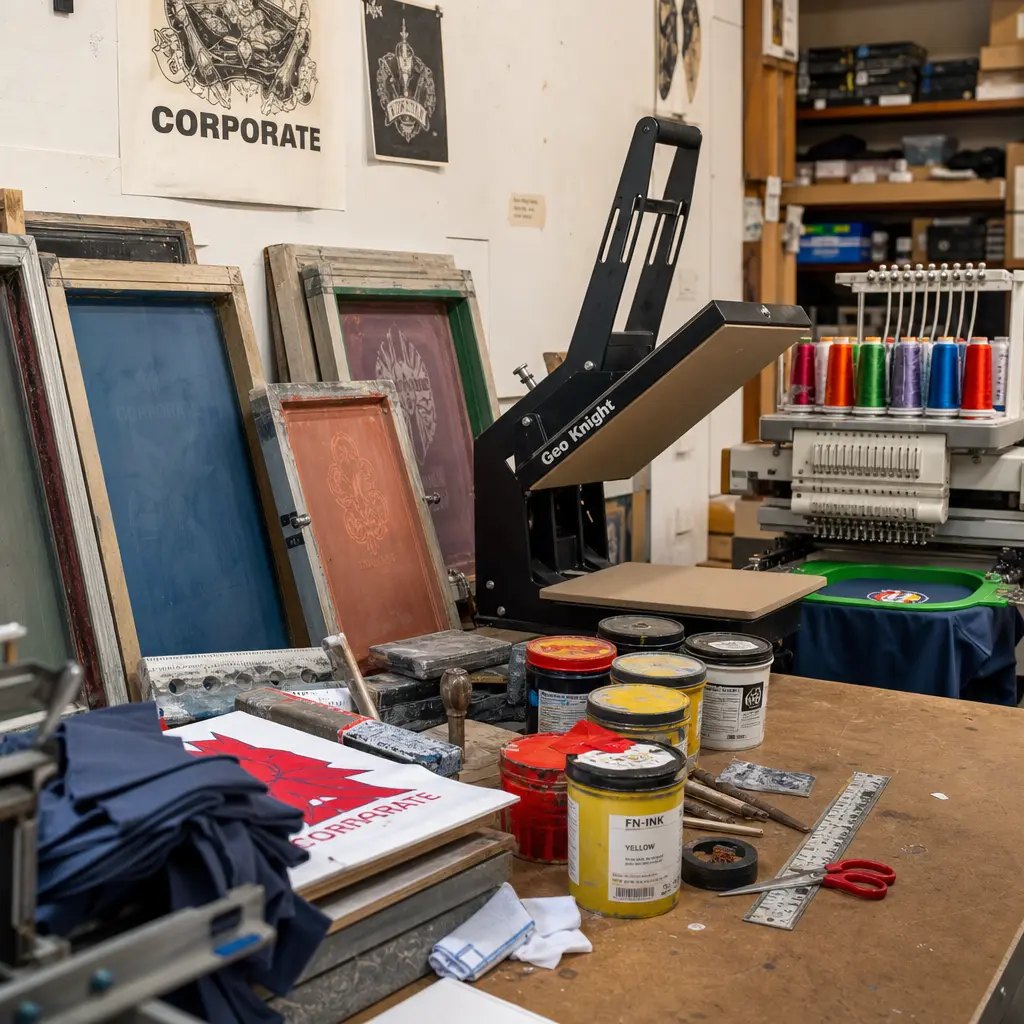
Jute is a textured, uneven surface, so not every print method behaves the same. For most tote programs, screen printing remains the most predictable route for simple logos and one- to three-color graphics. It delivers acceptable durability when the artwork is designed for the fabric surface and the supplier controls ink coverage carefully. Heat transfer can be useful for detailed artwork, but on coarse jute it may show edge issues or adhesion weakness if the surface is too rough.
Embroidery can look premium, but it adds cost, weight, and production complexity. It also raises the chance of puckering on a coarse woven body. For subscription boxes, the common mistake is approving artwork that was designed for smooth cotton or coated polyester and then expecting the same result on jute. The safer approach is to simplify line thickness, reduce tiny negative spaces, and confirm placement on a finished sample under normal lighting.
- Best default: screen print for logos with limited color count.
- Use transfer only when the design needs fine detail and the supplier proves adhesion on jute.
- Use embroidery selectively on premium gift bags where cost and lead time are acceptable.
Sample approval should test the full bag, not just the fabric
A useful sample is a pre-production bag made with the actual planned fabric, handles, print, and packing method. Swatches alone are not enough because jute behavior changes after cutting, sewing, and folding. The buyer should receive a sample that shows stitch quality, handle position, print centering, and final dimensions after pressing or folding. If the bag will be packed inside a subscription box, the folded profile should also be reviewed so the insert does not distort the box presentation.
Sample approval is where many errors can still be corrected cheaply. Once bulk production starts, changing handle width, print position, or lining dimensions can create scrap and delay shipment. A practical approval process uses one reference sample for construction and one sealed pre-shipment reference for color and print. The sample should be measured, not judged by eye alone.
- Measure body width, gusset depth, and handle drop on the approved sample.
- Check logo placement against a template or ruler, not just visual centering.
- Confirm that the folded sample fits the subscription box and does not crush the contents.
QC thresholds that prevent the most common jute tote disputes
The highest-risk defects on jute totes are not always dramatic failures. Most disputes come from moderate problems repeated across a run: uneven stitching, inconsistent dimensions, weak handle reinforcement, print blur at the edge of textured fiber, and color variation that is too broad for a brand launch. Because jute is a natural material, some variation is normal, but the buyer should define the acceptable range before production begins.
For commercial buying, QC should focus on measurable outcomes. Set tolerances for dimensions, stitch quality, and print placement. Decide in advance whether minor fiber protrusion is acceptable and whether the bag can ship with a limited number of visual imperfections per carton. If the supplier has no written inspection standard, the buyer may be left arguing over what is “normal” after goods are packed.
- Dimension tolerance: set a realistic range for natural material shrink and sewing variance.
- Stitching: no skipped stitches, no loose thread tails on carry points, no visible seam opening.
- Print: no major off-register, no ink flaking, and no unreadable logo edge.
- Packing: confirm carton count and random carton sampling before seal and dispatch.
Packing and freight choices that affect landed cost
Jute totes are bulky, and packing decisions can change landed cost more than expected. A flat-packed carton layout can reduce volume, but if the fold direction is wrong it can leave permanent crease lines across the printed face. Individual polybags protect premium bags but add cost and increase waste. Moisture protection matters when the cargo route is humid, especially for natural fiber products that can pick up odor or feel damp after long transit.
Buyers should request carton dimensions, quantity per carton, and gross weight before issuing the PO. That data is needed to compare sea freight, air freight, and mixed consolidation options. If the bag will be bundled into a subscription box at your warehouse, ask whether the factory can fold the totes to a standard insert size so downstream pack-out stays fast and consistent.
- Flat pack reduces freight volume but must preserve print appearance.
- Polybag adds protection and labor, so use it only when the end customer needs it.
- Desiccant or moisture protection is worth specifying for long transit or humid lanes.
Specification comparison for buyers
| Spec decision | Recommended option | When it fits | Buyer risk to check |
|---|---|---|---|
| Bag body material | Laminated jute or laminated jute-cotton blend | When the box includes heavier items, premium gifts, or you need cleaner shape retention on retail shelves | Confirm inner lamination thickness and whether the coating affects fold marks, odor, or recyclability claims |
| Uncoated natural jute | Standard woven jute with no lamination | When the bag is a light carry item, a recyclable presentation piece, or the box contents are low weight | Watch for fiber shedding, loose weave variation, and lower dimensional stability after packing |
| Fabric weight | About 14–16 oz/yd² equivalent for standard totes; heavier builds for structured premium bags | When you need a durable bag that survives shipping, fulfillment handling, and repeat consumer use | Ask how the mill measures weight because jute is often quoted in thickness, GSM-like terms, or mixed supplier units |
| Handle construction | Webbing handles or reinforced jute handles with bar-tack stitching | When the box includes product weight above basic giveaway level or the bag will be reused as a retail carrier | Check handle break test method, stitch density, and whether handle length suits hand carry or shoulder carry |
| Print method | Screen print for simple logos; heat-transfer or embroidery only for specific brand effects | When you need low- to mid-color artwork and predictable bulk output | Confirm print on jute surface adhesion, edge sharpness, and whether artwork needs a backing panel |
| Lining option | No lining for low-cost light-duty use; cotton or PP lining for premium, cleaner interiors | When loose fibers would affect cosmetics, snacks, textiles, or premium gift presentation | Verify sewing allowance, lining shrink risk, and whether lining changes bag dimensions after wash or steam |
| Supplier route | Direct factory with sample room and export packing experience | When you need tighter control on spec, print approval, and repeat replenishment | Review traceable sample history, in-house sewing capacity, and whether the factory can share measured pre-production samples |
| Alternative sourcing route | Trading company or mixed-category vendor | When you need small test quantities, multiple bag categories, or consolidated shipments | Check who controls the actual production line, which factory inspects final goods, and how defect claims are handled |
| Packing method | Flat-packed in export cartons with moisture protection and size count labels | When freight cost, carton efficiency, and warehouse receiving speed matter | Confirm fold direction, carton dimensions, polybag use, desiccant, and whether packing adds crease marks or print rub |
Buyer checklist before sampling
- Set the target use case first: light gift carrier, premium retail insert, or reusable shopping bag. That choice changes fabric weight, handle strength, and lining.
- Lock the bag dimensions with the box size and the item stack height, not just the outer carton size.
- Request a measured pre-production sample with actual fabric, handles, print, and packing method, not a loose fabric swatch.
- Compare quote lines for body material, lining, print colors, handle type, packing, and carton count, not one all-in unit price.
- Define acceptable variation for jute weave, color tone, and logo placement before bulk approval.
- Ask for carton pack-out details, master carton dimensions, and estimated CBM so freight can be calculated before PO release.
Factory quote questions to send
- What exact jute construction is quoted: uncoated, laminated, or jute-cotton blend, and what is the fabric weight or equivalent measurement?
- What is the handle material, handle length, stitch pattern, and reinforcement method?
- Which print method is included, how many colors, and what is the setup charge per design?
- What MOQ applies by size, color, and print method, and does a sample order count toward bulk MOQ?
- Can you provide carton size, pack quantity per carton, and estimated gross weight for freight planning?
- What is the lead time for sample approval and bulk production after artwork confirmation and deposit?
- What quality checks are done before packing, and what defect rate is acceptable on logo placement, stitching, and dimensions?
- Can you send photos or video of the first bulk pieces and the final packed cartons before shipment?
Quality-control points to confirm
- Fabric weight matches the approved range and does not vary sharply between panels.
- Bag dimensions stay within agreed tolerance after sewing and finishing.
- Handle attachment is reinforced and shows no loose stitches, puckering, or asymmetrical placement.
- Print is centered within tolerance, with no smearing, pinholes, cracking, or off-register color layers.
- Lining, if used, sits flat without twisting, exposed raw edges, or shrink distortion.
- Cartons contain the correct pack count, clean folding, and moisture protection where specified.
- The first production samples match the approved reference for color tone, hand feel, and logo placement.