Start With the Logo Job, Not the Bag Shape
For tech startups, the most common mistake is treating a jute tote like a blank digital canvas. Jute has coarse yarns, natural shade variation, seam bulk, and a surface that does not behave like cotton canvas. A clean logo result starts by deciding what the logo must do: be visible in a conference hall, look premium in an onboarding kit, support a sponsor wall, or stay subtle for retail resale.
The RFQ should describe the logo use case before the supplier quotes. A front-centered logo for a developer conference needs different artwork size and print density than a small side label for a founder gift set. If the supplier only receives a logo file and a target bag size, they may quote the cheapest standard placement without checking whether the mark works on jute texture.
- For booth giveaways, use a front logo large enough to read from two to three meters away.
- For premium gifting, consider a smaller front mark plus woven side label rather than a huge print.
- For retail distribution, balance brand visibility with shelf appeal and local labeling requirements.
- For sponsor bags, define hierarchy early so the main brand logo is not crowded by partner marks.
Choose a Jute Construction That Can Hold a Clean Logo
Logo placement quality depends heavily on the bag structure. A natural jute tote around 270-320 GSM with lamination is usually more stable for screen printing than very light unlaminated burlap. The lamination helps flatten the print surface, reduces fiber movement, and makes the front panel easier to control during printing and sewing.
Do not over-spec heavy jute only because it sounds stronger. A 350 GSM or heavier fabric can look substantial, but it increases shipping volume and may create bulky seams around the gusset. For many startup swag programs, the best commercial balance is a medium jute body, reinforced cotton webbing handles, and a print area kept away from the high-stress seams.
- Typical event tote body: about 380 x 420 mm with 100-120 mm gusset.
- Common jute range: 270-320 GSM for reusable promotional totes.
- Handle drop: about 250-300 mm for shoulder carry, depending on market preference.
- Lamination: useful for print sharpness but should be checked for smell, stiffness, and crease marks.
Place the Main Logo Where Sewing Tolerance Will Not Hurt It
The safest main logo position is centered on the front panel and kept clear of handle stitch boxes, side seam allowances, bottom seam, and gusset fold lines. For a 380 x 420 mm jute tote, a front logo width around 180-220 mm usually gives strong visibility without pushing too close to construction areas. The exact size depends on logo shape: a long wordmark may need more width, while a square icon can be smaller.
A buyer should not approve placement from a flat digital image alone. Once the bag is filled, the lower front panel curves forward and the gusset changes how the print reads. If the logo is placed too low, it can look tilted or stretched in photos. If placed too high, the handle reinforcement stitching may visually compete with it.
- Define logo centerline from the bag side seams, not from a photo crop.
- Specify top-edge distance and bottom-seam clearance in millimeters.
- Keep critical text away from fold lines and seam bulk.
- Allow normal mass production placement tolerance instead of expecting digital-perfect alignment.
Match the Print Method to Startup Logo Artwork
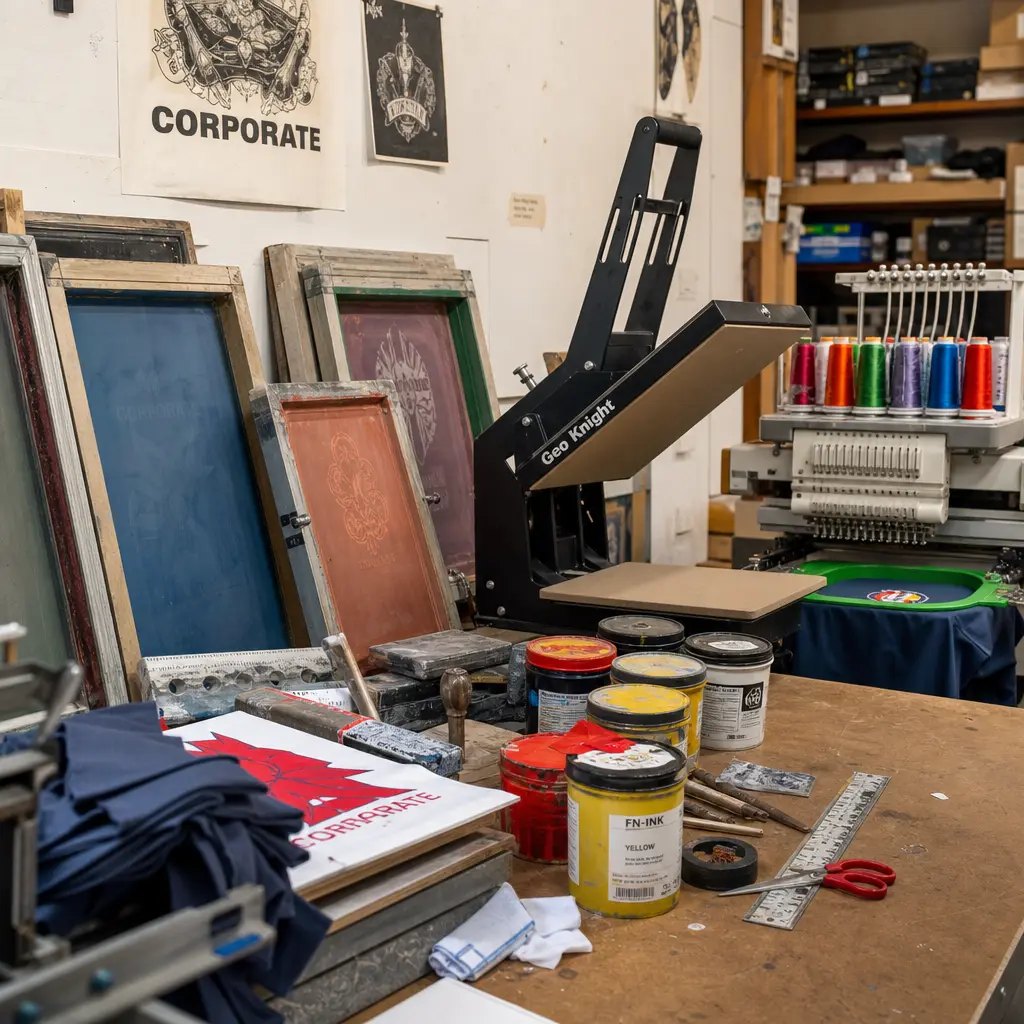
Screen printing is usually the most practical method for custom jute tote bags with tech startup logos. It works well for solid icons, clean wordmarks, and one to three brand colors. On laminated jute, screen print can produce a strong, readable result if the artwork avoids very thin lines and tiny legal text. The supplier should review the logo before confirming screen count and print area.
Heat transfer can handle more color detail, but it may look like a patch sitting on top of the natural jute surface and can change the bag's feel. Embroidery is not usually the first choice for jute panels because the coarse weave and lamination can make tension control difficult. Woven labels are useful as a secondary detail, especially for premium kits, but they should not be treated as a replacement for a main event logo if long-distance visibility matters.
- Use screen print for solid brand marks and high-volume event orders.
- Use transfer only when artwork has many colors or fine tonal detail and the buyer accepts the surface feel.
- Use woven labels for subtle branding, side seam identity, or retail-style finishing.
- Avoid tiny QR codes on jute unless the supplier proves scan reliability on a physical sample.
Control Color on Natural Jute Without Overpromising
Natural jute is not a white print base. The fabric color can range from light tan to deeper brown, and the yarn surface can absorb or visually break up ink. A Pantone reference is useful, but the buyer should understand that ink on jute will not match ink on coated paper. Dark green, black, navy, and warm white usually perform better than pale gray, neon tones, or low-contrast colors.
For brand teams with strict color rules, the RFQ should request a production ink drawdown or printed sample on the actual jute lot. This avoids a common dispute: the buyer approves a digital mockup with bright brand colors, then receives a bulk shipment where the color looks muted because the base fabric is darker. The right acceptance standard is practical visibility and brand closeness, not laboratory color control.
- Specify Pantone coated or uncoated reference, then approve final color on the real bag surface.
- Use higher-contrast artwork if the logo must photograph clearly under event lighting.
- Avoid reverse-out small white text unless the supplier confirms edge quality.
- Record approved sample photos under neutral light for receiving comparison.
MOQ Logic and Cost Drivers Buyers Should Separate
Jute tote quotes often look simple, but several MOQ layers can sit behind the unit price. The standard bag body may have a lower MOQ than custom handle color, woven label, inside pocket, special lamination, or multiple print positions. A supplier may accept a small order by using stock jute and standard handles, while a fully custom version requires higher material booking.
Procurement teams should ask suppliers to separate the cost drivers instead of only quoting one bundled unit price. Screen setup, sample cost, label mold or weaving setup, carton marking, and packing changes can distort comparisons between suppliers. A slightly higher unit price may be better if it includes a physical pre-production sample, stronger carton packing, and clearer QC documentation.
- Bag body cost is driven by jute GSM, size, gusset, lamination, and handle specification.
- Printing cost is driven by logo size, number of colors, number of positions, and screen setup.
- Packing cost changes with individual polybags, tissue, hangtags, carton strength, and pieces per carton.
- MOQ may increase when custom labels, dyed handles, or nonstandard dimensions are required.
Use a Physical Sample to Approve Placement and Handling
A production sample is not only for checking whether the logo looks nice. It should prove that the selected jute, lamination, handle position, print method, and packing style work together. For a tech startup launch event, the sample should be loaded with a realistic content weight such as a hoodie, brochure, water bottle, or device accessory box to see how the front print looks when the tote is actually used.
Buyers should mark sample approval comments directly against measurable points. Instead of saying the logo should be a bit higher, specify that the logo center must move up 15 mm or that the bottom of the logo must sit at least 100 mm above the bottom seam. This prevents repeated sampling rounds and makes the bulk production file easier for the factory floor to follow.
- Measure bag width, height, gusset, handle drop, logo width, and logo-to-edge distances.
- Rub the print with a clean dry cloth after curing to see whether ink transfers.
- Fold the bag as it will be packed and check for cracking or pressure marks.
- Approve one signed physical sample or sealed reference sample before bulk production.
Set QC Thresholds Before Bulk Printing Starts
Jute bags will have natural fiber variation, but that does not mean any defect is acceptable. The buyer should separate natural material character from production faults. Slubs, small shade differences, and minor fiber hairiness are normal. Crooked logos, heavy ink bleeding, loose handles, peeling lamination, and cartons crushed by overpacking are not normal buyer risk.
For bulk inspection, the most important logo checks are position, readability, color consistency, registration, and surface durability. If the order has multiple sponsor logos, registration and spacing become more critical. If the design uses a large dark ink block, pinholes and rubbing resistance need more attention. Define the thresholds in the purchase order so the supplier can train the print and QC team before production.
- Main logo center tolerance: commonly within ±5 mm horizontally on standard tote panels.
- Vertical placement tolerance: commonly within ±8 mm, unless artwork is near seams or handles.
- Reject severe smearing, double print shadows, unreadable small text, or large missing ink areas.
- Check handle load and stitch reinforcement because event users often carry laptops, bottles, and brochures.
Packing Choices Affect Logo Condition on Arrival
Many logo problems appear after packing, not during printing. Laminated jute can hold creases if cartons are over-compressed or if bags are rolled tightly to save space. A dark logo on the front panel can also pick up abrasion marks if the print face rubs directly against rough jute from another bag during transport.
For distributor and retail buyers, carton data is not a formality. Pieces per carton, carton size, gross weight, and packing direction affect freight quotes, warehouse receiving, and event preparation. If bags need to be handed out quickly at a conference, flat-packed totes grouped in manageable cartons are easier than oversized cartons that require repacking on site.
- Use flat packing when front logo appearance is important.
- Protect large dark prints from direct abrasion during carton movement.
- Avoid excessive carton weight that causes bottom cartons to crush in stacking.
- Request carton marks that match the purchase order, SKU, color, quantity, and destination.
Build Lead Time Around Artwork and Material Decisions
Lead time risk usually starts before sewing. Artwork review, screen making, material booking, sample production, buyer approval, bulk cutting, printing, curing, sewing, final inspection, and export packing all need sequence. If the logo placement changes after sample approval, the factory may need to remake screens or update production jigs, which can affect schedule more than buyers expect.
A practical schedule should leave time for one sample correction round, especially for a new supplier or first-time jute tote design. Tech startup campaigns often have fixed event dates, but fixed dates do not remove curing time, inspection time, or freight cutoffs. The RFQ should ask for a production calendar by step, not only a final ship date.
- Reserve artwork review time before confirming the sample date.
- Do not release bulk printing until logo size and placement are signed off.
- Add buffer for public holidays, material shortages, and export booking congestion.
- Align final inspection timing with balance payment and shipment release requirements.
Specification comparison for buyers
| Spec decision | Recommended option | When it fits | Buyer risk to check |
|---|---|---|---|
| Front logo position | Centered on front panel, 55-65% of bag width, placed above the lower seam allowance | Conference swag, employee welcome kits, investor event bags where the logo must be visible in photos | If logo sits too low, the gusset curve and packed contents distort the mark; define distance from top edge and bottom seam in millimeters |
| Print method | Screen print on laminated jute for solid 1-3 color logos | Most tech startup logos, simple icons, wordmarks, and event sponsor marks | Fine gradients and small type break up on coarse jute; request a production print test, not only a digital mockup |
| Logo artwork size | Minimum 180-220 mm wide for a main front logo on a 380 x 420 mm tote | Brand visibility from booth distance without making the bag look like an advertisement board | Very small logos disappear into fiber texture; oversized logos may crack near folds or look off-center after sewing tolerance |
| Fabric weight | Natural jute around 270-320 GSM with lamination for print stability | General tech event merchandise and reusable retail gifting | Low GSM can collapse and wrinkle around the print; heavy jute raises freight and may not improve perceived value enough |
| Handle and logo relationship | Use natural cotton webbing handles and keep logo clear of handle stitch boxes | Cleaner look for modern software, fintech, and hardware startup branding | Handle reinforcement stitching can cross the print area if the logo is placed too high; review the handle stitch box on the dieline |
| Side label option | Small woven CTM-style side label or brand label on seam as a secondary brand point | Premium retail kits, partner gifts, and designs where the front panel should stay minimal | Side labels require separate artwork, MOQ, and placement tolerance; low-volume orders may pay extra label setup |
| Packing method | Flat pack in export carton with print face protected and no tight rolling | Keeps front logo clean for distributor receiving and event unpacking | Rolled or over-compressed cartons can crease laminated jute and leave pressure marks over dark ink |
| Sample approval | Physical pre-production sample with exact jute, lamination, handle, logo size, and packing fold | Orders above a few hundred pieces or any campaign with launch-date risk | Photo approval alone misses ink absorption, logo edge quality, smell, and carton compression behavior |
Buyer checklist before sampling
- Define bag size, gusset, handle length, jute GSM, lamination, and whether the bag must stand when lightly filled.
- Provide vector artwork with Pantone references, minimum line thickness, and clear logo width in millimeters.
- Mark logo placement from top edge, side seams, bottom seam, handle stitch boxes, and gusset fold lines on a flat dieline.
- State whether the logo is the main front print, a smaller back print, a side label, or a mixed branding layout.
- Require a physical pre-production sample for any new artwork, new supplier, dark ink, or tight event schedule.
- Set acceptance criteria for print position tolerance, color variation, smudging, pinholes, stitching, odor, and carton condition.
- Request carton dimensions, gross weight, pieces per carton, packing style, and whether inner polybags are needed.
- Compare quotes using the same material, print, sample, packing, and delivery terms rather than unit price alone.
Factory quote questions to send
- What jute GSM, lamination type, and backing structure are included in this quote?
- What is the maximum recommended screen print area on this bag size without edge cracking or distortion?
- Can you print the logo at the requested size and position without crossing handle reinforcement or gusset folds?
- What MOQ applies to the bag body, screen print, woven label, and any custom handle color separately?
- Is the quoted sample made on production fabric with production ink, or is it only a handmade reference sample?
- What print position tolerance and color tolerance will you accept in mass production?
- How many pieces per carton, what carton size, and what gross weight should we use for freight estimates?
- What is the lead time for material booking, sample approval, bulk cutting, printing, sewing, final inspection, and export packing?
- Are screen charges, label setup charges, sample charges, and carton mark charges included or listed separately?
- What inspection photos or QC report can be provided before balance payment or shipment release?
Quality-control points to confirm
- Logo position tolerance should normally be controlled within ±5 mm for center placement and ±8 mm for vertical height on jute totes.
- Printed logo edges should be readable at arm's length, with no large pinholes, heavy ink bleeding, double shadows, or obvious registration shift.
- Ink should pass a dry rub check and light scratch check after curing, especially on laminated jute.
- Bag dimensions should be measured flat, including width, height, gusset, handle drop, and stitch box position.
- Handle stitching should be secure with no skipped stitches, loose thread nests, or reinforcement crossing into the logo area.
- Lamination should not peel, bubble, or show strong cracking at normal fold points after packing.
- Jute odor should be controlled by dry storage and ventilation before packing, not hidden with fragrance.
- Cartons should protect the print face from abrasion and avoid over-compression that creates permanent creases.