Start With the Retail Use Case, Not the Logo File
For hotel retail, the same jute tote can serve very different jobs. A bag sold in the lobby shop needs a balanced, retail-friendly logo that guests are willing to carry after checkout. A bag used for spa products, beach towels, or welcome amenities can carry a larger property mark because the value is partly service and presentation. If the RFQ only says "custom jute tote with logo," suppliers will quote the cheapest standard print position and leave too much interpretation to the sample room.
The buying problem is placement control. Jute is coarse, less flat than canvas, and more sensitive to panel distortion during sewing. A logo that looks perfect on a PDF can appear low, tilted, or crowded by handles once the tote is filled. The RFQ should define where the logo sits on the finished bag, not only the artwork size. Use measurements from finished top edge, side seams, and gusset fold, then require the supplier to confirm production tolerance.
- For a retail tote, keep the logo visible when the bag is hanging, folded, or filled.
- For a quiet luxury look, reduce front logo size and add a woven side label or small patch.
- For amenity use, larger front branding is acceptable if it does not cross handle stitching or gusset folds.
- For multi-property programs, keep the bag body consistent and change only the printed logo or label.
Choose a Logo Zone That Survives Real Bag Construction
A practical front logo zone on most hotel retail jute totes sits centered on the main panel, usually 90-120 mm below the top edge for medium bags. This keeps the logo clear of handle stitching while still visible above the lower crease when the bag is packed flat. For a 380 mm wide bag, a logo width around 170-230 mm is usually safer than printing edge to edge. The exact number depends on gusset depth, handle base position, and whether the tote has a pocket, lining, or laminated backing.
Avoid placing fine artwork across the lower gusset fold. When the bag opens, the bottom panel pulls the front face forward and can bend the print. Also avoid placing the logo too close to the top binding or handle reinforcement, because stitching pressure and fabric layers create uneven printing contact. If the tote uses cotton webbing handles, the handle base should be shown on the artwork dieline so the logo does not look squeezed after sewing.
- Define logo center point from finished side seams, not from raw fabric cutting marks.
- Keep a clear area of at least 25-35 mm from handle stitch boxes for most front prints.
- Keep a clear area of at least 30-50 mm above the bottom gusset fold for main logo text.
- For vertical logos, confirm whether the bag will be displayed by handles or folded on shelf.
Match Print Method to Jute Texture
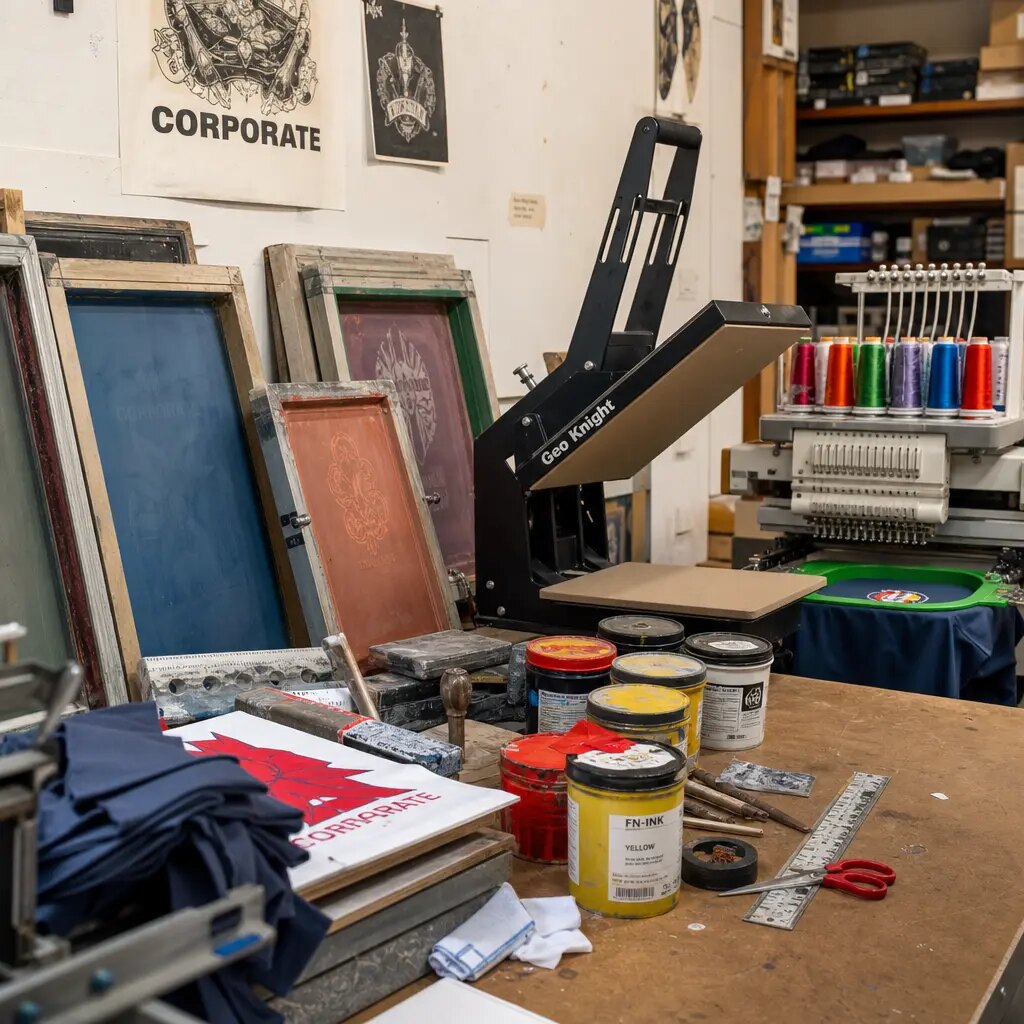
Screen printing is the normal choice for custom jute tote bags because it handles solid logos, one or two brand colors, and repeat production efficiently. On natural jute, the ink sits on an uneven surface, so very small letters, thin lines, gradients, and photographic marks are risky. A thicker ink deposit improves coverage but can feel heavy if the logo is oversized. For hotel retail, one clean dark print on natural jute often looks better than a complex multi-color design that fights the fabric texture.
Heat transfer can give sharper detail but may look too plastic on rustic jute, and adhesion must be tested because the surface is not as smooth as cotton canvas. Embroidery is rarely the best method directly on jute for a large front logo because the fabric can pucker and the stitch tension may open the weave. A cotton patch, woven label, or printed canvas panel sewn onto the jute body is a good option when the brand mark has small type or the hotel wants a more finished retail product.
- Use screen print for simple hotel names, resort marks, and gift shop branding.
- Use a cotton patch when artwork has small type, fine borders, or multiple colors.
- Use a woven side label when branding should be subtle and retail-friendly.
- Test heat transfer only with the exact jute surface and laundering or rub expectations.
Specify Jute GSM Before Comparing Logo Quotes
Logo placement quality is linked to fabric quality. A 220-240 GSM jute body may reduce unit price, but it can look loose, hairy, and uneven under print. For most hotel retail totes, 280-320 GSM natural jute is a more stable range. Heavier jute, such as 340-380 GSM, gives a stronger retail feel but increases cutting difficulty, carton weight, and freight cost. The buyer should compare quotes on the same GSM range, not only on bag dimensions and logo method.
Some jute totes use a laminated inner face to improve body stiffness and reduce fiber shedding. Lamination can help the bag stand better in a retail display and can make the panel flatter for printing, but it changes the sustainability story and may not fit buyers avoiding plastic components. A cotton-lined or canvas-backed construction is more premium but increases sewing time and MOQ pressure. For a hotel shop program, the right fabric choice is the one that balances retail feel, print clarity, and the brand's material claims.
- Economy range: 220-260 GSM, suitable only when low cost is more important than refined print appearance.
- Retail standard range: 280-320 GSM, suitable for most hotel gift shop and amenity totes.
- Premium range: 340 GSM and above, suitable when structure and perceived value matter more than freight cube.
- Laminated jute improves stiffness but must be declared clearly if the buyer has plastic-reduction rules.
Understand the Cost Drivers Behind Placement Choices
A centered one-color front print is usually the lowest-risk logo placement. Cost rises when the artwork needs multiple screens, tight registration, oversized print coverage, or printing after sewing. If the design includes both a front print and a woven side label, the buyer should expect separate setup costs and extra sampling time. If every hotel property uses a different logo, the factory may treat each design as a separate print setup even when the bag body is the same.
The cheapest quote may also hide production compromises. A supplier can reduce price by using lower GSM jute, narrower cotton handles, fewer reinforcement stitches, thinner ink, or looser carton packing. These changes are not always obvious in a spreadsheet. For fair comparison, request the quote as a build-up: material, handle, logo method, label or patch, packing, testing if any, sample charges, tooling charges, and export carton data. This helps procurement see which supplier is actually quoting the required retail standard.
- Separate setup charges from unit price so repeat orders can be compared correctly.
- List print color count and print size because both affect screen cost and production speed.
- Request handle width and stitch type because weak handles create complaints faster than small print defects.
- Include carton size and gross weight because heavy jute can change landed cost more than expected.
Use MOQ Logic for Multi-Property Hotel Programs
Hotel groups often need the same tote bag for several properties, each with its own logo. The cleanest sourcing route is to standardize the bag body, handle, GSM, packing method, and only change the logo screen or woven label. This allows the supplier to buy one fabric lot and run cutting together. If each property changes bag size, handle color, print position, and hangtag, the order becomes several small productions rather than one combined program.
MOQ should be discussed at three levels: total order quantity, quantity per logo design, and quantity per shipment destination. A factory may accept 3,000 pieces total but still require 500 or 1,000 pieces per logo because each setup consumes screen preparation, line change, and QC time. For distributors, it is also important to clarify whether mixed logos can share cartons or need separate carton marks and packing lists. The wrong MOQ assumption can turn a profitable hotel retail program into a high-handling-cost order.
- Best cost control: one bag size, one jute GSM, one handle spec, several logo screens.
- Higher complexity: different handle colors or side labels by hotel property.
- Highest complexity: different bag sizes, different print methods, and split export cartons.
- For reorder planning, keep screens, label artwork, and approved samples traceable by property name.
Approve Samples With Measured Acceptance Criteria
A pre-production sample for custom jute tote bags should not be approved only by looking at the front photo. Measure the finished width, height, gusset, handle drop, logo width, logo distance from top edge, and logo distance from side seams. Photograph the bag flat, standing, and filled with a realistic load. Jute can relax after sewing, so a sample that looks square when empty may twist when loaded. Hotel retail buyers should review the bag as a product, not as a print swatch.
Color approval also needs practical handling. Pantone matching on natural jute is not the same as printing on white cotton. The brown base color darkens many inks and the rough surface breaks the edge of small artwork. The approval standard should allow the expected jute texture while rejecting obvious defects such as missing ink in major logo strokes, tilted placement, poor handle stitching, mildew marks, or strong odor. If the supplier cannot define these limits, the buyer should write them into the purchase order.
- Require the sample to use bulk material or clearly state if substitute material is used.
- Approve a physical sample for first order; digital mockups are not enough for jute texture.
- Keep one sealed approval sample with the factory and one with the buyer or inspection team.
- Do not release bulk production until logo placement, handle construction, and packing are approved together.
Control Packing So the Logo Arrives Retail-Ready
Jute bags are vulnerable to moisture, odor, and pressure marks. For hotel retail, cartons should be clean, dry, and sized so the totes are flat without crushing the front printed panel. A common packing approach is 25-50 pieces per export carton, depending on bag size and GSM. Overpacking saves carton cost but can create deep creases across the logo. Underpacking increases freight cube. The supplier should provide carton dimensions and gross weight before the buyer confirms freight estimates.
Inner polybags are not always wanted by hotels because of sustainability policies, but completely unprotected jute can absorb warehouse odor or moisture. A practical compromise is a master poly liner inside the carton, desiccant where appropriate, and no individual polybag unless the retail buyer requires shelf protection. If the bags need hangtags, barcodes, or property-specific carton labels, those items should be included in the artwork approval loop. Packing errors are expensive because they are usually discovered at destination, not during sewing.
- Use flat packing when front logo presentation is more important than carton compression.
- Separate different hotel property logos by carton and mark cartons clearly.
- Avoid metal staples inside cartons where rust can transfer to natural jute.
- Confirm whether hangtags are tied to handles, sewn into seams, or packed loose.
Plan Lead Time Around Sample and Material Risk
A realistic schedule starts with artwork confirmation, then sample making, sample approval, material booking, printing, sewing, QC, packing, and export handover. For a straightforward one-color logo on an existing jute tote size, sampling may be relatively fast. For a custom size, special handle color, woven label, patch, lining, or multi-property split, the schedule grows. The buyer should not treat the supplier's sewing time as the whole lead time.
The biggest schedule risks are late artwork changes, unclear logo placement, unavailable handle tape, wet-season jute moisture issues, and delayed approval of labels or hangtags. If the hotel opening date or seasonal retail launch is fixed, build in time for one sample revision. A strong RFQ asks the supplier to state which date starts production: deposit received, artwork approved, sample approved, or all materials ready. Without that definition, both sides may believe the clock has started on different dates.
- Simple repeat order: usually controlled by fabric availability and print line capacity.
- First custom order: controlled by sample approval and final logo placement signoff.
- Multi-property order: controlled by artwork completeness and split packing instructions.
- Retail launch order: needs earlier carton data for freight booking and warehouse receiving plans.
Build an RFQ That Makes Supplier Quotes Comparable
A useful RFQ for custom jute tote bags should read like a production brief, not a mood board. Include finished size, gusset, GSM, handle material and drop, logo method, logo size, placement measurements, print colors, label or patch requirements, packing, carton marks, expected quantity, split by logo design, and delivery terms. If the buyer wants the bag to hold specific products, list the expected contents and approximate load. This lets the factory recommend reinforcement instead of guessing.
For landed-cost comparison, request export carton size, pieces per carton, gross weight, sample cost, setup cost, unit cost by quantity tier, and lead time assumptions. A quote with a lower unit price but larger cartons can be more expensive after ocean freight, warehouse handling, or courier samples. A quote with unclear GSM or logo tolerance is not equal to a quote that defines the production standard. Procurement teams should compare the total execution risk, not only the first unit price line.
- Include artwork in vector format and a placement diagram with measurements.
- Request pricing at realistic tiers, such as 500, 1,000, 3,000, and 5,000 pieces if those quantities match the program.
- Ask suppliers to state deviations from the requested spec instead of silently substituting materials.
- Require sample photos and bulk inspection photos from the same measurement points.
Specification comparison for buyers
| Spec decision | Recommended option | When it fits | Buyer risk to check |
|---|---|---|---|
| Main front logo position | Centered print 90-120 mm below top edge, sized to 45-60% of bag width | Hotel retail tote displayed folded or hung with front panel visible | Artwork may distort if printed across heavy jute slubs or too close to handle stitching |
| Logo method on natural jute | One-color screen print with slightly thicker ink deposit | Simple hotel mark, resort name, gift shop branding, or event logo | Fine lines below 0.4 mm and small serif text can fill in on coarse jute |
| Premium branding position | Cotton canvas patch or woven label sewn to front lower corner | Boutique hotels wanting a quieter retail look than a large printed logo | Patch color, edge finishing, and stitch color must be approved before bulk cutting |
| Side label option | Small woven side seam label 20-30 mm wide | Retail bag needs brand presence without turning into a promotional giveaway | Label may disappear when bag is filled unless placement is defined on the upper side seam |
| Bag body material | Natural jute 280-320 GSM with cotton laminated inner face if cleaner print area is needed | Hotel shop tote carrying towels, slippers, gifts, bottled items, or local products | Low GSM jute can look loose and hairy; lamination can affect recyclability claims |
| Handle construction | Cotton webbing handles with reinforced box stitch or cross stitch | Retail customers carry the tote outside the hotel, often with mixed product weight | Handle length and stitch position can crowd the logo zone if not shown on dieline |
| MOQ structure | Base MOQ tied to fabric roll and print setup, with logo colorways grouped where possible | Multiple hotel properties need the same bag size with different property logos | Small split orders may pay separate screen, label, and carton mark costs |
| Export packing | Flat packed in 25-50 pieces per master carton with moisture protection | Importers need clean shelf-ready goods and stable carton cube for freight planning | Jute absorbs odor and moisture; wet cartons can cause mildew or rusty staple marks |
Buyer checklist before sampling
- Define whether the bag is sold as merchandise, given with purchase, or used as an in-room amenity because the acceptable logo size changes by use case.
- Specify finished bag size, gusset, handle drop, GSM, lamination preference, and maximum load expectation instead of sending artwork only.
- Mark exact logo placement from top edge, side seam, and bottom gusset fold on a dieline or measured photo.
- Keep screen printed artwork simple: solid shapes, limited small text, and no hairline details on coarse jute.
- Request a pre-production sample using bulk jute, bulk handle tape, and the real logo method, not only a digital layout.
- Approve tolerance limits for logo position, print color, stitch alignment, handle length, and carton packing before mass production.
- Confirm whether each hotel property needs separate carton marks, hangtags, barcode labels, or inner polybag-free packing.
- Build the purchase schedule around sample approval and fabric booking, not only the supplier's stated sewing time.
Factory quote questions to send
- What jute GSM and yarn density are included in your quote, and is the inner face laminated, cotton lined, or uncoated?
- What is the maximum recommended print size on this jute quality without losing edge definition?
- Will the logo be screen printed before sewing or after sewing, and how will you control placement around the gusset and handles?
- Are screen charges, artwork separation, woven label setup, hangtag setup, and carton mark printing included or listed separately?
- What MOQ applies per bag size, per logo design, per print color, and per hotel property split shipment?
- Can you provide a measured pre-production sample with photos of logo position, handle stitching, inside seams, and carton packing?
- What are your normal tolerances for finished size, logo placement, print color, and handle drop on jute tote production?
- How many pieces fit per export carton, what is the carton size and gross weight, and how is moisture controlled during packing?
- What lead time starts after deposit, artwork approval, sample approval, and fabric arrival, and which date controls the real production schedule?
Quality-control points to confirm
- Logo center position should normally stay within plus or minus 5 mm horizontally and plus or minus 8 mm vertically from the approved sample unless the bag shape requires wider tolerance.
- Screen print edges should be readable at normal retail viewing distance, with no major ink skips across the main logo letters.
- Finished bag width, height, and gusset should be measured flat, with practical tolerance agreed before cutting because jute relaxes differently from cotton canvas.
- Handle drop must be consistent enough for retail display; mixed handle lengths make the same shipment look like seconds.
- Handle reinforcement stitching should fully catch the webbing and body fabric without loose thread nests or broken stitches.
- Front and back panels should be reasonably square; twisting is more visible when the logo is centered.
- Jute odor, mildew spots, oil marks, and rust marks should be treated as major defects for hotel retail goods.
- Cartons should be dry, correctly marked, and packed to avoid crushed corners, heavy creasing, or transfer marks on printed panels.