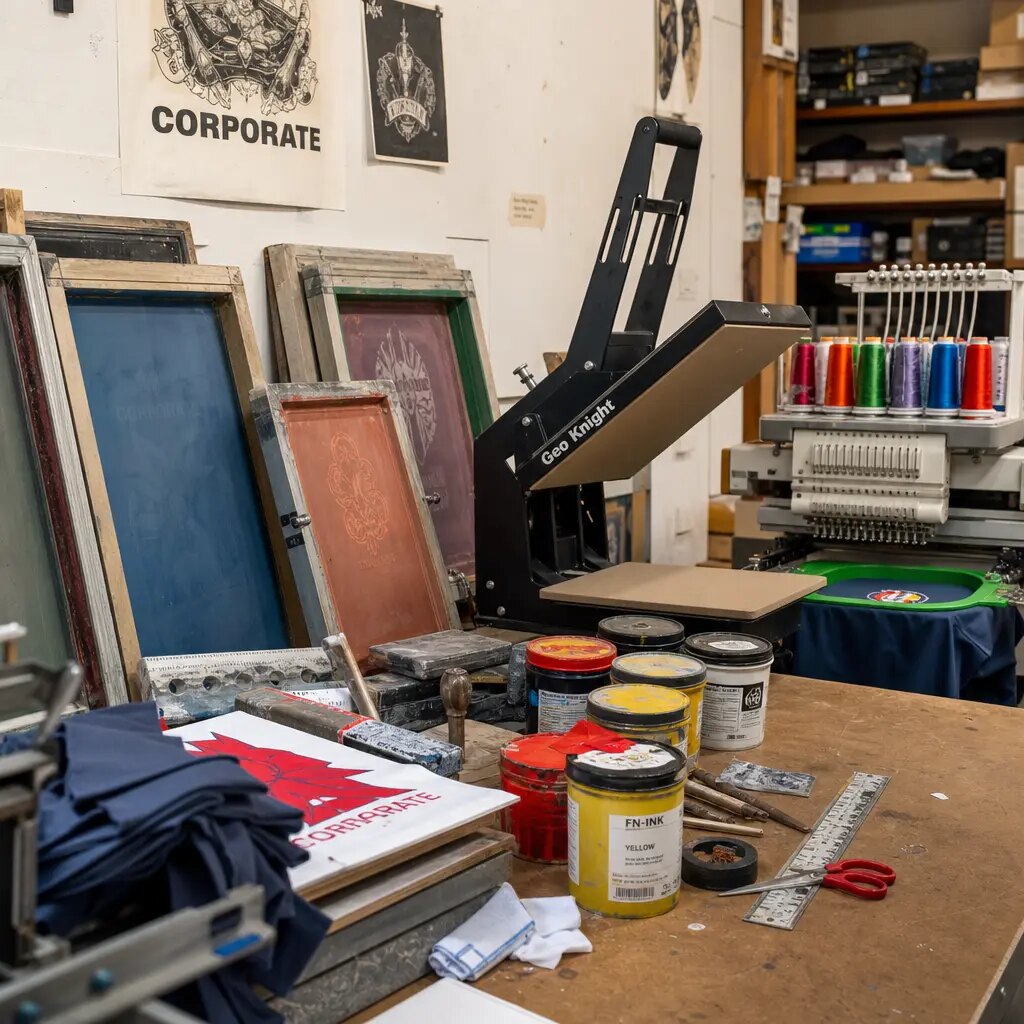
Why logo placement matters on jute tote bags
For boutique wineries, a jute tote is not just a carry bag. It is a retail item, a tasting-room purchase, and often a gift carrier for bottle sets. Logo placement affects all three uses. A logo that looks centered on a flat art proof can disappear once the bag is filled, folded, or displayed beside glass, paper, and cork products. The buyer should treat placement as a production decision, not a branding preference.
The other reason placement matters is that jute is a textured, uneven substrate. Ink sits differently on rough weave than it does on cotton canvas or coated paper. If the logo lands too close to a seam, hem, gusset fold, or handle stitch line, the print can warp or break. That is why the safest brief is a dimensioned placement drawing, not a loose note like front center logo.
- Keep the logo on a flat panel with enough uninterrupted weave around it for registration and rub resistance.
- Use a placement that still reads when the bag is partially filled with bottles or gift items.
- Treat the print area, not only the artwork, as the thing you are buying.
Lock the bag spec before you place the logo
Do not finalize artwork placement before the bag construction is fixed. Jute tote bags are often quoted with different fabric weights, lining choices, handle materials, and gusset depths. A logo placed correctly on a 30 cm wide body can look off-center on a 34 cm body, and a print that clears the hem on an unlined bag may hit the fold line once the bag is laminated or lined. The first sourcing step is to freeze the bag spec, then place the art against that exact pattern.
For winery retail, a common starting range is 320 to 450 GSM for the jute body, depending on size and reinforcement. Lighter constructions work for tasting-room giveaways or single-bottle carriers, while heavier bodies make more sense for gift tote programs and higher perceived value. If the bag needs to hold glass bottles, ask for reinforcement at the handle anchor points and a bottom structure that keeps the bag upright enough for shelf display and photography.
- Confirm body size, gusset depth, and handle drop before sending art.
- Ask whether the quoted GSM is for the base jute fabric, laminated body, or finished bag.
- If the bag will carry bottles, require reinforcement details in the spec sheet.
Choose the placement zone that prints cleanly
The best placement for most boutique winery totes is the front center panel, slightly above the visual midpoint, because it reads clearly on shelf and in the tasting room. That said, front center is not always the best production choice. If the bag has a wide bottom gusset or a stitched pocket, moving the logo higher can protect it from creasing. If the bag is often folded for retail packing, a lower print may be safer only if the fold line sits below the artwork.
Different placement zones serve different buyer goals. A gusset logo is subtle and works when the bag should feel premium rather than promotional. A small woven label on the side seam can support brand identity without adding print setup. Handle wrap printing can look distinctive, but it adds cost and can slow production. Buyers should decide whether the logo is meant to sell the bag itself, identify the winery at a distance, or create a quiet branded gift item.
- Front center: strongest visibility, best for shelf impact, but keep clear of seams and folds.
- Upper front panel: safer when the bag is packed flat or folded for retail.
- Gusset or side label: better for subtle branding and premium presentation.
Pick the decoration method that matches the weave
On jute, the decoration method matters as much as the art file. Single- or two-color screen print is still the most reliable option for most winery tote programs because it sits well on the rough weave and keeps unit cost predictable. If the logo has small text or fine lines, the supplier should show you a strike-off before bulk. For richer branding, a woven label or PU patch can give a more premium feel than ink alone, especially when the bag is sold rather than given away.
Heat transfer and complex digital methods are usually the first choice only when the artwork has gradients or many colors and the order quantity is low. They can work, but they need stronger supplier control on temperature, pressure, and surface flatness. Embroidery is possible on some jute constructions, but it can pucker the fabric and distort small type. For most buyers, the commercial question is simple: does the logo need to look crisp from three feet away, or does it need to feel premium in a hand-held gift context?
- Screen print: best for 1 to 2 colors, stable cost, and clean bulk repeatability.
- Woven label or PU patch: good for premium presentation and low ink risk.
- Heat transfer or embroidery: use only if the supplier has proven jute examples, not just canvas examples.
Build the RFQ so suppliers quote the same thing
Most bad quote comparisons start with incomplete RFQs. If one supplier quotes a blank bag and another quotes a printed bag with packaging, the numbers are not comparable. Your RFQ should spell out bag dimensions, fabric weight, handle type, decoration method, logo size, placement distance from seams, packing method, and shipping term. Without that detail, the lowest quote usually hides a setup fee, an upgraded carton plan, or a decoration method that cannot hold up in production.
A useful RFQ also separates one-time charges from recurring charges. Screen setup, artwork conversion, label tooling, and sample charges should be visible. Unit price should be split into bag body, decoration, and packing if the supplier can do it. That format lets procurement teams compare suppliers by real landed cost instead of headline unit price alone. It also exposes whether the factory is quoting a realistic production route or just a placeholder number to get the order.
- State the exact logo size in millimeters, not just the artwork file name.
- Ask suppliers to quote blank bag, decoration, packing, and freight separately.
- Request sample and setup fees in writing before you compare suppliers.
Compare sourcing routes before you choose a factory
The sourcing route changes more than price. A direct factory with in-house screen printing usually gives the cleanest control over placement and lead time, especially when the same supplier handles both the bag and the logo. A trading company can be useful when the program includes mixed SKUs, but the buyer must work harder to verify who actually owns QC. A local decorator on imported blanks may win on speed for small launches, yet it can introduce fit issues if the blank bag and the print shop do not align on seam location or print tension.
The right route depends on order size, repeat frequency, and risk tolerance. If the winery wants a seasonal tote for one release, flexibility matters more than absolute price. If the tote will become a permanent retail SKU, control and repeatability matter more. For that reason, buyers should compare not only unit price but also sample speed, artwork stability, decoration ownership, and the supplier's ability to reproduce the same logo position on the next reorder.
- Use a direct factory for repeat programs that need consistent placement.
- Use a local decorator only if the blank bag spec is already locked and proven.
- Use a trading company only when they can document the real factory and QC flow.
Approve samples in the right order
Sample approval is where most logo placement problems can still be fixed cheaply. Start with a strike-off or mock print on the actual jute material, not on paper or synthetic cloth. Then move to a pre-production sample that uses the final bag size, final placement, and final decoration method. If the logo crosses a seam, fold line, or label zone, only a physical sample will show you whether the art still reads after stitching and pressing. A clean PDF is not enough.
For production control, keep one signed gold sample at the buyer side and one at the factory. The approval should include the front, back, and side views, plus measurements from the top hem and side seam to the logo edges. If the buyer expects a specific natural-fiber tone, approve that against the actual lot, not only against a digital file. Jute varies from run to run, and the perceived contrast of the logo can change more than the ink formula itself.
- Approve a strike-off before bulk screens are made.
- Use a pre-production sample from the final material lot.
- Measure logo position from fixed seams, not from the eye alone.
Set QC thresholds that the factory can actually hit
Quality control on jute totes should be measurable. Ask for acceptable tolerances on body size, logo position, stitch quality, and color variance before production starts. For winery buyers, the visual standard often matters more than technical perfection, but the factory still needs numbers. A logo that shifts 8 mm on a rustic textured bag may be acceptable if the artwork is bold, but the same shift on a small-wordmark design can look careless on retail shelves. The tolerance should match the design, not the other way around.
Also define what a defect is. Loose threads, ink bleed, heavy smell, oil marks, and uneven handle lengths are not the same as a natural fiber surface variation. Some natural variation is normal in jute, but print failure, crooked alignment, and weak handle stitching are not. If the bags will be sold through tasting rooms or gift shops, insist on cleaner cosmetic standards than you would for a trade-show giveaway. The customer will handle the bag at close range, so the finish has to survive that inspection.
- Specify logo position tolerance, body dimension tolerance, and stitch standard in the PO.
- Separate natural fiber variation from real printing or construction defects.
- Require carton audit counts and label checks before shipment release.
Pack the bags for retail use, not just shipment
Packing affects how the logo is seen when the product reaches the winery. A jute tote folded too tightly can hold a crease across the logo panel, and a bag stuffed into an oversized carton can shift until the print rubs against another unit. For retail programs, ask the factory to fold the bags consistently and place the logo face up when possible. If the bag is premium retail stock, a single polybag or tissue wrap may be worth the extra cost because it protects the surface and keeps the presentation consistent in the store.
Export packing should also respect the material. Natural fibers can absorb moisture and odors, so carton liners or simple moisture controls may be needed for long transit routes. Keep carton weight manageable for warehouse handling and pick a count that preserves shape. For example, a small carton with too many compressed bags can flatten the gusset and distort the logo panel, while a carton that is too loose lets the bags slide and crease. The best packing plan is the one that protects both print quality and shelf appearance.
- Keep the logo away from fold lines in the packed condition.
- Use carton counts that avoid over-compression and panel distortion.
- Label each carton with SKU, color, logo method, and pack count.
Plan lead time and landed cost from the start
Lead time on custom jute totes is usually more sensitive to setup than to sewing. Once the fabric and decoration line are ready, production can move quickly. The slowdown usually comes from artwork revision, screen making, sample approval, and packing changes after the first quote. A practical schedule is to allow time for artwork finalization, sample approval, bulk production, packing, and freight booking. If the buyer waits to define the logo position until after the sample stage, the clock resets.
Landed cost should be reviewed as a program cost, not just a bag cost. A lower FOB number can disappear once screen fees, packing upgrades, outer carton changes, and freight are added. As an example, a fixed setup fee spread across a small opening order can make the first shipment look expensive, while the second reorder becomes much cheaper. That is why procurement should compare first-order and repeat-order economics separately. The real question is not only what the bags cost today, but what the same bag will cost on the second and third run when the winery scales the program.
- Compare first-order cost and repeat-order cost separately.
- Include screen fees, packing, and freight in the landed-cost view.
- Keep artwork frozen early so the sample cycle does not extend the schedule.
Specification comparison for buyers
| Spec decision | Recommended option | When it fits | Buyer risk to check |
|---|---|---|---|
| Direct factory with in-house screen print | Best for one to two spot colors on a stable logo area | Repeat orders, standard sizes, and buyers who need control over placement and sample approval | Confirm the factory owns the print line, not a subcontractor, or alignment and lead time can drift |
| Direct factory with outsourced decoration | Use only if the supplier can show prior proof of the same decoration method | Short-listing a good bag maker that does not keep a print shop in-house | Decoration quality may vary by batch and a hidden middle fee can appear in the quote |
| Trading company or sourcing agent | Useful when you need multi-item consolidation or mixed packaging | Buyers coordinating tote bags with inserts, gifts, or other promotional items | You may not see the real production floor, so demand factory photos, sample traceability, and clear QC ownership |
| Local decorator on imported blank bags | Good for fast domestic turnaround on small runs | When the bag shape is fixed and the logo art is still changing | Blank quality and print consistency must be matched carefully or the final piece can look assembled from two different suppliers |
| Regional bag maker near your market | Best if you need lower freight risk and easier reorders | Programs with frequent replenishment for tasting rooms or gift shops | Unit price may be higher, so compare total landed cost instead of only the base bag quote |
| Sample-first pilot supplier | Start with a small pilot before booking bulk | New logo placement, unusual panel size, or premium finishing | A good sample does not always mean smooth bulk output, so require a pre-production sample from the final material lot |
| Multi-decoration supplier | Choose when you want print plus woven label or PU patch | Premium winery retail bags with a giftable look | More decoration steps mean more alignment points, more setup charges, and more chances for delay |
| Low-MOQ digital transfer vendor | Use only when the art is detailed and volume is low | Small launch programs or seasonal editions | Transfers can crack, shine, or sit too plasticky on jute if the supplier is not experienced with natural fiber texture |
Buyer checklist before sampling
- Final logo file in vector format with one Pantone target and one approved dark-on-natural or light-on-natural version
- Bag size, gusset depth, handle length, and handle drop measured from the same reference point
- Confirmed logo placement drawing that shows distance from top hem, side seam, and bottom seam
- Decoration method selected before RFQ release, with one approved reference image or physical sample
- Target GSM or fabric weight range, plus whether the jute is laminated, lined, or unlined
- Retail or bulk packing spec, including polybag use, carton count, carton weight limit, and barcode label position
- Sample approval plan covering strike-off, pre-production sample, and final gold sample
- FOB, EXW, or CIF comparison sheet so every supplier quotes the same commercial terms
Factory quote questions to send
- What is your exact bag construction, including body fabric weight, lining, handle material, and reinforcement method?
- Which decoration method will you use for this artwork, and is it done in-house or by a subcontractor?
- What is the usable print area after seam allowance, folding, and handle attachment are removed from the design zone?
- What setup charges apply for screens, plates, patches, labels, or artwork changes, and are they one-time or per order?
- Can you quote the bag blank, decoration, packing, and carton separately so we can compare suppliers line by line?
- What is your sample sequence, and which sample will match bulk production exactly?
- What are your standard tolerances for logo position, color variance, and size variance on natural jute fabric?
- What packing method do you recommend for retail-ready bags versus bulk warehouse packing, and how does it change carton size and lead time?
Quality-control points to confirm
- Logo position should stay within plus or minus 5 mm of the approved placement on the physical bag
- Finished body dimensions should stay within plus or minus 10 mm unless the buyer approves a wider tolerance
- Screen print edges should be clean, with no smudging, broken lines, ghosting, or heavy ink bleed into the jute weave
- Color match should stay within the agreed Pantone target or a pre-approved visual standard under daylight inspection
- Handle stitching should be secure with no skipped stitches, loose ends, or crooked box-x reinforcement at stress points
- No visible oil stains, glue marks, odor problems, or dark fiber contamination should appear on the logo panel
- Carton count, SKU label, and outer mark should match the packing list and purchase order exactly
- A folded or bagged retail unit should not crease the logo across a seam or fold line