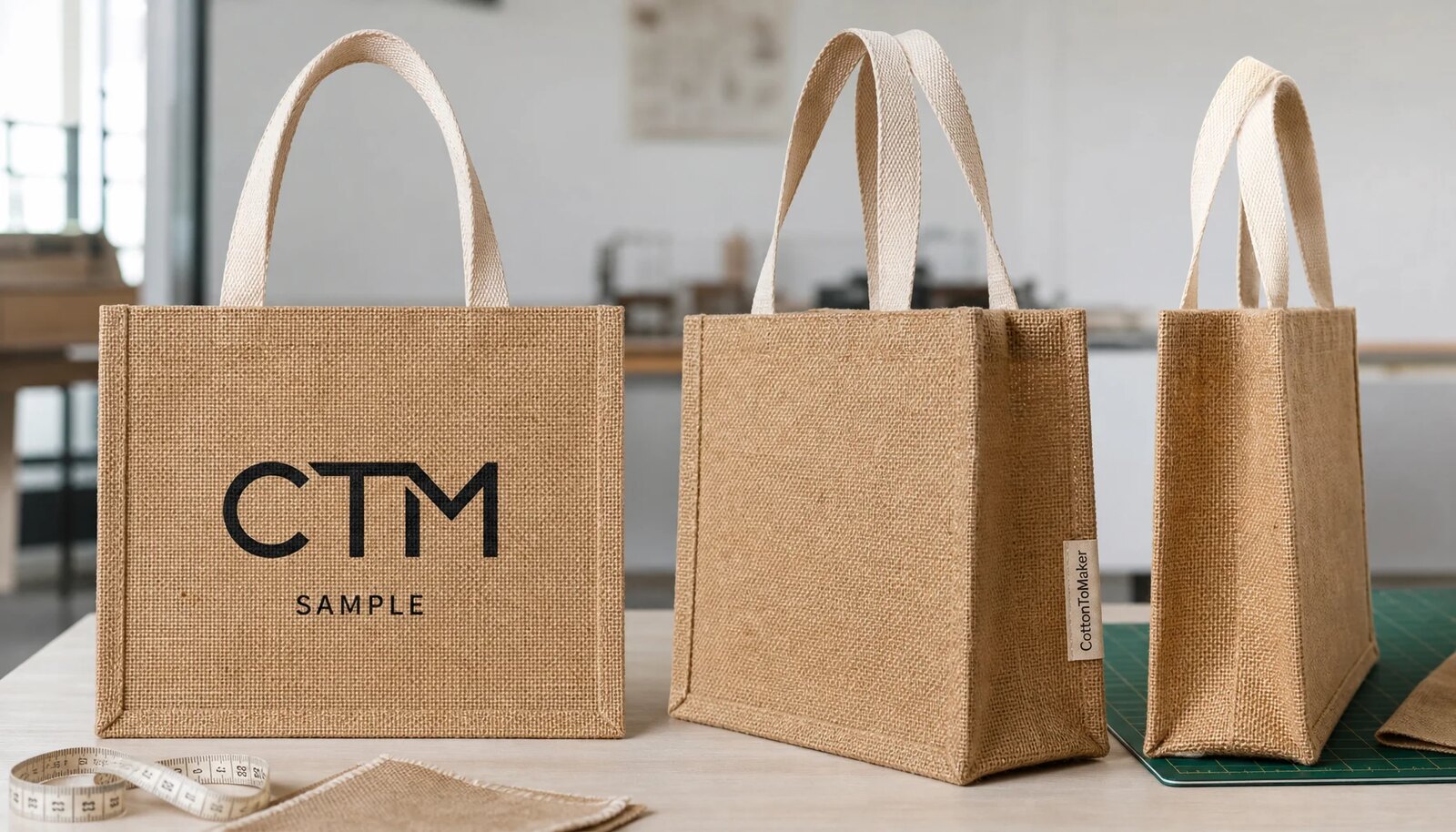
Start With the Production Reality
Custom jute tote bags suit craft fairs for a simple reason: the material already feels connected to handmade goods, farm products, candles, pottery, books, textiles, and local retail. The branding opportunity is strong. The production risk is easy to underestimate.
For procurement buyers, the question is not whether a supplier can put a logo on a jute tote. Most can. The real question is whether that logo can be placed, printed, sewn around, packed, and delivered consistently across hundreds or thousands of bags. Jute is coarse, flexible, and naturally irregular. A logo that looks clean in a digital mockup can look low, tilted, broken, or stretched once it is printed on real fabric and sewn into a finished bag.
Treat logo placement as a specification, not a design note. A purchase order that says “front logo, centered” leaves too much room for interpretation. The factory needs logo size, fixed reference points, seam clearances, print method, color standard, position tolerance, and sample approval rules. If the craft fair date is fixed, build those details before sampling. One failed sample can cost a week or more once artwork edits, screens, revised patches, and courier time are included.
- Use millimeters for logo width, logo height, and placement distance.
- Measure from fixed points such as the top opening, side seam, bottom seam, pocket edge, or label edge.
- Keep artwork away from handle reinforcement, top edge bulk, side seams, gusset folds, and heavy crease areas.
- Approve a physical strike-off or pre-production sample before bulk printing.
- Keep one approved artwork file and one approved placement sheet under version control.
- Ask the supplier to flag risky artwork details before setup charges are incurred.
Lock Bag Construction Before Logo Approval
Logo placement depends on the finished bag, not just the artwork. A lighter 220 GSM jute tote may be acceptable for small giveaways, but it can move more during cutting, printing, and sewing. That movement affects the flat logo zone. For most craft fair tote bags, 250-300 GSM is a practical starting range because it balances body, print support, cost, and carton weight. If buyers expect shoppers to carry ceramics, candles in glass jars, books, bottled goods, or boxed gift sets, 320-350 GSM or stronger reinforcement may be worth quoting.
Construction choices also change the branding area. Unlined jute gives a natural look and simpler sewing, but loose fibers and dust are more visible. Cotton lining improves the interior for retail goods, while lamination gives the bag more structure and a wipeable surface. Each option changes cost, hand feel, lead time, and sometimes the environmental language a brand can use. A cotton pocket creates a cleaner print surface, but it introduces pocket size, pocket placement, shrinkage, and sewing tolerance into the job.
Dimensions should be quoted as finished dimensions after sewing. A common craft fair size might be 380 mm wide x 420 mm high x 100 mm gusset, but the right size depends on the products being carried. Wide gussets help boxed goods and pottery. Taller panels work well for prints, textiles, and books. Handle drop matters too. Long handles can hang over the front panel and cover part of the logo when bags are displayed from a booth hook.
- 220-240 GSM jute: light giveaways, smaller logos, lower structure, and more panel movement.
- 250-300 GSM jute: common craft fair tote range with better print stability and manageable freight weight.
- 320-350 GSM jute: heavier retail loads, premium structure, higher unit cost, and higher carton weight.
- Cotton lining: cleaner interior finish with added material and sewing operations.
- Laminated jute: stiffer shape and wipeable surface with a less natural hand feel.
- Cotton webbing handles: usually more comfortable and controllable than many rope-handle constructions.
Map the Safe Logo Zone
The safest logo position for most custom jute tote bags is front-center on the main panel. Keep it below the handle reinforcement and above the bottom gusset fold. As a working rule, allow at least 40 mm between the logo and side seams, top stitching, handle attachment, and bottom folds. On small bags, that clearance quickly reduces the usable print area, so the artwork may need to change shape rather than simply shrink.
For a 380 mm wide x 420 mm high tote, a front logo around 180-220 mm wide is often easier to control than a full-panel print. It is visible from a craft fair aisle without forcing thin strokes into unstable areas near the seams. When a buyer wants stronger branding, the better answer is often a bolder mark, stacked layout, heavier type, or a printed cotton pocket. Bigger is not always cleaner on jute.
The placement sheet should be visual and measurable. A useful note might read: “logo 200 mm wide, centered horizontally on front panel, top of logo 90 mm below top opening.” That tells the factory where to measure. “Large logo in the middle” does not. If the logo sits on a pocket, show the pocket size and the logo distance from the pocket edge. If both sides are printed, approve both sides separately because panel alignment and fabric character can differ.
- Keep logo width near 45-55% of finished bag width for many standard totes.
- Start with 40 mm minimum clearance from seams, folds, handle stitching, and top edge bulk.
- Use a ruler, jig, or rigid placement template during inspection instead of visual centering only.
- Keep QR codes, fine type, and sponsor lines off heavy slubs, knots, and unstable yarn areas.
- Make small type large enough to survive ink spread across jute fibers.
- Move secondary sponsor names to a hangtag, insert card, or pocket print when the raw jute panel cannot hold detail cleanly.
Choose the Decoration Method Around Risk
Direct screen printing is often the economical choice for custom jute tote bags. It works best with one-color or simple two-color artwork: bold shapes, open counters, and limited fine detail. The ink has to suit a rough fiber surface, and the printer must control pressure carefully. Too little pressure leaves broken coverage. Too much can cause bleeding. Either way, the result will not look like printing on smooth cotton canvas. The jute texture will show, and that should be part of the approved appearance.
Detailed artwork needs a smoother surface. QR codes, sponsor blocks, small URLs, gradients, tight registration, thin script, and full-color marks usually perform better on a cotton canvas pocket, woven patch, embroidered patch, or heat-transfer label applied to a smooth substrate. Embroidery can look premium, but direct embroidery through loose jute may pull yarns and deform the panel. A separate patch or canvas component is usually safer.
Compare the total risk, not only the unit price. A low-cost direct print is not a bargain if the logo becomes unreadable, if panels need reprinting, or if a second sample threatens the event deadline. Ask the supplier to review the actual artwork and name the risk: line thickness, small text, color count, registration, gradient, QR code scan reliability, or logo size. A clear warning before sampling is more useful than a rejected bulk order later.
- Direct one-color screen print: best for bold marks and simple event branding.
- Two-color screen print: workable when registration tolerance is built into the artwork.
- Cotton pocket print: best for fine edges, QR codes, small text, and cleaner retail presentation.
- Woven patch: best for repeat programs needing consistent logo detail across orders.
- Embroidery patch: best for premium texture, not tiny lettering or dense small copy.
- Side label or hangtag: best when the jute front should stay natural but brand identification is still required.
Control Artwork and Version Names
Artwork control prevents many avoidable delays. Send vector files such as AI, EPS, PDF, or SVG, with fonts outlined and colors named. Low-resolution PNG or JPG files often need redrawing. Redrawing can change letter shapes, spacing, stroke weight, and logo proportions. That is a poor way to discover design differences after screens or patches have already been made.
Pantone references help, but natural jute affects perceived color. A black print may look softer on raw jute than on white cotton. Bright colors may dull slightly against the brown base. Buyers should define whether the approved standard is the Pantone target, the physical sample, or a documented combination of both. For direct printing on natural jute, the approved sample usually matters more than a paper swatch.
Placement language should be written for a factory operator. “200 mm wide, front center, top of logo 90 mm below top opening” is production-ready. “Big logo, centered nicely” is not. For pocket prints, say whether the logo is centered on the pocket or on the full bag panel. For side labels, state the distance from the top opening and side seam. For hangtags and carton marks, use version names so sponsor orders do not get mixed during packing.
- Provide final vector artwork with outlined fonts and a clear file version name.
- State exact logo width and height in millimeters and identify any approved scaling limits.
- Define minimum line thickness, minimum text height, and whether reversed details must remain open.
- Confirm how much natural jute texture may show through the ink.
- Use a signed placement sheet for front, back, pocket, side label, hangtag, and inner label positions.
- Lock artwork before sample approval and avoid circulating revised sponsor files without version control.
Set Tolerances Before Production Starts
Tolerances are easier to agree before production than during inspection. Jute totes are cut, printed, sewn, turned, pressed, and packed. Every step can add small movement. Finished bag size tolerance should be stated in millimeters because natural fabric, sewing tension, and gusset shaping all affect final dimensions. Ask the factory what it can control for this exact construction instead of copying a generic bag tolerance from another product.
For logo placement, many buyers discuss plus or minus 5-8 mm for standard front prints, depending on bag size, panel stability, and whether printing happens before or after sewing. Tighter tolerances may be possible for a pocket or patch, but they still need factory confirmation. Record horizontal and vertical deviation separately. A logo can be centered left-to-right but sit too low. It can also be at the correct height while shifting toward one seam.
Print tolerances should include color, registration, and readability. Some broken texture on raw jute is normal. Missing strokes in key letters are not. Two-color artwork should define acceptable color-to-color shift, especially near outlines or small symbols. If the artwork includes a QR code, scan the approved sample on real phones under normal lighting, then include scan checks in bulk inspection.
- Finished size: define width, height, gusset, handle length, and handle drop tolerance in millimeters.
- Logo position: state allowed horizontal and vertical deviation from the agreed reference point.
- Registration: define acceptable color-to-color shift for two-color or multicolor prints.
- Readability: reject broken letters, filled counters, missing strokes, and unscannable QR codes.
- Color: compare against the approved sample or Pantone target under agreed light conditions.
- Natural variation: document acceptable jute slubs and shade variation separately from defects.
Normalize MOQ and Cost Comparison
MOQ is not only a bag count. It is shaped by jute availability, GSM, dyed fabric, handle material, handle color, lining, lamination, pocket construction, logo process, number of artwork versions, packing method, and carton marking. A supplier may offer a low MOQ for a standard natural jute tote with one-color direct print, then require a higher minimum for dyed jute, custom handles, woven patches, embroidery, or individual retail packing.
The biggest cost drivers usually include fabric GSM, bag size, gusset depth, lining, lamination, handle construction, print color count, print location count, pocket or patch labor, trimming standard, packing style, export carton strength, inland freight, and sample revisions. Multi-sponsor craft fair orders often create hidden costs. Each logo version may need separate screens, patch setup, sample approval, packing separation, and carton marks.
Normalize quotes before comparing unit prices. A 250 GSM unlined direct-print tote is not the same product as a 320 GSM cotton-lined tote with a printed pocket. One may be cheaper, but it is not automatically a better procurement result. Require suppliers to list what is included, what is excluded, and where they have substituted materials or construction details.
- Separate MOQ by bag body, jute color, handle color, logo version, pocket option, label version, and packing method.
- Ask for price breaks at practical quantities such as 300, 500, 1,000, 2,500, and 5,000 pcs.
- List screen charges, patch molds, embroidery digitizing, artwork separation, and sample charges separately.
- Confirm whether sample cost is charged once, refundable, or repeated for revised samples.
- Request carton dimensions, net weight, gross weight, and pieces per carton for freight comparison.
- Require suppliers to list deviations from the RFQ instead of hiding substitutions inside a lower unit price.
Write an RFQ Suppliers Can Price Accurately
A strong RFQ gives factories enough information to quote the actual product, not an assumed substitute. Include finished bag size, jute GSM, fabric shade, backing or lamination, lining, handle type, handle width, handle length, handle color, logo method, artwork file, logo size, logo placement, print colors, quantity by design, sample requirement, packing method, delivery term, target handover date, and inspection expectations.
Describe the craft fair use case in plain language. A brochure bag is different from a tote expected to carry pottery, candles, glass jars, books, or packaged food. If shoppers carry it over the shoulder, handle drop and comfort matter. If bags are handed out at registration, bundles should be easy to count. If cartons ship to multiple sponsor booths or locations, carton marks and logo-version separation become part of the product specification.
Ask suppliers to respond in a structured format. Useful replies include recommended print method, safe logo size, position tolerance, sample lead time, bulk lead time, carton plan, setup charges, and deviations. This makes comparison more reliable than judging the lowest headline unit price.
- Bag example: 380 mm W x 420 mm H x 100 mm gusset, finished dimensions after sewing.
- Material example: natural jute, 280 GSM, unlined, no lamination, shade approved by swatch.
- Handle example: natural cotton webbing, 30 mm wide, 600 mm length, reinforced with box-X or dense bar tack stitching.
- Logo example: one-color black screen print, 200 mm wide, front center, top of logo 90 mm below top opening.
- Packing example: 25 pcs per inner bundle, 100 pcs per export carton, logo panels aligned, carton marks on two sides.
- Inspection example: final random inspection against approved golden sample with separate defect records for print, sewing, fabric, odor, and packing.
Make Samples Representative of Bulk
A digital mockup helps with layout, but it should not be treated as production approval. For custom jute tote bags, buyers should approve a physical pre-production sample or, at minimum, a printed strike-off on the actual jute material. The sample should use the same GSM, weave, color, ink, print process, handle webbing, pocket fabric, lining, stitch method, and placement method planned for bulk production.
Sample review should be practical, not just visual. Measure the logo from the agreed reference point after sewing, not only on a flat cut panel. Hang the bag as it might appear at a booth. Load it with a realistic product weight and check whether the logo still reads level. Review handle comfort, pocket alignment, label placement, top opening shape, interior finish, odor, and packing creases.
For repeat programs, keep one approved golden sample with the buyer and one with the factory. The golden sample should show final logo placement, material, handle construction, label, pocket, lining, and packing method. If the buyer accepts natural jute variation or a minor placement deviation on the sample, record it clearly so the inspector has the same standard.
- Confirm the sample uses the same material lot or the same approved material specification as bulk.
- Measure logo width, height, and placement distance after sewing and pressing.
- Check print color against the approved sample or Pantone target under the agreed light source.
- Run dry rub, light scratch, and adhesion checks after proper curing or conditioning time.
- Scan QR codes on real devices if QR codes are part of the artwork.
- Photograph approved sample front, back, side, inside, handle area, logo close-up, label area, and packed condition.
Inspect Fabric, Print, Sewing, and Packing
Jute is a natural material, so the inspection standard should separate acceptable character from defects. Minor fiber texture, small shade movement, and ordinary slubs may be acceptable. Holes, oil marks, mildew odor, heavy stains, broken yarns through the logo area, severe panel skew, contamination, and strong chemical odor should not be accepted. Write these categories into the purchase order or inspection checklist.
Logo QC needs measurement. Inspectors should record wrong artwork version, incorrect logo size, wrong placement, wrong color, unreadable text, registration shift, missing ink, smearing, ink transfer, poor adhesion, and unacceptable texture break in critical areas. The method should include random measurement from the approved reference point, not only a visual pass down the packing table.
Sewing and function matter because craft fair shoppers often carry irregular and heavy items. Inspect handle attachment, reinforcement stitching, seam allowance, skipped stitches, loose threads, pocket attachment, gusset formation, top edge shape, and trimming. If the bag is expected to carry a stated load, use an agreed practical load test and inspect the handle attachment afterward. Packing should protect the cured print, keep logo versions separated, and avoid compression that creases the branding area.
- Fabric defects: reject mildew odor, oil stains, holes, severe shade mismatch, and broken yarns in the print zone.
- Print defects: reject heavy smearing, missing logo areas, wrong artwork, unreadable text, and severe color mismatch.
- Placement defects: measure horizontal and vertical deviation separately from the approved reference point.
- Sewing defects: reject skipped stitches, open seams, loose handles, crooked pockets, and poor gusset formation.
- Function defects: test carrying performance using the buyer’s intended load or agreed test weight and duration.
- Reporting: separate defect counts for fabric, print, sewing, labels, odor, moisture, and packing.
Specification comparison for buyers
| Sourcing decision | Practical specification | Best use case | Quote or QC risk to control |
|---|---|---|---|
| Front-center direct logo | Logo width 45-55% of finished bag width; minimum 40 mm clearance from side seams, top edge stitching, handle reinforcement, and bottom gusset fold | Craft fair giveaway bags, maker market shopper totes, sponsor bags, and simple event branding | Digital mockups can hide weave distortion; approve a physical strike-off or pre-production sample on the actual jute lot |
| Cotton pocket logo | 8-10 oz cotton canvas pocket on 250-300 GSM jute body; print pocket before sewing when registration and edge quality matter | Detailed logos, QR codes, small type, multicolor marks, retail-style craft fair merchandise | Pocket changes cost, MOQ, shrinkage, sewing tolerance, and lead time; specify pocket size, placement, colorfastness, and print position tolerance |
| One-color screen print on jute | Bold vector artwork; minimum line thickness about 1.0 mm; avoid tiny reversed type and hairline outlines | Economical orders from about 300-5,000 pcs when branding is simple and rustic texture is acceptable | Ink coverage varies over slubs; require cured rub check, edge readability review, and agreed color tolerance |
| Two-color screen print | Use open artwork with trapping where possible; avoid tight registration under 1.5-2.0 mm on coarse jute | Event logos needing one accent color without adding a patch or pocket | Panel movement and weave variation can shift registration; set color-to-color alignment tolerance before bulk printing |
| Woven or embroidered patch | Produce patch separately, approve patch artwork, then sew to jute with defined stitch margin and location | Premium retail packaging, repeat event programs, club merchandise, and detailed marks | Patch setup cost and minimums are separate from bag MOQ; inspect patch placement, fraying, thread color, and stitching security |
| Heat transfer label | Apply transfer to cotton pocket, canvas patch, or smooth label substrate rather than raw uneven jute | Small batches, photographic marks, gradients, and artwork that cannot be simplified | Transfers on raw jute may lift at high fiber points; run peel, rub, flex, and edge-lift checks after conditioning |
| Jute fabric weight | 250-300 GSM for most craft fair totes; 320-350 GSM for heavier retail loads or premium structure | General shopper bags, candle or pottery bags, book fair totes, and artisan retail packaging | Low GSM can sag and distort the print zone; verify actual fabric weight by swatch weighing or mill record |
| Handle construction | Cotton webbing 25-35 mm wide; box-X, bar tack, or dense reinforcement stitching; define handle length and drop | Comfortable carrying for ceramics, jars, books, textiles, packaged food, and booth purchases | Rope handles can loosen at eyelets or holes; require attachment method, reinforcement material, and load test |
| Packing method | Flat pack 25-50 pcs per inner bundle; logo panels aligned; cured print protected; export cartons with moisture control if needed | Distributor orders, fair organizer booth kits, and multi-logo event deliveries | Over-compression can crease logos; specify carton size, gross weight limit, desiccant, bundle count, and carton marks by artwork version |
Buyer checklist before sampling
- Define finished bag dimensions in millimeters, including width, height, gusset depth, handle length, handle drop, top opening shape, lining or lamination, and expected carried load.
- Specify jute GSM, shade, weave appearance, backing or lamination, cotton lining if required, handle material, handle width, handle color, and reinforcement stitch type.
- Send final vector artwork with outlined fonts, Pantone references where relevant, intended logo width and height, minimum line thickness, and approved artwork version name.
- State exact placement from fixed reference points: top opening to logo top, side seam to logo centerline, pocket edge to logo, or bottom seam to logo bottom.
- Choose the logo method deliberately: direct screen print, print on cotton pocket, woven patch, embroidered patch, heat transfer on smooth substrate, side label, hangtag, or combined branding.
- Split quantity by bag size, jute color, handle color, logo version, print color count, pocket option, packing method, delivery destination, and event date.
- Request a line-item quote showing bag body, handles, lining, pocket, logo process, setup charges, sample charges, label or tag, packing, export cartons, and inland freight if applicable.
- Ask for actual jute swatches, handle webbing photos, print strike-off images, and one physical pre-production sample using the same materials as bulk.
- Set written tolerances for finished size, logo position, print registration, color variance, stitch density, handle pull, odor, moisture condition, and carton damage.
- Approve a golden sample and keep version control for artwork, placement sheet, material swatch, carton mark, and packing method before bulk production starts.
Factory quote questions to send
- What exact jute GSM, weave style, shade, backing, lamination, and fabric composition are included in the quote, and can you provide swatch photos or weight records?
- Are the quoted dimensions finished dimensions after sewing, and what tolerance do you apply for width, height, gusset, handle length, and handle drop?
- Is the logo quoted as direct screen print on jute, print on cotton pocket, woven patch, embroidery patch, heat transfer on a smooth substrate, side label, or another method?
- What maximum logo size do you recommend for this bag size without crossing side seams, handle reinforcement, top edge bulk, pocket seams, or bottom gusset folds?
- What minimum line thickness, minimum text height, and minimum QR code size do you recommend for the quoted jute surface or pocket fabric?
- What logo placement tolerance can you control in bulk production, measured from the top opening, side seam, pocket edge, or bottom seam?
- What is the MOQ for this exact combination of jute GSM, jute color, handle color, lining, pocket option, logo method, artwork version, and packing method?
- Are screen charges, artwork separation, patch molds, embroidery digitizing, label molds, sample printing, revised samples, and bulk print charges included or listed separately?
- Will the sample use the same jute lot, GSM, ink, handle webbing, pocket fabric, lining, stitch method, and packing method planned for bulk?
- What test or inspection records can you provide for print rub resistance, adhesion, curing, edge lift, color consistency, handle strength, seam strength, odor, and moisture condition?
Quality-control points to confirm
- Verify jute GSM before cutting by mill record or random swatch weighing; record tolerance and reject mixed GSM lots when they affect structure or print appearance.
- Check fabric shade, weave consistency, odor, stains, holes, oil marks, mildew, broken yarns, and heavy slubs in the planned logo zone before printing.
- Measure finished bag width, height, gusset, top opening, handle length, and handle drop against the approved specification and tolerance after sewing.
- Inspect logo placement from the agreed reference point with a ruler or template; record horizontal and vertical deviation separately rather than judging by eye.
- Check direct screen print for missing ink, bleeding, smearing, pinholes, poor curing, unreadable text, wrong artwork version, registration shift, and excessive ink transfer.
- Run dry rub, light scratch, tape adhesion where suitable, and edge-lift checks after curing or conditioning, especially for heavy ink coverage and transfer labels.
- Review color against the approved sample or Pantone target under an agreed light source, allowing documented jute influence for direct printing on natural fabric.
- Inspect seams, seam allowance, skipped stitches, loose threads, crooked panels, pocket alignment, gusset formation, and handle reinforcement stitching.
- Perform a practical load test using the buyer’s intended product weight or an agreed test weight and carry duration; inspect handle attachment after testing.
- Check labels, hangtags, barcodes, carton marks, logo-version separation, inner bundle count, moisture protection, carton strength, and carton gross weight.