Why logo placement is a sourcing issue, not just a design choice
For coffee roasters, custom jute tote bags often sit between packaging, merchandise, and retail display. A tote may carry coffee packs at checkout, sell as a branded item, ship inside a gift program, or support a trade event. That makes the logo placement commercially important. The buyer is not only approving a pretty mockup; they are setting a production standard that must survive cutting, printing, sewing, folding, packing, and receiving inspection.
Jute creates a different risk profile from cotton canvas or coated paper packaging. It has visible slubs, uneven yarn thickness, open weave, shade variation, and more surface movement during sewing. A centered digital logo can look low, high, or crooked once the bag is gusseted and filled with coffee products. Fine badge text that looks crisp in Illustrator can fill in or break apart when printed over coarse yarns. A top-centered mark can also collide with handle stitch boxes if the handle reinforcement was not included in the layout.
A useful custom jute tote bags logo placement guide for coffee roasters should therefore use measurable rules. Procurement buyers need specifications a factory can quote, sample, produce, and inspect. The goal is not paper-packaging precision on a natural textile. The goal is repeatable branding, realistic tolerances, clear defect decisions, and fewer surprises between sample approval and bulk shipment.
- Treat the logo zone as a production-controlled area, not a visual guess
- Base placement on finished sewn dimensions rather than flat artwork dimensions
- Expect natural jute texture to reduce fine-detail print clarity
- Keep artwork away from top hems, handle stitch boxes, side seams, gusset folds, and bottom creases
- Approve a physical sample before bulk production when the tote is brand-sensitive or resale merchandise
Choose the tote format around the coffee load
Logo placement should begin with the intended use and load. A tote for two 250 g coffee bags does not need the same structure as a gift set with a mug, retail tin, and boxed dripper. A one-day event giveaway can be lighter and simpler than paid merchandise. A wholesale resale tote needs a cleaner finish, more consistent presentation, and tighter visual QC because the customer is paying for it as a product.
Many coffee retail totes sit around 350-400 mm wide, 300-350 mm high, with a 100-150 mm gusset. That format usually handles coffee packs and small accessories without looking oversized. A short wide tote gives a friendly market-bag profile, but it leaves less vertical space between the top hem and bottom crease. A taller shopper gives more logo height, but a narrow gusset can twist when filled. That twist can make a logo appear slanted even when the print position was measured correctly.
The safest sourcing sequence is to confirm the finished bag construction before locking the logo zone. Ask the factory for a simple technical layout showing finished front panel width, top hem depth, side seam position, gusset fold lines, handle stitch-box size, pocket position, and proposed logo rectangle. Once approved, those measurements should move into the purchase order, sample approval sheet, and inspection checklist.
- Light retail tote: often suitable for coffee packs and small checkout purchases
- Gift tote: specify deeper gusset, stronger handles, and bottom seam strength
- Event tote: keep artwork bold and construction simple, but still define the print zone
- Tall product tote: consider vertical logo orientation instead of forcing a wide mark
- Pocket tote: decide whether the logo prints on the pocket, above it, or on a sewn patch
Specify jute construction with the logo result in mind
Jute construction is not a background detail. It affects print sharpness, color contrast, bag shape, odor risk, packed volume, freight weight, and rejection standards. Very light jute may reduce unit cost, but it can wrinkle, collapse, and distort the logo area. Heavier jute usually feels more substantial and holds shape better, but it increases shipping weight and may require stronger handles, denser stitching, and different carton packing.
For many custom jute tote bags, a practical fabric range is roughly 275-380 GSM, depending on size, lamination, lining, and intended load. Around 275-320 GSM may work for simple promotional or light retail totes with bold one-color artwork. Around 320-380 GSM is often more appropriate for paid merchandise, reusable retail bags, and coffee gift sets where structure matters. Buyers should always request the exact GSM or oz equivalent in the quote because generic phrases such as standard jute or thick jute are not enough for procurement control.
Natural jute is popular for coffee brands because it visually connects with agricultural and roastery cues, but it is not shade-stable like coated paper. Dyed jute can feel more controlled, yet dark colors may reduce contrast or require higher-opacity ink. Laminated jute can improve structure and moisture resistance, but it does not automatically create a smooth print surface on the outside. If the logo contains small origin text, thin rings, or a detailed crest, a cotton print panel or sewn patch may be a better sourcing decision than direct print on raw jute.
- Request exact GSM, not vague weight descriptions
- Confirm whether lamination is inside, outside, or between layers
- Use cotton lining for interior finish and perceived value, knowing it raises cost and carton volume
- Use cotton panels or patches when logo detail matters more than raw-jute texture
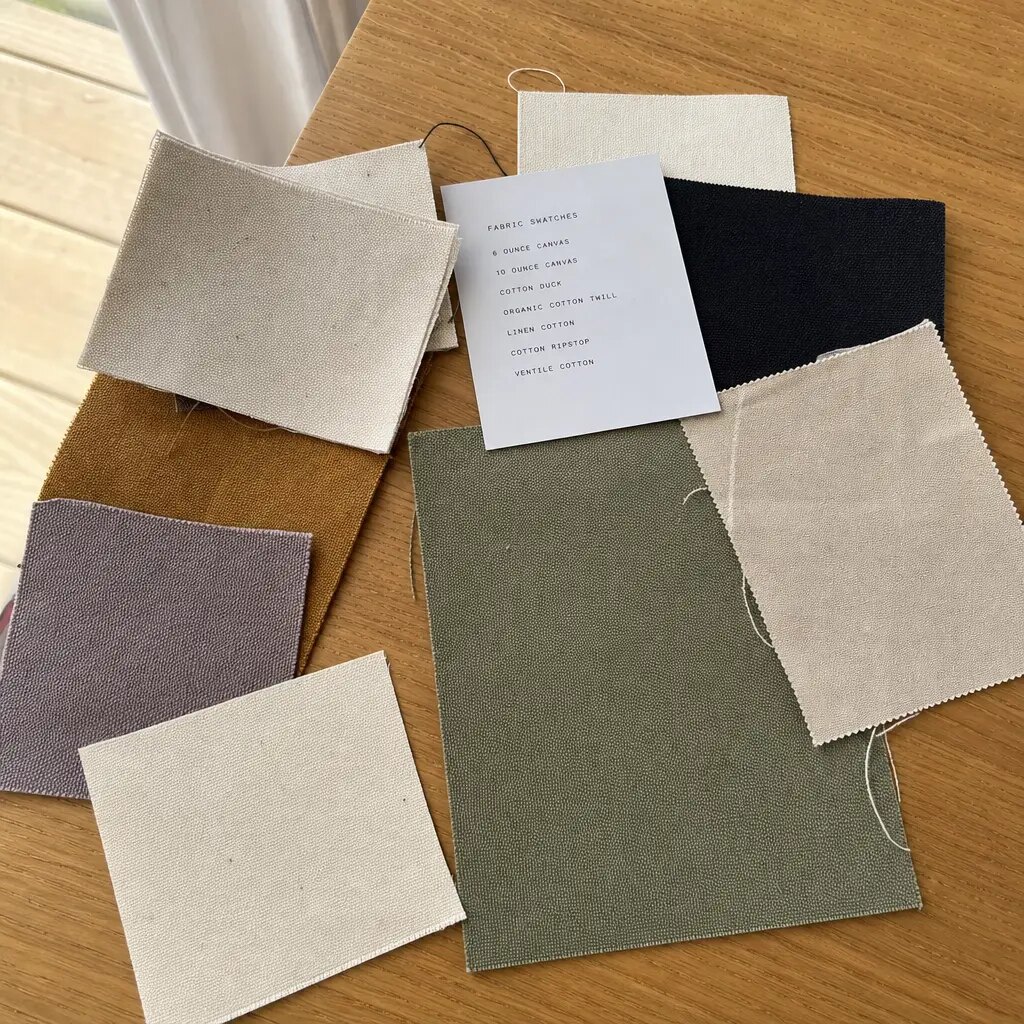
- Approve actual material swatches when body color, odor, stiffness, or logo contrast is important
Match decoration method to roaster artwork
Most coffee roaster logos perform best on jute as bold one-color screen prints. Wordmarks, simple monograms, cup icons, mountain marks, and strong circular badges are usually more reliable than delicate illustrations. A direct screen print can be cost-efficient and visually appropriate, but the artwork must be adapted to the weave. Thin serif strokes, tiny origin names, fine borders, gradients, distressed textures, and small reverse text are common failure points.
Two-color screen printing is possible, but the buyer should discuss registration tolerance before approval. On a coarse, flexible, sewn textile panel, color-to-color alignment will not behave like a flat label or carton. If the logo depends on tight registration between fine outlines and filled areas, simplify the art or move it to a smoother cotton panel. For large solid ink areas, ask for a strike-off because jute can show uneven coverage, edge roughness, stiffness, or cracking depending on ink and curing process.
Alternative decoration methods should solve a defined problem. A woven side label is useful for consistent small branding across multiple SKUs. A printed cotton patch can carry sharper detail while preserving a jute-body look. A leather-look patch can suit premium gift packaging, but the material composition, colorfastness, stitching, and import requirements should be confirmed. Embroidery may look tactile, but it can pull coarse jute or distort the panel unless the design is simple and well digitized.
- Direct screen print: best default for bold one-color roaster artwork
- Cotton print panel: better for small text, thin lines, and sharper badge edges
- Woven label: efficient for subtle branding or multi-design programs
- Sewn patch: useful for premium merchandise but adds stitch-placement QC
- Embroidery: consider only for simple marks after testing panel distortion
Define the logo zone with measurements factories can follow
Instructions such as front center, middle placement, or same as mockup are not enough for bulk production. A buyer-ready specification should state logo width, logo height, distance from finished top edge to top of artwork, horizontal center reference, and no-print zones. These details make the quote clearer and give inspectors a way to accept or reject production without subjective debate.
For many standard coffee merchandise totes, placing the top of the logo about 60-90 mm below the finished opening creates a balanced view and avoids the top hem. The exact number depends on bag height, handle stitch-box depth, pocket layout, and whether the bag will be displayed empty, hanging, or filled. A 220 mm wide logo may work on a 380 mm sewn front panel, but the buyer still needs to confirm side margins after sewing and gusset formation, not from the raw fabric cut width.
Handle reinforcement is one of the most common conflicts. Short-handle shoppers often use a rectangular stitch box, cross stitch, or reinforcement tape that extends downward from the opening. If the logo is placed too close, stitching may overlap the design or pull the fabric through the logo field. Reserve at least 25-35 mm between handle stitch boxes and artwork unless the factory recommends a larger clearance. For side seams and bottom folds, use enough clearance to keep the logo from looking squeezed or disappearing when the bag is filled.
- State final logo size in millimeters, including width and height
- Measure vertical placement from finished top edge to top of artwork
- Measure horizontal placement from the sewn front panel centerline
- Define no-print zones around top hem, handle stitching, side seams, gusset folds, pockets, and bottom fold
- Put placement tolerance in the PO only after the supplier confirms it is realistic for the construction
Write artwork tolerances before approving samples
B2B buyers should separate artwork preference from production tolerance. On jute, the approved logo should include practical limits for line weight, open gaps, text height, color, placement, and registration. Without those limits, a supplier may produce goods that are technically similar to the mockup but commercially disappointing for a coffee retail environment.
Ask the factory for minimum printable line width, minimum open gap, and minimum readable text height on the exact jute quality being quoted. There is no universal number that works for every weave, ink, and print table. A tightly woven laminated jute surface may hold detail differently from loose natural jute. The supplier's answer should be tied to the actual material and decoration method, not a generic factory capability sheet.
Placement tolerance also needs to be explicit. Many sewn tote programs may work around +/-5 mm for logo position, but this depends on cutting accuracy, sewing consistency, panel squareness, and whether the logo is printed before or after sewing. Tighter tolerance may require slower handling, better fixtures, more inspection, and higher cost. For two-color printing, registration tolerance should be discussed separately from placement tolerance. A logo can be correctly positioned and still look poor if the second color shifts too far.
- Request minimum line width and gap for the selected jute, not for paper or cotton canvas
- Set minimum readable text height for brand names, origin names, and badge copy
- Confirm whether reverse type is allowed or should be removed
- Define placement tolerance and multi-color registration tolerance separately
- Use a print strike-off when artwork detail or ink opacity is uncertain
Build an RFQ that prevents quote revisions
A strong RFQ reduces sample loops and price changes. Instead of sending only a logo file and an inspiration photo, provide a concise spec sheet with use case, target quantity, annual forecast if relevant, destination, finished dimensions, material preference, decoration method, artwork size, placement measurements, handle details, packing requirements, and retail labeling needs. The supplier should be able to identify construction conflicts before making a sample.
For coffee roasters, include the products the bag must carry. State whether the tote should hold two 250 g bags, one 1 lb bag, 12 oz bags, retail tins, mugs, boxed brewers, catalogs, or mixed gift components. This helps the factory recommend gusset depth, handle reinforcement, and bottom seam construction. It also avoids the common problem of a flat sample that looks beautiful but sags or twists under real store use.
Quote structure matters. Ask suppliers to separate the base bag cost, decoration cost, screen or setup charge, sample charge, label or hangtag cost, barcode application, export carton cost, and any inner packing. This makes repeat orders and artwork changes easier to compare. It also helps procurement see whether a low unit price is being offset by missing setup charges, vague packing, or weak QC commitments.
- Attach vector artwork and specify final printed size
- List number of logo variants and whether each needs a separate sample
- Ask for unit price, setup charges, sample cost, lead time, carton details, and estimated CBM
- Request supplier comments on logo risks before sampling
- Confirm whether multiple logos can share one material and sewing run
Control MOQ, split SKUs, and repeat orders
Coffee merchandise programs often involve multiple roaster logos, seasonal campaigns, cafe locations, or private-label partners. The base tote may be identical, but every artwork can require separate screens, approvals, production sorting, carton labels, and inspection records. A quote for 1000 pieces with one logo is not the same as a quote for four logos at 250 pieces each.
Many screen-printed jute tote programs become more efficient around 500-1000 pieces per artwork, though the actual MOQ depends on factory equipment, material stock, decoration method, and production schedule. Smaller runs may be possible, but setup charges and sample costs have fewer units to absorb. If the buyer needs low MOQ, they should ask what changes: fabric stock options, print method, available colors, packing density, or lead time.
For repeat orders, keep the approved sample, artwork version, screen size, logo placement map, material specification, and carton packing standard on file. Natural jute shade may still vary by batch, so the repeat PO should say whether the previous sample is the target or whether a new swatch must be approved. Buyers should also clarify how long screens or tooling are retained and whether repeat setup charges apply.
- Ask MOQ by size, body color, artwork, print color count, and decoration method
- Confirm split-run rules for multiple roaster logos
- Separate one-time setup charges from repeat-order pricing
- Keep artwork version control to avoid old logo files entering production
- Request new approval if material batch, print method, or handle construction changes
Approve samples under real production conditions
A digital mockup approves layout only. For jute totes, buyers need to see actual fabric texture, ink behavior, handle position, stitch layout, panel squareness, and finished logo placement. A printed pre-production sample is especially important for coffee roaster crests, circular badges, small type, and premium merchandise because these details can change character on rough weave.
A practical approval sequence is digital layout, material swatch, blank sewn sample if construction is new, print strike-off for line clarity and color, then printed pre-production sample for final approval. Not every low-risk order needs every step, but larger orders and paid merchandise should not skip the physical printed sample. The cost of an extra sample is often easier to manage than a bulk shipment where the logo is technically printed but not retail acceptable.
Review the sample the way customers and store staff will see it. Lay it flat, hang it, and lightly fill it with the intended coffee products. Measure the distance from finished top edge to artwork, check side margins, confirm handle stitch clearance, inspect bottom fold behavior, and verify that the logo reads at normal viewing distance. Photograph the approved sample with a ruler reference and keep it sealed or clearly labeled for factory QC and receiving inspection.
- Approve actual jute weight, color, handle material, thread color, and print method
- Measure logo placement on the finished sewn sample
- Check artwork flat, hanging, and filled with target products
- Review ink coverage, small text, edge clarity, color contrast, odor, and handle symmetry
- Document the approved sample before releasing bulk production
Inspect packing and final QC before shipment
Packing is part of logo quality. Jute totes are often flat-packed, but heavy compression can create hard creases across the printed panel. Rough jute surfaces can scuff ink when printed faces rub during transit. Laminated jute may hold fold memory, and lined bags can take more carton space than expected. If the bag is sold as merchandise or packed into coffee gift programs, arrival condition matters because the receiving team may not have time to reshape or sort every piece.
The purchase order should define carton quantity, inner bundle method, SKU separation, carton marks, barcode labels, and whether printed panels face the same direction. Consistent orientation makes inspection faster and reduces repacking errors. For brands avoiding individual polybags, bundle packing with practical protection can be specified. For retail resale, individual polybags or paper bands may be required, but the buyer should weigh presentation, sustainability policy, cost, and receiving workflow.
Final QC should distinguish normal natural-fiber character from preventable defects. Minor shade variation and small slubs outside the logo field may be acceptable if they match the approved sample. Major defects can include logo placement beyond tolerance, unreadable brand name, print overlap with stitching, large ink voids, stains on the front panel, loose handles, wrong SKU, or incorrect packing. Critical defects may include contamination, unsafe sharp parts, or structural failure under the agreed load. Put these categories in the inspection standard before goods are packed.
- Measure finished dimensions and logo placement with ruler references
- Inspect print clarity, opacity, edge breaks, registration, and color against the approved sample
- Check handle attachment, stitch density, bottom seam, loose threads, odor, stains, and lamination defects
- Verify carton count, SKU assortment, barcode labels, inner bundles, and carton marks
- Ask for carton dimensions, gross weight, net weight, and CBM per 1000 bags for landed-cost planning
Specification comparison for buyers
| Sourcing decision | B2B specification to request | Typical working range | Procurement risk to control |
|---|---|---|---|
| Finished bag size | State finished width x height x gusset after sewing, not cut-panel size | Common coffee retail totes: 350-400 mm W x 300-350 mm H x 100-150 mm gusset | Cut size and finished size differ after hems, seams, gussets, and shrinkage; logo placement must be based on finished dimensions |
| Front logo position | Define top of artwork distance from finished top edge plus horizontal centerline on sewn front panel | Often 60-90 mm below finished top edge for standard shopper totes | Too high can conflict with top hem or handle stitch box; too low can be distorted by bottom fold or hidden when filled |
| Logo width | Specify maximum print width and minimum side clearance from sewn panel edges | 180-220 mm wide on a 350-400 mm front panel for many bold roaster logos | Oversized artwork crowds side seams, drifts visually on gusseted bags, and shows more weave-related edge breaks |
| No-print zones | Reserve clearance from top hem, handle stitching, side seams, pocket seams, and bottom fold | 25-35 mm minimum from handle stitch boxes; 20-30 mm from side seams when practical | If clear zones are not written, reinforcement stitching or pocket seams may enter the approved logo field |
| Jute fabric weight | Quote exact GSM or oz equivalent, plus whether natural, dyed, laminated, backed, or lined | Approx. 275-320 GSM for light promotional totes; 320-380 GSM for stronger retail/gift totes | Light jute wrinkles and distorts print; heavier jute raises freight weight and may require stronger sewing specs |
| Print method | Match method to artwork: direct screen print, cotton print panel, sewn patch, woven label, or embroidery | 1-color screen print is the usual starting point for bold coffee logos | Fine serif type, thin rings, reverse text, and gradients may fail on raw jute unless simplified or moved to a smoother panel |
| Print tolerance | Request supplier-confirmed placement, registration, and color tolerances before sample approval | +/-5 mm placement is common for many sewn totes, but must be confirmed by supplier | Unconfirmed tolerances create disputes at inspection, especially when artwork appears crooked because the bag body is not square |
| Ink and color | Approve ink color on the actual jute batch or production-equivalent sample | Dark brown, black, deep green, or high-contrast single brand color usually performs well on natural jute | Pantone references help communication but do not predict final color on absorbent, uneven natural fiber |
| Handles | Specify handle material, width, length, drop, reinforcement stitch-box size, and load requirement | Cotton webbing handles often 25-40 mm wide; handle drop depends on hand-carry vs shoulder-carry use | Handle stitch boxes can overlap the logo zone or distort the front panel if their size is not locked before sampling |
Buyer checklist before sampling
- Define the tote use case: in-store shopping bag, paid merchandise, coffee subscription gift, trade show giveaway, wholesale resale item, or premium gift set.
- List the actual load: number and size of coffee packs, mugs, retail tins, boxed drippers, catalogs, or accessories the bag must carry.
- Specify finished dimensions with tolerances: body width, height, gusset depth, handle width, handle length, finished handle drop, and pocket size if applicable.
- State the jute construction: natural jute, dyed jute, laminated jute, jute with cotton lining, jute with cotton pocket, or jute body with sewn logo patch.
- Request exact material details: GSM or oz equivalent, lamination/backing status, lining fabric, handle material, thread color, and any chemical or odor requirements.
- Provide vector artwork and state final logo width, height, color count, Pantone references, and whether small text or fine lines may be simplified for jute printing.
- Define logo placement using measurable references: finished top edge, sewn side seams, handle stitch boxes, pocket edge, front panel centerline, and bottom fold.
- Set no-print zones around handle reinforcement, top hem, side seams, gusset folds, bottom fold, pocket seams, labels, and any hangtag attachment point.
- Ask the supplier to confirm minimum printable line width, minimum gap, minimum readable text height, and whether reverse type is practical on the quoted jute surface.
- Request a production-equivalent sample using actual jute weight, handle material, sewing layout, print ink, print method, and final logo placement.
Factory quote questions to send
- What exact jute GSM or oz equivalent are you quoting, and is the outer fabric natural, dyed, laminated, backed, washed, or combined with cotton lining?
- Are the quoted dimensions finished bag dimensions after sewing, and what tolerance applies to body width, height, gusset depth, and handle drop?
- What handle material, width, total length, finished drop, reinforcement method, stitch-box size, and thread specification are included in the unit price?
- What is the stable printable area on this exact bag construction after allowing for top hem, handle stitching, side seams, gusset folds, pockets, and bottom fold?
- Which logo method is priced: direct screen print on jute, screen print on cotton panel, heat transfer on patch, woven label, embroidered patch, leather-look patch, or another method?
- For the selected jute surface, what minimum line width, minimum open gap, and minimum readable text height can you reproduce consistently in bulk?
- How will logo placement be measured during production: from finished top edge, side seam, sewn front panel centerline, pocket edge, or another reference point?
- What normal placement tolerance in millimeters do you apply, and can you support tighter tolerance with slower production or added inspection cost?
- For two-color artwork, what registration tolerance do you apply on the finished sewn panel, and do you recommend simplifying the design?
- Will the handle stitch box, cross stitch, rivet, reinforcement tape, pocket seam, or side label enter or visually affect the proposed logo zone?
Quality-control points to confirm
- Logo position must be defined in millimeters from finished sewn references. For many jute totes, +/-5 mm placement may be realistic, but the supplier must confirm it for the exact construction before bulk production.
- Print quality should be judged against the approved physical jute sample, not a paper proof. Inspect for unreadable text, major ink skips, flooded details, drag marks near seams, excessive edge breaks, and poor opacity.
- Natural jute shade variation should be compared with the approved sample range. Pantone targets are useful for communication, but final acceptance must account for fiber color, weave texture, and ink absorption.
- Multi-color logos require registration checks on the sewn panel. Misregistration that is acceptable on a rough promotional item may not be acceptable on paid retail merchandise.
- Handle stitching must be symmetrical, secure, and outside the approved logo clear zone. Check stitch-box size, stitch density, skipped stitches, loose threads, and whether reinforcement distorts the front logo panel.
- Finished bag dimensions must be measured after sewing and finishing. Body width, height, gusset depth, handle drop, pocket position, and top hem depth all affect the visual logo position.
- The bag body should sit reasonably square when lightly filled. Twisted panels, uneven gussets, slanted top edges, and warped front panels can make a centered logo appear off even if print placement is within tolerance.
- Inspect natural material defects separately from factory defects. Minor slubs outside the logo field may be acceptable; heavy slubs through the logo, broken yarns, stains, oil marks, water marks, and strong odor should be controlled.
- If laminated jute is used, check for lamination bubbles, peeling, fold memory, odor, stiffness changes, and cracking near seams or folds.
- Perform a practical carry test using the intended load when the tote will hold coffee packs plus mugs, brewers, tins, or gift components. Handle attachment and bottom seam security should match the agreed use case.