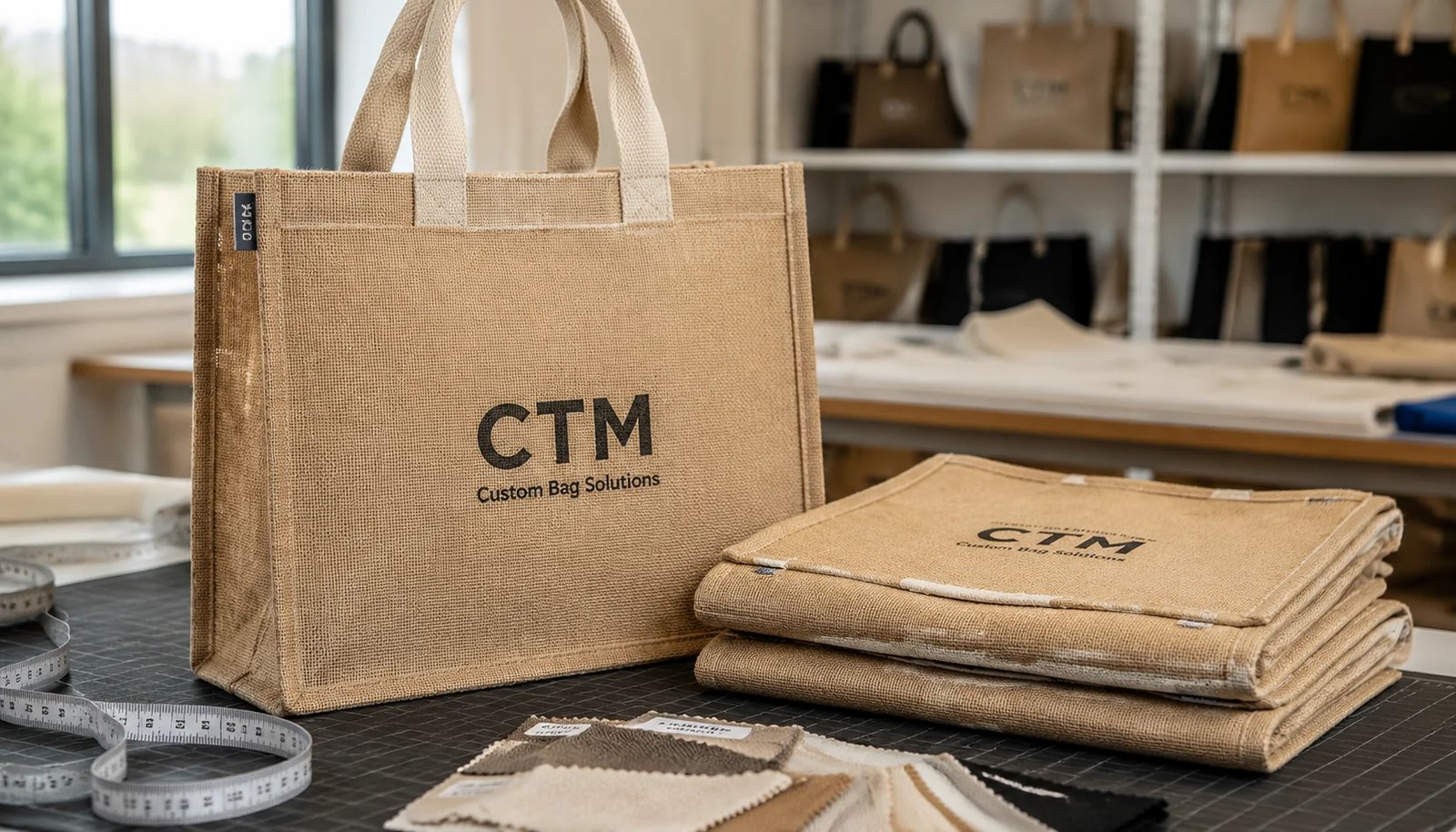
The main planning problem: the bag lead time is not the same as the launch lead time
For liquor retailers, the real risk is rarely sewing time alone. The schedule usually slips earlier, during artwork approval, bottle-fit confirmation, and consolidation planning. A custom jute tote bag for wine or spirits can be a simple SKU, but it still depends on details that affect production routing: laminated versus unlaminated body, print method, handle construction, and whether the bag must stand upright around one or two glass bottles. If those points are undefined, suppliers quote loosely and buyers compare prices that are not built on the same assumptions.
A practical lead time plan starts from the in-store date and works backward through receiving, customs clearance, vessel booking, factory production, sample approval, and RFQ clarification. Many buyers receive a nominal lead time such as 30 to 45 days, then discover that fabric sourcing, print screens, revised samples, or mixed packing added another two weeks. The fix is not only to push the factory. It is to lock the right bag specification early enough that the factory can reserve material and production capacity without guessing.
- Separate internal approval time from supplier production time
- Build schedule around ex-factory date, not only ETA
- Treat artwork, bottle fit, and packing approval as schedule gates
- Use one approved spec sheet across all quote requests
Choose the bag construction first, because it drives both protection and schedule
Liquor retail bags carry heavier, denser products than general grocery totes. A 750 ml glass bottle changes the stress pattern on the side seams, bottom panel, and handles. That is why construction choice matters before color or graphics. For most liquor programs, laminated jute is the safer route. A laminated interior reduces fiber shedding, improves shape retention, and gives the printed panel a more stable base. Typical jute body weight for this category sits around 270 to 320 GSM, depending on weave and lamination. Below that range, two-bottle bags can lose shape or lean after a short carry distance.
Unlaminated jute can work for rustic branding or one-bottle promotional bags, but buyers should expect more surface irregularity, more dust, and less print precision. If the bag is meant for premium spirits or gift sets, adding cotton web handles and bound seam edges raises cost slightly but reduces complaints. A bottom board is not mandatory for all orders, yet it is worth considering for taller bottles or packs that include accessories such as corkscrews or mini mixers. The wrong construction often causes a hidden delay: the sample may look acceptable empty, but fail bottle-fit or load test, forcing a remake.
- Common retail-friendly range: 270-320 GSM jute body
- Laminated interior improves print stability and spill resistance
- Cotton web handles usually outperform rope handles under bottle load
- Bottom insert helps upright presentation for two-bottle and gift-set formats
Size planning should be based on bottle geometry, not a generic one-bottle or two-bottle label
A one-bottle bag for wine is not automatically suitable for sparkling wine, taller imported spirits, or boxed accessories. Procurement teams often request a one-bottle or two-bottle format without sending bottle dimensions, then receive supplier samples built around the factory's default bottle assumptions. This creates avoidable re-sampling. The factory needs bottle height, body diameter, neck profile if relevant, and expected fill weight. With that, they can set bag width, gusset, and handle drop so the bag carries cleanly and does not tip.
For example, a standard one-bottle tote may land near 12 x 4 x 14 inches, while a two-bottle vertical bag may need a wider gusset or divider concept depending on the bottle shape. If the bag is used at checkout, the handle drop should allow easy wrist or hand carry, not only tabletop presentation. If it is sold as a reusable branded gift bag, front-panel appearance and base stiffness become more important. Suppliers quote more accurately when the intended use is clear because that changes panel reinforcement, insert choice, and even carton packing density.
- Send bottle height, body diameter, and target load per bag
- Note whether bottles are standard wine, sparkling, or spirits formats
- Clarify if dividers are required or if bottles can sit side by side
- Include use case: checkout carry, gift bag, or premium resale item
Print method affects lead time more than many buyers expect
On jute tote bags, print feasibility depends heavily on surface texture and whether the panel is laminated. For most liquor retailer logos, one- or two-color screen printing is the most workable method. It offers solid color blocks and reasonable durability without turning the order into a complex decoration project. However, screen setup still adds preparation time. If the design has very fine lines, small serif text, or gradients, the supplier may push toward heat transfer or another decoration route, which changes both unit cost and approval time.
This matters because print revisions often happen late. Brand teams may still be adjusting campaign dates, vintage information, or legal lines while procurement is trying to secure a factory slot. The practical solution is to freeze artwork elements that affect screen count and print area first, even if secondary copy is pending. Also specify acceptable print limitations in the RFQ. Jute is not coated art paper. If line weight is too thin or a logo relies on precise edges against a rough weave, expect a sample round. That sample round is normal, but it must be in the schedule.
- Screen print is usually best for 1-2 solid colors on jute
- Fine detail and gradients may require a different print method
- Approve artwork in vector format with actual print size shown
- Define print tolerance and acceptable texture-related irregularity
MOQ logic for jute bags is usually tied to material batching and print setup, not only sewing
Buyers often treat MOQ as a commercial negotiation point only, but on jute bags it often reflects how the factory batches raw materials, lamination, handle colors, and print screens. A natural stock-color laminated jute body with standard cotton webbing can support a lower MOQ than a fully custom dyed body with matching handle webbing and multiple artwork versions. The difference is important for liquor retailers testing new markets or running seasonal gift programs. A low quoted MOQ may look attractive until the supplier adds surcharges for custom body color, insert board, or split carton assortments.
The more useful approach is to structure MOQ around what can be standardized. If the body remains natural jute and only the front print changes, the factory may combine material preparation more efficiently. If each region needs a different slogan or legal line, ask whether the supplier can hold the base bag semi-finished, then complete the final print in smaller batches. Not every factory offers that route, but it is worth pricing. It can shorten repeat-order lead time and reduce inventory risk, especially for promotional calendars tied to holidays.
- Lowest MOQ usually comes from stock natural jute plus standard handles
- Custom dyed body and custom webbing usually raise MOQ and lead time
- Separate MOQ by size, print design, and color in the quote review
- Price semi-finished stock options for repeat seasonal programs
Build the timeline from sample stages, not from a single factory promise
A realistic schedule for custom jute tote bags includes at least four stages: quote clarification, sample approval, mass production, and shipment booking. If artwork and dimensions are already stable, a pre-production sample may take around 7 to 10 days after spec confirmation. Mass production can then run roughly 25 to 40 days depending on order volume, material readiness, and print complexity. But this is only useful if the buyer knows which stage starts the clock. Some suppliers count lead time from deposit receipt, others from final artwork approval, and others from sample sign-off.
For liquor retail launches, do not merge all timing into one line called lead time. Split it into dated milestones. Sample shipped by date, sample approval by date, material in-house by date, bulk sewing start, inspection window, ex-factory, vessel cutoff, and planned arrival. This exposes where the risk really sits. For example, if the artwork will not be approved for another week, the nominal 30-day production promise is irrelevant. If the supplier plans to source custom dyed web handles after sample approval, that should be visible before you issue the purchase order.
- Request lead time by stage, not only total days
- Clarify whether the clock starts at PO, deposit, artwork approval, or sample sign-off
- Keep a booking buffer between ex-factory and vessel cutoff
- Use milestone tracking for launch-critical seasonal programs
Sample approval should test load, fit, print, and folding behavior before bulk starts
A pre-production sample is not just a visual approval item. For liquor bags it needs a practical use review. Place the intended bottles inside, lift the bag repeatedly, and observe whether the side seams distort, the base insert shifts, or the necks push into the top opening awkwardly. Review the handle drop under load because some bags feel acceptable empty but uncomfortable once filled. If the bag is to be sold in-store, fold it the same way the factory will pack it and inspect whether the front panel print cracks or creases excessively after compression.
Sample comments should be consolidated into one controlled approval file. Multiple informal comments from merchandising, branding, and logistics teams create version confusion and can delay the order more than the physical sample itself. If the bag requires a woven label, side seam logo tab, or hangtag, those additions must be approved at the same stage. They often look minor, but missing trim details can hold bulk packing. A good sample sign-off document includes size, materials, print references, handle construction, packing notes, and a dated approval status.
- Load-test the sample with actual bottles, not only by hand feel
- Inspect print after folding and simulated carton compression
- Approve all trims and labels together with the bag body
- Issue one controlled sample approval record to the supplier
Packing choices can quietly add cost and also decide whether the bags arrive saleable
Jute bags are bulky relative to their value, so packing efficiency matters. Liquor retailers often focus on unit price, then discover the carton plan created excess freight cost or receiving problems. Flat-packed bags are usually the most efficient, but over-compression can damage laminated surfaces, bend inserts, or leave a permanent fold line across the front print. That is especially risky for premium gift programs. The factory should define units per carton, carton dimensions, gross weight, and whether inserts are pre-set inside each bag or packed separately.
Packing also needs to match your downstream handling. If the order is moving through a retail DC, carton markings and store allocation labels may be more important than a slight reduction in carton count. If the bags are going directly to events or franchise stores, mixed pack assortments may save local handling time but slow the factory packing line. Buyers should price both options. A cheaper unit bag can become a more expensive landed item if carton cube rises sharply or if store teams need to re-sort every shipment.
- Review units per carton, carton cube, and gross weight together
- Avoid over-compression on laminated jute print panels
- Decide whether base inserts are pre-inserted or packed loose
- Match carton marks and assortments to your receiving workflow
Quote comparison should separate unit price from the cost drivers behind it
When several suppliers quote the same jute tote bag, the lowest number often hides a simpler build: lower GSM, no lamination, smaller print area, lighter handles, fewer stitches, or tighter carton compression. That is why quote comparison needs a cost-driver view, not only a unit-price column. Procurement teams should normalize each offer into material, print, trims, packing, and freight cube assumptions. Even if suppliers do not provide a fully broken-out cost sheet, the buyer can still compare the quoted basis by asking what changes the price materially.
For example, a supplier may quote an attractive bag using stock natural jute, one-color print, and no insert board. Another supplier may be slightly higher but include laminated body panels, reinforced handles, and a packing plan that reduces damage risk. For liquor retail, those differences are commercial, not cosmetic. A bag failure under bottle weight or a delayed launch from resampling usually costs more than a few cents on unit price. Use the RFQ to force comparability before you negotiate.
- Normalize quotes by GSM, lamination, print colors, and handle construction
- Separate unit price from sample charges, tooling, and packing assumptions
- Compare freight impact through carton dimensions, not guesswork
- Identify which specs are fixed and which are negotiable for cost-down
QC thresholds and acceptance criteria should be practical for natural-fiber bags
Jute is a natural material, so the QC standard must be realistic without becoming vague. Buyers who use generic accessory tolerances often create disputes because the material will show some weave variation, slubs, and tonal inconsistency. Those are not necessarily defects if they sit within an approved natural-look range. The important point is to define what is unacceptable for retail sale: major panel skew affecting bottle fit, misaligned print beyond tolerance, exposed lamination edges, weak handle stitching, or odor issues that make the bag unsuitable for indoor retail shelving.
QC for liquor bags should prioritize functionality first. The bag must carry the intended load safely and sit correctly when filled. Then review appearance, including centered print, seam binding neatness, and absence of excessive fraying. If your business uses third-party inspection, align the defect list to this product type rather than applying a general textile checklist only. The most useful acceptance criteria are measurable and visible at the carton-opening stage, so they can be applied consistently by both factory QC and buyer inspection teams.
- Define acceptable natural jute variation versus sale-blocking defects
- Prioritize load-bearing seams and handle attachments in inspection
- Set measurable tolerances for size, print placement, and gusset shape
- Use production samples as the inspection reference standard
Specification comparison for buyers
| Spec decision | Recommended option | When it fits | Buyer risk to check |
|---|---|---|---|
| Material structure | Laminated jute 13 oz equivalent with PP lining and bound seams | Best for wine and spirits gift purchases where bottles may sweat or leak slightly | Unlined jute sheds fibers and can distort in print; confirm inner lamination thickness and seam binding |
| Bag size for bottle count | Single bottle 12 x 4 x 14 in or double bottle 8 x 4 x 14 in gusseted format | Retail checkout, gifting, and event packaging with standard 750 ml bottles | If dimensions are too narrow, necks collide or push seams; send bottle dimensions, not only bottle count |
| Fabric weight target | 270-320 GSM jute body with reinforced bottom board optional | Good balance of stiffness, print stability, and cost for repeat retail orders | Below this range the bag can sag under glass weight; above it cost and folding volume rise quickly |
| Handle construction | Cotton web handles cross stitched into side panels, 2.5-3 cm width | Frequent carry use and higher perceived quality for premium bottle programs | Short stitched tabs on face panel can tear; request handle pull test method and stitch count per attachment |
| Print method | 1-2 color screen print on laminated panel; heat transfer only for detailed logos | Most liquor retail logos and campaign art with solid brand colors | Fine text below 2 mm stroke can fill in on jute texture; request print size limit and artwork line thickness guidance |
| MOQ route | Stock color jute with custom print for lower MOQ; dyed body only for larger annual volume | Chains testing a regional launch or distributor trial run | Custom dyed jute often pushes MOQ and lead time; compare price break versus stock natural body |
| Inner support | Removable PP bottom insert or stitched-in base board for two-bottle styles | Needed when bottles are heavy or gift sets include mixers or accessories | Loose inserts shift during packing; confirm whether insert is packed inside bag or pre-set in production |
| Packing format | Flat packed by master carton with size sticker and PO-level carton marks | Container efficiency and easier DC receiving for mixed store allocations | Over-compressed cartons can crease laminated panels and crack print; confirm units per carton and carton drop standard |
| Booking schedule | Approve pre-production sample 7-10 days before mass production slot | Useful for holiday, year-end gifting, or promotional launches with fixed in-store dates | Late artwork approval can miss vessel cutoff even if sewing is finished; ask for ex-factory date and booking buffer separately |
Buyer checklist before sampling
- Define bottle count, bottle dimensions, and target load in kilograms before requesting bag size
- State whether the bag is for checkout carry, gift-with-purchase, event use, or premium resale
- Specify jute construction: laminated or unlaminated, GSM range, gusset, and whether a base board is required
- Provide artwork as vector file and note print colors, print size, and any fine text below 2 mm stroke
- Confirm handle material, width, drop length, stitch style, and minimum load requirement
- List your acceptable tolerance for finished size, print position, and color variation
- State sample stages required: digital layout, physical pre-production sample, and shipping sample if needed
- Define packing: units per polybag if any, units per carton, folded or set-up, and carton mark format
- Align MOQ with assortment plan by size or artwork version, not only total order quantity
- Request a production timeline split into sample, material prep, printing, sewing, inspection, and ex-factory
Factory quote questions to send
- Is the quoted bag made from laminated jute or unlaminated jute, and what is the actual GSM range of the body panels?
- What size is quoted, including gusset and handle drop, and what bottle type was the load assumption based on?
- Is the print screen printed directly on jute, on a laminated panel, or by heat transfer, and what are the artwork limits?
- What MOQ applies per size, per print design, and per body color?
- Does the quote include a bottom board, inner lamination, edge binding, and reinforced handle stitching?
- How many days are needed for pre-production sample, mass production, and booking after artwork approval?
- What carton quantity, carton size, and gross weight were used in the quote?
- What AQL level or in-line inspection standard is normally applied for this product type?
- Can the supplier hold stock color jute or standard handles to shorten repeat-order lead time?
- Which cost items change if the order splits into multiple store assortments or mixed SKUs in one shipment?
Quality-control points to confirm
- Finished size tolerance should be defined by width, gusset, and height separately; example tolerance is often within plus or minus 1 cm unless a tighter spec is required
- Handle attachment must be reviewed for stitch density, backstitch lock, and alignment; loose thread ends alone are cosmetic, but skipped stitches at stress points are not
- Print position should be centered to approved tolerance and compared to approved artwork size; inspect for smudging, pinholes, and weak opacity on dark dyed jute
- Lamination should be even with no obvious bubbling, peeling edges, or strong odor beyond normal material smell
- Bottom insert, if included, must fit flat without bending corners or lifting side seams
- Carton packing should preserve fold shape without crushing the front print area or cracking laminated surfaces
- Random load testing with filled bottle weight should be completed on retained production samples before final packing
- Needle control, metal contamination prevention, and carton count accuracy should be documented if the bags enter large retail DC systems