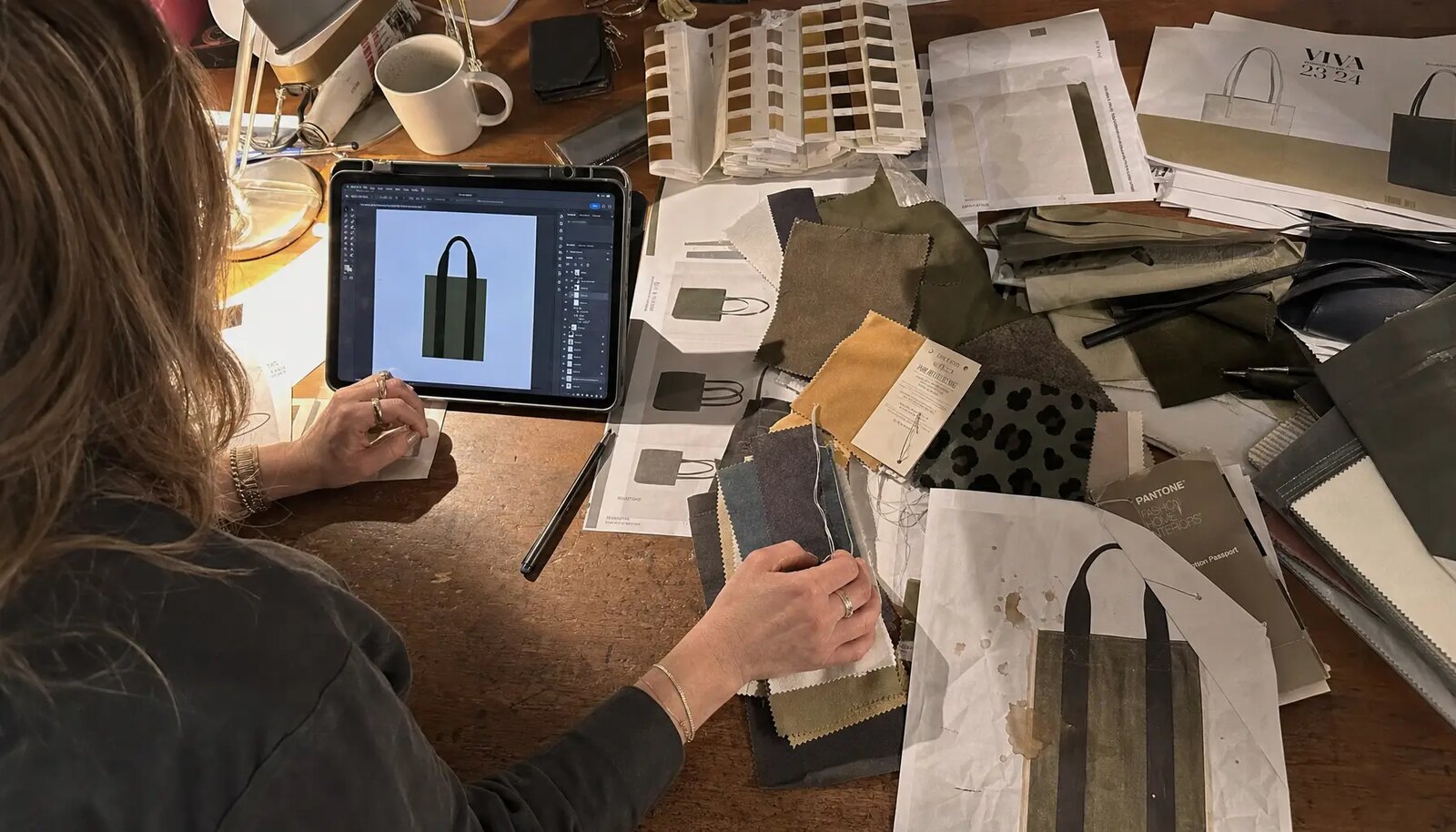
Why coffee roasters need a real lead time plan for jute totes
Custom jute tote bags look straightforward at first glance: fabric, handles, logo, carton. In practice, they can create the same procurement headaches as more technical packaging. The usual delay points are rarely sewing alone. Late artwork, unclear body construction, unapproved handle length, missing retail labels, revised carton counts, moisture-control decisions, and scattered sample comments can all push the calendar. For a coffee roaster, that delay may affect a holiday blend launch, café opening, wholesale promotion, farmers market season, trade show, or subscription campaign.
Jute, often called burlap in retail language, is a natural fiber with visible weave, slubs, shade movement, and fiber hairiness. That character is part of why roasters like it. It feels warmer than a plastic shopper and fits natural, craft, and sustainable merchandising stories. The same texture also makes print edges, dimensional tolerances, and shade expectations harder to manage than on smooth cotton canvas or non-woven polypropylene. A polished digital mockup will not tell you whether a fine-line roaster logo will fill in on the weave, whether two 12 oz coffee packs and a mug will sit upright, or whether a laminated body will remember a hard export fold.
The safest B2B approach is to plan backward from the required warehouse receipt date, not from the supplier's sewing completion estimate. A tote can be finished on the sewing floor and still miss the commercial window because final inspection, carton relabeling, freight handover, customs clearance, or warehouse receiving was not allowed for. A strong lead time plan separates buyer approval time from factory production time and gives each decision a dated owner.
- Treat final artwork, approved sample, deposit, material confirmation, and packing approval as separate schedule gates.
- Use physical samples to approve construction and print behavior; use digital layouts only for artwork position review.
- Define natural jute variation separately from workmanship defects so inspection is fair but still protects brand presentation.
- Build the calendar from required warehouse receipt date, then add freight, customs, final inspection, production, sampling, and internal approval time.
- Ask suppliers to state the lead time trigger clearly: final sample approval, final artwork release, deposit received, or material booking confirmation.
A realistic lead time map from RFQ to warehouse receipt
A useful calendar breaks the order into blocks instead of hiding everything inside one promised date. RFQ clarification may take 2-5 business days if the buyer provides size, quantity, artwork, handle preference, packing requirement, destination, and required receipt date. If those details are missing, the quote cycle stretches because the supplier is guessing. Physical sample making often takes about 7-14 days after artwork and sample payment are confirmed, plus courier transit. A revision can add another 5-10 days, depending on whether it affects the pattern, printing, or only minor workmanship details.
Bulk production for many standard custom jute tote bag programs is often planned in the 25-45 day range after final approval and deposit. Treat that as a planning range, not a promise that applies to every order. Quantity, factory loading, holidays, fabric availability, dyed handles, multiple artwork versions, and special packing can all change the answer. Final inspection and export handover deserve their own space too. Allow at least 2-5 days for inspection scheduling, inspection result review, corrective action if needed, packing confirmation, and document preparation.
The phrase 30 days is not enough. Some suppliers mean 30 days from deposit and final artwork. Others mean 30 days from approved pre-production sample and confirmed materials. If the sample is still pending, the real lead time is 30 days plus the full sample cycle. That difference is enough to force air freight, cut into warehouse receiving time, or miss a seasonal promotion. Ask what is included before you put the date into an internal launch plan.
- Planning benchmark: RFQ clarification 2-5 business days; sample 7-14 days plus courier; revision 5-10 days if needed; bulk 25-45 days after final release for many standard programs.
- Add extra buffer for dyed handles, non-standard jute shade, multiple artwork versions, retail labels, divided packing, or peak-season factory loading.
- For fixed launch dates, request dated milestones for material arrival, print start, cutting, sewing, packing, inspection, and handover.
- Do not release freight plans from sewing completion alone; ask when inspected packed cartons will be available.
- Build buyer-side deadlines for finance approval, PO release, brand approval, label data, carton marks, and warehouse booking.
Start with use case, size, gusset, and load expectation
Before asking for price, define what the tote must do. A paid café merchandise tote needs a better hand feel, cleaner seams, and more consistent print presentation than a free event giveaway. A holiday gift-set bag may need to hold coffee packs, a mug, syrup bottle, chocolate bar, or brewing accessory and still stand neatly on a display table. A farmers market tote may need a longer shoulder handle and stronger top hem. These use cases change the material, pattern, stitch reinforcement, carton volume, and QC priorities.
For coffee roasters, common retail tote dimensions sit around 30 x 35 x 12 cm for compact gift or two-pack formats, 35 x 40 x 12 cm for general merchandise, and 38 x 42 x 15 cm for larger market-style bags. Use these as planning examples, not universal standards. A 250 g pack, 12 oz pack, or 1 lb pack can have very different height and stiffness depending on the coffee packaging format. If the tote must carry actual retail goods, send the supplier product dimensions or a simple fill diagram.
Handle drop needs the same precision. A short hand-carry handle may suit gift packaging, while a shoulder tote usually needs a longer usable drop. Cotton webbing in the 25-30 mm width range is common when roasters want better comfort than self-jute handles. Ask for handle drop measured from the top opening to the top of the loop, not only total handle length. Suppliers may describe the same handle differently, and a small misunderstanding can make the finished bag feel wrong in store.
- State dimensions as width x height x gusset, in centimeters, and clarify whether measurements are taken flat before filling.
- Typical tolerance for medium totes is often ±0.5-1.0 cm for main dimensions, but confirm by pattern and construction.
- Specify expected fill weight, such as coffee packs only or coffee plus mug/bottle/accessory, so handle and seam reinforcement are realistic.
- Approve handle drop on a physical sample, especially if the tote must fit over a jacket or be used as shoulder merchandise.
- If the tote must stand upright, test the sample with the actual coffee packs and gift contents, not empty.
Fabric terminology: jute, burlap, GSM, weave, and lamination
In sourcing conversations, jute is the fiber and burlap often describes the coarse woven fabric style. Suppliers may use the terms differently, so do not let the RFQ rely on the name alone. Specify natural jute, laminated jute, unlaminated jute, jute-cotton blend, or cotton-lined jute. If you ask only for a custom jute tote, one supplier may quote a structured laminated body while another quotes a looser unlined burlap fabric. Those two offers are not comparable, even if the outside dimensions match.
GSM helps, but it is not the whole specification. A buyer can request an approximate body weight range, such as 260-340 GSM for many medium retail-grade laminated jute totes. Still, the actual hand feel depends on yarn thickness, weave density, finishing, and lamination. A fabric swatch or reference sample is more useful than a word like premium. If repeat-order consistency matters, ask whether the supplier can hold the same shade range or material source and for how long. Natural jute can move from pale straw to deeper tan depending on crop, processing, and lot.
Lamination gives structure and a cleaner interior, which helps when the bag is used for coffee gift sets or retail shelves. It can also stabilize the fabric for printing. The trade-off is folding behavior. Laminated jute can show whitening, fold memory, or cracking if it is sharply creased or over-compressed. That means packing is part of the material decision, not a detail to solve after production.
- Use supplier swatches to compare body feel, weave openness, shade, lamination, and print surface before approving price.
- Confirm whether lamination is inside, outside, or absent; inside lamination is common for structured retail totes.
- For unlaminated jute, expect more fiber shedding, slubs, internal roughness, and softer structure.
- If shade matters for e-commerce photography or retail display, request a defined approved shade range rather than exact beige matching.
- Ask whether the quoted fabric is stock, newly sourced, or specially controlled; the answer affects both lead time and repeatability.
Print planning for roaster logos, roast notes, and brand colors
Most custom jute tote bags for coffee roasters use screen printing because it is practical for bold one-color or two-color graphics. A roaster wordmark, icon, or simple badge usually works well when the strokes are thick and the artwork has enough open space. Problems appear when buyers try to print packaging-level detail on coarse jute: origin notes, tasting descriptors, small serif text, QR codes, gradients, distressed textures, and thin lines. The weave can break edges, swallow detail, or allow ink to spread.
The RFQ should include vector artwork, final print size, Pantone references, and print position measured from bag edges, seams, or the top opening. Pantone references are useful, but printing on natural tan jute will not look like printing on white coated paper. For strict color programs, ask for a strike-off and approve the color visually on the actual material. If the print area is large and solid, discuss pinholes, opacity, and acceptable fabric show-through before sampling.
Changing print size after sample approval often creates avoidable delay. Larger artwork may require a new screen, different placement jig, more drying space, or a fresh approval. If the bag has a front fold or will be packed folded, keep artwork away from heavy creases. When the brand story needs fine detail, a hangtag, woven label, printed cotton patch, or insert card is usually cleaner than forcing small tasting notes onto jute.
- Best artwork: bold marks, 1-2 colors, thick strokes, high contrast, and limited fine detail.
- Use a practical minimum text height; for many jute surfaces, small text below about 6-8 mm cap height should be tested before approval.
- Define print placement tolerance, commonly around ±0.5 cm for smaller panels and up to ±1.0 cm where construction variation is higher.
- Require a printed panel or strike-off for QR codes, small icons, strict brand colors, or dense logo badges.
- Do not approve bulk based only on a clean digital mockup; jute texture changes edge quality and color perception.
MOQ and quote structure: why small orders are not always faster
Coffee roasters often want a small test order before committing to a larger merchandise program. That is sensible. It does not, however, automatically shorten lead time. Even a small order needs material preparation, screen setup, cutting, sewing, packing, and inspection. If the order sits below the supplier's efficient production level, it may be scheduled between larger runs or made from available materials. The result can be a higher unit price and a completion date that is less predictable than expected.
MOQ should be quoted by variable, not as one vague number. Size, fabric, handle color, print design, label version, and packing method can each create a separate setup. If three café locations need the same bag with different city names, ask whether one fabric and handle booking can be shared while printing is split. If several roast lines need different hangtags, keep the bag itself identical and handle variation through labels or inserts. Consolidating the base construction is often the easiest way to improve schedule reliability.
Be careful with very low MOQ offers. They may be fine for a pilot, but procurement should ask what makes the low MOQ possible. Is the factory using stock jute? Leftover cotton webbing? A simplified handle? A smaller print? No carton liner? If the pilot succeeds, the reorder may not match unless the initial material route is documented.
- Ask MOQ per size, material, handle color, print design, label version, and packing configuration.
- Consolidate body fabric and handle color across artwork versions where possible.
- If using a pilot lot, ask what MOQ and lead time apply to the repeat bulk order.
- Clarify whether low MOQ pricing is based on available stock fabric or newly sourced production material.
- Compare suppliers on setup assumptions, not only on unit price.
Sample approval and revision control
A physical pre-production sample is the most important risk-control step for custom jute tote bags. It should use the intended fabric, handle material, print method, sewing construction, gusset pattern, top hem, and approximate fold. This sample shows what a digital layout cannot: handle comfort, bag balance, front panel distortion, print readability, odor, fiber shedding, lamination crease marks, and whether the filled bag looks retail-ready.
Sample approval should turn into measurable standards. If the approved size is 35 x 40 x 12 cm, write the tolerance. If the print sits 10 cm below the top opening and centered on the front panel, write the placement tolerance. If the handle drop is 25 cm, define the acceptable range. If natural shade variation is accepted, define it with approved swatches or photos. If the sample is approved for construction only and print color is still pending, say that clearly.
Revision control protects the schedule. A larger gusset changes the pattern. A different handle width may require new webbing. A revised logo size can require a new screen. A new packing fold can affect creasing. Instead of sending comments one by one from marketing, procurement, and operations, consolidate feedback into one revision list with priorities: must change, acceptable as is, and monitor in bulk.
- Keep one sealed approved sample or a signed photo record with measurements for inspection reference.
- Use the sample review to check dimensions, handle drop, handle comfort, stitch density, seam finish, gusset stability, print edge quality, odor, and packing fold.
- Ask whether sample approval allows immediate material booking or whether PO and deposit are still required.
- If a revision is needed, ask whether it affects pattern, print screen, material sourcing, or only workmanship instruction.
- Do not change dimensions, artwork, handles, and packing in separate late rounds if the delivery date is fixed.
Packing, moisture control, and warehouse receiving
Packing affects cost, carton cube, product appearance, and transit risk. For laminated jute totes, aggressive compression can create fold memory or whitening. For unlaminated jute, loose fibers and dust can transfer inside cartons. For either construction, moisture deserves serious attention because jute is a natural fiber and coffee merchandise should not arrive smelling musty. Flat packing or controlled folding in export cartons is usually safer than chasing the lowest possible carton volume.
Avoid the phrase standard export packing unless you define it. State pieces per carton, maximum carton dimensions if your warehouse has limits, bundle method, liner requirement, desiccant plan if needed, and whether individual poly bags are allowed. Many sustainability-focused roasters prefer no individual poly bags. That can work, but then carton liners, moisture control, clean interiors, and bundle protection become more important. Retail merchandise also needs protected labels and cartons that can survive receiving without making the product look dusty or crushed.
Coffee programs often add details late: hangtags, UPC stickers, store allocation, carton marks by region, or inserts for a gift set. Put those into the quote before production is complete. Reopening cartons to add labels or split assortments costs time, creates counting errors, and can damage presentation. Packing instructions should be approved before bulk packing starts, not after final inspection.
- Typical packing may range from about 40-100 pcs per export carton depending on tote size, gusset, handle bulk, lamination, and fold method.
- Define carton marks: PO number, item/style, artwork version, quantity, gross/net weight, carton number, destination, and barcode if required.
- Use carton liners or moisture barriers for sea freight or long storage routes; discuss desiccant based on route, season, and carton volume.
- If individual poly bags are prohibited, state the alternative such as paper bands, bundle ties, or carton liner only.
- Approve packing fold on a sample or packing photo before mass packing laminated jute.
Quality control standards that separate natural variation from defects
Jute should be inspected with material reality in mind. Natural slubs, small shade differences, and minor weave irregularity may be acceptable if they match the approved standard. But natural material is not a valid excuse for crooked handles, weak stitching, delamination, smudged printing, mold odor, oil marks, or wrong carton counts. The QC document should separate acceptable natural character from workmanship defects so the inspection is practical and still protects the brand.
Measurement checks should include width, height, gusset, handle drop, handle position, and print placement. A common commercial tolerance for medium jute totes is ±0.5-1.0 cm on main dimensions, but the final tolerance should reflect bag size and construction. Handle alignment should be checked from the front view because uneven handles are highly visible on retail merchandise. Print should be checked for placement, opacity, pinholes, smudges, ghosting, and ink transfer.
For coffee roasters, odor and cleanliness are especially important. A musty bag placed near coffee can undermine the customer experience even if the bag is structurally acceptable. Final inspection should check that goods are dry, cartons are clean, and no chemical, mildew, oil, rust, or warehouse odor is present. If the tote carries a gift set, perform a practical load check with the intended fill weight and focus on handle attachment, top hem, and bottom seams.
- Inspect against approved physical sample plus written tolerances, not only a digital mockup.
- Separate minor natural slubs and shade variation from major defects such as open seams, delamination, oil marks, mildew odor, or print drift.
- Use in-line inspection if possible to catch print or handle alignment problems before all units are sewn.
- Check carton count, carton marks, labels, liner, bundle count, and moisture condition during final inspection.
- For heavier gift sets, test the bag with the expected contents or an equivalent weight, then inspect handle and seam stress points.
How to compare quotes and avoid a misleading low unit price
A low quote often reflects a different bag. One supplier may quote laminated jute with 30 mm cotton webbing handles, one-color screen print, carton liner, and defined sample approval. Another may quote unlaminated jute, self-fabric handles, smaller print area, no liner, and a looser delivery trigger. Both may be called custom jute tote bags, but the landed cost and risk are not equivalent.
Create a quote comparison sheet that normalizes the technical and commercial variables. Include dimensions, gusset, fabric construction, approximate weight, lamination, handle width and drop, print method, color count, print area, label requirements, sample lead time, MOQ basis, packing count, carton volume, inspection standard, Incoterms, and lead time trigger. List exclusions too: screen charges, hangtags, barcode labels, individual packing, carton liner, desiccant, split shipment costs, or special carton marks.
For seasonal coffee launches, reliability can matter more than a small unit-price saving. If late artwork or vague packing instructions turn into emergency air freight, the original low price becomes irrelevant. The best supplier is not always the cheapest; it is the one whose quote assumptions are clear enough to manage. Ask what conditions would change price or lead time before issuing the PO.
- Normalize quotes by construction, not just by outer dimensions and quantity.
- Compare lead time from the same trigger: final artwork, final sample approval, deposit, and material confirmation.
- Include sample charges, print setup, labels, carton liner, packing materials, inspection, and freight impact in landed-cost review.
- Flag quotes that use terms like premium, standard, or similar quality without swatch, weight range, or measurable tolerances.
- Ask suppliers to state exclusions and change-order triggers in writing before deposit.
Specification comparison for buyers
| Spec decision | Recommended option | When it fits | Buyer risk to check |
|---|---|---|---|
| Body fabric | Natural jute or burlap fabric specified by construction and approximate weight, such as medium retail-grade laminated jute in the 260-340 GSM range or the supplier's equivalent swatch | Coffee retail merchandise, holiday gift sets, farmers market bags, café launch kits, wholesale account promotions | Do not compare quotes described only as standard jute. Confirm weight range, weave density, yarn appearance, lamination, shade range, and whether the sample is made from the bulk-intended lot. |
| Lamination | Inside laminated jute for structure and a cleaner interior; unlaminated jute only when a softer rustic finish is acceptable | Laminated suits paid merchandise, gift packaging, and upright display. Unlaminated suits low-cost giveaways or natural craft positioning. | Lamination can whiten or crack at hard folds and can trap odor if goods are packed damp. Approve fold method, carton count, and dry-goods controls before bulk packing. |
| Size and gusset | Define width x height x gusset in centimeters, with a typical coffee tote range of 30 x 35 x 12 cm to 38 x 42 x 15 cm | Two to four retail coffee packs, mug-and-coffee gift sets, brew accessory bundles, or shoulder-carry market totes | A 2-3 cm gusset change can affect cutting yield, carton cube, sample pattern, and whether the bag stands upright when filled. Lock dimensions before asking for a committed lead time. |
| Handle specification | 25-30 mm cotton webbing, natural or dyed, with box stitch plus cross stitch or an agreed reinforced bartack/box construction | Roasters wanting a better hand feel and stronger retail presentation than self-jute handles | Confirm handle drop, total handle length, width tolerance, color, attachment depth, and front-view alignment on the physical sample. Do not assume these from a digital mockup. |
| Print method | 1-2 color screen print for bold roaster logos; printed cotton panel, woven label, or transfer only when fine detail is essential | Screen print fits most coffee branding, keeps setup simple, and is usually more predictable on jute than detailed multicolor artwork | Fine type below about 6-8 mm cap height, QR codes, gradients, and thin strokes may fill in or break on coarse weave. Require a strike-off when readability matters. |
| MOQ structure | Quote MOQ by size, fabric, handle color, print design, and packing method; consolidate shared components where possible | Multi-café programs, regional artwork versions, seasonal roast launches, and pilot merchandise orders | Very low MOQ may use stock fabric, leftover webbing, or manual scheduling. Ask whether repeat orders can match the pilot and what MOQ applies after the test run. |
| Sample route | Digital layout plus physical pre-production sample using intended fabric, handles, print method, sewing construction, and approximate fold | Best balance of speed and risk control before releasing bulk cutting and print setup | Approving artwork only misses handle comfort, gusset proportion, odor, shade, seam quality, print edge quality, and fold memory. Sample revisions can reset the production calendar. |
| Packing | Flat packed or controlled folded in export cartons, with carton liner or moisture barrier as required; typically 40-100 pcs/carton depending on size and lamination | Sea freight, importer warehousing, distributor receiving, café allocation, and retail-ready merchandise programs | Over-compression can create permanent creases. Missing liners, poor desiccant planning, wet cartons, or strong warehouse odors can make jute unsuitable for coffee retail environments. |
| Lead time basis | Plan from required warehouse receipt date and break timing into RFQ, sampling, revision, material booking, production, inspection, handover, and freight | Seasonal promotions, holiday coffee boxes, trade shows, new café openings, and wholesale campaign deadlines | A supplier's 25-35 production days may start only after sample approval, final artwork, deposit, and material confirmation. Late buyer approvals are a common hidden delay. |
Buyer checklist before sampling
- Define the commercial use first: paid café merchandise, grocery retail display, coffee gift set, subscription insert, farmers market bag, corporate gift, or event giveaway.
- Confirm final width, height, gusset, handle drop, expected fill weight, and whether the bag must stand upright when filled with coffee packs or accessories.
- State the exact material route: laminated natural jute, unlaminated jute, jute-cotton blend, cotton-lined jute, or another burlap-style construction.
- Request approximate fabric weight or swatch reference, weave appearance, lamination side, natural shade range, and whether the production lot can match the approved sample.
- Provide vector artwork with final print size, Pantone references, print method, print position measured from seams or bag edges, and acceptable placement tolerance.
- Avoid small text, QR codes, gradients, and fine origin notes on coarse jute unless a strike-off proves readability on the selected material.
- Quote MOQ by size, body fabric, handle color, artwork version, label version, and packing method rather than asking for one blended MOQ number.
- Ask the supplier to separate sample lead time, sample revision time, material booking, cutting, printing, sewing, final inspection, packing, and export handover.
- Approve a physical pre-production sample made from actual jute, actual handles, intended print method, top hem construction, gusset pattern, and approximate final fold.
- Use sample review to check dimensions, handle comfort, front-view symmetry, gusset stability, logo readability, odor, loose fibers, top hem neatness, and fold marks.
Factory quote questions to send
- What is the production lead time from final sample approval, final artwork, material confirmation, and deposit receipt, not from first inquiry date?
- What exact fabric are you quoting: laminated jute, unlaminated jute, jute-cotton blend, cotton-lined jute, or stock burlap, and what is the approximate GSM or supplier weight reference?
- Is the body fabric natural jute only, or are dyed jute and shade-sorted natural jute available? What color variation should be expected within one bulk lot?
- Can you provide a fabric swatch, previous production reference, or lab-style specification showing weave appearance, lamination, and body stiffness before sample making?
- Is the lamination inside or outside, what is its approximate thickness if known, and what folding method do you recommend to avoid whitening or cracking?
- What dimensions are included in the price, and what tolerance do you accept for width, height, gusset, handle drop, and print placement?
- How many print colors are included, what print method is assumed, and what minimum line thickness or text height do you recommend on this jute fabric?
- Can you provide a print strike-off or printed panel before sewing if our logo has fine type, small icons, strong brand color requirements, or a QR code?
- What MOQ applies per size, per fabric, per handle color, per print design, per label version, and per packing method? Can multiple artwork versions share one material booking?
- Are cotton webbing handles included, and what width, length, handle drop, color, attachment depth, and reinforcement stitching are quoted?
Quality-control points to confirm
- Fabric construction matches the approved sample, including jute shade range, weave appearance, body stiffness, lamination presence, surface finish, and overall hand feel.
- Bag width, height, gusset depth, panel symmetry, and opening shape stay within the agreed tolerance, commonly ±0.5-1.0 cm depending on bag size and seam structure.
- Handle drop, total handle length, handle width, handle pair alignment, and attachment position are consistent, with no visibly uneven placement from the front view.
- Handle reinforcement uses the approved box stitch, cross stitch, bartack, or equivalent construction, with no skipped stitches, broken yarns, weak top hem areas, or loose thread tails.
- Top hem stitching is straight and secure, with no exposed raw edge beyond the approved finish and no sharp lamination edge at the opening.
- Side seams, bottom seams, and gusset seams are secure and balanced, with no open seams, puckering that distorts the front panel, or loose internal cutting waste.
- Print color matches the approved standard within commercially reasonable tolerance on natural jute, with no major smudging, ghosting, ink transfer, heavy pinholes, or poor opacity.
- Print placement is centered within agreed tolerance and does not drift visibly across the lot or move too close to seams, handles, top hem, or gusset folds.
- Fine artwork, small text, QR codes, or coffee roast details remain readable only if they were approved in the strike-off and defined as part of the production standard.
- Lamination, if used, is bonded evenly with no major bubbling, peeling, delamination, cracking, or excessive whitening at folds after normal packing.