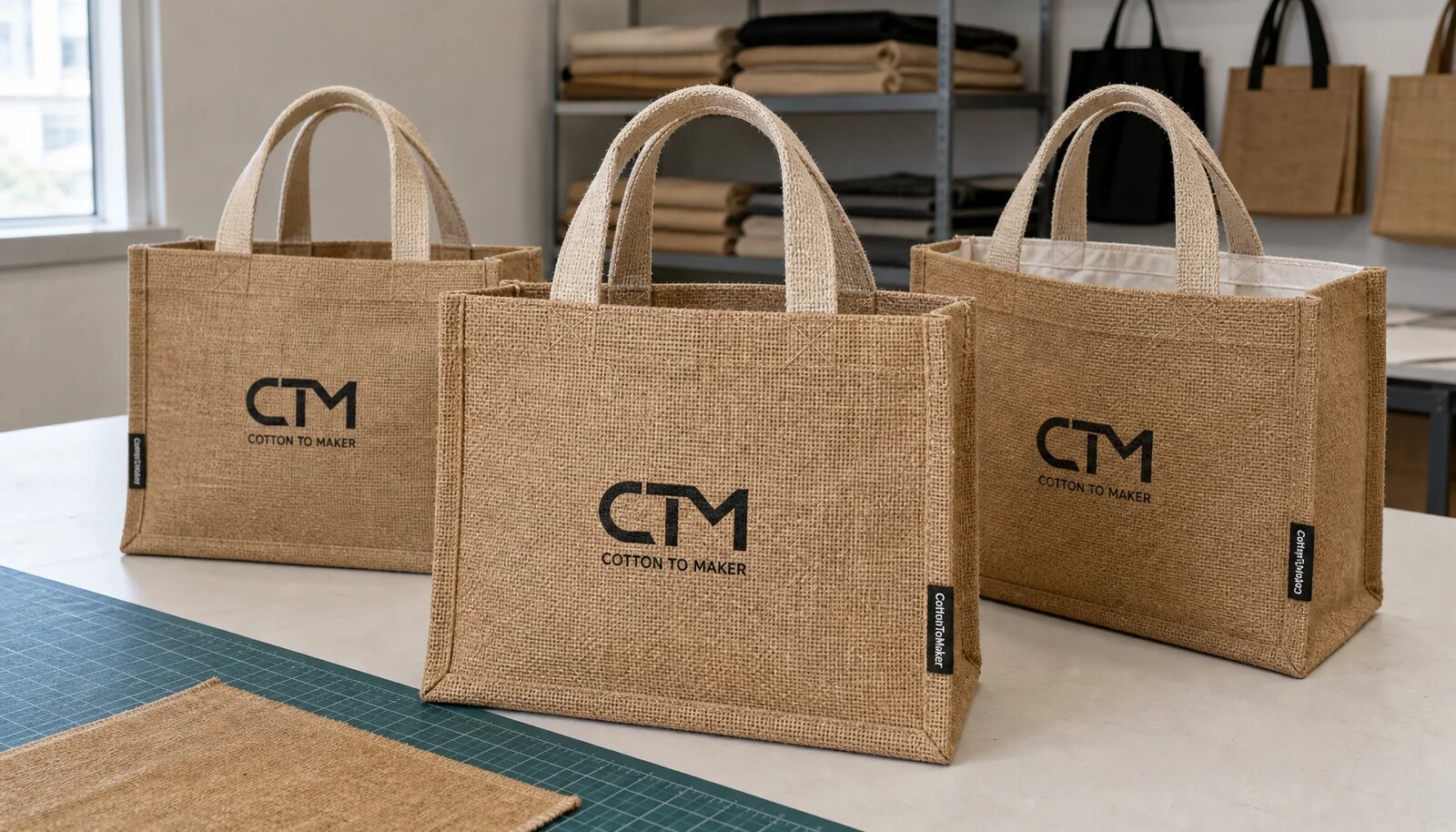
Define the Craft Fair Load First
The correct jute tote fabric weight depends on what the bag must carry at the booth, not on the word premium in a supplier quote. Craft fair buyers usually need a bag that looks natural, stands reasonably well on a table, and carries uneven items such as candles, pottery, soap boxes, small framed prints, yarn kits, jars, books, or bundled gifts. Those products create point pressure at the bottom corners, so the body fabric, gusset, seam allowance, and handle stitching matter together.
For most custom jute tote bags sold or distributed at craft fairs, a practical starting point is 13 oz to 15 oz jute, roughly 440-510 GSM before lamination. This range normally feels stronger than an economy giveaway bag but does not become too heavy for carton packing. If the tote is positioned as a reusable retail item or is expected to carry ceramics and glass, move closer to 15 oz to 17 oz. If it is a low-cost event handout, 10 oz to 12 oz may work, but it should be approved with realistic load testing.
- Light booth giveaway: 10 oz to 12 oz jute, simple construction, lower load expectation.
- General craft fair retail tote: 13 oz to 15 oz jute, reinforced seams, stable gusset.
- Premium artisan market tote: 15 oz to 17 oz jute, stronger handles, better shape retention.
- Heavy product use: consider a stiff bottom insert or reinforced base instead of only increasing GSM.
Understand GSM Before Comparing Quotes
Jute bag quotes often become confusing because suppliers may describe fabric weight in oz, GSM, or a local mill reference. Some quote raw jute fabric before lamination, while others weigh the laminated material. A laminated jute fabric can feel stiffer and may weigh more, but that does not always mean the jute yarn itself is stronger. Procurement teams should force the quote into one measurement basis so competing suppliers are quoting the same construction.
A useful RFQ line is: natural jute fabric, 13 oz to 15 oz, approximate 440-510 GSM before lamination, clear inner PP lamination if required. If the supplier cannot state whether the GSM is before or after lamination, request a swatch weight report or ask for a small cut piece size and weight. This prevents a cheaper supplier from quoting a lower raw fabric with a coating that makes the finished material appear heavier.
- Raw jute GSM shows the textile weight before coating and is better for material comparison.
- Finished laminated GSM includes coating and may look stronger on paper than it performs in use.
- Oz references are common in bag factories; keep both oz and GSM in the RFQ to avoid conversion mistakes.
- Accept a practical tolerance such as +/- 5% on fabric weight, but require notification if the mill lot changes.
Choose Lamination for Function, Not Assumption
Many jute tote bags for craft fairs use an inner PP lamination because it helps the bag stand, reduces loose fiber inside, and adds some resistance against light moisture. This is useful when vendors sell packaged food, candles, soaps, stationery, and gift items that should not collect jute dust. Laminated jute also gives the bag a cleaner retail shape on display, especially when the gusset is wide enough to sit on a table.
Unlaminated jute has a softer, more natural hand feel and may suit brands that want a rustic texture with fewer plastic components. The tradeoff is less structure, more fiber shedding, and more variation in print appearance. If a brand wants to make environmental claims, the lamination choice must be reviewed carefully by the buyer's compliance team. The factory should not write broad sustainability wording unless the importer has documentation to support it.
- Use laminated jute when shape retention, cleaner interior, and light moisture resistance matter.
- Use unlaminated jute when natural texture is more important than stiffness and dust control.
- Confirm lamination color because clear, milky, and tinted backing can change the outside shade.
- Open a sealed sample after storage to judge coating odor before approving bulk production.
Match Print Method to Jute Texture
Jute is not a smooth canvas. The coarse weave creates high and low points, so thin lines, small type, gradients, and QR codes can lose detail. Screen printing is still the common choice for custom jute tote bags, especially for one or two solid colors. The artwork should be bold, with enough line thickness to bridge the texture. A logo that looks sharp on a PDF may break apart when printed directly on natural jute.
For more detailed branding, consider a cotton patch sewn to the bag, a woven side label, or a printed canvas panel combined with jute body fabric. These options cost more than a simple screen print but can protect brand readability. Heat transfer may work on a sewn cotton panel, but direct transfer on rough jute is rarely the safest first choice. A serious supplier should recommend artwork adjustments before sampling instead of accepting an unsuitable file without comment.
- Best direct print: bold one-color or two-color screen print with simplified artwork.
- Best small brand mark: woven side label or cotton label sewn into the side seam.
- Best detailed graphic: printed cotton or canvas front panel stitched onto the jute body.
- Approval standard: strike-off on production fabric, not only a digital layout.
Build Strength Through Construction Details
Increasing fabric weight helps, but many failed jute totes fail at the handle or seam before the main body tears. For craft fair use, handle comfort matters because customers may carry multiple purchases around an event. Cotton webbing handles are usually softer in hand, while jute handles keep a consistent rustic look. Either option should include width, drop length, stitch pattern, and reinforcement details in the purchase specification.
A common practical handle width is 35-45 mm, with a drop length suited to hand carry or shoulder carry. Box-X stitching is safer than a few straight stitches when the bag is expected to carry heavier goods. The bottom seam and side gusset should be checked for even seam allowance, skipped stitches, and fraying. If the bag has a wide gusset, the factory should fold and stitch it consistently so the bag stands square instead of twisting.
- Handle width: 35-45 mm for better comfort and load distribution.
- Handle drop: define in centimeters and state whether it is hand carry or shoulder carry.
- Stitching: use box-X or reinforced bar tack where handles meet the bag body.
- Seams: inspect side, bottom, and gusset seams for fraying and uneven allowance.
- Load test: test with the intended product weight plus a safety margin.
Control MOQ by Reducing Variant Complexity
MOQ for custom jute tote bags is driven by fabric purchasing, cutting efficiency, print setup, handle material, label work, and packing requirements. A buyer who requests three sizes, four logo colors, two handle colors, and individual barcodes may receive a high MOQ or a quote that hides setup cost inside the unit price. For a first craft fair season, it is usually better to launch fewer variants and buy enough volume in each to keep production stable.
A practical trial order can use one natural jute body, one bag size, one handle type, and one print color across several distribution channels. If the buyer needs multiple retail brands or event logos, keep the bag construction identical and separate only the print screens. The RFQ should define MOQ per size, per logo, and per packing version. This avoids the common surprise where the supplier's quoted MOQ applies to one artwork only, not the whole combined order.
- Lowest complexity: one size, natural jute, one handle color, one print color.
- Moderate complexity: one size with several logo prints but identical packing.
- High complexity: multiple sizes, dyed panels, different labels, and retail barcodes.
- RFQ control: request MOQ separately for body fabric, print design, handle color, and packing SKU.
Approve Samples With Measurable Criteria
A jute tote sample should not be approved only because it looks close to the catalog photo. The buyer should measure the physical bag, compare fabric weight, load the handle, inspect print clarity, and fold the bag into the proposed packing method. Jute has natural shade variation, slubs, and fiber thickness differences, so the approval standard should separate acceptable natural variation from actual defects such as broken yarns, open seams, heavy odor, print smears, or twisted gussets.
The strongest sampling sequence is a material swatch, then a logo strike-off, then a full pre-production sample. If time is limited, combine the strike-off and full sample, but do not skip physical review for a new artwork or new fabric weight. For repeat orders, buyers can approve by retained sample and updated photos only when the same fabric, lamination, handle, and print method are used.
- Measure bag width, height, gusset, handle drop, print size, and print position.
- Weigh a measured swatch or request mill fabric data for GSM confirmation.
- Rub the print lightly after curing to check flaking or poor ink adhesion.
- Load the sample with realistic craft fair goods and hold by the handles for practical stress.
- Keep one signed approval sample at the factory and one with the buyer or inspection team.
Specify Packing Before Final Price
Packing affects both product condition and landed cost. Jute tote bags are often flat packed in export cartons, but lamination and gusset shape can be damaged by over-compression. If the carton is too tight, the bags may arrive with hard creases, bent corners, or distorted gussets that look poor at retail. For craft fair distributors, cartons also need clear SKU marks because event inventory is often handled quickly by temporary staff.
Individual polybags are not always necessary and may conflict with a natural product position, but they can protect bags from moisture and warehouse dust. A carton liner or master polybag may be a better compromise. The buyer should request pieces per carton, carton dimensions, gross weight, net weight, and carton stacking recommendation before confirming the order. These details allow the freight forwarder to calculate volume and allow the warehouse to plan receiving.
- Flat pack is efficient but should not crush laminated corners or handles.
- Carton liners help with moisture control without adding individual retail packaging.
- SKU marks should include item number, logo version, quantity, carton number, and destination if required.
- For retail channels, define barcode sticker position and whether hangtags or inserts are included.
- Request packing photos from the first finished cartons before mass packing continues.
Plan Lead Time Around Material and Print Risk
Lead time for custom jute tote bags is not only sewing time. It includes fabric sourcing, lamination, cutting, print screen setup, ink curing, sewing, trimming, inspection, packing, and export handover. Natural jute availability can change during busy seasons, and dyed or specially laminated material can add waiting time. If the craft fair season has a fixed opening date, the buyer should build the schedule backward from warehouse arrival, not from factory shipment.
A realistic production plan separates sample approval from bulk lead time. Buyers often lose one or two weeks because artwork needs revision after the first strike-off, or because the sample used a different fabric than bulk production. Peak season orders should also account for factory capacity and inspection booking. If the order must ship by air due to late approval, the heavier fabric weight and bulky cartons can make freight cost painful.
- Allow time for artwork cleanup before screen making.
- Do not release bulk cutting until fabric weight, lamination, and shade are accepted.
- Reserve inspection time before the cargo handover date, not after cartons are sealed and rushed.
- Treat late artwork, multiple SKU labels, and changed packing as schedule risks.
- Ask whether the quoted lead time starts from deposit, artwork approval, or physical sample approval.
Compare Quotes by Landed Cost and Defect Risk
The cheapest jute tote quote may not be the lowest-cost order after freight, defects, repacking, and retail presentation are included. A 17 oz laminated jute tote costs more than a 12 oz bag and weighs more per carton, but it may reduce complaints if the product is sold as a reusable premium craft fair tote. On the other hand, over-specifying heavy fabric for a simple giveaway can waste budget and increase import cost without improving the event result.
Procurement teams should compare quotes using the same bag size, raw fabric weight, lamination, handle width, print method, packing, MOQ, sample terms, lead time, and Incoterm. If one supplier quote is much lower, identify what is missing before negotiating price. Missing carton data, undefined fabric weight, vague reinforced handles, or no strike-off process can turn into rework later. A clear RFQ makes supplier comparison easier and gives the factory fewer chances to choose the cheapest interpretation.
- Material cost driver: jute weight, lamination type, handle webbing, and bottom reinforcement.
- Decoration cost driver: number of print colors, screen setup, patch sewing, and label type.
- Packing cost driver: individual bags, hangtags, barcode labels, carton strength, and mixed SKU sorting.
- Freight cost driver: carton volume, gross weight, compression limits, and shipping mode.
- Risk cost driver: unclear tolerances, skipped samples, poor print readability, and weak handle stitching.
Specification comparison for buyers
| Spec decision | Recommended option | When it fits | Buyer risk to check |
|---|---|---|---|
| Fabric weight for standard craft fair resale tote | 13 oz to 15 oz jute, about 440-510 GSM before lamination | Good balance for vendor booths, retail gift shops, and promotional resale where the bag must stand upright but still stay within reasonable freight weight | Confirm whether quoted GSM is raw jute only or jute plus laminated backing; suppliers may compare different measurement bases |
| Fabric weight for premium artisan market bag | 15 oz to 17 oz jute, about 510-575 GSM, with reinforced seams and heavier handle webbing | Fits higher retail price points, heavier handmade goods, ceramics, books, jars, and gift bundles | Heavier jute increases carton weight and can raise ocean and air freight cost; test packed carton handling before mass production |
| Economy fabric for giveaway use | 10 oz to 12 oz jute, about 340-410 GSM, usually with simple lamination | Works for short-event giveaways or light merchandise when the buyer accepts a softer bag body | Low weight jute may wrinkle, shed fiber, and collapse on display; approve an actual sample instead of judging from photos |
| Lamination choice | Clear PP lamination inside for structure and moisture resistance, or unlaminated jute for a more natural feel | Laminated jute fits craft fair shopping, food-adjacent stalls, and bags needing shape retention; unlaminated fits eco-positioned retail where texture matters more | Lamination changes print feel, odor, recyclability claims, and seam stiffness; define it in the RFQ rather than treating it as standard |
| Logo method on coarse jute | Screen print with bold artwork, woven label, cotton patch print, or heat transfer on a sewn cotton panel | Best for brand logos that need to remain readable from booth distance and survive repeated handling | Fine lines, small QR codes, gradients, and thin serif fonts often break on rough jute; require a strike-off on production fabric |
| Handle construction | Cotton webbing or jute webbing, 35-45 mm wide, box-X stitched, with drop length stated in centimeters | Cotton handles fit comfort-focused retail bags; jute handles keep a more rustic appearance for craft fairs | Cheap handles fail before the body fabric; specify width, length, material, stitch pattern, and pull-test target |
| MOQ and color planning | Start with one natural jute body color and one print color when testing demand, then add dyed panels or multi-color print after repeat orders | Useful for distributors and brand owners launching craft fair SKUs without locking too much cash in slow-moving variants | Small orders with many artwork versions increase setup cost and production sorting risk; combine SKUs only when specs are truly identical |
| Packing method | Flat pack in export cartons with moisture control, carton liner, and clear carton marks by SKU | Fits importers shipping mixed craft fair inventory to warehouses, retailers, or event distributors | Over-compression can crease laminated jute and deform gussets; request carton size, pieces per carton, gross weight, and packing photos |
Buyer checklist before sampling
- State bag size as width x height x gusset, with tolerance such as +/- 1 cm for panels and +/- 1.5 cm for handle drop.
- Define jute weight in oz and approximate GSM, and clarify whether GSM is measured before or after lamination.
- Specify laminated or unlaminated construction, including inner coating color, odor expectations, and whether the bag must stand upright when empty.
- Send vector artwork and minimum readable logo height; avoid approving print from a digital mockup only.
- List handle material, width, drop length, stitch pattern, and expected load use, not only the phrase reinforced handles.
- Request pre-production sample photos plus one physical approval sample made with production jute and the correct logo method.
- Set carton packing requirements, moisture protection, carton drop suitability, SKU labeling, and barcode placement before the final quote.
- Require quote data by line item: material, print setup, sample charge, carton quantity, lead time, payment terms, and Incoterm.
Factory quote questions to send
- What is the raw jute fabric weight in oz and GSM, and is the quoted value measured before lamination?
- What lamination, if any, is included in the price: clear PP, matte finish, colored backing, or no lamination?
- Can you provide a strike-off on the same jute lot for our logo before bulk cutting starts?
- What is the minimum order quantity per bag size, per print design, and per handle color?
- Which print method do you recommend for our artwork on coarse jute, and what line thickness or font size should be adjusted?
- What are the standard tolerances for bag size, handle drop, print position, and fabric weight?
- How many pieces per export carton, what are carton dimensions and gross weight, and how will moisture be controlled?
- What sample timeline, bulk production lead time, and peak-season capacity assumptions are included in this quote?
- Which quote items are excluded, such as inner label, barcode sticker, individual polybag, fumigation document, inspection, or local delivery to forwarder?
Quality-control points to confirm
- Verify fabric weight by cutting and weighing a measured jute swatch; compare against the approved GSM tolerance instead of relying only on supplier declaration.
- Inspect lamination adhesion, odor, bubbling, cracking at fold lines, and whether the gusset keeps shape after flat packing.
- Check logo clarity on actual jute texture, including edge bleeding, missing ink in low spots, registration, and print position from top and side seams.
- Measure bag dimensions, gusset depth, handle drop, handle width, and seam allowance across early production, mid-production, and final packed cartons.
- Run a practical load test using the buyer's intended weight range, then inspect handle stitch tearing, seam opening, and fabric distortion.
- Review carton strength, piece count, moisture protection, carton marks, barcode labels, and whether mixed SKUs are separated clearly for warehouse receiving.