Start with the coffee load, not the tote photo
Custom jute tote bags are used in coffee retail for more than one job. A roaster may need a light event carrier, a checkout bag for several retail packs, a paid merchandise tote, a holiday gift-set bag, or a wholesale account gift. Those bags can look almost identical in a front-facing mockup, yet the construction underneath may be very different.
That is where many sourcing problems begin. Roasted coffee is compact and heavy. Two 1 kg bags, a mug, a jar, or a boxed brewer can turn a small tote into a real load-bearing product. The first failures rarely appear as a clean rip through the center of the jute panel. They usually start at the handle stitch box, top hem, side-bottom gusset corner, bottom seam, or a fold line where laminated jute has been repeatedly compressed.
A procurement-ready specification should connect the intended load to the material and construction. Fabric weight, lamination, handle webbing, reinforcement, seam allowance, print method, and packing are not separate decisions. They work together. A bag made for a market sample giveaway does not need the same structure as a bag sold as reusable merchandise in a cafe.
For B2B buyers, a custom jute tote bags durability testing checklist for coffee roasters should be practical enough for a supplier, inspector, and brand team to use. It should name the working load, test load, handle method, seam construction, print rub expectation, odor check, lamination fold behavior, and packing recovery. When those points are written before production, supplier quotes become easier to compare and bulk disputes become less subjective.
- Common coffee retail loads: about 1.5-5.0 kg depending on pack size, bundle contents, and accessories
- Highest-risk areas: handle stitch box, top hem, side-bottom gusset corner, bottom seam, and print rub zone
- Common quote gaps: no GSM, no lamination detail, unspecified handle width, no stitch pattern, no load test, and no carton plan
- Useful first decision: classify the tote as giveaway, retail carry bag, paid merchandise, gift packaging, or wholesale account gift
Turn use case into measurable RFQ language
A strong RFQ describes performance before it asks for the lowest unit price. Size and artwork matter, but they do not define durability. The same 35 x 40 x 15 cm gusseted tote can be produced as a low-cost promotional bag or as a sturdier retail item with laminated jute, wider cotton handles, reinforced stitching, and tighter packing controls.
Write the actual contents into the RFQ. If staff will load bags at checkout, include the heaviest realistic combination rather than the average sale. For example, two 1 kg coffee packs plus a mug is a different stress case from three 250 g bags. Holiday bundles may include boxed brewers, tins, jars, books, or ceramic items. These hard-edged products press into seams and bottom corners in a way soft coffee pouches do not.
Separate working load from test load. The working load is what the bag is expected to carry in normal use. The test load is the agreed inspection weight. A clear line might read: 'Expected working load 3 kg; finished sample to pass static load hold at agreed test weight for 30 minutes with no handle detachment, seam burst, broken stitch at handle box, or major deformation.' The final number should match the bag construction and supplier recommendation, but it should never be left implied.
Dimensions also need more care than a simple width-by-height note. State width x height x gusset. Say whether measurements are taken flat, opened, or filled. For sewn jute bags, +/-1 cm is a common practical body-size tolerance unless tighter control is specifically agreed. Handle drop, print placement, label placement, and gusset depth should have their own tolerances because they affect comfort, shelf presentation, and bundle fit.
- State the channel: event, cafe retail, e-commerce gift, wholesale pack, subscription insert, or merchandise SKU
- Define body size as width x height x gusset and say how it will be measured
- Specify working load, test load, hold time, sample quantity, and pass/fail conditions
- List dense and hard-edged contents, not only coffee pouches
- Add separate tolerances for body dimensions, gusset depth, handle drop, print position, and label position
- Ask the supplier to confirm the recommended maximum working load for the quoted construction
Specify jute fabric, GSM, lamination, and variation
Jute fabric specification is one of the quickest ways to identify whether quotes are truly comparable. For many coffee roaster retail totes, laminated jute around 280-340 GSM is a practical starting range. Some suppliers describe similar material as a 13-15 oz equivalent, but ounce terminology varies by market and may not map cleanly to GSM. Ask the factory to state exactly what they mean.
Clarify whether the fabric weight is measured before or after lamination. A tote described only as 'natural jute' or 'burlap' leaves too much room for interpretation. Similar-looking fabric can differ in stiffness, shedding, weave density, seam strength, and price. Require a declared tolerance, such as +/-5% or the factory's own controlled range, so bulk material can be checked against the approved standard.
Heavier fabric is not automatically the best choice. A lighter unlaminated jute tote may fit rustic event giveaways or very light purchases. It may also pack flatter. For retail coffee programs, laminated jute often gives better body stability, cleaner internal surfaces, and reduced fiber migration. That can matter when the bag sits near roasted coffee packs, labels, barcodes, and shelf displays.
Lamination should be approved by touch, smell, and folding, not just by a line in the quote. Inner PP lamination or a comparable film can help the tote hold shape, but weak bonding may cause bubbling, edge peel, cracking at fold lines, or trapped odor. Fold the sample along the likely export-packing creases. Open and close it several times. Then inspect the corners, top edge, and bottom fold.
Natural jute will always show shade and yarn variation. The goal is not to erase every slub; the goal is to define what is acceptable. Approve a shade range, keep a trim card, and label each component: body fabric, lamination, handle webbing, binding, thread, labels, and any printed panel. If the brand requires a cleaner pale-beige look, state that early because darker lots and heavy slub variation can change the whole presentation.
- Request GSM or oz equivalent, lamination status, and the supplier's controlled tolerance
- Clarify whether GSM includes lamination and whether bulk fabric comes from stock or a new lot
- Approve a shade range instead of relying on one perfect sample
- Check fiber shedding with a clean cloth rub on inner and outer surfaces
- Fold laminated samples along expected packing lines to check cracking, peel, and stiffness
- Seal samples for 24-48 hours to screen for concentrated odor before bulk approval
Treat handles and seams as engineered parts
Handles carry the complaint risk. A jute tote body may look strong while the handle attachment is barely adequate. Procurement teams should avoid vague terms such as 'cotton handle' or 'webbing handle.' The quote should state material, width, thickness or hand feel, color, drop length, attachment method, stitch pattern, and reinforcement.
For many retail coffee totes, 25-30 mm cotton webbing is a sensible baseline. It spreads pressure across the hand and gives the stitch area more material to hold. Narrower tape may work for light giveaways, but it can feel uncomfortable at 3 kg or more and may concentrate stress where the handle enters the bag. Shoulder-carry totes also need a different drop length than hand-carry totes, so handle drop must be measured in bulk.
Attachment style should be locked with close-up photos and written dimensions. Box-X stitching is common on stronger totes because it distributes load across more stitch lines. Bartacks, extended insertion, or longer run-down stitching may be useful for heavier gift sets. A single line of stitching across the handle end should be treated as a low-cost construction choice, not a default for paid reusable merchandise.
Gusset seams and bottom corners deserve the same attention. Coffee packs are dense, so weight pushes down and outward at the bottom seam. If seam allowance is too small or thread tension is poor, the seam can grin, open, or tear the laminated jute near the stitch line. Ask for inside construction photos before production, then load the sample with real products and inspect the corners after the static hold.
The top hem is another load path. If handles are sewn into or near the top edge, weak hemming can distort before the handle itself fails. Record the approved hem width, stitch density, thread color, and back-tacking. Small details here decide whether a bag feels sturdy after repeated customer handling.
- Specify handle width, drop length, color, thickness or hand feel, and attachment pattern
- Use close-up sample photos to lock stitch box size, bartack position, and thread color
- Check that handle pairs are equal length and not twisted before sewing
- Inspect top hem strength near the handle insertion area
- Review seam allowance, skipped stitches, thread tension, puckering, and open corners
- For heavier gift sets, consider extended handle insertion or reinforced stitch boxes
Match the print method to jute texture
Direct screen printing on jute can look excellent for coffee brands. Bold roaster logos, large origin names, simple icons, and one to three color graphics often suit the natural texture. It is also usually efficient for cost and production. The problem is expectation. A crisp digital mockup does not show how ink lands on coarse yarns, gaps, slubs, and raised fibers.
Review artwork before choosing the print method. Fine serif type, thin rules, small certification marks, QR codes, halftones, and photo-style graphics are risky on direct jute print. If the design needs small text, clean edges, or tighter color control, a printed cotton canvas panel, sewn patch, woven label, or printed label may be a better construction. These options add material and sewing cost, but they give the artwork a smoother surface.
Print durability should be specified with the same seriousness as visual appearance. Coffee totes are stacked, rubbed against shelves, handled at checkout, packed in cartons, and sometimes reused. Ink that looks good immediately after printing may transfer if curing is incomplete or the ink system is poorly matched to jute. Ask how long the printed bags cure before packing and what rub-resistance check the factory uses.
A basic dry rub with a clean white cloth after full curing is a useful buyer-side minimum. If the tote may encounter light moisture, request a mild damp rub check as well. Keep the method simple and repeatable: same pressure, same number of strokes, same cure time, same judgment standard. Record whether ink transfer, smudging, or surface flaking is acceptable.
Placement tolerance should be written down too. Sewn jute bags are not rigid cartons. Artwork will not land with digital precision on every unit. Define the center point, print area, and acceptable tolerance. Keep critical marks away from seams, folds, hems, and gusset transitions. For multi-location roasters or seasonal designs, approve each artwork version separately and require clear carton labeling.
- Use direct screen print for bold logos, simple graphics, and larger lettering
- Use a cotton panel, patch, woven label, or printed label for fine detail or small type
- Define artwork size, color reference, placement point, and position tolerance
- Request a print strike-off before full sample approval when artwork has fine lines or heavy ink coverage
- Check dry rub after proper curing; add damp rub only when relevant to use conditions
- Keep QR codes and critical small marks off coarse jute unless tested on a strike-off
Use samples to prove repeatability
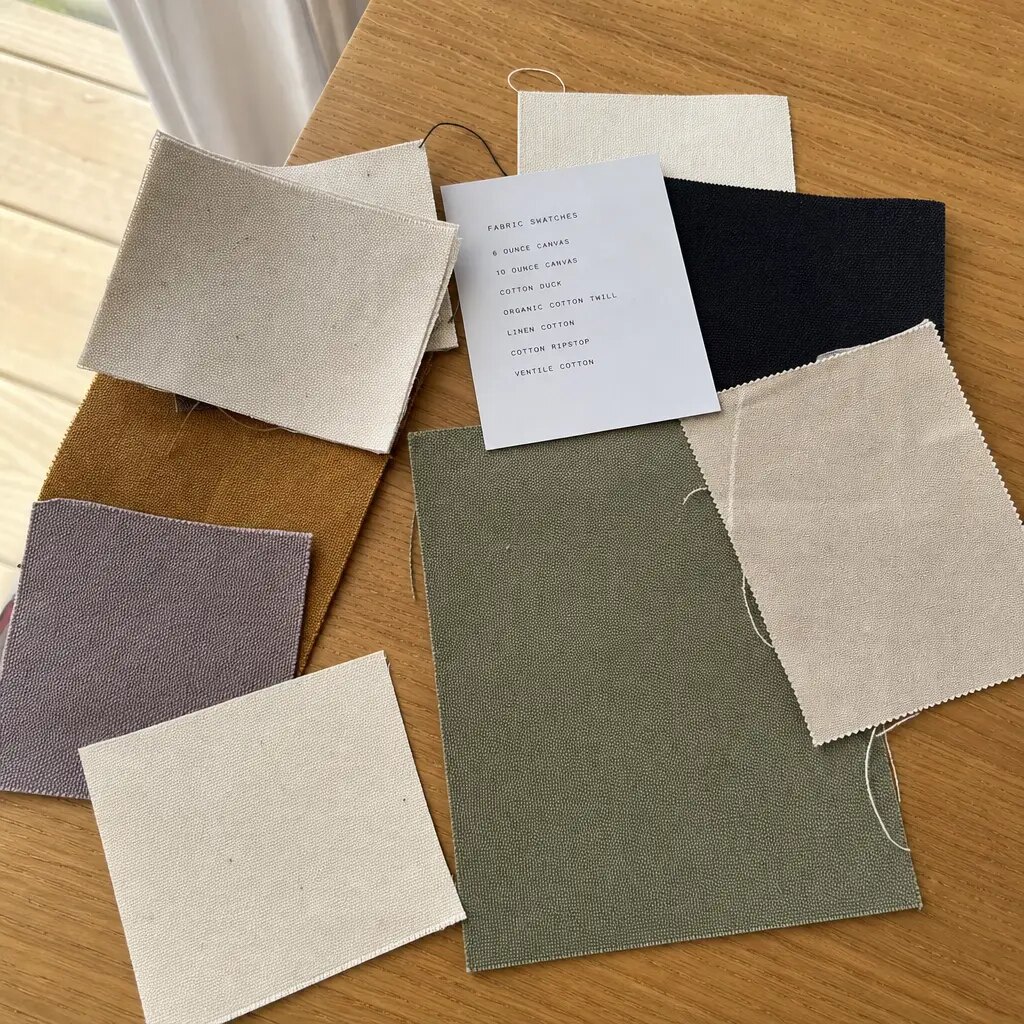
A good sample process answers questions in stages. First, material swatches confirm the jute, lamination, handle webbing, binding, thread, labels, and color references. Next, a blank construction sample confirms body dimensions, gusset shape, handle drop, top finish, inside seams, and standing behavior. A print strike-off shows how the artwork behaves on the chosen surface. Finally, a printed pre-production sample confirms the full production intent before bulk cutting.
Skipping these stages can create a false sense of approval. A beautiful printed sample made with substitute jute does not prove durability. A blank sample with non-production handles does not prove the handle attachment. A digital mockup cannot reveal print edge softness, odor, stiffness, shedding, lamination peel, or shape recovery. For repeat retail programs, every approved sample should use the actual material and process intended for bulk.
When the sample arrives, review it like an inspector rather than a shopper. Measure body width, height, gusset, handle drop, print position, label position, and total weight if relevant. Fill it with the real products it will carry. Carry it by hand. If it is meant for shoulder use, try it on the shoulder. Set it on a shelf or counter and see whether the gusset holds shape.
Then stress the ordinary details. Fold and unfold the bag along the proposed packing lines. Inspect the inside bottom corners after loading. Rub the print after curing. Seal the sample in a bag or carton for 24-48 hours and check odor when opened. These are not elaborate lab tests, but they catch many issues before a purchase order becomes a container of compromised bags.
Keep the approval record together. A signed golden sample, trim card, measurement sheet, artwork reference, print strike-off, and close-up photos of handle stitching and internal seams are valuable for reorders. They prevent quiet downgrades in webbing width, stitch pattern, lamination quality, print placement, or packing method.
- Stage 1: labeled swatches for jute, lamination, handle webbing, binding, thread, labels, and print color references
- Stage 2: blank construction sample for dimensions, gusset, handles, top finish, and inside seams
- Stage 3: print strike-off for artwork with fine detail, tight color expectations, or uncertain ink behavior
- Stage 4: printed pre-production sample made with production-intent materials and print method
- Stage 5: packed sample or packing photos showing fold method, bundle quantity, carton quantity, and shape recovery
- Approval record: signed spec sheet, dated sample photos, measurement table, artwork reference, and approved deviations
Build the durability test checklist
Durability testing for custom jute tote bags does not need to be complicated to be useful. The checklist should target the failures that matter in coffee retail: handles stay attached, seams do not open, the bottom holds dense products, lamination survives folding, print does not transfer easily, odor is acceptable, and the bag still presents well after packing.
The static load hold is the core test. Load the bag to the agreed test weight, suspend or support it consistently, and hold it for the agreed time. Thirty minutes is a common practical buyer-side check, but the buyer and supplier should agree on the exact method. After the hold, inspect handle stitch boxes, top hem, side seams, bottom gusset, and lamination around folds and stitch lines. Record sample quantity, test weight, hold time, and result.
For paid reusable merchandise or heavier gift sets, add a repeated lift check. Load the bag to the agreed weight, lift and lower it for a defined number of cycles, and inspect the same stress points. This is not a replacement for formal laboratory testing where required, but it is a practical way to reveal weak thread tension, handle slippage, seam grin, or corner opening before shipment.
Print, odor, and packing recovery belong in the same checklist. A tote that holds weight but smells strongly of chemicals is still a poor retail product. So is a tote that transfers ink onto coffee packaging. Check dry rub after curing. Seal a sample or carton to screen odor. Unpack a folded sample, let it recover, fill it, and review whether the gusset and bottom shape are acceptable.
Use pass/fail wording that removes guesswork. 'No handle detachment' is clear. 'No major deformation' should be supported by photos or examples. 'Acceptable odor' should be judged against a sealed approved sample or agreed buyer standard. The more concrete the checklist, the less the final inspection depends on mood, lighting, or negotiation pressure.
- Static load hold: agreed weight, agreed time, random finished samples, and stress-point inspection afterward
- Repeated lift: defined load and cycle count for reusable retail totes or heavier bundles
- Handle observation: no detachment, stitch breakage, webbing slippage, or severe stitch box distortion
- Seam review: no seam burst, open corner, skipped stitches, seam grin beyond tolerance, or lamination tear near stitches
- Print rub: dry rub with clean cloth after curing; optional light damp rub if retail conditions require it
- Odor check: sealed sample or carton opened after storage to check chemical, mildew, or damp fiber odor
- Lamination fold check: no bubbling, edge peel, brittle cracking, or sticky surface after folding
- Shape recovery: unpack folded sample, fill it, and confirm gusset and bottom recover to approved presentation
Classify defects before inspection
Bulk inspection should respect jute as a natural fiber while still protecting the buyer from real quality failures. Slubs, small shade shifts, and yarn irregularity may be acceptable within the approved range. Handle detachment, wrong webbing width, severe odor, open seams, delamination, incorrect size, and uncured print are not natural variation. They are defects.
Define critical, major, and minor defects before production starts. Critical defects include failures that make the bag unsafe, unusable, or materially different from the approved construction. Major defects affect performance, saleability, brand presentation, or compliance with the specification. Minor defects are small cosmetic issues within the approved tolerance. This classification helps inspectors make consistent decisions and prevents every flaw from becoming a fresh debate.
In-line inspection is especially useful for new suppliers, new constructions, or high-visibility launches. Once the first sewn units are available, check handle stitch pattern, stitch density, seam allowance, gusset shape, top hem, and print placement. If the stitch box is too small at the beginning of production, the factory can correct it before thousands of units are packed.
Final inspection should sample across cartons, artwork versions, and material lots. If the order includes several cafe locations, wholesale account logos, or seasonal designs, each version needs inspection coverage. Do not let the inspection focus only on the simplest artwork or the best-looking carton. For load testing, use random finished units from packed production rather than handpicked office samples.
AQL sampling can support visual and dimensional checks, but functional failures deserve stricter attention. One handle detachment during an agreed load test may indicate a systemic problem. Strong odor in sealed cartons may affect the full shipment. Wrong construction, wrong material, missing reinforcement, or severe lamination failure should be escalated quickly because those issues are rarely isolated cosmetic mistakes.
- Critical defects: handle detachment, seam burst under agreed load, wrong material, severe chemical or mildew odor, unsafe sharp trim, or missing key reinforcement
- Major defects: size beyond tolerance, wrong handle width or drop, poor lamination bond, unacceptable print rub, major print misplacement, open seams, or incorrect artwork
- Minor defects: small loose threads, slight shade variation within approved range, minor slub variation, or small cosmetic marks within tolerance
- In-line QC: first sewn units checked for stitch pattern, seam allowance, top hem, gusset strength, and print placement
- Final QC: sample across cartons, artwork versions, packing positions, and fabric lots
- Inspection report: include defect counts, measurement results, test weight, hold time, load-test photos, carton numbers, and corrective action notes
Control packing, moisture, and carton compression
Packing is part of durability for jute totes. A strong bag can still arrive misshapen, damp, odorous, or crushed if carton packing is treated as an afterthought. Jute absorbs humidity, and laminated jute can trap odor if packed too soon after production or printing. For ocean freight, humid seasons, LCL consolidation, or long warehouse storage, packing requirements should be written into the RFQ and purchase order.
Review the fold pattern before bulk packing. A wide-gusset tote that needs to stand at retail can develop permanent creases if folded too tightly. Handles can twist or flatten if bundles are tied under too much pressure. Ask for photos showing how bags are folded, how many pieces are in each bundle, how bundles sit in the carton, and how the top and bottom of the carton are protected.
Carton weight and carton cube affect both quality and landed cost. Very heavy cartons are harder to handle and more likely to be dropped. Over-compressed cartons can distort gussets and create sharp fold marks. Ask for carton dimensions, gross weight, pieces per carton, and carton count before shipment. Bulky jute bags can make freight volume more important than a small unit-price difference.
Moisture control should be specific. Depending on route and season, the supplier may use carton liners, desiccants, stronger export cartons, dry warehouse storage, or shorter storage time before pickup. Avoid vague instructions such as 'pack well.' Better wording names the maximum carton gross weight, liner requirement if any, desiccant use if approved, carton marks, SKU separation, and dry storage off the floor.
If the bag will be sold individually, decide early whether it needs a hangtag, barcode, belly band, master polybag, or individual polybag. Those choices affect packing labor, carton count, moisture behavior, and inspection. They also affect how quickly staff can receive, count, and put the tote into retail or fulfillment use.
- Confirm fold pattern, pieces per bundle, bundles per carton, carton dimensions, carton gross weight, and carton count
- Unpack a folded sample and check handle recovery, gusset recovery, and shelf presentation
- Do not pack before print is properly cured or before damp jute has stabilized
- Use carton liners or moisture protection where route, season, or destination humidity requires it
- Tie carton marks to SKU, artwork version, quantity, PO, destination, and carton number
- Request production-floor packing photos and final carton photos before shipment release
Plan MOQ, lead time, and artwork splits
Custom jute tote lead time is often underestimated because the product looks simple. In practice, the schedule may depend on fabric availability, lamination, handle webbing color, trim sourcing, sample revisions, print setup, ink curing, sewing capacity, inspection, packing, and export booking. A realistic lead time starts from final approved artwork and signed pre-production sample, not from the first inquiry.
MOQ should be broken down by component and process. A supplier may quote a total MOQ but still require minimums by body size, jute color, handle color, trim, pocket, woven label, printed label, or artwork version. A coffee roaster with five cafe locations may be able to use one shared body construction with five print versions. That is usually easier to control than five handle colors, five labels, and five packing methods.
Artwork splits add operational risk. Each version requires setup, checking, counting, carton labeling, and separation. Low MOQ per design can look attractive but may increase screen charges, setup time, print inconsistency, and mixed-carton mistakes. Ask how the supplier will identify each artwork on the line, how cartons will be marked, and whether each design receives separate inspection coverage.
Seasonal programs need extra buffer. Brand teams often adjust logo size or color after seeing how jute texture affects the print. Handle color can delay production if webbing must be dyed to order. If the tote is tied to a holiday launch, trade show, cafe opening, or subscription shipment, request a production calendar with decision deadlines.
Approved alternates should be documented before production. A substitute handle, lighter fabric, different lamination, or changed stitch pattern can reduce durability even if the tote still looks similar in photos. If an alternate is allowed, describe exactly what may change and what may not. The signed sample standard should remain the reference for bulk acceptance.
- Count lead time from final sample and artwork approval
- Break MOQ down by size, body color, handle color, label, pocket, artwork, and packing method
- Standardize one bag body across multiple artwork versions where possible
- Request a calendar covering swatches, blank sample, strike-off, pre-production sample, bulk materials, cutting, printing, sewing, curing, packing, inspection, and shipment
- Ask how mixed artworks will be separated, counted, labeled, and packed
- For launch-critical orders, define approved alternates before production rather than accepting last-minute substitutions
Specification comparison for buyers
| Spec decision | Recommended option | When it fits | Buyer risk to check |
|---|---|---|---|
| Jute fabric weight | Laminated jute commonly specified around 280-340 GSM, or 13-15 oz equivalent where the supplier uses ounce terminology; require a declared tolerance such as +/-5% or the factory's controlled range | Retail carry bags for 250 g, 340 g, 500 g, and 1 kg coffee packs, subscription gifts, roastery merchandise, and mixed coffee-plus-accessory bundles | Quotes that say only 'natural jute' or 'burlap bag' are not comparable. Similar-looking fabric can vary in stiffness, shedding, seam strength, and price. Ask whether GSM is measured before or after lamination. |
| Body construction | Side and bottom gusset with a stable bottom panel or wrap construction, adequate seam allowance, and bound or finished internal seams where the construction needs it | Bags expected to stand for shelf display, hold multiple coffee packs, or carry boxed gifts, mugs, jars, tins, brewers, or tasting sets | Flat bags are cheaper and easier to print but distort faster under dense loads. If gusset depth and corner finishing are vague, the side-bottom corner often becomes the first failure area. |
| Handle material | Cotton webbing 25-30 mm wide for most retail totes, with specified thickness, color, drop length, and dye lot control; polyester or blended webbing only if approved for the desired feel and strength | Coffee roasters wanting a comfortable handle, less scratchy customer experience, and a more premium retail impression than jute rope or narrow tape | Handle width is often downgraded quietly between sample and bulk. Narrow handles concentrate stress at the stitch box and can feel uncomfortable when the bag carries 3-5 kg. |
| Handle attachment method | Box-X stitch, bartack support, extended insertion, or a documented reinforcement pattern matched to working load; require stitch density and stitch box dimensions on the sample record | Paid merchandise bags, holiday bundle bags, and retail bags carrying several dense coffee packs or ceramic/glass accessories | Single-line handle attachment may pass a quick visual check but fail under static hold or repeated lift. Treat attachment style as a priced construction detail, not a cosmetic choice. |
| Lamination type | Inner PP lamination or comparable film specified by presence, approximate thickness if available, bond quality, odor requirement, and fold resistance; approve by physical sample | Retail environments where shape retention, reduced fiber shedding, cleaner inner surface, and stable presentation matter | Poor lamination can create odor, bubbling, edge peel, brittle cracking at folds, or stiffness that makes cartons bulky. Require fold checks and sealed-sample odor review. |
| Print method | Direct screen print for bold 1-3 color artwork; printed cotton canvas panel, patch, woven label, or sewn label for fine detail, small type, QR codes, or tighter color expectations | Most roaster logos, origin marks, gift program branding, cafe location graphics, and wholesale customer bags | Coarse jute naturally softens edges and breaks up fine lines. Define print size, color reference, position tolerance, curing time, dry rub, and optional damp rub before approving bulk. |
| Top finish | Turned hem, cotton binding, or cleanly finished inner top edge with thread color and binding width approved against the sample | Premium retail bags and gift sets where the rim is visible to customers and repeated handling is expected | Raw or weak top edges fray and shed. A photo sample can hide simplified bulk finishing, uneven hem width, or loose thread at handle stress areas. |
| Dimensional tolerance | Body width, height, and gusset tolerance typically written as +/-1 cm for sewn jute bags unless the buyer requires tighter control; handle drop often needs a separate tolerance such as +/-0.5-1 cm | Retail programs needing consistent shelf presence, carton planning, or bundle fit | Digital mockups imply precision that coarse fabric and sewing do not provide. Without written tolerances, undersized gussets and mismatched handle drops become subjective disputes. |
| MOQ structure | Same body size and construction across the order, with controlled artwork splits only where the supplier can manage setup, line separation, and carton labeling | Multi-location roasters, seasonal drops, subscription programs, and wholesale partner gifts | Low MOQ per artwork can add screen charges, longer scheduling, color variation, mixed cartons, or unapproved component substitutions. Ask MOQ by size, body color, handle color, label, and print version. |
Buyer checklist before sampling
- Classify the bag use case: event giveaway, retail checkout bag, paid merchandise tote, gift bundle packaging, wholesale account gift, or subscription insert.
- Define the real working load in kilograms using the heaviest realistic contents, not the average transaction. Include dense coffee packs, mugs, jars, tins, brewers, books, or boxed gifts.
- State the test load and safety margin separately from the working load. For example, a 3 kg working load may be tested at a higher agreed weight if the construction supports it.
- Specify bag dimensions as width x height x gusset, and state whether measurements are taken flat, opened, or filled.
- Add dimensional tolerances for body size, gusset depth, handle drop, print placement, and label placement.
- State jute fabric target in GSM or oz equivalent, whether that value includes lamination, and what tolerance the supplier controls in bulk.
- Require labeled swatches for jute body, lamination, cotton webbing, binding, thread, labels, and any printed panel before approving final cost.
- Define handle material, width, thickness or hand feel, color, drop length, attachment method, stitch pattern, stitch box dimensions, and reinforcement requirements.
- Require production-intent samples using actual jute, actual lamination, actual webbing, actual thread, actual trim, and actual print method. Do not approve substitute-material mockups for bulk release.
- Define print method, artwork size, color count, Pantone or brand reference where applicable, print position tolerance, acceptable edge softness, and curing time before packing.
Factory quote questions to send
- What is the exact jute fabric specification in GSM or oz equivalent, and is that value before or after lamination? What tolerance do you control in bulk?
- Is the body laminated or unlaminated? If laminated, what film type is used, what approximate thickness can you state, and how do you check bonding, odor, bubbling, and fold cracking?
- What is the seam allowance and internal seam finish for the side seams, bottom seam, top hem, and gusset corners? Can you provide inside construction photos?
- What handle material, width, thickness or weight, color, and drop length are included in the quote? Are handles stock color, dyed to order, or matched to a buyer reference?
- What handle attachment method is included: single line, box stitch, box-X, bartack, extended insertion, or another reinforcement pattern? Please provide close-up photos and stitch box dimensions.
- What stitch density do you target at the handle attachment and main seams, and what thread type or thread strength do you normally use for this construction?
- What maximum recommended working load do you suggest for this fabric, handle, and stitch construction? What test load and hold time can you commit to in writing?
- Do you run static load or repeated lift checks in-house? If yes, how many samples are tested, at what weight, for how long, and what is the pass/fail standard?
- Is the logo direct screen printed on jute, printed on a cotton panel, heat transferred, woven, or applied as a sewn label? Which method do you recommend for our artwork and why?
- What print position tolerance, color tolerance, curing time, and rub-resistance check do you use on coarse jute? Can you make a print strike-off before the full pre-production sample?
Quality-control points to confirm
- Fabric GSM or oz equivalent checked against the approved specification and recorded by lot where practical
- Jute fabric reviewed for approved shade range, weave density, slub level, panel consistency, oil marks, stains, holes, and severe yarn defects
- Lamination bonded cleanly with no bubbling, delamination, edge peel, brittle fold cracking, sticky surface, or strong chemical odor
- Body dimensions measured against tolerance after the bag is opened and shaped, including width, height, gusset depth, bottom shape, and top opening
- Cut panels aligned with weave direction, with no severe skewing that distorts the front panel, print position, side gusset, or bottom geometry
- Top hem, binding, or turned edge neat and secure, with no raw fray beyond approved cosmetic tolerance
- Handle material, width, thickness or hand feel, color, and drop length matching approved sample and specification sheet
- Handle pair length consistent on each bag, with left and right handle drop matched within the agreed tolerance
- Handle stitch density, stitch box size, X reinforcement, bartack position, back-tacking, and thread color matching the signed golden sample
- Seams showing no skipped stitches, broken thread, seam grin, puckering, open corners, loose thread ends, or weak tension in stress areas