Why Carton Planning Belongs in the RFQ
A custom jute tote bag can pass product inspection and still create problems for a university bookstore if the carton plan is weak. The same order may pass through procurement, licensing, a distributor, campus receiving, bookstore stockrooms, and event staff. Carton count, gross weight, SKU labels, inner packing, and carton dimensions affect landed cost and receiving labor as much as the tote specification itself.
The RFQ should ask suppliers to quote the bag and packing plan together. Two quotes for the same finished tote size may differ in fabric weight, lamination, handle bulk, fold direction, carton board, and pieces per carton. A lower unit price can be offset by higher CBM, more cartons, heavier manual handling, print abrasion, or extra sorting during back-to-school receiving.
For a custom jute tote bags carton packing plan for university bookstores, the buyer needs supplier-validated numbers: pieces per carton, carton dimensions, net weight, gross weight, CBM per 1,000 bags, label format, SKU separation method, and packed-carton evidence. These details should be approval items, not informal production notes.
- Compare quotes by unit price, carton count, CBM per 1,000 bags, gross weight, and packing format.
- Identify the receiving route: single bookstore, multi-campus store group, distributor, 3PL, event site, or direct-to-department delivery.
- Set the main packing priority: low cube, reduced plastic, retail presentation, fast unpacking, or stronger print protection.
- Require packed-carton photos before final packing, including open carton, sealed carton, label, and gross weight.
- Update freight estimates after the packed-carton trial instead of relying on early quote assumptions.
Match Tote Specification to Bookstore Use
The intended use should drive the tote and carton specification. A checkout tote sold near the register usually needs consistent carton counts and fast replenishment. An alumni tote may need cleaner folding, a hangtag, barcode, premium handle, and stronger print protection. An orientation or admissions tote may be handled by temporary event staff, so carton labels and destination markings become more important than retail shelf presentation.
Specify dimensions after stitching, not only cut-panel dimensions. Width, height, gusset depth, handle drop, and handle width should each have an agreed tolerance and measurement method. For many jute tote programs, practical tolerances are often set in the range of plus or minus 1 cm for bag body dimensions and plus or minus 0.5 cm for handle width or logo placement on simple designs, but the supplier must confirm what is realistic for the selected construction.
Premium trims change carton planning. Lamination, lining, piping, thick handles, patches, embroidery, hangtags, and barcode labels can reduce pieces per carton and increase gross weight. If the buyer changes any of these details after sampling, the carton count and CBM estimate should be revalidated.
- Retail replenishment: prioritize one-SKU cartons, readable labels, easy bundle removal, and consistent carton counts.
- Orientation or event use: prioritize destination labels, allocation accuracy, event-date buffers, and manageable carton weights.
- Premium merchandise: allow for lower carton counts when tags, lining, patches, embroidery, or structured lamination add bulk.
- Freight-sensitive orders: avoid oversized gussets, rigid inserts, padded handles, and unnecessary individual packaging.
- PO specification: list finished dimensions, fabric weight, handle details, print method, packing format, carton count, and tolerances.
Fabric, Lamination, Odor, and Moisture Controls
Jute should be specified with measurable language. Terms such as heavy jute, export grade, and premium quality are not enough for quote comparison or inspection. The supplier should state GSM or ounce weight, tolerance, finish, color, lamination status, and whether the material is natural, dyed, washed, coated, laminated, or unlaminated.
Natural jute can include slubs and shade variation, but defects need clear limits. Holes, weak yarn, oil stains, mildew marks, dampness, wet carton board, heavy odor, and contamination should not be accepted as normal natural variation. If several campus designs will be displayed together, approve a shade range and require the supplier to keep each SKU within that range.
Laminated jute can help a tote stand upright, reduce fiber shedding, and create a cleaner interior. It can also increase folded thickness, show crease whitening, trap odor, or hold moisture if packed too soon. Unlaminated jute usually folds flatter and breathes better, but it may shed more fiber and look softer on a retail display. The choice affects both presentation and carton cube.
Moisture control is especially important when individual polybags or tight master cartons are used. Prints and fabric must be dry before sealing. Inspection should include opening cartons, smelling goods, touching fabric for dampness, checking carton board for soft spots, and confirming any desiccant quantity and placement.
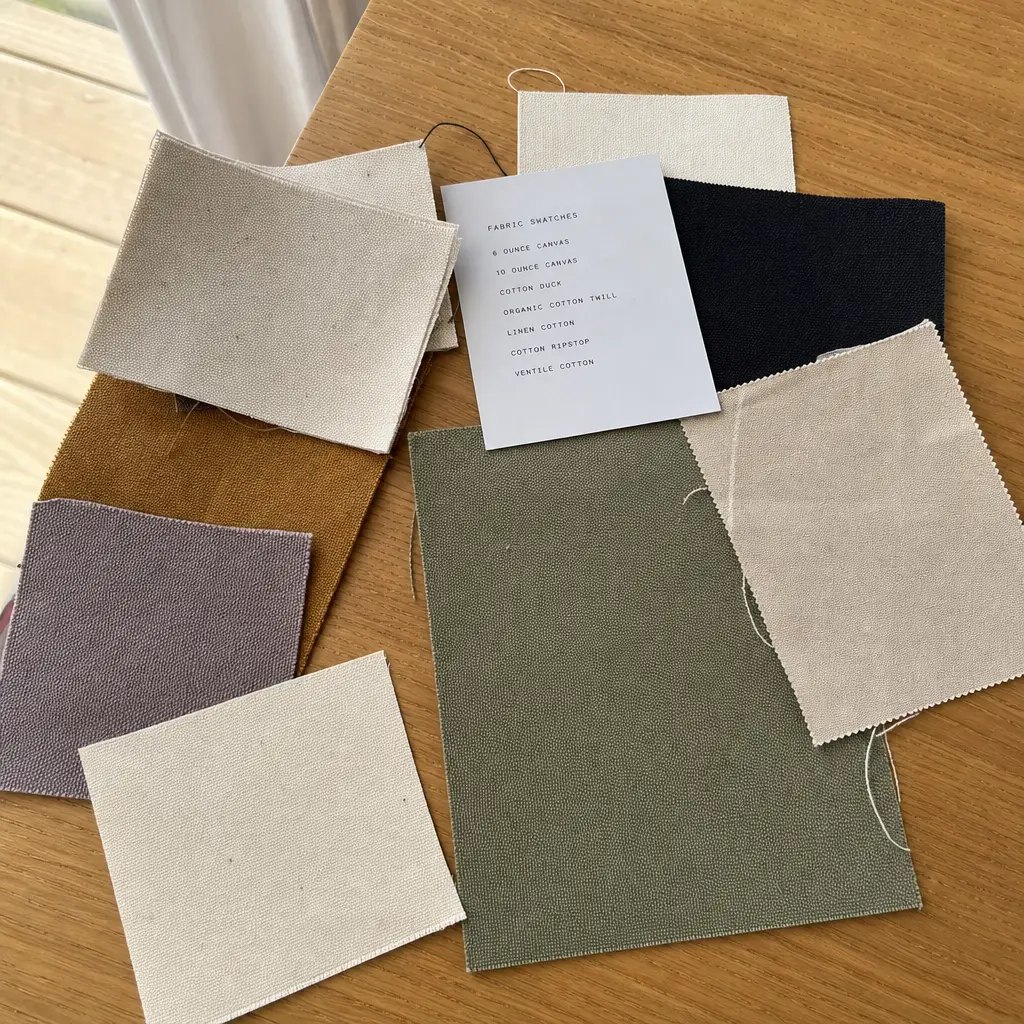
- Request production-quality swatches from the intended fabric quality, not only showroom material.
- Specify GSM or ounce weight, tolerance, lamination status, finish, and acceptable shade range.
- Check laminated samples for crease marks, stiffness, odor retention, cracking, and added carton bulk.
- Classify damp jute, mildew odor, wet cartons, oil stains, visible holes, weak yarn, and heavy contamination as major or critical defects.
- Confirm curing and drying time before polybag sealing, bundle compression, or master-carton closure.
Artwork, Licensing, and Print Approval
University bookstore artwork may include licensed marks, mascots, department names, founding dates, event slogans, and sponsor logos. Jute is a coarse woven surface, so a digital proof does not prove that the artwork will hold in production. Small serif type, pale ink, fine outlines, large solid fills, and tight multicolor registration need physical testing on the selected fabric.
Screen printing is usually practical for bold one-color or limited-color artwork. Heat transfers can hold more detail but require adhesion, edge, rub, and fold checks on the actual jute. Patches and embroidery can support premium programs, but they add cost, lead time, thickness, and sometimes carton compression risk.
The approval package should include the licensed artwork file, color reference, logo size, print location, production-jute strike-off, and pre-production sample. Placement should be measured from fixed points such as top edge, side seam, center line, or gusset fold. A simple numeric placement tolerance is better than approving by eye, especially when the order includes multiple designs.
- Use screen print for bold bookstore logos, slogans, and simple one-to-three-color graphics.
- Flag mascot detail, small text, pale ink, large solid fills, and tight registration before sampling.
- Approve a physical strike-off on the selected jute before bulk printing begins.
- Set logo placement tolerance from fixed references; do not rely only on visual centering.
- Confirm full curing before folding, stacking, polybagging, interleaving, or sealing cartons.
Choose the Inner Packing Format
The best inner packing format depends on how the bookstore receives, stores, and sells the tote. Counted bundles work well for high-volume replenishment because staff can remove a known quantity quickly. Individual polybags improve dust protection and unit handling but add plastic, labor, cost, and cube. Hangtags make the tote retail-ready without full unit packaging, but they must survive folding and carton compression.
Bulk packing still requires a written method. The supplier should state pieces per bundle, fold direction, handle placement, printed-panel orientation, and whether print faces are protected. If the logo has heavy ink coverage or a transfer surface, test interleaving before adding full polybags. Interleaving should solve a specific rub or transfer risk, not become an automatic cost increase.
Pallets and mixed cartons are logistics decisions. Pallets may be useful for a distributor or 3PL but inconvenient for a small campus delivery. Mixed-SKU cartons can reduce allocation work for orientation kits or department deliveries, but they create a higher count-error risk. Use mixed cartons only with an approved carton map and stricter open-carton verification.
- Use counted bundles when low plastic, lower CBM, and fast stockroom replenishment are priorities.
- Use individual polybags when dust control, premium presentation, or unit barcode handling is required.
- Use hangtags when retail display matters but the buyer wants to avoid individual polybags.
- Use interleaving when actual rub testing shows print-to-print or print-to-fabric damage risk.
- Use mixed cartons only with approved maps, inner separation, exterior mixed-SKU labels, and count checks.
Build the Carton Count and CBM Plan
A carton plan should be based on a packed-carton trial. Jute thickness, lamination, gusset size, handle bulk, hangtags, print method, fold direction, and inner packing all change how many pieces fit safely. The trial should prove that cartons close squarely without forced compression, heavy bulging, bent tags, print rubbing, unreadable labels, or weak sealing.
Ask the supplier to quote at least two practical carton-count options when the order size allows it. One option may use fewer pieces per carton for easier manual handling. Another may use more pieces per carton to reduce carton count and freight cube. The best option is the one that meets the buyer’s gross-weight limit, damage-control needs, and receiving workflow, not simply the highest pieces per carton.
Set non-negotiable limits before packing. If bookstore staff lift cartons manually, maximum gross weight may matter more than the lowest CBM. If a distributor charges by cube or requires routing labels, carton dimensions and label placement may drive the decision. If the final carton is partial, specify whether it uses the same carton size or a smaller carton.
- Require pieces per carton, carton dimensions, net weight, gross weight, board grade, closure method, and label layout.
- Approve open-carton and sealed-carton photos from the trial pack before final packing.
- Set a maximum gross weight for manual handling or distributor compliance before the PO is issued.
- Require cartons to close squarely without heavy compression, deformation, or tape failure.
- Revalidate carton count after any change to fabric, lamination, handle, hangtag, polybag, or folding method.
Worked Example for 1,000 Bags
The following example shows the calculation logic to request from suppliers. It is not a universal specification. Assume a bookstore tote around 15 x 16 x 6 inches, natural jute, cotton webbing handles, one-color screen print, counted bundle packing, and no individual polybags. Final numbers must come from a packed-carton trial using the approved sample construction.
If a supplier validates 50 bags per carton and each carton measures 52 x 42 x 38 cm, carton CBM is 0.52 x 0.42 x 0.38, or 0.0830 CBM. A 1,000-piece order needs 20 cartons, so estimated cube is about 1.66 CBM before pallets. If each packed carton is 11.8 kg gross weight, total gross weight is about 236 kg.
If another supplier validates 80 bags per carton and each full carton measures 60 x 45 x 45 cm, carton CBM is 0.1215. The order needs 12 full cartons plus one partial carton. If the partial carton uses the same size, estimated cube is about 1.58 CBM. If a smaller partial carton is used, cube may be lower. The 80-pack option may reduce carton count but could be harder to lift or more likely to compress hangtags and printed panels.
- Formula: carton CBM = carton length x width x height in meters.
- Formula: order CBM = carton CBM x carton count, adjusted when smaller partial cartons are used.
- 50-pack example: 20 cartons x 0.0830 CBM = about 1.66 CBM per 1,000 bags before pallets.
- 80-pack example: 13 cartons may be about 1.46 to 1.58 CBM depending on partial-carton planning.
- Decision point: balance cube, gross weight, square closure, print protection, and receiving speed.
Carton Labels, SKU Separation, and Receiving
A strong carton plan fails if labels and SKU control are weak. University bookstore orders may include main bookstore graphics, alumni designs, admissions programs, orientation totes, department marks, and sponsor variations. One SKU per carton is the cleanest rule for peak receiving because staff can reconcile the packing list without opening every carton.
Mixed cartons should be used only when they solve a real allocation problem. They require a written carton map showing exact counts by design, color, barcode, and destination. Inner separation must be clear enough for quick verification. Exterior labels should identify the carton as mixed SKU so it is not mistaken for normal replenishment stock.
Carton labels should be readable without opening the carton. At minimum, include buyer PO, SKU or design name, color if relevant, carton number sequence, quantity, gross weight, net weight, carton dimensions, country of origin where required, and distributor or campus routing labels. Receiving staff should compare labels, packing list, carton sequence, and sampled open-carton counts before releasing goods to the sales floor or event team.
- Prefer one SKU per carton for back-to-school, orientation, and other high-volume bookstore receiving.
- For mixed cartons, approve exact counts by SKU, inner separation, destination labels, and exterior mixed-SKU wording.
- Use carton sequences such as 1 of 20 and match them to the packing list and invoice.
- Reject or quarantine cartons with wet board, heavy bulging, weak closure, unreadable labels, or major deformation.
- At receiving, open a sample of cartons by SKU, count units, check labels, and record discrepancies immediately.
Sample Route and Approval Records
A disciplined sample route prevents late packing problems. Start with a construction sample to confirm finished size, gusset, fabric feel, lamination, handle drop, stitch pattern, standing shape, and fold behavior. Then approve a print strike-off to confirm artwork clarity, color, placement, ink coverage, curing, and rub resistance on the actual jute.
The pre-production sample should combine final fabric, handle, print, labels, hangtags, barcode approach, country-of-origin marking, and workmanship. Before bulk packing, request a packed-carton trial or pilot packing report. The buyer should see bundle quantity, fold direction, handle placement, printed-panel orientation, inner protection, carton dimensions, gross weight, closure method, and shipping marks.
Approval records should be version controlled. Keep signed photos, measurements, swatch references, strike-off references, carton count, label layout, and accepted deviations. If the supplier changes lamination, handle width, print method, label, hangtag, inner packing, or carton board, revalidate the carton plan before final packing.
- Construction sample: size, gusset, fabric, lamination, handle drop, stiffness, stitching, and fold behavior.
- Print strike-off: color, line clarity, registration, edge quality, curing, rub behavior, and placement.
- Pre-production sample: final trims, logo placement, barcode or hangtag, labels, and workmanship.
- Packing trial: bundle count, pieces per carton, carton dimensions, gross weight, label, closure, and photos.
- Change control: recheck carton count and CBM after any material, trim, print, or packing change.
QC Sampling, AQL, and Shipment Release
Inspection should cover the tote and the carton. Product checks include measurements, fabric appearance, handle construction, stitching, print placement, print quality, odor, cleanliness, trims, labels, and hangtags. Carton checks include quantity, SKU separation, dimensions, gross weight, board grade, label accuracy, closure, deformation, dampness, and packing method.
Many buyers use ANSI/ASQ Z1.4 or ISO 2859-1 sampling tables, commonly with general inspection level II for finished goods, but the final plan should follow the buyer’s internal policy. A practical AQL example is 0.0 for critical defects, 2.5 for major defects, and 4.0 for minor defects. Critical defects can include wrong licensed logo, mildew, wet cartons, unsafe contamination, and destination-label errors that could misroute the order. Major defects can include failed load test, open seam, severe print defect, short count, wrong SKU mix, wrong barcode, or heavy carton deformation. Minor defects can include small loose threads, slight shade variation within the approved range, or minor label scuffing that does not affect scanning.
Shipment release should be tied to inspection results. Open sampled cartons, count by SKU, compare gross weights, verify labels against the packing list, and check that the approved packing method was followed. If critical defects are found, hold shipment for buyer disposition. If major defects exceed the acceptance number, require sorting, rework, replacement, or reinspection before forwarder handover.
Receiving inspection should mirror the outbound checks at a lighter level. Campus staff should inspect carton condition, label accuracy, carton sequence, SKU mix for sampled cartons, odor, moisture, and obvious print or packing damage. Record photos before cartons are moved deeply into storage, because claims are easier to support when the original carton condition is documented.
- Define inspection level, sample size, AQL values, defect classes, acceptance numbers, and reinspection rules before production finishes.
- Use 0.0 AQL or equivalent hold rules for wrong logo, mildew, wet cartons, unsafe contamination, and severe routing-label errors.
- Classify failed load test, open seam, severe print defect, short count, wrong SKU mix, wrong barcode, and crushed cartons as major defects.
- Open sampled cartons, count by SKU, compare gross weights, and verify labels against the packing list before shipment release.
- Inspect before forwarder handover so count, print, odor, and carton issues can still be corrected.
Specification comparison for buyers
| Packing format | Best use in bookstore orders | Buyer advantages | Controls to lock before PO |
|---|---|---|---|
| Counted bulk bundles | High-volume checkout totes, back-to-school replenishment, and stockroom storage where unit retail packaging is not needed | Lower plastic use, usually lower cube, faster carton opening, simple restocking when bundle counts are consistent | Approve pieces per bundle, fold direction, handle placement, printed-panel orientation, pieces per carton, carton gross weight, and open-carton count checks |
| Individual polybags | Premium retail totes, dust-sensitive routes, unit barcode handling, or orders moving through multiple distribution points | Cleaner unit presentation, reduced abrasion between printed panels, easier price-ticket or barcode routing | Confirm bag venting if used, plastic material policy, barcode position, added CBM, moisture risk, curing time before sealing, and packed-carton dimensions |
| Hangtagged units without polybags | Retail display programs where the tote needs a selling tag but the buyer wants less plastic | Retail-ready appearance with less unit packaging, useful for alumni merchandise and gift tables | Approve tag stock, string length, tag location, barcode scan quality, fold method, replacement rule for damaged tags, and compression test results |
| Interleaved bundles | Printed totes with large ink coverage, transfer patches, or surfaces likely to rub during transit | Adds targeted protection without fully polybagging each unit, helps protect print faces in bulk cartons | Specify interleaf material, placement frequency, recyclable-material preference, print-rub acceptance rule, and whether interleaving changes carton count |
| One-SKU master cartons | Most bookstore replenishment, licensed-logo programs, and orders received during peak campus seasons | Lowest sorting risk, faster receiving, cleaner packing-list reconciliation, fewer allocation errors | Use one SKU/design/color per carton, carton sequence numbers, exterior SKU labels, quantity labels, and random open-carton verification |
| Mixed-SKU master cartons | Pre-allocated orientation kits, branch-store allocations, department orders, or event drops that cannot break full cartons | Can reduce campus sorting when the allocation map is correct | Require approved carton map, inner separation, exact counts by SKU, exterior mixed-SKU warning, destination label, and stricter open-carton checks |
| Palletized master cartons | Distributor, 3PL, or campus dock receiving that requires pallet handling or appointment delivery | Improves warehouse movement, label visibility, and carton traceability for larger shipments | Confirm pallet size, height limit, carton overhang, mixed-SKU pallet rules, stretch wrap, pallet label, and whether pallet CBM affects freight |
| Smaller manual-handling cartons | Campus stores or event teams that manually move cartons without dock equipment | Lower injury risk, easier movement through elevators, stockrooms, and temporary event spaces | Set maximum gross weight, minimum carton board strength, carton count impact, label placement, and whether extra cartons affect freight budget |
Buyer checklist before sampling
- Define finished bag width, height, gusset depth, handle drop, handle width, fabric GSM or ounce weight, lamination status, print method, target load, and measurement tolerances in the RFQ.
- State the business use: checkout merchandise, orientation gift, alumni item, admissions kit, department event, sponsor giveaway, bookstore replenishment, or premium retail program.
- Require supplier-validated pieces per carton, carton dimensions, net weight, gross weight, board grade, closure method, carton label layout, estimated CBM per 1,000 bags, and pallet data if used.
- Set a maximum carton gross weight before quoting when bookstore staff, event teams, or campus receiving will lift cartons manually.
- Choose the inner packing format before samples: counted bundles, individual polybags, hangtagged units, interleaved bundles, one-SKU cartons, mixed cartons, or palletized cartons.
- Request production-quality jute swatches and a logo strike-off on the actual fabric, not only a digital proof or a print on smoother substitute material.
- Approve one pre-production sample with final fabric, handle, logo, hangtag or barcode method, country-of-origin marking, label placement, stitching, and folding method.
- Approve packed-carton photos showing open carton, bundle orientation, handle placement, print protection, carton count, carton label, sealed carton, and gross weight.
- Use one SKU per carton unless mixed cartons are operationally necessary; when mixed cartons are used, approve the exact carton map and inner separation method.
- Define inspection level, AQL or buyer sampling rule, defect classes, sample size, acceptance numbers, and reinspection rules before the PO is released.
Factory quote questions to send
- What exact jute GSM or ounce weight is quoted, what tolerance applies, and is the fabric natural, dyed, washed, coated, laminated, or unlaminated?
- Can you provide swatches from the intended production lot quality, and what shade range will be treated as acceptable within one SKU?
- What are the finished-size tolerances after stitching for width, height, gusset, handle drop, and handle width, and what measurement method will your QC team use?
- Which handle material, width, length, color, and reinforcement stitch pattern are included, and can you provide close-up photos of the handle anchor?
- What static load test will be used, such as 10 kg or 15 kg for a defined hold time, and what seam slippage, tearing, or stitch breakage is considered failure?
- Which print method is quoted, what minimum line thickness and text height can hold on this jute, and how many print colors are included?
- Can you provide a strike-off on production jute using the actual ink or transfer, curing process, logo size, placement, and color reference?
- For each packing option, how many pieces fit per master carton, and what are the carton dimensions, net weight, gross weight, board grade, and closure method?
- What is the estimated CBM per 1,000 pieces for counted bundles, individual polybags, hangtagged units, interleaved bundles, palletized shipment, and any mixed-SKU cartons?
- Will cartons close squarely without forced compression, bulging, print rubbing, bent hangtags, or unreadable labels, and can you provide open-carton and sealed-carton trial photos?
Quality-control points to confirm
- Measure finished size after stitching with the bag laid flat and not stretched; use the approved tolerance for width, height, gusset depth, handle drop, and handle width.
- Check fabric GSM against the approved swatch or specification; holes, weak yarn, oil stains, mildew marks, dampness, excessive open weave, and strong odor should be classified as defects.
- Control natural slubs and shade variation against an approved range; visible mismatch within one SKU, display group, or licensed-logo program should require buyer disposition.
- Test handle attachment using the agreed static load, hold time, and pass/fail rules for seam slippage, stitch breakage, fabric tearing, and handle distortion.
- Measure print placement from fixed references such as top edge, side seam, center line, or gusset fold; use a numeric tolerance rather than visual centering only.
- Check ink adhesion, dry rub, color appearance, edge clarity, registration, and fold resistance after full curing and after the approved folding method is applied.
- Inspect heat transfers, patches, labels, or embroidery for edge lift, bubbles, cracking, puckering, stiffness, poor alignment, and failure after carton compression.
- Verify carton counts by opening sampled cartons and counting by SKU; do not rely only on packing-list totals, carton weight, or supplier carton markings.
- Check master cartons for board grade, dimensions, sealing, tape or straps, shipping marks, SKU labels, carton number sequence, deformation, moisture, and weight consistency.
- During receiving, quarantine cartons with wet board, mildew odor, crushed corners, unreadable labels, count discrepancies, wrong SKU mix, or evidence that cartons were repacked in transit.