Why carton packing is a buying decision, not a shipping detail
For custom jute tote bags used by coffee roasters, carton packing changes far more than freight cost. It affects how the bags look when they arrive, how quickly a warehouse can receive them, whether retail staff can put them on shelves without reworking creases, and whether the shipment can be checked against the purchase order without opening every case. A strong jute tote can still become a poor purchase if cartons are overfilled, too heavy, poorly labeled, or packed without moisture control. In procurement terms, packing is part of product quality, not a separate logistics note.
Coffee roasters often sell or give these totes with roasted coffee, brewing accessories, or gift sets. That means the tote is part of the brand experience, not only a carrier bag. Buyers should include carton packing requirements in the RFQ at the same level as fabric weight, logo printing, handle length, and MOQ. If packing is left until the end, the supplier may choose the lowest-cost carton method, while the importer pays the hidden cost through higher claims, receiving delays, and repacking. A clear packing plan also helps pricing comparisons because it exposes the real landed cost behind a seemingly low unit price.
For B2B procurement teams, the main point is simple: the carton is a working specification. It affects gross weight, CBM, carton strength, pallet pattern, barcode visibility, and handling time. The same bag can be easy to receive or expensive to receive depending on how it is folded, separated, labeled, and stacked. When coffee roasters sell through multiple channels—retail shelves, subscription inserts, cafe merch corners, and distributor replenishment—the carton plan must fit the channel, not just the factory.
A strong packing plan reduces disputes later. If a buyer can point to an approved carton spec, an approved packing photo, and a PO that lists carton counts and labels, claims become factual instead of subjective. That is especially important with natural fiber goods like jute, where texture, color variation, fiber shedding, and crease behavior are normal and should be controlled through the packing method rather than treated as surprises. Good packing turns those natural characteristics into manageable variables instead of recurring complaints.
The procurement lesson is that carton details are not operational noise. They determine whether the order lands cleanly into a warehouse system, retail back room, or distribution center. If the buyer knows the receiving rules before quoting, the factory can quote a realistic pack plan instead of a generic export carton. That usually saves time on both sides because the supplier does not need to revise packaging after production has already started.
For coffee roasters in particular, a tote that arrives crumpled or hard to scan can slow down a seasonal launch. That delay may not show up in the unit price, but it shows up in labor, in warehouse tickets, and in missed display windows. The packing plan is therefore a procurement lever, not an afterthought.
The best way to think about it is this: the bag specification tells you what you are buying, while the carton packing plan tells you how safely and efficiently you will actually receive it. Both belong in the quote. Both belong in the PO.
Start with the coffee roaster use case before choosing carton quantity
A coffee roaster’s tote usually carries dense products. Two 340 g coffee bags, a 1 kg bag, a grinder accessory, or a retail gift box create more real-world stress than a lightweight fashion giveaway. The carton plan should therefore protect the bag’s shape, handle alignment, and print surface, because these are the first areas customers notice after unpacking. If the tote is part of a gift bundle, the buyer must also think about how quickly a picker or packer can remove, fold, and stage bags without damaging them.
The same jute tote can be packed differently depending on the sales channel. A tote used as a farmers market giveaway may be packed in larger master cartons without individual polybags. A tote sold as a retail item may need individual polybags, hangtags, barcode stickers, and a cleaner fold. A distributor shipping to multiple cafes may need cartons split by SKU with clear carton numbering to prevent the wrong logo version reaching the wrong location. This means the first question is not how many fit in a carton, but how will the receiving team use them?
Coffee roasters also need to consider product adjacency. Jute has a natural smell and a textured surface, so it should not be packed as if it were an inert synthetic bag. If the tote is stored next to coffee, food-grade packaging, or scented promotional items, the customer may be sensitive to odor transfer or lint. The packing method should limit exposure to dust, moisture, and handling marks while still allowing the bag to unfold naturally once opened.
When the use case is clearly defined, carton quantity becomes easier to optimize. For promo giveaways, maximizing CBM efficiency may matter more than a perfect retail presentation. For premium retail, an extra layer of individual protection may be worth the higher freight cost because it avoids shelf rework. For subscription or gift programs, the bag should open neatly and lie flat enough for quick kitting. The carton plan should be selected by channel economics, not by habit.
A useful internal rule is to define the tote by the way it will be received, not only by the way it will be sold. If it enters a distribution center in one format and leaves in another, the carton has to support both steps. That is why procurement should ask the warehouse team early whether cartons must be one SKU only, whether loose or bundle packing is preferred, and whether the team will scan each carton or only the outer pallet label.
Buyers should also ask whether the coffee roaster’s program is permanent or seasonal. Seasonal merch usually favors quick inbound handling and a simple packing structure, while a permanent retail program may justify more protection and tighter carton labeling. Those are different supply-chain needs, and the packing plan should reflect that difference instead of forcing one standard onto every channel.
Jute fabric weight and lining change how bags fold in the carton
Jute fabric weight is often quoted in ounces, GSM, or a supplier’s local mill description. For coffee roaster tote bags, a practical range is usually around 13-15 oz natural jute, approximately 380-430 GSM depending on yarn and weave. Lighter jute may reduce unit cost and carton weight, but it can feel weak, wrinkle sharply, and lose shape when carrying heavier coffee products. Heavier jute can look premium, but it adds bulk and may lower the number of pieces per carton. Procurement should ask the supplier for the exact construction, not just a marketing description such as thick jute or premium rustic weave.
Lining is a major packing variable. Unlined jute folds flatter and is usually cheaper to ship. Cotton lining improves the inside finish and reduces loose fiber contact with coffee packaging, but it adds sewing labor and thickness. Laminated lining adds structure and some moisture resistance, yet it can create odor concerns if packed too quickly after production. The RFQ should not only say jute tote bag; it should state the intended fabric weight, lining type, and expected carton packing method. Otherwise the factory may quote one structure and pack another.
Handle construction also affects thickness in the carton. Cotton webbing, jute webbing, and stitched loop handles do not occupy the same space when folded. A tote with box-stitched reinforced handles can be bulkier at the handle seam and may need a lower carton count than a visually similar lightweight tote. For that reason, carton planning should use a finished sample, not only CAD dimensions. Even a few millimeters of extra seam bulk can change how a carton closes and whether the bag corners stay crisp.
For coffee roasters that care about shelf presentation, lining may be justified even when the bag is not sold as a luxury item. A lined bag tends to keep a cleaner inner face and may feel more substantial when a customer places a bag of coffee inside. But the buyer should ask for a packed sample because the folding pattern can differ from an unlined tote. What looks efficient on a paper spec may become awkward in a real carton if the lining resists compression or the handles spring back after folding.
When the buyer requests a quote, the supplier should be asked to confirm the fabric basis weight, weave type, handle tape width, stitching type, and whether the finished dimensions are measured before or after pressing. Those details matter because jute can vary from mill to mill and because finished tote dimensions are what the warehouse will receive. A quote that only says natural jute tote is not procurement-ready.
For a procurement team, the practical question is not whether thicker is better. It is whether the chosen structure will still fit the packing and receiving rules after printing, folding, and transport. That is the point at which a tote becomes a usable commercial item rather than a sample.
Print method affects drying, stacking, and surface protection
Most coffee roaster logos work well with screen printing when the design uses one to three solid colors. Jute is coarse, so small text, thin lines, and fine serif fonts may not print as sharply as they do on cotton canvas. The buyer should approve a print strike-off on actual production jute, not only on paper or a digital artwork proof. The strike-off should be folded or lightly rubbed to see whether ink cracks, flakes, or transfers. For B2B buyers, the standard is not whether the artwork looks good on screen; it is whether it survives production, packing, and receiving.
Print also affects carton packing timing. If bags are stacked before ink has cured properly, the logo can offset onto the back of another bag or onto the polybag. Heavy ink layers on jute require enough drying time, especially in humid seasons. If the order has both front and back printing, the factory may need more drying racks, more handling time, and more space before final folding. These details matter because a rushed packing schedule can turn a good production run into a rejected shipment. A procurement team should ask how the factory sequences printing, drying, and packing before approving the order.
The color conversation should be practical. Pantone references help, but jute’s natural base color affects the final visual result. A dark ink on natural jute usually reads clearly, while pale colors may look muted. Buyers should specify acceptable variation, logo placement tolerance, and whether minor fiber interference in ink areas is acceptable. For retail use, ask the supplier to confirm that the print area will not be folded sharply across the logo if that can be avoided. If a fold must cross the print, the buyer should approve that on a real sample before mass packing.
Some coffee roasters also request heat transfer or other decorative methods for multi-color art. Those methods may work, but they can change the handfeel and packing behavior. A transfer can sit more like a film on top of the fabric and may need a different curing or resting time. If the order is intended for export or warehouse storage, the buyer should ask for rub-resistance and storage-condition confirmation. The right question is not simply which print method is cheapest, but which print method gives predictable results on rough jute and still packs cleanly?
For quote accuracy, ask the supplier to state whether the print is one side only, both sides, or partial panel coverage, and whether overprint tolerance is measured from the seam, the top edge, or the centerline. That makes approval easier and prevents arguments about slight shifts that are normal in hand-fed or semi-automatic printing on coarse jute.
It is also useful to ask about print dry time before packing. A supplier that can name the curing window is usually managing the process with more discipline than one that only promises the artwork will be done. That matters when cartons are sealed and moisture or offset risks increase.
MOQ logic: why packing choices can change the real minimum
The stated MOQ for custom jute tote bags may be based on fabric purchasing, cutting efficiency, print setup, or carton packing labor. A supplier might accept 500 pieces for a simple unlined natural jute tote with one-color print, while a lined tote with custom woven label, multiple logo colors, and individual barcode labels may require a higher practical MOQ to keep production efficient. Buyers should separate the production MOQ from the economic MOQ. The first is what the factory can technically make; the second is what it can make profitably without cutting corners.
Packing specifications can also create minimums. If a buyer wants custom printed cartons, custom hangtags, barcode labels, or palletized packing, the supplier may need to buy packaging materials in minimum quantities. A low bag MOQ with complex packing often raises unit cost because setup labor is spread over fewer pieces. For a coffee roaster planning multiple cafe locations or seasonal launches, it may be better to consolidate designs into one bag body and vary only hangtags or carton labels. This keeps the packing line simpler and reduces the chance of mixed inventory.
Procurement teams should ask suppliers how MOQ changes by option. Some of the most common cost drivers are lining, handle material, print colors, bag size, individual polybagging, and carton marking complexity. A quote that does not state which assumptions are included is hard to defend internally. It may look attractive, but it is not yet a usable sourcing comparison. If the buyer needs a launch date, the safest path is to request a cost ladder across several quantities and packing configurations before committing.
For repeat orders, use the first order to establish a packing standard. Once the buyer has an approved carton count, a weight limit, and a carton label format, reorders become much easier to price and inspect. That is especially useful for coffee brands that sell seasonal merchandise and do not want to re-litigate packaging decisions every time. Stable packing standards also reduce warehouse confusion when multiple tote colors or artwork versions are in circulation.
A good purchasing practice is to request a simple price matrix. Ask the factory to show pricing at 500, 1,000, 3,000, and 5,000 pieces with the same bag spec and only one packaging variable changed at a time. That makes it visible whether the supplier’s MOQ is true production capacity or only a pricing threshold. It also prevents procurement from choosing an apparently cheap quote that becomes expensive once packing add-ons are reinstated.
If the order is for a one-off launch, ask the supplier whether the first run can be structured as a pilot lot with a locked packing standard. That is often easier to control than treating the launch quantity as a special case and then changing the pack method after the first shipment.
Build the carton packing plan from weight, volume, and receiving rules
A useful carton plan starts with a target gross weight and a safe carton shape. For many jute tote orders, keeping cartons around 12-18 kg gross weight is practical for manual handling, though the buyer’s warehouse may require a lower limit. If cartons exceed the receiving limit, the importer may pay for repacking or face delays. If cartons are too light and bulky, the buyer pays unnecessary freight because jute totes ship by volume as much as by weight. The right plan balances labor, freight, and warehouse compliance rather than optimizing only one variable.
Carton dimensions should be based on the folded bag size, not guessed from a previous cotton tote order. Jute is thicker, rougher, and less compressible than thin cotton. Handles create uneven bulk if not aligned during folding. A carton may look efficient in a factory packing photo but bulge after strapping or during LCL handling. The better method is to approve a fold standard, then test how many pieces fit while the carton stays square and liftable. The fold should be repeatable by the packing team and easy to verify by the inspector.
Carton shape matters as much as carton count. Long, narrow cartons may be easy to stack poorly. Overwide cartons may wobble on pallet forks and increase risk of sidewall crush. Buyers should ask the supplier for actual carton dimensions and then calculate CBM from those dimensions, not from a rounded estimate. If the shipment is palletized, the pallet pattern may change the effective carton count per pallet layer, which can increase or reduce total pallet height and freight cost. The quote should show both loose-carton and palletized scenarios when pallet delivery is possible.
The receiving rules should be built into the carton plan. If the warehouse requires max gross weight, barcode placement, or one SKU per carton, the supplier needs that information before packing starts. The wrong carton plan can force the warehouse to open cartons, re-label goods, or refuse receiving altogether. In other words, carton planning is not just about making the cartons look neat; it is about making them compatible with the next handoff in the supply chain.
For importers, the best practice is to ask the supplier to supply a carton packing schedule by SKU: pieces per carton, carton dimensions, carton number sequence, gross weight target, and pallet pattern if relevant. That schedule becomes the document used by freight forwarders, warehouse teams, and inspectors. If those teams all work from the same pack data, the risk of mismatch falls sharply.
Do not rely on carton quantity alone. Ask for the folded bag dimensions, the way handles are laid, whether the logo faces up or down, and whether the bag body is flattened before carton loading. Those small choices change whether the carton closes cleanly and whether the first opened bag looks retail-ready.
Individual polybag, bundle pack, or loose pack: choose by channel
Individual polybags protect jute totes from carton dust, moisture contact, and handling marks. They also make retail or warehouse distribution easier when each bag needs a barcode or SKU sticker. The downside is extra material cost, more packing labor, and a sustainability concern for some coffee brands. Buyers who want reduced plastic can request recycled-content polybags where available, paper bands, or master carton liners, but each option changes protection level. The correct choice depends on what happens after the carton arrives.
Loose packing may be acceptable for internal cafe use or promotional giveaways where staff will unpack and stage the bags immediately. However, loose jute can shed fibers inside the carton and pick up marks during transport. Bundle packing, such as 10 pieces per inner bundle, offers a middle route. It improves counting and handling without fully individually packing every tote. The selected method should match the receiving process, not just the brand’s packaging preference. If the warehouse sorts by SKU and hands goods to a third-party packer, individual protection may save time and labor later.
For retail resale, barcode readiness becomes important. A bag in a polybag can accept a barcode sticker without exposing the fabric to adhesive residue. For a cafe-only giveaway, a clean master carton with one interior liner may be enough. If the brand wants a premium unboxed presentation, the buyer should still specify a clean fold, no visible lint, and a carton that opens without damage to the bag surface. Each choice has a direct effect on carton count and gross weight, so the packing method should be included in the quote and sample approval.
There is also a moisture-control angle. Natural jute is less forgiving than synthetic materials when cartons are stored in humid yards or shipped by sea. If polybags are omitted, the carton liner and outer carton quality need to do more work. Buyers should ask whether the packing method is intended for short domestic movement or long export transit. A good way to decide is to compare the total cost of protection against the cost of cleaning, rework, or warehouse delay.
If sustainability is part of the buying brief, ask the supplier to state the polybag material, thickness, and whether the bag is recyclable in the buyer’s market. Then decide whether the gain in handling control justifies the extra material. Procurement should treat this as a channel decision, not a moral label: the right answer for a subscription add-on is often different from the right answer for a trade-show giveaway.
When unsure, ask for two packed samples: one individually packed and one bundle packed. That makes the tradeoff visible in real terms rather than in theory. The sample will quickly show which option gives the best mix of appearance, protection, and labor efficiency for the intended channel.
Sample approval should include a packed-carton check
Many buyers approve a jute tote sample for size, handle, print, and fabric, then never approve how it will be folded and packed. That is a common mistake. A pre-production sample should include at least photos or a short video of the intended fold method, polybag style, carton arrangement, and carton marking layout. For larger orders, a packed-carton sample or pilot carton is worth reviewing because it reveals the true carton quantity and gross weight. A flat photo of a finished bag is not enough to approve a production packing method.
Sample checks should also look for odor and moisture. Natural jute has a characteristic smell, but it should not smell musty, moldy, or chemical-heavy. If laminated lining or heavy printing is used, bags should be aired before sealing. A buyer importing by sea should be especially careful because moisture problems become worse inside sealed cartons during long transit. The approval record should state the acceptable odor level, print dryness, folding method, and carton protection. That record becomes the baseline if a shipment issue arises later.
The sample review should also include random handling. Unfold one sample after it has been packed and reopened to see whether the crease pattern is acceptable and whether the print survives light friction. If the logo sits on a fold line, the buyer should decide whether that is acceptable or whether the fold method must change. For some brands, a visible crease is fine. For retail merch, it may be unacceptable. The supplier should know which standard applies before bulk packing begins.
The best sample approval process leaves no ambiguity. Keep dated photos of the bag front, back, inside, handle attachment, folding sequence, polybag or bundle format, carton interior, carton exterior label, and final carton weight. Link those photos to the PO and packing specification so the factory, inspector, and warehouse are all referring to the same version. That reduces friction when the shipment is received months later by a different team.
If the order is going to a retailer, distributor, or fulfillment center, ask for a carton mark mockup before bulk labels are printed. The buyer should verify barcode size, quiet zone, PO number format, and the placement of carton numbers. These are small details in production, but they are the details that determine whether receiving is fast or slow.
Sample approval should also confirm what is not allowed. If a customer will reject crushed corners, visible loose fibers, or folds through the logo, that rule should be written down before mass packing begins. It is much easier to hold that line during production than after the cartons are sealed.
Lead time risks that come from packing, not sewing
Buyers often estimate lead time from sewing capacity only, but jute tote delays can come from print drying, lining preparation, carton label approval, barcode files, or late warehouse instructions. A factory may finish sewing on time and still wait several days because carton labels are not approved or the buyer changes the SKU split. When a coffee roaster is preparing a seasonal launch, this kind of delay is avoidable only if packing data is locked early. In procurement terms, packing is a schedule dependency, not a post-production activity.
A realistic schedule separates sample approval, material purchasing, cutting, printing, sewing, finishing, QC, packing, and export booking. If the order ships by sea, the booking cutoff and container closing date matter. If it ships by courier or air for an event, carton dimensions and gross weight become even more important because dimensional weight can create a freight surprise. The production calendar should include packing confirmation as a milestone, not a final afterthought. Buyers should ask the factory which step is most likely to hold the shipment if something changes late.
Artwork approval and carton label approval are especially important. If the buyer sends barcode files late or changes the destination information after packing materials are printed, the factory may need to rework labels or split cartons manually. That adds labor and time. Likewise, if the customer requests a different fold or individual bag insert after the sample has been approved, the carton count may change. The safest method is to freeze the packing spec before bulk work starts and treat changes as controlled revisions, not informal updates.
For coffee roasters with fixed launch dates, procurement should request a schedule with clear gates: sample approval date, artwork lock date, carton label lock date, bulk production start, packing completion, inspection window, and ship date. A supplier that can only give one vague lead time is signaling that packing details are not yet fully planned. A supplier that can show the critical path is usually better prepared to deliver on time.
It is also worth asking whether the supplier has enough packing space and drying space for the order volume. Natural fiber products often need more airflow than synthetic products, especially if print is heavy or if a lining is used. If the supplier’s facility is crowded, the practical lead time may be longer than the sewing time suggests. That is why buyers should ask not only when can you sew it, but when can you pack it cleanly without trapping moisture or print transfer?
When timing is tight, prioritize decisions that lock the carton format first. Bag size, lining, print method, and carton marking rules should all be settled before a final production slot is booked. That prevents the order from getting stuck in a series of small approvals that are harmless individually but expensive together.
Quote data that allows real landed-cost comparison
A low unit price is not enough to compare jute tote suppliers. For importers and distributors, the quote should include the packing details needed to calculate landed cost: pieces per carton, carton dimensions, net weight, gross weight, total carton count, total CBM, packing method, and whether palletizing is included. Without this information, one supplier may look cheaper per bag but cost more after freight and warehouse handling. Procurement should treat the packing table as part of the price sheet, not an optional appendix.
The cleanest RFQ format asks each supplier to quote the same bag specification and the same packing assumption. If suppliers use different carton quantities or omit polybags, the comparison becomes misleading. Buyers should also request the cost impact of alternate packing options, such as individual polybag versus bundle pack, loose cartons versus palletized cartons, and unlined versus lined tote. This gives procurement a practical tradeoff view instead of a single incomplete unit price. It also helps internal stakeholders decide whether to optimize for shelf presentation, warehouse efficiency, or freight savings.
To compare suppliers properly, ask for a quote breakdown that separates the bag body, print, lining, handle, packaging materials, carton labels, and any pallet fees. If one supplier includes a stronger carton and another uses a lighter carton, the apparent unit price difference may be meaningless. The same applies to sample charges: a strike-off, pre-production sample, and packed-carton sample should be labeled separately if they are billable. Then the buyer can decide where to spend money and where to save it.
For repeat orders, keep a packing specification sheet so the next quote can be compared accurately. Record the approved fold method, carton dimensions, gross weight target, label position, and packing count. That turns the sourcing process into a stable baseline instead of a fresh negotiation each cycle. For coffee brands with recurring merch programs, this is one of the easiest ways to control both time and cost.
If your team uses an internal cost model, ask for the quote in a format that allows a landed-cost comparison by SKU. That usually means unit cost, inner packing cost, outer carton cost, pallet cost if applicable, and estimated CBM. Then freight forwarders and sourcing managers can work from the same assumptions instead of re-estimating later. This reduces surprises when the goods are ready to book.
A good quote also shows assumptions clearly. For example, if a carton count depends on whether the tote is folded with handles inside or outside, the supplier should say so. Hidden assumptions are where most packing disputes start.
Specification comparison for buyers
| Spec decision | Recommended option | When it fits | Buyer risk to check |
|---|---|---|---|
| Jute fabric weight | 13-15 oz natural jute, roughly 380-430 GSM depending on weave, yarn count, and mill construction | Coffee retail totes carrying 1-3 bags of roasted coffee, a mug, small merchandise, or a gift set | Too light can collapse and expose seam weakness; too heavy increases carton gross weight and freight cost without adding meaningful retail value |
| Lining choice | Unlined for rustic low-cost tote; cotton or laminated inner lining when coffee dust control, gift use, or premium retail finish matters | Unlined fits farmers market promos and simple cafe giveaways; lined fits retail shelves, subscription welcome packs, and gift bundles | Lining changes folded bulk and carton count; laminated lining can retain odor if cartons are sealed before the bag is fully aired and cured |
| Handle construction | Cotton webbing or jute webbing, usually 50-60 cm total carry length, with box-stitch or cross-stitch reinforcement | Shoulder carry for coffee shop customers and retail gift buyers | Short handles may look neat in photos but reduce usability; weak attachment can fail in real use and trigger retail complaints |
| Print method | Screen print for 1-3 spot colors; heat transfer only when artwork needs fine gradients or complex artwork | Most coffee roaster logos, origin icons, and simple brand marks | Heavy ink on coarse jute can bleed, crack, or show fiber interference; the buyer should approve print on production jute, not only a digital mockup |
| Individual packing | One bag folded flat in a clear OPP or recycled polybag, or no individual polybag if the buyer accepts more carton dust-control work | Retail distribution, third-party warehouse receiving, and mixed SKU control | No polybag lowers plastic use but raises exposure to moisture, loose fibers, scuff marks, and warehouse handling damage |
| Carton quantity | 40-80 pieces per export carton depending on bag size, lining, handle bulk, and whether individual packing is used | Common 35 x 40 cm to 40 x 45 cm jute totes with flat folding | Overpacked cartons deform corners and may exceed manual handling limits; underpacked cartons raise CBM and freight cost |
| Carton weight limit | Target gross weight often around 12-18 kg unless the consignee sets a lower warehouse limit | Importer warehouse, retail DC, courier, and palletized LCL receiving | A cheap carton plan can become expensive if cartons are rejected, repacked, or charged as oversize/overweight |
| Carton marking | PO number, SKU, color, size, quantity, carton number, country of origin, and barcode label if required | Multi-location roasters, distributors, and retail buyers with receiving systems | Mixed cartons and missing carton marks slow receiving and create short-shipment disputes |
| Pallet plan | Export cartons on fumigation-compliant pallets when the buyer requests pallet delivery or warehouse receiving requires it | Retail DC shipments, Amazon-style receiving, and domestic distribution after import | Pallet CBM can be higher than loose cartons; dimensions must be planned before freight quote, not after production |
Buyer checklist before sampling
- Define the actual bag load: number of coffee bags, typical coffee bag weight, whether customers will shoulder-carry it, and whether the tote is a gift item or a resale item.
- Choose jute fabric weight by use case, not only by unit price; 13-15 oz is a common practical range for retail coffee totes.
- Decide whether lining is required before requesting quotes because it affects folding bulk, carton quantity, sample cost, and lead time.
- Approve print on production jute fabric, including logo edge sharpness, ink coverage, color tolerance, and rub resistance.
- Set carton quantity, carton dimensions, and gross weight target in the RFQ instead of leaving packing to the factory default.
- Confirm whether bags need individual polybags, master carton inner liners, carton barcode labels, retail hangtags, or SKU stickers.
- Request a packed-carton photo or video during pre-shipment inspection showing fold method, carton count, and carton markings.
- Use a carton drop or compression expectation suitable for export transport, especially if goods move by LCL, courier, or mixed freight.
- Provide warehouse receiving rules, including max carton weight, pallet height, label position, and mixed-SKU restrictions.
- Include packing details in the purchase order so freight, receiving, and claims are based on the same specification.
Factory quote questions to send
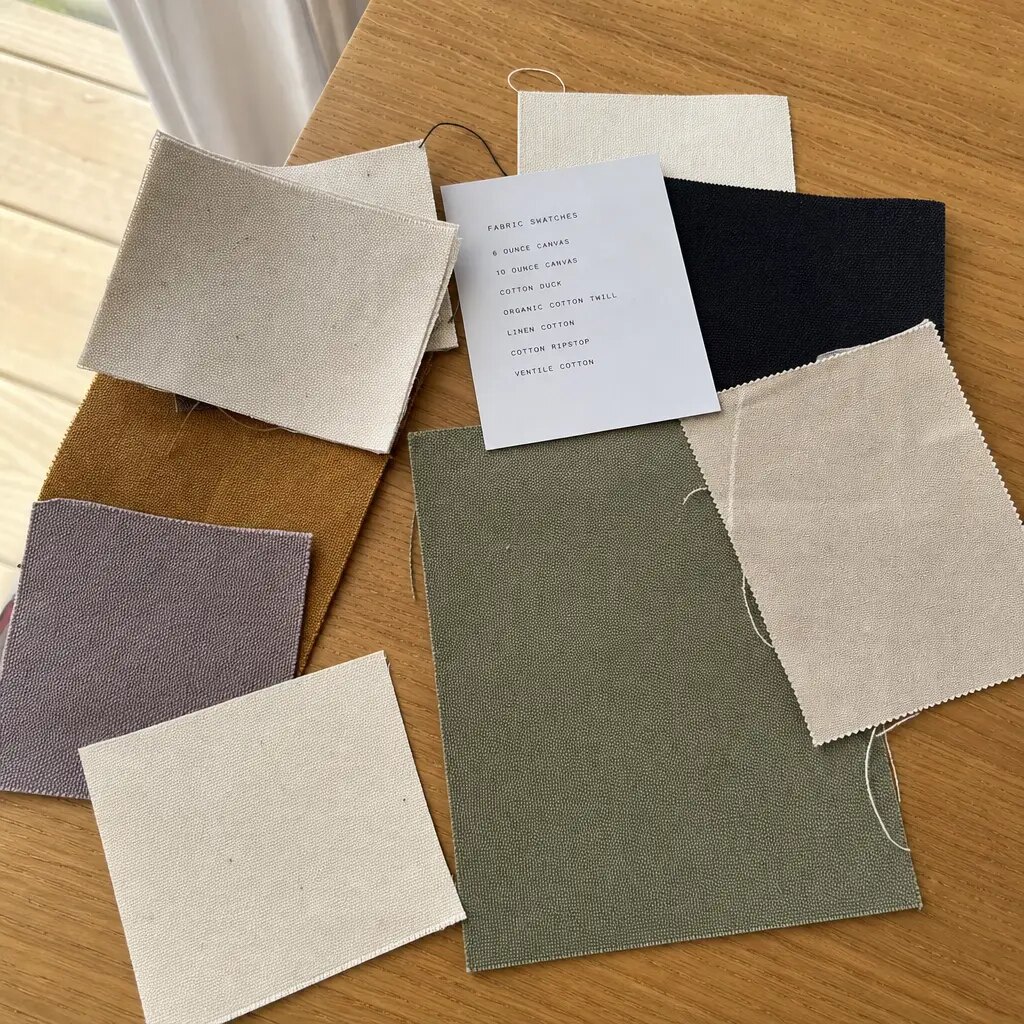
- What exact jute fabric weight and construction are you quoting, and can you provide the approximate GSM or oz plus a current stock swatch?
- Is the quote based on unlined, cotton-lined, or laminated-lined jute tote bags, and how does each option change carton quantity and CBM?
- What print method is included, how many colors are allowed, and what artwork tolerance should we expect on coarse jute fabric?
- What is the MOQ for this jute tote style and print setup, and does MOQ change by color, lining, handle type, or packaging method?
- How many pieces will be packed per export carton, and what are the estimated carton dimensions, net weight, gross weight, and total CBM?
- Will each bag be individually polybagged, bundled, or packed loose, and what material and thickness is used for the polybag if included?
- Can you mark cartons with PO, SKU, carton number, quantity, country of origin, and barcode labels supplied by our warehouse team?
- What sample stages are available: material swatch, print strike-off, pre-production sample, and packed-carton sample?
- What is the normal production lead time after sample approval, and what operations are on the critical path: fabric cutting, sewing, printing, drying, packing, or carton label approval?
- What inspection standards do you use for seam strength, print defects, odor, stains, loose fibers, carton count, and carton condition?
Quality-control points to confirm
- Fabric weight tolerance should be documented; a practical receiving tolerance is often within about ±5-8% from the approved sample, depending on mill supply and weave density.
- Bag size should be measured after sewing and pressing, not only after cutting; agree on tolerance for width, height, gusset, and handle length.
- Handle attachment should use consistent box stitch or reinforced cross stitch with no skipped stitches, loose thread nests, or weak corners.
- Print should be checked for registration, color, edge bleeding, cracking, missing ink, and rub resistance on the actual jute surface.
- Odor and moisture should be controlled before sealing cartons; jute stored damp can create musty smell or mildew risk during sea freight.
- Carton count must match the packing list by SKU and carton number; mixed SKUs should be avoided unless clearly authorized.
- Export cartons should be dry, square, clean, and not overbulged; carton tape and strapping should protect against LCL handling.
- Packed cartons should be weighed during inspection and compared against the quoted gross weight to avoid surprise freight or warehouse issues.
- Random bags from different cartons should be unfolded to confirm crease behavior, lining placement, handle orientation, and logo position.
- Carton labels should be scanned or visually verified against the buyer’s PO, SKU, barcode, destination, and receiving instructions.