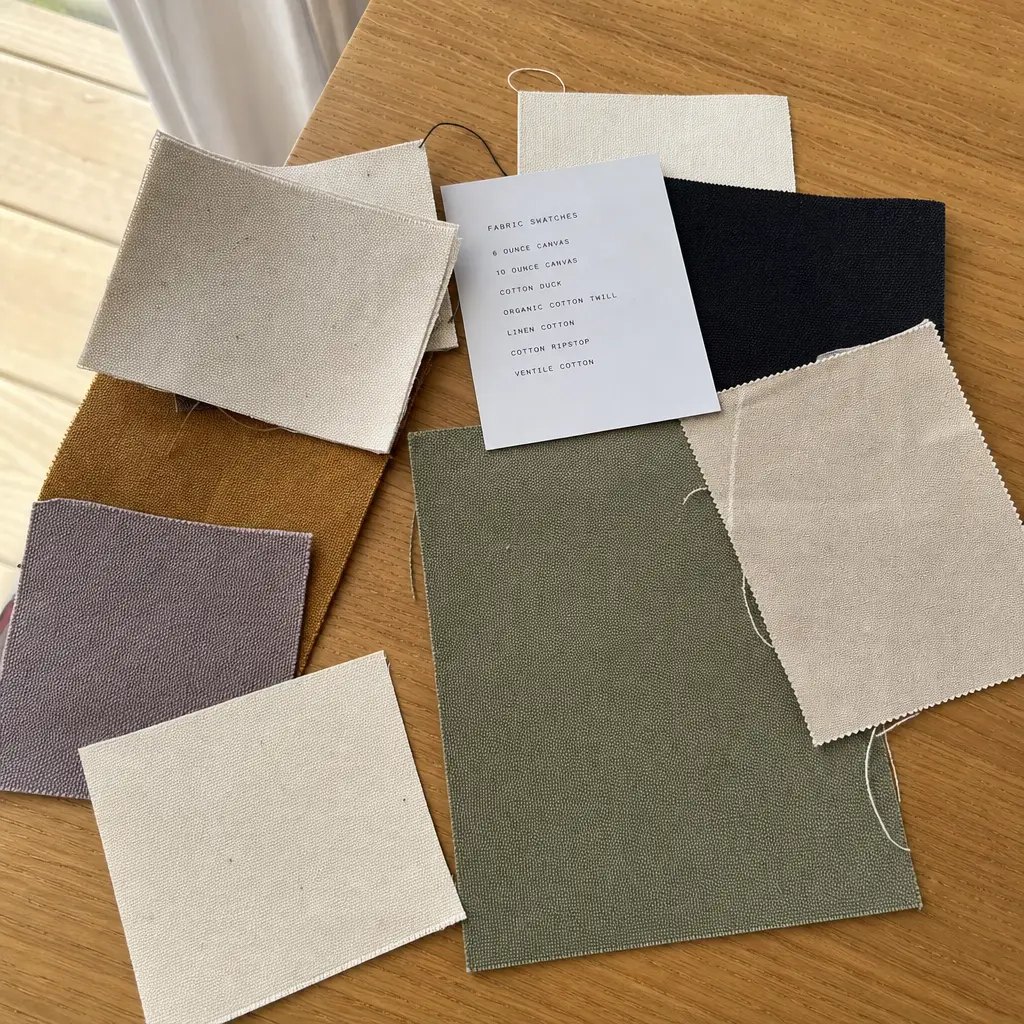
Why jute tote QC is different from canvas tote QC
A custom jute tote bag looks simple in a product photo, but it behaves differently from canvas during cutting, printing, sewing, packing, and inspection. Jute is a natural bast fiber with a coarse open weave. It can have slubs, color variation, vegetable smell, and broken yarns that are normal within limits. The buyer problem is deciding which irregularities are acceptable natural character and which defects will damage a tech startup’s brand at a launch event or partner conference.
For tech startup buyers, the bag often carries more than groceries. It may hold a welcome kit, boxed device accessories, water bottle, notebook, apparel, badge, charger, and printed brochures. That means QC cannot stop at logo appearance. The bag must stand up well, hold weight without handle failure, arrive clean and dry, and look consistent enough when hundreds are placed on a registration table.
- Treat jute texture as a controlled natural material, not a flat print surface like laminated paper.
- Use physical samples for odor, hand feel, and handle comfort; photos are not enough.
- Define logo defects separately from normal jute yarn variation.
- Check load-bearing seams before approving a cheaper handle or lighter fabric.
Start the RFQ with the real packed contents
The best custom jute tote bag specification starts with the contents going inside the bag. A common purchasing mistake is to request a standard size from a supplier catalogue and then discover that the product box or hoodie makes the bag bulge. Jute has less stretch than soft cotton canvas, and laminated jute can crease when forced around sharp corners.
Before asking for a quote, list the largest item, the heaviest expected kit weight, and how the bag will be presented. A tech event tote used for a notebook and T-shirt can use a different construction from an onboarding kit holding a retail box, tumbler, mouse pad, and printed insert. If the tote will sit on chairs, hang from booth hooks, or be shipped pre-packed to employees, those handling conditions should be included in the RFQ.
- Light event use: brochures, T-shirt, notebook, pen, badge, and small giveaways.
- Medium kit use: hoodie, water bottle, retail box, cable pouch, notebook, and leaflet.
- Retail handout use: the bag must look clean at point of sale and may need a stronger bottom gusset.
- Pre-packed shipping use: carton compression and moisture protection matter more than shelf appearance.
Set fabric weight, weave, and lamination before comparing prices
Jute tote quotes can vary widely because suppliers may quote different fabric weights while using similar product images. For a reliable branded tote, buyers commonly look at jute around 280-320 GSM before lamination, or a weave construction that gives comparable body and strength. Lighter jute can work for short-life giveaways, but it may feel flimsy, show more open holes, and distort the printed logo. Heavier jute improves structure but increases unit cost, carton weight, and shipping volume.
Lamination is another major decision. A thin LDPE or PP backing helps the bag hold shape, reduces fiber shedding inside, and gives the sewing line more stability. It also changes the sustainability message, because the tote becomes a composite material rather than pure jute. For many tech startup campaigns, laminated jute is chosen because it photographs better, stands more neatly, and handles kit packing better. If the brand promise requires plastic-free packaging, unlaminated jute is possible, but the buyer should expect more fiber shedding and softer structure.
- Quote comparison should state jute GSM or weave, not only bag dimensions.
- Laminated jute should be checked for peeling, cracking, odor, and uneven backing.
- Unlaminated jute needs stronger expectation control for shedding and shape.
- Natural jute shade can vary by batch; use an approved sample as the realistic color reference.
Choose handle construction based on load, comfort, and brand look
Handles are one of the fastest ways to identify a weak tote. Jute handles look natural, but they can be rough on the hand and may not match the load requirement for a packed tech kit. Cotton webbing handles, usually 35-40 mm wide, are a practical upgrade because they feel better and accept stronger stitching. The handle color can be natural, black, dyed to match a brand color, or contrast color, but dyed webbing should be checked for rubbing and color transfer.
Handle length also affects the user experience. Short hand-carry handles may be fine for retail packaging, while shoulder-length handles are better for conferences where attendees walk all day. The RFQ should include handle total length, exposed drop length if needed, webbing width, and reinforcement method. A cross stitch or box-X stitch at each handle base is usually safer than a simple line stitch when the bag carries bottles, boxes, or electronics accessories.
- For hand carry: shorter handles reduce dragging and keep the bag neat on tables.
- For shoulder carry: longer handles improve comfort but need better anchoring and balanced placement.
- For heavier kits: use cotton webbing and reinforced stitching rather than narrow jute tape.
- For dark handles: request a rub test against natural jute and white tissue before bulk approval.
Print method selection for startup logos on coarse jute
Most custom jute tote bags use screen printing for solid logo designs. It is cost-efficient, durable enough for event use, and works well with one to three color artwork. The limitation is that jute is rough and uneven. Very thin lines, small registration marks, gradient effects, and tiny tagline text may not reproduce cleanly. If the startup logo includes fine icon details or small legal text, the artwork may need simplification before production.
Heat transfer can show sharper detail on some surfaces, but it may look less natural on jute and can be more sensitive to adhesion, heat setting, and edge lifting. Embroidery is usually not the first choice for coarse jute tote panels because stitch density can distort the fabric and increase cost. For premium retail programs, a cotton label, woven side label, or leather-like patch can be used, but each adds MOQ and sewing control points.
- Screen print: best for bold logos, solid colors, and larger order quantities.
- Heat transfer: useful for detailed marks, but test adhesion and edge feel on laminated jute.
- Woven label: good for small brand marks when printing is too rough for fine details.
- Patch application: premium look, but it adds alignment risk and extra sewing steps.
Use clear acceptance criteria for natural jute defects
A practical inspection checklist must separate critical, major, and minor defects. Natural yarn variation should not automatically fail the shipment, but oil stains, mold, wrong logo color, broken handles, open seams, and strong odor should. If your startup event has a high visibility launch date, logo defects should be treated as major or critical depending on severity, because a bag with a crooked or unreadable logo may be unusable even if the bag can physically carry weight.
For dimensional inspection, a reasonable tolerance for many jute totes is plus or minus 5 mm on width and height and plus or minus 8 mm on gusset. Handmade or semi-manual sewing may require slightly wider tolerance, but it must be agreed before production. Print placement should commonly stay within plus or minus 5 mm from the approved sample. If the logo sits close to a seam, pocket, or handle, tighter placement control becomes harder and should be priced accordingly.
- Critical defects: mold, sharp contamination, unsafe hardware, completely wrong artwork, or unusable handle attachment.
- Major defects: open seams, large stains, severe logo misprint, wrong size beyond tolerance, strong chemical smell, or peeling lamination.
- Minor defects: small loose thread, minor jute slub, slight shade variation, or small print pinhole within approved limit.
- Buyer standard: keep a signed sample and defect board if the order is large or repeatable.
Sampling should prove production method, not just appearance
A sample made from leftover fabric does not always predict bulk production. For custom jute tote bags, the buyer should know whether the sample uses the same fabric weight, lamination, handle webbing, print ink, and sewing method planned for bulk. If the sample is only a size and logo reference, it should be labeled that way. For high-visibility tech events, a pre-production sample using actual approved material is much safer than approving a photo sample.
Sample review should include practical handling, not only desk inspection. Load the sample with the planned contents and carry it for a few minutes. Check whether the handles twist, whether the side seams pull, whether the bottom gusset deforms, and whether the logo looks clean under normal event lighting. Smell the bag after it has been sealed in a polybag or carton for a day; jute and lamination odor can become more obvious in closed packaging.
- Measure finished width, height, gusset, handle width, and handle drop.
- Compare print color under consistent light against Pantone or approved swatch.
- Perform a simple load test using the estimated kit weight plus safety margin.
- Fold and reopen the bag to see whether lamination cracks or the print creases badly.
- Keep one approved sample with the buyer and one sealed sample at the factory.
MOQ logic and cost drivers that change the quote
MOQ for custom jute tote bags is not only about the sewing line. It can be driven by jute fabric purchase quantity, lamination setup, handle webbing dyeing, ink mixing, label production, carton printing, and cutting efficiency. A supplier may accept a lower MOQ if the buyer uses stock natural jute, standard bag size, stock cotton handles, and one-color screen print. The MOQ rises when the order needs dyed jute, custom handle color, multiple print colors, inside pocket, closure, or special packaging.
When comparing quotes, separate the unit price from setup costs and logistics data. A lower unit price can disappear if the carton is oversized, the fabric is heavier than needed, or the supplier excludes sample fees, screen charges, carton marks, and inner packing. For importers and distributors, carton quantity, gross weight, and CBM are essential quote data because jute bags can be bulky even when the unit price looks low.
- Main cost drivers: fabric GSM, lamination, bag size, gusset depth, handle material, print colors, and packing method.
- Secondary cost drivers: sample remake, artwork adjustment, label MOQ, carton printing, moisture protection, and inspection sorting.
- Quote data needed: unit price, setup charges, sample cost, MOQ, lead time, carton size, pieces per carton, gross weight, and HS code suggestion.
- Commercial rule: do not compare a laminated 320 GSM jute tote with a thin unlaminated promotional tote as if they are the same product.
Packing and moisture control are not small details
Jute is sensitive to moisture and odor absorption. A good packing plan protects both the product and the brand presentation. For many bulk orders, flat packing in bundles of 25-50 pieces per export carton is practical. Inner polybags can keep dust away, but they also trap moisture if the bags are packed too soon after printing or stored in a humid area. If the brand wants reduced plastic, kraft paper bands or master polybag-free packing can be considered, but the carton must still protect against dirt and moisture.
Cartons should not be overloaded to the point that the bags crease heavily or the lamination is stressed. They also should not be so loose that the bags shift and corners crush during transport. If the order will be distributed to multiple offices or event venues, carton marks should include SKU, bag size, color, logo version, quantity per carton, carton number, and destination code if needed. This prevents warehouse teams from opening cartons just to identify the correct version.
- Require clean, dry export cartons with consistent bundle quantity.
- Use desiccant or moisture control when shipping in humid seasons or long sea routes.
- Let printed bags cure before final packing to reduce ink offset and odor.
- Avoid mixing logo versions in one carton unless the packing list clearly controls it.
- Request carton dimensions early so freight cost can be estimated before production finishes.
Lead time planning for event and launch deadlines
The most expensive jute tote problem is not always a quality failure; it is a schedule failure. Tech startup orders often connect to fixed launch dates, investor events, retail pop-ups, or trade shows. Production lead time should not be counted from the first email. It usually starts after artwork approval, sample approval, deposit, and material confirmation. If any of those steps are delayed, the shipping plan compresses and the buyer may be forced into air freight.
A practical schedule includes artwork review, sample making, sample transit, approval comments, material purchase, bulk cutting, printing, sewing, trimming, final inspection, packing, and export booking. For urgent campaigns, simplify the specification: standard natural jute, stock handle color, one-side screen print, open top, and standard carton packing. Every custom element adds approval risk and possible rework.
- Artwork and RFQ clarification: allow time for logo file, Pantone, placement, and size confirmation.
- Sample stage: include factory sample time and courier transit, not only sewing time.
- Bulk production: printing and sewing capacity must match the event quantity and deadline.
- Inspection buffer: reserve time for rework if logo sorting, thread trimming, or repacking is needed.
- Shipping decision: compare sea, rail, truck, and air options using actual carton CBM and gross weight.
Specification comparison for buyers
| Spec decision | Recommended option | When it fits | Buyer risk to check |
|---|---|---|---|
| Jute fabric weight | 13 x 13 weave, about 280-320 GSM natural jute before lamination | Conference giveaways, welcome kits, light retail purchases, and branded merchandise where the bag must stand upright but still fold for shipping | Very loose weave can distort logos; overly heavy jute increases carton weight and may push air freight cost higher than expected |
| Inner construction | Light LDPE or PP lamination on the reverse side, typically clear or milky | Improves body, reduces fiber shedding, and gives better print stability for tech event bags that hold brochures, boxes, or apparel | Lamination may crack if folded sharply; strong plastic odor or uneven bonding should be rejected during sample review |
| Handle material | Cotton webbing 35-40 mm wide, reinforced cross stitch at handle base | More comfortable than flat jute handles for laptop sleeves, bottles, and onboarding gift sets | Handle color can bleed on natural jute if dyed poorly; pull strength and stitch density must be inspected |
| Print method | Screen print for solid 1-3 color logos; heat transfer only for small detailed artwork | Startup logos usually need clean edges and brand color control; screen print is cost-efficient at bulk quantity | Jute texture breaks fine lines; artwork below about 1.5 mm stroke width may fill in or look jagged |
| Bag size | Common buyer starting point: 35 W x 40 H x 15 D cm, adjusted to kit contents | Fits hoodies, notebooks, retail boxes, bottled water, leaflets, and event materials without overbuilding the bag | If the gusset is too narrow, packed kits bulge and tear side seams; if too large, the bag looks empty and carton volume rises |
| Closure option | Open top for event totes; cotton drawstring or snap only when contents need retention | Open top keeps MOQ lower, production faster, and inspection simpler for most tech startup campaigns | Adding closures changes sewing operations and can cause alignment defects; closure hardware may increase metal detection or packaging requirements |
| Packing method | Flat packed 25-50 pcs per inner bundle, export carton with moisture control | Best for sea shipment, distributor receiving, and warehouse counting | Jute absorbs moisture; avoid compressing wet goods or using unventilated storage after production |
| Inspection level | Final random inspection to AQL 2.5 major / 4.0 minor, plus 100% visual sorting for critical logo defects when brand standards are strict | Appropriate for public-facing launch events where logo appearance and bag function matter more than lowest unit price | If logo defects are treated as only minor, unusable branded inventory may pass standard inspection |
Buyer checklist before sampling
- Define the exact use case: conference giveaway, onboarding kit, retail packaging, investor event, or reseller stock.
- List the packed contents with approximate weight and dimensions before choosing bag size and handle strength.
- Specify jute GSM or weave quality, lamination requirement, handle material, handle width, and reinforcement stitching.
- Provide vector artwork with Pantone references and minimum printable stroke width; include logo placement in millimeters.
- Decide whether color tolerance should be judged against Pantone, a physical color swatch, or a signed pre-production sample.
- Approve a physical sample for size, smell, handle comfort, print sharpness, lamination, and carton packing method.
- Set inspection criteria for broken yarns, oil stains, mold, odor, loose threads, poor handle stitching, skewed panels, and print defects.
- Require carton marks, inner bundle quantity, polybag or no-polybag choice, moisture protection, and pallet requirements in the quote.
- Build lead time around artwork approval, material purchase, sampling, bulk production, inspection, and export booking.
- Compare quotes using the same specification sheet, not only the same bag photo.
Factory quote questions to send
- What jute fabric weight or weave construction are you quoting, and is the quoted fabric laminated on the reverse side?
- What is the maximum recommended load for this handle construction, and what stitch pattern will be used at the handle base?
- Which print method are you quoting for our artwork, and what is the minimum line width you can hold cleanly on jute?
- Is the logo price based on one side or two sides, and how many colors are included in the quoted unit price?
- What MOQ applies to this bag size, fabric color, handle color, and print method separately?
- How many physical samples are included, what is the sample lead time, and will the bulk match the approved sample?
- What are the estimated carton dimensions, gross weight, and pieces per carton for our ordered quantity?
- Does the quote include export carton, inner bundles, moisture control, and carton marks, or are these extra charges?
- What production lead time starts after which milestone: PO, deposit, artwork approval, or sample approval?
- Can you provide in-line photos, final inspection support, and a packing list with carton count before shipment?
Quality-control points to confirm
- Fabric should match approved jute texture, approximate GSM, color tone, and lamination feel without mold, damp odor, oil marks, or excessive loose fibers.
- Finished bag size tolerance should normally stay within plus or minus 5 mm for width and height, and plus or minus 8 mm for gusset, unless the buyer approves wider handmade tolerance.
- Handles should be symmetrical, securely attached, and comfortable to hold; reject broken stitches, skipped stitches, twisted webbing, and weak reinforcement.
- Logo position should stay within plus or minus 5 mm from the approved placement for normal event totes; tighter tolerance must be agreed before production.
- Print should show acceptable edge definition for jute, with no heavy ink bleeding, major pinholes in solid areas, wrong color, ghosting, or upside-down placement.
- Side seams and bottom seams should be straight enough for the bag to stand and load properly; reject open seams, raw cut edges outside tolerance, and serious panel skew.
- Lamination should be bonded evenly, not peeling at the opening, not cracked across fold lines, and not producing strong chemical odor.
- Cartons should be dry, clean, properly taped, correctly marked, and packed to prevent crushing, moisture absorption, and counting confusion.
- Random inspection should separate critical safety or brand defects from normal minor jute irregularities, because natural fiber texture cannot be judged like polyester fabric.