Start With The Buying Use Case
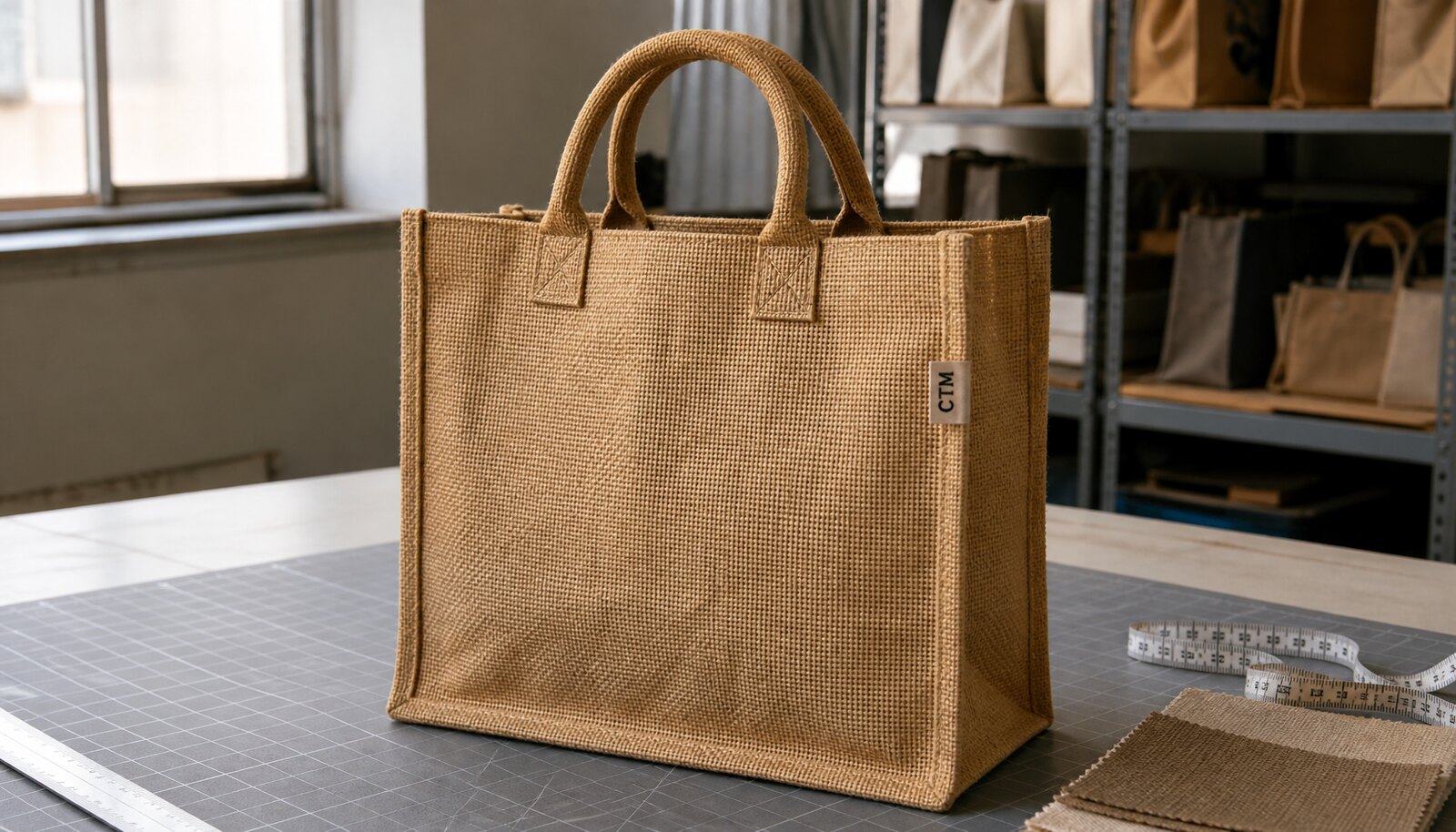
A jute shopping bag quote only makes sense when the supplier knows what the bag must do. A grocery bag, a gift bag, a retail carrier, and a trade show handout all push the design in different directions. If the bag is meant to carry bottled goods or boxed products, you need a stronger base, tighter stitching, and a handle that is comfortable in the hand. If it is mainly a brand carrier for fashion or home goods, the print finish and shape retention matter more than raw load capacity. Procurement teams often get into trouble when they ask for a 'custom jute shopping bag' without saying how the bag will be used, because the supplier fills the gaps with its own assumptions.
The right starting point is not artwork or price. It is the actual load, the expected reuse count, and the retail setting. Jute has a natural, coarse structure, so it can look premium in the right format but also look underbuilt if the GSM is too low or the seam allowance is too small. A buyer who defines the use case early gets cleaner quotes, fewer sample revisions, and less risk of a production batch that is technically correct but commercially wrong.
- State the channel first: grocery, retail, promotional, or corporate gifting.
- Define what the bag must carry and how often it will be reused.
- Tell the supplier whether the bag must look premium, natural, or utility-driven.
Set The Construction Spec Before You Compare Price
For jute shopping bags, fabric weight is one of the first things that should be fixed in the RFQ. As a practical range, 300-320 gsm works for lighter retail carriers and short promotional use, 340-400 gsm is a safer range for standard shopping bags, and 400 gsm or above is usually reserved for premium or heavier carry applications. The exact number is less important than the outcome: a bag that holds shape, accepts print cleanly, and survives repeated handling without seam stress. A supplier can quote a low price by trimming GSM, but that change often shows up later as a flimsy body, uneven print, or poor bag posture on shelf.
Construction details matter just as much as fabric weight. Confirm finished size, gusset depth, handle length, handle material, reinforcement patches, and whether the bag needs a board or stiff base insert. If the bag has a wide opening, a gusseted side and bottom help the bag stand and carry better. If the bag is intended for repeated retail use, cotton webbing handles with bartack reinforcement usually give a better user experience than thin self-fabric handles. Buyers should also decide if the bag is raw, lined, or laminated, because that decision changes both appearance and quote structure.
- Lock the GSM range before asking for a price.
- Specify gusset depth and bottom structure if the bag must stand.
- Choose handle material for comfort, not only for cost.
Match The Print Method To The Artwork And Order Volume
Jute is textured, porous, and not as forgiving as smooth cotton canvas or coated synthetics. That means the print method should match both the artwork and the quantity. Screen print is still the workhorse for simple logos, solid blocks, and repeat orders because it is efficient and clear on natural fibers. Heat transfer can handle finer details and multiple colors, but it may feel less integrated into the fabric and can become a weak point if the bag is folded tightly or reused frequently. Woven or sewn labels work well when the buyer wants a premium finish and a more controlled brand mark on a rough surface.
The print method also affects MOQ logic. Each screen, transfer setup, or label variant creates its own setup and approval work, so a one-color logo with one placement is easier to buy than three small logo placements across two bag sizes. If the design has fine lines or gradients, ask the factory to show its smallest achievable detail on jute, not on paper. A clean-looking artwork file does not guarantee a clean production result once it is translated onto a fibrous, uneven surface.
- Use screen print for bold, simple branding and stable repeat orders.
- Use heat transfer only when the artwork really needs detail or color range.
- Ask for a placement proof before approving any multicolor logo.
Read MOQ And Sample Policy As A Cost Signal
Minimum order quantity is not just a factory rule; it reflects how much setup the order needs. Fabric cutting, handle sourcing, screen preparation, sewing line changeover, and carton allocation all create labor and waste that have to be spread across the order. A small order with several sizes, colors, and logo placements usually costs more per bag than a simpler order with one construction and one print. That is normal, but the supplier should explain it clearly. If the quote jumps because of low quantity, ask which steps are driving the increase instead of accepting a vague answer.
Sampling should be handled in stages. A development sample confirms the construction and look, a pre-production sample confirms the final approved spec, and a shipment sample gives you a record of what actually went into the box. Buyers should also ask whether sample material comes from the same batch as bulk production, because color and texture can shift between lots. For jute, sample checks are especially important if you are comparing raw finish versus laminated finish, since the hand feel and fold behavior change enough to affect retail presentation.
- Ask how MOQ changes when you change size, color, print, or handle type.
- Treat sample fees and setup fees as part of the real order cost.
- Confirm that the final bulk run will follow the approved sample, not a verbal revision.
Build An RFQ That Forces Comparable Quotes
Most bad sourcing decisions start with a weak RFQ. A supplier cannot quote accurately if the buyer only sends a logo and a target price. The request should define finished size, gusset, fabric weight, weave finish, handle material, handle length, print method, print area, number of colors, logo file type, packing style, carton count, destination, and target timeline. The more exact the spec, the less room there is for hidden substitutions. If you leave out the backing or lamination decision, one factory may quote a raw body while another assumes a laminated build, and the numbers will never compare cleanly.
The quote itself should separate product cost from setup cost, sample cost, packing cost, and export terms. Ask the supplier to note what is included and what is excluded. If the factory offers a low unit price but charges later for screens, carton labels, or stronger handles, the quote is not truly cheaper. A good RFQ does not just ask for a number; it makes the supplier show how that number was built.
- Send a dimensioned spec sheet instead of a short email description.
- Attach artwork in vector format and mark the print location clearly.
- Ask the factory to list exclusions line by line, not in one vague note.
Compare Quotes On Structure, Not Only On Unit Price
When buyers compare jute bag quotes, the unit price is only one line in the total cost. The real difference often sits in the hidden details: fabric weight, handle grade, stitch count, print setup, carton quality, and whether the quote assumes retail-ready packing or bulk loose packing. A lower quote can look attractive until you discover the supplier used a lighter body, shorter handles, or a simpler seam construction. That is why the same-looking bag can produce very different customer reactions once it reaches the store floor.
It helps to compare quotes by building a simple internal checklist. Ask whether the supplier included sample approval, whether the packing matches your receiving requirements, and whether the quote is EXW, FOB, or something else. If one factory is 10% to 15% lower, do not assume it is a better deal. Check whether the cheaper quote quietly removed a feature that matters in use. In jute bags, the cost difference is often caused by a small change in GSM or reinforcement, and that small change can create a much bigger quality issue later.
- Compare the same bag spec across all suppliers before looking at price.
- Ask what changed if one quote is materially lower than the others.
- Watch for missing setup, packing, or export line items.
Approve Samples Against Measurable Acceptance Criteria
A sample approval should be a measurement exercise, not a visual guess. Check finished width, height, and gusset against the approved spec, and do not accept a sample that is 'close enough' if the bag needs to fit shelving, cartons, or product inserts. Look closely at seam straightness, stitch density, bartack placement, handle symmetry, and print alignment. On jute, a logo can look acceptable from a distance while still bleeding into the weave or drifting off-center because the fabric surface is uneven. That is why buyers should ask for a clear front view, side view, and close-up photo before signing off.
Physical testing matters too. Load the bag with a realistic weight, check how the handles sit in the hand, and inspect whether the bottom sags or the side seams pull. If the bag is meant for retail display, it should stand and recover shape without collapsing. If the product will be folded and stored, it should still open cleanly after compression. The sample is the last low-cost place to catch a problem, so the acceptance criteria should be written before bulk production begins.
- Measure the sample instead of judging it only by appearance.
- Test carry comfort with the actual load, not an empty bag.
- Reject samples that hide weak construction behind a good print.
Lock Packing, Carton, And Shipping Details Early
Jute shopping bags are bulky relative to their unit value, so packing efficiency matters. Buyers should decide early whether the bags will be folded flat, nested, stuffed, or separated by inner packs. If the bag carries printed branding, the fold line should not cut directly through the logo unless that is acceptable for your shelf presentation. Moisture protection is also important because jute can pick up odor or dampness during storage and transit. Even a well-made bag can disappoint on arrival if the packing spec was left vague.
Carton dimensions and master pack count affect freight cost, storage, and receiving speed. Ask the supplier how many pieces fit per carton, whether the carton is export grade, and whether the outer marks match your warehouse needs. If you need retail-ready packing, make that clear before production begins. If you only need bulk packing for distribution, do not pay for unneeded bag inserts or individual wrapping. Packing is often treated as an afterthought, but for bulky products it can swing landed cost and warehouse efficiency more than the bag decoration itself.
- Confirm flat pack, inner pack, and carton count before approving the PO.
- Protect printed areas from fold marks and scuffing.
- Ask for carton size because freight can change with small packing differences.
Map The Production Flow Before You Place The Order
A clean production flow for jute shopping bags usually runs from spec confirmation to sample approval, then material sourcing, cutting, printing, sewing, inspection, and packing. Buyers should understand where the longest delays happen. Artwork approval may be quick, but screen preparation, handle sourcing, and fabric availability can stretch the schedule. If the bag needs special lamination, a custom label, or a nonstandard handle width, add time for those steps before promising delivery to your own customer or retailer.
Lead time is not just a factory promise; it depends on how complete the order information is when the PO lands. A buyer who sends a full spec, approved artwork, and clear packing instruction will usually move faster than a buyer who revises the logo after sampling. The safest approach is to protect time at the front end. Spend the time on the sample, freeze the drawing, and ask the factory to confirm the schedule by process step rather than by one vague shipment date.
- Ask for a process timeline, not only one final delivery date.
- Expect longer lead times when the order adds lamination, labels, or multiple print colors.
- Freeze artwork and packing details before the bulk run starts.
Award The Order On Capability, Not Just On Cost
The best jute bag supplier is not always the cheapest one. A strong factory quote should be readable, technically complete, and consistent with the sample. It should also show that the supplier understands bag structure, print limitations, and packing discipline. If communication is slow during sampling, it usually becomes slower when production is busy. If a factory cannot clearly explain why a price is lower or higher, that is a warning sign. Buyers should value suppliers who can translate commercial requirements into a stable manufacturing plan.
A practical award decision should weigh four things: the sample, the quote clarity, the response speed, and the supplier's ability to hold the spec during revision. If one supplier offers a nice-looking bag but cannot keep the print centered or the carton pack consistent, the initial savings may disappear in claims or rework. For procurement teams, the goal is not to buy the prettiest sample. It is to place a repeatable order that can be received, stored, sold, and reordered without surprises.
- Score suppliers on sample quality, quote clarity, lead time, and communication.
- Check whether the supplier can repeat the same spec across reorders.
- Choose the factory that understands your use case, not only your artwork.
Specification comparison for buyers
| Spec decision | Recommended option | When it fits | Buyer risk to check |
|---|---|---|---|
| Fabric weight | 300-320 gsm for light retail, 340-400 gsm for standard shopping, 400 gsm+ for premium or heavy carry | Choose by load, bag size, and how often the bag will be reused | A lower GSM can look fine on paper but feel limp, show print distortion, or fail early at the seams |
| Lamination | Unlaminated for a natural look or laminated backing for cleaner print and less fiber shedding | Use lamination when print clarity, shape retention, or product presentation matters more than a fully raw finish | Lamination changes hand feel, recyclability expectations, and folding behavior; confirm with the buyer team before ordering |
| Handle construction | Cotton webbing or jute-cotton blend handles with bartack reinforcement | Best for retail carry bags and repeated use | Thin handles save cost but can cut into the shoulder and create complaints after the first use |
| Print method | Screen print for simple logos, heat transfer for detailed art, woven or sewn label for premium branding | Match the method to artwork complexity and order volume | A method that works on paper may crack, blur, or look uneven on textured jute |
| Bag structure | Gusseted body with reinforced base for grocery and store carry use | Use when the bag must stand, hold shape, or carry boxed goods | If the base and side seams are underbuilt, the bag can twist or sag even with strong fabric |
Buyer checklist before sampling
- Confirm the real use case: retail carry, grocery, event give-away, or premium brand packaging.
- Lock the finished size, gusset depth, handle length, and whether the bag must stand upright.
- Choose the target GSM or fabric weight range before asking for a unit price.
- Decide on lamination, lining, or a raw jute finish based on print and presentation needs.
- Specify the print method, number of colors, print area, and artwork file format.
- Ask for sample cost, setup cost, and bulk lead time in writing.
- Confirm carton count, inner packing, and whether polybags are allowed or not.
- Request tolerance limits for dimensions, color variation, and stitch placement.
- Check whether the supplier quote includes handling, inspection, and export packaging.
- Compare at least two quotes using the same spec sheet, not separate email descriptions.
Factory quote questions to send
- What exact fabric weight and weave construction are you quoting for the body?
- Is the quoted price for unlaminated or laminated jute, and what is the backing material if laminated?
- How many print colors are included, and what is the setup charge for each color or screen?
- What are the handle material, handle width, handle length, and reinforcement stitch details?
- What are the sample costs for development sample, pre-production sample, and shipping sample?
- What MOQ do you require for one size, one logo, and one colorway?
- What is the quoted tolerance for size, print position, and stitch alignment?
- How are the bags packed per polybag, inner pack, and master carton?
- What is your standard production lead time after sample approval, and what changes it?
- Please separate EXW, FOB, and any export packing or carton charges in the quotation.
Quality-control points to confirm
- Measure finished size, gusset depth, and handle drop against the approved spec sheet.
- Check fabric weight, weave consistency, and whether the jute surface has weak spots or loose fibers.
- Inspect print sharpness, color density, registration, and whether ink sits evenly on the textured surface.
- Confirm bartacks, side seams, bottom seams, and handle joins for stitch density and symmetry.
- Test carry strength with a realistic load, not just by hand feel.
- Look for odor, moisture, or contamination from storage and packing.
- Check whether the bag stands, folds, and stacks as intended for retail or shipping use.
- Verify that carton markings, pack counts, and label data match the PO.
- Review color variation between sample, pre-production batch, and bulk output.
- Reject any sample that hides a construction problem behind a good-looking print.