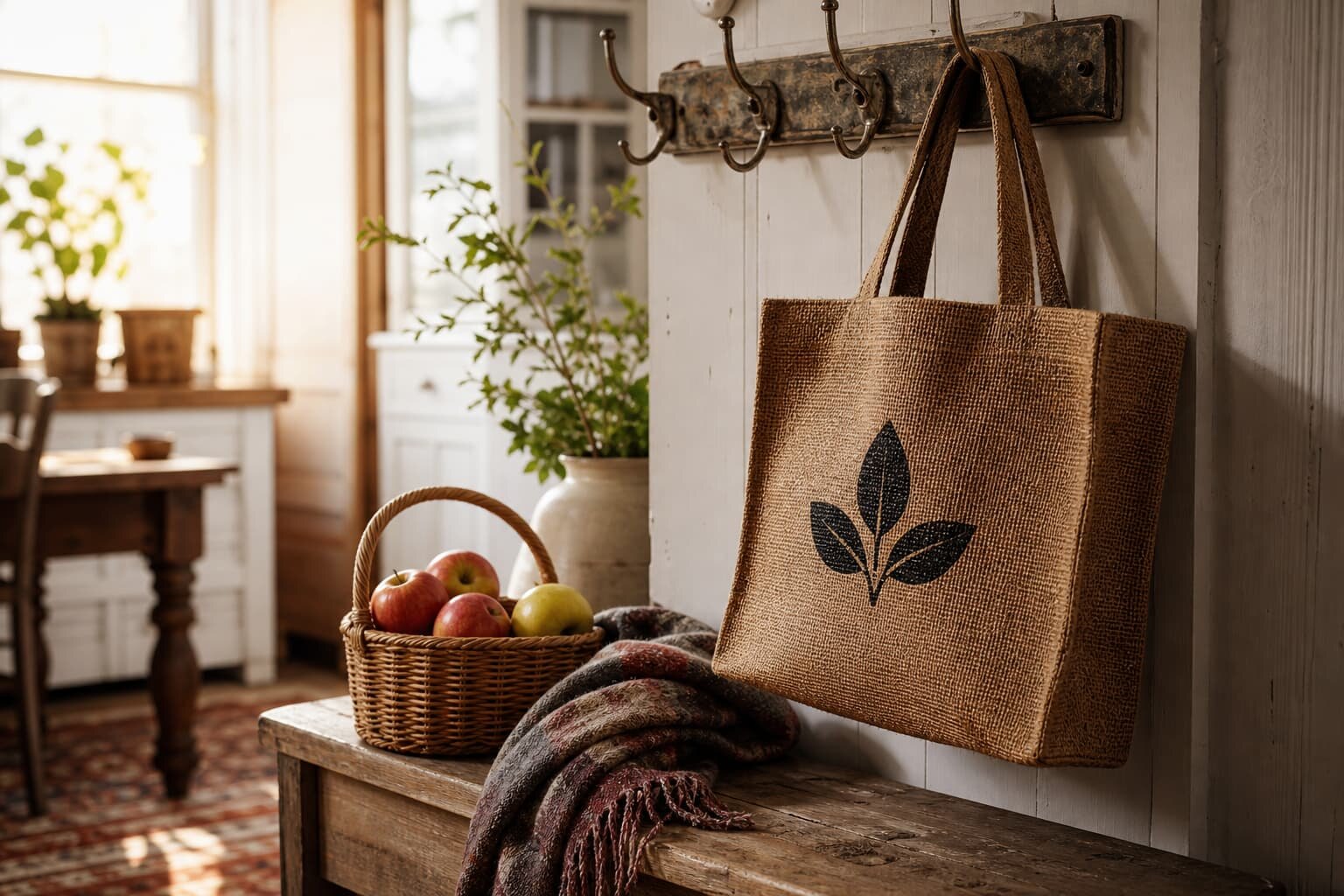
Why bulk jute bag quotes often fail comparison
Most quote gaps on custom jute grocery bags do not come from price negotiation. They come from different supplier assumptions hidden inside short quotations. One factory prices 320 GSM natural jute with self-material handles. Another prices 380 GSM jute with cotton webbing handles and inside lamination. Both call it a custom grocery bag. If your RFQ does not lock the construction, the lowest quote may simply be the lightest bag with the least reinforcement.
For procurement teams, the real task is not getting more quotes. It is getting quotes based on the same build. Jute bags are particularly sensitive because fabric texture, lamination, and handle construction change cost, print result, capacity, and durability at the same time. The cleaner your specification sheet, the easier it becomes to compare ex-factory price, sample quality, packing efficiency, and risk of claims after arrival.
- Ask every supplier to quote the same finished size, same gusset structure, and same handle spec
- Request separate line items for sample cost, print setup, and upgraded packing
- Reject vague descriptions such as heavy jute, standard grocery size, or strong handle
Start with the bag use case, not the logo artwork
The best RFQ starts with what the bag must carry. Grocery programs usually involve mixed loads: produce, canned food, boxed items, jars, and sometimes one or two bottles. That means the bag must hold shape when open, support concentrated bottom weight, and stay comfortable in hand. If you begin with print color and front panel layout before load use is defined, suppliers will optimize appearance first and structure second.
A practical buying brief should describe typical fill weight, whether the bag needs to stand upright at checkout, and whether the retailer wants a natural rustic look or a cleaner laminated interior. Jute is attractive because it signals sustainability and texture, but a rough natural bag without inside finish behaves very differently from a laminated jute shopping bag designed for frequent supermarket use.
- Define expected carry load, for example 8 to 12 kg working load as a buyer target rather than a marketing claim
- Say whether food packaging, produce moisture, or bottle corners are expected in normal use
- Clarify whether the bag is for checkout resale, promotional giveaway, or private label retail stock
Choose the right jute fabric weight and inner finish
For most reusable grocery bags, the safer starting point is jute in the 360 to 400 GSM range, often described by suppliers as around 13 oz to 14 oz equivalent depending on conversion method. Lighter jute can work for promotional carry bags, but grocery use usually needs more body so the side panels do not collapse and the seams do not distort under load. Heavier fabric also gives better shelf presence when bags are merchandised folded or displayed open.
Inner finish matters almost as much as GSM. An unlaminated jute bag feels more natural and may suit farmers' market style branding, but it sheds more fiber, absorbs surface moisture, and is harder to wipe clean. A thin inside PP lamination gives the bag more structure and makes it more practical for grocery use. Buyers should specify whether the inside lamination is clear or colored and ask if the lamination thickness is consistent across the body and gusset panels.
- Natural rustic look: unlaminated jute, but expect more loose fiber and less moisture resistance
- Retail grocery use: laminated interior usually performs better for repeat use and cleaner packing
- If quoting multiple suppliers, ask for GSM tolerance and sample swatch confirmation before order placement
Handle construction is where many complaints start
A jute grocery bag can look acceptable on a table and still fail in real use because of handle construction. For heavier carrying loads, cotton webbing handles are usually the better choice than self-jute handles or rope. Cotton webbing at 2.5 cm width spreads pressure better in hand, gives a cleaner finish for retail programs, and can be sewn deeper into the side seam. If the bag needs a premium look, padded handles can be added, but they increase cost and often reduce packing density.
Do not accept a handle specification that stops at color and length. Ask for width, handle drop, insertion depth, seam capture method, and reinforcement stitching. A box stitch or cross stitch near the stress area can help, but the deeper issue is whether the handle is anchored into the seam properly. A nice-looking top stitch on a shallow insertion may still pull out when a consumer loads glass bottles or canned goods.
- Typical grocery handle width: 2.5 cm cotton webbing for comfort and strength balance
- Check handle drop against bag height so the bag can be carried by hand or over forearm as intended
- Require photos of inside seam reinforcement on sample approval, not only front exterior views
Match print method to jute texture and brand expectations
Jute is not smooth canvas. Its open weave affects edge sharpness, small text readability, and ink coverage. For simple logos, large icons, and bold one-color branding, screen printing usually gives the most economical result. But buyers should not assume that a vector logo will reproduce with the same precision seen on paper packaging. Thin lines can break, and small reverse text can fill in. If the logo includes fine detail, it may be smarter to enlarge the mark, simplify the art, or print on a smoother laminated panel or cotton patch.
Color matching should also be handled realistically. Natural jute tone varies by batch, and that affects how inks read. Dark green, black, navy, and deep red often perform better than light brand colors on natural fibers. If exact Pantone appearance matters, ask the supplier whether they recommend a white underbase, a sewn label, or a transferred artwork panel instead of direct screen print on raw jute.
- Ask for minimum recommended line thickness and minimum text size for your chosen print method
- Request a print strike-off on actual jute surface if logo legibility is critical
- If using two-sided print, confirm whether the back print may show slight pressure shadow inside the bag
Use MOQ logic that reduces SKU waste and setup cost
MOQ on jute grocery bags is rarely just one number. Factories think in terms of fabric purchase, cutting efficiency, print setup, and carton assortment. A supplier may offer a low total MOQ but require it per size, per color, or per artwork. If you split one order into many colorways with different logos, the effective cost per unit rises because screens, cutting control, and packing complexity all increase. Buyers often think they are reducing risk with more variants, but for a first order that can create more dead stock and more factory errors.
A better first-order structure is usually one core size, one construction, and limited print variation. If you need assortment for a retail chain, ask the factory to quote two scenarios: one artwork across all units, and one mixed-SKU plan with clear add-on cost per colorway or print change. That gives procurement a real basis for deciding whether assortment value is worth the operational cost.
- Keep first order simple: one size and one handle spec across all SKUs
- Ask if colors can be split only at print stage while keeping fabric and handle constant
- Request carton pack plans for each assortment option so warehouse handling is visible before approval
Sample stages that actually protect the order
Many buying teams approve the wrong sample. A showroom sample made from substitute stock tells you shape and general look, but not whether the actual bulk fabric, print, handle attachment, and gusset symmetry will meet expectations. For custom jute grocery bags, the safest path is to separate sample stages: first a fit or construction sample, then a print strike-off if needed, then a pre-production sample made with the actual approved materials and artwork.
The pre-production sample should be checked like a small QC audit, not like a sales presentation. Measure finished dimensions, inspect seam piping, test handle feel with weight, compare print placement against artwork, and confirm the inside finish is what was quoted. If the sample uses bulk-equivalent materials, it often reveals hidden issues early: sharp jute odor, print bleeding, uneven gusset depth, or handle imbalance between left and right.
- Do not approve mass production from edited photos alone
- Ask the factory to mark sample fabric GSM, handle width, and lamination type on the sample card
- If time is tight, at least approve a sealed golden sample with signed dimensions and packing notes
Packing details have a direct cost and damage impact
Packing is not a back-office detail on jute bags. It changes freight cost, carton failure risk, and the condition of the bags when they reach your warehouse. Flat packing is common and usually most efficient, but over-compressed cartons can crease laminated interiors, distort gussets, and rub print surfaces. Jute also reacts to humidity, so sea shipment packing should include a moisture barrier liner or at least a controlled inner protection method depending on route and season.
Retail buyers should also decide early whether bags need individual polybags. Many sustainability programs prefer no individual polybag, but that increases the need for clean cartons and better handling. If barcode stickers or retail swing tags are required, their placement must be specified before packing starts. Otherwise warehouse relabeling can erase whatever unit savings you negotiated in the factory quote.
- Set carton quantity by bag size and stiffness, not by a factory's generic standard pack
- Require export carton dimensions and gross weight in the quotation for freight planning
- Confirm whether cartons are lined, strapped, palletized, or loaded floor-packed for container shipment
Lead time planning should include artwork and material checkpoints
Lead time on custom jute grocery bags is often underestimated because buyers count sewing days only. Real production timing starts earlier: artwork cleanup, print screen preparation, raw jute sourcing, lamination scheduling if used, handle webbing color confirmation, sample approval, and then bulk cutting and sewing. If your shipment must align with a retail promotion or store launch, the risky point is usually not the sewing line. It is the delay between RFQ approval and final sign-off on the last unresolved spec.
Ask suppliers to break lead time into stages instead of giving one total number. For example, you want to know how many days they need for blank sample, pre-production sample, bulk material prep, sewing, printing, inspection, and packing. This helps procurement spot what can overlap and what cannot. It also reveals whether a supplier is quoting from actual planning experience or simply giving a sales-friendly estimate.
- Request lead time counted from both deposit date and final artwork approval date
- Ask whether peak season affects jute fabric sourcing, not only factory line capacity
- Build internal approval time into your purchase plan so factory delays are not blamed for buyer-side hold-ups
Quote data points that make supplier comparison cleaner
A useful quote for jute grocery bags should read more like a specification sheet than a one-line price offer. Procurement teams should ask every supplier to confirm material composition, finished size, GSM, lamination, handle spec, print method, print size, packing method, MOQ, sample timeline, production lead time, and carton data. Without these points, it is nearly impossible to explain later why one quote was selected over another or why received goods do not match expectations.
Where possible, ask factories to state cost drivers separately. You do not need them to reveal full internal costing, but it helps to see whether the price changes come from fabric weight, added piping, upgraded handles, extra print colors, or stronger cartons. That makes negotiation more rational. Instead of asking for a blanket discount, you can choose which features are worth keeping and which are optional.
- Compare on total landed logic: unit price, carton efficiency, damage risk, and expected claim exposure
- Request revision quotes for two or three spec levels rather than endless free-form bargaining
- Document supplier assumptions in writing before PO release
Specification comparison for buyers
| Spec decision | Recommended option | When it fits | Buyer risk to check |
|---|---|---|---|
| Fabric weight | 13 oz to 14 oz equivalent jute, roughly 360 to 400 GSM | Daily grocery use with enough body to stand well on shelf and hold produce, bottles, and boxed food | Suppliers may quote lighter fabric that looks similar in photos but collapses faster and prints less cleanly |
| Inner finish | Thin PP lamination inside | Reusable grocery bags that may carry vegetables, chilled packs, or items with surface moisture | Lamination thickness may be uneven, peel at fold lines, or create stronger odor if low-grade material is used |
| Handle material | Cotton webbing handles, 2.5 cm width, sewn into side seam with box stitch | Higher comfort for heavier grocery loads and better brand feel than twisted jute cord | Short stitch length or shallow insertion depth can cause handle pull-out in carton drop or real-store use |
| Bag construction | Bottom gusset plus side gussets with piping on main seams | Structured supermarket bag shape for easier filling at checkout and stronger shelf appearance | Some factories skip piping or reduce gusset width, changing capacity and making seam distortion more likely |
| Print method | 1 to 2 color screen print on jute surface, or on laminated panel if fine detail is required | Solid logos, bold retail branding, promotion, and readable care marks | Fine lines can bleed into jute weave; supplier should confirm minimum line thickness and artwork trapping |
| MOQ setup | Single size per color, split across 1 to 2 print colors only | First bulk order when testing demand or onboarding a new supplier | Too many SKUs spread setup cost, increase print changeover time, and make carton counts harder to manage |
| Packing format | Flat packed, 25 to 50 pcs per export carton with moisture barrier liner | Container efficiency and lower freight cost for standard grocery retail programs | Cartons can deform if overpacked; high compression can crease laminated panels and distort printing |
Buyer checklist before sampling
- Define bag finished size in centimeters including width, height, side gusset, and bottom gusset; do not approve quotes based on photo references only
- State jute fabric target as GSM or ounce equivalent and say whether tolerance is allowed; ask if the quoted GSM is before or after lamination
- Specify inside finish: no lamination, clear lamination, colored lamination, or biodegradable coating if required by your market
- List handle material, width, total length, drop height, insertion method, and reinforcement stitch requirement
- Confirm print method, number of print colors, print position, artwork size, and minimum line thickness the factory can hold on jute texture
- Ask for a pre-production sample using actual fabric, actual handle, and actual print method, not only a digital mockup or substitute material sample
- Set packing rules: units per carton, polybag policy, moisture protection, carton burst strength, carton marks, and barcode label position
- Request quote separation for sample charge, print plate or screen cost, carton upgrade, and any testing or inspection fees
- Agree on acceptable tolerance for finished size, handle length, color variation, and print placement before deposit is paid
- Confirm production lead time from artwork approval and deposit date, plus how long lab dips, strike-offs, and pre-production samples will take
Factory quote questions to send
- What exact jute fabric weight are you quoting, and is that measured before or after any lamination or backing?
- Is the quoted bag made with natural jute only, or does it include cotton canvas panels, PP lining, EVA window, or other mixed materials?
- What handle construction are you quoting: cotton webbing, self-jute handle, padded handle, or rope handle, and how deep is the handle insertion into the seam?
- Can you share the standard stitch count per inch and reinforcement method at handle stress points for this bag style?
- What print method do you recommend for our logo on jute, and what artwork limitations should we follow for small text and thin lines?
- What is your MOQ by size, color, and artwork, and can multiple colorways be combined if the construction stays the same?
- What sample stages do you offer: blank fit sample, print strike-off, and full pre-production sample using bulk fabric?
- How many pieces fit per export carton at our requested size without crushing the gussets or causing print rub during shipment?
- What moisture protection do you use for sea shipments, especially for laminated jute bags stored in humid conditions?
- What are your standard lead times for sampling, bulk production, and reorders during peak season?
Quality-control points to confirm
- Measure finished width, height, side gusset, and bottom gusset on laid-flat samples and compare against approved tolerance
- Check fabric smell, lamination bonding, and visible weave consistency across the production lot
- Verify handle length pair to pair and perform pull check on reinforced stitch areas
- Inspect print color, edge sharpness, registration, and ink adhesion after light rub test
- Confirm seam piping, inside trimming, and absence of exposed sharp staple ends or loose thread clusters
- Check carton count accuracy, inner moisture liner presence, and carton strength after stacking
- Review barcode labels, shipping marks, assortment labels, and carton dimensions against packing instructions
- Open random cartons from top, middle, and bottom of pallet or container loading sequence to catch compression-related defects