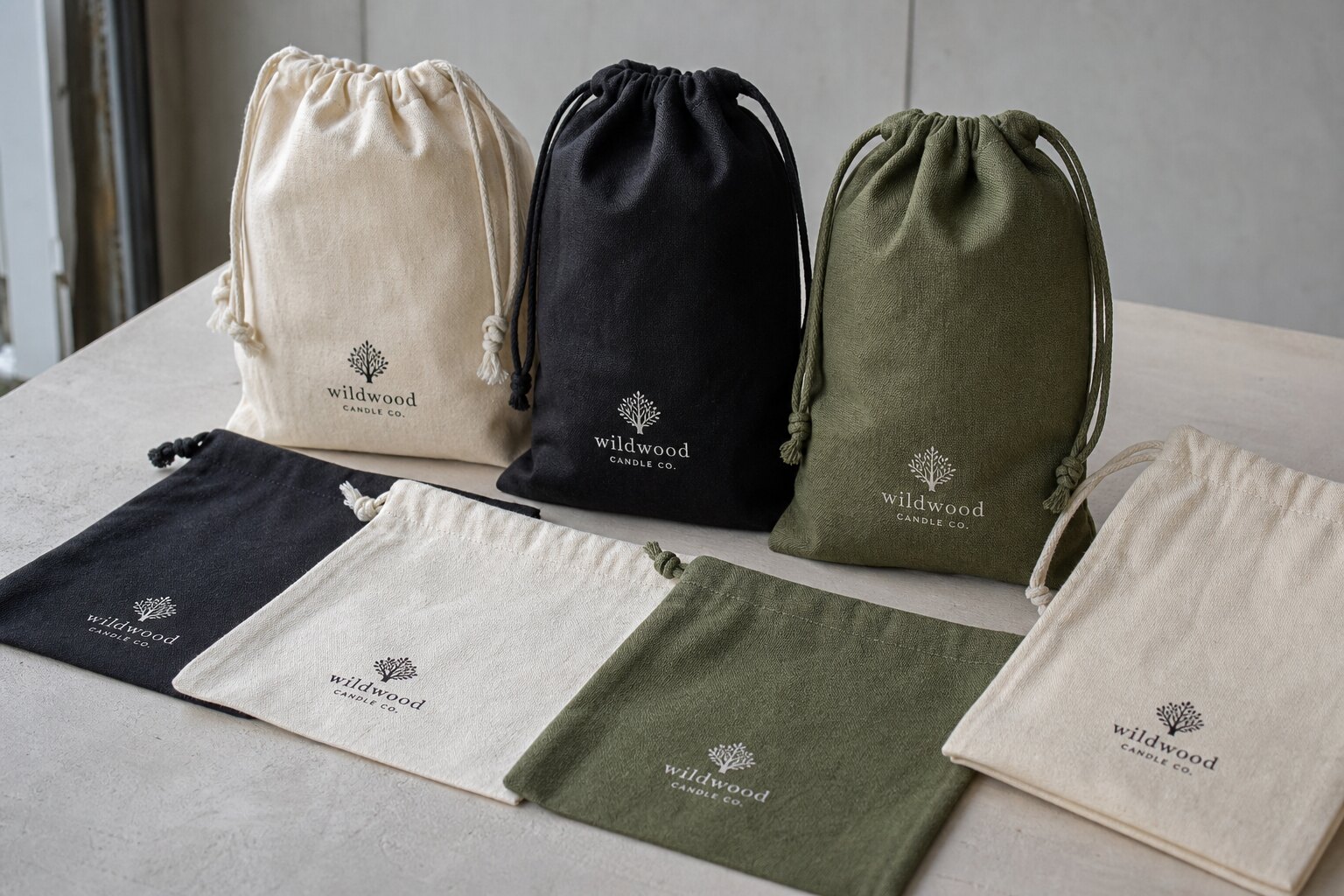
Start With the Product the Pouch Must Hold
For wholesale custom drawstring pouches, the most common buying mistake is choosing the pouch size from a catalog without checking the actual product dimensions. A pouch that fits the product tightly may look neat in a photo, but it can slow down packing, wrinkle the fabric, or make the drawstring difficult to close.
Before asking for pricing, procurement teams should confirm the product length, width, thickness, packed shape, and whether the pouch needs extra space for tissue paper, instruction cards, hangtags, or inner packaging.
- Measure the product at its widest and thickest points, not only the listed retail size.
- Add working allowance for hand packing, especially for rigid items such as candles, bottles, jars, jewelry boxes, or electronics.
- For soft goods, check whether the pouch must look full or loose after loading.
- Confirm whether the pouch will be used as primary packaging, gift packaging, dust protection, or a reusable promotional bag.
- Request a pre-production sample with the real product inserted before approving bulk production.
Choose Fabric Based on Weight, Appearance, and Reuse
Fabric choice affects both unit cost and how the pouch feels in the buyer’s hand. Cotton muslin, canvas, jute, velvet, polyester, and recycled fabrics can all be used for drawstring pouches, but they are not interchangeable.
A cosmetics brand may need a smooth surface for a clean printed logo, while a wine accessory distributor may prefer heavier cotton or canvas for a more durable presentation. Importers should match the fabric to the sales channel, not only the target price.
- Cotton muslin is suitable for lightweight gifts, jewelry, soap, tea, small accessories, and promotional sets.
- Canvas gives better structure and durability for heavier products or premium retail packaging.
- Jute provides a natural rustic look but has a rougher print surface and less fine logo detail.
- Polyester can support bright colors, low weight, and water resistance, but may not match natural or eco-positioned branding.
- Velvet or suede-like fabric works for jewelry and gift packaging but requires different printing or branding methods.
Product-Specific Fabric and Size Comparison Table
A clear comparison table in the article should help buyers connect pouch specifications with real product applications. This avoids quoting one generic pouch for very different use cases.
The table should compare common product categories, recommended pouch materials, typical fabric weight, sizing allowance, branding method, and key caution points.
- Jewelry or small gifts: cotton muslin, velvet, or satin; small size tolerance is important; logo area is limited.
- Soap, candles, or cosmetics: cotton, canvas, or linen-blend fabric; allow space for product thickness and scent transfer risk.
- Wine accessories or bottles: heavier cotton, canvas, or jute; check bottom strength and cord durability.
- Electronics accessories: cotton, canvas, or recycled polyester; consider dust protection and inner seam finish.
- Retail gift sets: canvas, cotton, or jute; confirm shelf presentation, drawstring color, and barcode or label placement.
Specify the Drawstring Closure, Not Just the Bag Body
The drawstring is a functional component, not a minor detail. Cord material, cord thickness, channel width, knot style, and stopper options can affect how the pouch opens, closes, and holds weight.
For bulk orders, closure problems often appear only after packing begins. If the cord is too thin, it may look cheap or cut into the fabric. If the channel is too tight, workers will spend more time closing each pouch.
- Cotton cord gives a natural look and works well with cotton or canvas pouches.
- Polyester cord is smoother, stronger, and available in more colors.
- Flat tape drawstrings give a softer retail look but need a wider channel.
- Double drawstring closure is easier to open and close than a single-side pull for many retail uses.
- Cord stoppers can be useful for outdoor, travel, or accessory pouches but add cost and may affect recyclability.
Match Logo Method to Fabric and Order Quantity
Logo printing on drawstring pouches should be selected according to fabric texture, artwork detail, color count, and expected wash or reuse. A detailed logo that works on paper may not print cleanly on coarse jute or loose-weave cotton.
Buyers should send vector artwork early and ask the factory to confirm maximum print area, minimum line thickness, and whether the print will sit flat after the pouch is filled.
- Screen printing is cost-effective for simple logos and medium to large wholesale quantities.
- Heat transfer can handle more colors and gradients but may feel less natural on cotton or canvas.
- Embroidery gives a premium finish but is better for thicker fabrics and simple artwork.
- Woven labels work well when the fabric surface is too textured for sharp printing.
- Debossed or embossed branding is possible only on suitable synthetic leather or specialty materials, not standard cotton muslin.
Build a Practical Specification Checklist Before Requesting Quotes
A complete RFQ helps the supplier price accurately and reduces back-and-forth. For custom drawstring pouches wholesale, missing details often lead to price revisions after sampling.
The article should include a buyer checklist that procurement teams can copy before contacting suppliers.
- Finished pouch size: width, height, bottom gusset if required, and acceptable tolerance.
- Material: fabric type, fabric weight, color, dye requirement, and certification request if needed.
- Closure: single or double drawstring, cord material, cord color, cord diameter, knot or stopper details.
- Branding: logo file, print size, print position, color count, and Pantone references.
- Packing: bulk pack or individual polybag, carton quantity, carton marks, barcode labels, and export requirements.
Check MOQ, Sampling, and Lead Time Realistically
MOQ depends on fabric availability, dyeing requirements, logo method, and pouch size. A natural cotton pouch with one-color screen print usually has a lower entry point than a custom-dyed pouch with multiple print colors and special cord.
Buyers should separate sample lead time from bulk production lead time and confirm whether the quoted lead time starts after deposit, artwork approval, sample approval, or material arrival.
- Stock fabric colors normally support faster sampling and lower MOQ.
- Custom-dyed fabric requires more time and may involve minimum dye lot quantities.
- Multiple pouch sizes in one order may reduce production efficiency and affect unit cost.
- Logo approval should include print position, color matching, and durability checks.
- Peak season orders should allow extra time for material sourcing, sewing capacity, and export booking.
Review Quality Points Before Bulk Shipment
Drawstring pouches are simple sewn products, but quality control still matters. Uneven stitching, twisted cords, poor logo registration, and inconsistent sizing can create problems for retail packing and brand presentation.
A practical inspection standard should focus on the features that affect use: size, fabric defects, seam strength, closure function, logo appearance, and packing accuracy.
- Check finished size tolerance against the approved sample, not only the original drawing.
- Pull-test the drawstring channel and side seams for products with higher weight.
- Inspect logo placement and print clarity across different fabric colors.
- Confirm loose threads are trimmed and knots are secure.
- Verify carton packing, inner quantity, labels, and moisture protection before shipment.