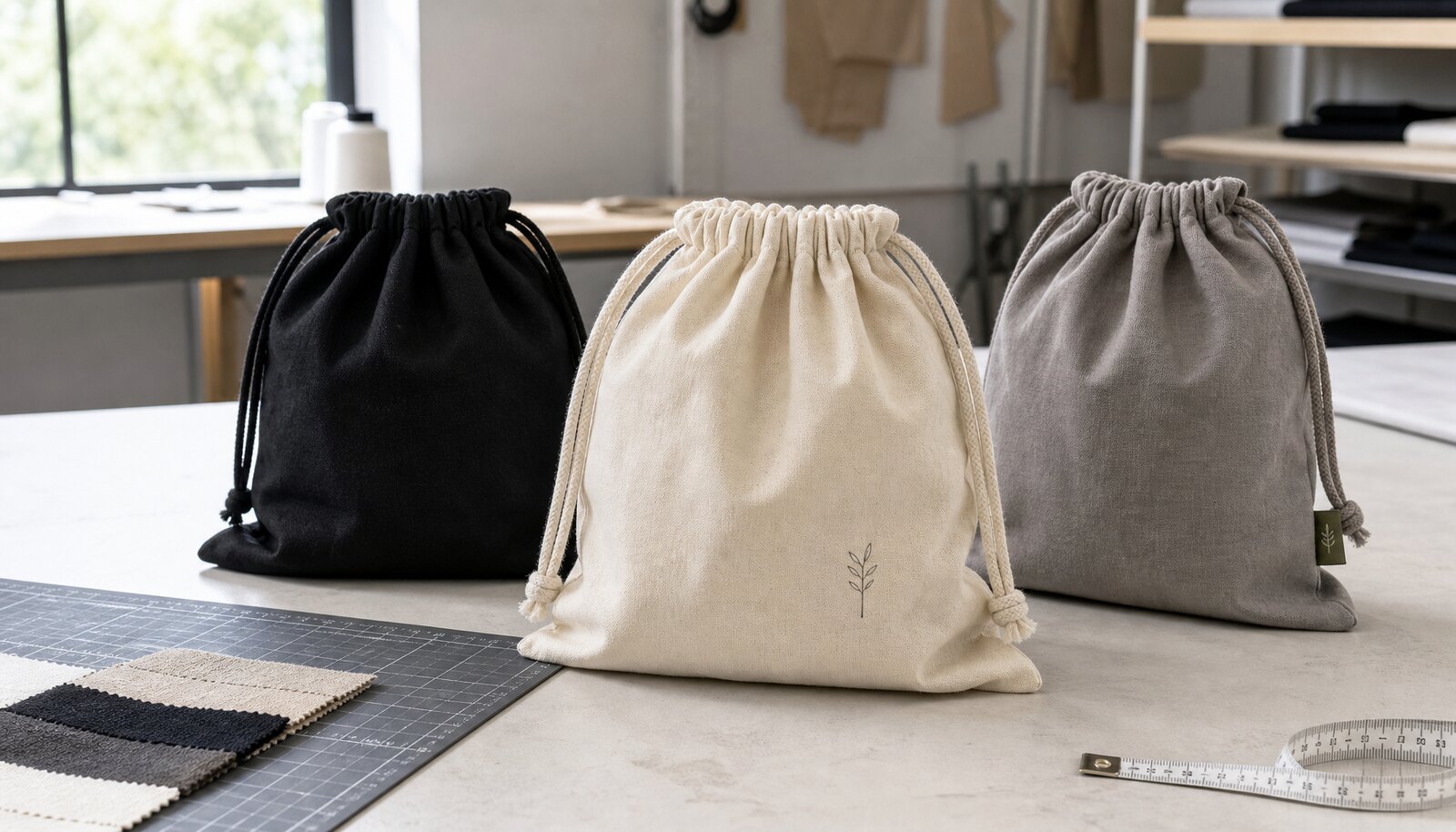
What custom drawstring gift bags solve for procurement buyers
For procurement teams, custom drawstring gift bags are not just a presentation accessory. They are part of the product system: they protect the item, carry the brand, influence the unboxing moment, and affect freight and handling cost. A bag that looks fine in a mockup can still fail commercially if the actual closure is weak, the print is off-center, or the fabric is too light to hold shape. That is why this category needs the same sourcing discipline you would apply to other branded packaging components.
The buying goal is usually a balance of four things: appearance, function, cost, and repeatability. A gift bag used for jewelry or cosmetics may need a softer look and smaller size, while a bag for bottle sets or heavier retail bundles may need stronger fabric, wider seams, and a more durable cord. The wrong specification can create hidden costs later, including rework, packaging damage, returns, or re-packing labor at destination.
Procurement teams also need a usable way to compare suppliers. Two factories can quote the same generic description and still be offering very different products. One may be quoting a 120 GSM cotton bag with basic screen print and bulk packing. Another may be including heavier canvas, a woven brand label, hemmed edges, and retail folding. Without a strict spec sheet, the lowest quote can simply be the least complete quote.
The practical approach is to turn the bag into a measurable buying object. Define the size, fabric, closure, print method, and packing method. Ask for a sample that matches bulk production. Then inspect the supplier response for what is included, what is optional, and what is left vague. That is how custom drawstring gift bags become a controllable procurement item instead of a subjective design purchase.
- Use the bag as a branded packaging component, not only a transport sleeve.
- Treat size, fabric, closure, print, and packing as one system.
- Write the RFQ around end use and inspection requirements, not marketing language.
Choose the right fabric before you compare supplier quotes
Fabric drives most of the commercial difference in custom drawstring gift bags. It affects appearance, print quality, sewing labor, tear resistance, carton weight, and how the bag feels in the hand. For most procurement programs, cotton is the default starting point because it is versatile, easy to brand, and widely available. A lighter cotton in the 120–150 GSM range usually works for lightweight gifts, promotional packs, jewelry sets, or items that do not need the bag to stand upright. It also keeps the landed cost lower than heavier constructions.
If the bag must feel more premium or carry more weight, canvas is usually the next step. In procurement terms, an 8–10 oz canvas bag offers more body and better resistance to deformation when filled. That matters for retail resale, wine accessory sets, hospitality gifts, and brand programs where the bag itself stays with the customer after the gift is removed. The downside is that heavier material increases sewing time and freight cost, and it can require a stronger cord or wider channel to feel balanced.
Jute and linen-style fabrics create a natural or rustic image, but they bring sourcing tradeoffs. Jute can shed fibers, look uneven across dye lots, and reduce print sharpness on fine logos. Linen-look fabrics can be attractive for premium packaging, but they can also be more expensive or less consistent across suppliers. Polyester and nonwoven materials can be cost-efficient for large promotional programs, yet they change the brand message and are usually less suitable when the bag itself must read as a gift item rather than disposable packaging.
The key procurement question is not which fabric is best in general, but which fabric meets the functional and visual target at the target cost. Ask the supplier to name the exact fabric weight, fabric construction, and finish. If they only say 'cotton' or 'canvas,' ask for a measurable spec and a photo of the material before sample approval. This prevents later substitutions that are hard to spot until the bulk order arrives.
- 120–150 GSM cotton: lighter, lower cost, good for small gifts and event packs.
- 8–10 oz canvas: heavier feel, better structure, better for premium resale or heavier contents.
- Jute: rustic image, but the rough surface can reduce print sharpness and increase fiber shedding.
- Polyester/nonwoven: lower cost, but less suitable when the bag itself must feel like a gift item.
Size, seam allowance, and closure design are where many orders go wrong
The most common defect in this category is not print failure. It is a size mistake. Buyers often approve a nominal bag dimension that looks right on paper and then discover the usable opening is too small once the draw channel, hem allowance, and seam allowance are built in. For procurement, the answer is to request both finished external dimensions and usable internal dimensions. If the bag must fit a rigid box, candle, bottle, or bundled set, specify the actual item dimensions as well and ask the supplier to allow for insertion clearance.
Size tolerances matter because the bag is sewn, not molded. A practical tolerance is often around ±0.5 cm for smaller pouches and ±1.0 cm for larger bags, but the right tolerance depends on the brand channel and the item being packed. If the gift is tight-fitting or the opening must align with a rigid insert, ask for a tighter tolerance and a signed sample. If the bag is used more loosely, such as for an event giveaway, a slightly wider tolerance may be acceptable.
Closure design affects both performance and user experience. A single-cord drawstring with a reinforced channel is sufficient for most custom drawstring gift bags and is usually the lowest-risk construction to source. Double-cord styles can improve symmetry and reduce one-sided pulling, but they add sewing steps and may increase cost. The cord itself should be specified by material, diameter, color, and finish. Thin cords can look weak and cut into the hand on larger bags; overly thick cords can make the channel bulky and hard to close.
Procurement buyers should also pay attention to channel construction. A folded and stitched channel usually offers a cleaner appearance, while a bound edge or hemmed channel may provide a more premium finish depending on the fabric. Ask the supplier how the cord entry is reinforced, because the weakest area on a drawstring bag is often the point where the cord exits the channel. If reinforcement is poor, the bag may close correctly in sample approval but fail after repeated use.
- Specify internal usable size and finished size separately.
- State the packed item dimensions so the factory can check fit, not only bag dimensions.
- Ask whether the bag must stand upright when filled or only close after loading.
- Require the cord length, cord diameter, and cord finish to appear in the quote.
- For premium programs, ask for clean cord ends with no loose fray or rough melt marks.
Print method changes unit cost, repeatability, and the final look
Print choice is one of the clearest ways to control both cost and brand impression. For most custom drawstring gift bags, one- or two-color screen printing is the most efficient commercial option when the artwork is stable. Screen print usually offers strong color coverage on cotton and canvas, and it becomes more economical as quantity rises because the setup cost is spread across more units. The buyer should ask not just whether the bag can be printed, but how many colors are included, what the print area is, and whether the factory charges separately for screens or plates.
If the artwork changes often, or if the order quantity is smaller, a woven label or heat transfer can be a better fit. A woven label gives branding without covering the fabric with ink, which can be valuable on coarse textures or when you want the natural color of the cloth to remain visible. Heat transfer can reproduce more detail at lower quantities, but it is more dependent on process control. If the factory has poor heat and pressure consistency, the transfer may crack, lift at the edges, or look glossy in a way that feels less premium than the sample.
Embroidery is another option, especially for premium retail positioning, but it brings its own sourcing questions. Embroidery can create a richer tactile effect, yet it may pucker lightweight fabrics and add sewing time. On very light cotton, the stitch density can distort the fabric if the backing is not controlled. For that reason, embroidery should not be assumed to be 'better' automatically; it is a distinct manufacturing method that needs sample approval on the exact substrate.
Whatever print method you choose, the buyer should define acceptable alignment, ink density, and color reference before production starts. If color matters, use a Pantone reference or a signed sample as the comparison standard. If the art includes fine text or thin lines, ask the supplier to confirm the minimum line thickness they can hold on the chosen fabric. This avoids later disputes about whether a logo that looks soft in a coarse weave is acceptable or defective.
- Screen print: best for repeat artwork and stronger unit economics at volume.
- Woven label: useful for premium branding and low ink coverage.
- Heat transfer: helpful for detailed art, but requires stronger sample control.
- Embroidery: premium look, but may cause puckering on lighter fabrics and adds sewing time.
MOQ should be evaluated as a cost curve, not a single number
MOQ in this category is often misunderstood. A factory may quote a low minimum order quantity, but that number is usually tied to stock fabric, standard cord colors, and simple packing. If you change one of those variables, the MOQ can rise because the factory must source additional materials or change machine setup. In procurement terms, the real question is not 'What is your MOQ?' but 'What is your MOQ for this exact fabric, this exact color, and this exact print method?'
There are three hidden cost drivers behind MOQ: material availability, setup time, and packing labor. Material availability determines whether the factory can buy or cut what you need without a special run. Setup time covers screen preparation, printing setup, and line changeover. Packing labor becomes important when the bag must be individually bagged, labeled, or inserted with retail cards. A quote that seems very competitive at 5,000 pieces may look very different if the factory adds one-time tooling or accessory charges that were not obvious in the first email.
For a procurement team, the cleanest comparison is to ask for a price ladder. Request pricing at 1,000, 3,000, and 5,000 pieces using the same finished size and decoration method. That shows where the unit price starts to stabilize. In many cases, the lower MOQ quote will have a higher cost per piece because the factory has not spread the setup cost yet. But if you only need a test run, that may still be the right commercial decision. The best option depends on whether this is a launch order, a seasonal order, or a recurring program.
Also ask for a reorder price. Reorders often remove some setup cost or reduce sampling expense, and that can change the business case substantially. If the supplier cannot explain what changes on a repeat run, you may not be getting a true manufacturing quote. You may be getting an introductory price that does not reflect the long-term purchasing cost.
- Low MOQ often means stock fabric and fewer customization options.
- Higher MOQ can unlock better fabric pricing and cleaner sewing efficiency.
- Ask for a price ladder at 1,000, 3,000, and 5,000 pcs if you are comparing suppliers.
- Separate tooling, screen setup, label cost, and packing labor before judging the quote.
- Request a reorder price so you know the long-term buying position.
How to compare sourcing routes without losing technical control
There are three common sourcing routes for custom drawstring gift bags: direct factory, trading company, and local agent or consolidator. The right route depends on whether your priority is cost transparency, consolidation, or communication convenience. Direct factories are usually best when the bag is a core branded item and repeat orders matter. You get a clearer line of sight on fabric, sewing, QC, and production scheduling. If the supplier is truly a factory, you can also review production constraints earlier and avoid vague promises that are hard to enforce later.
Trading companies can be helpful when the bag is one of several items in a larger packaging program. For example, if you need gift bags, tissue, inserts, and shipping cartons coordinated together, a trading company may simplify coordination. The tradeoff is that you must verify which item is actually made in-house and which is outsourced. If the quote does not identify the factory or if the technical answers are vague, the risk is that the commercial markup hides the real production details.
Local agents can reduce language friction and help with follow-up, but they do not eliminate the need for a written spec. A local middle layer can be useful when your team needs quick communication or consolidated logistics, yet the bag still needs the same controls: dimensions, fabric weight, print method, packing, and QC criteria. Procurement should treat the route as a sourcing structure, not a quality guarantee.
The most practical rule is simple: if the bag is brand-sensitive, ask who actually makes it and what process controls they use. If the supplier cannot identify the production site, the fabric source, or the inspection method, the quote may be convenient but not procurement-ready.
- Direct factory: better for repeatable spec control and lower unit cost at scale.
- Trading company: useful for mixed orders, but verify who actually makes the bags.
- Local agent: helpful for communication, but still require written product specs and samples.
- If the supplier will not identify the factory, treat that as a sourcing risk.
What the sample must prove before bulk cutting starts
A sales sample is not enough. For custom drawstring gift bags, you need a pre-production sample built with the final fabric, the final closure, the final cord, and the final decoration method. The purpose is to verify what the bulk goods will actually look and feel like, not to approve a generic prototype. If the sample uses a different cloth weight or different stitch construction, it can hide problems that appear later in cutting, sewing, or packing.
A useful sample review should be measurable. Check the usable dimensions, the cord movement, the alignment of the print, and the bag’s ability to close smoothly when filled with a representative item. If the bag is intended for retail resale or higher-value presentation, inspect it in light similar to the destination environment so color and print coverage are assessed fairly. For natural fibers, some variation is normal, but the allowed range should be agreed in advance. That prevents a supplier from treating visible differences as acceptable after the order has started.
If the bag is for a rigid item, test the sample with the actual item or a dummy pack that matches the weight and size. This is especially important for bottles, boxed sets, candle containers, and multi-piece gift kits. A bag that closes beautifully when empty may not work when loaded. You should also test whether the cord remains easy to pull after the product is inserted, because a narrow channel or poorly finished edge can snag under normal use.
Do not release bulk cutting until the sample is signed off. If your order is tied to a launch date, include a sign-off window in the schedule so there is no ambiguity about who is responsible for delay. When sample approval is tied to a photo, a signed sheet, or a marked physical reference, the factory has a clearer standard and the buyer has better leverage if a later batch drifts from the approved sample.
- Approve final fabric, not only final color.
- Compare sample and bulk using the same lighting and the same measuring method.
- Mark accepted print placement on the sample with a reference photo.
- Test the sample with the actual filled item, not only an empty bag.
- Do not release bulk cutting until the sample is signed off.
Packing choices affect freight, damage risk, and retail handling
Packing is one of the easiest places to lose money without noticing. Bulk packing in polybags and export cartons is usually the lowest-cost option and works well when the buyer will repack locally or insert the bags into a larger kit. It keeps the manufacturing line simpler and generally improves carton efficiency. If the bags will be used as retail units straight from the carton, the packaging discussion becomes more important because individual folding, inserts, barcodes, and hang tags all increase labor and handling.
A supplier quote should clearly state the packing structure. Ask how many pieces go into each inner bag, how many inner bags go into each carton, whether the bags are folded or rolled, and what carton size is assumed. If the bag is printed, the way it is folded can affect print creasing and create cosmetic issues even when the product itself is correct. Poor packing definitions also make freight comparison difficult, because two suppliers can quote similar unit prices while one uses much larger cartons and raises the landed cost.
If the order is going into retail or e-commerce fulfillment, define the barcode position, hang tag requirement, and any shelf-ready presentation requirement early. These details matter because they change labor content and can create line congestion if they are added late. If moisture protection is important, specify the polybag thickness or whether the bags must be packed with desiccant. The more specific the packing instruction, the fewer surprises at receiving.
For procurement, the best rule is to pack to the channel, not to the factory preference. A warehouse receiving bulk kits may want maximum carton density and minimal inserts, while a retail buyer may need consistent presentation and less handling by the store team. Those are different packaging objectives, and the quote should reflect that difference.
- State whether each bag must be folded flat, rolled, or left open.
- Confirm polybag thickness if moisture protection matters.
- Require carton count, carton size, and gross weight on the quote.
- If retail-ready packing is needed, define barcode position and hang-tag format early.
- Ask for carton photos or packing photos before shipment if the order is branded.
A practical landed-cost comparison for procurement teams
The cleanest way to compare custom drawstring gift bags is to normalize every quote before making a decision. If one supplier quotes a 140 GSM cotton bag with one-color screen print and bulk packing, while another includes 150 GSM canvas, woven label, retail bagging, and larger cartons, the numbers are not comparable. Procurement should adjust the comparison to the same size, same fabric weight, same decoration method, same packing format, and same Incoterm. Only then can the actual price difference be judged.
The landed-cost question is also about freight efficiency. Heavier fabric can improve perceived quality and reduce claims, but it raises carton weight. A cleaner print method may cost more per unit but save on complaint handling or rework. The cheapest ex-factory price may not be the best landed cost if the bag requires oversized cartons, extra repacking, or generates more damage during transit. In other words, the unit price and the true procurement cost are not the same thing.
A simple buyer worksheet can help. Enter the same base assumptions across suppliers: bag size, fabric spec, color, print area, packing, carton count, and shipment terms. Then add the visible extras: setup fee, sample fee, label fee, and any repack charge. If the supplier will not separate these items, ask them to do so. That transparency is what allows apples-to-apples comparison and protects the budget later when the order is repeated or expanded.
For recurring programs, compare first-order pricing and reorder pricing side by side. A supplier with a slightly higher first-order cost may become more competitive on reorders if tooling is reused and the packing process is stable. Buyers often overlook this and judge only the opening quote, which can lead to a false decision on a product that will be reordered several times per year.
- Normalize every quote to one size, one fabric weight, one print method, and one packing format.
- Ask for carton dimensions because freight volume can change the final cost materially.
- Include screen setup, label cost, and packing labor in the same comparison sheet.
- Separate first-order price from reorder price to understand the real purchasing picture.
QC standards that are specific enough to reject bad lots
QC for custom drawstring gift bags needs to be more specific than 'check quality before shipment.' A supplier should know what is a critical defect, what is major, and what is minor. A critical defect might include contamination, wrong item, or a broken functional closure. A major defect could be the wrong size, wrong color, misregistered print, or seam failure. Minor defects may include a few loose threads or slight cosmetic irregularities that do not affect function or presentation within your agreed tolerance. If these categories are not written down, the factory and the buyer will argue later about what counts as acceptable.
A useful inspection plan includes measurement, appearance, and function. Measure finished dimensions against the approved sample and define the tolerance in advance. Check the stitch line and channel area for skipped stitches, loose threads, and seam slippage. Pull the drawcord several times to ensure it moves smoothly and closes evenly. Inspect the print for registration, ink density, edge sharpness, and placement. Review the fabric surface for stains, oil marks, broken yarns, and inconsistent shade. If the product is branded, color control should be tied to a reference standard such as Pantone or an approved sample rather than an informal description like 'close enough.'
Many procurement teams also want an AQL framework, especially for retail or promotional launches. A common approach is General Inspection Level II with AQL 2.5 for major defects and 4.0 for minor defects, though the right standard should reflect your brand risk and order criticality. If you are shipping to a tight launch window, it is worth asking the factory to share inspection photos, carton photos, and a counted packing report before dispatch. That reduces the chance of receiving a mixed or short-packed order after the shipment leaves the factory.
The best QC standard is one the supplier can execute consistently. If the factory cannot explain how they inspect size, stitch density, color, and packing, they are probably relying on visual judgment alone. That may be fine for low-risk giveaways, but it is not enough for branded retail packaging.
- Use a defined defect framework: critical, major, and minor.
- Set measurable size tolerances before production starts.
- Check stitch density and seam integrity around the channel and cord entry.
- Use Pantone or an approved sample for color matching when branding is important.
- Ask for AQL inspection or a documented final inspection report for branded orders.
Specification comparison for buyers
| Spec decision | Recommended option | When it fits | Buyer risk to check |
|---|---|---|---|
| Fabric weight | 120–150 GSM cotton for light retail gifting; 8–10 oz canvas for premium reuse | Choose cotton when you want softer handfeel, lower unit cost, and easy branding; choose canvas when the bag must carry heavier items or keep its shape on shelf | Very light fabric can show print-through, twist under load, or look limp after folding; heavy fabric increases sewing time, freight weight, and carton cost |
| Closure style | Single draw cord with reinforced channel; double-cord only when users need fast, symmetrical opening and closing | Fits most gift sets, event kits, product bundles, and retail packaging programs | Channel stitching must be even on both sides; if the cord exits at different heights, the bag pulls crooked or closes unevenly |
| Print method | 1–2 color screen print for volume; woven label or heat transfer for smaller runs or more detailed artwork | Screen print fits repeat orders and simple logos; woven labels work well when you want branding without ink coverage; heat transfer fits finer detail on smaller runs | Coarse fabrics can blur fine lines; transfers can crack, peel, or look glossy if heat and pressure are not controlled |
| Supplier route | Direct factory for stable volume and spec control; trading company only when you need multiple product categories in one shipment | Direct sourcing usually gives better cost transparency for bags; trading can help when sourcing packaging, inserts, and accessories together | Intermediary quotes may hide the actual fabric grade, stitching standard, or packing assumptions |
| MOQ structure | Start at 3,000–5,000 pcs for custom print on standard fabrics; go lower only if you accept higher unit cost or stock-material constraints | Best for seasonal promotions, new product tests, or first-time supplier validation | Low MOQ offers often rely on stock fabric colors, simplified packing, or limited print options |
| Sample route | Pre-production sample with your exact fabric, cord, print, and label placement | Best when the artwork is new, the size is new, or the supplier is new | Sales samples may not reflect bulk shrinkage, cord length, stitch density, or print coverage |
| Packing format | Bulk packed in polybag plus export carton; individual retail insert only when your channel requires shelf-ready units | Best when the retail team repacks locally or adds labels after arrival | Retail-ready packing increases labor, carton volume, and the risk of inconsistent inserts |
| Lead time control | 15–25 days for standard production after sample approval; add time for custom dyeing, accessories, or special packing | Fits planned launches and replenishment orders | Artwork revisions, fabric shortages, and packing changes are the most common schedule delays |
| QC standard | Use measurable checks: size tolerance, stitch density, print position, color reference, and carton count | Needed for brands that want repeatable quality and fewer claims | If the factory only says 'good quality,' you will not know what defects are rejectable |
Buyer checklist before sampling
- Define the end use first: gift presentation, retail resale, event giveaway, subscription insert, or protective packaging for another item.
- Lock the finished size with usable internal dimensions, not only nominal outer dimensions.
- Choose fabric by load and brand position: cotton for natural look, canvas for a premium feel, jute for rustic presentation, polyester only if moisture resistance or low cost is the top priority.
- Specify GSM or ounce weight, fabric weave or construction, cord material, cord diameter, and whether the channel is folded, hemmed, or bound.
- State artwork file type, print colors, print area, and acceptable color tolerance before asking for a quote.
- Request a pre-production sample using the final fabric, final closure, final print method, and final label location.
- Confirm carton pack count, inner polybag requirement, carton mark, and whether palletizing is needed.
- Ask for the production timeline broken into sample, bulk, inspection, packing, and handoff dates.
- Compare quotes on the same basis: same size, same fabric weight, same print area, same packing, same carton load, and same Incoterm.
- Ask the supplier to state which defects are considered rejectable and which are within approved tolerance.
Factory quote questions to send
- What exact fabric weight, weave, or fabric construction is included in the quotation?
- Is the quote based on finished size or cut size, and what shrinkage allowance is built in?
- How many print colors are included, what is the print area, and is there a separate setup or plate charge?
- Are cord, label, hangtag, reinforcement stitching, and packaging included, or quoted as add-ons?
- What is the MOQ for the quoted fabric and color, and what changes if we need a lower quantity?
- Can you provide a pre-production sample with final materials before bulk cutting starts?
- What is the stated cord material, diameter, and color standard?
- What packing is included per inner bag and per carton, and what carton size is assumed?
- What is the estimated production lead time after sample approval, and which steps can extend it?
- Which QC standard do you use for stitching, print alignment, stain limit, and carton condition?
Quality-control points to confirm
- Measure finished size on a random sample from each carton or bundle and compare it against the approved sample. Use a defined tolerance, such as ±0.5 cm for small pouches and ±1.0 cm for larger bags, unless your product requires tighter control.
- Inspect stitch quality around the channel, side seams, and bottom seams. Look for skipped stitches, loose thread tails, broken thread, seam slippage, and weak reinforcement at the cord entry.
- Check stitch density if the supplier can provide it. A practical target is consistent density across the seam line, with no visibly sparse sections or sudden changes in stitch pitch.
- Use an AQL-based inspection plan when the order is branded or time-sensitive. Many buyers use General Inspection Level II with AQL 2.5 for major defects and 4.0 for minor defects, then adjust by channel risk.
- Review print clarity for edge blur, missing ink, registration shift, ghosting, and artwork placement relative to the centerline. Use a signed sample or Pantone reference if color matters.
- Set a color matching standard before production. For critical branding, request Pantone reference control or a pre-approved lab dip / strike-off if the fabric is dyed.
- Check fabric surface for stains, oil marks, broken yarns, slubs, thin spots, thread contamination, and noticeable color variation beyond the approved range.
- Pull the cord repeatedly to confirm smooth action, even closure on both sides, and no snagging in the channel after repeated use.
- Verify cord ends are cleanly finished. Frayed ends, melted lumps, or uneven knots are acceptable only if they were explicitly approved.
- Confirm packing count per inner bag and per carton before sealing for export. Count variation should be zero unless the buyer has agreed to a defined pack tolerance.