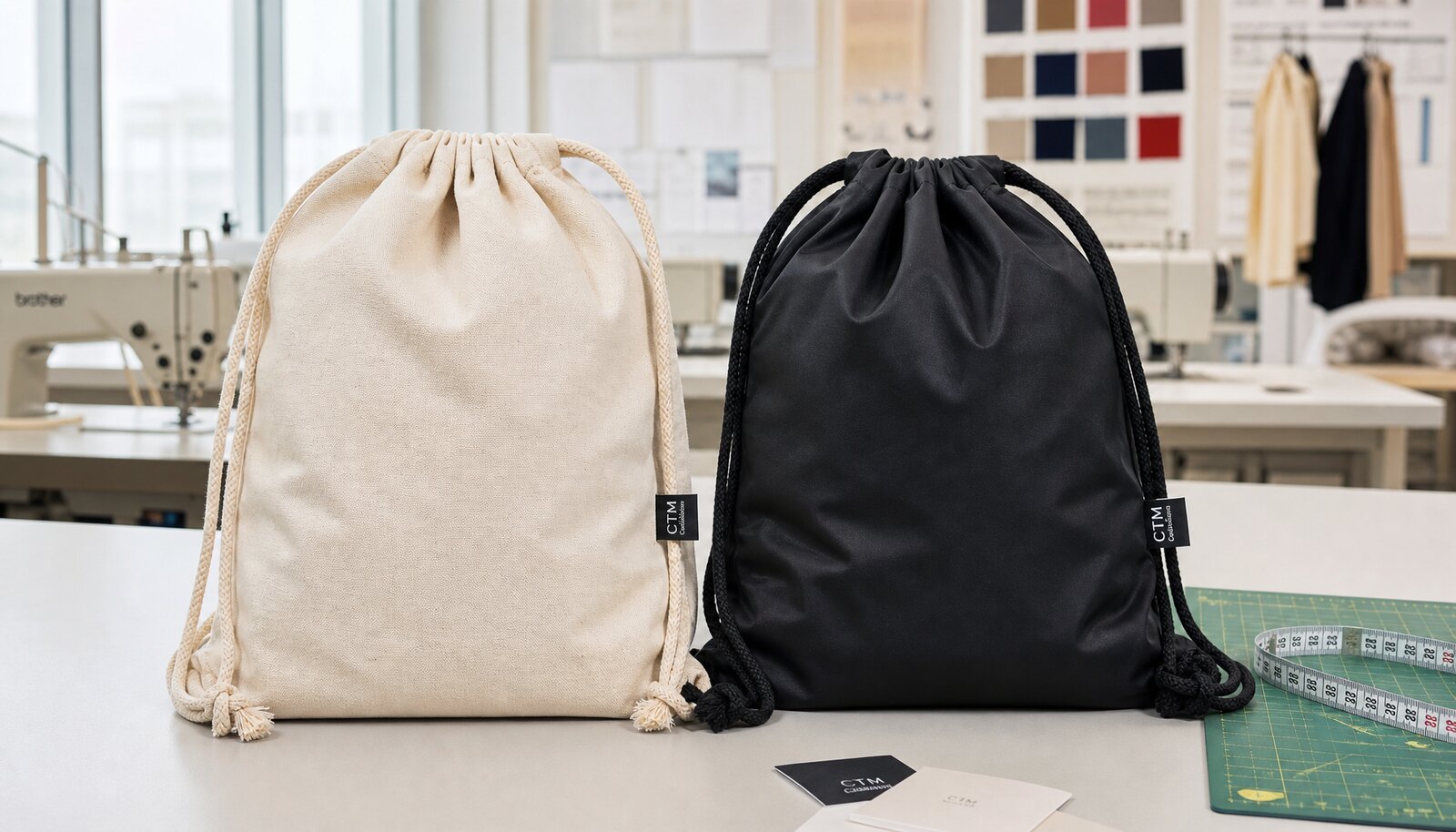
Why hotels buy drawstring backpacks differently from event giveaways
Hotels usually need drawstring backpacks for guest welcome kits, spa packages, gym access, resort activities, or resale in the gift shop. That means the bag is not just a giveaway item. It is a service item that has to hold a robe, brochure set, slippers, a water bottle, or light apparel without making the property look cheap. The spec has to support handling, not just branding.
The buying mistake is to treat a hotel order like a one-time promo run. A hotel wants predictable repeatability across properties and seasons. That changes the way you should write the RFQ: consistent color, stable print positioning, carton discipline, and a supplier who can repeat the same output six months later without changing fabric handfeel or cord quality. In procurement terms, you are buying consistency first and novelty second.
For hotels, the bag is also part of the guest experience chain. It may be handled by purchasing, branding, warehouse teams, housekeeping, or a distributor before it ever reaches the guest. Each handoff adds a place where the spec can drift. That is why you should define not only what the backpack looks like, but also how it ships, how it is counted, and what happens if a shipment arrives with mixed colors or an off-center logo.
- Choose the bag around the actual contents, not the logo size.
- Avoid ultra-thin fabric if the bag must survive daily guest handling.
- Plan for warehouse receiving, not only final guest presentation.
- Treat repeatability and carton accuracy as part of the product, not an afterthought.
Start with the use case before you choose fabric or size
A helpful hotel spec starts with the contents the bag must hold. A welcome kit with slippers, a brochure, and a room key sleeve has a very different load profile from a gym bag holding shoes, a towel, and a water bottle. If you define the use case first, the rest of the decisions become easier: size, fabric weight, gusset, cord type, and print placement all follow from that.
For amenity programs, smaller and lighter can be better because the bag often sits inside a larger kit or is handed out at check-in. For resort activity bags or retail resale, the backpack may need more structure, a stronger top channel, and a more premium finish. When buyers skip this step, they tend to over-spec the fabric or under-spec the closure, which creates either unnecessary cost or a bag that feels cheap in the guest’s hand.
It also helps to distinguish between guest-facing and back-of-house use. A bag used to bundle seasonal gifts for distribution to properties may have different requirements than one that is directly handed to a guest. Back-of-house handling may favor bulk packing and barcode-ready cartons; guest-facing use may justify individual wrapping or a more polished finish. The procurement question is not only 'what is the bag,' but 'where does it travel before it is used?'
- Define the contents first: weight, volume, and whether items are boxed or soft goods.
- Separate guest-facing presentation requirements from warehouse handling requirements.
- If the bag must serve multiple use cases, write the most demanding one into the spec.
Fabric and GSM choices that make sense in hotels
For custom drawstring backpacks for hotels, the two most common routes are cotton and polyester. Cotton around 150-180 GSM gives a softer premium feel, takes screen print well, and works for spa or boutique hotel positioning. Polyester around 210D is lighter in freight terms, dries faster, and often costs less when the order needs a consistent branded finish across larger volumes. If the bag needs to look upscale in hand, cotton usually wins; if the bag needs durability, low weight, and easier packing, polyester can be the cleaner option.
Do not let a quote say only 'cotton bag' or 'poly drawstring backpack.' Ask for the exact fabric spec after finishing. A 150 GSM cotton after wash and dye can behave very differently from a loose woven fabric described casually by a salesperson. For hotel use, the finish matters too: pre-shrunk or enzyme-washed cotton can reduce the chance of a stiff, uneven handfeel; polyester needs colorfastness and decent stitch stability at the cord channel. If you want a premium hotel look, a small bottom gusset can improve the bag shape without a major cost jump.
There is also a practical tradeoff in warehouse handling. Cotton usually feels more substantial but can add weight, which matters if you are shipping thousands of units to multiple properties. Polyester is easier to pack and typically less bulky, but it may look less elevated unless the color, print, and trim are executed well. If your brand standard is strict, ask for side-by-side lab dip, fabric swatch, and finished-sample approval before you compare prices. Otherwise, suppliers may quote visually similar materials that perform very differently once cut and sewn.
- 150-180 GSM cotton: good for premium guest presentation and simple logos.
- 210D polyester: good for lighter freight, faster handling, and wider color matching.
- Add a gusset only when the hotel kit needs structured volume.
- Ask whether the quoted GSM is pre-finish or post-finish, and whether shrinkage was considered.
Print method: what looks good on the bag and what survives handling
Most hotel buyers choose between screen print, heat transfer, embroidery, or a woven side label. Screen print is usually the best value for one- or two-color logos with flat coverage. It is easier to repeat, easier to approve, and easier to compare across suppliers. Heat transfer helps when the artwork has more detail, but it should be tested on the exact fabric color because some transfers look sharp in sample photos and weak in production lighting.
Embroidery can work on thicker canvas or heavier cotton, but it adds thread cost, machine time, and a risk of puckering on light fabric. For a clean hotel presentation, a small woven label on the side seam plus a one-color front print is often the most controlled combination. If you need a logo across a dark bag, insist on a print sample on the real fabric rather than a digital proof. What looks white in artwork may print gray if the ink coverage is thin.
From a procurement standpoint, the decoration method should be selected based on repeatability, not just visual preference. Screen printing is usually the easiest to standardize across reorders, but it depends on print screen quality, ink curing, and operator consistency. Heat transfer is more artwork-flexible, yet it can be less forgiving if the fabric texture is rough or the bag will be flexed often. Embroidery looks premium in small doses, but it is the least forgiving on lightweight fabrics and can add stiffness exactly where the bag opens and closes. If the buyer needs multiple properties to receive identical branding, the safest path is the method that your supplier can reproduce with the fewest variables.
- Use screen print for simple hotel branding and repeat orders.
- Use embroidery only if fabric weight supports it cleanly.
- Use a woven side label when you want subtle branding and less print risk.
- Ask for abrasion, wash, or rub resistance information if the bag may be handled frequently.
Supplier routes and how they change your price and risk
For hotel programs, the sourcing route matters as much as the spec. A factory-direct supplier with in-house cutting, printing, stitching, and packing can give you tighter control on color, lead time, and carton count. That is usually the best route for repeat hotel procurement, multi-property rollouts, and buyers who need to compare quotes line by line. If the supplier outsources printing or packing, the quote may look cheaper at first but usually contains more hidden risk in schedule and quality control.
Trading companies can still be useful when the order is mixed, urgent, or needs several bag types in one shipment. But for custom drawstring backpacks for hotels, the buyer should verify who actually owns the sample, who approves the artwork, and who signs off on the final pack. If the person quoting is not the maker, you can lose control of fabric substitutions, cord changes, and packing shortcuts. Ask for evidence of recent similar production, not just a catalog.
A useful supplier evaluation goes beyond whether they 'can make bags.' Ask how they manage fabric incoming inspection, whether they track shade lots, how they handle rework, and who inspects the first 30-50 pieces off the line. A supplier that can answer those questions clearly is usually easier to manage in a hotel program than one that only talks about low MOQ. If you are buying for a chain or property group, also ask how they will keep future reorders visually consistent if the original fabric roll is no longer available.
- Factory-direct is best for repeatability and transparent cost structure.
- Trading layer is acceptable only if roles are clear and documented.
- Avoid suppliers who cannot show a real sample room or production photos.
- Ask who checks incoming fabric, first-off samples, and final carton counts.
How to compare quotes without getting fooled by low unit prices
A low quote for custom drawstring backpacks for hotels often hides differences in fabric weight, print size, packing, or carton specification. One supplier may quote the bag only, while another includes setup, inner packs, and export cartons. Another may quote a smaller print area or a thinner cord. That is why the price comparison should always start with the same size, same fabric, same print method, and same packing rule.
For a realistic landed-cost comparison, ask suppliers to quote the same base unit and then break out optional charges. Typical line items include sample fee, print plate or setup fee, extra color charge, woven label fee, carton fee, and any special packing. If your order is going to a hotel DC, include carton dimensions and gross weight in the quote. A cheaper unit price can lose once freight is added if the supplier uses bulky packing or a heavier carton.
It helps to compare quotes in a short line-by-line table rather than by unit price alone. Put in-house versus outsourced steps on the page, because a 'cheap' quote with external printing or third-party packing may be harder to control and slower to correct if there is an issue. For procurement review, ask the supplier to confirm whether the quoted price is stable for reorder quantities, or whether the price changes materially once the spec is repeated. That matters if you intend to standardize the bag across several properties or seasonal programs.
- Compare price on identical fabric, decoration, and carton assumptions.
- Ask for setup charges separately so you can amortize them across volume.
- Include freight weight and carton volume in the quote comparison.
- Use a line-item comparison so hidden differences are visible before you award the PO.
MOQ logic for hotel programs and how to avoid overbuying
The right MOQ depends on how the bag will be used. A small boutique hotel chain might only need 500-1,000 pieces for one season, while a resort group or distributor program may need 3,000-10,000 pieces across properties. In factory terms, MOQ is not just a number; it is tied to fabric roll usage, print setup efficiency, and trimming waste. That is why the quote should state whether the MOQ price assumes one color bag, one artwork version, and one packing method.
If you want a lower MOQ, expect tradeoffs. The factory may use stock fabric instead of custom-dyed fabric, limit print colors, or raise the unit price. That can still be a good deal if the hotel is testing a new guest amenity concept. For repeat programs, it is often smarter to buy a slightly higher quantity once and lock the same material batch for later reorder. That reduces shade variation and avoids the common problem of one property receiving a different-looking bag from the next shipment.
Procurement teams should also think about inventory risk. If the hotel program changes seasonally, ask the supplier whether they can hold a repeat spec and quote a reorder window rather than forcing you to rebuy development each time. If you anticipate several phases of rollout, you may want to separate the tooling/setup cost from the unit cost so the first order is not distorted by development expense. That makes approvals easier when finance reviews the PO.
- Lower MOQ usually means fewer customization choices and higher unit cost.
- Repeat programs benefit from one batch and a reserved reorder spec.
- Keep one artwork version per SKU if you want clean production control.
- Separate setup cost from unit price when you expect repeat orders.
Sample approval: the stage where most hotel mistakes are avoided
The best sample process has at least one real pre-production sample, not only a printed proof. The sample should confirm fabric handfeel, cord thickness, seam finishing, print placement, and overall bag shape. If the bag is going to be used with amenity kits, put the actual contents inside the sample and make sure it closes cleanly without stressing the top hem. A bag that looks fine empty can fail once folded towels or boxed items are added.
Sample approval should be based on measurable points. Check logo position against the center line, verify the drawcord runs smoothly through the channel, and make sure the seams do not twist when the bag is loaded. If you need hotel gift-shop presentation quality, review the sample under the actual lighting you plan to use in the room or store, because fabric color and print contrast shift noticeably under warm indoor light.
A stronger approval process also includes a photo record. Capture front, back, inside, close-up of the cord channel, and a flat lay with ruler reference. Keep that image set with the PO so there is no argument later about whether the production run matched the approved sample. If the supplier proposes a pre-production change after approval, require a written deviation note before the order advances. That simple step prevents last-minute substitution of cord, thread, or fabric shade without buyer consent.
- Test with the actual guest kit or product set inside the sample.
- Mark approved print size and placement directly on the sample or spec sheet.
- Do not release production until the fabric shade and cord finish are accepted.
- Keep a photo record of the approved sample with close-ups and measurement references.
Packing, carton marks, and warehouse handling
Packing is where a lot of hotel orders go sideways. If the bags are loose packed, they may arrive wrinkled, dusty, or counted incorrectly. If they are individually polybagged without a reason, you add cost and plastic volume that many hotel buyers do not want. The most practical solution is usually a controlled bulk pack with a fixed inner count, moisture protection when needed, and clearly printed carton marks showing style, color, quantity, and purchase order number.
For hotel DCs and distributors, carton size matters as much as bag size. Too much empty carton volume increases freight. Too much compression can crease print or deform the bag shape. If the backpacks will be stored before distribution, ask the supplier for a stacking-friendly carton spec and make sure the pack count matches the handling plan. A clean pack list saves time during receiving and reduces disputes over short shipments.
Warehouse rules can be stricter than the bag itself. Some hotel groups need barcode labels, lot codes, or pallet pattern instructions. Others require cartons that open from the top, because staff will pull inventory in smaller quantities over time. When you write the packing line in the RFQ, include the receiving environment: central warehouse, direct-to-property, or distributor fulfillment. That context tells the supplier whether bulk pack, shelf-ready pack, or individual wrapping makes the most sense.
- Specify inner pack count and outer carton count in the PO.
- Use carton marks that include style, color, qty, and PO reference.
- Avoid unnecessary individual polybags unless the hotel requires them.
- Tell the supplier where the cartons are going so packing fits the warehouse process.
Lead time, schedule risk, and what should drive your approval date
A realistic hotel order usually needs sample time, artwork confirmation, production, and packing. For a standard custom drawstring backpack with simple print, sample lead time often lands around 7-12 days, and production around 25-40 days after sample approval. If the bag needs custom color matching, special cords, or multiple print positions, the timeline stretches. Seasonal hotel programs should build in extra buffer because cord and fabric availability can shift faster than buyers expect.
Schedule risk often comes from approval delays, not sewing capacity. If artwork changes after sampling, the factory may need to replate or reprint. If the buyer has not approved carton marks or packing format, final packing can stall. The cleanest workflow is to lock the spec first, approve the sample second, and release the PO only when the shipment window is realistic. That avoids the common problem of rushing production and then accepting defects because the opening date is fixed.
For larger hotel groups, it is smart to back-plan from the warehouse receipt date rather than the guest-use date. Add time for customs clearance, internal distribution, property-level delivery, and any rework buffer. If your launch date is immovable, tell the supplier which date is the true latest arrival date and which date is the internal approval deadline. Those two dates are not the same, and mixing them up creates avoidable rush fees.
- Build buffer for artwork revision, sample transit, and carton approval.
- Treat custom colors and special trims as schedule risk items.
- Release production only after the approved sample matches the final PO.
- Plan from warehouse receipt date, not only from the guest launch date.
Specification comparison for buyers
| Spec decision | Recommended option | When it fits | Buyer risk to check | Procurement note |
|---|---|---|---|---|
| Fabric route | 150-180 GSM cotton or 210D polyester | Guest welcome kits, gym use, short-stay amenity bags, souvenir resale | Too-light fabric can pucker at print areas or tear at cord holes; too-heavy fabric raises freight and unit cost | Ask suppliers to confirm fabric after finishing, not just greige or yarn spec |
| Cotton vs polyester tradeoff | Cotton for handfeel and brand presentation; polyester for lower weight and easier handling | Cotton for boutique, spa, and premium welcome kits; polyester for high-volume amenity programs or transit-heavy supply chains | Cotton may vary more in shade and shrinkage; polyester may look less premium and can show heat-transfer issues if print is not tested | Request wash/shrinkage guidance if bags may be laundered or exposed to damp environments |
| Print method | 1-2 color screen print for most hotel logos; heat transfer only when artwork needs detail | Simple logos, hotel names, one-side branding, controlled artwork | Fine gradients and small text can blur; transfers can crack or lift if the fabric finish is wrong | Approve on actual fabric color and ask for print location marked on the sample |
| Decoration durability | Screen print with tested ink cure or embroidered patch on heavier cloth | Repeated guest handling, housekeeping use, resale items | Under-cured ink may rub off; embroidery may pucker or distort on lighter fabric | Ask how print adhesion, wash resistance, and abrasion are checked before bulk packing |
| Closure style | Reinforced drawcord channel with cord lock or knot finish | Hotels that want quick-open, easy-close guest carry bags | Weak top hem causes fraying and seam failure; cord pull should be tested | Define cord diameter, stopper style, and channel stitch in the spec sheet |
| Size choice | 38x42 cm to 40x50 cm with 7-10 cm bottom gusset if needed | Amenity bundles, slippers, water bottle, brochure, light apparel | Oversized bags increase fabric use and shipping; undersized bags fail fit for boxed items | List the exact contents to be packed so the supplier can size the bag to real volume |
| Supplier route | Factory-direct with sample room and in-house printing | Repeat programs, multi-property rollouts, buyers who need quote control | A trading layer can hide print, packing, and trim costs; verify who actually makes the bag | Ask for the production flow: cutting, printing, stitching, packing, and QC responsibility |
| MOQ logic | 500-3,000 pcs per style/color for most factory runs | Hotel groups, importers, distributor orders, seasonal promotions | Low MOQ often means higher price, fewer customization options, or stock-base substitution | Clarify whether MOQ is tied to one artwork version, one color, or one packing format |
| Packing method | Bulk packed with carton inner count and moisture protection | Backpacks going to hotel warehouses, DCs, or kit-assembly centers | Loose packing can crease print and complicate counting; polybag use may add cost and plastic compliance issues | Ask for carton marks, case pack, and whether desiccant or liner bags are needed |
Buyer checklist before sampling
- Final bag size, fabric, GSM, color, and whether you need a gusset
- Logo artwork in vector format with approved print size and placement
- Cord type, cord thickness, cord stop or knot finish, and top-channel reinforcement
- Packing method, carton count, carton label format, and any polybag or barcode rules
- Target MOQ, target delivery window, and approved sample timeline
- Inspection standard, defect limits, and whether drop/pull testing is needed
- Who owns each step in the supply chain: cutting, printing, stitching, packing, and final QC
- Any compliance needs for hotel procurement, such as restricted substances, recycled content, or packaging reduction
- Carton dimensions, estimated gross weight, and the receiving location’s warehouse rules
Factory quote questions to send
- What fabric are you quoting, and what is the exact GSM or denier after finishing?
- Is the price based on screen print, heat transfer, embroidery, woven label, or a mix?
- What is included in the MOQ price: sample, artwork setup, inner packing, master carton, and cartons per case?
- Where is the logo placed, what is the maximum print area, and how many colors are included?
- Can you provide carton size, gross weight, and estimated loading quantity for the quoted bag?
- What sample stage do you offer before production, and what changes are still possible after sample approval?
- Which process is in-house and which is outsourced: cutting, printing, stitching, packing, and QC?
- What are your acceptable tolerance ranges for bag size, print position, and stitching accuracy?
- What inspection standard do you use before shipment, and how are critical defects handled?
- Can you confirm fabric shade, cord color, and accessory trims will match the approved sample batch?
Quality-control points to confirm
- Stitch density should be even, with no skipped stitches at stress points, cord channel ends, or corner reinforcements
- Seams should be straight and secure, with no open stitches, loose threads longer than an agreed trim length, or seam tunneling that changes bag shape
- Logo placement should stay within the approved tolerance, with no skew, cracking, smearing, ghosting, or obvious color shift on the finished fabric
- Cord pull should not damage the top hem, deform the channel, or loosen the seam after repeated opening and closing
- Fabric and print should not show excessive odor, staining, oil marks, pinholes, weave slubs that affect branding, or shade variation across the same shipment
- Bag dimensions should remain within the agreed tolerance, with a practical allowance for fabric type and finishing process
- Cartons should match the agreed pack count, with clear carton marks and no mix-up between sizes, colors, or artwork versions
- Any critical issue such as broken cord, missing print, torn seam, or wrong size should be treated as a reject, not a rework candidate for guest-facing stock
- For load testing, define the intended use case first: amenity kits need less than retail hiking bags, but the bag still must survive daily handling and transport
- If the order is large or multi-property, use AQL-style sampling and record major/minor defect thresholds before production starts