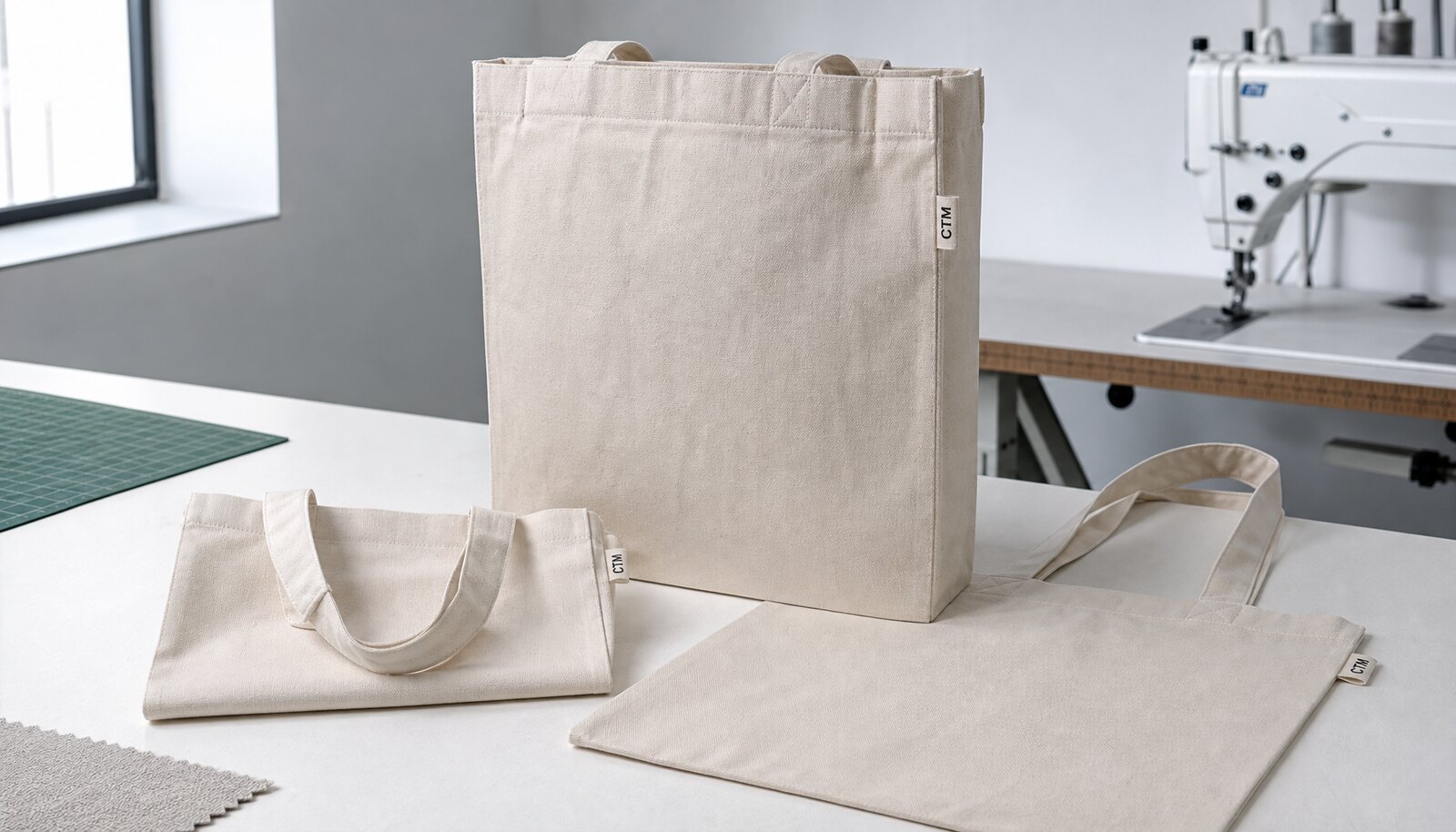
Why custom cotton shopping bags fail at quote stage
Most sourcing problems start before production begins. A buyer asks for “custom cotton shopping bags” and gets three quotes that look comparable, but each supplier has priced a different fabric weight, different handle construction, and different print allowance. The lowest number often comes from the lightest fabric, the smallest print area, or a packaging assumption that will not work for your warehouse.
For procurement teams, the real job is not finding the cheapest cotton bag. It is defining the same product across suppliers so the quote line items are comparable. If you leave GSM, size tolerance, print method, and packing open, you are comparing different products and calling it sourcing.
- A quote is only meaningful when size, fabric, handle, print, and packing are locked.
- Cotton bags are sensitive to GSM, shrinkage, and stitch density, so “same style” is not enough.
- The cheapest quote often excludes sample matching, setup fees, or carton packing details.
Pick the right fabric weight before you talk price
For most retail and promotion programs, cotton shopping bags fall into a practical GSM band: 140–180 GSM for light-use shopping bags and 200–240 GSM for a more premium reusable bag. Below that range, the fabric can feel too thin, print can show through more easily, and the finished bag may collapse awkwardly when filled. Above that range, the bag becomes heavier, costs more, and may not fold as compactly for retail packaging.
Fabric weight should match how the bag will be used. A grocery promotion bag that carries leaflets and lightweight purchases does not need the same build as a branded retail tote that customers keep in their car or use every week. If the bag is intended for resale, buyers should care about hand feel, seam stability, and how the bag looks after a few folds, not just the initial quote.
- 140–160 GSM: lower-cost promotional use, lightweight retail insert, and event giveaways.
- 180–220 GSM: balanced option for most consumer retail programs.
- 220–240 GSM: better for premium branding, heavier carry, and stronger perceived value.
Use print method as a commercial decision, not just an artwork choice
The print method changes both unit cost and risk. Screen printing is usually the practical choice for one to three solid colors, especially on natural cotton where you want stable ink coverage and predictable repeatability. If the artwork has fine lines, gradients, or photo-style detail, a transfer method may be quoted, but buyers should treat that as a short-run or special-effect option rather than a default retail solution.
For higher perceived value, some buyers switch from a full-print bag to a smaller logo print plus a woven or sewn label. That often reduces print risk, shortens sampling iterations, and keeps the bag cleaner visually. The tradeoff is that the branding area must be approved carefully, because a small logo can look too modest if the bag is meant to carry strong shelf presence.
- Screen print is usually the most stable cost/performance option for simple artwork.
- Heat transfer can work for short runs, but it needs durability testing if the bag will be handled often.
- Woven labels, side labels, or embroidered marks are better when the brand wants a premium finish and lower print complexity.
Choose a supplier route that matches your order size and control needs
The supplier route matters as much as the spec. A specialist cotton bag factory with cutting, printing, and sewing in-house can usually give tighter lead-time control and cleaner accountability when the sample does not match the bulk order. A trading company can be useful if you need multiple product categories in one shipment, but the buyer must work harder to verify who actually makes the bag and what was truly priced.
For importers and distributors, the right route depends on volume stability. If the order is repeatable and the artwork is fixed, factory-direct sourcing normally gives better control over fabric, stitching, and packing. If the launch is uncertain and you need low commitment, a sourcing agent or trading layer may help consolidate smaller buys, but the quote should clearly separate the factory price from the service margin.
- Factory-direct: better for repeat programs, tighter spec control, and more transparent production details.
- Trading company: useful for mixed-category consolidation, but harder to trace production accountability.
- Local stockist: faster for urgent needs, but usually limited in customization and less efficient at scale.
Comparison table: which sourcing route fits your bag program
The table below is not a generic feature list. It is a practical way to compare sourcing routes for custom cotton shopping bags, because the route affects MOQ, sample control, cost structure, and the risk of quote drift.
The sample record for custom cotton shopping bags should include front, back, side, seam, logo, label, inside, and packed-carton photos. For important programs, keep one signed physical sample and record the sample version in the approval file.
- Write decisions in measurable language, not only descriptive wording.
- Ask for sample photos plus one physical approval sample for important orders.
- Keep quotation, sample approval, and inspection notes tied to the same spec version.
How to read MOQ without getting trapped by a low headline number
MOQ for custom cotton shopping bags is rarely just one number. It usually changes by size, print color count, fabric color, and whether the supplier must set up a new cutting pattern or screen. A factory may quote a low MOQ for one simple natural bag with one-color print, but the same supplier may require a much larger run if you ask for multiple colors, woven labels, or special packaging.
The buyer should separate commercial MOQ from production MOQ. Commercial MOQ is the smallest order a seller is willing to accept. Production MOQ is the point at which the factory can run the job without wasting fabric or setup time. If those two numbers are far apart, the quote may look attractive but become expensive per unit once you add setup fees or split shipments.
- One color, one size, one material: usually the lowest-risk MOQ structure.
- Multiple bag colors or multiple print variants: expect the MOQ to rise quickly.
- If your forecast is uncertain, ask for a pilot run with a clearly priced repeat order.
Sample approval should test bulk reality, not showroom quality
A sales sample is useful for feel and general shape, but it should not be treated as final approval. The pre-production sample needs to be made from the actual bulk fabric, final print method, and final handle construction. That is the only way to expose shrinkage, print opacity, seam tension, and folding behavior before the whole order is cut.
On cotton shopping bags, the biggest sample mistake is approving the bag by appearance only. Buyers should measure the bag, stretch the handle, inspect print density under light, and check whether the bag stands or collapses the way the retail team expects. If the bag includes a washed finish, pre-shrink assumption becomes critical because a small shrink difference can change the final look and the fit of the print.
- Approve size, handle length, stitch pattern, and print placement on the same sample.
- Use the sample to confirm color tone under indoor light, not only daylight.
- Keep one sealed sample as the production reference for final inspection.
Packing details that protect your margin after the goods leave the factory
Packing is often ignored until the cartons arrive. For cotton shopping bags, flat packing into export cartons is usually the most efficient option, but the buyer needs clarity on inner count, bundle style, and whether each bag is folded to a fixed dimension. If your warehouse uses barcodes or retail-ready counting, the supplier should label cartons clearly and keep each size or color separated.
Packaging can change your landed cost more than expected. A simple polybag per piece adds material and labor, and mixed-size cartons slow down inbound receiving. If the brand or retailer does not require individual bag polybags, removing them can save cost and improve carton density. But if the bags go directly to shelf, a clean fold standard and carton mark system become more important.
- State piece count per inner bundle and carton count per outer carton.
- Clarify whether polybags are required or prohibited for sustainability reasons.
- Request carton dimensions early so freight can be estimated correctly.
Lead time and freight risk: where cotton bag schedules slip
Lead time on custom cotton shopping bags is affected by fabric sourcing, printing queues, sewing capacity, and carton packing. If the bag uses a standard natural cotton and a simple one-color logo, the schedule is usually more predictable. Once you introduce dyed fabric, multiple print colors, or woven labels, the production queue can stretch because each extra process step creates a new handoff and inspection point.
The quoted lead time should be read as a factory time, not a door-to-door promise. Buyers should separate sample time, production time, and shipping time. If the order is for a campaign launch or retail reset, build time into the schedule for artwork approval, pre-production sample signoff, and freight booking. Missing any one of those milestones is how “ready” orders become late shipments.
- Typical risk points: fabric color approval, print screen confirmation, and final carton count.
- Short lead times usually require fewer customization steps and faster sample signoff.
- Always confirm whether production lead time starts after deposit, sample approval, or artwork approval.
QC thresholds that keep supplier comparisons honest
A useful quality standard for cotton shopping bags should include measurement tolerance, print acceptance, stitching quality, and carton packing accuracy. If the supplier does not state these up front, the goods may still be “acceptable” by their internal standard while being wrong for your retail program. Buyers should define what is unacceptable before production starts, especially for visible flaws like print off-center, dirty fabric, or loose handles.
For bulk orders, a small defect rate can become expensive fast because cotton bags are usually low margin and high handling volume. A few millimeters of seam drift may not matter on paper, but a visibly crooked bag destroys retail consistency. The inspection plan should therefore combine visual standards with simple mechanical checks: handle pull, seam integrity, and print rub resistance.
- Set a measurement tolerance for width, height, and handle length.
- Define acceptable print variation by color and placement.
- Require clean cartons with no moisture, odor, or contamination before shipment.
Specification comparison for buyers
| Spec decision | Recommended option | When it fits | Buyer risk to check |
|---|---|---|---|
| Fabric weight | 140–180 GSM plain cotton for light retail use; 200–240 GSM for premium retail and reuse | Choosing a reusable shopping bag that needs better hand feel, fewer see-through issues, and higher perceived value | Very light fabric can distort under print and may show seam puckering; heavy fabric increases unit cost and may reduce folding convenience |
| Weave type | Plain weave for standard supermarket and promotion use; canvas-like construction only if you need a stiffer look | When you want a simple, cost-controlled bag with predictable sewing behavior | Overly loose weave can shrink or skew after washing; too stiff a fabric can make side seams bulky and difficult to fold |
| Print method | Screen print for 1–3 solid colors; heat transfer only for short runs or detailed artwork; woven/embroidered label for premium branding | When artwork is simple and volume is stable, or when the brand wants a cleaner look than direct printing | Fine lines can fill in on low-GSM cotton; transfers can crack if the bag will be folded, washed, or rubbed often |
| Handle style | Self-fabric handles for a soft retail look; reinforced webbing handles for heavier carry loads | When the bag carries light groceries, cosmetics, books, or event items | Handle length and stitch density affect comfort and strength; weak handle bar-tacks are a common failure point |
| Closure or top finish | Open top for shopping use; drawcord or button only if the bag also serves as gift packaging | When speed of packing and easy customer access matter more than closure security | Adding closures raises sewing time and may create quote gaps if the supplier priced an open-top bag only |
| MOQ route | Factory-direct with one standard fabric color and one print setup for best unit economics | When the buyer can consolidate artwork, sizes, and colors into one production run | Multiple colors, mixed sizes, or special packaging can push MOQ up and create hidden setup charges |
| Sampling route | Pre-production sample from actual bulk fabric and final print method | When artwork placement, handle length, and bag shape are important to the brand | A clean sales sample may not reflect bulk shrinkage, final print opacity, or seam tension |
| Packing method | Flat-packed in export cartons with clear inner polybag count or no polybag if retailer accepts it | When you need efficient carton loading and simple warehouse receiving | Loose carton counts, unlabeled bundles, or mixed sizes create receiving disputes and slower inbound QC |
| Supplier type | Specialist cotton bag factory with in-house cutting, printing, and stitching | When schedule, consistency, and quote clarity matter more than the lowest headline price | Trading layers can hide the real factory, weaken spec control, and make color or lead-time accountability harder |
Buyer checklist before sampling
- Fix the bag size, seam allowance, handle length, and acceptable tolerance before requesting quotes.
- Specify fabric weight in GSM and whether you want natural cotton, bleached white, or dyed fabric.
- State the print area, number of colors, Pantone targets, and whether the artwork includes fine text or gradients.
- Define whether the bag must carry retail groceries, event inserts, or lightweight giveaway items.
- Confirm packing count per carton, inner packing style, carton mark requirements, and barcode labeling needs.
- Request the supplier’s sample source: sales sample, pre-production sample, or bulk reference sample.
- Ask for production lead time, sampling lead time, and whether the quote includes plate, screen, or setup charges.
- Set your QC acceptance rules for print registration, seam strength, odor, measurement tolerance, and stains.
Factory quote questions to send
- What GSM, weave, and shrinkage assumption did you price for this bag?
- Is the quote based on open-top construction, and what is the added cost for any closure or internal pocket?
- How many print colors, screens, or setup steps are included in the unit price?
- Are handles self-fabric or webbing, and what stitch reinforcement is included at the stress points?
- What is the MOQ per size and per print design, and does mixing colors raise the MOQ?
- Can you quote both FOB and CIF options, and what carton count did you use for freight estimation?
- Will you make the pre-production sample from bulk fabric and final print method, or from substitute materials?
- What are your standard measurement tolerances, and what inspection report or photos will you share before shipment?
Quality-control points to confirm
- Bag size must stay within the agreed tolerance on width, height, and gusset after cutting and after any finishing or washing.
- Fabric weight should match the approved GSM range and not feel noticeably thinner than the sealed sample.
- Print must register correctly, with no major color shift, cracking, smudging, bleeding, or missing ink in dense areas.
- Handle attachment must withstand normal carry stress, with even bar-tacks or reinforcing stitches and no skipped stitches.
- Seam lines should be straight and consistent, with no broken thread, open seam, or visible puckering at corners.
- No contamination such as oil marks, stains, loose threads, needle damage, or strong odor should appear on packed goods.
- Cartons should match the agreed pack count, outer marks, barcode labels, and stacking strength for export or warehouse handling.