The buying problem for university bookstores
Custom cotton drawstring pouches look simple, but bookstore orders usually fail in small details: the pouch is too tight for the packed item, the natural cotton shade changes between lots, the school logo prints too close to the draw channel, or the cartons arrive without clear SKU separation. The buyer’s job is not only to find a low pouch price. The real task is to specify a pouch that can be received, displayed, sold, packed into kits, and reordered without constant exceptions.
For university bookstores, the pouch may be used for alumni gifts, graduation accessories, jewelry, small apparel add-ons, stationery kits, dorm move-in sets, or bookstore-branded merchandise. Each use pushes the specification in a different direction. A gift pouch can be softer and lighter. A retail pouch that students reuse needs stronger seams and better cord movement. A pouch used as product packaging needs stable sizing, clean print placement, and packing that supports fast backroom handling.
- Treat the pouch as a retail packaging component when it holds a paid product.
- Treat the pouch as merchandise when the pouch itself carries brand value.
- Treat the pouch as a kit bag when fast filling and SKU control matter most.
- Do not approve a quotation until the supplier knows the item going inside the pouch.
Start with the packed item, not the pouch size
Many RFQs start with a size such as 10 x 15 cm or 6 x 8 inches because that is what appears in a catalog. That is not enough for a reliable bookstore order. A flat pouch loses usable space at the seams, at the bottom fold, and at the drawcord closure. If the item has thickness, the pouch needs extra width and height so the top can cinch without pulling the print out of shape.
A useful factory RFQ includes the actual product dimensions, packed thickness, target opening width, and whether the pouch must close fully or only gather at the top. For example, a flat sticker pack needs different allowance than a folded T-shirt accessory, boxed ornament, calculator, lanyard bundle, or jewelry card. If the bookstore plans to fill the pouches in-house, the opening must also be wide enough for staff to pack quickly without stretching the channel.
- For flat goods, add seam allowance plus a small handling allowance around the product.
- For boxed goods, add extra width for depth so side seams are not under stress.
- For items with corners, consider heavier fabric or a slightly larger pouch to prevent point wear.
- For quick kit filling, test whether the product can be inserted smoothly by hand in under a few seconds.
Choose fabric weight by use, not by lowest cost
Cotton drawstring pouches are commonly quoted by ounce weight or GSM. Light muslin-style cotton may be around 3 oz to 4 oz, midweight cotton often sits around 5 oz to 6 oz, and heavier cotton or canvas-style pouches may be around 7 oz to 10 oz. These ranges are practical buying references, not universal standards, because weaving density, yarn count, finishing, and washing can change the handfeel even at the same GSM.
For most university bookstore wholesale programs, 5 oz to 6 oz cotton is a balanced starting point. It gives enough body for a printed school logo, keeps freight weight reasonable, and still feels soft enough for gift use. Move heavier if the pouch will be sold as a reusable item, carry sharp-edged merchandise, or support premium graduation and alumni programs. Move lighter only when the pouch is secondary packaging, the logo is simple, and see-through risk is acceptable.
- 3 oz to 4 oz cotton: low-cost event packaging, light contents, limited reuse expectation.
- 5 oz to 6 oz cotton: bookstore default for branded gift pouches and small merchandise.
- 7 oz to 8 oz cotton: better structure, stronger retail feel, higher unit cost and carton weight.
- 10 oz canvas: premium pouch feel, but less flexible draw closure on small sizes.
Natural cotton shade and dye control
Natural unbleached cotton is popular for campus stores because it supports a practical sustainability message and pairs well with simple school marks. The tradeoff is shade variation. Natural cotton can look cream, oatmeal, or slightly grey depending on yarn lot, washing, and finishing. A buyer who expects every reorder to match a website photo exactly will be disappointed unless a physical standard and tolerance are agreed.
Dyed cotton solves some brand-color issues but creates MOQ and lead-time pressure. Custom dyeing usually requires enough fabric consumption to justify the dye lot, and the pouch color may still shift slightly after cutting, sewing, and pressing. For school colors, it is often safer to keep the pouch natural and print the official color, unless the bookstore needs a full-color pouch for a specific program. When fabric color is critical, approve a lab dip or fabric swatch before the full sample.
- Use natural cotton when slight shade variation is commercially acceptable.
- Use bleached cotton when a cleaner white background is needed for bright prints.
- Use dyed cotton when the pouch color is part of the product identity.
- Keep a signed physical swatch for reorders instead of relying only on digital photos.
Print method decisions for school logos
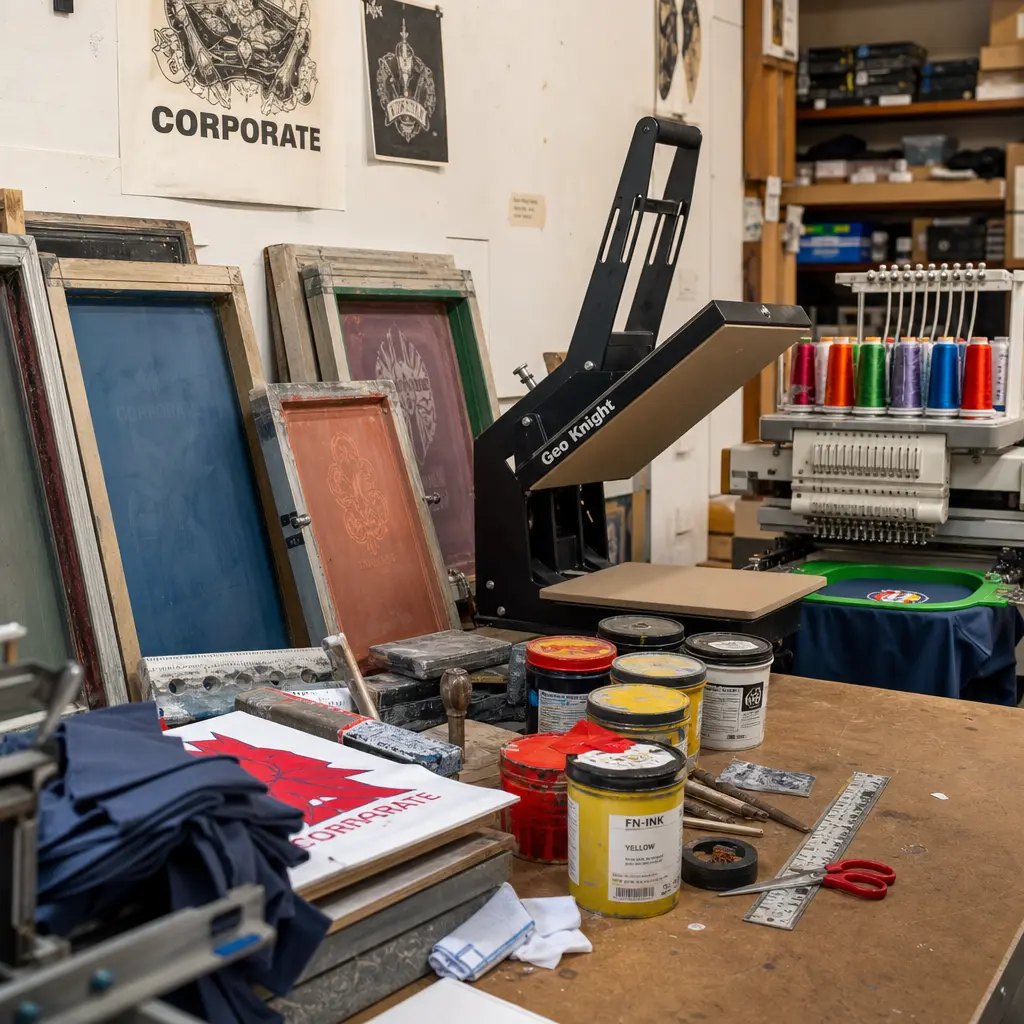
Screen printing is the main choice for wholesale cotton drawstring pouches when the artwork uses solid school colors, simple text, mascots, or department marks. It has good cost control at volume, works well on cotton, and gives a retail-appropriate finish if the ink deposit is not too heavy. The buyer should provide vector artwork and Pantone references, but the factory still needs to print a strike-off on the actual fabric because natural cotton absorbs ink differently from coated paper or synthetic fabric.
Heat transfer, digital print, or sublimation-style approaches may be offered when artwork has gradients, many colors, or a low quantity. These methods can be useful, but they change handfeel and durability. A thick transfer on a soft pouch may feel like a sticker and can crack if the pouch folds sharply. For bookstore buyers, the best rule is simple: use screen print for standard bulk school branding; use transfer only when the artwork or MOQ makes screen printing impractical.
- Specify print size in width and height, not only as centered logo.
- Set print placement from the bottom edge or side seam to avoid drawcord distortion.
- Avoid printing too close to the draw channel because gathering will wrinkle the logo.
- For two-sided printing, confirm whether ink show-through or drying marks are a risk.
- Approve a strike-off after curing, not immediately after wet ink leaves the screen.
MOQ logic and quote comparison
MOQ is not a single number. A supplier may have one MOQ for pouch sewing, another for custom fabric dyeing, another for cord color, and another for print setup efficiency. A buyer comparing quotes must separate these drivers. A low MOQ can be valid when the factory uses stock fabric, standard cord, and one-color print. It becomes less realistic when the RFQ demands custom size, custom dyed fabric, woven side label, multiple print colors, individual barcode packing, and split delivery by campus location.
For university bookstores, demand can be seasonal and uncertain. It is often better to start with a standard size and stock cotton base for the first order, then refine after sell-through data is available. If the bookstore expects recurring purchases, negotiate repeat-order terms at the start: stored screen charges, approved fabric standard, reorder MOQ, and whether the factory can combine multiple pouch sizes under one production run.
- Lowest unit price may require a larger fabric purchase than the bookstore can use.
- Multiple artwork versions increase setup time even when the pouch body is identical.
- Custom dyed fabric may create leftover material that affects the quoted cost.
- Split SKUs need extra cutting, printing, counting, and carton marking control.
- A realistic quote should show whether sample, setup, packing, and labels are included.
Sample approval that prevents bulk mistakes
A photo sample is not enough for cotton drawstring pouches. The buyer needs a physical pre-production sample that uses the same fabric weight, cord, print method, thread color, seam finish, and final dimensions as bulk production. If the sample is made from substitute fabric just to show shape, it should not be treated as approval for bulk. Cotton handfeel, opacity, shrinkage, and print absorption must be judged in hand.
The sample should be tested the same way the bookstore will use the pouch. Put the real item inside, close and open the cord repeatedly, rub the print with a dry cloth, check whether the logo wrinkles when closed, and confirm that the pouch sits correctly in the planned display or kit pack. If the sample has a barcode, hangtag, woven label, or belly band, approve those components together with the pouch, not later as a separate packing detail.
- Keep one sealed approved sample for the buyer and one for the factory production line.
- Measure finished width and height after the pouch is relaxed, not pulled tight.
- Photograph print placement with a ruler so the factory has a clear reference.
- Test cord movement before approving any small pouch with a narrow draw channel.
- Record all approved changes in writing before bulk cutting starts.
Construction details that affect durability
A drawstring pouch usually fails at the side seam, bottom corner, or drawcord channel. These are not expensive details to control, but they must be specified. A double-fold drawcord channel gives a cleaner edge and better cord movement than a raw or poorly folded top. Reinforced side seams and secure backstitching help when the pouch is opened repeatedly by students or store staff. Inside seams can be overlocked, French seamed, or otherwise finished depending on cost and appearance requirements.
Cord selection also changes the product. Cotton cord looks natural and matches the pouch, but it can fray if the ends are not secured. Polyester cord is smoother, stronger in some uses, and easier to color match, but it may not support a natural-material story. For small pouches, thick cord can overpower the body and make the top bulky. For larger pouches, cord that is too thin feels cheap and can dig into the channel.
- Set a minimum stitch density suitable for the fabric and seam type.
- Require no open seams, skipped stitches, loose top threads, or twisted channels.
- Confirm whether the pouch uses single drawcord or double drawcord closure.
- Define cord end treatment: knot, sewn end, metal tip, plastic tip, or heat seal.
- Check that the drawcord does not pull out under normal opening force.
Packing, carton planning, and bookstore receiving
Packing is where many clean pouch orders become messy for bookstore teams. If the order includes multiple sizes, school marks, department logos, or colorways, the factory must pack by SKU with clear carton marks. Mixed cartons can reduce freight handling, but they create receiving errors unless the carton label and packing list show exact contents. For campus stores with limited backroom space, carton weight and dimensions matter almost as much as unit price.
Individual polybags are not always necessary. Bulk packing can reduce cost, waste, and carton volume when the pouches will be unpacked and filled by the bookstore. Unit packing is useful for premium retail pouches, online fulfillment, barcode scanning, or protection from dust during long storage. A buyer should decide this before quotation because packing method affects labor, material cost, carton size, CBM, and inspection process.
- Set pieces per inner pack and pieces per master carton by SKU.
- Limit carton gross weight so campus receiving staff can handle cartons safely.
- Use carton marks that show PO number, SKU, color, size, quantity, and carton count.
- Request carton dimensions and gross weight before approving shipment method.
- Confirm whether barcodes belong on each pouch, each inner pack, or each carton.
Lead time risks and landed-cost comparison
A practical timeline starts after all approvals are complete, not after the first inquiry. Artwork cleanup, fabric sourcing, lab dip approval, sample making, sample shipping, buyer review, bulk fabric preparation, printing, sewing, inspection, packing, and vessel or air booking all sit on the schedule. The most common delay is not sewing capacity; it is late artwork approval, unclear Pantone references, rejected print strike-offs, or waiting for custom dyed fabric.
Landed cost should be compared at the same shipment and packing assumptions. A quote that is cheaper per pouch can become more expensive after larger cartons, heavier fabric, individual polybags, extra labels, or small-lot air freight. Importers and distributors should request carton dimensions, gross weight, estimated CBM, HS code suggestion, and shipment terms with the unit quote. Bookstore buyers working through a distributor should still ask for these details because they affect delivery reliability and reorder planning.
- Build the calendar from the in-store date backward, including receiving and internal distribution.
- Do not start bulk production until artwork, fabric, print, construction, and packing are all approved.
- Compare quotes using the same Incoterm, packing method, carton quantity, and inspection requirement.
- Separate one-time setup charges from repeat-order unit cost.
- Keep reorder files with approved sample photos, fabric standard, artwork file, and carton plan.
Specification comparison for buyers
| Spec decision | Recommended option | When it fits | Buyer risk to check |
|---|---|---|---|
| Fabric weight | 5 oz to 6 oz cotton for small retail pouches; 7 oz to 8 oz for heavier gift or tech items | 5 oz to 6 oz works for pins, stationery, small apparel accessories, and orientation gifts where softness and cost matter | Very light cotton can show contents, distort under drawcord tension, and make dark prints look uneven |
| Cotton finish | Natural unbleached cotton for campus sustainability positioning; bleached or dyed cotton for tighter brand color control | Natural cotton fits bookstore gift programs and avoids the brighter white look that can feel less organic | Natural cotton shade varies by lot; approve a fabric standard and allow a controlled shade tolerance |
| Drawcord material | Cotton cord for a coordinated natural look; polyester cord when color matching or abrasion resistance is more important | Cotton cord is usually preferred for bookstore retail packaging and alumni merchandise presentation | Thin cord can slip inside the channel; cord ends may fray if not knotted, tipped, or heat sealed where applicable |
| Print method | Screen print for solid logos and school marks; heat transfer only for small runs or full-color artwork with fine detail | Screen print is the best default for bulk bookstore pouches with one to three brand colors | Overloaded ink on loose cotton weave can crack at the draw area; require a print strike-off on production fabric |
| Size selection | Flat size based on actual packed item plus seam, thickness, and easy draw closure allowance | Useful for merchandise kits, jewelry, small gifts, graduation add-ons, and dorm move-in accessories | A pouch sized only by product length and width may not close cleanly once the item has depth |
| Construction | Double-fold drawcord channel, reinforced side seams, and clean lockstitch or overlock inside finish | Needed when students repeatedly open and close the pouch or the pouch is sold as part of a reusable gift set | Loose channel stitching can catch the cord; weak side seams fail first when the pouch is overfilled |
| MOQ route | Use stock greige fabric and standard sizes for lower MOQ; custom dyed fabric and custom cord color require higher MOQ | Best for university bookstore buyers balancing seasonal demand, multiple departments, and limited storage space | Quotes with low MOQ may hide higher unit cost, limited color options, or restricted print placement |
| Packing method | Bulk packed by SKU with inner polybags or paper bands only when retail handling requires it | Bulk packing reduces waste and carton volume for backroom receiving, while unit packing protects premium gift pouches | Individual packing adds labor, material cost, and CBM; confirm whether barcode labels are needed per pouch or per inner pack |
Buyer checklist before sampling
- Define the pouch use case first: retail sale, gift-with-purchase, orientation kit, merchandise packaging, or department giveaway.
- List the actual items going inside the pouch, including thickness, folded shape, sharp corners, and target closing space above the item.
- Specify fabric in oz and approximate GSM, not only as cotton, canvas, muslin, or eco fabric.
- State whether natural cotton shade variation is acceptable, or provide a physical shade standard for white, dyed, or school-color fabric.
- Provide finished pouch dimensions with tolerance, drawcord length requirement, seam finish, and whether the pouch needs to stand, lay flat, or hang.
- Send vector artwork with Pantone references, print size, print position from seam or bottom edge, and whether the design is one side or two sides.
- Request a pre-production sample made with actual fabric, actual cord, actual print method, and final sewing construction before bulk production.
- Define acceptable print defects: registration shift, pinholes, ink smudge, crocking, color variance, and logo placement tolerance.
- Clarify barcode, SKU sorting, carton marks, inner pack quantity, master carton weight limit, and whether mixed cartons are allowed.
- Compare supplier quotes by landed cost, including sample fee, print setup, packaging, inland freight, export carton volume, and duty assumptions.
Factory quote questions to send
- What exact fabric weight will be used in oz and GSM, and is it stock fabric or woven/dyed to order?
- What is the fabric shrinkage expectation, and are the quoted dimensions finished size after sewing?
- What drawcord diameter and material are included in the quote, and can cord color be matched to school colors?
- Which print method is quoted, how many colors are included, and what is the maximum printable area for this pouch size?
- Does the price include screen setup, artwork film, strike-off sampling, custom labels, barcode labels, or inner packing?
- What MOQ applies to the pouch size, fabric color, print color count, and custom cord separately?
- What is the production lead time after sample approval, and what part of the schedule is most sensitive to delay?
- What are the packing details: pieces per inner pack, pieces per carton, carton dimensions, gross weight, and estimated CBM?
- What inspection standard is normally used for cotton pouches, and what defect types are considered critical, major, and minor?
- Can the factory provide photos or a short video of fabric cutting, printing, sewing, and final packing for this order?
Quality-control points to confirm
- Finished size tolerance should normally be agreed before production, often within plus or minus 5 mm for small pouches and plus or minus 8 mm for larger pouches unless the design requires tighter control.
- Fabric weight should be checked against the approved sample or lab-cut GSM measurement, because light fabric can reduce cost while changing handfeel and opacity.
- Drawcord channel width must allow smooth opening and closing without cord twisting, binding, or pulling into the seam.
- Side seams and bottom seams should be inspected for skipped stitches, open seams, broken thread, and loose ends that can spread during retail handling.
- Print position should be measured from fixed edges, not judged by eye only, especially when the logo must align with a bookstore label or belly band.
- Screen print color should be compared under consistent light against Pantone or approved strike-off, with reasonable tolerance for natural cotton base shade.
- Ink adhesion should be checked by rubbing and light flexing after curing, especially on thicker ink deposits and dark school-color prints.
- Cord ends should be secured by knots, stitching, metal tips, plastic tips, or heat sealing depending on material and safety requirements.
- Cartons should be clean, dry, correctly marked by SKU, and strong enough for stacked storage in a campus receiving room.
- Random cartons should be opened during inspection to verify SKU count, mixed color accuracy, packing sequence, and barcode readability.