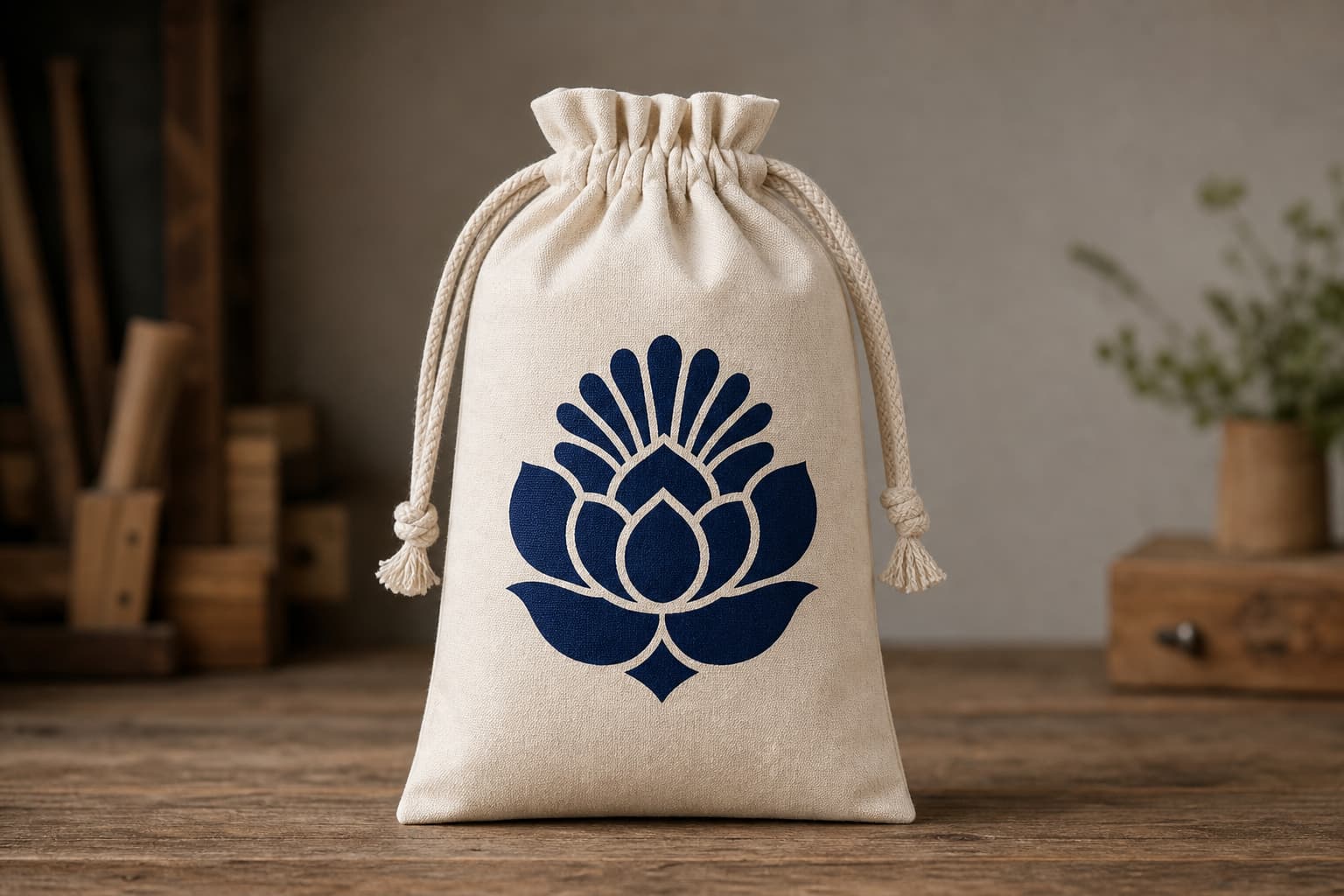
Start With the Jewelry Set, Not the Pouch
A custom cotton jewelry pouch should be sized around the packed jewelry, not around a generic bag template. Rings, earrings, pendants, bracelets, and multi-piece sets each need different depth, opening width, and body stiffness. If the pouch is too loose, the product shifts and looks cheap. If it is too tight, the drawcord strains and the buyer gets returns for damaged packaging.
For procurement, the first RFQ decision is the product use case. A pouch for a single ring set can be smaller and lighter, while a pouch for a necklace-and-earring set usually needs more room and a stronger hand feel.
- Measure the packed item, not the loose jewelry piece.
- State whether the pouch must hold one item, a set, or both product and insert card.
- Confirm if the pouch is for retail display, gift packing, or secondary shipping protection.
Choose Fabric Weight That Holds Shape
For custom cotton jewelry pouch wholesale orders, GSM matters more than many buyers expect. A light 120-130 gsm fabric can work for budget programs, but it may look thin once the pouch is filled. Most buyers land in the 140-160 gsm range because it gives better structure, better print clarity, and a more reliable retail feel.
Unbleached cotton is usually lower cost and has a natural look, but it can show fiber specks and slight shade variation. Bleached cotton gives a cleaner background for logos and is easier to sell into premium gift packaging. If the pouch needs to stand up on a shelf, a 180 gsm canvas option is worth quoting even if it is not the lowest price.
- Ask for GSM and fabric width in the quote, not just a generic cotton description.
- Request a pre-shrunk or wash-tested note if the pouch may be handled often.
- Check seam performance after filling the pouch to normal use weight.
Pick Branding That Survives Repeated Handling
Jewelry pouches are handled a lot, so the logo must survive friction, folding, and packing. One-color screen print is usually the most practical choice for simple logos and high-volume wholesale orders. If the brand needs a more premium finish or a logo that stays visible even after wear, a woven side label is often safer than a delicate print detail.
Do not over-spec tiny text or many colors unless the pouch is sold at a higher margin. A factory can print a fine logo, but the result may lose sharpness once the fabric flexes. Keep the artwork simple enough to stay readable at pouch size.
- Use screen print for simple, durable logos with controlled setup cost.
- Use woven or sewn labels when repeat branding matters more than print detail.
- Avoid very thin lines and small text unless the factory has already proven the result on the same fabric.
Build MOQ and Quote Logic Around Variants
MOQ usually rises when you add size options, logo colors, fabric colors, or different labels. A supplier may be comfortable with one size and one print, but the quote changes once you split the order into multiple SKUs. This is normal manufacturing logic, not just supplier pushback.
The cleanest way to compare quotes is to isolate one base spec. Ask for a price on one size, one fabric GSM, one logo method, and one packing format first. Then request the delta for extra colorways, extra sizes, or special packing.
- Separate base order price from variant price.
- Ask whether MOQ is per size, per color, or per total order.
- Request the cost impact for logo changes, label changes, and carton spec changes.
Sample Checks Before You Approve Bulk
The sample should be treated as the production standard, not as a display piece. Check the feel of the fabric, the tightness of the seam, the drawcord action, and the exact logo position. If the sample already feels too loose, too thin, or too glossy, the bulk order will not fix itself later.
Ask the factory to sample the exact packing format too. A pouch that looks fine loose on a table may fail once it is folded, counted, and carton-packed.
- Measure finished size and compare it with the RFQ drawing.
- Pull the cord several times to confirm glide and knot stability.
- Check logo sharpness, color match, and placement after the pouch is filled.
- Inspect for odor, stains, loose threads, and uneven seam allowance.
Lock Packing and Lead Time Early
Packing details affect labor cost, damage risk, and warehouse handling. State the number of pieces per inner bag, the carton quantity, and whether the cartons need barcode labels, outer marks, or retail-ready stickers. If the buyer leaves packing open, the quote may look cheaper but the finished goods may not fit the distribution plan.
For simple one-color cotton pouches, factories often quote a sample window of about 5-10 days and a bulk window of about 20-35 days after sample approval, depending on fabric stock and order volume. Treat that as a planning example, not a promise, and always ask where the clock starts.
- Confirm piece count per bag, bag count per carton, and carton dimensions.
- Ask whether bulk lead time starts from artwork approval, sample approval, or deposit receipt.
- State any special packing such as tissue insert, barcode sticker, or polybag warning label.
Compare Quotes Line by Line
A low unit price is not enough if the quote hides setup cost, weak packing, or a different fabric weight. When you compare factories, compare the same GSM, same finished size, same logo method, and same packing spec. Otherwise you are comparing different products and calling it sourcing.
The best quote should tell you exactly what is included and what is excluded. If the supplier cannot clearly list fabric, print, packing, and tolerance, the order is at higher risk for claims later.
- Check whether sample fee is deductible from bulk or billed separately.
- Look for clear line items on fabric, sewing, print, label, and packing.
- Verify the quoted lead time against fabric availability and approval milestones.
- Confirm overrun or underrun tolerance before you approve the order.
Quality Control Points That Prevent Claims
The biggest claims on jewelry pouches usually come from uneven size, bad print placement, weak stitching, and packing mismatch. These are preventable if the buyer writes the checks into the RFQ and confirms them again on the pre-production sample.
Set the acceptance standard before mass production starts. A factory can only hold what you define, so make the critical points measurable.
- GSM and fabric color match the approved sample.
- Finished dimensions are within the agreed tolerance.
- Print placement, label position, and cord length are consistent.
- Inner count, carton count, and shipping marks match the order file.
Specification comparison for buyers
| Spec decision | Recommended option | When it fits | Buyer risk to check |
|---|---|---|---|
| Fabric weight | 120-130 gsm unbleached cotton | Low-cost inserts, giveaways, and very light jewelry sets | Can feel thin, show fiber specks, or lose body after packing |
| Fabric weight | 140-160 gsm bleached cotton | Most retail jewelry programs and premium gift sets | Check shrinkage, color uniformity, and seam strength after sewing |
| Fabric weight | 180 gsm cotton canvas | Heavier or premium collections that need structure | Higher unit cost and bulkier folds can change pack-out |
| Branding method | One-color screen print plus woven side label | Wholesale orders that need durable branding and clear repeatability | Confirm print registration, label softness, and correct logo placement |
Buyer checklist before sampling
- Confirm the jewelry item size, weight, and whether the pouch holds one piece or a full set.
- Lock the finished pouch size, seam allowance, and drawstring opening before sampling.
- State the target fabric GSM, color, and whether you want bleached or natural cotton.
- Choose one primary logo method and one logo location; do not ask the factory to guess.
- Request a pre-production sample with the exact fabric, cord, label, and print method.
- Define packing count per inner bag, carton quantity, and any retail barcode or sticker needs.
- Ask for sample lead time, bulk lead time, and the production start point tied to sample approval.
- Get the quote broken out by material, printing, packing, and any extra setup or variant cost.
Factory quote questions to send
- What fabric weight, weave, and width will you use, and is the cloth pre-shrunk?
- What finished size tolerance can you hold on width, height, and drawstring opening?
- Which branding method do you recommend for my artwork, and what setup cost applies?
- What is the MOQ per size, color, and logo version, and what changes it?
- Can you quote sample fee, sample lead time, and bulk lead time separately?
- What packing count, inner bag spec, carton size, and gross weight will you use?
- What defect tolerance do you allow for stitching, print alignment, stains, and loose threads?
- Can you share production photos, a pre-shipment checklist, or a finished sample reference?
Quality-control points to confirm
- Fabric GSM matches the approved spec and feels consistent across the lot.
- Finished size stays within the agreed tolerance after cutting and sewing.
- Drawstring runs smoothly, knots hold, and cord ends are clean and even.
- Logo is centered, sharp, and the color matches the approved sample or Pantone target.
- Seams are straight, thread ends are trimmed, and stress points do not gap under light pull.
- No visible stains, holes, oil marks, or strong odor on finished pouches.
- Inner pack count and carton count match the packing list exactly.
- Shipping marks, barcodes, and side labels are correct and readable.