1. Start with the coffee program, not the pouch mockup
A cotton drawstring pouch is a small item, but in a coffee business it can serve very different jobs. It may hold five drip bags for a subscription insert, a 100 g roasted coffee sample for a wholesale buyer, a cupping spoon and tasting card for an event kit, or a reusable pouch sold as café merchandise. Those uses need different sizing, fabric weight, cord strength, print durability, packing, and QC standards.
Before asking for price, describe the sales channel and handling path. A pouch for a trade-show giveaway may need a simple screen print, light fabric, and fast delivery. A holiday retail gift pouch may need better opacity, tighter front-panel appearance, cleaner stitching, and carton labels that help a warehouse separate seasonal SKUs. A co-packer filling 10,000 pouches will care about mouth opening and filling speed more than a café team filling a few hundred pieces by hand.
A useful custom cotton drawstring pouches wholesale buying checklist for coffee roasters begins with the loaded product. Send the supplier a photo, dimensions, and weight of the actual contents. Include coffee bags, drip sachets, filters, cards, tags, scoops, brushes, vouchers, and any rigid accessories. This prevents quotes based on a pouch that looks fine empty but is too tight, too transparent, or awkward to close once filled.
- State the use case and sales channel in the RFQ.
- List every item going inside the pouch, including inserts and accessories.
- Identify who fills the pouch: café staff, warehouse team, co-packer, or supplier.
- Flag launch dates for seasonal blends, subscription drops, events, and gift sets.
- Send loaded-product photos instead of relying only on artwork mockups.
2. Convert loaded contents into finished sewn dimensions
Pouch size should be specified as finished sewn size in millimeters, measured flat after sewing and pressing, outside seam to outside seam. This matters because some suppliers quote cutting size, some quote catalog size, and some quote finished size. Those differences can change both usable space and price.
The drawcord channel is closure space, not storage space. Coffee products should sit below the channel so the pouch can close without strain. Flat drip bags, tasting cards, and filter packs may need only modest clearance. Gusseted coffee bags, valve bags, folded-top packs, or rigid accessories need more room because thickness pushes against the side seams and narrows the mouth.
For many small flat pouches, a commercial tolerance around +/-5 mm is realistic when both buyer and supplier agree in writing. Larger pouches, heavier fabric, or gusseted constructions may need +/-5-8 mm or a supplier-specific tolerance. The goal is not perfect geometry; it is consistent usable fit. A too-tight pouch slows filling and distorts the logo. A too-large pouch wastes fabric, increases carton cube, and can look loose in a retail gift set.
- Specify finished sewn width and height, not cutting size.
- Define how gussets are measured if the pouch is not flat.
- Keep contents below the drawcord channel during fit testing.
- Measure samples with the real coffee product inside.
- Ask for estimated carton dimensions when changing size or gusset.
3. Choose fabric gsm and color by buyer outcome
Fabric weight should match the purpose of the pouch. For light promotional inserts, sample sachets, event giveaways, and slim drip bag bundles, 120-140 gsm cotton can be a practical choice. It keeps unit cost, freight weight, and storage volume lower. The trade-off is softer structure and less opacity.
For retail gift pouches, reusable accessory storage, subscription packaging with darker contents, or café merchandise, 160-180 gsm is usually a safer middle range. It feels more substantial and hides contents better without becoming overly bulky. Above 200 gsm can support a premium presentation, but it should be chosen deliberately because it increases material cost, sewing effort, carton volume, and sometimes closure stiffness.
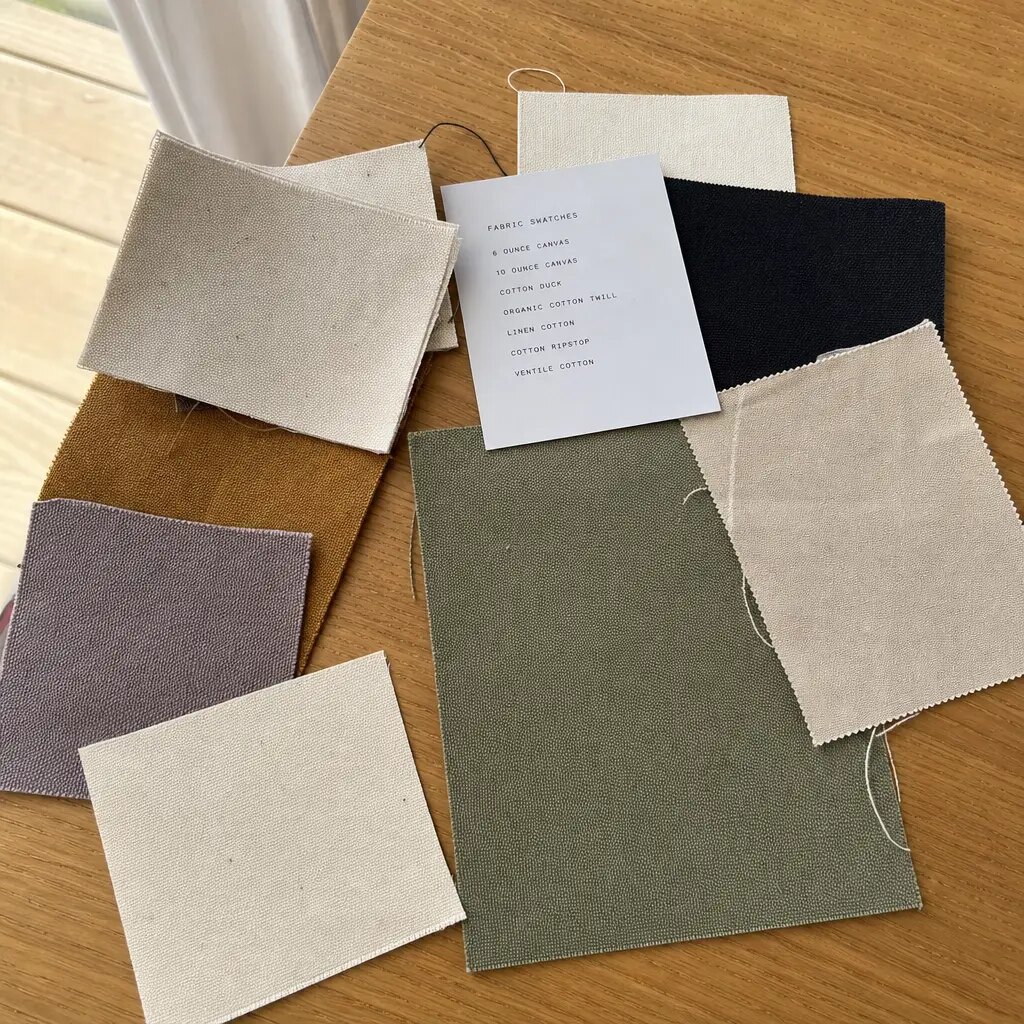
Color has procurement consequences too. Natural cotton fits many coffee brands and pairs well with kraft labels or earthy retail displays, but it can show seed flecks, slubs, and shade variation. Bleached white improves contrast for fine logos. Dyed cotton can match a brand palette, but it needs an approved shade reference and clear tolerance for reorders. In every case, check opacity by placing the actual coffee bag, dark insert, or accessory inside a fabric swatch under realistic lighting.
- Use 120-140 gsm for lightweight samples and lower-cost campaigns.
- Use 160-180 gsm for retail gifts, reusable pouches, and better opacity.
- Use 200 gsm+ only when structure or premium feel is worth the added cost.
- Accept natural cotton flecks and shade variation in writing if they fit the brand.
- Require a shade standard for dyed cotton, especially for repeat orders.
4. Treat drawcord and stitching as functional specs
The cord is one of the first touchpoints customers notice. Supplier defaults can vary widely, so define cord material, approximate diameter, color, finished length, knot style, and single-pull or double-pull construction. Cotton cord gives a natural look. Polyester cord can be smoother and more color-stable. Flat tape can look distinctive but may require a wider channel.
Channel construction is a common weak point. If the fold is too narrow, the cord binds. If the side openings are not reinforced, repeated pulling can fray the fabric. If the channel is sewn through by mistake, the pouch may not close. For reusable pouches, gift sets, and merch, ask for reinforcement or backstitching at stress points. For simple event giveaways, construction can be more economical, but the closure still needs to work smoothly.
Stitching should be checked inside and outside. Look for straight seams, reasonable stitch density, secure backstitching, no open seams, no thread nests, and clean raw-edge handling. Coffee roasters often fill pouches away from the factory, so a broken seam or slipping cord creates rework close to the campaign date.
- Define single drawcord or double drawcord before comparing quotes.
- Specify cord material, color, diameter, finished length, and knot finish.
- Check that the cord moves freely and closes the pouch without strain.
- Inspect channel openings for fraying, skipped stitches, and weak reinforcement.
- Approve inside seam quality, not only the printed front panel.
5. Match print method to artwork, fabric, and handling
For most coffee roaster logos, one-color or two-color screen printing is the practical wholesale default. Wordmarks, badges, simple illustrations, and line art usually reproduce well. Screen print is also easier to compare across suppliers when the ink color, logo size, placement, and fabric are fixed in the RFQ.
Heat transfer can work for complex artwork, gradients, small full-color designs, or short runs. It needs a harsher sample check because pouches are folded, bundled, stacked, shipped, and filled by hand. Fold across the print, rub it, stack it against another pouch, and check for cracking, edge lift, glossy hand feel, or transfer marks. A print that looks sharp on a flat photo may not survive normal pouch handling elegantly.
Embroidery can look premium on heavier cotton, but it may pucker light fabric and can be too costly for promotional packaging. Woven labels are useful when the brand wants a clean front panel or a sewn-in retail cue. For any method, write the logo width, height, distance from top seam, distance from side seams, print color reference, and placement tolerance. Fabric printing will not match coated-paper color perfectly, so approve a physical strike-off when color matters.
- Use screen print for simple 1-2 color logos and repeat orders.
- Use heat transfer only after folding, rubbing, and stacking tests.
- Use embroidery mainly on heavier pouches where texture justifies cost.
- Use woven labels for subtle branding or seam-inserted details.
- Lock artwork size, position, color reference, and placement tolerance before bulk.
6. Build MOQ and price breaks around real demand
MOQ is rarely one simple number. A supplier may have one MOQ for natural stock fabric, another for dyed fabric, another for custom cord color, and another for each print design. If a roaster wants three pouch sizes and three seasonal artworks, the effective MOQ can multiply quickly. Ask for MOQ by size, fabric color, cord color, print design, and print color count.
Standardization often helps. One well-sized pouch may support several coffee sample programs if the insert card, hang tag, or contents change. If multiple sizes are necessary, ask suppliers to quote each size separately and then quote the combined order. That shows whether combined cutting, printing, or packing creates any efficiency.
Request price breaks at practical quantities: the target order and two realistic higher volumes. For example, if the launch needs 1,000 pieces, compare 1,000, 3,000, and 5,000 pieces only if those numbers match forecasted use. A low MOQ can be valuable for a trial, but ask what makes it possible. It may depend on stock size, stock fabric, lighter gsm, limited cord colors, simplified printing, or a higher unit price.
- Ask MOQ by size, fabric, cord, print design, and print color count.
- Separate trial order needs from repeat packaging plans.
- Compare one universal pouch SKU against several specialized sizes.
- Request price ladders using the exact same specification.
- Avoid over-ordering highly seasonal artwork that may become dead stock.
7. Use samples as approval gates, not decoration
A pre-production sample should represent the final pouch: final fabric, gsm, color, cord, channel, stitching, print method, logo placement, and intended packing fold. A swatch confirms texture and shade. A digital proof confirms layout. Neither confirms loaded fit, drawcord function, opacity, odor, seam strength, or print curing.
Test the sample as the pouch will be used. Insert the actual coffee bag, drip bags, filters, scoop, brush, card, or kit. Pull the cord closed several times. Check whether the channel binds, the cord length feels balanced, the logo distorts, and the contents sit below the closure. Fold and stack the sample as cartons will be packed. Rub the print by hand and check whether ink marks adjacent pouches.
Bring warehouse or co-packer feedback into approval when possible. The buyer may approve the look while the filling team notices a narrow opening or awkward cord position. Keep the signed sample, approved artwork, measurement sheet, and packing instruction together. On reorders, reference those documents by date instead of relying on an invoice line that says cotton pouch with logo.
- Approve a final-material pre-production sample before bulk production.
- Load the sample with real contents and test closure repeatedly.
- Measure width, height, channel height, cord length, and print placement.
- Check opacity, wrinkles, odor, stains, loose threads, and front-panel defects.
- Keep one approved sample with procurement and one with the supplier.
8. Compare quotes by spec, incoterm, and landed cost
Two supplier quotes are not comparable unless the specification is identical. One quote may use 120 gsm natural cotton, single cord, and bulk packing. Another may use 180 gsm bleached cotton, double cord, and individual polybags. The unit price gap may be real, but it is not a fair side-by-side comparison.
Use one RFQ sheet and require each supplier to confirm finished size, tolerance, fabric, gsm, color, cord, print method, MOQ, sample basis, packing, carton information, production lead time, and shipping term. Ask whether prices are EXW, FOB, CIF, DAP, or another agreed incoterm. A low ex-factory price can lose its advantage if packing is inefficient, cartons are oversized, or inland and export charges are not visible.
Ask for line items where possible: pouch sewing, printing, setup or screen charge, sample fee, label cost, inner packing, export cartons, special carton marks, and document fees. Confirm carton dimensions, gross weight, pieces per carton, and carton count before estimating freight. Cotton pouches are light, but carton cube can matter for courier, air freight, and warehouse storage.
- Issue one RFQ sheet to all suppliers.
- Confirm the quoted incoterm and what charges are excluded.
- Request carton dimensions, gross weight, pieces per carton, and carton count.
- Separate setup, sampling, printing, labels, packing, and carton charges when possible.
- Compare landed cost and operational risk, not only unit price.
9. Write QC standards that receiving teams can use
Quality control needs written criteria, not a vague phrase such as high quality. A useful QC appendix defines fabric condition, size tolerance, stitch quality, channel function, cord consistency, print appearance, odor, cleanliness, bundle count, carton labels, and SKU separation. This gives the supplier, inspector, and receiving team the same reference.
If your company uses AQL inspection, classify defects clearly. Critical defects may include needle fragments, metal contamination, mildew, severe chemical odor, or unsafe contamination. Major defects may include open seams, blocked channels, broken cords, wrong artwork, wrong size outside tolerance, heavy front-panel stains, severe print defects, and count shortages. Minor defects may include small thread ends or slight natural flecks if those were accepted in the approved sample.
Coffee brands should pay special attention to odor and cleanliness. Cotton and cartons can absorb damp storage smells, mildew, smoke, or chemical odor. Even when the pouch does not touch roasted coffee directly, unpleasant odor can damage the customer experience. Final inspection should sample multiple cartons and, when possible, different production batches.
- Measure finished width, height, gusset, channel height, and print placement.
- Reject open seams, blocked channels, broken cords, wrong artwork, heavy stains, and strong odor.
- Check print opacity, registration, smudging, cracking, rub-off, and transfer marks.
- Inspect inside seams, raw edges, thread nests, skipped stitches, and fraying.
- Verify bundle count, carton count, carton marks, PO number, SKU label, and packing method.
10. Control packing, lead time, and reorder consistency
Packing affects cost, cleanliness, receiving speed, and storage. Bulk packing is usually efficient when pouches will be filled later by the roaster, warehouse, or co-packer. It still needs structure: consistent inner bundles, clean export cartons, a carton liner if needed, and countable quantities. Individual polybags should be used only when retail presentation, direct handling, barcode needs, or strict cleanliness requirements justify the extra cost and plastic use.
Confirm packing details before shipment: pieces per inner bundle, pieces per carton, carton dimensions, gross weight, carton marks, SKU label content, and carton numbering. If several sizes, fabric colors, or prints ship together, require separate cartons or clear internal separation. Mixed cartons can slow receiving and create errors during kitting.
Lead time should be managed by approval gates. Track artwork confirmation, sample making, sample shipping, revision time, fabric booking, cutting, sewing, printing, curing, inspection, packing, export documents, and freight booking. For seasonal coffee drops, holiday kits, trade shows, and subscription dates, build schedule buffer before committing a launch.
Reorders need the same discipline as first orders. Reference the approved sample, spec sheet, artwork file, carton marks, and QC checklist. Ask whether fabric lot, cord diameter, ink, print shop, or sewing line will change. For repeat brand packaging, small shifts in natural cotton shade, print position, or cord color can be more visible than buyers expect.
- Choose bulk bundles, carton liner, or individual polybags based on the sales channel.
- Confirm bundle count, carton count, carton dimensions, gross weight, and carton marks.
- Use labels showing SKU, size, fabric color, design, quantity, PO number, and carton number.
- Set approval gates for sample, artwork, fabric, production, inspection, packing, and dispatch.
- For reorders, reference the approved sample and spec sheet instead of only the last invoice.
Specification comparison for buyers
| Choice | Best fit for coffee roasters | Trade-off to price | QC point to confirm |
|---|---|---|---|
| 120-140 gsm cotton | Light sample pouches, event giveaways, drip bag samplers, low-weight subscription inserts | Lower material cost and carton weight, but less opacity and softer structure | Check dark coffee bags or printed inserts do not show through too strongly; inspect channel strength |
| 160-180 gsm cotton | Retail gift pouches, accessory kits, reusable customer pouches, higher-visibility brand packaging | Higher unit cost than light cotton, but better hand feel, opacity, and perceived value | Compare fabric hand feel against approved sample and check seam bulk at the channel |
| 200 gsm+ cotton or canvas | Premium merch, heavier tools, café retail accessories, structured gift presentation | More fabric cost, more sewing effort, higher carton cube, and sometimes slower production | Test closure with real contents; heavy fabric can make small pouches harder to cinch |
| Flat pouch | Drip bags, tasting cards, stickers, filters, vouchers, slim sample packs | Efficient cutting and packing, but limited internal volume | Confirm usable height below drawcord channel and avoid a too-tight mouth |
| Bottom-gusseted pouch | 100 g coffee bags, small gift sets, sample bag plus scoop or card | Better loaded shape, but more sewing steps and dimensional variation | Define gusset measurement and inspect that the base opens evenly |
| Screen print | Simple 1-2 color logos, badges, wordmarks, repeat wholesale orders | Setup charges may apply, but repeat cost is usually practical at volume | Approve ink color, opacity, placement tolerance, curing, and rub resistance |
| Heat transfer | Short runs, complex artwork, gradients, small full-color graphics | Can look sharp, but may feel glossy and can be vulnerable to folding or edge lift | Fold across the print, rub by hand, stack pouches, and check for cracking or transfer marks |
| Woven label | Subtle branding, premium accessory pouches, designs where direct print is not preferred | Label cost and sewing placement add complexity | Confirm label size, fold type, seam insertion point, and consistency after washing if relevant |
| Bulk packing | Pouches filled later by roaster, warehouse, or co-packer | Efficient and lower packing cost, but requires clean bundling and count control | Confirm pieces per inner bundle, carton count, carton liner, carton marks, and SKU separation |
Buyer checklist before sampling
- Define the pouch use case: roasted coffee sample, drip bag bundle, filter pack, cupping spoon kit, grinder brush kit, subscription insert, event giveaway, holiday gift set, or café merch item.
- Measure the loaded contents in width, height, and thickness, including gussets, valves, folded tops, cards, tags, and rigid accessories.
- Specify finished pouch dimensions in millimeters, measured flat after sewing and pressing, outside seam to outside seam, excluding loose cord ends.
- Identify flat, bottom-gusseted, side-gusseted, or boxed construction, and ask how that construction changes usable internal space.
- Set a written dimensional tolerance, such as +/-5 mm for many small flat pouches or the supplier's advised tolerance for larger or gusseted styles.
- Specify fabric composition, fabric type, gsm, color, finish, shrinkage expectation if relevant, and whether natural flecks or shade variation are acceptable.
- Request physical fabric swatches and check opacity with the intended coffee bag, drip bundle, dark insert, tasting card, or accessory inside.
- Define cord material, color, approximate diameter, finished cord length, single-pull or double-pull construction, knot style, and channel height.
- Choose print method based on artwork complexity, fabric color, folding, filling process, and reorder plan; confirm artwork size, placement, color reference, and tolerance.
- State MOQ by pouch size, fabric color, cord color, print design, and print color count, not only by total order quantity.
Factory quote questions to send
- What exact fabric will you use: composition, fabric type, gsm, color, fabric width, and whether it is stock fabric or made-to-order fabric?
- Is the quoted pouch size the finished sewn size, cutting size, or nominal catalog size, and how will width and height be measured for inspection?
- What dimensional tolerance do you recommend for this pouch size and construction, and can it be written into the proforma invoice or purchase order?
- Based on my loaded product dimensions, what finished pouch size do you recommend for easy hand insertion and full drawcord closure without strain?
- Will the pouch be flat, bottom-gusseted, side-gusseted, or another construction, and what is the estimated usable internal space below the drawcord channel?
- What cord options are available, including cotton cord, polyester cord, flat tape, round cord, approximate diameter, standard finished length, color options, and knot finish?
- Is the closure single drawcord or double drawcord, and how is the channel reinforced at the side openings or stress points?
- Which print methods do you recommend for this artwork, and what are the cost, setup, color opacity, curing, rub resistance, and folding risks for each option?
- Can you confirm logo size, print position from top seam and side seams, print color reference, and expected print placement tolerance in mass production?
- For natural cotton, what level of shade variation, seed flecks, and slubs should we expect, and can you provide a physical reference sample?
Quality-control points to confirm
- Fabric gsm is checked against the approved sample or purchase specification within the agreed commercial tolerance, commonly about +/-5% if both parties accept that standard.
- Fabric is free from unacceptable holes, oil marks, mildew, water stains, dirt, severe slubs, needle damage, loose contamination, and thin spots that affect use or front-panel appearance.
- Natural cotton shade, bleached fabric, or dyed fabric matches the approved reference within the agreed tolerance, with no obvious panel-to-panel mismatch on the same pouch.
- Finished width and height are measured flat after sewing and pressing, outside seam to outside seam, and fall within the written tolerance for width, height, gusset if applicable, and channel height.
- Side seams, bottom seams, gusset seams, and channel seams are straight and secure, with no open seams, skipped stitches affecting strength, broken threads, loose thread nests, or fraying at stress points.
- Stitch density and backstitching are consistent with the approved sample, especially at drawcord channel openings, side seams, and lower corners.
- Drawcord channel is not blocked, twisted, too narrow, or sewn through; the cord moves smoothly and closes the pouch without tearing the channel.
- Cord material, color, approximate diameter, knot style, and finished length match the approved sample; paired cords on double-pull pouches are balanced and do not slip out.
- Print size, color, opacity, registration, and placement match the signed artwork and approved sample within written tolerance, with no major bleed, smudge, pinhole clusters, ghosting, or transfer marks.
- Print is checked after normal folding, rubbing by hand, and carton-style stacking so ink does not easily crack, flake, stick, or mark adjacent pouches.