What compliance means for winery pouch orders
For boutique wineries, a custom cotton drawstring pouch is not just a soft bag. It is a retail surface, a tasting-room handout, a club-shipment insert, and sometimes the first physical contact a customer has with the brand. Compliance matters because the failures are visible fast: weak fabric that looks cheap, crooked drawstrings, print that cracks after handling, or packing that arrives dusty and deformed. A supplier compliance checklist keeps the order on one standard instead of letting the supplier decide the standard after the quote is won.
The right checklist starts with the use case. A pouch used for a small bottle, tasting accessory, or premium gift set needs different construction from a simple giveaway bag. If the winery wants repeat orders, the supplier must be able to reproduce the same hand feel, size, and logo placement across runs. That means the RFQ must describe more than color and quantity. It should define the fabric, cord, seam type, print method, packing, and the evidence the supplier must show before bulk production starts.
- Treat the pouch as a branded retail component, not a generic promotional item.
- Write the use case into the RFQ so the supplier understands the finish level you need.
- Separate visual acceptance from shipping acceptance, because both can fail independently.
Lock the fabric and construction spec first
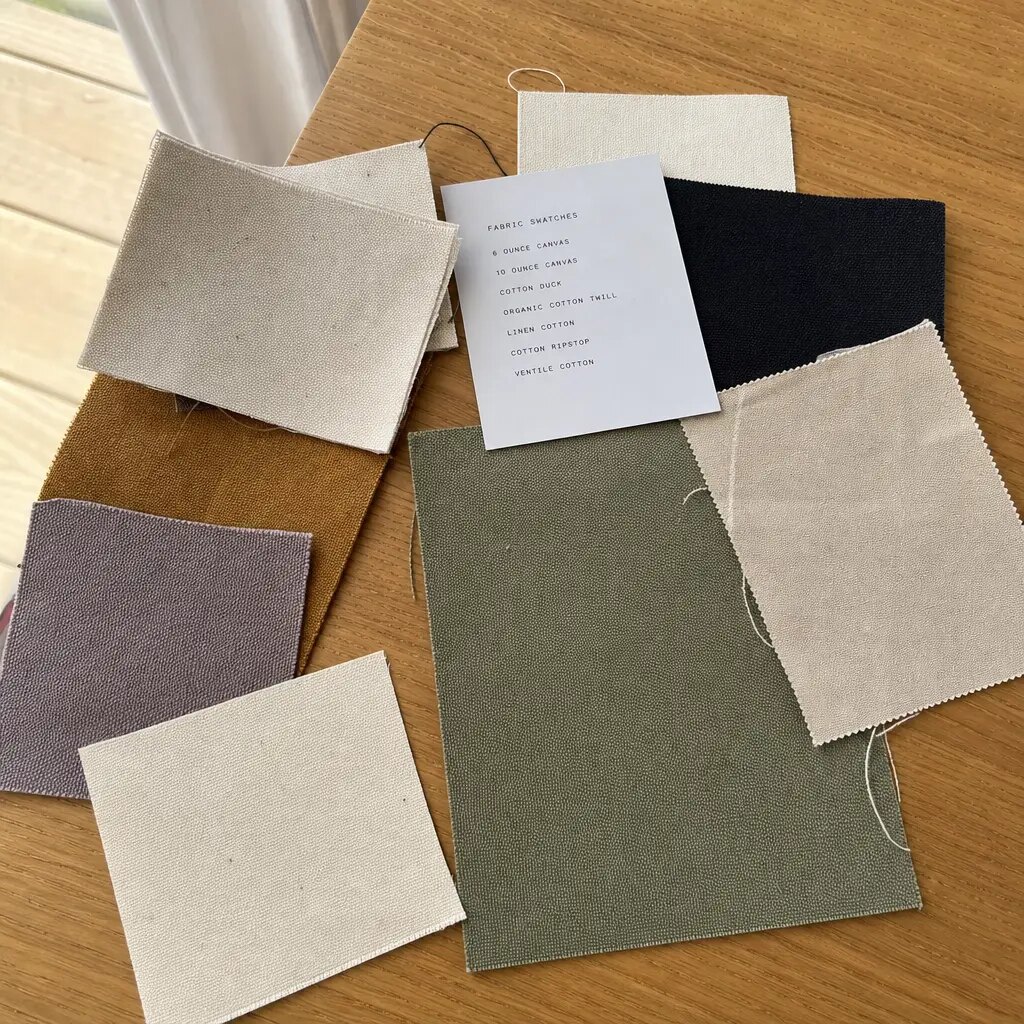
Fabric weight drives most of the buyer experience. For custom cotton drawstring pouches, a common practical range is 140 to 220 GSM depending on whether the pouch is for lightweight gifting, premium bottle presentation, or repeated handling. Lighter fabric can work for low-cost inserts, but it tends to show contents more easily and may wrinkle or distort after packing. Midweight cotton in the 160 to 180 GSM range usually gives a better balance of drape, opacity, and cost. If the pouch must stand up better on shelf or hold a heavier item, move toward 200 GSM and specify the weave clearly instead of using GSM alone.
Construction matters as much as weight. The top channel needs enough width for the cord to move freely without chewing the seam. Side seams should be straight and secure, with no gap at the bottom corners where stress will collect. If the pouch will carry a bottle-shaped item, the bottom seam and hem reinforcement should be called out in the spec sheet. Buyers often lose time when they approve a sample based on appearance only, then discover that the bulk run changed the channel width, added a cheaper cord, or substituted a looser weave. That kind of drift is avoidable when the spec sheet names the fabric type, GSM, cord type, and stitch expectations together.
- Use a GSM range, not a vague word like thick or premium.
- State whether the cotton is plain weave, twill, canvas, or another structure.
- Require a sample that matches the intended cord diameter and top-channel construction.
Choose the print method around handling and wear
Print choice should follow the way the pouch will be handled after delivery. For a simple winery logo on natural cotton, one-color screen print is usually the most stable and cost-effective method at medium volume. It gives solid ink coverage and good consistency if the artwork is clean and the supplier controls registration. If the logo includes fine type, gradients, or a multi-color mark, the buyer should expect higher setup complexity and a larger risk of color shift. For premium positioning, a woven label or sewn patch can be more durable than ink on a pouch that will be folded, rubbed, and carried often.
Heat transfer can work for short runs, but it deserves more scrutiny on cotton pouches because repeated flexing may crack or lift the print edge. Embroidery looks premium, yet it is not always the best answer for light cotton because it can pucker the fabric and distort small logos. Buyers should not let the decoration choice drift into a supplier preference decision. Pick the method based on logo complexity, expected handling, and order size. For winery programs, the best result is usually a clean one-color screen print or a woven label positioned where it survives folding and string movement.
- Place the logo where the cord channel and folding pattern will not hide it.
- Match the print method to quantity, logo detail, and handling frequency.
- Require a physical color standard if brand color accuracy matters.
What a real supplier should prove
A supplier quote is only useful if the supplier can prove they control the production path. At minimum, the buyer should expect business registration, export experience, production photos, and an explanation of which steps are in-house. If the supplier claims a certification or test result, it should be tied to the actual product type and the actual order, not used as a generic sales claim. For winery buyers, supplier proof matters because many orders are not huge, but the brand visibility is high. A weak supplier can damage the launch with small mistakes that are expensive to correct later.
The cleanest signal is whether the supplier can explain its process without hand-waving. A serious factory can say where the fabric is sourced, how the pouch is cut, where the print is applied, how the cord is threaded, and how final inspection works. If they cannot describe the process flow, they are not ready for a compliance-driven account. Buyers should also ask for recent photos of the actual machine setup, not polished catalog imagery. The goal is evidence of repeatability, not just evidence that the supplier can make one good sample.
- Ask who owns the line: the quoted factory, a subcontractor, or a trading partner.
- Request recent production photos that show sewing, printing, and packing stages.
- Treat unsupported certification claims as unverified until the document is inspected.
Read MOQ and quote logic before you compare suppliers
MOQ is not just a minimum quantity. It is the supplier’s way of recovering setup cost, material risk, and labor efficiency. For drawstring pouches, the real MOQ can sit at different levels for the body fabric, print color count, woven label, and packaging. A buyer who sees only one number in a quote is missing the structure behind it. A low unit price can hide a high setup fee, a high label charge, or an inflexible fabric minimum that becomes expensive once the order is revised. Compare suppliers on the same quote basis: same size, same GSM, same print method, same packing, and same trade term.
For boutique winery orders, the best quote is usually the one that shows the cost drivers clearly. Look for line items for fabric, sewing, print setup, label, inner pack, cartons, test fees, and freight basis if offered. Ask the supplier to show price steps at pilot quantity, repeat quantity, and scale quantity. That reveals whether the supplier is giving a real production quote or a hopeful opening number. If the order will repeat every season, the supplier should be able to explain where the price drops once setup is absorbed. If they cannot, they probably have not priced the order with enough discipline.
- Compare unit price only after aligning fabric, decoration, and packing scope.
- Request tiered pricing so you can see the economics of a reorder.
- Separate setup charges from recurring production cost in the quote review.
Use sample approval to expose hidden defects
Sample approval is where most pouch problems can still be fixed without cost pressure. The sample should come from the same construction logic that will be used in bulk, not from a random look-alike. Measure finished width, height, channel height, cord length, and seam allowance. Then inspect the pouch under ordinary light for print placement, color consistency, and thread quality. If the winery uses a premium brand color or exact logo geometry, approve against a physical sample or a controlled artwork proof, not a phone photo. Photos compress color and hide fabric texture, which is exactly where many disputes start.
A useful sample approval note is specific enough that the factory can act on it immediately. For example, write that the top channel must lie flat, the drawcord must pull smoothly without binding, and the logo must remain centered after the bag is cinched. If the pouch will be folded for retail or inserted in a shipping carton, test the fold line on the sample before signing off. Buyers should reject samples with loose threads, skewed side seams, patchy print ink, or inconsistent cord ends. The point is not perfection for its own sake. The point is to stop small defects from becoming a full lot problem.
- Approve a physical sample, not just a digital mockup.
- Record measured dimensions on the signed sample card.
- Test the pouch in the same folded or filled condition it will face in use.
Packing and labeling should match the channel, not just the product
Packing is often treated as the last step, but for pouch orders it affects the product condition on arrival and the efficiency of downstream handling. If the pouches go directly into tasting-room inventory, retail kits, or fulfillment bins, the inner pack count needs to be practical for the team receiving them. If the order moves by sea freight, carton size and moisture control become important because thin cotton can absorb odor and dampness. The buyer should specify whether each pouch will be polybagged, bundled, or packed loose, and whether the carton needs an inner liner or desiccant for the lane.
Labeling should match market requirements and the buyer’s inventory system. That can include size stickers, SKU labels, barcode labels, country-of-origin marking, and fiber content information where required. Do not let the supplier choose the carton marking format casually. The wrong carton count or unclear outer label causes receiving delays and makes shortage claims harder to prove. For a compliance-focused order, the packing list should reflect actual inner counts and carton counts, with no assumption that the warehouse can sort mistakes later. Good packing reduces damage, simplifies receiving, and protects the visual quality of the pouch when it reaches the winery.
- Define inner pack quantity, outer carton quantity, and carton dimensions before production.
- Specify whether pouches ship flat, folded, or bagged individually.
- Require readable SKU and outer label marking that matches the receiving system.
Plan lead time around the slowest approval step
Lead time is usually lost in approvals, not sewing. A pouch order may look simple, but the schedule can stretch when the supplier waits on artwork, lab dips, label approval, fabric booking, or revised sample comments. A realistic schedule should separate sample development, pre-production approval, bulk production, and shipping transit. When buyers force all steps into one vague lead-time number, they remove the ability to see where the delay is likely to happen. For a custom cotton drawstring pouch order, the safest approach is to treat approval gates as hard milestones and to release each one only when the prior step is signed off.
The production risk increases when the order includes special cord colors, nonstandard woven labels, or a new print method. Those items are not impossible, but they create additional coordination and can push the schedule if the supplier is waiting on an external vendor. Holiday launches and winery gift programs are especially sensitive because a few lost days can miss a selling window. Buyers should ask the factory to name the longest internal step, the likely external step, and the material reservation point. That tells you whether the promise is built on actual capacity or optimistic sequencing.
- Separate sample lead time from bulk lead time in the planning sheet.
- Treat label approval and artwork approval as schedule-critical tasks.
- Reserve extra time when the order depends on custom cord, labels, or special packing.
Compare landed cost before you award the order
The cheapest unit price can still produce the most expensive landed result. Landed cost should include the pouch unit price, print setup, label cost, inner packing, outer cartons, freight basis, import duty, inland delivery, inspection, and any rework allowance you think the program will need. If one supplier quotes a low EXW number but another quotes a clearer FOB or DDP structure, the buyer must normalize the offer before comparing them. Otherwise the apparent bargain may hide freight inefficiency, weak packing, or a missing service item that shows up later as an extra charge.
For winery buyers, the landed-cost review should also include operational cost. A pouch that arrives packed in awkward inner counts or inconsistent carton quantities can slow receiving and create warehouse handling time. A slightly higher unit price may be worthwhile if it reduces rework, protects print quality, and supports repeat ordering with less buyer effort. The right decision is the supplier who can satisfy the spec, document the order properly, and keep the production path stable. That is the real compliance outcome, not the lowest first-line number.
- Normalize quotes to the same trade term before comparing them.
- Add setup, packing, freight, duty, and inspection into one landed-cost view.
- Factor in receiving efficiency, not just per-piece price.
Specification comparison for buyers
| Supplier option | What to verify | Commercial advantage | Buyer risk to control |
|---|---|---|---|
| Direct sewing factory | cord material proof, reinforcement close-ups, load-test photos, approved sample tag, and bulk-line first-piece record | Better sample-to-bulk control and faster production feedback | May be weaker on export paperwork or branded packing unless checked early |
| Trading company | Factory name, production photos, trim-source proof, and who owns QC decisions | Can coordinate small mixed orders and extra services | Markup can hide real factory capability and slow defect decisions |
| Specialized bag workshop | cord diameter, eyelet or reinforced channel, bottom corner reinforcement, seam allowance, bar-tack position, and load target | More practical for detailed construction, trims, and repeat programs | Capacity may be limited during peak seasons |
| Low-price general supplier | 6-10 oz cotton canvas, 210D polyester, rPET, or blended cotton with shrinkage and colorfastness expectations set before sampling | Useful for simple promotional runs with loose specs | Material downgrades, weak packing, and vague inspection scope can erase savings |
| Retail-ready supplier | fold direction, cord protection, bundle count, carton compression, moisture bag, and retail label position | Can handle labels, SKU separation, carton marks, and receiving rules | Higher unit cost must be compared against reduced warehouse work |
| Compliance-focused supplier | Fabric records, labeling review, test plan, and production traceability | Safer for retail programs and repeat brand orders | Documentation claims need evidence, not only sales language |
| Local sample room plus bulk factory | Signed sample, bulk factory handoff, first-piece photos, and deviation owner | Good for complex branding before large production | Sample room quality may not match bulk line unless handoff is controlled |
Buyer checklist before sampling
- Confirm finished pouch size with a toleranced spec sheet, not a nominal size only.
- Set the target fabric weight in GSM and the fabric weave or finish before requesting quotes.
- State the print method, color reference, and print position on the RFQ artwork.
- Request a sample from the same fabric, cord, and sewing line intended for bulk production.
- Ask for packing details, including inner pack count, carton count, and carton label format.
- Collect supplier proof of export experience, business registration, and recent production photos.
- Compare quotes on the same basis: EXW, FOB, or DDP, never a mixed basis.
- Define acceptable size tolerance, stitch quality, and print registration before sample approval.
- Confirm label, barcode, and country-of-origin requirements for your destination market.
- Lock the lead-time calendar around sample approval, material booking, and shipping method.
Factory quote questions to send
- What is the exact fabric composition and GSM, and can you confirm it on the production sample?
- Will the cord be cotton, polyester, or blended, and what diameter and finish will you use?
- Is the print screen print, heat transfer, embroidery, woven label, or another method, and what is the setup cost for each?
- What MOQ applies to the pouch body, the print color, and any woven label or hangtag?
- Which parts of the order are made in-house and which are subcontracted?
- What size tolerance do you hold on finished width, height, and drawstring opening?
- Can you share carton pack count, carton dimensions, and gross weight before I compare freight?
- What documents can you provide with the order, such as packing list, commercial invoice, and origin marking details?
- How many days are needed for sample development, pre-production approval, and bulk production separately?
- What must change in the quote if I increase the order from pilot quantity to repeat quantity?
Quality-control points to confirm
- Finished size matches the approved spec within the agreed tolerance.
- Fabric weight is within the target GSM band and does not feel thin or inconsistent across the lot.
- Stitching is even, seam allowance is stable, and the top channel does not twist.
- Drawcord slides smoothly and does not fray, snag, or vary too much in length.
- Print color matches the approved physical standard under normal indoor light.
- Logo placement is centered or positioned within the allowed offset.
- No loose threads, skipped stitches, oil marks, needle damage, or stained panels.
- Carton count and inner pack count match the packing list exactly.
- Barcode, label, and country-of-origin marking are readable and correctly placed.
- Random carton opening shows no crushed goods, moisture damage, or packing drift.