Start the RFQ With the Bookstore Use Case
A university bookstore usually buys cotton drawstring pouches for one of five jobs: retail accessory packaging, orientation welcome kits, graduation gift sets, alumni merchandise, or department event giveaways. The pouch may look simple, but the correct specification changes depending on whether a student pays for it at checkout or receives it inside a bulk kit. A retail pouch needs better fabric hand feel, cleaner stitching, and stronger logo control. A giveaway pouch may need lower cost, fast packing, and easy counting more than premium weight.
The RFQ should describe the business use before listing dimensions. Factories quote more accurately when they know what the pouch must carry and how it will be handled. A 15 x 20 cm pouch for lapel pins can use lighter cotton than a 25 x 35 cm pouch holding a hoodie, drinkware, or tech accessory. If the pouch is part of a licensed school logo program, include the approval path and required proofing time because artwork delays often create more schedule risk than sewing.
- For checkout retail packaging, prioritize fabric appearance, print alignment, and repeatable SKU labeling.
- For orientation kits, prioritize MOQ efficiency, low unit cost, and carton-level counting accuracy.
- For graduation gifts, prioritize premium fabric weight, strong drawcord feel, and clean logo presentation.
- For department giveaways, standardize size and cord color so small sub-orders can share one production run.
Choose Fabric Weight by Contents, Not Habit
Cotton drawstring pouches are commonly quoted by ounces per square yard or by GSM. For RFQ clarity, give either one and allow the factory to convert, but do not accept a quote that says only natural cotton without weight. For university bookstore use, 4 oz cotton or 120-140 GSM is a cost-focused option for light giveaways. Around 6 oz or 180-220 GSM is the safer middle range for general retail and bundle packaging. For premium gift sets, 8 oz or 260-280 GSM canvas gives more body and a better shelf feel, especially in natural, black, navy, or school-color fabric.
Fabric weight affects more than unit price. Heavier cotton changes the sewing allowance, drawcord channel thickness, carton weight, freight cost, and how flat the pouch lies after packing. On small pouches, very heavy canvas can make the top tunnel bulky and harder to pull closed. On larger pouches, fabric that is too light can sag, reveal contents, and make the logo look cheap. The best RFQ gives the target use and asks the factory to quote two weights with the same size and print method, so the buyer can compare true cost difference.
- 120-140 GSM: acceptable for low-cost handouts, light objects, or temporary event packaging.
- 180-220 GSM: balanced option for most university bookstore custom cotton drawstring pouches.
- 260-280 GSM: stronger retail feel, but confirm tunnel bulk and carton weight before approval.
- Unbleached natural cotton: economical and popular, but shade variation must be accepted within a defined range.
Define Finished Size and Drawcord Construction
A useful RFQ states finished size after sewing, not fabric cut size. Finished width and height should be measured flat from seam to seam, excluding the cord. For many bookstore orders, small pouches such as 10 x 15 cm fit pins, jewelry, earbuds, and gift cards. Mid sizes like 15 x 20 cm or 20 x 25 cm suit stationery, cords, and small souvenirs. Larger sizes such as 25 x 35 cm work for folded tees, scarves, and gift bundles. If the pouch must fit a specific product, provide the product dimensions and target insertion method, not just the pouch size.
Drawcord construction deserves a line in the RFQ because it changes appearance and durability. Single-sided drawcords are cheaper but can feel less balanced on retail products. Double-sided drawcords close more evenly and look better in a shop display. Cotton cord gives a natural look and matches sustainability messaging, while polyester cord can be smoother and more color-consistent. Cord diameter should be suitable for the tunnel width; a thin cord in a wide tunnel looks weak, while a thick cord in a narrow tunnel creates friction and customer complaints.
- State size as finished flat dimensions, such as 15 cm wide x 20 cm high.
- Indicate whether the drawstring exits one side or both sides.
- Specify cotton cord, polyester cord, or matching dyed cord if color is important.
- Define cord diameter, knot style, and whether cord ends must be sealed or stitched.
Select the Print Method Before Comparing Prices
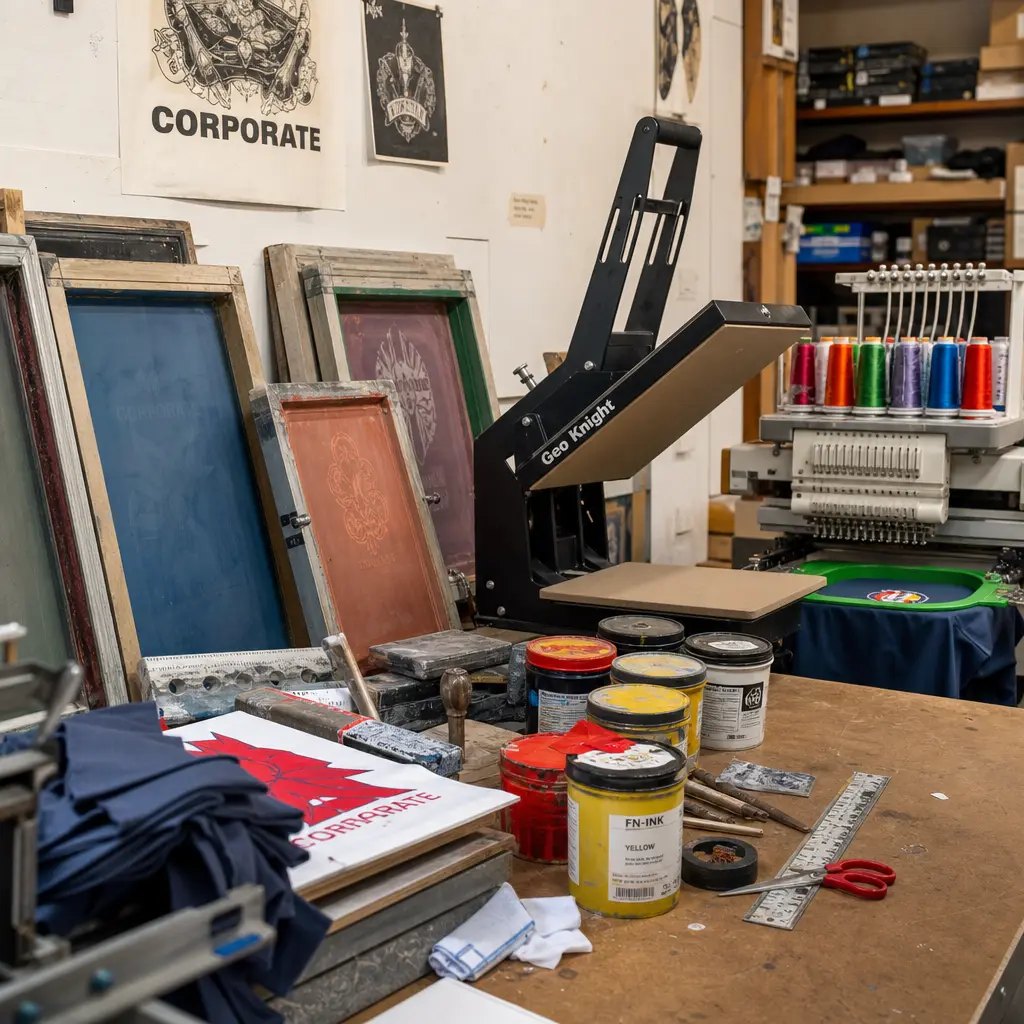
For most university bookstore pouches, one-color screen print is the most practical method. It handles school names, block letters, simple seals, and mascot marks at a competitive cost. Screen printing also works well across repeat orders because the factory can control placement with a jig. The RFQ should include print size, position, Pantone color, and whether the artwork is vector. If the logo has tiny registered trademark marks, fine serif text, or distressed texture, the factory should review line thickness before committing to mass production.
Multi-color artwork changes the quote structure. Each screen color may add setup cost and registration risk. Heat transfer or digital print may be better for full-color mascot artwork, but buyers should test hand feel, edge adhesion, and rub resistance. Embroidery is possible on heavier canvas but often unsuitable for small lightweight pouches because the fabric can pucker. Woven labels and sewn side tabs are useful when the bookstore wants a premium branded detail without printing a large logo on every pouch.
- Screen print: best for solid school logos, repeat orders, and predictable unit cost.
- Heat transfer: useful for full-color art, but review feel and edge durability.
- Embroidery: premium look on heavier canvas, not ideal for tiny pouches or thin cotton.
- Woven label: good for subtle branding, but requires label MOQ and sewing placement approval.
Build MOQ Logic Around SKU Count
Many RFQ mistakes come from quoting the total order quantity while ignoring SKU splits. A buyer may say the order is 5,000 pieces, but the actual plan is five sizes, three fabric colors, and four artwork versions. That creates many small production lots, each with separate fabric handling, printing setup, cutting, sewing, packing, and carton labeling. A factory quote for one 5,000-piece SKU will not be valid for twenty small SKUs.
University bookstores often serve multiple departments, so consolidation is the easiest way to reduce cost. One natural cotton fabric, one standard cord, and one print color can support orientation, alumni, and merchandise bundle programs. If the buyer needs separate department logos, the RFQ should ask for price by artwork version and screen setup. For a first order, it is better to narrow the assortment and prove sell-through than to create many low-volume variants that complicate inspection and receiving.
- Quote quantity by size, fabric color, cord color, and artwork version.
- Ask for price breaks at realistic quantities such as 500, 1,000, 3,000, and 5,000 pieces per SKU.
- Separate one-time setup costs from recurring unit cost.
- Avoid mixing too many school colors unless the retail value justifies dyed-fabric MOQ.
Use Quote Data That Exposes Real Cost Drivers
A good quote should make cost drivers visible. The buyer needs to compare fabric weight, print method, packing, sample cost, setup charges, and freight terms. If one supplier is cheaper, the reason should be clear. It may be lighter fabric, smaller print size, single-sided drawcord, fewer stitches per inch, looser packing, or a quote that excludes screen charges. Without standardized quote data, procurement teams may choose a low price that does not match the bookstore’s actual requirement.
The RFQ should request a line-by-line quote instead of a single unit price. For importers and distributors, this protects margin because a small change in packing or carton size can affect inland handling and freight. For brand owners, it protects presentation because print method and fabric weight are often the first items reduced when cost pressure appears. The quote should also state validity period, production lead time after approval, payment terms, and Incoterms such as EXW, FOB, CIF, or DDP if available.
- Unit price by SKU with fabric weight, size, print method, and packing basis.
- Separate sample charge, screen charge, label charge, and special packing charge.
- Carton quantity, carton dimensions, gross weight, and estimated CBM.
- Lead time after artwork approval, not only lead time after deposit.
- Incoterm and port, so freight comparison is not mixed with product comparison.
Approve Samples With Measurable Acceptance Criteria
The sample approval stage should not be limited to whether the pouch looks nice in a photo. A physical pre-production sample is important when the order uses a new fabric weight, custom cord color, full-color print, retail barcode label, or special packing. The buyer should measure the finished size, pull the drawcord, rub the print, inspect the seam, and place the intended product inside. If the pouch is part of a licensed university program, the sample should also go through trademark or brand approval before bulk production starts.
Sample comments must be written in production language. Instead of saying the logo should be higher, state the print center should be 7 cm below the top edge, tolerance plus or minus 0.5 cm. Instead of saying the cord feels cheap, specify cotton cord diameter, color, and knot finish. Factories can correct measurable instructions more reliably than subjective comments. Once approved, the signed sample or approved sample photos become the reference for mass production and final inspection.
- Measure finished width and height on at least three samples.
- Confirm print size, print position, color, opacity, and curing.
- Test drawcord opening and closing several times for friction or tunnel tearing.
- Inspect inside seams for loose threads that may catch small merchandise.
- Approve the sample packing if the pouch will be sold as a retail item.
Set QC Thresholds Before Production Starts
Cotton pouches have simple construction, but small defects become very visible in bookstore retail displays. Common issues include uneven top channels, crooked logo placement, loose thread tails, stains on natural cotton, fabric shade variation, skipped stitches, and drawcords cut too short. The RFQ should define what is acceptable and what must be reworked. This prevents disagreement during final inspection when shipment timing is already tight.
For most bulk orders, the buyer can use a standard inspection approach with defined major and minor defects. Major defects include wrong size, wrong artwork, open seams, broken drawcord channels, heavy stains, wet cartons, or print that rubs off. Minor defects include small thread tails, slight wrinkles, or small fabric slubs within the approved cotton character. The key is to align expectations before mass production, especially for natural cotton where tiny seed flecks and shade variation are normal unless bleached or dyed fabric is specified.
- Set finished size tolerance by pouch size and measure flat, not stretched.
- Define print placement tolerance from fixed seams or top edge.
- Classify stains, mildew smell, broken seams, and wrong artwork as major defects.
- Accept minor natural cotton flecks only if they match the approved sample standard.
- Require rework or sorting before shipment for defects above the agreed limit.
Plan Packing for Bookstore Receiving
Packing is often treated as a final detail, but it directly affects receiving labor. Bookstore stockrooms may need to count by SKU, department, purchase order, artwork version, or event date. If pouches are randomly mixed, the buyer may spend hours sorting cartons before a launch. A good RFQ states units per inner pack, master carton quantity, carton label format, and whether individual pouches need barcode stickers, hangtags, belly bands, or recycled polybags.
Flat bulk packing is usually the most efficient option for cotton drawstring pouches. It reduces carton volume and keeps the logo panel reasonably protected. Individual polybags may be necessary for retail cleanliness, but they add material cost and packing labor. Paper bands or kraft sleeves can support a more sustainable presentation, but buyers should confirm whether the band hides the logo or crushes the pouch shape. For import shipments, carton strength and moisture protection matter because natural cotton can absorb odor and humidity during long transit.
- Use SKU-level carton marks with PO number, size, color, artwork version, and quantity.
- Limit carton gross weight if campus receiving teams handle cartons manually.
- Separate retail-ready packed goods from bulk kit goods in different cartons.
- Request carton photos before shipment for mixed-SKU orders.
- Avoid over-tight compression that creates deep wrinkles across printed logos.
Protect the Lead Time With a Sourcing Workflow
The realistic schedule starts before production. Artwork cleanup, quote comparison, sample making, sample transit, logo approval, deposit, fabric preparation, cutting, printing, curing, sewing, trimming, packing, inspection, and freight all need time. A common planning error is counting only bulk production days and forgetting that bookstore receiving deadlines are fixed around orientation, game days, graduation, and holiday retail windows. Once those windows are missed, a cheap pouch becomes expensive dead stock.
The RFQ should include the required in-hand date and the latest acceptable ship date. The supplier can then flag whether ocean freight, air freight, or split shipment is needed. For repeat programs, the buyer should keep the approved sample, artwork files, Pantone references, and carton specifications on record. Repeat orders move faster when the factory can reuse the same fabric, screen setup, cord standard, and packing instruction instead of rebuilding the order from old email chains.
- Reserve time for artwork approval before starting the sample clock.
- Do not approve bulk production from photos only when logo color or fabric hand feel is critical.
- Schedule inspection after packing but before final shipment release.
- Use a repeat-order spec sheet to prevent drift in fabric weight, cord color, and print placement.
- Build extra time for campus trademark review if licensed artwork is involved.
Specification comparison for buyers
| Spec decision | Recommended option | When it fits | Buyer risk to check |
|---|---|---|---|
| Fabric weight for bookstore retail use | 6 oz cotton canvas or 180-220 GSM cotton | Works for pens, cords, pins, jewelry, small apparel accessories, and gift bundles without looking disposable | Too-light 120 GSM fabric may show contents, wrinkle badly, and reduce perceived retail value |
| Budget giveaway pouch | 4 oz cotton or 120-140 GSM plain weave | Suitable for large orientation kits, single-use event handouts, or low-price bundled merchandise | Logo coverage and darker ink may show through; require a pre-production sample before mass printing |
| Premium bookstore gift pouch | 8 oz cotton canvas or 260-280 GSM canvas | Best for graduation gifts, alumni merchandise, tech accessories, and higher-ticket branded sets | Higher fabric weight increases unit price, carton weight, and sewing difficulty on small sizes |
| Logo printing method | One-color screen print for most school logos | Best balance for university bookstore volume orders with solid-color marks and repeat purchasing | Fine serif text, registration lines, and small mascot details may fill in on coarse cotton texture |
| Multi-color artwork | Heat transfer or digital print after artwork review | Useful when the pouch must match a mascot illustration, full-color seal, or retail packaging artwork | Transfers can feel heavier on soft cotton; test wash, rub, and edge lift before approval |
| Drawcord construction | Cotton rope or matching cotton cord with double-sided draw closure | Looks natural, supports campus sustainability positioning, and opens smoothly for retail shoppers | Thin cord can fray or pull through the tunnel; define cord diameter and knot finish in the RFQ |
| MOQ and size assortment | Consolidate sizes and print colors where possible | Best when bookstores need multiple departments to share one pouch platform for gifts and kits | Splitting an order into many sizes, cord colors, or artwork versions can push each SKU below efficient MOQ |
| Packing method | Flat bulk pack by SKU with inner polybag or paper banding | Keeps receiving simple for bookstore stockrooms and protects printed panels during ocean or air freight | Random mixed cartons slow counting; require carton marks, SKU labels, and packing list by artwork version |
Buyer checklist before sampling
- Define the pouch use: retail sale, bundle packaging, orientation giveaway, graduation gift, or department kit.
- Specify finished size, fabric weight in oz or GSM, fabric color, drawcord material, cord diameter, and closure style.
- Send vector artwork with Pantone references, print size, print location, and whether the logo must pass trademark approval.
- State expected order quantity by SKU, not only total quantity, so the factory can price MOQ and setup correctly.
- Require a physical pre-production sample when changing fabric weight, logo size, ink color, cord material, or packing method.
- List acceptance criteria for size tolerance, print position, color variation, seam strength, loose threads, stains, and carton labeling.
- Confirm packing format, units per inner pack, carton quantity, carton size limits, gross weight limits, and barcode or SKU label needs.
- Build the RFQ calendar backward from the bookstore receiving date, including artwork approval, sample transit, production, inspection, and freight.
Factory quote questions to send
- What fabric weights can you offer for this pouch size, and can you quote each option in GSM or ounces with the same finished dimensions?
- What is the MOQ per size, per fabric color, and per artwork version, and what price breaks apply at realistic bookstore quantities?
- Which print method do you recommend for our artwork, and what minimum line width or text height should we avoid?
- Can you provide a printed pre-production sample using production fabric, production cord, and the actual packing method?
- What are your size tolerance, print position tolerance, and acceptable color variation for cotton fabric and printed logos?
- How many pieces are packed per inner bag and master carton, and can carton marks show bookstore SKU, PO number, artwork version, and quantity?
- What is the estimated lead time for sampling, bulk production, and packing after artwork approval and deposit?
- Which quote items are included and excluded: setup charge, sample charge, print screen charge, carton labels, barcode stickers, export carton, and freight terms?
- Can you share photos or a short video of sewing, drawcord threading, print curing, and final packing for this product type?
- What inspection standard do you support before shipment, and can defects be sorted or reworked before goods leave the factory?
Quality-control points to confirm
- Finished size tolerance should normally be controlled within about plus or minus 0.5 cm for small pouches and plus or minus 1 cm for larger pouches, unless the buyer accepts a wider tolerance.
- Print placement should be measured from the top seam or side seam, not judged by eye only, with a practical tolerance such as plus or minus 0.5 cm.
- Logo color should be approved against a printed sample under consistent light, because unbleached cotton changes the visual tone of white, navy, burgundy, and metallic colors.
- Drawcord channels must be open, even, and free from skipped stitches so the cord slides without tearing the top tunnel.
- Cord knots, heat-sealed ends, or stitched stops should be tested by pulling several samples with normal hand force.
- Seams should have no open stitches, broken thread, needle holes outside the seam line, or loose thread tails longer than the agreed limit.
- Fabric panels should be free from oil marks, heavy slubs, stains, mildew smell, and obvious shade variation within the same carton.
- Printed panels should pass a dry rub check and basic scratch check after curing, especially for dark ink on natural cotton.
- Cartons should match the packing list by SKU, artwork version, size, and quantity before booking shipment.