Define the pouch job before requesting prices
A useful RFQ for custom cotton drawstring pouches starts with the job the pouch must perform. Tech startups often use these pouches for hardware accessories, charging cables, event kits, investor gifts, onboarding packs, retail bundles, and replacement-part packaging. Each use case changes the fabric weight, closure strength, logo method, packing style, and inspection focus. A pouch for a sticker pack can be light and low-cost. A pouch holding a power adapter needs stronger seams, a smoother cord, and enough body to avoid looking cheap after handling.
The biggest quote problem is treating the pouch as a simple size-and-logo item. Factories can quote very different products under the same words if the RFQ does not define finished size, GSM, fabric type, print area, drawcord material, and packing method. For a buyer comparing suppliers, the goal is not to get the lowest first number. The goal is to receive quotes that describe the same physical pouch so unit cost, sample quality, packing data, and delivery risk can be compared fairly.
- State the packed item: cable, device, cards, accessories, retail kit, or giveaway contents.
- Give the target pouch function: dust protection, reusable packaging, premium unboxing, warehouse kitting, or event distribution.
- Separate must-have details from nice-to-have options so suppliers can quote a base version and upgrades.
- Include photos or drawings of the item going inside, especially if the item has sharp corners or unusual thickness.
Choose fabric weight by use, not by habit
Cotton drawstring pouches are commonly made from sheeting, twill, or canvas. For small lightweight inserts, 120-140 GSM cotton sheeting keeps cost and carton weight down. It is easy to sew and closes smoothly, but it can look translucent in natural color and may wrinkle quickly. For a more substantial pouch, 180-220 GSM cotton canvas or twill gives better structure and a stronger retail feel. Above that range, the pouch becomes more expensive, bulkier in cartons, and harder to close in small sizes.
If the startup brand wants natural cotton, the buyer should decide whether visible cotton seeds and slubs are acceptable. Natural unbleached cotton is not a pure white material; it has shade variation. Bleached cotton gives a cleaner base for bright print colors but may look less sustainable to some brands. Dyed cotton adds MOQ pressure because fabric dye lots and color matching become part of the order. Organic or recycled claims need documentation, but those claims should be requested with realistic lead time and minimums.
- Use 120-140 GSM for light promotional pouches and low freight weight.
- Use 160-180 GSM for a balanced startup gift or accessory pouch.
- Use 180-220 GSM for premium retail kits, hardware bundles, or repeated handling.
- Avoid heavy canvas on very small pouches unless the sample proves the drawcord closes cleanly.
- Request GSM tolerance, such as +/-5%, because fabric mills rarely supply an exact number every batch.
Specify finished size and closure performance
Pouch size should be written as finished width x finished height, measured flat after sewing. Buyers sometimes send the item size only and expect the factory to add enough allowance. That creates samples that are too tight, especially when the pouch must hold a thick adapter, boxed accessory, or folded manual. A practical rule is to allow extra width for item thickness and hand packing. For rigid items, the sample should be tested by actually inserting the product, closing the drawstring, and checking whether the top tunnel distorts.
The drawcord tunnel is often the hidden failure point. A narrow tunnel with a thick cord feels premium at first but can jam during packing. A wide tunnel with a thin cord can look loose and uneven. For most cotton pouches, a cotton cord or braided polyester-cotton cord works well. The cord ends may be knotted, heat sealed if synthetic, or finished with simple tips depending on brand preference. Metal cord ends look upscale but add cost, weight, and compliance questions.
- Define finished size tolerance before bulk: +/-5 mm for small pouches and +/-10 mm for larger pouches is common.
- Keep the logo below the drawcord tunnel so closing wrinkles do not distort the print.
- Confirm drawcord length after closure, not only total cord length before sewing.
- Require reinforced side openings or back-tack stitching where the cord exits the tunnel.
- Test the pouch with the real packed item, not with paper stuffing or an empty sample.
Match print method to artwork and quantity
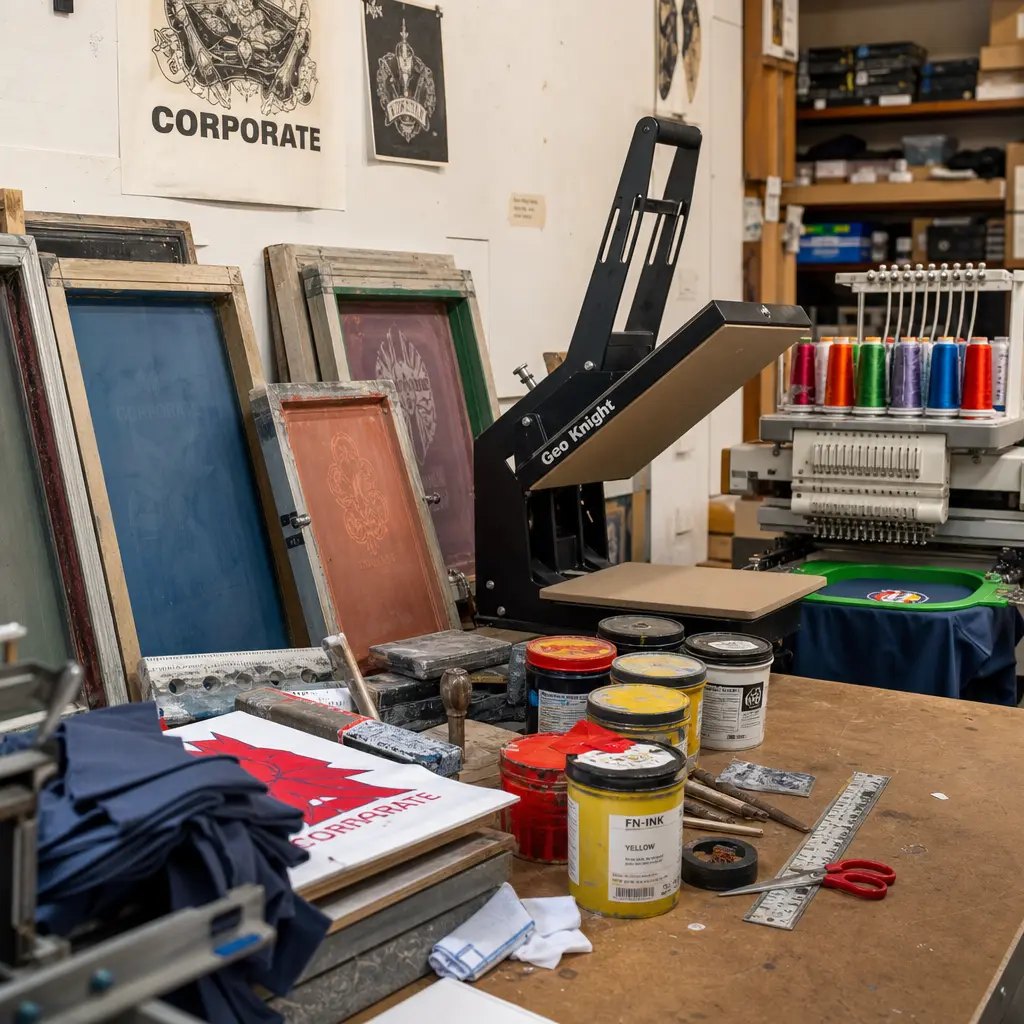
Screen printing is usually the most stable choice for cotton drawstring pouches when the logo is one to three solid colors. It gives a clean result on natural or dyed cotton and is cost-efficient once the setup is absorbed by the order quantity. The RFQ should include vector artwork, Pantone references, print dimensions, and exact placement. If the artwork has fine type, thin icon lines, or a QR-like element, the supplier should review the minimum line width before screens are made.
Heat transfer and digital printing can solve short-run and detailed artwork problems, but they bring different risks. Transfers may sit on top of cotton and feel less natural. Digital print can handle gradients but may look less saturated on unbleached fabric. Embroidery is possible for premium pouches, but it can distort lightweight fabric and is usually not ideal for very small logos with fine detail. A print strike-off is the cheapest way to catch a wrong logo size, poor color, or excessive ink handfeel before the full fabric is cut.
- Screen print: best for solid logos, stable colors, and medium to large quantities.
- Heat transfer: useful for detailed graphics and short runs, but handfeel must be approved.
- Digital print: suitable for gradients or many colors, with shade testing on actual cotton.
- Embroidery: works for heavier cotton, simple marks, and premium programs, but needs backing and puckering checks.
- Woven label: good for small brand marks when front print area must stay clean.
Use MOQ logic that matches startup demand
MOQ for cotton pouches is not only a factory preference. It is linked to fabric purchasing, dyeing minimums, print setup, cutting efficiency, sewing line changeover, and packing labor. A supplier may accept a low quantity for natural cotton with one screen print because materials are easy to source. The same supplier may need higher MOQ for dyed fabric, custom cord color, several logo versions, or multiple pouch sizes. Buyers should not compare MOQ alone without comparing what the MOQ includes.
For startup launches, a useful RFQ can ask for a tiered quote. For example, request pricing at 500, 1,000, 3,000, and 5,000 pieces, separated by size and print version. This shows where setup costs become less painful and whether the supplier is quoting a real production minimum or simply a sales number. If the buyer needs two pouch sizes, it may be possible to combine quantities when the same fabric, same print color, and same packing method are used. That should be confirmed in writing.
- Request unit price by quantity tier instead of one blended estimate.
- Separate MOQ by natural fabric, dyed fabric, organic cotton, custom cord, and each logo version.
- Ask whether sample cost can be refunded or credited after bulk order, if that matters to the budget.
- Do not force too many sizes into a tiny order; changeover loss can make the quote worse.
- Treat unusually low MOQ with caution if no setup, packing, or inspection details are shown.
Build the RFQ data sheet suppliers can price
A strong RFQ data sheet removes guessing. It should list the product name, finished size, fabric, GSM, color, cord material, logo method, logo size, logo placement, quantity by SKU, sample requirement, packing method, carton marks, shipping destination, and target delivery date. If a tech startup has multiple departments ordering pouches, the procurement team should standardize this sheet so marketing, hardware, retail, and events teams do not send conflicting versions to suppliers.
The quote should also show what is excluded. Common missing items are screen charges, Pantone matching, sample courier, individual polybags, barcode labels, insert cards, carton drop-test requirement, third-party inspection, and freight. Without these lines, a low quote can become expensive after sample approval. A buyer should request carton dimensions and gross weight early because cotton pouches are not usually expensive per piece, but freight and warehouse handling can affect landed cost.
- Include Incoterms requested, such as EXW, FOB, CIF, DDP, or courier door-to-door for samples.
- Provide destination country and delivery address type if freight estimates are needed.
- List every SKU separately when size, color, print, or packing is different.
- Ask for carton quantity, carton size, net weight, and gross weight by SKU.
- Require quote validity date because cotton and freight costs can change between sample approval and PO release.
Approve samples in stages, not by photo only
Sample approval should be staged when brand appearance matters. A material swatch confirms fabric weight, color, handfeel, and shrinkage direction. A print strike-off confirms ink color, logo sharpness, coverage, and adhesion. A pre-production sample confirms size, seam construction, drawcord function, print placement, and packing method. The sealed pre-production sample then becomes the physical reference for bulk production and final inspection.
Photo approval alone is risky for cotton. A photo cannot show exact GSM, drawcord friction, odor, print handfeel, or whether the pouch closes smoothly around the real item. It also cannot prove that the print will survive rubbing during packing or transport. If schedule is tight, the buyer can approve some non-critical details by high-resolution photo, but fabric and print should be physically reviewed when the pouch is part of retail or customer-facing packaging.
- Measure sample flat and record actual finished width and height.
- Insert the real product and close the pouch at least 20 times to feel tunnel friction.
- Rub the print with a dry white cloth and perform a simple tape pull on the cured ink.
- Compare logo color under neutral light, not only under warm office lighting.
- Keep one signed or labeled approved sample with the buyer and one with the factory.
Set QC thresholds before production starts
Quality control for cotton drawstring pouches should focus on defects that affect appearance, function, and packing accuracy. Common defects include uneven size, skewed logo placement, loose stitches, open seams, cord jamming, oil marks, fabric shade panels, print bleeding, and incorrect carton mix. For a small startup order, one carton of mixed sizes can create a serious fulfillment problem if the pouches are used in launch kits or retail bundles.
Acceptance criteria should be simple enough for factory inspectors and third-party inspectors to apply. For example, define size tolerance, logo placement tolerance, maximum acceptable thread length, print adhesion result, stain rejection rules, and carton count accuracy. If the pouch will touch electronics or accessories directly, the buyer may also request clean packing conditions and odor control. Cotton can absorb warehouse smells, so pouches should be packed dry and stored away from moisture.
- Size: measure a sample set from different cartons, not only the top layer.
- Logo: reject obvious skew, ghosting, pinholes in solid areas, and major Pantone deviation.
- Stitching: no open seams, skipped stitches, broken thread, or weak back-tack at cord openings.
- Function: cord must pull smoothly and close the pouch without tearing the tunnel.
- Cleanliness: reject visible oil stains, mildew odor, dirty fingerprints, and excessive lint.
Plan packing for warehouse receiving and kitting
Packing is often treated as an afterthought, but it affects labor cost at the buyer's warehouse. Bulk flat packing is cheapest and works when pouches will be used internally on a kitting line. Individual polybags keep each pouch clean but add material, packing labor, and waste concerns. Paper bands or kraft sleeves can help with presentation while reducing plastic, but they must be tested so they do not wrinkle the pouch or hide count errors.
For distributors and retail buyers, carton separation matters more than decoration. Each carton should contain one size and one logo version unless the PO requires a controlled assortment. Carton marks should show item name, SKU, quantity, carton number, gross weight, net weight, and country of origin if required. If pouches go to a 3PL, barcode labels and ASN requirements should be included in the RFQ, not negotiated after production is finished.
- Use bulk flat pack for low-cost kitting and internal warehouse use.
- Use individual polybag or paper sleeve when cleanliness or retail presentation is important.
- Avoid random mixed cartons unless the buyer provides an exact assortment packing table.
- Request carton dimensions before shipping so warehouse and freight teams can plan receiving.
- Confirm whether cartons need export strength, moisture protection, palletization, or special marks.
Protect the schedule from approval and material delays
A realistic schedule includes RFQ clarification, artwork checking, sample making, sample shipping, buyer review, fabric booking, cutting, printing, sewing, packing, final inspection, and export handover. For a simple natural cotton pouch with one-color screen print, the process can move quickly after artwork approval. For dyed fabric, custom cord, organic cotton documentation, multiple sizes, or retail packing, the schedule needs more buffer because material sourcing and approval loops are longer.
The most common schedule failure is approving artwork late while keeping the original ship date. Factories cannot print accurately until final logo size, color, and placement are locked. Another common failure is changing packing after production has started. If the buyer adds barcode labels, inner cartons, or individual bags after sewing is complete, the shipment can wait for new materials and repacking labor. The RFQ should request the supplier's critical path, not just a single lead time number.
- Separate sample lead time from bulk lead time in the quote.
- Lock artwork before screen making and treat any later change as a schedule reset risk.
- Confirm fabric availability before issuing a launch-date commitment to internal teams.
- Schedule inspection before balance payment and before freight pickup.
- Keep buffer for courier sample transit, public holidays, peak sewing periods, and customs documents.
Specification comparison for buyers
| Spec decision | Recommended option | When it fits | Buyer risk to check |
|---|---|---|---|
| Fabric weight for small accessory pouches | 120-140 GSM cotton sheeting | Light cables, stickers, onboarding cards, earbuds cases, and event giveaway inserts where low freight weight matters | Too thin fabric may show the packed item outline and may not hold sharp print edges on large solid logos |
| Fabric weight for retail or hardware kits | 180-220 GSM cotton canvas or twill | Chargers, small devices, premium welcome kits, reusable retail packaging, and bundles handled repeatedly by end users | Higher GSM increases unit cost, carton weight, and drawstring closing resistance on small pouch sizes |
| Logo method for simple startup branding | Screen print with Pantone reference and approved strike-off | One- to three-color logos, clean icons, QR-adjacent graphics, and medium-volume pouches needing stable cost | Fine type below 1.5 mm stroke width can fill in on coarse cotton unless artwork is adjusted |
| Logo method for detailed artwork | Heat transfer or digital print after testing handfeel | Gradient marks, small color details, campaign artwork, and short pilot runs where screen setup cost is inefficient | Transfers can feel plasticky and may crack if the wash or rub test is ignored before bulk approval |
| Drawcord construction | Cotton cord with reinforced top tunnel and back-tack at side seams | Brand programs that want a natural look and acceptable durability without adding metal or plastic parts | Cord diameter and tunnel width must match; tight tunnels slow packing and can cause puckering |
| MOQ structure for startup launches | Aggregate MOQ across two to three sizes if fabric and print colors are shared | Buyers needing launch inventory for multiple SKUs but not enough volume for each separate pouch size | Supplier may quote low MOQ but add hidden setup, fabric dyeing, or printing minimum charges later |
| Packing format | Flat packed in inner polybags or paper bands by size and logo version | Warehouse receiving, kitting lines, 3PL handling, and distributor orders that require quick count verification | Random mixed-size cartons create picking errors and slow inbound inspection |
| Approval sample path | Material swatch, print strike-off, pre-production sample, then sealed PP sample | Any order with brand color control, retail visibility, or product contact concerns | Skipping the PP sample can leave drawcord length, shrinkage, seam allowance, and logo placement unresolved |
Buyer checklist before sampling
- Define the packed item dimensions, weight, and whether the pouch must close fully without stressing the drawcord tunnel.
- State finished pouch size as width x height, not fabric cut size, and include acceptable tolerance such as +/-5 mm for small pouches or +/-10 mm for larger sizes.
- Specify cotton type and fabric weight: natural, bleached, dyed, organic, recycled blend, sheeting, twill, or canvas with target GSM.
- Attach vector artwork with Pantone colors, print size, print position from pouch edge, and minimum acceptable logo sharpness.
- Separate quantities by size, color, logo version, destination, and packing requirement so suppliers can quote setup and carton data correctly.
- Require sample stages: fabric swatch, print strike-off, pre-production sample, and sealed approved sample for mass production reference.
- List QC thresholds for seam strength, drawcord function, print adhesion, color variation, stains, loose threads, and carton count accuracy.
- Request quote breakdown for pouch unit cost, print setup, sample fee, tooling if any, inner packing, carton packing, export carton marks, and freight-ready carton dimensions.
- Confirm whether the supplier can support barcode labels, SKU separation, 3PL carton labeling, and mixed PO delivery schedules.
- Build schedule buffer for artwork approval, sample shipping, bulk fabric lead time, printing queue, final inspection, and vessel or courier pickup.
Factory quote questions to send
- What fabric construction and GSM are included in the quoted price, and can you provide a swatch before sampling?
- Is the quoted pouch size finished size after sewing, and what production tolerance will be used?
- Which print method is included, what is the maximum print area, and what artwork limits apply for fine lines or gradients?
- Are screen setup, Pantone matching, sample making, and courier charges included or listed separately?
- What MOQ applies by size, fabric color, print color, and shipment, and can quantities be combined if the same fabric is used?
- What is the standard seam allowance, drawcord diameter, top tunnel height, and reinforcement method at the side opening?
- What packing method is included: bulk flat pack, individual polybag, paper band, inner carton, barcode label, or SKU-separated carton?
- What are the estimated carton dimensions, gross weight, net weight, and pieces per carton for each pouch size?
- What sample lead time, bulk lead time, and production capacity apply after final artwork and deposit approval?
- Which inspection points will be checked before shipment, and can photos or a third-party inspection report be provided before balance payment?
Quality-control points to confirm
- Finished size within agreed tolerance after sewing and pressing, measured flat without stretching the pouch.
- Fabric GSM within agreed range using production fabric, not only the first submitted swatch.
- Logo position within agreed tolerance from top edge and side edge, with no skew visible when the pouch is laid flat.
- Print adhesion passes tape test and dry rub test, with no unacceptable cracking, peeling, bleeding, or color migration.
- Drawcord pulls smoothly through the tunnel and closes the pouch without seam tearing or top-edge distortion.
- Side seams and bottom seams are lockstitched evenly, with no open seams, skipped stitches, or loose thread clusters.
- Cotton fabric is free from oil marks, mildew odor, excessive slubs, needle holes, and obvious color shade panels.
- Cartons are packed by SKU, size, and logo version according to the packing list, with accurate carton marks and count.