Start the RFQ with the actual hotel retail use case
A custom cotton drawstring pouch for hotel retail is not one universal product. The same 12 x 15 cm pouch can be a soap bag, jewelry sleeve, minibar product cover, candle dust bag, spa amenity pouch, gift-with-purchase pack, or resort shop packaging. Each use case changes the correct fabric weight, closure style, seam finish, print method, packing format, and inspection level. A procurement-ready RFQ should begin with what the pouch must hold, how guests will see it, how often it will be handled, and whether the pouch is packaging, a reusable accessory, or part of the sellable product value.
This prevents a common sourcing problem: suppliers quoting different interpretations of the same short request. If a buyer writes only natural cotton drawstring pouch with hotel logo, one factory may quote 120 GSM cotton sheeting, single drawcord, overlocked seams, bulk packing, and one-color screen print. Another may quote 240 GSM canvas, double cord, cleaner enclosed seams, hangtags, and individual retail packing. Both quotations may be technically honest, but they are not comparable.
Hotel retail also has several stakeholders. Procurement may focus on landed cost, marketing may focus on brand presentation, operations may need easy receiving, and retail teams may need shelf-ready labeling. The RFQ should convert these priorities into measurable specifications. If the pouch supports a premium spa line, handfeel, opacity, print clarity, and drawstring function matter. If it is used for back-of-house amenity assembly, accurate count, low lint, stable dimensions, and efficient carton packing may matter more.
- Amenity pouch: prioritize consistent size, clean sewing, low lint, odor control, and bulk or inner-bundle packing for assembly teams.
- Resort shop pouch: prioritize stronger fabric, better closure feel, shelf-ready presentation, barcode or hangtag options, and repeatable branding.
- Spa or welcome gift pouch: allow extra internal space so bottles, jars, or brushes do not bulge, distort the logo, or prevent closure.
- Candle, glass, or ceramic pouch: choose heavier canvas, review seam stress, and test whether the base needs a gusset or boxed bottom.
- Multi-property program: define SKU naming, carton marks, destination allocation, and no-mixed-carton rules early to avoid distribution errors.
Define finished size, usable capacity, and tolerance before discussing price
Drawstring pouch sizing needs more detail than width by height. A pouch measured flat is not the same as usable capacity after the drawstring is pulled. The top channel consumes height, the cord closure gathers fabric, and thick contents reduce practical fill space. As a working rule, leave at least 25-40 mm above the packed item for small pouches and more for larger or bulky items, then confirm with a fit sample. A 15 x 20 cm flat pouch may not comfortably hold a product that is also 15 x 20 cm, especially if the item has depth.
The RFQ should define finished flat dimensions after sewing, pressing, and cord insertion. It should also define channel height, gusset depth if any, and the dimensions and weight of the item being packed. If the hotel product is already selected, include the product size, product weight, and a simple photo of the intended packing arrangement. This allows the supplier to flag if a wider pouch, taller pouch, heavier fabric, or different base construction is needed.
Finished size tolerance should be realistic for cotton fabric and manual sewing. For small pouches up to about 15 x 20 cm, many buyers use ±5 mm. For medium and larger pouches, ±10 mm is often more practical unless the project requires a tighter standard. If fabric is washed, dyed, or heavy, variation may increase. Very tight tolerances can raise rejection risk and cost, so they should be reserved for pouches that must fit a rigid insert or automated packing process.
- Small amenity pouch: common finished ranges include 8 x 10 cm, 10 x 12 cm, and 12 x 15 cm for soap, jewelry, or small cosmetics.
- Gift or spa pouch: common finished ranges include 15 x 20 cm, 20 x 25 cm, and 25 x 30 cm for jars, bottles, brushes, and compact kits.
- Shoe or laundry-style pouch: often 30 x 40 cm or larger and may require thicker cord, stronger seams, and larger carton planning.
- Flat pouch capacity: suitable for thin or flexible goods; not ideal for jars, candles, or boxed sets unless sized generously.
- RFQ line format: SKU, finished size, tolerance, product to fit, packed item weight, fabric GSM, closure style, and packing method.
Choose fabric construction and GSM based on opacity, handling, and brand position
Fabric weight is one of the largest drivers of cost, performance, and guest perception. Cotton sheeting around 120-140 GSM is economical and folds easily, but it may look thin under retail lighting, show the product inside, and provide less support for sharp printing. Around 140-180 GSM is a practical range for many hotel amenity and light retail pouches. It usually offers better opacity, print support, and seam stability while keeping freight and carton volume manageable.
For a more premium hotel retail program, 200-280 GSM cotton canvas gives a stronger handfeel and a more reusable impression. This range is often suitable for spa gift sets, candles, ceramic items, glass jars, slippers, or pouches that guests may keep. Higher GSM, however, changes total landed cost. It increases fabric consumption by weight, carton weight, carton volume, cutting effort, sewing time, and sometimes cord requirements. A heavier pouch may also need a wider channel so the drawstring can move smoothly.
The RFQ should identify both fabric construction and GSM. Cotton sheeting, muslin, canvas, twill, and brushed cotton can all be described as cotton, but they behave differently. Canvas is sturdier and more textured; sheeting is smoother and lighter; muslin may be looser and more rustic; twill has a diagonal structure and a different drape. Ask the supplier for construction, GSM tolerance, expected shrinkage, and whether the material is a regular stock fabric or a special purchase.
- 120-140 GSM: budget packaging for very light contents where opacity and reusable handfeel are less important.
- 140-180 GSM: balanced range for hotel amenities, small branded retail pouches, spa items, and light gift packaging.
- 200-280 GSM: stronger canvas feel for premium retail, heavier contents, guest reuse, and more durable presentation.
- Above 280 GSM: possible for specialty items, but closure bulk, sewing difficulty, freight, and carton weight require review.
- Quote requirement: ask for fabric construction, GSM, GSM tolerance, shade reference, shrinkage expectation, and stock or custom status.
Control color, shade range, shrinkage, and natural cotton expectations
Natural cotton is popular in hotel retail because it fits wellness, spa, beach resort, and low-waste positioning. But natural cotton is not one fixed shade. It can vary by yarn lot, greige fabric source, washing process, and finishing method. Some natural cotton contains seed specks, small slubs, neps, or irregular yarn marks. For some brands, this is desirable; for others, it looks dirty or inconsistent. The RFQ should state whether these natural features are acceptable, limited, or unacceptable.
Bleached cotton creates a cleaner white or off-white look and often gives stronger logo contrast, but it also shows stains, dirt, oil marks, and handling contamination more easily. Dyed cotton gives closer brand alignment when a hotel needs a specific color, but it introduces lab dip approval, dye lot control, colorfastness expectations, and usually higher MOQ. Washed cotton can feel softer and more relaxed, but may create more shade and size variation. Color choice affects lead time, minimums, inspection, and repeat-order consistency.
Shrinkage matters when the pouch may be reused or sold as a retail item. If it is only packaging for a soap or minibar item, post-wash shrinkage may not be critical. If it is sold as a travel organizer, laundry pouch, or spa accessory, buyers should request expected dimensional change after washing. Pre-washed or pre-shrunk fabric may reduce later shrinkage but can add cost and variation. At minimum, ask whether the quoted fabric is untreated, washed, pre-shrunk, or finished, and what shrinkage range the supplier expects.
- Natural cotton: approve a physical shade reference and define whether seed specks, slubs, and neps are part of the intended look.
- Bleached cotton: require cleaner handling, stain control, and protective packing because light fabric shows dirt quickly.
- Dyed cotton: request Pantone target, lab dip, bulk dye lot control, colorfastness expectation, and reorder shade tolerance.
- Washed cotton: approve a physical sample because softness, wrinkles, shade, and final dimensions can change after washing.
- Reusable pouch: ask for wash-test data or an agreed shrinkage target before selling the pouch as a functional accessory.
Match branding method to artwork detail, fabric texture, and order quantity
For most hotel logos, one-color or two-color screen printing is the most practical branding method. It works well on cotton when artwork has clean shapes, readable text, and moderate line thickness. Screen printing can be efficient for repeat orders because setup cost is spread across volume, and the print can be controlled through ink color, screen mesh, curing, and an approved strike-off. The RFQ should state how many print colors are included, whether screen charges are separate, and what print area is assumed.
Logo complexity should be reviewed before the print method is selected. Fine serif names, thin crest lines, small location text, and intricate icons can fill in or break up on textured cotton, especially on canvas. Gradients, metallic effects, and photographic artwork are not good candidates for standard screen print unless simplified. Heat transfer can help with multicolor or gradient artwork and lower-volume launches, but the print may feel less integrated with natural cotton. Embroidery can look premium on heavier canvas, but it can pucker lighter fabric and is usually not ideal for small detailed marks.
Woven labels and side labels are useful when a hotel wants understated branding or wants to avoid a large print on coarse fabric. Labels also help when multiple pouch sizes share the same brand element. For retail programs, the buyer should clarify whether branding is decorative, regulatory, or functional. Hangtags, barcode stickers, care labels, and country-of-origin labels may be needed depending on how the item is sold and where it is distributed.
- Screen print: best for solid hotel logos, clean one-color or two-color artwork, repeat programs, and stable unit economics.
- Heat transfer: useful for multicolor artwork, gradients, short runs, and designs that are hard to separate into screens.
- Embroidery: test on final fabric; better for heavier canvas and larger pouches, with attention to puckering and backside finish.
- Woven label: strong option for understated premium branding and lower risk of print defects on textured cotton.
- Approval rule: require a physical strike-off on final fabric and approve color, position, line clarity, handfeel, adhesion, and curing.
Specify drawstring construction, cord details, and seam finish
The drawstring system is where many quote differences hide. A single cotton cord exiting from one side is cheaper and can work for small flat pouches, but it may close unevenly and feel less finished. A double drawcord, with cords pulling from both sides, gives a better guest experience and a more balanced closure. This matters in hotel retail because guests may open and close the pouch several times before buying, using, or reusing it.
Cord diameter should match pouch size and fabric weight. A 2 mm cord may be acceptable for a small jewelry pouch. A medium canvas pouch often feels better with 4-6 mm cord, provided the top channel is wide enough. Cotton cord supports a natural look and is common for spa and resort positioning. Polyester cord can offer better color consistency and abrasion resistance, especially for bright custom colors. Flat tape can look clean but may slide differently through the channel. Twisted rope can feel premium but may be too bulky for small pouches.
Seam construction affects durability and perceived quality. Overlocked inside seams are common and efficient for volume production. French seams or folded enclosed seams look cleaner but add labor and slightly reduce internal space. Bottom gussets improve capacity but require sewing accuracy. Cord exit areas should be tidy and reinforced when the pouch is larger, heavier, or repeatedly handled. Loose threads, raw holes, and messy inside seams are brand issues when the pouch is displayed in a hotel shop or premium guest room.
- Single drawstring: economical for small pouches, light contents, and simple amenity packaging.
- Double drawstring: better for retail handling, guest convenience, reusable pouches, and gift sets.
- Cord specification: define material, diameter, color, length, exit direction, and whether ends are knotted, tipped, stitched, or heat sealed.
- Seam specification: define overlock, folded seam, French seam, gusset, boxed bottom, seam allowance, thread color, and stitch density standard.
- Reinforcement check: larger or heavier pouches need stable channel stitching, stronger cord exits, and seam stress review with the packed item.
Use MOQ logic to compare suppliers fairly
MOQ for custom cotton drawstring pouches is not only about sewing capacity. It depends on fabric availability, dyeing minimums, cutting efficiency, print setup, label production, cord sourcing, packing requirements, and how many SKUs the order contains. A natural cotton pouch in one size with a one-color screen print can usually support a lower MOQ than a custom-dyed pouch with four sizes, property-specific logos, woven labels, hangtags, and individual retail packing.
A low MOQ can be useful for a hotel retail launch, but buyers should ask what makes it possible. Sometimes the supplier can use stock fabric, existing cord colors, shared ink color, or simplified bulk packing. Other times, a low MOQ may rely on leftover fabric, mixed shade lots, or manual processing that is difficult to repeat. If the buyer expects replenishment, it is important to ask whether the same fabric, cord, and print color can be repeated later.
Procurement should separate trial order logic from repeat program logic. For a resort shop testing a new spa line, a higher unit cost at a lower MOQ may be acceptable because it reduces inventory risk. For a chain-wide amenity program, the RFQ should include estimated annual usage, forecast call-offs, and location allocation. A factory may be able to plan fabric purchase and production capacity better when the buyer provides a forecast, even if shipments are released in stages.
- Lowest MOQ route: natural stock cotton, one size, one logo, one print color, standard cord, and bulk packing.
- Moderate MOQ route: several sizes using the same fabric, same fabric color, same ink color, and shared packing style.
- Higher MOQ route: custom dyed fabric, custom cord color, multiple logo versions, woven labels, hangtags, or individual retail packing.
- Repeat program route: provide annual forecast, reorder frequency, call-off quantity, and expected replenishment timing.
- MOQ question to ask: which element sets the minimum—fabric, dyeing, printing, sewing, label, cord, packing, or scheduling?
Build staged samples into the RFQ and approval workflow
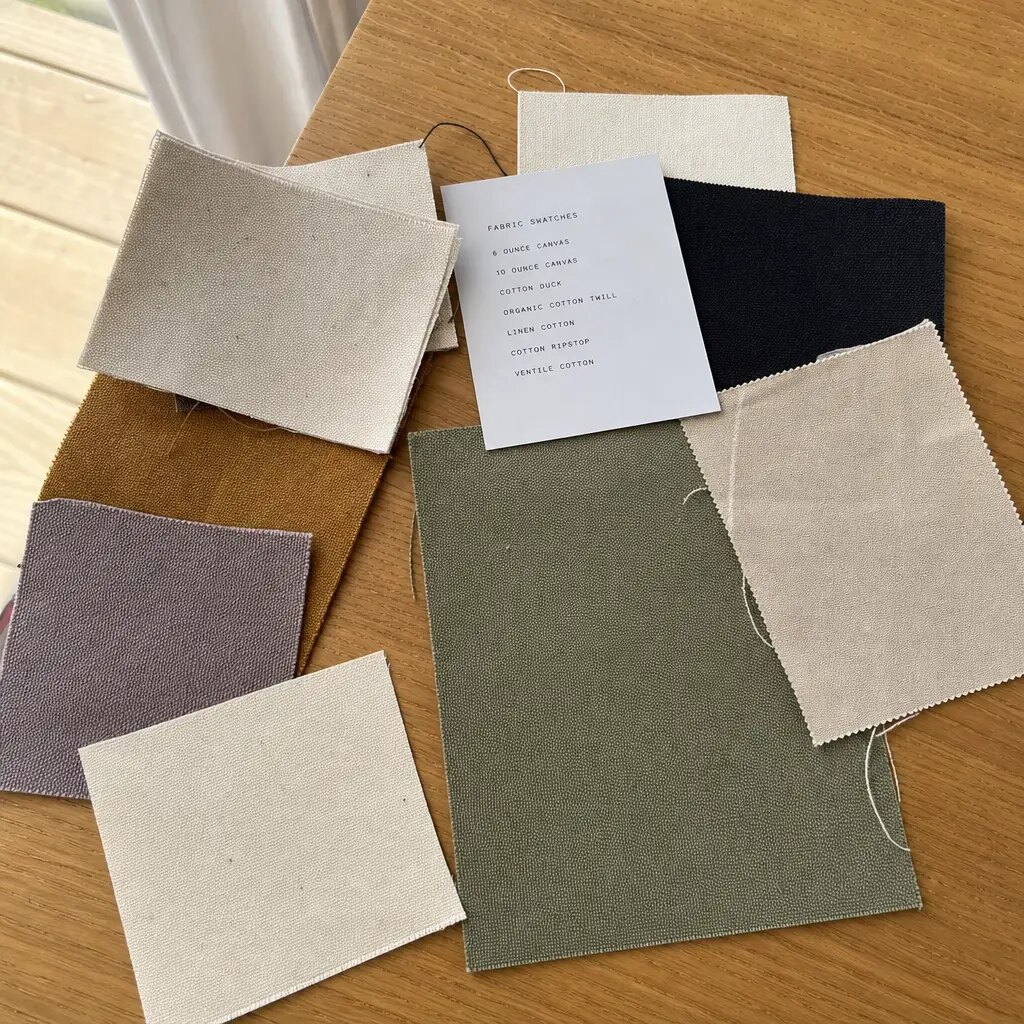
A structured sample process protects both buyer and factory. A fabric swatch confirms construction, GSM, handfeel, opacity, and natural shade. A lab dip is needed when fabric is custom dyed. A blank fit sample confirms dimensions, seam construction, cord function, and whether the intended product fits without bulging. A print strike-off confirms ink color, logo sharpness, print handfeel, curing, and adhesion on the actual fabric. A pre-production sample combines final fabric, final size, final sewing, final cord, final logo, and final packing.
The approved pre-production sample should become the working standard for production and inspection. It should have a date, version, reference number, and written approval. If the buyer approves only photos, the supplier and buyer may still interpret shade, handfeel, and seam quality differently. For higher-value programs, keep one approved sample with the buyer, one with the factory, and one with the inspection team.
Hotel retail programs often involve marketing, operations, procurement, and property teams. Without one approval owner, suppliers may receive conflicting feedback: one team changes logo position, another requests thicker cord, and another approves packing. The RFQ should define the sample approval workflow and state that bulk production starts only after written approval of the final pre-production sample. Any change after approval should be treated as a change order that may affect cost, lead time, and already purchased materials.
- Fabric swatch: approve construction, GSM, handfeel, opacity, slub level, and natural or bleached shade.
- Lab dip: approve custom dyed color before bulk fabric dyeing, with clear light source and tolerance expectations.
- Blank sample: approve finished size, product fit, seam construction, cord function, and closure appearance.
- Print strike-off: approve logo size, ink color, position, line sharpness, registration, coverage, curing, and adhesion.
- Golden sample control: retain approved samples by buyer, factory, and inspector so final QC uses the same physical standard.
Require quote data that supports landed-cost comparison
A unit price alone is not enough for a custom cotton drawstring pouches RFQ template guide for hotel retail procurement. Pouches are light individually, but carton size, packing density, inner packing, and SKU assortment can influence freight, receiving labor, and storage. The quote should show pieces per carton, carton dimensions, gross weight, net weight, carton count, and estimated CBM. If the launch deadline requires air freight, chargeable weight may become more important than a small unit-price difference.
Setup costs should be visible. Screen charges, sample fees, lab dips, custom dyeing, woven labels, hangtags, barcode stickers, individual bags, paper bands, special carton marks, and palletization can change true order cost. A supplier that includes more items in the unit price may look expensive at first but may be more transparent. A supplier with a low unit price may add charges later once artwork and packing instructions are finalized.
Incoterm and delivery scope must be clear. An EXW price cannot be compared directly with FOB, CIF, DAP, or delivered warehouse pricing. If the hotel buyer uses a forwarder, the quote should still include export carton data and readiness date. If the supplier arranges freight, the buyer should ask whether duties, taxes, customs clearance, destination handling, or final delivery are included. For launch programs, the quote should show sample time, production time after approval, inspection time, packing time, and shipment handover date.
- Commercial fields: unit price, currency, Incoterm, quote validity, MOQ, payment terms, setup charges, and change-order rules.
- Specification fields: fabric type, GSM, size tolerance, print method, number of colors, cord construction, seam finish, and packing method.
- Logistics fields: pieces per carton, carton dimensions, gross weight, net weight, carton count, estimated CBM, and air chargeable weight estimate.
- Timeline fields: material sourcing time, sample time, approval deadline, production time, inspection window, and export packing date.
- Comparison rule: normalize all quotes to the same specification and delivery point before selecting the lowest apparent price.
Set packing rules for hotel receiving and retail display
Packing is often decided too late, but it affects cost, cleanliness, sustainability, and warehouse accuracy. One pouch order may support central warehouse receiving, distribution to multiple properties, back-of-house amenity assembly, and resort shop display. Bulk packing is efficient when pouches are used in kit assembly. Inner bundles or paper bands help counting and reduce loose handling without fully bagging every pouch. Individual bags may protect white or light-colored cotton and keep retail pieces clean, but they add material, labor, carton volume, and disposal concerns.
Retail-ready packing requires more control. A pouch sold in a hotel shop may need a hangtag, barcode sticker, care label, country-of-origin marking, price label area, or paper band. If the pouch is part of a gift set, the factory may need to keep it clean enough for direct presentation. If the pouch is only packaging for another product, decide whether the pouch itself needs a barcode or whether the finished kit receives the retail barcode.
Carton marks should match the buyer's receiving process. At minimum, carton labels should show item name, SKU, size, color, quantity, purchase order number, carton number, and destination if the supplier packs by property. Avoid mixed cartons unless the warehouse has approved the assortment. Mixed cartons can save space but create counting errors when hotel locations receive partial allocations. For chain-wide programs, require a packing list by SKU, carton number, and quantity.
- Bulk pack: lowest handling cost and suitable for internal hotel use, amenity assembly, or further kitting.
- Inner bundle: useful for counting, cleanliness, and warehouse control without the cost and waste of individual bags.
- Individual bag: better for retail cleanliness and light fabric protection, but adds material, labor, carton volume, and disposal concerns.
- Retail-ready pack: define hangtag, barcode, care label, country-of-origin marking, price sticker area, and display orientation.
- Carton control: require approved carton marks, no mixed cartons unless agreed, carton sequence, PO number, and packing list format.
Specification comparison for buyers
| Spec decision | Recommended option | When it fits | Buyer risk to check |
|---|---|---|---|
| Fabric weight | 140-180 GSM cotton sheeting or light canvas for most small hotel retail pouches; 200-280 GSM canvas for premium gift packaging | 140-180 GSM suits soap, amenity, jewelry, tea, minibar, spa, and light resort shop items; heavier canvas suits glass jars, candles, ceramics, slippers, or reusable kits | Very light fabric can be translucent, wrinkle heavily, distort print, or feel disposable; heavy fabric raises unit weight, CBM, sewing time, and may require a wider top channel and thicker cord |
| Fabric construction | Specify cotton sheeting, muslin, canvas, twill, or brushed cotton rather than only cotton | Sheeting works for cost-efficient amenity packing; canvas is better when the pouch is part of the retail value; twill or brushed fabric may suit premium tactile programs | Suppliers may quote different cotton fabrics under the same description; require construction, GSM tolerance, shrinkage expectation, and approved handfeel sample |
| Finished size | Quote finished flat size after sewing and cord insertion, with usable height and tolerance | Works when the pouch must fit a defined soap, bottle, jar, jewelry box, spa kit, candle, or welcome gift set | Flat size is not usable capacity; top channel, seam allowance, fabric thickness, and gathered closure reduce internal space |
| Size tolerance | Use ±5 mm for small pouches up to about 15 x 20 cm; ±10 mm for medium/large pouches unless a tighter tolerance is justified | Practical for hand-fed sewing and cotton fabric variation; tighter limits may be possible after sample testing | If tolerance and measurement method are not written, buyers and factories may disagree over shrinkage, pressing, seam position, or channel height |
| Drawstring material | Cotton cord for natural positioning; polyester cord when color consistency, abrasion resistance, or bright shade matching matters | Cotton cord fits wellness, spa, resort, and eco-positioned retail; polyester cord fits dyed cords, frequent handling, and higher color-control needs | Cord below 2.5-3 mm can feel weak on medium pouches; bulky cord can jam in a narrow channel; raw cord ends may fray |
| Closure construction | Single drawcord for small flat pouches; double drawcord for retail handling, gift sets, and reusable pouches | Single cord controls cost; double cord gives a more balanced close, easier opening, and stronger perceived quality | Single-cord pouches may close unevenly; double-cord pouches need correct channel width, exit holes, bar-tack or reinforced stitching where required |
| Print method | Screen print for solid logos; heat transfer for multicolor small batches; woven label for understated branding; embroidery only after fabric test | Screen print is economical after setup; transfer handles gradients; labels reduce print risk on coarse canvas; embroidery suits heavier fabric and larger logos | Fine serif logos, small crest lines, and tiny text can fill in on cotton; approve a strike-off on final bulk fabric, not only a digital proof |
| MOQ logic | Base MOQ on fabric availability, dye lot, size count, logo versions, cord color, labels, packing format, and production schedule | Natural stock cotton with one-color print usually supports lower MOQ; custom dyeing, custom cords, multiple property logos, hangtags, and individual retail packs raise MOQ | A low MOQ quote may use available fabric, leftover lots, simplified packing, or manual processing; ask what specification element controls the minimum |
| Packing format | Bulk pack for kit assembly; inner bundles for counting; individual bags or retail-ready hangtags when cleanliness and shelf display matter | Bulk pack suits hotel warehouse distribution; bundles help receiving; retail-ready packing suits resort shops and gift counters | Mixed cartons and unclear SKU marks cause receiving errors across properties; require carton labels, packing list format, and assortment rules |
Buyer checklist before sampling
- Define the pouch use case: amenity packaging, retail shelf product, welcome gift, spa kit, jewelry pouch, minibar pack, candle sleeve, slipper bag, laundry item, or resort shop gift bag.
- List each SKU separately with finished flat width x height, target tolerance, channel height, expected packed item dimensions, and packed item weight.
- State the usable internal space required below the drawstring channel so the pouch can close after the product is inserted.
- Specify fabric construction and GSM, such as 160 GSM cotton sheeting, 180 GSM light canvas, or 240 GSM cotton canvas, instead of writing only cotton pouch.
- Define acceptable GSM tolerance, commonly ±5% or the supplier's stated mill tolerance, and ask how GSM is verified during production.
- State whether fabric should be natural, bleached, washed, stock dyed, or custom Pantone-dyed, and define acceptable shade variation for first order and reorders.
- Confirm whether cotton seed specks, slubs, minor neps, natural shade irregularity, and small yarn contamination are acceptable or should be minimized.
- Provide logo artwork in vector format and note print size, print position, print color reference, minimum line thickness, and whether the logo must face a specific seam or cord exit direction.
- Choose the branding method: screen print, heat transfer, embroidery, woven label, side label, hangtag, paper band, barcode sticker, care label, or no visible branding.
- Define drawstring construction: single cord, double cord, cotton cord, polyester cord, flat tape, twisted rope, cord diameter, cord color, cord length, exit side, and end finish.
Factory quote questions to send
- What exact fabric construction and GSM are included in the price: cotton sheeting, muslin, canvas, twill, brushed cotton, or another cotton fabric?
- What GSM tolerance applies to the bulk fabric, and can GSM be checked from production fabric rather than only from a catalog swatch?
- Is the quoted fabric greige, natural, bleached, washed, stock dyed, or custom dyed, and is the same fabric available for repeat orders?
- For natural cotton, what level of seed specks, slubs, neps, and shade variation should we expect in bulk production?
- What is the MOQ by size, fabric color, print design, print color, cord color, label, and packing format?
- What finished size tolerance is included, and is measurement taken flat after sewing, pressing, and drawstring insertion?
- What is the top channel height and usable internal height below the channel for each pouch size?
- What print method is quoted, how many colors or screens are included, and what maximum logo detail do you recommend for this fabric texture?
- Can you provide a physical print strike-off on the final fabric before bulk production, and what is the cost and timing?
- What drawstring material, diameter, color, construction, exit direction, cord length, and end finish are included in the quote?
Quality-control points to confirm
- Finished dimensions are measured flat after sewing, pressing, and drawstring insertion, with agreed tolerance by size before bulk cutting.
- Measurement points are defined: outside width seam-to-seam, outside height top edge to bottom seam, channel height, logo position, gusset depth if applicable, and cord length.
- Fabric GSM is verified from production material or cutting-room fabric, not only from the quotation or a supplier catalog page.
- Fabric shade is checked against the approved reference sample under consistent lighting, especially for natural cotton, bleached cotton, dyed cotton, and repeat orders.
- Fabric handfeel, opacity, slub level, seed specks, neps, and visible yarn contamination are compared with the approved swatch or golden sample.
- Logo position is measured from the top edge, side seam, and center line using the approved pre-production sample as the reference standard.
- Print adhesion, ink coverage, edge sharpness, registration, color match, handfeel, odor, and ink cracking are checked on the actual cotton fabric after drying or curing.
- Cord material, diameter, color, length, end finish, and pulling function match the approved sample and do not distort the top channel during normal closure.
- Cord exits are clean, reinforced where required, and free from tearing, skipped stitches, raw holes, loose threads, or excessive fraying.
- Seams show no skipped stitches, broken thread, open seams, seam slippage, puckering beyond the approved standard, or loose ends longer than the defined limit.