Why coffee roasters need a tighter RFQ than a generic pouch request
Custom cotton drawstring pouches look simple, but coffee buyers run into the same problems over and over: bags that are too thin, prints that blur on textured fabric, cords that feel cheap, and pack counts that do not match the sales plan. If the pouch is used as a coffee sample sleeve, retail add-on, or subscription insert, the bag has to balance appearance, protection, and unit cost. A loose RFQ usually produces loose quotes, and the differences only show up when the first production lot arrives.
The right RFQ does not need to be long. It needs to remove ambiguity on fabric weight, finished size, print method, and packing. Once those four items are fixed, supplier quotes become easier to compare because the factory is no longer filling gaps with assumptions. For coffee roasters, that usually means choosing a natural cotton bag that feels honest and clean, while still holding a branded impression strong enough for shelf or mail-order use.
- State the final use: sample bag, merch pouch, retail insert, or bulk gift packaging.
- Define whether the pouch must look premium, survive shipping, or both.
- Avoid vague terms like “nice quality”; specify GSM, size, and print standard instead.
Start with the use case, not the decoration
A pouch for 250g coffee samples is not the same pouch as one used for branded gifts or retail accessories. If the bag only carries lightweight items, a 140 GSM cotton body with a simple drawcord is usually enough. If it will hold metal scoops, printed cards, or heavier sample kits, consider 160 GSM or a reinforced seam spec. The wrong starting point here drives most quote mismatches, because factories will price against their own assumption of use.
Think through the opening size and internal clearance. Coffee roasters often need a pouch wide enough for a small tin, valve bag, or sample jar, but not so oversized that the product rattles around inside. For presentation-sensitive programs, a slightly taller pouch with a controlled hem and neat closure often looks better than a wider bag with a loose mouth. The bag should support the product, not compete with it.
- For sample kits, prioritize opening width and closure reliability.
- For retail add-ons, prioritize hand-feel, print finish, and fold consistency.
- For mail packs, prioritize seam strength and carton efficiency.
Fabric weight, weave, and finishing choices that affect quotes
For most cotton drawstring pouches in this category, the practical buying range is 120 GSM to 160 GSM. Below 120 GSM, the bag can feel too thin for retail use and may show seam distortion. At 140 GSM, you get a balanced cost point for many coffee programs. At 160 GSM, the bag feels stronger and less see-through, but the unit price rises and the bag may need more careful stitching to keep the channel clean.
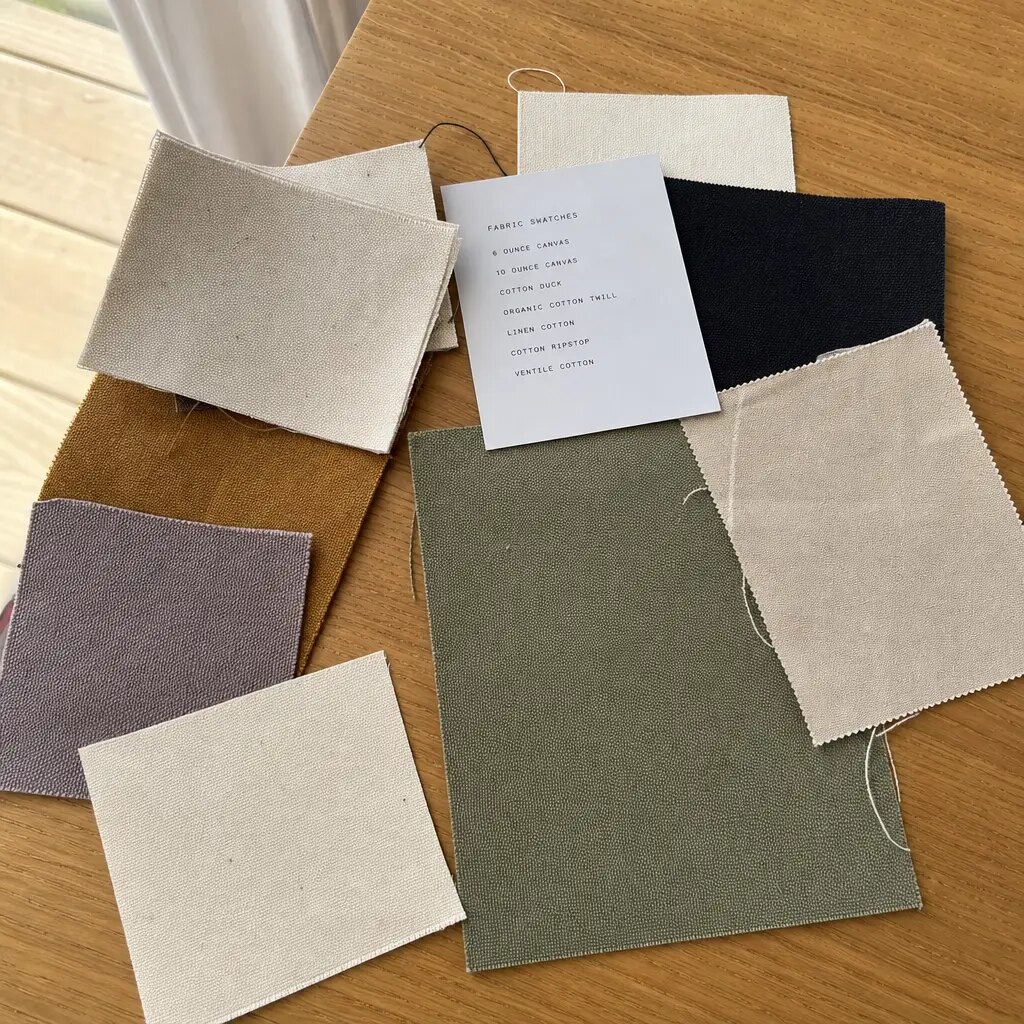
Ask whether the fabric is natural, bleached, or dyed before you compare quotes. Natural cotton usually keeps costs and lead times simpler, but its shade varies batch to batch. Bleached fabric gives a cleaner white look for dark logos, yet it can show dirt and handling marks faster. Dyed cotton can align with brand colors, but only if the MOQ and shade tolerance are realistic. A weak RFQ says “cotton pouch.” A strong RFQ says “140 GSM natural cotton, unbleached, single-layer, hemmed top, no visible slubs above normal cotton range.”
- Specify GSM, not just “thick” or “premium.”
- State whether you accept natural cotton variation or need tighter shade control.
- If the pouch is printed, confirm whether fabric shrinkage has been pre-tested.
Print method: choose the finish the fabric can actually carry
The most common buying mistake is selecting a print style that looks good on a mockup but performs poorly on cotton weave. For simple coffee branding, one-color screen print is often the most cost-effective option and gives solid coverage if the logo has clean shapes. If the artwork includes fine lines or a small QR code, a woven label or stitched side label may be more reliable than printing directly on the pouch. Heat transfer can work for short runs, but it often feels less integrated on natural cotton and may age less gracefully.
The print method should match both the design and the reorder plan. Screen printing usually has setup cost but stable repeatability. A woven label can improve brand presentation, especially when the pouch color changes between orders. Embroidery is possible on some pouch styles, but it adds cost, can pull the fabric, and is not always efficient for a small bag. For coffee roasters, a clean logo with strong contrast usually beats decorative complexity.
- One-color screen print is usually the easiest quote to compare.
- Woven labels help when logo detail is too fine for cotton print.
- Do not approve artwork without confirming print placement on the actual pouch size.
How to write MOQ logic that suppliers can price properly
MOQ is not just a factory preference; it reflects fabric sourcing, print setup, cut loss, and packing labor. If you request one pouch size in one color with one print location, MOQ can be relatively low. Add three sizes, two fabric colors, and a woven label, and the minimum will usually rise because the factory now has more changeovers and more leftover material risk. Buyers who want a sharp quote should separate the base pouch from the decoration options.
A practical RFQ should ask for layered pricing. For example: base bag price at 5,000 pieces, same bag with one-color screen print, same bag with woven label, and same bag with retail polybag packing. That structure helps procurement compare routes instead of debating one blended number. It also shows whether the supplier is pricing the actual work or padding the quote for unknowns.
- Request separate pricing for fabric, print, label, and packing.
- Ask for price breaks at 3,000, 5,000, and 10,000 pieces if the supplier can support them.
- Do not force too many variants into the first production run unless the market already proved demand.
Compare supplier routes before you compare unit prices
Not all supplier options solve the same problem. A direct factory with an in-house drawstring pouch line usually gives the best control over fabric selection, stitching, and QC ownership. A trading company may respond faster and offer broader sourcing flexibility, but the buyer needs stronger evidence about the actual mill or sewing line behind the quote. A local printer can be useful for very short runs, yet the bag itself may not be optimized for export packing or repeat volume.
The sourcing route should match the buying objective. If your team needs a first-time pilot, a local short-run source may be fine. If the goal is a repeatable national program with multiple shipments, direct factory sourcing is usually cleaner because the production process, carton loading, and inspection standards can be locked earlier. What matters is not just who answers the email, but who controls the fabric, sewing, and final packing.
- Request factory photos, production line evidence, and a sample from the same material source.
- Ask who owns final QC sign-off before shipment.
- Verify whether the quoted lead time is from artwork approval, deposit, or sample approval.
Supplier comparison table for coffee roaster pouch sourcing
Use the table below to compare sourcing routes before you send the RFQ. The goal is not to pick the cheapest line item, but to match the sourcing route to the real risk in your program. A slightly higher quote can be cheaper overall if it removes rework, delayed launches, or poor packaging fit.
When quotes look close, the decisive differences are often in the details: whether the supplier understands cotton shrinkage, whether the print setup is suited to small artwork, whether they can pack in consistent inner counts, and whether their lead time includes sample approval. That is where a structured comparison saves money.
- Write decisions in measurable language, not only descriptive wording.
- Ask for sample photos plus one physical approval sample for important orders.
- Keep quotation, sample approval, and inspection notes tied to the same spec version.
Sample approval is where most pouch orders are won or lost
A pre-production sample should use the real fabric, real cord, real print method, and real label or side tag. A digital rendering is only a layout tool; it cannot show how the cotton behaves after sewing, how the print sits on the weave, or how the drawstring pulls through the channel. For coffee buyers, sample approval should include the product in the hand, not just on screen.
The sample should be judged against a short acceptance list. Is the size usable with your coffee packs? Does the pouch stand up visually when filled? Does the logo contrast well enough at normal shelf distance? Does the cord pull smoothly without bunching the top edge? If any of these fail, the factory should correct them before bulk production begins.
- Approve fabric tone under daylight-like lighting, not only under office light.
- Measure sample size after sewing, not just the cutting pattern.
- Test at least a small fill weight to verify closure feel and seam behavior.
Packing, carton loading, and label details that affect landed cost
Packing is often treated as an afterthought, but it changes both freight cost and receiving accuracy. If pouches are bulk packed in one carton, your warehouse will move faster, but the bags may arrive with more fold marks. If they are packed in sets or retail-ready inner bags, the presentation improves, yet labor and carton volume increase. The right choice depends on whether the pouch is being resold, inserted, or repacked by your team.
For importers and distributors, carton dimensions matter because cotton pouches compress differently from structured bags. Ask for carton count, gross weight, and estimated carton size before production, not after. A quote that ignores packing format can look cheaper on paper while costing more in freight and warehouse handling. This is especially important if the pouch is bundled with coffee tins, cards, or other promotional items.
- Set inner pack count clearly: 25, 50, or 100 pieces per polybag or bundle.
- Request shipping marks and carton labeling format in the quote.
- If you need retail-ready presentation, specify folding standard and bag orientation.
Lead time risk: where schedules usually slip
For this product, lead time is usually lost in three places: artwork approval, fabric confirmation, and packing instructions. If the supplier has to wait for a final logo file, confirm whether the print plate or screen can be made immediately after approval. If the pouch depends on a specific fabric shade, make sure the fabric is already sourced or the supplier has stated the purchase plan. Delays rarely come from the sewing step alone; they come from unresolved input decisions.
A practical schedule is built in stages: sample confirmation, material reservation, mass production, inspection, then shipment booking. If your launch date is fixed, build a small buffer for print rework and carton labeling. That buffer matters even more when the pouches are part of a coffee campaign tied to seasonal promotions or trade show dates.
- Separate sample lead time from mass production lead time.
- Confirm whether the quoted schedule starts after deposit or after sample sign-off.
- Ask for a realistic cutoff date for final artwork changes.
Specification comparison for buyers
| Spec decision | Recommended option | When it fits | Buyer risk to check |
|---|---|---|---|
| Fabric weight | 140–160 GSM cotton | Best for coffee samples, retail giveaways, and pouch use that needs a better hand-feel than thin promo bags | Too light can show seam distortion; too heavy raises cost and slows drawstring closure |
| Bag construction | Single-layer cotton with hemmed top and channel drawstring | Fits low-to-mid value packaging where weight control matters | Raw-edge channels can fray; insist on clean top stitching and a defined cord tunnel |
| Print method | 1-color screen print or woven label | Works for simple logos, strong contrast, and stable repeat orders | Fine text may fill in on textured cotton; artwork proof must match the chosen fabric color |
| Cord type | Cotton cord or polyester cord with matching color | Cotton-forward branding, natural look, or food-safe presentation style | Cord slippage and inconsistent knotting if cord diameter is not matched to channel width |
| MOQ route | Stock fabric + standard size + 1-color print | Good for first orders, pilot launches, and faster quote cycles | Lowest MOQ may hide higher unit cost or limited color options |
| Sample approval | Pre-production sample with actual fabric, cord, print, and label | Required when brand color, logo placement, or closure feel matters | Digital mockups alone miss density, shrinkage, and print registration issues |
| Packing method | Bulk packed with size label and carton mark, or polybagged in sets | Bulk pack for internal repacking; retail-ready sets for DTC or gifting programs | Mixed sizes or wrong set counts are common if pack-out instructions are vague |
| Supplier route | Direct factory with drawstring pouch line | Best when you need control over spec, print, and carton loading | Trading-only quotes can hide subcontracting and weak QC ownership |
| Lead time strategy | Fabric reserved after sample sign-off, then production slot booked | Useful for seasonal coffee launches and private-label replenishment | Lead time slips when artwork approval, cord sourcing, or carton printing starts late |
Buyer checklist before sampling
- Confirm pouch use case: loose coffee sample, retail gift, subscription insert, or merch pack.
- Define finished size in centimeters and acceptable tolerance for width and height.
- Choose fabric weight range and whether the fabric must be bleached, natural, or dyed.
- Specify print method, number of colors, print placement, and artwork format.
- State cord material, cord color, closure style, and whether knots must be secured.
- Set MOQ, target unit price range, and whether you accept mixed sizes or only one size.
- State packing method, carton quantity, inner pack count, and shipping marks.
- Request pre-production sample, inline QC photos, and final inspection photos before shipment.
Factory quote questions to send
- What exact fabric weight will you use, and can you quote the same bag in 120 GSM, 140 GSM, and 160 GSM for comparison?
- Is the quote based on your own fabric, stock fabric, or outsourced fabric, and what changes if we switch to dyed cotton?
- Which print method is included in the price, how many colors are allowed, and what are the plate or setup charges?
- What is the MOQ per size, per color, and per print version, and does the MOQ change if we add a woven label or hangtag?
- What is the tolerable size variance after sewing, and what do you do if a batch falls outside the agreed range?
- How are the pouches packed per inner pack and per carton, and can you provide carton dimensions and gross weight before production?
- What is the sample timeline, production timeline, and the earliest date you can start after artwork approval and deposit?
- Which QC photos or inspection reports can you provide before shipment, and who is responsible for rework if defects are found?
Quality-control points to confirm
- Finished size tolerance should stay within an agreed range, typically tight enough for retail presentation but wide enough for normal cotton sewing variance.
- Top hem and cord tunnel must be even, with no skipped stitches, puckering, or exposed raw edges at stress points.
- Print registration should match approved artwork placement, with no obvious smearing, pinholes, or color bleeding on the cotton weave.
- Cord pull should be smooth across the full opening range, with knots secured so they do not slip into the channel.
- Seam strength at the side and bottom corners must hold normal fill weight without seam opening under light pull testing.
- Color consistency should be assessed against the approved sample under daylight-like lighting, especially for natural cotton and dyed shades.
- Packing count must match carton labels, and any polybag or inner pack count should be verified against the packing list.
- Sample approval should include fabric hand-feel, print look, cord length, and closure function before mass production release.