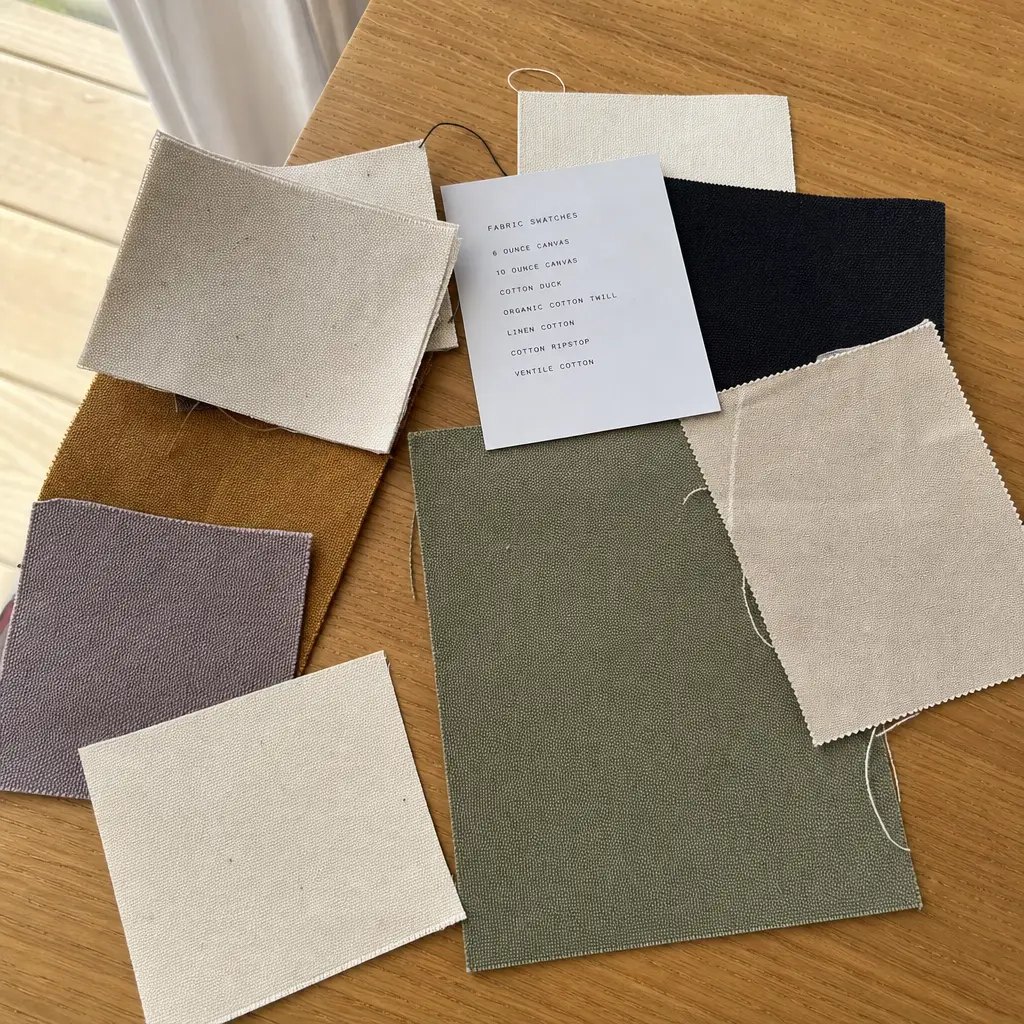
Why Trade Show Pouches Need Tighter Control
Custom cotton drawstring pouches for trade show exhibitors are usually low unit value, but the order risk is high because the delivery date is fixed. If the pouches arrive after booth setup, the buyer cannot recover value through a later shipment. If the logo is misprinted, the defect is visible to every visitor who picks up the giveaway.
The pouch also works as packaging, not just a bag. It may hold product samples, USB drives, cosmetic minis, snack packs, printed cards, chargers, or VIP gifts. That means the pouch must fit the contents, close properly, present the logo cleanly, and survive fast handling by booth staff. A quality inspection checklist should reflect that real use, not only general fabric and sewing points.
- Start inspection criteria from the contents and booth workflow.
- Treat logo visibility and drawstring function as critical quality points.
- Use the event date to set approval deadlines and shipment buffers.
- Keep a sealed approved sample for production and inspection comparison.
Set the Product Brief Before Requesting Prices
Many bad quotes start with a thin RFQ: one size, one logo file, and a target price. Factories then quote different cotton weights, different cord types, and different packing methods, so the prices cannot be compared fairly. A good RFQ for cotton drawstring pouches should tell the supplier what the pouch must carry, how it will be handed out, and what level of appearance the brand expects.
Use finished size, not only approximate size. A 10 x 15 cm pouch can mean a finished external size, an internal usable size, or a fabric cut size before sewing. For a pouch holding a rigid item, the difference matters. Provide the product dimensions and allow space for seam allowance, drawstring closure, and easy insertion during booth packing.
- Include finished width and height, measured flat.
- State whether the item must fit fully below the drawstring channel.
- Provide content weight so the factory can recommend fabric and seam strength.
- Confirm whether the pouch must stand retail presentation or only giveaway handling.
- Attach vector artwork and specify print size in millimeters.
Choose Fabric GSM by Use, Not by Habit
Cotton pouch fabric is often described in ounces, GSM, or both. As a practical guide, 4 oz cotton is common for low-cost lightweight giveaways, roughly around 120-140 GSM depending on the mill. A 5 oz to 6 oz cotton, about 150-200 GSM, gives a more balanced trade show feel and reduces transparency. An 8 oz cotton can look more substantial but increases material cost, carton weight, and storage volume.
Natural cotton has small flecks and shade variation. That can be acceptable, even desirable, for sustainability-positioned campaigns, but it needs to be approved before production. Bleached cotton gives a cleaner background for bright prints. Dyed cotton needs colorfastness attention, especially if the pouch will hold light-colored products or printed literature.
- For paper inserts or flat samples: 4 oz to 5 oz may be enough.
- For cosmetics, chargers, or mixed booth kits: 5 oz to 6 oz is a safer default.
- For premium reusable gifts: 8 oz cotton or canvas-style construction may be justified.
- For white or light logos on dark pouches: confirm opacity and rub resistance.
- For natural cotton: approve shade range and visible cotton seed flecks.
Construction Details That Affect Failure Rate
The top channel and side seams carry most of the stress. During event packing, staff often pull cords quickly and repeatedly. A narrow top channel can bind the cord; a weak side seam can open at the cord exit point. For exhibitor orders, a double-fold top channel and locked side seams are usually worth specifying because the extra sewing cost is small compared with the cost of visible failures at the booth.
Cord choice should match both appearance and handling. Cotton cord gives a consistent natural look, especially with undyed cotton fabric. Polyester cord is smoother, stronger, and easier to color match, but it may look less natural. Cord diameter also matters. If the cord is too thick, the pouch is slow to close. If it is too thin, it feels weak and can cut into the fabric channel.
- Require no open seam at the drawstring exit point.
- Define cord diameter and material on the spec sheet.
- Approve single drawstring or dual drawstring closure based on user experience.
- Check that cord ends are knotted or finished according to the sample.
- Avoid metal cord tips for low-cost giveaways unless needed for premium presentation.
Logo Printing: Method, Placement, and Cure
Most trade show cotton pouches use screen printing because it is cost-effective for solid logos and simple artwork. It gives good coverage on cotton when the screen mesh, ink, and curing are controlled. Heat transfer can work for gradients, small details, and short runs, but buyers should review the edge finish and hand-feel. Embroidery is less common on small pouches because it can pucker lightweight fabric and reduce usable space.
Logo placement needs more discipline than many RFQs show. A logo placed too high will wrinkle when the drawstring closes. A logo placed too close to side seams can distort after sewing. For many pouch sizes, keeping at least 15-20 mm clearance from seams and the channel helps protect the print area. The approved sample should record print width, height, distance from top edge, and center alignment.
- Use Pantone references, but judge final color on the actual cotton base.
- Define acceptable print position tolerance, such as plus or minus 3 mm for small pouches.
- Run a dry rub check after curing, especially on dark ink or thick coverage.
- Avoid printing over heavy fabric creases or near the drawstring channel.
- Request a printed pre-production sample for any new logo, not only a blank sewing sample.
MOQ and Cost Drivers Behind the Quote
MOQ is not only about the number of pouches. It is affected by fabric purchase quantity, dyeing if needed, screen setup, cutting efficiency, packing labor, and how many versions the order is split into. One size with one logo is simple. One size with eight sponsor logos may require separate screens, separate counting, separate carton marks, and more inspection time.
A low unit price may exclude setup charges, sample cost, individual packing, carton labels, or inland freight to the forwarder. For a trade show order, compare total delivered project cost and schedule risk, not only unit price. If the order is small but urgent, a factory using stock natural cotton fabric may be more practical than a supplier promising a lower price with custom-dyed fabric and a longer lead time.
- Material cost rises with GSM, dyed fabric, organic cotton, and small fabric lots.
- Print cost rises with color count, print size, number of positions, and artwork versions.
- Labor cost rises with double drawstrings, reinforced seams, individual packing, and special sorting.
- Freight cost rises with heavy fabric, bulky packing, and late air shipment.
- Administrative risk rises when many logo versions share one deadline.
Sample Approval Must Represent Bulk Production
A sample made from available fabric is useful for checking size and shape, but it is not enough for final approval. The pre-production sample should use the actual fabric weight, actual cord, actual print method, and intended packing format. If the supplier cannot make that sample before production, the buyer should understand which details remain unapproved and carry risk.
Keep sample comments measurable. Instead of writing that the pouch should be more premium, specify heavier fabric, cleaner top channel, tighter stitching, larger cord, or better print coverage. The factory can act on measurable comments. The final approved sample should be sealed, photographed, and used by both the production team and inspector.
- Measure finished size flat and record tolerance.
- Weigh the sample if GSM confirmation is important.
- Open and close the drawstring at least 20 times during review.
- Insert the real product or a same-size dummy item.
- Photograph logo position with a ruler for inspection reference.
- Approve packing method before bulk, not after production is complete.
Inspection Criteria for Finished Pouches
A practical custom cotton drawstring pouches quality inspection checklist for trade show exhibitors should separate critical, major, and minor defects. Critical defects include wrong logo, wrong size that cannot fit the product, mold, strong odor, unsafe contamination, or mixed artwork that will confuse booth distribution. Major defects include open seams, poor drawstring function, heavy stains, obvious print cracking, and severe logo misalignment.
Minor defects can include small loose threads, slight natural cotton slubs, or small shade variation within the approved range. The point is not to reject natural material character; it is to prevent defects that damage the brand presentation or block the event workflow. The inspector should compare bulk goods with the approved sample under consistent lighting and inspect both packed and unpacked pieces.
- Size: within agreed tolerance and able to hold the intended contents.
- Fabric: no mildew, oil stain, large hole, or unapproved shade change.
- Sewing: no open seam, skipped stitch cluster, severe puckering, or loose channel.
- Cord: smooth closing, correct length, correct color, finished ends.
- Print: correct artwork, color target, position, coverage, and curing.
- Packing: correct count, clean inner bags, dry cartons, readable carton marks.
Packing for Booth Handling and Warehouse Receiving
Packing should match the way the pouches will be used. For simple booth giveaways, bulk packing in inner bags of 50 or 100 pieces is usually efficient. Staff can open one inner bag at a time and refill the counter. For VIP kits, retail sets, or pre-packed gift bundles, individual polybags may be required, but they increase labor, plastic, carton volume, and unpacking time.
Carton marks deserve attention because event freight often passes through decorators, warehouses, hotels, and booth service teams. A carton that only says cotton bag may be hard to identify on the show floor. Add PO number, item name, logo version, quantity, carton number, destination, and event reference if allowed by the consignee. For mixed logo versions, avoid combining versions in the same inner bag unless the buyer has approved the sorting plan.
- Define pieces per inner bag and pieces per export carton.
- Request carton dimensions and gross weight for freight planning.
- Use moisture protection for ocean shipments and humid storage routes.
- Keep heavy cartons manageable for booth staff and warehouse teams.
- Separate logo versions by carton or clearly marked inner bag.
- Include receiving labels required by the event warehouse or distributor.
Lead Time Planning Around a Fixed Event Date
Trade show orders should be scheduled backward from the booth setup date. The public opening date is too late as a planning anchor because freight, warehouse receiving, and booth installation happen earlier. A realistic schedule includes artwork proofing, sample making, sample transit, sample comments, bulk fabric preparation, printing, sewing, inspection, packing, export handling, freight, customs, and delivery to the venue or staging warehouse.
The riskiest delays usually come from late artwork approval, custom fabric dyeing, failed print samples, and missing packing labels. Air freight can rescue some timelines, but it is expensive and still depends on export documents, customs clearance, and last-mile receiving. Buyers should decide early which details are flexible if the schedule tightens: fabric color, pouch size, individual packing, or split shipments.
- Reserve time for one sample revision if the logo or fit is important.
- Avoid custom-dyed fabric for urgent small orders unless stock is confirmed.
- Set inspection before final payment or before goods leave the factory.
- Build buffer for event warehouse receiving cutoffs.
- Prepare carton marks and shipping documents before production finishes.
- Consider partial shipment only when carton sorting is controlled.
Specification comparison for buyers
| Spec decision | Recommended option | When it fits | Buyer risk to check |
|---|---|---|---|
| Fabric weight | 5 oz to 6 oz cotton, about 150-200 GSM, pre-shrunk if size tolerance is tight | Most trade show gifts, charger kits, cosmetics, samples, and lightweight retail inserts | Underweight fabric can look transparent after printing; overweight fabric raises freight and may feel bulky for small pouches |
| Pouch construction | Double-fold top channel with locked side seams and reinforced cord exit points | Orders that will be handled repeatedly at booths, packed in attendee bags, or reused after the show | Single stitch or narrow channel can tear when staff pull cords quickly during packing |
| Cord material | Cotton cord for natural look, polyester cord for higher abrasion resistance and color matching | Cotton cord suits eco-positioned campaigns; polyester is better for dark colors or high handling | Cord diameter must slide smoothly through the channel; too thick slows packing and too thin feels cheap |
| Print method | Screen print for solid 1-3 color logos; heat transfer only for gradients or photographic artwork | Most exhibitor logos, sponsor marks, and simple booth campaign graphics | Ink bleeding, poor registration, or transfer edge marks become obvious on natural cotton |
| Logo placement | Center print with minimum 15-20 mm clearance from seams and drawstring channel | Clean front-facing logo visibility when pouches are laid on counters or inserted in gift bags | Artwork placed too close to the channel wrinkles during drawstring closing and may fail rub testing |
| MOQ logic | Use one pouch size and fabric base, then split logo versions only if the factory allows efficient screen changes | Multi-sponsor events, distributor programs, and regional booth kits | Too many artwork versions can add screen charges, sorting errors, and extra sample approval time |
| Packing format | Bulk pack 50-100 pieces per inner bag, or individual polybag only when required by retail or kit assembly | Bulk packing for booth giveaways; individual packing for pre-built gift sets or resale | Individual packing increases labor, CBM, plastic use, and unpacking time at the venue |
| Inspection level | AQL-style final inspection with added logo position, cord function, and carton count checks | Any order tied to a fixed event date where replacement production is not practical | Standard soft-goods inspection may miss drawstring smoothness, print cure, and mixed-size carton errors |
Buyer checklist before sampling
- Define the pouch use: booth giveaway, product sample holder, VIP kit, retail insert, or mailer insert.
- List the exact product to be packed inside and provide dimensions, weight, and any sharp edges or leak risk.
- Specify finished pouch size after sewing, not only fabric cut size.
- Choose fabric weight by purpose: 4 oz for low-cost light giveaways, 5-6 oz for standard trade show quality, 8 oz for heavier reusable positioning.
- Set a size tolerance, usually plus or minus 5 mm for small pouches and plus or minus 10 mm for larger pouches.
- Confirm whether the cotton must be natural, bleached, dyed, organic, recycled, or certified under a specific program.
- Approve drawstring type, cord diameter, color, and whether knots, metal tips, or plastic stoppers are allowed.
- Confirm print method, Pantone references, print size, logo clearance, and ink hand-feel before mass production.
- Request a pre-production sample using the correct fabric, cord, print, sewing, and packing method.
- Define QC acceptance criteria for fabric defects, stitching, print registration, drawstring function, stains, odor, and packing.
Factory quote questions to send
- What fabric weight in oz and GSM is included in the quote, and is it finished weight or greige fabric weight?
- Is the fabric natural cotton, bleached cotton, dyed cotton, organic cotton, or blended cotton?
- What is the finished pouch size tolerance after sewing and ironing?
- What drawstring material, diameter, and color are included?
- Is the top channel double-folded, and how are the side seams finished?
- Which print method is quoted, and how many colors, positions, and screens are included?
- Are screen charges, setup charges, sample charges, and artwork adjustment charges included or separate?
- What is the MOQ for one size and one logo, and what changes if the order is split into multiple logo versions?
- How many days are needed for artwork proof, sample production, sample transit, bulk production, inspection, and export packing?
- What packing format is included, including pieces per inner bag, pieces per carton, carton size, gross weight, and carton marks?
Quality-control points to confirm
- Finished size must match approved sample and tolerance, measured flat without stretching the drawstring channel.
- Fabric GSM must be within the agreed range and consistent between production lots.
- Cotton surface should be free from oil stains, dark yarn contamination, mildew smell, and excessive slubs unless approved as natural texture.
- Seams should be straight, locked, and free from skipped stitches, loose threads, open seams, and puckering.
- Drawstrings should pull smoothly from both sides if dual cord, or close evenly if single cord.
- Cord ends should be knotted, heat sealed, tipped, or otherwise finished according to approved sample.
- Logo position should stay within the approved measurement tolerance from top edge, side edge, and center line.
- Print color should match approved Pantone target within a commercially acceptable tolerance on cotton fabric.
- Print should pass dry rub and light scratch checks after curing, with no obvious cracking or flaking.
- Pouches should be counted by inner bag and carton, with mixed sizes or mixed logos clearly separated.