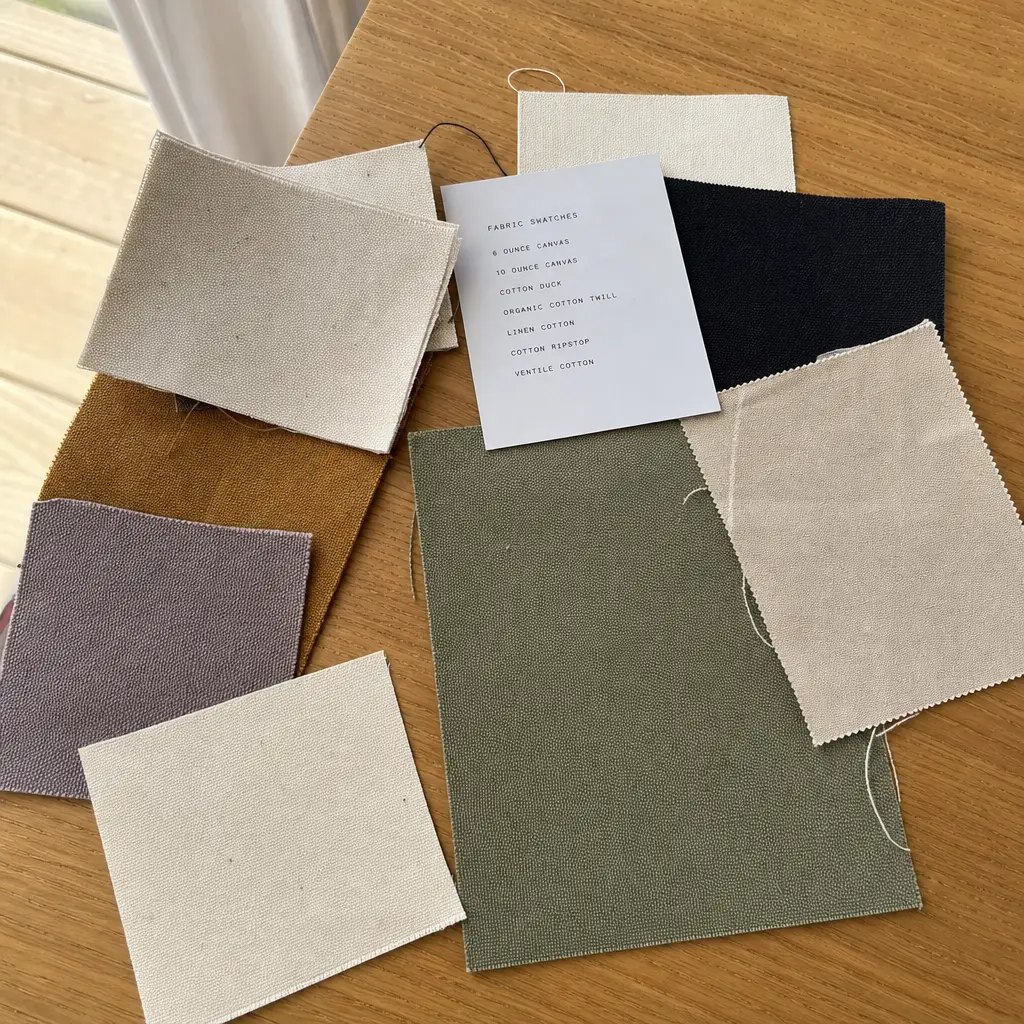
Why Print Proofing Matters for Subscription Box Pouches
A cotton drawstring pouch looks simple until it becomes part of a subscription box launch. The pouch may carry the brand logo, hold a paid product, protect a fragile insert, and appear in unboxing photos. If the print is off-center, the cotton shade is different from the approved sample, or the drawcord is hard to open, the problem is multiplied across every box in the run. Print proofing is not just an artwork step; it protects presentation, packing speed, subscriber experience, and the buyer’s ability to hold the supplier to a written standard.
For procurement teams, the main risk is approving a digital artwork file without checking how that artwork behaves on woven cotton. Cotton absorbs ink differently from coated paper, polyester, paperboard, jute, or synthetic nonwoven fabric. Natural cotton has slubs, seed specks, yarn variation, and shade differences. A thin 5 oz pouch can wrinkle under the screen, while a heavier 8 oz pouch prints more cleanly but increases unit cost, folded thickness, and carton weight. A good proofing process turns these variables into measurable acceptance criteria before fabric is cut and before the production calendar becomes difficult to change.
Subscription boxes add one more complication: the pouch is rarely judged alone. It is judged inside a box with tissue, cards, paper fill, products, dividers, and sometimes retail barcodes. A pouch that looks acceptable on a factory table may look bulky, wrinkled, or misaligned once it is folded into the box. Proofing should therefore check both the pouch as a textile product and the pouch as a component in the final kit.
- Use proofing to lock fabric, print size, print color, placement, cord construction, folding style, and packing assumptions.
- Treat the approved sample as a production control sample, not as a marketing photo prop or loose visual reference.
- Keep one signed sample with the factory and one with the buyer, inspection agency, or local QC team.
- Record artwork version names and approval dates so old subscription artwork is not used on a new campaign or reorder.
- Review the pouch in the actual subscription box layout before releasing bulk production, especially when box space is tight.
Define the Pouch Before Comparing Quotes
Many quote differences come from suppliers pricing different products under the same broad description. A request for custom cotton drawstring pouches can mean 4 oz muslin with one-side pull, 6 oz cotton with double drawcord, 8 oz cotton with a large screen print, or 10 oz canvas with reinforced seams. These are not equivalent products. Before collecting quotes, the RFQ should define the pouch by finished size, usable interior space, fabric weight, cotton color, print method, cord type, packing format, and inspection level.
Finished size is especially important. Factories cut panels larger than the final pouch to allow for seams, bottom turn, and the drawstring channel. If a buyer writes only the product dimensions that must fit inside, one supplier may quote a tight pouch and another may quote a looser pouch. Both may believe they have answered correctly, but the landed cost, fabric usage, and presentation will differ. For subscription boxes, the buyer should also check whether the pouch must lie flat, stand up, wrap around a product, or fit into a tray or mailer without bulging.
A clear specification also prevents quote creep after the order is placed. If the supplier later learns that the logo is larger, the drawcord must be custom dyed, or the pouches need individual barcode labels, the original price may no longer apply. The best RFQs separate must-have requirements from optional upgrades so buyers can compare like with like and decide where to spend budget.
- State finished size as width x height after sewing, for example 12 x 16 cm, 15 x 20 cm, or 20 x 30 cm.
- Define whether the quoted height includes or excludes the drawstring channel and top frill area.
- List the product weight and product dimensions going inside the pouch so the factory can judge seam strength and closing allowance.
- Mention whether the pouch is gift wrap, product storage, retail packaging, a protective sleeve, or a reusable subscriber item.
- Attach a simple technical sketch showing print side, logo position, seam direction, cord exit, and any label or tag location.
Fabric GSM, Cotton Color, and Hand-Feel Decisions
Fabric weight drives cost, print appearance, opacity, sewing behavior, packing volume, and freight. For small beauty samples, jewelry, tea sachets, stationery, or lightweight accessories, 5 oz cotton is often enough when the pouch is primarily an insert. For premium skincare, candles, small apparel items, glass items, or reusable storage pouches, 7 oz to 8 oz usually gives a better hand-feel and a flatter print surface. Very heavy canvas can feel premium, but it may be too bulky for subscription box packing and may not be necessary for short-term packaging use.
Cotton color should be treated as a technical specification, not an aesthetic afterthought. Natural unbleached cotton has a warm beige tone and may show cottonseed specks. It supports organic, handmade, or minimalist positioning, but light inks can appear duller on the beige base. Bleached white cotton gives stronger contrast, more predictable product photography, and cleaner color perception. Dyed cotton can support seasonal campaigns or brand color blocking, but buyers should allow additional lead time, dye lot variation, and a higher minimum quantity because dyeing is often managed in batch lots.
Hand-feel also matters for subscription boxes because subscribers physically open and handle the pouch. A soft muslin pouch communicates differently from a structured canvas pouch. If the pouch will be reused, the buyer may want stronger seams, heavier cord, and fabric that tolerates handling. If the pouch is a one-time protective sleeve, lower bulk and cost may matter more. The purchase specification should describe the intended user experience, not only the material name.
- Use about 140-170 GSM for lightweight insert pouches where low cost, low bulk, and fast packing matter most.
- Use about 200-270 GSM for better opacity, stronger seams, cleaner print edges, and a more retail-ready feel.
- Request fabric swatches from the same material source planned for production, not only a generic sample room swatch.
- Set a shade tolerance for natural cotton because one exact beige tone is rarely stable across crop, yarn, and lot changes.
- Ask whether fabric is pre-shrunk, washed, or calendared if washability, surface smoothness, or size stability matters.
Choose the Print Method Based on Artwork Requirements
Screen printing is usually the most practical choice for cotton drawstring pouches with solid logos, simple icons, short text, and one to three brand colors. It gives a clear mark, reasonable unit cost at volume, and good repeatability once screens are set. The limitation is fine detail on textured cotton. Very thin strokes, small reverse text, distressed textures, and tight registration between colors may not stay sharp after ink spreads slightly into the weave.
Heat transfer, digital transfer, and direct digital printing can help when the artwork has gradients, many colors, small illustrations, or photographic elements. These methods may carry a different hand-feel, different wash behavior, and a different cost structure. A transfer may sit more on top of the cotton, while screen print may feel more integrated depending on ink type and coverage. For subscription box buyers, the decision should be based on the result on actual fabric rather than a supplier’s generic claim that one print method is best.
Embroidery, woven labels, and sewn tags are alternatives when the brand wants a premium or tactile detail, but they change both cost and construction. Embroidery can distort thin cotton, add backing, and create stiffness. Woven labels require their own MOQ and artwork approval. Sewn patches or labels can help avoid ink variation, but placement and stitching quality become the new inspection points. The RFQ should ask the supplier to recommend a method only after reviewing artwork size, line thickness, color count, and order quantity.
- Use screen print for bold logos, solid brand marks, campaign slogans, and repeat seasonal artwork with limited colors.
- Use heat transfer or digital transfer for gradients, full-color artwork, or small details that are not practical for screen separation.
- Avoid very fine reverse text on natural cotton unless the strike-off proves it remains readable at final size.
- Consider woven labels or sewn tags when color consistency is more important than a direct print look.
- Ask the factory to flag artwork elements that may fail before screens are made, such as thin strokes, tight spacing, or low contrast ink.
Build a Real Print Proofing Workflow
A practical proofing workflow has three controls: artwork file approval, print strike-off approval, and pre-production sample approval. Artwork approval checks the file format, logo size, print color references, placement drawing, and version control. Strike-off approval checks how the print actually lands on production fabric. The pre-production sample checks the finished pouch, including sewing, drawstring, print position, folding, and packing appearance. Skipping any stage may be acceptable for low-risk repeat orders, but it is risky for a first production run, new artwork, dyed fabric, or a launch with no room for delay.
The proof should be reviewed like a production part. Measure the printed logo width and height with a ruler. Measure placement from fixed points such as side seam, bottom seam, or drawstring channel, not from a visual guess. Compare color under consistent lighting, not beside a window in mixed daylight. If the pouch will touch light-colored products, run a simple dry rub with a clean white cloth. If the pouch will be reused or washed, define the expected test before the quote is finalized because testing can affect cost and lead time.
Revision control is often where subscription box programs lose discipline. Designers may send an updated file after procurement has already approved screens. A brand manager may approve a PDF while operations approves a physical sample with a different logo size. To prevent this, every proof should carry an artwork file name, date, print size, color reference, and approver name. If a revision is made, the old proof should be clearly cancelled so it is not used by the factory during mass production.
- Approve vector artwork before screen making to avoid wrong file scaling, low-resolution files, or missing fonts.
- Approve a strike-off on the actual cotton color and GSM planned for the bulk order.
- Use millimeter placement tolerance instead of wording such as centered, standard, normal, or same as image.
- Record every rejection with a specific reason, such as color too dark, print 6 mm too low, text filling in, or ink too stiff.
- Do not release bulk cutting or printing until the approved pre-production sample is signed or confirmed in writing.
Cost Drivers Buyers Should Separate in the RFQ
A clean RFQ separates recurring unit cost from one-time or variable costs. Fabric, cutting, sewing, printing, drawcord, basic trimming, and normal export packing are usually built into the unit price. Screen setup, sample making, sample courier, artwork cleanup, custom dyed fabric, custom cord color, special testing, barcode labeling, individual polybags, and urgent production may be quoted separately. If these costs are mixed together, one supplier may look cheaper on the first order but become more expensive on reorder.
MOQ logic also affects real landed cost. A factory may offer one MOQ for one fabric color, one pouch size, and one artwork. If the subscription program needs four seasonal prints, the factory may treat each artwork as a separate setup even when the pouch body is the same. Buyers can often reduce cost by keeping one pouch size, fabric color, and cord construction while changing only the front print. The RFQ should show quantities by artwork version so the supplier can confirm whether combined production is possible.
Freight and fulfillment costs should not be ignored when comparing pouch prices. A heavier fabric may add only a small unit cost but increase carton weight and shipping cost. A loose packing method may reduce creasing but increase carton volume. Individual polybags may help receiving accuracy but add labor, material, and disposal considerations. Procurement teams should compare the full delivered and fulfillment-ready cost, not only the ex-factory unit price.
- Request unit price by quantity breaks such as 1,000, 3,000, 5,000, and 10,000 pieces.
- Ask whether screen charges are per color, per artwork, per logo size, per print position, or per reorder.
- Separate packing upgrades such as individual polybag, belly band, barcode label, warning label, desiccant, or special carton mark.
- Compare carton volume and gross weight because freight can erase a small unit price difference.
- Ask whether repeat orders can reuse screens and whether there is a storage period or remake charge.
Sample Checks Before Releasing Bulk Production
The approved sample should answer more than whether the logo looks attractive. It should prove that the pouch fits the product, closes easily, survives reasonable handling, and presents well inside the subscription box. Place the real product inside the sample if possible. Pull the drawstring several times. Fold it the way the fulfillment center will fold it. Put it into the actual outer box with paper fill, insert cards, trays, and neighboring products to see whether it creases, hides important graphics, or changes the box closing pressure.
For importers, distributors, and subscription operators, sample records prevent disputes. Photograph the sample front, back, inside seams, cord exits, label if any, and packing method. Note the approved fabric GSM, cotton color, print method, logo size, placement distance, drawcord details, and artwork version. If the buyer later requests a change, the change should generate a revised approval record rather than relying on email memory.
Samples also help identify operational problems before they reach the fulfillment line. A pouch may look correct but take too long to open if the channel is tight. Cord knots may come loose when staff insert products quickly. A dark ink area may scuff if pouches are stacked face to face. These issues are easier to fix at sample stage than after mass production, when rework may require sorting, trimming, cleaning, or repacking thousands of units.
- Measure finished pouch size at multiple points because soft cotton can vary after sewing and pressing.
- Check whether the drawstring channel is wide enough for smooth closing after the real product is inserted.
- Look for print cracking, pinholes, blurred edges, ink buildup on slub areas, and inconsistent coverage across the logo.
- Confirm that the pouch does not shed heavy lint onto cosmetics, glassware, dark products, or adhesive labels.
- Test the sample in the actual subscription box layout before approving production, especially when box height is limited.
Packing Requirements for Subscription Fulfillment
Packing should be designed around the fulfillment operation, not only around export shipping. Some 3PL teams want pouches flat in counted bundles so staff can insert products quickly. Others require individual polybags, barcode labels, sorted inner packs, or pre-folded units. A factory can pack many ways, but each method affects labor, material cost, carton size, print protection, receiving accuracy, and waste. Put the packing format in the RFQ before comparing prices so suppliers are quoting the same work.
Cotton pouches with fresh print should not be packed in a way that causes rubbing, blocking, odor transfer, or heavy creasing. If ink has a raised hand-feel, careful stacking or interleaving may be needed for dark, large-area prints. Cartons should be strong enough for export handling but not so overfilled that the print face is crushed. For subscription boxes with multiple SKUs or monthly versions, carton marks should show PO number, pouch size, artwork version, cotton color, quantity, and carton number.
The best packing method depends on where the pouch enters the fulfillment flow. If the factory ships directly to a 3PL that will fill each pouch, flat bundles may be fastest. If the pouches are shipped to a brand warehouse and then redistributed, individual bags or labeled inner packs may reduce sorting errors. If the pouch already contains a product before final box assembly, the buyer should define whether the pouch is delivered empty, pre-stuffed, closed, or left open for the next step.
- Define units per inner bundle, inner bag, and master carton before the supplier quotes the order.
- Require carton labels that match the subscription box SKU, campaign code, artwork version, and PO number.
- Request carton dimensions, gross weight, and net weight for freight quotation before final shipment booking.
- Avoid mixing artwork versions in one carton unless the 3PL has approved the receiving and sorting method.
- Specify whether pouches should be packed print-face up, alternating, folded, flat, or protected from direct print-to-print contact.
Lead Time Risks and Approval Gates
A typical schedule includes artwork checking, sample or strike-off making, buyer approval, material booking, cutting, printing, sewing, trimming, inspection, packing, and export handling. The slowest points are often not sewing. Delays usually come from late artwork corrections, waiting for sample courier feedback, dyed fabric lead time, screen remaking, unclear approval authority, or packing instructions added after the quote. A buyer who needs a fixed subscription box launch date should build approval gates into the purchase order timeline.
Repeat orders can move faster if the fabric, print method, artwork, and packing are unchanged. However, even repeat orders need a lot check when natural cotton shade, fabric thickness, or cord color matters. If a supplier changes fabric mill, uses a different dye lot, or adjusts cord sourcing, the pouch may still meet a general description but fail the brand’s visual expectation. Retained samples and written substitution rules help prevent surprises.
Approval gates should be tied to decisions, not vague dates. The PO should state when artwork must be finalized, when strike-off feedback is due, when the pre-production sample must be approved, and when inspection will occur. If a buyer misses an approval date, the ship date may need to move. If a supplier misses a sample date, the buyer should know early enough to adjust air freight, launch timing, or backup sourcing.
- Reserve time for artwork cleanup and file checking before sample production starts.
- Add buffer for physical sample transit if decision makers are in different countries or approval requires multiple departments.
- Lock the approval deadline because factories cannot protect ship dates if feedback comes late or conflicts between teams.
- For launch-critical orders, request production photos at cutting, printing, sewing, trimming, and packing stages.
- Require written approval before material, cord, print method, or packing substitutions are made.
Inspection Criteria That Prevent Expensive Rework
Final inspection should focus on defects that affect brand presentation and fulfillment use. For cotton drawstring pouches, common defects include stains, oil marks, fabric holes, heavy slubs in the print area, crooked printing, wrong artwork, missing print, ink smudging, loose threads, skipped stitches, blocked drawstring channels, uneven cord lengths, weak knots, odor, and incorrect carton counts. AQL inspection can be used, but the defect list must be customized to the product. A generic textile checklist may miss print proofing failures that are obvious to the brand.
Set critical, major, and minor defects before production. Wrong artwork, wrong fabric color, missing print, unsafe contamination, and severe odor can be treated as critical because they may make the goods unusable. Off-center print beyond tolerance, broken cord, open seam, blocked channel, heavy stain, or wrong carton label can be major because they affect function or presentation. Small thread ends, slight natural cotton specks, or minor shade variation within the approved range may be minor. This prevents arguments where the factory treats a visual issue as acceptable but the brand sees it as a launch problem.
Inspection should also check packing and quantity, not only the pouch itself. Subscription fulfillment shortages are expensive because the missing units may be discovered only when boxes are being assembled. Carton count, inner pack count, artwork version, SKU label, and PO number should match the packing list. If different artwork versions are produced in the same order, inspectors should verify separation and labeling so the wrong version is not delivered to the 3PL.
- Measure print placement on enough samples to show production consistency, not only on the top piece in a carton.
- Open and close sampled pouches to test cord function, knot security, and channel resistance.
- Check carton count accuracy because subscription fulfillment shortages are costly to fix after import.
- Keep defect photos in the inspection report so rework instructions are clear and objective.
- Re-inspect repaired or repacked goods to confirm rework did not create new stains, creases, or mixed-version cartons.
Specification comparison for buyers
| Spec decision | Recommended option | When it fits | Buyer risk to check |
|---|---|---|---|
| Fabric weight for subscription box insert pouches | 5 oz to 8 oz cotton, roughly 140-270 GSM depending on size, opacity needs, and product weight | 5 oz works for light samples, jewelry, tea, and cosmetics; 7-8 oz gives more structure for premium or reusable pouches | Low GSM may show product outlines, wrinkle during printing, distort after drawcord tension, or make dark ink coverage look uneven |
| Cotton color and dye route | Natural unbleached cotton for earthy positioning; bleached white for brighter print contrast; dyed cotton when campaign color is critical | Natural cotton suits organic, handmade, and low-impact branding; white improves photo consistency and color contrast; dyed cotton supports seasonal themes | Natural cotton shade varies by lot, and dyed fabric may need extra lead time, dye MOQ, and shade tolerance approval |
| Print method for front logo | Screen print for solid 1-3 color logos; heat transfer or digital transfer for gradients, small multi-color art, or photographic elements | Screen print is usually practical for repeat subscription branding with stable artwork and clear color blocks | Fine lines can fill in on textured cotton; require a strike-off on actual production fabric, not only a PDF or paper proof |
| Artwork placement tolerance | Set logo center tolerance within plus or minus 3 mm for small pouches and plus or minus 5 mm for larger pouches | Useful when pouches appear in unboxing photos, influencer content, or retail partner presentation kits | If tolerance is not written, small shifts may pass factory inspection but look inconsistent across the subscription box run |
| Drawstring construction | Cotton cord with single-side pull for simple cost control or double draw for a more finished opening experience | Double draw feels more premium and closes evenly; single draw can reduce cost and simplify filling for lightweight inserts | Cord fraying, uneven cord length, tight channels, and weak knots can slow fulfillment or create customer complaints |
| Sample approval stage | Approve size sample, print strike-off, and pre-production sample before bulk cutting and printing | Best for first orders, new artwork, dyed fabric, new pouch size, or launch-critical subscription programs | Skipping strike-off approval saves days but increases the risk of wrong ink hand-feel, color, logo scale, or placement |
| Packing format | Flat packed in counted bundles, inner polybags, or retail-ready individual bags depending on 3PL workflow | Flat counted bundles support fast kitting; individual bags support barcode control, cleanliness, and mixed-SKU receiving | Over-compressed cartons can crease prints; loose cartons increase freight volume; unclear inner counts create receiving delays |
| MOQ and reorder logic | Consolidate one pouch body across multiple artwork versions where possible; separate MOQ by fabric color, cord color, and print setup | Works for seasonal subscription themes where size and material stay constant while artwork changes monthly or quarterly | Different fabric colors, drawcord colors, labels, and print methods may reset MOQ, screen charges, and sample approval steps |
| Inspection level | Use an AQL plan with customized defect definitions for print, fabric, sewing, drawstring function, and carton count | Appropriate for importers, subscription brands, and distributors that cannot inspect every pouch after arrival | A generic textile inspection may miss print registration, artwork version, carton label, or fulfillment-critical packing errors |
Buyer checklist before sampling
- Define finished pouch size after sewing, not only cut panel size, and include width, height, and channel measurement tolerance.
- Specify fabric composition, cotton color, GSM or ounce weight, weave appearance, and whether the target is natural, bleached, dyed, or washed cotton.
- Provide vector artwork with Pantone or physical color references, final print size, placement distance from fixed seams, print side, and artwork version name.
- Approve print on the same fabric weight and color planned for production because cotton texture, shade, and absorbency change ink appearance.
- Set acceptance criteria for logo position, color variation, ink hand-feel, edge sharpness, smudging, dry rub, and wash or wet rub resistance if relevant.
- Confirm drawstring material, cord diameter, channel width, knotting method, cord length, pull direction, cord color, and whether double draw is required.
- Clarify packing for subscription fulfillment, including flat or folded format, units per inner pack, carton count, barcode needs, polybag use, and carton marks.
- Request carton dimensions, gross weight, net weight, units per carton, and loading assumptions before final order confirmation to estimate freight and 3PL receiving cost.
- Lock the approved sample with supplier signature, photos, measurements, artwork version, fabric swatch, print method, and approval date before bulk production starts.
- Reserve schedule time for artwork checking, strike-off approval, sample courier, fabric booking, printing, sewing, trimming, final inspection, rework if needed, and export packing.
Factory quote questions to send
- What fabric weight in GSM or ounces is included in this quote, and is it greige, natural, bleached, dyed, or washed cotton?
- Is the quoted size the finished sewn size, and what tolerance applies after sewing, trimming, ironing, and packing compression?
- Which print method is quoted, how many colors are included, and are screen charges, artwork cleanup, color matching, or setup charges separate?
- Will the print proof be made on the actual production fabric and color, and how many revision rounds are included before extra charges apply?
- What MOQ applies by pouch size, fabric color, drawcord color, print method, label option, and artwork version?
- What is the estimated material lead time if dyed cotton, custom cord color, non-standard GSM, or special packing material is required?
- How will pouches be packed for subscription box fulfillment: flat, folded, bundled, individually bagged, barcoded, or sorted by artwork version?
- Can you provide carton dimensions, gross weight, net weight, units per carton, inner pack count, and carton mark format before production approval?
- What in-line and final inspection standards will be used for print position, stains, loose threads, cord function, seam strength, artwork version, and count accuracy?
- What are the payment, sample, mass production, inspection, and shipping lead time assumptions used in the quote?
Quality-control points to confirm
- Finished size should be measured flat at the opening, body, and usable interior area, with tolerance agreed before cutting.
- Fabric GSM should be checked against the approved swatch or purchase specification, not only against the supplier’s commercial description.
- Logo color should be compared under stable lighting against the approved Pantone target or signed strike-off, allowing realistic cotton absorption variation.
- Print placement should be measured from pouch edges, bottom seam, side seam, or drawstring channel using a written millimeter tolerance.
- Ink should pass agreed dry rub or handling checks and should not transfer onto neighboring pouches during stacking or carton compression.
- Drawstring should pull smoothly through the channel without broken stitches, blocked seams, twisted cord, loose knots, or excessive resistance.
- Stitching should be secure at side seams, bottom corners, channel fold, and stress points near cord exits.
- Visible contamination, oil marks, heavy slubs in the logo area, holes, yarn defects, and shade mismatch should be rejected according to the agreed AQL plan.
- Carton quantity, inner packing count, SKU label, artwork version, pouch color, PO number, and campaign code should match the packing list.
- Finished cartons should protect the print surface from abrasion, moisture, odor transfer, and crushing during export handling.