Start With The Use Case, Not The Price
Trade show buyers often begin with unit price, but custom cotton drawstring pouches are easier to source when the use case is clear first. A pouch that protects a sample vial, a pouch that holds a brochure and QR card, and a pouch that is handed out as a branded gift do not need the same fabric weight, print coverage, or packing method. If the function is vague, the factory has to assume risk and the quote will either be padded or incomplete.
The best RFQ describes what goes inside the pouch, how the pouch is distributed, and where it lands after the show. If the pouch must fit inside a booth kit, an advance warehouse carton, or a distributor allocation, say so. If it will be filled on-site by staff, that changes packing, carton labeling, and the acceptable level of wrinkling or bulk packing density.
For procurement, the practical objective is to keep every decision tied to a cost driver. Size affects cutting yield. Fabric weight affects sourcing and sewing behavior. Artwork count affects setup. Packing changes labor. Delivery date affects line priority. Once those drivers are visible, MOQ negotiation becomes a structured discussion instead of a price-only conversation.
- State the intended contents and their dimensions, not only the pouch size.
- Clarify whether the pouch is protective packaging, a giveaway item, or a premium presentation piece.
- Specify the receiving destination: booth, warehouse, distributor, or direct mail kit.
- Identify whether staff will fill the pouch or whether it must ship pre-packed.
- Tell suppliers whether the pouch can be standard natural cotton or must match a brand color exactly.
How MOQ Is Actually Calculated
MOQ for cotton drawstring pouches is rarely one single number. It is usually a mix of material minimums, cutting efficiency, print setup, sewing line changeover, and packing labor. A factory may accept a lower total quantity if the pouch uses stock fabric and one print color, but the same supplier may require a larger run if the order needs dyed fabric, multiple logos, or special folding and labeling.
This is why buyers should ask the supplier to separate total quantity from per-design quantity. A 6,000-piece order across three logos is very different from a 6,000-piece single-logo run. The first order creates setup and inspection work for each artwork version; the second allows longer continuous production and lower handling cost. If the factory does not break that out, the buyer cannot tell where the real MOQ pressure sits.
There is also a difference between sewing MOQ and material MOQ. Cotton fabric may be available in common greige or natural stock at relatively small purchase sizes, while custom dyed cord, special labels, or branded print placements can add a separate minimum. Buyers should ask which element is limiting the order before they negotiate price or commit to a design split.
- Ask for the MOQ by total units and by artwork version.
- Confirm whether the factory quotes a separate minimum for fabric color, cord color, and label type.
- Treat setup work as a cost driver, not as a hidden detail.
- Use one common pouch construction whenever possible to reduce line changeover.
- If the supplier says no to a lower MOQ, ask which input actually drives the limit.
Use A Spec Sheet The Factory Can Price Precisely
A strong spec sheet is the fastest way to get a quote that can survive procurement review. At minimum, it should include finished size, size tolerance, fabric weight, fabric color, drawstring type, print method, print area, number of colors, artwork count, packing format, destination, and required in-hand date. If any of those items are missing, the quote will usually assume the cheapest interpretation and then change later.
The most useful spec sheet separates fixed and variable fields. Fixed fields are the same across all versions: pouch size, fabric weight, cord type, seam construction, and base packing. Variable fields are artwork, language, barcode, insert card, and destination label. That structure lets the supplier understand what can be shared across the order and what must be treated as a separate setup.
For trade show exhibitors, this matters because the same pouch family is often used by different teams. Marketing may want one logo, regional sales another, and an event agency a third version. If the shared specs are obvious, the buyer can negotiate one material purchase and several artwork runs instead of repeating the full cost structure three times.
- Show finished width and height in millimeters, not only in inches or approximate terms.
- Mark whether the size is measured flat, before filling, or after packing the intended item.
- Give artwork files in vector format when possible and note any small text or QR code requirements.
- State whether the quote should include proof, sample, packing, and carton marks.
- Tell the supplier if the order is for one shipment or split delivery by team or region.
Fabric Weight, Handfeel, And Transparency
Fabric weight is one of the biggest drivers of both perceived quality and MOQ. For light trade show giveaways, 5 oz to 6 oz cotton is commonly enough when the pouch holds a small accessory or a folded insert. For premium kits, 7 oz to 8 oz cotton canvas gives better structure and a more substantial handfeel. Heavier fabric also reduces the chance that dark contents show through the pouch body.
The wrong fabric choice creates avoidable problems. Very light cotton can pucker around the print area, show contents, or collapse at the seam when filled. Very heavy canvas can increase freight cost, make the drawstring channel stiffer, and raise the chance of sewing defects if the factory is not set up for heavier goods. The right GSM is the one that balances appearance, cost, and the actual item weight.
Buyers should also ask about fabric behavior after printing. Some cotton surfaces absorb ink more aggressively, which can blur small text or reduce color saturation. If the pouch will be shown against a dark object or used with a glossy product insert, request a filled sample or a dark insert test. That is a simple way to catch transparency issues before the bulk run starts.
- 5 oz cotton is useful for light inserts and lower-cost handouts.
- 6 oz cotton is a common middle option for screen-printed trade show pouches.
- 7 oz to 8 oz cotton canvas is better for higher-value kits or heavier contents.
- Ask whether fabric is pre-shrunk or whether the finished size already accounts for handling shrinkage.
- If the pouch will be handled many times, ask the supplier to test seam behavior after repeated fill and close cycles.
Choose The Print Method Around The Artwork, Not The Catalog
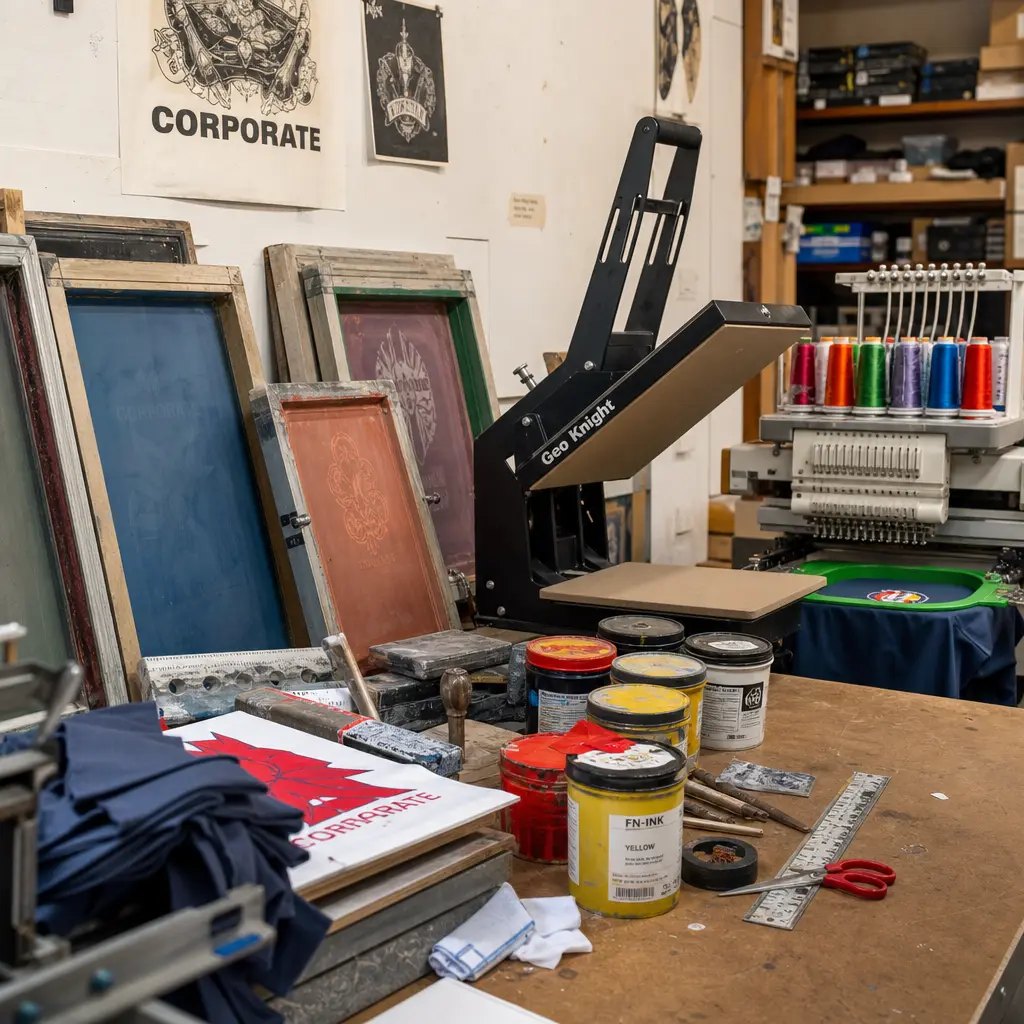
Screen printing remains the default for many custom cotton drawstring pouches because it handles bold logos well and keeps costs manageable at trade show volumes. It is a good fit for one-color or limited-color artwork with clear linework. The real cost drivers are the number of colors, number of print positions, screen setup, and the size of the printed area.
Heat transfer or digital transfer can help when artwork has gradients or many colors, but those methods are not automatically better on cotton. On textured fabric, very fine detail may still lose sharpness, and the transfer layer can change the handfeel. Buyers should ask for the factory's minimum text height, minimum line width, and recommended print area before approving complex artwork.
For B2B procurement, the safest rule is to choose the simplest decoration that still supports the brand use case. If the pouch is a giveaway, durability and legibility matter more than decorative effects. If the pouch is part of a VIP or retail-style kit, a woven label, side label, or cleaner single-color print may be worth a slightly higher setup charge because the pouch becomes part of the presentation, not just packaging.
- Screen print is usually best for solid logos and simple event branding.
- Transfer methods suit smaller runs with complex graphics, but they need sample proofing.
- Embroidery can look premium but may distort lighter fabric and increase setup cost.
- Woven labels work well for branding without print coverage, but they add sewing steps.
- Define minimum line width, minimum text height, and exact print placement in the RFQ.
Negotiating Lower MOQ Without Weakening The Spec
The most effective MOQ negotiation is usually spec consolidation. If the buyer keeps the pouch size, fabric weight, fabric color, drawstring type, and construction identical, the supplier can often accept multiple artwork versions under one shared production run. That reduces cutting and sewing fragmentation and lets the buyer spread setup cost across the full order instead of paying it separately for each team or event.
A practical order matrix helps here. For example, a 6,000-piece program could be structured as three 2,000-piece artwork versions, all in 150 x 200 mm finished size, 6 oz natural cotton, one-sided one-color screen print, single cotton cord, and bulk pack by artwork. That is much easier for a factory to price than a vague request for three custom versions with no shared spec. The buyer is not asking the factory to do less work; the buyer is making the work easier to batch.
If the supplier pushes back on MOQ, do not immediately ask for a price cut. Ask which part of the spec is driving the minimum: fabric availability, print setup, label sourcing, or packing labor. Then decide whether to simplify the specification, increase the total order across designs, or accept a higher unit cost for the lower-volume version. That approach usually produces a cleaner commercial outcome than negotiating blindly on price.
- Keep one pouch size across the program whenever possible.
- Use natural cotton if schedule risk is high and brand color is not mandatory.
- Limit print positions to one side unless the back print is truly needed.
- Bundle multiple artwork versions under one total fabric purchase when possible.
- Ask the factory to quote the shared-cost and per-version cost separately.
Quote Terms That Make Comparison Possible
A useful quote for custom cotton drawstring pouches should be broken into pieces, not compressed into a single unit price. At minimum, ask for the pouch base price, print setup, sample fee, packing cost, carton charge, and freight basis. If the factory includes all of those in one number, it becomes hard to compare suppliers or see which cost is one-time versus recurring.
This matters even more for trade show programs because the receiving process can be expensive if the packing is wrong. If the quote does not mention carton labels, inner pack counts, destination sorting, or barcode stickers, those details may appear later as extra charges or as warehouse errors. The buyer should force those items into the quote conversation early, before production starts.
Procurement teams should also ask which charges repeat on reorders. Screen setup, artwork setup, and lab dip approval are usually one-time or per-design costs. Packing labor, special labels, and split destination sorting are more likely to recur. If the supplier cannot distinguish those categories, the quote is not yet decision-ready.
- Request separate pricing for base pouch, print, sample, packing, and freight.
- Ask whether the quote includes production loss allowance or rejects it as a separate charge.
- Confirm whether the same screens, labels, or cord stock can be reused on reorders.
- Ask for carton dimensions and gross weight for landed-cost calculations.
- Require the supplier to state any assumptions that could change the final price.
Sample Approval And QC Gates Before Bulk
For a first run, the pre-production sample should match the bulk order in fabric weight, construction, cord type, print method, and approximate print position. A blank shape sample can help with fit, but it does not prove print clarity, curing, handfeel, or closure behavior. If the order has a hard deadline, the sample calendar should be approved before the factory begins materials purchase so there is still time to correct issues.
A photo approval is not enough when the pouch will carry branded content or fit a specific product. The buyer should test the pouch with the real insert, pull the cord several times, inspect the seam corners, and check whether the logo stays centered when the pouch is filled. For dark prints on natural cotton, a quick rub test after curing can catch weak adhesion before the bulk run is locked in.
The approval rule should be explicit. Mark the sample as approved, approved with minor notes, or rejected with a correction list. If there is a correction, identify the exact dimension, print area, or construction issue to be changed. Vague feedback such as make it nicer or adjust the feel usually creates a second sample that is still ambiguous and slows the production schedule.
- Measure finished width and height flat, then test with the real product inside.
- Check logo position after filling, not only when the pouch is empty.
- Rub the print lightly after curing to detect weak adhesion.
- Keep one sealed approved sample for factory reference and receiving inspection.
- Record the approval date and version number so bulk production has a clear reference.
Packing, Labeling, And Event Logistics
Packing is often treated as a minor detail, but for trade show buyers it can decide whether the order lands cleanly at the booth or creates receiving delays. Bulk pack is the simplest and lowest-cost option when staff will hand out pouches from cartons. Individual polybags, paper bands, barcode labels, or insert cards add labor, but they may be necessary if the goods are going into inventory, retail-style kits, or multi-team allocations.
The carton plan should match the receiving path. A shipment to an advance warehouse needs clear carton marks, carton count, and a packing list that aligns with destination rules. A shipment split across regions or teams should be packed by SKU and destination to avoid miscounts. If the factory has to sort cartons by event, booth zone, or department, that work should be priced and scheduled before production begins.
Do not leave carton dimensions out of the discussion. Cotton pouches are light but bulky, so freight can be driven more by volume than weight. Asking for carton dimensions and gross weight early helps procurement compare suppliers on landed cost, not just unit cost. It also helps event teams verify whether the shipment will fit the warehouse receiving rules or booth storage limits.
- Use bulk packing when pouches will be distributed directly from cartons.
- Use individual polybags when the pouch must stay clean during storage and transit.
- Use barcode or SKU labels when goods enter inventory systems or retail channels.
- Use carton sorting by destination when multiple teams receive separate allocations.
- Request the carton label format before production so the factory prints the right marks.
Lead Time, Risk Buffers, And Final Decision Rules
MOQ negotiation should be tied to the calendar from the start. A lower MOQ does not help if the factory needs extra time for fabric sourcing, print proofing, sample transit, or packing changes. A realistic schedule includes artwork review, sample production, sample approval, material preparation, cutting, printing, sewing, inspection, packing, and shipping. Each step needs an owner and a date.
The highest-risk orders are usually late approvals with multiple artwork versions and fixed event deadlines. In those cases, buyers sometimes choose air freight to recover time, but that can erase the savings from a lower unit price, especially when the pouch is made from heavier canvas. Procurement should compare the cost of a slightly higher MOQ produced on time with the cost of a smaller, rushed order that requires premium freight.
The final decision rule should be simple: if the spec is stable, the sample is approved, and the receiving plan is clear, then optimize for total landed cost. If any of those items are still uncertain, optimize for schedule and process control first. For trade show programs, being wrong on time is usually more expensive than being modestly high on unit price.
- Freeze the artwork before sample production whenever possible.
- Allow extra time for dyed fabric, custom cord, or special labels.
- Reserve inspection time before goods leave the factory.
- Set the arrival date earlier than booth move-in to absorb transit or customs delays.
- Build a fallback plan if one artwork must be split into two shipments.
Specification comparison for buyers
| Spec decision | Recommended option | When it fits | Buyer risk to check |
|---|---|---|---|
| Fabric weight for trade show giveaways | 5 oz to 6 oz cotton, about 140-170 GSM | Works for lightweight samples, brochure inserts, badge kits, and other handouts where cost and shipping volume matter | Thin fabric can show contents, wrinkle around the print, or look uneven when filled; ask for a filled sample or a dark insert test |
| Fabric weight for premium exhibitor kits | 7 oz to 8 oz cotton canvas, about 200-270 GSM | Best for VIP kits, launch packs, retail-style presentation, or heavier contents that need more body | Heavier fabric increases carton weight and freight volume; confirm whether MOQ applies per size, per color, or per artwork |
| Natural cotton versus dyed cotton | Natural or ecru cotton when schedule and MOQ flexibility matter; dyed cotton only when the brand color must match | Natural cotton usually has the most stock availability and is easier to approve quickly | Dyed fabric can trigger lab dip approval, shade tolerance limits, and a separate minimum at the fabric mill |
| Logo print method | Screen print for bold logos; transfer print for gradients or tiny multi-color artwork when the supplier can prove quality | Screen print is often the safest balance of cost, durability, and turnaround time for trade show orders | Small text can fill in on textured cotton; define minimum line width and approve a pre-production sample |
| Drawstring material | Cotton cord for a natural look; polyester cord when color consistency and abrasion resistance matter more | Cotton cord fits eco-leaning programs and natural aesthetics; polyester cord offers cleaner dyed colors and smoother pull performance | Cord color may have its own MOQ; confirm stock cord availability before asking for custom dyeing |
| Pouch construction | Single drawstring for simple giveaways; double drawstring for smoother opening and a more finished feel | Single cord lowers cost; double cord works better for higher-value kits and repeat handling | Low-quality double cords can twist, pull unevenly, or create closing issues after filling |
| Packing format | Bulk packed by size and print version, with carton marks and a declared pack count | Good for booth giveaways, warehouse receiving, and orders that will be opened on site | Mixed designs in one carton can create counting errors; require SKU-level packing and carton labels |
| MOQ negotiation lever | Keep size, fabric, and print method standard, then negotiate across total units instead of one-off custom variables | Best when several exhibitor teams need different logos or event versions | Setup cost still applies per artwork, so separate shared-cost items from per-design costs |
Buyer checklist before sampling
- Define the pouch use before RFQ: empty giveaway bag, product dust bag, VIP kit pouch, retail gift pouch, or insert packaging.
- State finished size with tolerance, not only approximate dimensions; include whether the pouch is measured flat or filled.
- Specify fabric weight in GSM or oz and identify natural, bleached, dyed, organic, or recycled cotton only when relevant.
- List print position, print size, Pantone references, number of colors, and whether fine text or QR codes must remain scannable.
- Separate total order quantity, quantity per artwork, quantity per pouch size, and quantity per delivery date.
- Request an MOQ explanation by cost driver: fabric buying, cutting loss, print setup, cord color, sewing line changeover, and packing labor.
- Ask whether the factory can share one material run across multiple artwork versions before you agree to split the order.
- Require a physical pre-production sample for first orders or any pouch with tight color, print, or fit requirements.
- Set acceptance criteria for fabric shade, stitching, cord pull strength, print adhesion, size tolerance, and carton labeling.
- Confirm packing: bulk, individual polybag, paper band, barcode sticker, insert card, master carton quantity, and carton dimensions.
Factory quote questions to send
- Is the MOQ based on total order quantity, per size, per fabric color, per print design, or per shipment?
- What fabric weights are in regular stock for natural cotton drawstring pouches, and which weights require weaving, dyeing, or special purchase?
- Can several artworks share one fabric and pouch size MOQ, and what is the minimum quantity per artwork after the total order MOQ is met?
- What print method do you recommend for this artwork on the chosen GSM, and what line width or text height is risky?
- How many pieces are included in the sample fee, and will the sample use bulk fabric, the correct cord, the correct print, and final sewing construction?
- What are the normal tolerances for finished size, fabric weight, print position, print color, and carton quantity?
- What packing method is included in the base quote, and what is the extra cost for individual bags, barcode labels, inserts, or carton sorting by exhibitor team?
- What are the lead times for artwork proof, sample making, sample transit, bulk material preparation, production, inspection, and export packing?
- Which quote items are one-time setup charges, and which repeat on every reorder or every artwork change?
- What information do you need from us to hold the quoted production slot before sample approval?
Quality-control points to confirm
- Finished size tolerance should be defined in millimeters; for soft cotton pouches, a practical starting point is +/- 5 mm on width and height, with a tighter target if the pouch must fit a rigid item.
- Fabric GSM should be checked against the approved swatch, not only against invoice wording; natural cotton shade variation should have an agreed acceptable range.
- Seam strength should be tested by filling the pouch with the intended item weight and pulling the drawstring several times; if the pouch will carry a heavier insert, test at 1.25x the intended load.
- Print adhesion should be checked by dry rub and light scratch testing after curing, especially for dark ink on natural cotton and for large solid areas.
- Print position should be measured from the top edge and side seam so off-center logos are caught before packing; set a tolerance such as +/- 3 mm for simple front prints.
- Cord length should allow easy closure without excessive loose ends that tangle during bulk packing; check that both cord ends are even within an agreed tolerance.
- Needle holes, loose threads, broken stitches, and puckering should be inspected at drawstring channel corners where stress is concentrated.
- Carton quantity, SKU labels, artwork version, and destination marks should match the packing list before goods leave the factory.
- If the pouch includes a label or hangtag, confirm label placement, stitch security, and legibility after folding and packing.
- For first runs, keep one sealed golden sample with the approved fabric, print, cord, and packing format for later reference.