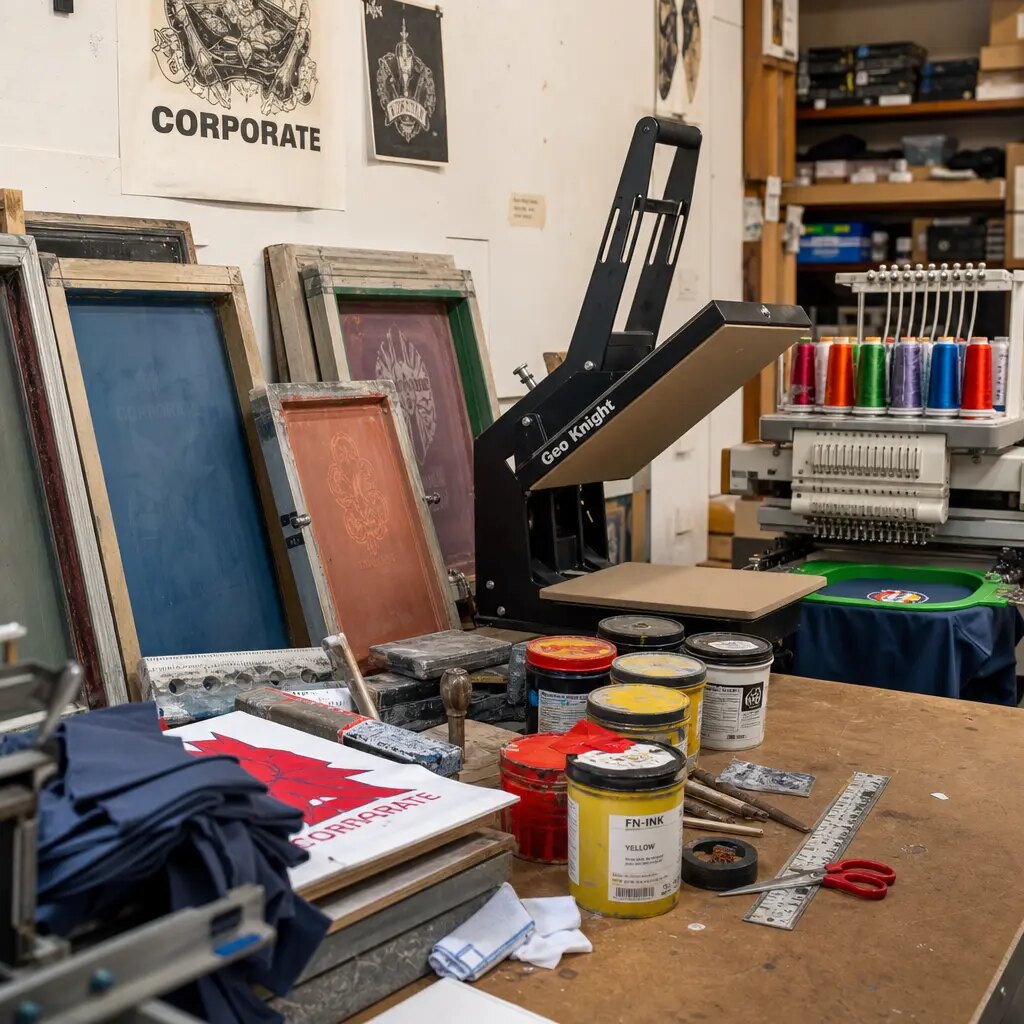
1. Why MOQ gets difficult on cotton drawstring pouches for coffee roasters
A cotton drawstring pouch looks like a small, simple item. From the factory side, it is still a production job with several minimums layered together. The supplier has to allocate fabric, set the cutting marker, prepare the sewing line, source or confirm cord, make or retrieve the print screen, mix ink, allow drying or curing time, trim threads, pack the finished goods, mark cartons, and inspect the order. That is why a request for 300 custom pouches may come back with a practical MOQ of 1,000 or 2,000 pieces. The sewing time per pouch may be modest; the setup burden is the issue.
Coffee roasters often add another layer of complexity without meaning to. Ecommerce wants a gift pouch. Wholesale wants sample-kit packaging. The subscription team wants a branded insert. Retail wants something seasonal for the café shelf. If every team asks for a different size, fabric shade, cord color, logo, and packing method, the factory does not see one 2,000-piece order. It sees four small 500-piece jobs, each with its own setup, sorting, inspection, and carton-control work.
The best MOQ negotiation does not start with pushing the supplier to accept an uneconomic quantity. It starts by removing complexity that does not change the customer experience. If the pouch must hold a 250 g coffee bag plus a brew card, size and closure matter. If it is a reusable wrapper for filters, stickers, or a grinder brush, the construction can stay simple. Procurement’s job is to protect the requirements that affect function, quality, and brand presentation while making the run easier to produce.
- Lowest practical MOQ usually comes from stock natural cotton fabric, stock cord, one pouch body, and one print color.
- MOQ should be discussed by finished size, fabric color, print design, cord color, and delivery split, not only as one total quantity.
- Flat pouches usually run more efficiently than gusseted or boxed-bottom pouches because cutting, sewing, and pressing are simpler.
- One shared pouch size across ecommerce, wholesale, subscription, and event programs can unlock better price breaks.
- Bulk carton packing by item code is cheaper and safer than retail prepack, mixed assortments, or store-level allocation.
- If a supplier agrees to a very low MOQ, ask what changes: unit price, setup fee, sample fee, lead time, packing, or tolerance.
2. Define the pouch job before discussing artwork
Many sourcing projects go sideways because the first supplier message includes artwork but not the pouch’s job. A supplier can print a logo on a rectangle of cotton. That does not prove the pouch will fit the item, close smoothly, survive handling, or look right in a gift bundle. Before asking for price, define what the pouch has to do for the coffee business: protect an accessory, hold a sample flight, organize paper filters, wrap a seasonal gift set, add value to a subscription box, or serve as a reusable café giveaway.
The fill item should drive the spec. A pouch for flat paper filters may only need lighter cotton and a basic drawstring. A pouch for a hand-grinder accessory, dosing cup, tamper, glass jar, small tin, or holiday bundle may need firmer fabric, a wider opening, stronger seams, or a bottom gusset. If a co-packer or fulfillment warehouse will assemble the kits, opening width and closure speed become operational requirements, not design preferences.
Build a short internal requirement sheet before contacting suppliers. Include actual product dimensions, maximum fill weight, target quantity, delivery deadline, receiving warehouse, packing format, and whether the pouch is sold, gifted, or used inside a larger kit. Photos help, especially if the product is already being tested in a rough pouch, but photos are not a substitute for dimensions. A clear functional brief prevents the common mistake of approving a nice-looking sample that fails during fulfillment.
- Measure the largest intended fill item, including corners, seams, tins, labels, or folded cards that add bulk.
- Specify whether the pouch must close fully, partially close, or only gather at the top for presentation.
- For lightweight accessories, 140-180 GSM may be acceptable if the pouch is small and not positioned as premium packaging.
- For reusable gift packaging or denser accessories, 180-240 GSM is often a safer starting range.
- If contents are bulky, ask whether a bottom gusset is worth the extra sewing cost and MOQ impact.
- Ask the warehouse or co-packer whether the opening must be easy to access quickly during assembly.
3. Fabric terminology, GSM, and color choices that change MOQ
Cotton pouch terminology can be surprisingly loose. Buyers may say cotton, canvas, calico, or muslin as if they are interchangeable. Suppliers may use the same words for different weaves and weights. For procurement, the RFQ needs measurable language: fabric type plus GSM or ounce weight. GSM means grams per square meter. Ounce ratings are common in bag sourcing, but conversions are not always used consistently, so actual GSM is the safer comparison point.
A lighter plain-weave cotton around 140-180 GSM can lower unit cost and carton weight. It may also feel thinner, wrinkle more, show more print-through, or offer less structure in a gift presentation. Heavier cotton canvas around 220-270 GSM gives a firmer hand and a more substantial retail feel, but it adds material cost, creates more bulk at the drawcord channel, and can reduce the number of pieces per carton. For many roaster programs, 180-240 GSM is a practical middle range, but the final choice should be tested against the fill item and artwork.
Stock fabric is usually the strongest MOQ lever. If the factory keeps unbleached cotton in a common weight, it can support a lower custom pouch MOQ because fabric risk is low. Custom-dyed fabric, unusual weaves, organic-certified cotton, recycled cotton blends, or uncommon weights can trigger a mill MOQ far above the sewing factory’s minimum. For roasters that already like a natural packaging look, stock unbleached cotton with black, dark brown, rust, or forest green print is often the simplest first-order route.
Natural cotton shade should not be treated as a fixed brand color unless you define it that way. Unbleached cotton can shift from lot to lot because of fiber, spinning, washing, and finishing. That variation may suit a coffee brand’s natural aesthetic, but it still needs approval. Ask for swatches from current fabric stock and keep an approved shade range. If the shade must be exact, expect custom dye, lab dips, bulk shade checks, and a different MOQ conversation.
- Quote language should identify muslin, plain-weave cotton, cotton canvas, recycled cotton blend, or another blend.
- Require target GSM and tolerance; do not compare quotes that only say cotton or canvas.
- Common practical fabric tolerance may be around +/-5% to +/-10%, but it must be confirmed with the supplier.
- Ask whether the fabric is stock, made-to-order, bleached, unbleached, dyed, washed, or pre-shrunk.
- Custom dye can create a separate fabric MOQ and a longer approval path for lab dip and bulk shade.
- If sustainability claims matter, request documentation for organic, recycled, or certification language before using it in marketing.
4. Size, construction, and tolerances that belong in the RFQ
Finished size is one of the easiest details to misunderstand. A buyer may assume the quoted size is usable internal space. A factory may mean finished flat dimensions, or in some cases cut-panel dimensions. For drawstring pouches, specify finished width and finished height measured flat after sewing and pressing. Also specify usable inner height below the drawcord channel. A 200 mm tall pouch with a 25 mm channel does not give you 200 mm of usable product space.
Construction terms need the same level of clarity. A flat pouch with a single drawstring is not the same as a double-drawstring pouch that pulls from both sides. A bottom-gusset pouch is not the same as a boxed-bottom pouch. An internal drawcord channel differs from an external folded top. Seam type also matters: simple overlock, lockstitch with overlock, French seam, or bound seam can change appearance, durability, sewing time, and cost. If the pouch will carry heavier accessories, discuss reinforcement and back-tack points before sampling.
Tolerances should be agreed before the pre-production sample is approved. Cotton can shrink, stretch, and move during cutting, sewing, and pressing. On a small pouch, a few millimeters can affect closure or print centering. On a larger pouch, a slightly wider tolerance may be realistic. Avoid vague phrases such as standard tolerance. Ask the supplier to state measurable limits for width, height, opening width, usable height, cord length, print placement, and print size.
- State finished dimensions in both inches and centimeters or millimeters to avoid conversion errors.
- Clarify that dimensions are measured flat after sewing, not as cut panel dimensions.
- Add usable inner height below the channel if contents must close fully.
- Consider a minimum 15-25 mm safe zone from seams and channel for print placement, depending on pouch size.
- Ask whether the factory can hold +/-5 mm, +/-10 mm, or another realistic tolerance for your size class.
- Keep an approved sample and written spec together; neither should replace the other.
5. Print method is often the hidden MOQ and QC lever
For many coffee roaster pouch programs, one-color screen printing is the most predictable starting point. It works well for simple logos, roast names, origin badges, brewing icons, QR-adjacent artwork, and short brand statements. It is also easy to inspect against a physical strike-off. A strong first production spec is often unbleached cotton, one ink color, artwork centered on the flat panel, and no print too close to the cord channel or side seams.
Problems usually appear when artwork designed for paper labels or digital screens is moved directly onto woven cotton. Thin serif text, distressed illustrations, gradients, photographic images, and tiny map details may not reproduce cleanly. Cotton has texture and absorbency, and the fabric can shift slightly during printing. Large solid ink areas may feel stiff or show uneven deposit. Fine lines can fill in. Small reversed-out text can disappear. Artwork should be reviewed as fabric artwork, not only as brand artwork.
DTF, heat transfer, digital print, embroidery, or woven labels can be useful in certain cases, especially for multicolor artwork or smaller runs. Each option brings trade-offs. Transfers may change the handfeel. Embroidery can distort lighter fabric or feel too heavy on a small pouch. Woven labels add a trim supplier and another placement check. The right method is the one that meets brand requirements, MOQ, durability, handfeel, and inspection standards on the actual cotton fabric.
- Ask for a print strike-off on the actual fabric, not only a digital mockup.
- Specify ink color using Pantone or a physical reference, but approve the final shade on cotton.
- Ask the supplier for minimum line width, minimum text size, and spacing recommendations for your artwork.
- Define print-position tolerance, such as distance from top edge, side seam, and centerline.
- Second-side printing, large solid areas, and multiple colors can increase setup charges and reject risk.
- Check curing or drying quality so ink does not transfer, crack, smell strongly, or feel tacky.
6. How to negotiate MOQ without losing control of price or quality
MOQ negotiation should not be treated as a single number. A supplier may agree to a lower quantity, but the cost has to move somewhere. It may appear as a higher unit price, separate screen charge, extra sample fee, slower scheduling, simplified packing, looser tolerance, or a less suitable fabric. A better procurement approach is to reshape the order so it is easier to manufacture while keeping the quality points that actually matter.
Ask for price breaks at practical levels such as 500, 1,000, 2,000, 3,000, and 5,000 pieces. The curve tells you where the cost changes. If the unit price drops sharply from 500 to 1,000, setup allocation is probably driving the price. If the biggest improvement appears at higher quantities, fabric purchasing, cutting yield, or line efficiency may be the bigger factor. Price breaks give you facts instead of relying on pressure or guesswork.
Roasters can often combine demand across internal programs. A pouch used for ecommerce gifts, wholesale samples, subscription inserts, and event giveaways may share one body size and one fabric. The factory can cut and sew one larger run, then print one master brand design or a small number of artwork versions. If artwork variation is the problem, consider a standard printed pouch and use hangtags, stickers, insert cards, or warehouse-applied labels to differentiate the contents.
If the pouch may repeat, negotiate first-order and reorder terms separately. The first order may include sample cost, screen setup, artwork preparation, and approval work. Reorders using the same fabric, construction, print, and packing should be simpler, though fabric shade and availability still need confirmation. Ask whether screens are stored, how long they remain usable, and whether repeat orders qualify for lower MOQ or faster lead time.
- Simplify before negotiating: one size, one fabric color, one cord, one print color, one packing format.
- Separate setup charges from unit price so you understand the real cost of a low-volume first order.
- Ask whether lower MOQ is possible with stock fabric and stock cord rather than custom dye or trim.
- Confirm whether split deliveries are produced in one lot or separate lots with possible shade variation.
- Use annual forecast carefully; do not promise volume you cannot support, but share realistic repeat potential.
- If the supplier lowers MOQ, ask which specification, inspection, or packing assumption changed.
7. Read supplier quotes line by line, not only by unit price
Two pouch quotes can look close in unit price while describing very different products. One supplier may quote 8oz cotton canvas, one-color screen print, double drawstring, and 100 pieces per inner bag. Another may quote lighter muslin, transfer print, single cord, no sample refund, and vague carton details. If procurement compares only unit price, the cheaper quote may create problems later in handfeel, print durability, freight density, or warehouse receiving.
A clean RFQ makes like-for-like comparison possible. It should state finished size, usable inner height, fabric type, target GSM, construction, cord type, print process, print area, number of colors, sample sequence, packing method, carton estimate, lead time basis, payment terms, and Incoterms. If a quote leaves out a line, ask the supplier to revise it rather than filling the gap with assumptions. This is especially important for seasonal programs where one missing detail can create a launch delay.
Separate one-time charges from repeat costs. Screen setup, artwork adjustment, pre-production samples, special carton labels, and barcode setup can make the first order look expensive. If the pouch is likely to become recurring packaging, compare first-order cost and reorder cost separately. A supplier with a slightly higher first-order price may still be the better choice if the spec is clearer, the sample process is stronger, and reorders are easier to manage.
- Normalize fabric GSM, fabric type, construction, cord, print method, print area, and packing before comparing price.
- Ask whether sample charges are refundable, deductible, or separate from bulk order cost.
- Confirm whether labels, hangtags, barcodes, insert cards, and retail inner packs are included or excluded.
- Request carton dimensions, carton quantity, net weight, and gross weight for landed-cost planning.
- Compare Incoterms correctly; ex-factory, FOB, CIF, DAP, and delivered prices are not interchangeable.
- Ask what is excluded from the quote, because exclusions often become change orders.
8. Samples and approval standards before bulk production
A pre-production sample is more than a visual sign-off. For custom cotton drawstring pouches, it should confirm the fabric, cord, print process, sewing construction, and practical packing intent. A digital proof is useful for layout and scale, but it cannot show handfeel, closure function, seam strength, ink behavior, or fit with the real coffee item. Bulk cutting should wait until the physical sample and the written specification match.
Test the sample as a working packaging component. Put the real item inside, close the drawstring, and handle it the way a warehouse worker or customer would. Check whether the seams strain, the top bunches awkwardly, or the cord catches in the channel. If the pouch is for a holiday bundle, test the fullest bundle. If it is for sample packs, test the exact number of packets. If it is for café giveaways, open and close the pouch repeatedly and watch for knot slippage, cord resistance, and fabric distortion.
Record approval with measurements and photos. Measure finished width, finished height, usable inner height, opening width, cord length, print size, and print location. Photograph the front, back, inside, seams, cord channel, drawstring ends, and printed area. Keep one sealed approved sample as the reference for production and final inspection. If the approved sample differs from the written spec, resolve the conflict in writing before production starts.
- Approve a physical sample made from actual or clearly identified equivalent fabric before bulk production.
- Measure after sewing and pressing; do not approve based only on pattern dimensions.
- Perform a fill test with the largest intended product or bundle.
- Check whether print show-through is acceptable on lighter cotton weights.
- Pull the cord repeatedly to detect trapped stitches, uneven closure, weak knots, or channel resistance.
- Keep an approved sample, strike-off, and final spec sheet together for inspection reference.
9. QC plan: defects, tolerances, and inspection details that prevent disputes
Quality control is easier when defect definitions are written before production. For pouches used in paid gift sets, subscription programs, wholesale kits, or retail merch, inspection should cover fabric, sewing, print, cord, cleanliness, packing, and carton markings. AQL inspection can be used for random final inspection, but buyer and supplier should agree which defects are critical, major, and minor. A mildew odor, wrong artwork, or incorrect carton label may be more serious than a small loose thread.
Measurement checks should be objective. Inspectors need the approved sample and written tolerances for finished width, finished height, usable inner height, cord length, print size, and print position. Print placement should be measured from defined reference points such as top edge, channel seam, side seam, and centerline. Visual judgment alone is unreliable because a slightly crooked print may look acceptable on one pouch and obvious when several are packed together.
Coffee-adjacent packaging also needs attention to cleanliness and odor. These pouches are not normally direct food-contact packaging unless they are specifically designed and documented for that use, but they may be packed near coffee, filters, tools, or gift products. Inspect for oil marks, mildew smell, loose fibers, dirt, chemical odor, print offset, and debris inside the pouch. If the pouch will directly touch food or unwrapped coffee-related consumables, raise compliance and testing requirements separately instead of assuming a standard cotton pouch is sufficient.
- Classify wrong fabric, wrong artwork, mildew, severe odor, and unsafe contamination as critical or major defects.
- Check seam strength visually and by light pull testing at side seams, bottom seams, channel seams, and back-tack points.
- Inspect print for smudge, pinhole, ghosting, misregistration, cracking, poor curing, and ink transfer.
- Measure a sampling of pouches across cartons, not only the top pieces in one carton.
- Check inner-bag counts and export carton counts against PO requirements.
- Confirm that cartons are clean, dry, correctly marked, and not overloaded beyond agreed gross weight.
10. Packing, lead time, and landed cost: the final MOQ reality check
Packing is a common hidden cost in low-to-mid volume pouch programs. A factory quote may assume bulk packing while the buyer expects SKU stickers, store packs, barcode labels, paper bands, or mixed seasonal assortments. Every extra sorting step adds labor and increases error risk. For roasters shipping to a central warehouse or co-packer, a simple format is often safest: one item code per inner bag, 50-100 pieces per inner bag depending on pouch size, clear carton marks, and counts that match the purchase order.
Lead time should be broken into stages: artwork review, digital proof, sample making, sample transit, sample approval, fabric allocation, printing, sewing, finishing, inspection, packing, and shipping. Production lead time usually starts after deposit and pre-production sample approval, not after the first email inquiry. Custom dye, special cord, woven labels, complex artwork, or revised packing can reset the calendar. Seasonal programs should reserve time for inspection and shipment instead of spending the full schedule on sample revisions.
Landed cost is the final reality check. Heavier GSM, gussets, double drawstrings, second-side printing, custom labels, and retail packing can all be valid choices, but they affect carton density, labor, freight, and setup allocation. A lower MOQ can protect cash flow, yet setup and sample charges may become expensive per piece. Compare two or three practical builds: a base option with stock fabric and one-color print, a mid-tier option with firmer fabric or double drawstring, and a premium option with gusset, label, or retail packing. Choose based on product value, reorder likelihood, warehouse handling, and launch risk, not unit price alone.
- Define pieces per inner bag, pieces per export carton, carton marks, and mixed-carton rules before quote approval.
- Set a carton gross-weight limit if your warehouse has lifting or palletizing requirements.
- Ask for estimated carton dimensions and gross weight early so freight is modeled before purchase approval.
- Build calendar buffer for sample transit, inspection, customs, and peak-season freight delays.
- If an event date is fixed, ask whether partial shipment is possible for the launch quantity.
- Compare first-order cost and reorder cost separately if the pouch may become a recurring packaging component.
Specification comparison for buyers
| Spec decision | Recommended option | When it fits | Buyer risk to check |
|---|---|---|---|
| Fabric weight | 5oz-8oz cotton, approximately 170-270 GSM depending on supplier conversion | Accessory pouches, sampler kits, cupping tools, brew guides, filters, and gift packaging where the pouch should feel reusable but not overbuilt | Ounce ratings are not always converted consistently between suppliers; require actual GSM, fabric type, and tolerance, commonly +/-5% to +/-10% depending on fabric source |
| Fabric type | Stock unbleached cotton, muslin, or cotton canvas before custom dye | Best MOQ route for roasters that want a natural packaging look and do not require exact brand-color fabric | Natural shade varies by fabric lot; approve a swatch range and do not treat a photo or digital mockup as a shade standard |
| Print method | 1-color screen print on actual bulk fabric | Most economical for logos, roast names, origin badges, simple icons, QR-adjacent artwork, and short brand copy | Fine details can fill in on woven cotton; request a strike-off and confirm minimum line width, ink type, print area, and curing method |
| Logo size | Keep print inside the flat central panel, typically at least 15-25 mm from side seams, bottom seam, and drawcord channel | Improves registration, reduces distortion, and keeps the first run easier to inspect | Oversized prints can increase reject rate, ink handfeel, drying time, and the chance of uneven ink deposit across fabric texture |
| Pouch construction | Flat pouch, straight bottom, single or double drawstring using stock cord | MOQ-sensitive orders for sample packs, filters, small accessories, subscription inserts, event giveaways, and lightweight merch | Flat pouches do not add depth; test the real fill item and confirm usable inner height below the drawcord channel |
| Size strategy | One shared body size across two or three internal programs | Useful when ecommerce, wholesale, subscription, and event teams can aggregate demand into one cutting and sewing run | A single size can look poor if one product swims inside the pouch or another cannot close; approve by fill test, not by measurement alone |
| Color assortment | One fabric color and one print color for the first production lot | Reduces fabric sourcing, screen setup, ink mixing, shade control, SKU sorting, and carton-marking complexity | Each body color, cord color, or print color may trigger a separate minimum even when the total order quantity looks high |
| Cord and trim | Stock cotton cord, polyester-cotton cord, or natural braided cord without custom aglets | Works for reusable roaster pouches where a simple natural handfeel is preferred | Custom-dyed cord, metal tips, leather patches, woven labels, and hangtags can add separate supplier MOQs, compliance checks, and sample rounds |
| Packing method | Bulk packed by item code, usually 50-100 pcs per inner bag, with export cartons marked by PO line | Good for roaster warehouses, importers, fulfillment partners, co-packers, and multi-location distribution teams | Mixed loose packing causes receiving errors, recount labor, barcode relabeling, and inventory discrepancies |
Buyer checklist before sampling
- Define the business use first: roasted coffee gift packaging, sample flight pouch, paper filter storage, brew tool pouch, grinder accessory bag, subscription insert, café event giveaway, or retail merch add-on.
- List the item that will go inside the pouch, including maximum product dimensions, approximate fill weight, edge shape, and whether the pouch must close fully after filling.
- State finished size in inches and centimeters, measured flat after sewing and pressing, not as cut panel size or pattern size.
- Confirm construction: flat pouch, bottom gusset, side gusset, single drawstring, double drawstring, external cord, internal channel, boxed bottom, French seam, overlock seam, or label placement.
- Specify fabric as cotton muslin, plain-weave cotton, cotton canvas, recycled cotton blend, or other blend, with target GSM or ounce weight and an acceptable tolerance such as +/-5% or supplier-standard +/-10%.
- Decide whether stock natural/unbleached cotton is acceptable or whether custom-dyed fabric is required, then ask what MOQ applies to fabric color, finished pouch size, and production lot.
- List print method, artwork colors, Pantone or reference color, maximum print area, minimum line width, minimum text size, and whether print show-through on the inside is acceptable.
- Confirm drawstring material, color, diameter, cord length, knot style, cord-end finishing, and whether metal-free, plastic-free, or single-material trim is required.
- State MOQ expectations by total order, finished size, fabric color, print design, cord color, and delivery split so suppliers do not quote a misleading blended quantity.
- Request price breaks at 500, 1000, 2000, 3000, and 5000 pieces where relevant, with tooling, screen, sample, artwork, label, and packing charges shown separately.
Factory quote questions to send
- What is your MOQ by finished size, fabric color, print design, cord color, and shipment split if we keep the same construction across all SKUs?
- Can you quote stock unbleached cotton versus custom-dyed cotton separately, including fabric MOQ, pouch MOQ, lead-time difference, and shade-control process?
- What fabric type and weight do you recommend for our intended fill item, and what actual GSM or ounce tolerance do you hold in bulk production?
- Is the quoted material muslin, plain-weave cotton, canvas, or another cotton construction, and is it washed, bleached, unbleached, dyed, or pre-shrunk?
- Is the quoted print method screen print, heat transfer, DTF, digital print, embroidery, woven label, or another process, and what setup charges are included or excluded?
- How many print colors are included in the unit price, and what is the add-on cost for each additional color, larger print area, second-side print, or revised screen?
- What minimum line width, minimum text size, and minimum spacing do you recommend for screen printing on this fabric weight?
- Can you quote flat pouch, bottom-gusset pouch, and double-drawstring versions separately so we can compare sewing cost, MOQ, usable capacity, and carton efficiency?
- What sample cost is refundable against a bulk order, and which sample stage uses actual bulk fabric, actual cord, actual print process, and final construction?
- What are your standard tolerances for finished width, finished height, opening width, usable inner height, cord length, print position, and seam allowance?
Quality-control points to confirm
- Fabric weight should be checked against the approved standard using actual GSM or agreed ounce conversion, with tolerance defined before production starts.
- Fabric type and handfeel should match the approved sample; muslin, plain-weave cotton, and canvas should not be substituted without written approval.
- Finished size must be measured flat after sewing, including width, total height, opening width, and usable inner height below the drawcord channel.
- Finished-size tolerance should be written by dimension; many buyers use tighter tolerances on small pouches than large pouches, such as +/-5 mm for small dimensions and +/-10 mm for larger dimensions when the supplier can support it.
- Logo print position should be measured from the top edge or channel seam, side seam, and centerline rather than judged visually only.
- Print color should be compared with the approved strike-off under consistent lighting; Pantone references help but do not replace approval on the actual cotton fabric.
- Print quality should be checked for pinholes, smudging, uneven ink deposit, cracking, ghosting, misregistration, ink offset, excessive handfeel, and poor curing.
- Seams at side, bottom, gusset, and cord channel should show no skipped stitches, broken threads, unraveling, puckering, loose back-tack, needle cutting, or weak stress points.
- Drawstring channel must open smoothly without trapped stitches, fabric bunching, cord resistance, or asymmetry that prevents full closure.
- Cord length should be consistent within the agreed tolerance, and knots, cord-end finishing, and cord diameter should match the approved sample.