Start with the skincare pack format
A cotton drawstring pouch for skincare is not just a soft bag with a logo. It may hold a glass moisturizer jar, a serum bottle with a dropper cap, a tube pair, refill packs, sachets, spatulas, folded inserts, or a complete discovery kit. Each format changes the fabric and construction decision. A serum bottle needs extra height above the cap so the drawcord can gather neatly. A round jar needs enough width so the side seams are not stressed. A refill pack may need a flatter, lighter pouch that feeds cleanly into a subscription box or mailer.
Procurement teams should brief the pouch as a packaging component before discussing artwork. The most useful starting data is physical: product dimensions, filled weight, fragility, carton size, expected handling, and whether the pouch will be used for retail display, fulfillment kitting, gifting, or post-purchase reuse. A pouch that looks good empty can fail once a rigid carton creates corners, a glass bottle shifts inside, or a fulfillment worker has to load hundreds per hour.
For oily skincare products, consider how the pouch will be handled if a cap leaks, a jar is overfilled, or product residue transfers during packing. Cotton is absorbent, so it is usually used as presentation packaging rather than a leak barrier. If the item is glass, the pouch should not be treated as impact protection unless the product also has suitable primary and secondary packaging. The pouch can improve unboxing and grouping, but it should not replace a carton, tray, divider, or protective insert when breakage risk is real.
- List every item going into the pouch, including cartons, bottles, jars, spatulas, refill packs, leaflets, and inserts.
- Weigh the filled set, not only the hero product, before choosing GSM and seam requirements.
- Decide whether the pouch is a promotional insert, retail presentation item, reusable gift component, or kitting-line part.
Choose GSM by weight and role
GSM is one of the clearest controls in a pouch RFQ because it affects cost, opacity, structure, print quality, closure feel, and carton weight. For light skincare samples, 120-160 GSM plain cotton or muslin can be enough. It folds small, keeps freight volume low, and suits sachets, refill packs, and travel-size tubes. The tradeoff is lower body, possible show-through, and less premium hand feel.
For many skincare discovery kits and subscription-box inserts, 160-220 GSM is a balanced range. It gives more opacity around boxed products, holds a cleaner shape, and still closes easily with a normal cotton cord. This range is often suitable for tube pairs, small jars in cartons, mini bottle sets, and mixed trial packs where the pouch must look intentional but does not need heavy canvas structure.
For premium retail sets, especially those containing glass jars or several rigid cartons, buyers may specify 220-320 GSM canvas. This provides stronger hand feel and better shelf presence, but it can add cost, sewing time, carton weight, and closure stiffness. A heavy fabric with a narrow channel can look bulky when gathered. The buyer should test the final pouch filled and closed, not only flat on a sample table.
- 120-160 GSM: sample sachets, refill packs, light tubes, low-cost promotional use.
- 160-220 GSM: discovery sets, subscription boxes, small jars in cartons, and standard retail gift pouches.
- 220-320 GSM: premium sets, heavier glass items, display pouches, and reusable packaging programs.
Compare material options decisively
Plain weave cotton is usually the most flexible choice when cost, softness, and simple branding matter. It is available in many weights and can be sourced in natural, bleached, dyed, or washed finishes. It works best when the pouch does not need to stand upright and the artwork uses clean shapes. Below roughly 140 GSM, buyers should check whether carton edges show through and whether fine logo strokes break on the fabric surface.
Canvas is a stronger option when the pouch is part of the perceived product value. A 220-280 GSM canvas pouch can make a skincare set feel more substantial and can hide the shape of inner cartons better than light cotton. The risk is over-specification. If a small pouch is made from very heavy canvas, the top may not gather smoothly and the closure can feel stiff to consumers.
Muslin creates a softer, more open, natural look, but it is less suitable for small detailed printing. Recycled cotton and organic cotton can support sustainability goals, but they should be bought as documented materials, not marketing words. Recycled cotton may have flecks and shade variation. Organic cotton claims may require transaction certificates and chain-of-custody control. Cotton-polyester blends can improve dimensional stability and print sharpness, but they may not suit brands promising a fully natural pouch.
- Choose plain cotton when the priority is cost control, soft hand feel, and simple one-color branding.
- Choose canvas when opacity, structure, and premium presentation are more important than the lowest unit price.
- Choose recycled or organic cotton only after confirming the documents needed for the exact claim the brand will make.
Use one specification for quote comparison
A fair supplier comparison starts with one controlled specification sheet. Every supplier should quote the same finished size, fabric type, GSM, weave, cord, print method, label, packing count, carton standard, inspection requirement, and incoterm. If one quote is based on 160 GSM plain cotton and another on 240 GSM canvas, the buyer is comparing different products, not different prices.
The RFQ should make cost drivers visible. Fabric weight, dyed versus natural cloth, print color count, sewing complexity, drawcord type, woven labels, inner bags, retail labels, and carton strength all affect price. Ask suppliers to state what is included and what is excluded. This is important for skincare brands that need barcode labels, retail-ready cartons, tissue inserts, secondary carton compatibility, or individual polybags for clean handling.
Supplier type also affects execution. A direct sewing factory may offer better repeat control for pouch-only programs. If printing or dyeing is outsourced, ask who owns strike-off approval, defect sorting, and rework. A trading company may be useful when the pouch is part of a larger packaging bundle, but the specification and inspection rules must be more explicit because there are more handoffs.
- Normalize fabric, GSM, print, cord, labels, packing, inspection level, and incoterm before comparing unit prices.
- Ask each supplier to itemize screens, strike-offs, labels, inner bags, carton upgrades, documents, and reinspection fees.
- Score quotes on sample accuracy, documentation, repeatability, carton planning, and communication, not only FOB price.
Control weave, finish, and color
The fabric surface determines both hand feel and logo behavior. A tight plain weave usually gives cleaner print edges than loose muslin. Canvas gives structure but can make very small text look broken if the yarns are coarse. For skincare brands with minimalist marks, ingredient-inspired language, or refill instructions, legibility must be checked on the final fabric, not only on a digital proof.
Natural cotton is not one exact color. It may shift from cream to beige to slightly grey depending on fiber, washing, and lot. Recycled cotton can vary more. If the brand needs a consistent natural look across multiple purchase orders, the supplier should approve a physical shade band rather than one screen image. For dyed cotton, request lab dips and define the acceptable color range before bulk dyeing.
Finish affects shrinkage and fit. Raw cotton may shrink more after washing, steam, or humidity exposure. Washed or pre-shrunk cotton can improve dimensional stability but may increase cost. If the pouch must fit rigid cartons or feed a kitting line, a few millimeters matter. A slightly undersized pouch can slow loading, wrinkle the product carton, or prevent a clean drawstring closure.
- Approve a physical swatch, lab dip, or sealed control sample before bulk production.
- Set a shade band for natural, recycled, or unbleached cotton instead of expecting exact lot-to-lot matching.
- Confirm whether fabric is raw, washed, pre-shrunk, dyed, bleached, or unbleached before locking price.
Match branding method to fabric
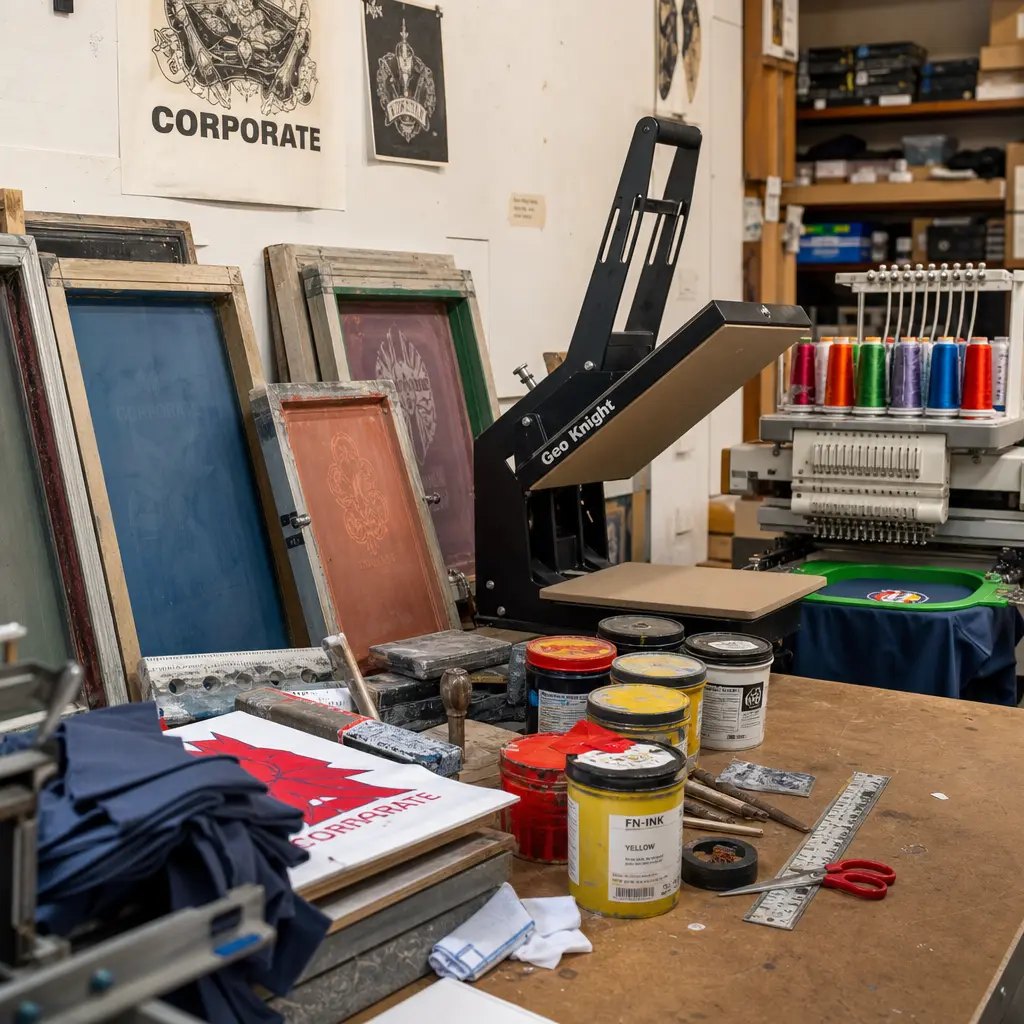
Screen printing is a practical option for many custom cotton drawstring pouches because it works well for simple one- or two-color logos. It can produce strong color on natural cotton when artwork has clean spacing and enough stroke width. Setup cost is part of the commercial decision, so screen printing is more efficient when the order quantity can absorb screens and strike-off work.
Transfer printing can help when artwork includes gradients, small text, or detail that will not hold on textured cotton. Buyers should test hand feel, adhesion, and rub resistance because some transfers feel too plastic for natural skincare packaging. Embroidery can look premium, but it may distort lighter fabric and is usually slower and more expensive. Woven side labels are often a strong choice for premium pouches because they keep the brand mark crisp across fabric lots.
Logo placement should be specified with measurements. State logo width, height, distance from bottom seam, distance from side seam, label position, and tolerance. For retail display, check visibility after the pouch is filled and closed. A mark that is centered on an empty flat pouch may sit too low once a jar, box, or bottle set creates volume.
- Use screen print for simple logos, clean line art, and repeat orders with limited color count.
- Use woven labels when the fabric is textured or the logo must remain crisp across reorders.
- Approve a strike-off on final bulk fabric before printing mass production.
Specify construction for handling
Drawstring pouch construction looks simple, but small choices affect durability and daily use. Side seam, bottom seam, top hem, channel depth, stitch density, cord diameter, and cord end finish all matter. A light sample pouch can use a simpler construction than a pouch holding two glass serum bottles in cartons. If the channel is too narrow, the cord drags. If seam allowance is too small, side seams may open during filling or consumer handling.
The drawcord should match the fabric weight. A thin cord on heavy canvas can cut into the channel and feel under-specified. A thick cord on a small plain cotton pouch can make the top bulky and reduce packing efficiency. Cotton cord supports a natural look, while polyester cord may run more smoothly and hold color better. Specify diameter, color, exposed length, end finish, and whether the pouch uses one-side or two-side pull.
Finished size tolerance needs special attention for skincare. Products are rigid, and small differences can slow a packing line. Measure after sewing, not from cut panels. For multi-item kits, test the largest expected product combination and confirm closure height. A pouch that closes only when forced will look uneven and put stress on the top channel.
- Set finished size tolerance, for example plus or minus 3-5 mm for many small to medium pouches depending on construction.
- Confirm channel depth and cord diameter together so the pouch opens and closes smoothly.
- Test samples with actual jars, tubes, bottles, cartons, refill packs, and inserts before bulk approval.
Plan packing for kitting and retail
Packing is part of the product specification. Cotton pouches can arrive wrinkled, dusty, damp, miscounted, or mixed by SKU if the factory receives vague instructions. For bulk skincare programs, counted inner bags inside export cartons are common. Inner counts such as 50 or 100 pieces can support warehouse counting, while very large inner bags may create handling and cleanliness issues once opened.
Kitting-line handling should be written into the RFQ. If pouches feed a line, cartons need clear SKU labels, consistent counts, and stable dimensions. If the pouch ships to a retail packer, barcode labels, PO numbers, color names, size codes, and carton sequence numbers may be required. If several pouch sizes or logo versions ship together, use single-SKU cartons unless mixed cartons are approved with a clear packing list.
Carton design affects landed cost and damage risk. Request carton dimensions, gross weight, wall strength, and master carton count before shipment. Overfilled cartons can compress pouch stacks and create hard creases. Underfilled cartons waste freight. Cotton also absorbs odor and moisture, so storage and loading conditions matter. Cartons that are damp, oil-stained, mold-marked, or soft from humidity should be treated as shipment risks.
- Define fold method, inner bag count, master carton count, carton dimensions, and gross weight.
- Require carton marks with PO number, SKU, material, color, size, quantity, carton number, and destination when needed.
- Add moisture, odor, and cleanliness checks for humid routes, long storage, retail-ready packing, or oily-product kitting areas.
Set QC standards before deposit
Quality control should cover incoming fabric, print approval, sewing, trimming, final inspection, and packing verification. A final random inspection can reference ANSI/ASQ Z1.4 or ISO 2859-1, often with General Inspection Level II as a baseline. AQL examples such as critical 0, major 2.5, and minor 4.0 can be used as starting points, then tightened for premium retail programs or high-risk launches.
Defect definitions must be agreed before production. Critical defects include mold, contamination, unsafe odor, sharp foreign matter, and unsupported material claims. Major defects include wrong fabric, GSM outside tolerance, incorrect finished size, open seams, broken stitches, poor drawcord function, unreadable logo, severe stains, wrong carton labels, and count errors. Minor defects include loose threads, slight wrinkles, or natural slubs within the approved standard.
Testing should be repeatable. Check GSM against the agreed tolerance. Measure finished width, height, channel depth, drawcord length, logo placement, and label position. Test seam strength with an agreed pull method on side seams and top channels. Run repeated open-close cycles for drawcord function. Use dry and damp rub tests for print, especially on dyed fabric or pouches handled near creams, oils, or balms.
- Agree on AQL, inspection level, sample size, defect classes, and reinspection rules before deposit payment.
- Test GSM, finished size, seam strength, drawcord function, shrinkage, rub resistance, shade, odor, and packing count.
- Keep inspection photos, approved swatches, print strike-offs, and sealed samples for reorder control.
Protect lead time and reorders
A useful lead-time quote breaks production into stages: sample making, strike-off approval, fabric booking, dyeing or washing, cutting, printing, sewing, trimming, inspection, packing, and export readiness. A broad statement such as production takes 25 days is not enough for a skincare launch calendar. If the order uses dyed fabric, recycled cotton, organic cotton, woven labels, or special cartons, ask which stage is the bottleneck and when changes become impossible.
Reorder control is where weak specifications become expensive. If the first shipment used an undefined natural cotton, the next lot may look different. If the cord diameter was never recorded, closure feel may change. If carton count was improvised, the warehouse may receive a different pack format next time. Keep a signed specification sheet, approved fabric swatch, print strike-off, sealed sample, and carton label template for every program.
Landed cost includes more than unit price. Add setup charges, sample fees, inspection fees, inland freight, carton volume, gross weight, duties, local handling, and likely rework risk. A supplier with a slightly higher unit price can be more competitive if cartons are efficient, counts are accurate, documents are complete, and inspection results are stable.
- Ask for a stage-by-stage calendar instead of one broad lead-time estimate.
- Record approved fabric, GSM, cord, logo, size, packing, carton, inspection standard, and documents for every reorder.
- Compare landed cost and operational risk, not only the lowest quoted pouch price.
Specification comparison for buyers
| Material option | Typical GSM range | Best skincare use | Commercial impact | Documentation and QC burden |
|---|---|---|---|---|
| Plain weave cotton | 120-200 GSM | Sample sachets, light tubes, refill packs, subscription inserts, entry gift-with-purchase pouches | Usually the lowest cotton option; flexible MOQ; shorter lead time when stock greige or natural fabric is available | Check opacity, shrinkage, print sharpness, natural shade range, and seam fraying at lower GSM |
| Cotton canvas | 200-320 GSM | Premium skincare sets, glass jars, serum bottle bundles, retail display pouches, reusable packaging | Higher unit cost and carton weight; MOQ may rise if a specific weave, dye, or finish is required | Check closure stiffness, top-channel bulk, seam strength, needle marks, carton compression, and freight weight |
| Cotton muslin | 90-140 GSM | Trial kits, soap bars, sachet sets, low-weight promotional packs with a handmade look | Low material cost and easy folding; not ideal for premium rigid kits or detailed logo work | Check loose weave, print bleeding, content show-through, seam allowance, lint, and fraying |
| Recycled cotton | 140-260 GSM | Brands with verified recycled-content goals, seasonal kits, natural speckled retail pouches | Can increase MOQ and lead time depending on certified supply; shade matching may be harder across reorders | Request fiber content proof, certification scope where applicable, traceability documents, and approved shade band |
| Organic cotton | 120-280 GSM | Premium clean beauty programs, certified product lines, reusable gift pouches tied to sourcing claims | Generally higher cost; MOQ and lead time depend on certified fabric availability and chain-of-custody handling | Confirm transaction certificates, certification scope, logo-use rules, labeling language, and supplier eligibility |
| Cotton-polyester blend | 120-240 GSM | Programs needing lower shrinkage, smoother print surface, or better dimensional stability for kitting lines | Often cost-stable and efficient to sew; may conflict with fully natural brand positioning | Confirm blend ratio, labeling claims, hand feel, heat response, shrinkage, and customer-facing material language |
| Dyed cotton fabric | 140-280 GSM | Brand-color pouches, limited launches, holiday sets, retail color blocking, line extensions | Adds lab dip approval, dye MOQ, and lead-time risk; repeat shade control must be planned | Check crocking, colorfastness, odor, shade continuity, logo contrast, and fabric-lot approval |
| Unbleached natural cotton | 120-280 GSM | Minimalist skincare, apothecary styling, refill programs, brands avoiding bright-white packaging | Often commercially efficient when stock fabric is available; exact shade control is limited | Approve physical shade range, fleck level, print contrast, shrinkage, odor, and reorder tolerance |
Buyer checklist before sampling
- Define the pack format first: single jar, tube pair, serum bottle, boxed set, refill pouch, discovery kit, subscription insert, or retail gift set.
- Measure the filled product group and packaging together, including caps, cartons, spatulas, leaflets, dividers, and clearance for hand insertion.
- Choose a GSM range by use: 120-160 GSM for light samples, 160-220 GSM for most skincare kits, and 220-320 GSM for premium or heavier sets.
- Specify fabric type, weave, GSM target, GSM tolerance, color standard, finish, shrinkage limit, and whether the material must be pre-shrunk or certified.
- Confirm whether the pouch must protect presentation only or also support fragile items such as glass jars and serum bottles inside secondary cartons.
- State logo method, artwork size, color count, placement tolerance, label position, and whether fine text must remain readable on textured cotton.
- Request a pre-production sample made with final fabric, final cord, final print or label method, final size, and intended packing format.
- Set measurable QC criteria for GSM, finished size, seam strength, drawcord pull, print adhesion, rub resistance, shrinkage, odor, stains, shade, and carton condition.
- Define packing rules: fold method, inner bag count, master carton count, carton strength, SKU labels, barcode labels, carton marks, and moisture protection.
- Compare suppliers on the same incoterm, same carton dimensions, same included accessories, same inspection plan, and same sustainability documentation scope.
Factory quote questions to send
- What exact fabric is quoted: plain weave cotton, canvas, muslin, recycled cotton, organic cotton, dyed cotton, or blend?
- What are the yarn count, weave, target GSM, and allowed GSM tolerance, and will GSM be checked before cutting?
- Is the fabric raw, washed, pre-shrunk, dyed, bleached, or unbleached, and what shrinkage result should we expect?
- What documents can you provide for recycled, organic, or blended material claims, and do they cover fabric only or finished goods?
- What finished pouch size is quoted after sewing, and what width, height, channel, and logo placement tolerances are included?
- What drawcord material, diameter, color, exposed length, end finish, and replacement tolerance are included in the unit price?
- Is the channel designed for one-side or two-side pull, and are the channel openings reinforced for repeated closure?
- Which print or label method is included, how many colors are priced, what is the maximum print area, and what setup charges apply?
- Can you provide a strike-off on final bulk fabric before mass production, and how many revision rounds are included?
- Are woven labels, care labels, barcode labels, hangtags, inserts, individual polybags, desiccants, or retail cartons included or excluded?
Quality-control points to confirm
- Use a documented inspection plan such as ANSI/ASQ Z1.4 or ISO 2859-1 with General Inspection Level II for normal final inspection; add special tests for premium retail programs.
- Set AQL examples before production. Critical 0, major 2.5, and minor 4.0 can be used as starting points, then adjusted by brand risk, shipment value, and retail exposure.
- Classify defects clearly: critical includes mold, contamination, unsafe odor, sharp foreign matter, and unsupported material claims; major includes wrong fabric, wrong GSM, wrong size, open seams, poor closure, unreadable logo, severe stains, wrong carton labels, and count errors; minor includes loose threads, slight wrinkles, or small slubs within the approved standard.
- Check GSM from bulk fabric using a documented method and agreed tolerance, such as plus or minus 5% for tighter programs or plus or minus 8% for value-driven orders.
- Measure finished pouch width, height, channel depth, drawcord length, logo placement, and label position against the approved spec sheet rather than visual judgment.
- Test seam strength with an agreed pull method on side seams, bottom seams, and top channels for a fixed time without seam opening, skipped stitches, or fabric tearing.
- Run repeated open-close checks to confirm drawcord movement, channel durability, cord shedding, cord length consistency, and closure appearance when filled.
- Test shrinkage on final fabric or finished pouches using a defined wash, steam, or humidity exposure condition that matches expected use.
- Check print adhesion and rub resistance with dry and damp rub tests, especially for dark ink, dyed fabric, oily-product handling, or retail kitting lines.
- Inspect packing for SKU mix, carton count, moisture, odor, carton strength, barcode accuracy, secondary carton fit, and cleanliness before shipment release.