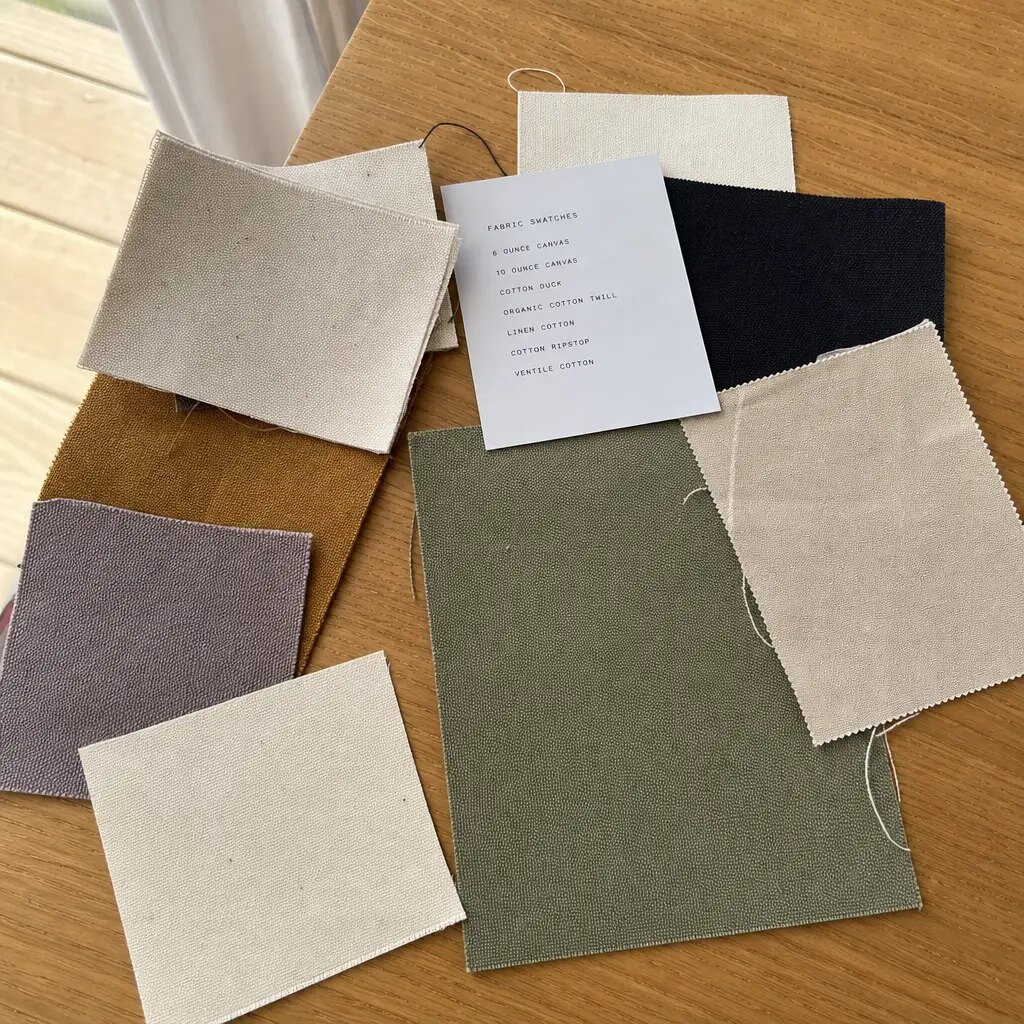
Why material selection matters more than the pouch shape
For coffee roasters, the main buying mistake is treating a cotton drawstring pouch as a generic merch item. The same silhouette can serve very different jobs: a sampler gift pouch, a retail accessory bag, a grinder brush set holder, or an outer pack holding sealed coffee bags. The material needs to match the real function. If the pouch is only there to present a premium roast set, fabric hand feel and print quality usually matter more than abrasion resistance. If it carries a mug, scoop, and a 250 g coffee bag, seam strength and body structure move higher on the decision list.
Cotton also gets misused as if it were a direct barrier package for roasted beans. It is not. Cotton is breathable, absorbs odor, and does not provide moisture or oxygen protection. For most roasters, the cotton pouch should be positioned as secondary packaging or reusable branded packaging around a proper inner coffee bag. That one clarification changes material selection fast. You can then choose fabric for brand appearance, durability, carton efficiency, and cost, instead of trying to force cotton to do the job of a foil or PE-laminated barrier bag.
- Use cotton pouch as outer packaging for sealed coffee bags, accessories, gift sets, or event packs
- Do not rely on plain cotton pouch for aroma retention or shelf-life protection
- Pick material based on filled weight, print style, reuse expectation, and freight impact
Choosing the right cotton weight: where 4oz, 6oz, 8oz, and 10oz actually fit
Fabric weight is usually the first useful filter because it affects both unit cost and usability. Lightweight 4oz to 5oz cotton, roughly 135-170 GSM, works when the pouch is mostly a promotional cover or a holder for small items like drip bag assortments, coupons, tasting notes, or a small retail add-on. It folds compactly, prints well enough for simple graphics, and keeps the piece inexpensive. The tradeoff is lower body and lower seam margin for heavy fillings. If a buyer puts a 500 g bean bag, ceramic cup, or metal tool inside, this grade starts to feel underbuilt.
For most coffee roaster applications, 6oz to 8oz cotton, around 200-270 GSM, is the practical middle. It gives a better hand feel, less fabric show-through, cleaner logo presentation, and more reliable stitching at side seams and top channel. When the pouch needs to stand up to repeated opening and store-shelf handling, this range is usually the safest recommendation. At 10oz canvas, around 340 GSM, the pouch becomes noticeably sturdier and more premium-looking, but the cost increase is not only in fabric. Sewing time goes up, carton quantity drops, and heavyweight cloth may be unnecessary if the contents are light.
- 4oz to 5oz: budget promo use, low filled weight, compact packing
- 6oz to 8oz: best general-purpose range for coffee roaster branded pouches
- 10oz: premium structure for heavier gift contents or reusable retail packaging
- Always link GSM choice to actual filled product weight, not only the visual target
Natural cotton, bleached cotton, or dyed fabric: appearance and risk tradeoffs
Natural unbleached cotton is popular with specialty coffee brands because it supports an earthy, low-processed look. It usually pairs well with black, dark brown, forest green, or muted brand colors. It can also be cost-efficient because it avoids bleaching and some extra finish steps. The issue is consistency. Natural cotton can vary slightly from lot to lot in shade, and small seed specks or slubs may appear. For many roasters, that is acceptable and even desirable. For a tightly controlled retail chain, it may create unnecessary approval friction unless the acceptable appearance standard is written clearly before sampling.
Bleached white cotton gives the cleanest base for bright logo colors and finer graphic detail. Dyed cotton, especially black or deep tones, creates a more premium presentation and hides coffee dust or handling marks better than natural fabric. But dyed goods need more caution in quote comparison. Cheap dyed cotton can bleed, crock, or show shade inconsistency between lots. If the pouch will be packed with light-colored cups, paper cards, or textile accessories, color transfer risk matters. A buyer should request shade approval swatches and define what level of lot variation is acceptable instead of assuming all black cotton is the same.
- Natural cotton: brand-authentic look, but visible lot variation should be pre-approved
- Bleached white: best for bright clean print results
- Dyed black or dark colors: premium look, but request rub and shade consistency review
- For repeat orders, keep a retained fabric swatch signed against the approved PO
Print method selection: silkscreen, heat transfer, and embroidery by logo type
Most coffee roaster pouch programs should start with silkscreen printing because it balances cost, speed, and logo clarity on cotton surfaces. Simple one-color or two-color brand marks, origin badges, and short text print well on 6oz to 8oz cotton. On rougher natural fabric, very fine lines or tiny reverse text may lose sharpness, especially near seams or over slub areas. That is not a factory problem alone; it is often a mismatch between artwork detail and base cloth texture. If the branding team wants intricate line art, halftones, or small typography, a different print method or smoother fabric should be chosen early.
Heat transfer can produce finer details and photographic effects, but it adds process cost and can feel less integrated with the fabric than silkscreen. It also depends on artwork size and placement because transfer on a wrinkled or thick seam area can show edge lift or imperfect adhesion. Embroidery is usually reserved for premium short runs, gift sets, or retail merchandise where the tactile branded look supports a higher selling price. It is slower, often MOQ-sensitive, and can distort thin fabric unless the base cloth is stable enough. Buyers comparing quotes should not ask for 'best print method' in general terms. They should send the actual logo and intended pouch fabric together.
- Silkscreen: strongest value for simple coffee brand logos
- Heat transfer: better for detail, gradients, or small fine text on suitable fabric
- Embroidery: premium look, higher cost, not ideal for very lightweight fabric
- Keep logo away from top drawstring channel and heavy side seam zones
Construction details that affect performance and quote accuracy
Many pouch quotes look similar until construction is broken out. A low quote may use a narrower seam allowance, lighter cord, fewer stitches per inch, or a shorter top channel. Those details do not appear in a basic photo. For coffee roaster use, side seams and top channel strength matter because pouches are often opened repeatedly during retail handling or gifting. If the filled product is heavy, a small saving in seam allowance or stitch density can become open seams in transit. Buyers should define not just size and fabric, but also whether the pouch needs double drawcord, boxed bottom, French seam, overlock finish, or a simple inside raw seam finish.
Drawstring material also changes performance. Cotton cord looks more natural and brand-consistent, but quality varies by diameter and braid tightness. Polyester cord can be smoother and stronger for the cost, though some brands dislike the mixed-material look on a cotton pouch. Cord length matters too. If too short, the customer struggles to close the pouch. If too long, it tangles during packing and presents an untidy retail appearance. These are not small details when a roaster is shipping thousands of units into distribution. They should be part of the approved sample and the written quote basis.
- Specify seam finish: raw edge, overlock, or cleaner enclosed seam if needed
- State single or double drawstring and desired cord material
- Add bottom depth only if contents need structure; otherwise flat pouches pack more efficiently
- Request inside and outside sample photos, not only front-view beauty shots
MOQ logic and why mixed sizes can distort the real unit price
MOQ for custom cotton drawstring pouches is rarely just one number. It usually changes by fabric color, pouch size, print color count, and whether the factory can combine production with a standard base cloth already in stock. A buyer may receive an attractive price on one size in natural cotton with a one-color logo, then find the unit cost rises sharply when splitting the order into three sizes or two dyed colors. The reason is practical: cutting efficiency drops, print setup multiplies, and carton assortment becomes more labor-intensive. That is normal, but buyers need to understand it before comparing suppliers line by line.
For coffee roasters launching seasonal gift packs, mixed-size assortments are common. The smarter RFQ approach is to request pricing in volume tiers with the same artwork, then separately request the uplift for size split, color split, and packaging split. That shows where the factory's cost model changes. It also helps procurement decide whether one universal pouch size can reduce landed cost enough to justify a small fit compromise. In many cases, standardizing one or two pouch sizes across multiple SKUs saves more than squeezing each retail item into a unique exact-fit pouch.
- Ask for base price by one size and one color first, then add split-cost options
- Mixed sizes increase cutting and packing complexity
- Dyed fabric color changes may create separate MOQ thresholds
- Standardizing pouch size often lowers both unit cost and receiving complexity
Sample approval: what procurement should evaluate beyond the visual look
A pre-production sample is not only for marketing approval. It is the best stage to catch failures that become expensive in bulk. For cotton drawstring pouches, buyers should measure actual finished dimensions, test the drawcord action five to ten times, inspect print alignment, and load the pouch with the real intended contents. A pouch can look correct empty but distort badly once filled with a 250 g or 500 g coffee bag. The sample should also be reviewed from the inside. Loose trimming, skipped stitching, exposed raw fray, and weak cord knotting are easier to accept by accident when only exterior photos are reviewed.
Another practical sample issue is fabric hand feel and stiffness. Some factories may quote the right nominal GSM but source a harsher or looser weave that changes the perceived quality. For roasters selling premium gift sets, hand feel matters because the pouch becomes part of the unboxing experience. If repeat business is expected, procurement should retain one physically signed approval sample and one fabric swatch standard. Without that, future reorders can drift in cloth texture or shade while technically staying close to the original quote description.
- Measure finished width and height on the actual sewn sample
- Load test with real coffee pack or accessory contents
- Inspect interior stitching and trimming quality
- Retain approved sample and signed fabric swatch for repeat orders
Packing and carton planning: where many low-cost pouch orders become expensive
Pouches are lightweight, so buyers often overlook packing discipline. That becomes a problem when multiple sizes, roast series, or logo variants arrive mixed loosely in cartons. Warehouse receiving time rises, count errors appear, and some cartons may be relabeled manually before dispatch to stores or fulfillment partners. For coffee roasters with seasonal launches, that extra inbound labor can wipe out the apparent savings from a low unit price. Flat packing by defined bundle count inside polybags or inner packs is usually the cleanest approach. The carton should show item code, size, color, and quantity clearly on the outside.
Carton dimensions also matter more than many buyers expect. A thicker 10oz pouch reduces units per carton and can increase freight cost disproportionately compared with a mid-weight 6oz or 8oz pouch. If the project ships with other packaging items such as cups, boxes, or coffee accessories, carton cube can be as important as the ex-works price. Procurement should request carton size, net weight, gross weight, and packing ratio early, then model how many cartons fit in the planned shipment mix. That gives a more accurate landed-cost picture than unit price alone.
- Use fixed bundle counts inside cartons for faster receiving
- Separate sizes or logo variants unless a mixed pack is intentionally specified
- Collect carton dimensions and gross weight with the first quotation
- Heavier canvas may raise freight cost more than expected through lower carton efficiency
Lead time planning and the schedule risks specific to custom cotton pouches
Lead time on cotton drawstring pouches looks simple, but several small variables can stretch it. Dyed fabric may need extra time for color approval or sourcing if the shade is not standard. Multi-color print adds setup and drying sequence. Embroidery can queue behind other orders because machine capacity is finite. If the pouch is part of a coffee holiday set or promotional launch, those delays matter more than on evergreen items. The safest planning method is to separate sample lead time, artwork approval time, material booking time, and bulk sewing time instead of requesting one general delivery promise.
Procurement should also identify schedule risk created by internal approvals. Many launches lose time because purchasing approves cost first, then brand teams later request logo size changes, side labels, or revised pouch dimensions. Those changes are manageable early but disruptive after fabric cutting or print screen setup. A cleaner workflow is to freeze size, fabric, artwork, and packing method before bulk approval. If the order is date-sensitive, ask the supplier which elements are on the critical path. For example, custom dyed fabric and woven labels may be slower than pouch sewing itself.
- Break lead time into sample, approval, material prep, printing, sewing, and packing stages
- Flag seasonal launch dates early so the supplier can advise capacity risk
- Freeze artwork and pouch dimensions before bulk start
- Custom dyeing and woven labels often add more risk than basic sewing
How to compare quotes on landed cost instead of unit price only
A procurement team comparing pouch suppliers should build the comparison around landed cost and failure risk, not only ex-works price. One quote may be lower because it uses 150 GSM cloth instead of 220 GSM, simpler seam finish, shorter cord, or looser packing. Another may include individual barcode stickers, bundle packing, better carton efficiency, or a more stable print process that reduces rework. For coffee roasters shipping retail-ready gift components, those differences affect receiving labor, defect exposure, and freight spend. A quote is only comparable when fabric weight, print method, construction, and packing basis match closely.
A practical quote sheet should include at least these cost drivers: base fabric GSM, fabric color, print colors and method, pouch size, cord material, label type, individual packing, carton ratio, sample cost, and estimated bulk lead time. Then add one landed-cost note: units per carton and carton cube. That helps buyers identify when a slightly higher ex-works price actually ships more efficiently or reduces warehouse handling. For lower-volume specialty roasters, the cheapest unit is often not the lowest total program cost once setup charges and mixed-SKU packing are included.
- Normalize GSM, size, print method, and packing before comparing supplier prices
- Include carton cube and units per carton in landed-cost review
- Treat warehouse sorting labor and defect risk as real sourcing costs
- Watch for low quotes built on lighter fabric substitution or simplified construction
Specification comparison for buyers
| Spec decision | Recommended option | When it fits | Buyer risk to check |
|---|---|---|---|
| Base fabric weight | 6oz to 8oz cotton, about 200-270 GSM | Best for coffee bean gift pouches, retail accessory packs, or multi-pack sampler sets where shape, print clarity, and moderate durability matter | Too light can wrinkle, distort print, and feel cheap; too heavy can raise cost and reduce carton quantity |
| Lightweight economy pouch | 4oz to 5oz cotton, about 135-170 GSM | Suitable for promotional giveaway pouches, drip bag sets, or non-heavy contents where price per unit is the main driver | Seam stress increases with heavier contents; fabric can become semi-transparent after dark print or washing |
| Premium sturdy pouch | 10oz canvas, about 340 GSM | Works for grinder accessories, mugs, metal tools, or reusable retail packaging where structure matters more than low freight cost | Higher MOQ pressure, bulkier cartons, and thicker seams can affect print area and sewing consistency |
| Natural cotton color | Unbleached natural cotton | Good for craft, specialty, and sustainability-led coffee branding with simple black or dark brown logo work | Shade varies by lot; small seed dots or slubs may appear and should be approved as acceptable before bulk |
| Black or dark dyed fabric | Reactive dyed cotton with color fastness target stated in RFQ | Useful when a darker premium look is needed or when coffee dust marks on light fabric are a concern | Dye lot variation, crocking, and extra shrinkage risk; request color swatch approval and rub test standard |
| Print method | Silkscreen for simple logos, heat transfer for detailed artwork, embroidery only for premium low-volume branding | Silkscreen fits most coffee roaster logos; transfer suits small text or tonal detail on smoother fabric | Print cracking, misregistration on textured fabric, and logo size limits near drawstring channel |
| Closure format | Single-side drawstring for simple access, double drawstring for cleaner retail presentation | Single drawcord saves cost on small pouches; double drawcord looks better for gift-ready packaging | Short drawcord length, weak knot fixing, or uneven channel sewing can make closing inconsistent |
| Lining or barrier layer | No lining for dry accessories; add food-contact inner bag separately for roasted beans | Best when outer pouch is branding or gift packaging rather than direct food-contact primary packaging | Buyers sometimes assume cotton alone protects aroma and moisture; it does not replace a proper coffee barrier bag |
| Packing method | Flat packed in PE bag by bundle, then export carton with size ratio count | Best for import efficiency and quick inbound counting across SKU or size assortments | Loose mixed carton packing causes receiving errors, logo mix-ups, and higher damage or recount labor |
Buyer checklist before sampling
- Define whether the pouch is an outer gift pack, accessory bag, sampler holder, or direct-contact package replacement; material choice changes by use case
- State exact finished size in centimeters and note whether size tolerance applies before or after sewing and drawstring closure
- Specify cotton type and target weight in GSM or oz, not only 'cotton pouch' or 'canvas pouch'
- Decide if natural, bleached, or dyed fabric is required and whether lot shade variation is acceptable
- Provide artwork format and maximum print area, and note if logo placement must avoid the drawstring channel seam distortion zone
- State expected filled product weight so the factory can match seam allowance and drawcord strength
- Clarify whether the pouch touches food directly or only holds sealed coffee bags, cups, filters, or gift items
- Request pre-production sample approval for fabric hand feel, print sharpness, drawstring action, and finished measurement
- Set packing ratio by size, color, and logo version to reduce warehouse sorting errors
- Ask for carton dimensions, carton gross weight, and estimated units per 20ft or 40ft container for landed-cost planning
Factory quote questions to send
- What exact fabric composition and GSM are you quoting, and what is the acceptable production tolerance on weight?
- Is the quoted fabric plain weave cotton, cotton canvas, or blended material, and how does that change print result and seam durability?
- Does the quote include fabric pre-shrinking or washing, or should shrinkage be expected after sampling or end use?
- What print method are you pricing for this logo, and what artwork limitations apply on textured natural cotton?
- What is your MOQ by size, color, and logo design, and does MOQ change if we mix 2 to 3 sizes in one order?
- Can you share sample photos showing inside seam finish, drawstring knotting, and top channel stitching on similar pouches?
- What is your standard drawcord material and diameter, and can you quote cotton cord versus polyester cord separately?
- How do you pack mixed SKUs in export cartons, and what carton count tolerance should we expect at receiving?
- What is the normal lead time for sample, pre-production approval, and bulk production during peak season?
- Which defects are counted as major for your in-line and final inspection: print offset, wrong size, open seam, shade variation, or cord length mismatch?
Quality-control points to confirm
- Finished size tolerance should be agreed by pouch size, commonly around plus or minus 0.5-1.0 cm for small pouches and plus or minus 1.0-1.5 cm for larger styles
- Fabric weight should be spot-checked against quoted GSM tolerance, especially where low-price quotes may substitute lighter cloth
- Drawstring channel stitching must be straight and secure with no skipped stitches, raw fray exposure, or cord snagging during opening and closing
- Logo position should be measured from top edge and side seam so print does not drift visibly across the production run
- Natural cotton lot variation, slubs, and seed specks should be defined as acceptable or not before bulk approval
- Dyed fabric should be reviewed for shade consistency between pouch body, cord, and any handle or trim components if added
- Seam pull strength should match intended contents; heavier coffee gift sets need stronger side seam construction than lightweight promo sachet packs
- Carton labels must show item code, color, size, quantity, and PO reference to prevent inbound sorting mistakes