What logo placement really changes on a cotton drawstring pouch
For custom cotton drawstring pouches, logo placement is not a design afterthought. It affects print yield, setup time, visual balance, and the amount of risk you carry if the pouch shrinks, wrinkles, or pulls at the cord channel. A logo that looks centered on a flat mockup can drift once the bag is sewn, folded, and filled, so procurement teams should specify the finished pouch, not only the artwork file.
For nonprofit campaigns, placement has a second job: it has to work in the real world of volunteers, donors, mailers, and event staff. The pouch may be handled quickly, stacked in cartons, or photographed in low light at a fundraising table. If the logo sits too close to a seam or too high under the drawcord, the bag may technically pass production but fail as a visible campaign item. That is why buyers should define a print window, not just a general location.
The safest approach is to treat placement as a production constraint and a brand control point. Ask the supplier to confirm the finished pouch dimensions, the usable front-panel print area, and the exact distance from the bottom hem and side seams. Once those measurements are approved, the buyer can compare suppliers on the same basis instead of relying on vague wording like centered, near the top, or a little lower than midline. For procurement, “looks centered” is not a usable spec; “print center 55 mm above bottom seam on finished pouch, within ±10 mm” is.
Also define what the pouch will hold. A pouch that looks perfect empty can pull open or wrinkle differently once literature, pins, or a donor gift set is inside. For campaigns where staff hand out the pouches at events, the logo should remain legible at arm’s length and from the side. For mailer kits, it may be more important that the artwork sits in the same place every time so kitting teams can pack quickly without sorting or flipping.
The right placement choice is usually the one the factory can repeat without debate. That means clear direction on the measured print area, the approval method, and the exact reference point used by QC. If your order may be rerun next quarter, use the first production sample as the master reference and keep the same drawing, measurements, and photo record tied to the PO.
- Front-panel prints are easier to inspect than side or bottom placements.
- Center placement works for event giveaways when the pouch is held flat.
- Upper-left placement can suit premium branded kits, but it reduces usable area if the cord channel sits high.
- Avoid placing small text too close to the stitching line because seam tension can distort letters.
- Require measurement from the finished seam to the print edge, not from the raw cut fabric.
- For nonprofit use, prioritize easy recognition from 1-2 meters away rather than decorative symmetry.
Choose fabric weight before you choose print size
Fabric weight is the first specification that determines whether the logo looks crisp or weak. For basic campaign pouches, 120-150 GSM cotton is usually the practical range: it keeps the bag affordable, folds well, and supports common one-color prints. If the pouch will carry heavier inserts, or if the buyer wants a more premium feel for donor kits or retail bundles, 150-200 GSM gives better body and reduces show-through behind darker artwork.
The tradeoff is simple. Lower GSM reduces material cost and freight volume, but it can warp under heat and show print bleed if the ink is too heavy or the fabric weave is too open. Higher GSM gives a cleaner presentation and better perceived value, but quote comparisons must account for higher fabric consumption, slightly longer sewing time, and more carton weight. That means a “cheap” heavier pouch can become expensive once shipping and kitting are included.
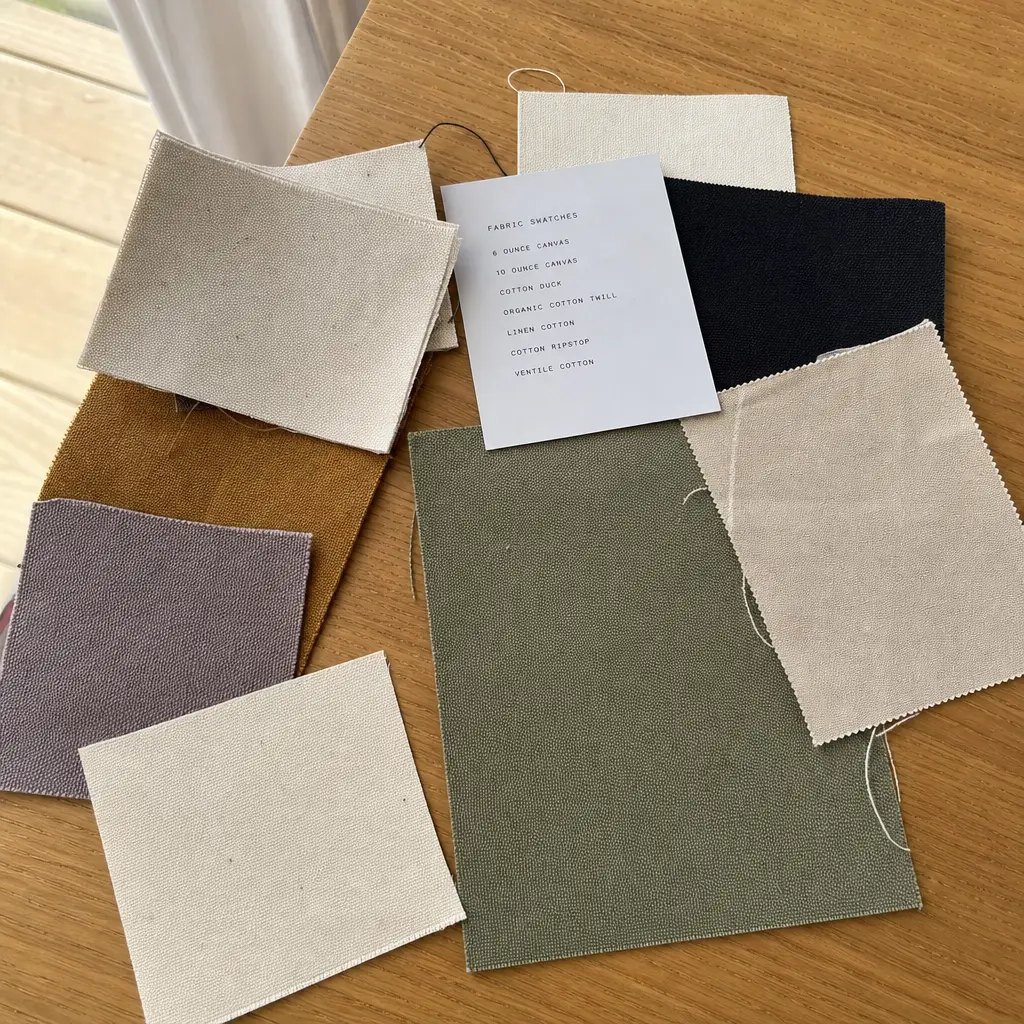
Nonprofit campaigns often need a balanced middle ground. A 120-140 GSM pouch may be enough for a literature pack or wristband set, while a 150-180 GSM pouch is better when the pouch itself is part of the gift. The right answer depends on what is going inside the bag, how the organization will distribute it, and whether the pouch is expected to be reused after the campaign. Ask for swatches or a pre-print sample; GSM alone does not reveal weave density, color variance, or how well the fabric takes ink.
If your artwork is detailed, ask whether the weave can hold fine linework at the chosen print size. A thin logo on open-weave cotton may look soft or broken even when the screen file is correct. Likewise, a natural unbleached cloth may show flecks or shade variation that are acceptable for a rustic campaign but not for a sponsor-facing donor kit. Procurement should judge fabric not only by weight, but by opacity, hand feel, and print behavior.
When buyers compare offers, insist on the same GSM and fabric finish across suppliers. One factory may quote a lower price using a looser weave or a narrower usable print area, which makes the comparison misleading. The better RFQ asks suppliers to state both the raw fabric spec and the finished pouch spec so you can see the full tradeoff before selecting the best value.
- Use 120-150 GSM for event kits, literature packs, and donation campaigns with tight budget control.
- Use 150-180 GSM when the pouch is part of a retail bundle or recurring branded program.
- Ask whether the fabric is bleached or unbleached, because print contrast changes quickly.
- Request a physical swatch or pre-print sample; GSM alone does not show weave density or surface smoothness.
- If the pouch carries sharp-edged items, verify that the fabric and stitching tolerate abrasion.
- For white or light logos, confirm whether the cloth background is uniform enough to avoid patchy contrast.
Best logo placement options by sourcing route
Different sourcing routes support different placement choices. Factory-direct buyers can usually request a precise artwork position, but they must lock the spec early and approve a pre-production sample. Traders may offer faster quoting and a lower barrier to entry, yet the buyer can lose visibility into screen setup, subcontracted sewing, and who is actually controlling placement tolerance. For procurement teams, those hidden details matter because they determine whether the factory can repeat the same result on the second order.
For nonprofit campaigns, the most efficient route is often a simple front print on one size and one fabric base. That keeps the quote clean and lowers the chance of a production mismatch. If the order needs more than one logo placement, such as a front logo plus a side mark or a donor program tag, cost those elements separately. Each added placement increases setup risk, inspection time, and the chance of seam interaction.
The route should also match the order’s timing. If the nonprofit has a short event deadline, a local decorator may be useful because the buyer can see the sewn pouch sooner. If the order is large, imported, and repeatable, factory-direct sourcing generally offers better control of print position, carton labeling, and batch consistency. The right sourcing route is the one that lets you measure the product the same way every time.
Ask who owns the master spec and who is accountable if the placement drifts. That answer matters more than the sales channel. If the quote comes through a middle layer, require the actual production factory name, the print method, and the final carton pack-out details. The supplier should be able to tell you whether the print is done before sewing, after sewing, or as a separate finishing step, because that affects the achievable tolerance and the inspectable reference points.
For recurring nonprofit programs, a factory-direct route usually creates the cleanest reorders because the same artwork setup and placement drawing can be reused. For one-off campaigns, a local or domestic option can reduce sampling latency, even if the unit price is higher. Procurement should choose based on control and deadline risk first, then negotiate price once the production path is clear.
- Factory-direct route: best for repeat orders and precise approval control.
- Trading route: useful for small test buys, but require written artwork-location confirmation.
- Domestic decorator route: good for urgent local runs, but unit cost is often higher.
- Mixed-route sourcing: use only if you can prevent sample confusion and duplicate setup charges.
- Ask who owns print setup, who inspects sewing, and who signs off on final packed cartons.
- If the campaign is donor-facing, insist on a single approved reference sample tied to the purchase order.
Use this comparison to avoid paying for the wrong placement
Buyers often compare pouch quotes by unit price only, but placement choice changes the real landed cost. A lower quote with a poor logo position may trigger a second sample round, extra screen fees, or carton rework. For procurement teams, the better comparison is whether the supplier can hold the same artwork position across the full lot with predictable QC. If one supplier quotes a lower price but cannot prove placement control, the apparent savings can disappear before the goods even reach your warehouse.
The table below helps compare sourcing choices by the decisions that matter most: where the logo sits, how it is applied, and what operational risk comes with that choice. Use it as a buyer checklist, not as a design preference sheet. A good supplier should be able to quote against these details without ambiguity and should be willing to reference the finished sample, not only the artwork file.
For nonprofit campaigns, this matters even more because the pouch often carries a mission message, a sponsor mark, or a donor thank-you role. Misplaced logos can affect brand credibility and make the order unusable for event distribution. A disciplined quote comparison protects both budget and campaign presentation by forcing every supplier to respond to the same measured spec.
A useful comparison rule is to normalize quotes to the same finished size, same front print dimensions, same seam margin, same packing method, and same sample policy. If one supplier includes only a loose decorative pouch with no measured reference points, and another includes a signed pre-production sample plus carton labels, the second offer may actually be cheaper in operational terms. Procurement should compare what arrives, not only what is invoiced.
If you manage multiple campaigns, keep a comparison spreadsheet with columns for GSM, print area, distance from seam, print method, sample lead time, production lead time, inner pack count, and carton count. That makes recurring buys easier and lets you see which supplier can consistently deliver the same placement without extra instructions.
- Write decisions in measurable language, not only descriptive wording.
- Ask for sample photos plus one physical approval sample for important orders.
- Keep quotation, sample approval, and inspection notes tied to the same spec version.
- Compare the total cost of a usable pouch, not just the ex-factory price.
- If two suppliers quote different print areas, normalize the numbers before choosing.
- For mission-critical campaigns, require a measured placement drawing from the factory.
Sample approval should lock the placement window
A good sample is not just a reference for color. It should lock the exact logo position, print size, and distance from the seam, cord tunnel, and bottom hem. If the sample arrives with the artwork a few millimeters higher or wider than agreed, the bulk order will likely drift further once production starts. Approval should be based on the sewn pouch in hand, not the artwork proof on screen.
Before approval, fold the pouch as it will ship and make sure the logo still reads cleanly. Check the front when the bag is empty and when it contains a typical fill. If the logo disappears into wrinkles or lands under the drawcord closure, the placement is wrong even if the print itself is technically sharp. This is especially important for nonprofit campaign pouches, which may be opened, refilled, photographed, or reused by the recipient.
The sample process should produce a traceable record. Keep the approved pouch, a marked-up photo showing measured distances, and a written note of the fabric lot, cord type, and print method. If the supplier needs to revise the sample, treat the revision as a new approval point instead of “close enough.” Near-matches are the fastest path to bulk disappointment because they create arguments about tolerance after production has already started.
For stronger control, ask the factory to mark the print window on the sample card in millimeters, not just in wording. If the pouch is for a sponsor-facing campaign, request a layout sheet showing the logo relative to the top edge, side seam, and bottom hem. You want one reference package that procurement, QC, and the factory can all read the same way. That avoids the common problem where the sales team says the placement is approved but the production team has a different working interpretation.
Sample approval is also the time to test handling. Open and close the drawcord several times, pack and unpack the pouch, and check whether the logo location still looks balanced after ordinary use. If the logo appears too high, too low, or too close to the side seam after the bag is filled, revise it before production. Small corrections at sample stage are far cheaper than reruns or write-offs after the shipment is packed.
- Measure from seam to print edge and record the accepted distance on the sample card.
- Confirm whether the approved sample is hand-printed or machine-printed.
- Mark the exact approved pouch size, GSM, and cord style on the sample file.
- If the sample needs revision, reset the timeline instead of approving a near-match.
- Check the bag filled and unfilled, because folding can change logo visibility.
- Keep a dated approval photo so procurement, QC, and the supplier use the same reference.
Print method affects both placement and quote structure
Screen print is usually the most stable option for cotton drawstring pouches with simple campaign logos. It handles solid shapes well, keeps setup cost manageable, and makes repeat orders easier to compare. For buyers, the main benefit is consistency: once the screen, platen, and placement are locked, the factory can repeat the run with less variation. That is why screen printing is often the default choice for nonprofits ordering in volume.
Heat transfer or digital transfer may be useful for small quantities or multi-color artwork, but the buyer should treat those methods as more sensitive to fabric texture and cure quality. On textured cotton, transfers can sit on the surface and show edge lift after folding. If the campaign requires long shelf life or repeated handling, ask the supplier to prove adhesion and wash resistance on the actual fabric, not on a different swatch. A pouch that looks good out of the press but fails after packing is a preventable procurement problem.
Print method also changes the pricing model. Screen printing often has a setup fee per color and may reward larger repeat orders, while transfers can price more like a short-run decoration service. If you are requesting multiple quotes, make the method explicit so suppliers do not quote against different assumptions. Ask whether their quoted price includes screen setup, alignment, curing, and inspection, because hidden decoration charges make comparison unreliable.
The method also influences what placement tolerance is realistic. Screen print on a flat blank before sewing can give cleaner alignment to a measured template, while printing on a finished pouch may need more generous tolerance around seams and folds. Buyers should ask the supplier to name the process and the acceptable deviation in millimeters. If the logo includes small text, barcode-like elements, or thin lines, confirm the minimum line width the factory can hold on the selected cotton surface.
If your nonprofit campaign includes different message versions, ask whether the factory can change artwork without resetting the whole production flow. Some suppliers can reuse the same screen size and only swap the art; others need a full new setup. Knowing that distinction helps you estimate the cost of a future campaign update before you commit to a long production run now.
- One-color logos usually favor screen print on natural cotton.
- Small, detailed logos may need a larger print area to stay legible.
- Full-color art often raises both setup cost and placement risk.
- Always ask whether the ink or transfer can survive folding, handling, and storage friction.
- For nonprofit campaigns, keep artwork simple enough that the logo reads clearly from arm’s length.
- Confirm whether the supplier prints before or after sewing, since that affects placement accuracy.
MOQ logic: why logo placement changes minimum order cost
MOQ is not just about how many pouches the factory wants to run. It is tied to how many screens, setup passes, artwork positions, fabric cuts, and packing steps are required. A centered one-color print on one size is easy to repeat, so the MOQ can stay lower. The moment you add a second placement, a second size, or a second logo color, the factory usually needs more setup labor and a larger run to protect margin. Procurement buyers should assume complexity raises MOQ unless the supplier proves otherwise.
Buyers should separate campaign needs from inventory planning. If the nonprofit only needs a single event batch, keep the artwork simple and use one pouch spec. If the organization plans recurring fundraisers or donor gift shipments, ask for tiered pricing at the same placement so you can see the cost of repeatability versus customization. This also helps avoid stranded inventory when a campaign ends and the next event uses a different message or sponsor mark.
A useful RFQ practice is to quote the core pouch one way and then price optional complexity separately. For example, ask for a base quote for one front print on one size, then request the uplift for a second color, a second print location, or a branded hangtag. That gives procurement a clean view of where cost is coming from and makes internal approval easier. It also helps the factory answer with fewer assumptions and fewer surprise adders later.
In practical terms, the MOQ should be discussed alongside the yield. A pouch with a large centered logo may consume a larger print area and require more careful alignment, which can slow production. If you split the order into two artwork versions, ask whether the factory counts each version separately for MOQ and whether the sample charge is repeated for both. Those details matter more than the headline MOQ number if you are trying to compare suppliers on real cost.
For nonprofit campaigns, the best strategy is often to keep a stable master pouch spec and only change a small variable element, such as a message line or seasonal line of text, if the supplier can do so without creating a new setup category. The simpler the spec, the easier it is to reorder, inspect, and compare quotes next time.
- Single size, single color, single placement usually gives the cleanest MOQ.
- Two placements should be costed as a separate decoration operation.
- Small reorder quantities may carry the same setup cost as the first batch.
- If you expect reorders, lock one master spec and keep a reference sample archive.
- Ask the supplier to show whether MOQ changes with fabric stock, not just print complexity.
- For nonprofit programs, define the minimum viable spec before adding premium options.
Packing and carton rules that protect logo quality
Packing is part of print quality, not just logistics. Cotton pouches can crease heavily if they are folded too tightly or packed before the ink is fully cured. If the logo sits near a fold line, pressure in carton transit can leave permanent marks or transfer ink from one pouch to another. A good packing instruction should define the fold direction, count per inner bag, and minimum cure time before boxing. Without those details, a technically good print can still arrive looking damaged.
For importers and retail buyers, carton labels should identify size, color, artwork version, and production lot. That makes receiving easier and protects you if a later claim is tied to one print batch. If the supplier mixes variants in one carton, your warehouse team will waste time recounting and sorting, and the risk of artwork mismatch rises. For nonprofit campaigns, that can delay event kitting and force staff to hand-sort under deadline pressure.
Packing also affects presentation. If the pouch is intended as a donor handout, ask whether the bags can be folded consistently so the logo faces outward. If the pouch is a stock item for internal kitting, bulk packing may be more efficient, but it should still be clean, countable, and labeled. The best packing spec is the one that preserves the print and fits the receiving workflow on your side.
You should also define carton limits. Ask how many pieces per master carton, what the gross weight will be, and whether cartons will be reinforced for export. A carton that is too heavy may crush the inner bags and crease the logo window; a carton that is too light may add cost with no real benefit. If the pouches are traveling a long distance, request corner protection or double-wall cartons when the product value and freight risk justify it.
If the campaign is time-sensitive, request packed photos from the supplier before shipping. A few images of the folded pouch, inner bag count, label format, and master carton seal can reveal issues before the goods leave the factory. That small step often prevents avoidable receiving disputes and helps the nonprofit stay on schedule for its event or mail date.
- Require full cure or drying time before folding and boxing.
- Keep print faces separated where possible in inner packs.
- Label cartons with size, color, artwork code, and lot number.
- Request packed sample photos before mass shipment if the order is time-sensitive.
- State whether bags should be folded, stacked, or loose-packed.
- If your warehouse scans by SKU, make the carton code match the purchase order line.
Landed-cost comparison for nonprofit and retail buyers
The cheapest factory quote is not always the best landed cost. A low unit price can hide extra screen fees, sample revisions, higher carton volume, or a longer lead time that forces expensive freight. When comparing offers, use the same placement, the same GSM, and the same packing assumptions, then compare the true cost at your destination warehouse. That is the only way to compare suppliers fairly on a procurement basis.
For nonprofit campaigns, the right cost model is often total campaign spend per usable pouch, not just ex-factory price. A slightly lower factory price is not a win if the bags arrive wrinkled, misprinted, or packed in a way that forces your team to rework them. For retail buyers, the key question is whether the pouch can pass final QC without repacking or relabeling. A slightly higher quote from a supplier who can hold placement consistently may still be the lower-risk purchase.
When reviewing multiple bids, ask each supplier to quote the same assumptions: finished size, fabric GSM, print method, placement window, carton count, and sample charge. If one supplier includes setup and another excludes it, normalize the numbers before making a decision. Procurement value comes from apples-to-apples comparison, not from whichever line item looks smallest on the page.
To make the comparison more useful, request a line-item breakdown: fabric cost, sewing cost, print setup, per-color print charge, sample charge, packing, cartonization, and any export paperwork or inland freight handling. This helps you see where a supplier is truly competitive and where they are simply shifting cost into another line. It also makes internal approval smoother because finance teams can see the full landed-cost picture.
If you are buying for a nonprofit program with donor funding or grant constraints, keep a copy of the quote assumptions in the procurement file. That way future orders can be compared against the same baseline, and a follow-on buy will not inherit hidden changes in print area, GSM, or packing density.
- Compare quotes on identical artwork size and placement window.
- Include print setup, sample fee, cartonization, and inland handling where possible.
- Watch freight impact from heavier GSM and larger folded dimensions.
- Use the same approval standard for every supplier so the pricing comparison stays fair.
- Ask for destination-cost estimates if your program budget is fixed.
- If a supplier’s quote is unusually low, verify what is excluded before you negotiate.
How nonprofits should specify campaign pouches to sponsors and vendors
Nonprofit campaigns usually involve more stakeholders than a simple merchandise order. The marketing team cares about visibility, the fundraising team cares about donor perception, and procurement cares about cost, timing, and consistency. A good pouch spec helps all three teams by translating the creative idea into measurable production language. Instead of asking for a nice logo position, specify the print area, minimum clear space from seams, pouch color, fabric weight, and whether the pouch is intended for direct mail, event handout, or donor appreciation.
Sponsors and partner vendors often care about logo hierarchy. If multiple marks need to appear on the pouch, decide early which mark is primary, whether any text must remain legible from a distance, and whether the nonprofit logo needs more emphasis than the sponsor logo. When those decisions are vague, the factory may place artwork based on visual balance rather than brand priority. That can create disputes after the sample arrives, so procurement should ask for a layout proof that clearly shows relative size and location.
A practical nonprofit RFQ should also describe the campaign use case. A street event pouch has different needs from a mailed donor pack. The first may require faster recognition and stronger stitching; the second may need flatter packing and a smaller logo window. If you tell suppliers what the pouch will carry and how it will be distributed, they can recommend the right size and fabric weight instead of quoting a generic pouch that looks good but underperforms in the campaign.
For sponsor-facing items, define whether logos must appear on the front only or whether a second mark can be printed on the back or gusset if the pouch design allows it. More print locations can look polished, but they also increase inspection burden and make the quote harder to compare. If the campaign has a hard budget cap, keep the spec focused on the front panel and use hangtags or inserts for extra messaging instead of adding another pouch print pass.
The stronger your brief, the easier it is for suppliers to quote accurately and for your internal stakeholders to approve quickly. Treat the RFQ as a production document, not a marketing concept note. That shift usually cuts revisions, prevents brand confusion, and gives the nonprofit a cleaner path from idea to deliverable.
- State whether the pouch is for event giveaways, donor packs, mailing inserts, or retail fundraising.
- Define logo hierarchy if the pouch carries sponsor and nonprofit marks together.
- Specify the minimum clear space around the logo so it does not crowd seams or the cord channel.
- Ask for a layout proof that shows all marks at actual relative size.
- Match pouch size to the contents so the campaign item does not look empty or overstuffed.
- If the pouch will be mailed, confirm whether it fits the envelope or carton plan.
Specification comparison for buyers
| Spec decision | Recommended option | When it fits | Buyer risk to check |
|---|---|---|---|
| Logo placement | Front lower-center or upper-left on the finished pouch with a measured seam margin of at least 15 mm from the nearest seam or cord tunnel unless the approved sample proves otherwise | Best for nonprofit campaign logos, donor giveaway kits, and fast visual recognition at events | Avoid seam overlap, drawcord tunnels, and print areas that curve or fold when the pouch is filled |
| Print method | Screen print for one- to two-color logos; digital or heat transfer only for short-run, multi-color, or variable-data needs | Screen print usually gives the lowest setup cost per repeat run and the most repeatable placement control | Transfers can crack, lift, or look glossy on low-GSM cotton if adhesion and cure testing are weak |
| Fabric weight | 120-150 GSM unbleached cotton for value campaigns; 150-200 GSM for premium donor kits or heavier contents | Use lighter fabric when budget, unit freight, and foldability matter more than stiffness | Very light fabric can shadow print, show bleed-through, and distort under heavier contents |
| Bag size | Standard 15x20 cm, 20x30 cm, or 25x35 cm depending on the insert kit and required usable print width | Fits mailers, literature packs, small gifts, or donor thank-you bundles without excess empty space | Oversized pouches increase fabric use, print area, carton volume, and shipping cost |
| String style | Self-fabric drawcord or cotton cord with documented knot retention and a measured cord length tolerance | Useful when buyers want a natural, low-plastic presentation for nonprofit programs | Weak knots, uneven cord lengths, or loose channel stitching can trigger complaints and returns |
| MOQ route | Single artwork, single color, one size, one fabric base for the lowest practical MOQ | Works when campaign artwork is fixed and replenishment risk is low | Multiple SKUs multiply setup costs and raise the minimum order per variant |
| Supplier route | Factory-direct with one approved pre-production sample and documented artwork placement | Best for importers, distributors, and retail buyers comparing landed cost across suppliers | Trading layers can hide print setup details and make QC responsibility unclear |
| Packing method | Bulk inner polybag by count, then export carton with size, lot, and artwork labels | Good for warehouse receiving, kitting, and rework control | Loose packing raises dust risk, wrinkle risk, and count verification errors at destination |
| Lead time path | 7-10 days for sample, 20-35 days for production after sample approval | Suitable when artwork is stable and fabric is in stock | Compressed schedules often push factories to shorten cure time, skip checks, or rush packing |
Buyer checklist before sampling
- Fix pouch size, fabric GSM, cord style, and logo placement before requesting quotes.
- State print color count, print area in centimeters, and whether artwork crosses seams or stitch lines.
- Ask the supplier to confirm the measurement reference: finished pouch seam edge, not raw fabric blank, unless otherwise stated in writing.
- Request a pre-production sample with the exact fabric lot, cord type, print method, and curing process.
- Confirm carton count, inner packing method, and whether bags are folded, stacked, or bulk-packed.
- Ask for production lead time counted from sample approval date, not from PO date.
- Set acceptance criteria for print registration, shade variation, stitch strength, odor, and cord length tolerance.
- Request photos of the sewn blank pouch before print approval if your artwork is close to the seam or cord tunnel.
- Keep one approved reference sample and one photo record of the measured print window for the purchase file.
Factory quote questions to send
- What GSM cotton do you quote for this pouch, and is the fabric bleached, unbleached, dyed, or prewashed?
- What is the finished pouch size, the flat blank size before sewing, and the usable front-panel print area in centimeters?
- Where exactly will the logo sit on the pouch, and what is the maximum print size after you allow for seam margin and the cord tunnel?
- What is the setup cost per color, and how many units are included before the print price changes?
- Can you quote one version with front-center print and one with upper-left print so we can compare yield and visual balance?
- What is your MOQ by size, color, and artwork, and what happens if we split the order into two SKUs or two placements?
- What is the sample lead time, sample charge, and whether the charge is refundable against the bulk order?
- How do you pack the goods for export, and how many pieces per inner bag and carton?
- What final inspection standard do you use for print position, stitching, cord length, and odor?
- Can you confirm whether print placement is measured from the finished seam edge or from the flat fabric blank?
Quality-control points to confirm
- Logo position tolerance: keep the print center within the agreed artwork window, ideally within ±10 mm on standard pouch sizes and tighter if the logo sits near the seam.
- Print clarity: no pinholes, smearing, ghosting, washed-out edges, or obvious mesh marks on the approved sample area.
- Color match: allow only the agreed tolerance against the Pantone reference or signed physical sample, especially for dark logos on natural cotton.
- Stitching: seam skips, loose threads, needle holes larger than the approved sample, and torn channel corners are not acceptable on sample approval or bulk inspection.
- Cord function: drawcord must slide smoothly, close evenly, and hold under normal tug force without knot slippage; check both cords for equal length within the agreed tolerance.
- Fabric condition: no oil stains, black specks, mildew smell, severe slub defects, broken yarns, or inconsistent GSM within the lot.
- Packing accuracy: carton counts, size labels, artwork version, and lot identification must match the packing list and approved sample reference.
- Cure quality: printed areas should not offset, stick, or transfer when folded in the approved packing configuration and held under light pressure.
- Artwork alignment: check that the print sits square to the pouch body and does not slope relative to the seam line beyond the approved tolerance.
- First-carton check: verify print position, measured dimensions, cord length, fold method, and overall appearance before authorizing the rest of the shipment.