Plan from the launch date, not the production quote
Custom cotton drawstring pouches look uncomplicated until they sit on the critical path. Artisan bakeries often need them for a holiday cookie box, corporate gifting program, wedding favor, wholesale retail launch, farmers market bundle, store opening, or seasonal hamper. Those dates rarely move. If the pouches arrive late, the bakery may not be able to swap in another package without changing the shelf presentation, gift value, retail price point, or brand experience.
For procurement teams, the date that matters is not the supplier’s quoted production window. It is the date the pouches must be usable at the bakery, warehouse, co-packer, store, or distribution center. Work backward from that operational date. Include internal merchandising signoff, artwork proofing, fabric approval, sample making, courier time, sample review, possible revisions, deposit, bulk production, inspection, export packing, freight booking, customs clearance, local delivery, and receiving.
A factory may quote 25-35 working days for bulk production. That sounds clear, but the clock often starts only after every approval is complete. Two extra weeks spent finalizing artwork or one week spent deciding between natural cotton shades can push the real schedule without changing the supplier’s stated production time. Put the lead time start event in writing. The RFQ, quote comparison, and PO should say whether timing begins after deposit, final artwork, fabric approval, pre-production sample approval, packing approval, or all of them.
- Plan from the required warehouse-use date, not only the ex-factory or vessel date.
- Separate buyer-side approval time from supplier-side production time.
- Record the lead time start event in the RFQ, quote comparison, and PO.
- Build in buffer for sample courier delays, holidays, peak freight periods, and internal review cycles.
- Treat fabric approval, artwork approval, sample approval, and packing approval as formal gates.
Define the pouch as secondary packaging unless the spec says otherwise
Most cotton drawstring pouches for bakeries should be specified as secondary packaging. In practice, that means the cookie, biscotti, granola, confectionery, bread item, or cake portion is already sealed inside a food-safe inner wrap before it is placed in the cotton pouch. This distinction protects the buyer. A printed cotton pouch with drawcords is not automatically suitable for direct food contact.
If the bakery wants direct contact between the fabric and food, the RFQ becomes more technical. The specification should address fabric processing, washing or finishing residues, dyes, inks, drawcord material, migration testing, odor, lint, foreign matter control, and the regulatory market where the product will be sold. The supplier also needs to know whether the buyer expects declarations, test reports, or third-party lab testing. Without that detail, one side may quote a decorative textile pouch while the other assumes compliant food-contact packaging.
Use plain, controlled terminology. Secondary packaging, non-food-contact decorative pouch, reusable textile gift pouch, and retail presentation pouch are clearer than loose phrases such as eco food bag or bakery-safe pouch. When sourcing, legal, QA, and merchandising teams all read the same definition, fewer assumptions slip into price comparisons and sample approvals.
- State whether the bakery item is sealed before insertion.
- If food contact is required, specify material compliance and testing before quotation.
- Define whether ink, dye, cord, and fabric finish are included in the compliance scope.
- Keep food-contact and non-food-contact quotes separate.
- Do not approve production on visual appearance alone when compliance is part of the requirement.
Build the SKU matrix before the RFQ goes out
A strong quote request starts with a SKU matrix, not a broad request for custom pouches. For each line, list finished width, finished height, usable height below the drawstring channel, channel height, gusset depth if any, fabric GSM, cotton color, drawcord type, artwork, print size, print position, order quantity, inner packing quantity, carton mark, and destination. This stops the factory from filling gaps with assumptions that may later become price changes or sample delays.
Height is a common source of confusion. Some suppliers quote total flat height including the top channel. Buyers often think in usable product height. If a 200 mm pouch includes a 25 mm drawstring channel and a gathered top, the usable area is not 200 mm. For rigid cookie boxes and jars, opening width and diagonal clearance may matter more than panel width. For flexible wrapped cookies, extra clearance can help staff pack quickly without crushing corners or tearing the inner film.
A matrix also brings variant creep into view. Bakery teams may want different pouches for sourdough, cookies, granola, biscotti, wedding favors, and holiday gifts. Every change in size, fabric color, artwork, or destination can create another production line for cutting, printing, sewing, and packing. Before quoting, check whether two or three base sizes can cover most products. Consolidation often reduces MOQ pressure and makes repeat orders easier to manage.
- List total finished height and usable height below channel separately.
- Include product dimensions after food-safe wrapping, not only baked-item dimensions.
- Provide filled product weight, especially for jars, tins, or dense gift bundles.
- Identify which SKUs can share fabric, size, and cord.
- Keep artwork variants visible as separate RFQ lines even when the base pouch is shared.
Test the real product fit, not an empty flat pouch
Flat pouch dimensions do not tell the whole story. Cotton has limited stretch, the drawstring channel consumes height, and the opening narrows when the top gathers. A pouch that looks roomy on the table can become tight around a rigid cookie box, tin, or jam jar. When staff have to force the product inside, seams strain, print panels distort, and packing speed drops at exactly the wrong moment.
Fit testing should use the actual wrapped product or a dummy that matches width, height, depth, corner stiffness, and weight. For boxed bakery goods, measure the diagonal because the corners must pass through the opening. For jars, check base diameter and weight concentration. For soft wrapped goods, see whether the product slumps, creates creases, or hides the printed logo after the cords are pulled.
A paper mockup is useful early in development, but final approval should be based on a sewn sample. Insert the product, close the drawcord, tie or knot it if required, place the filled pouch in the intended display crate, pack it into a shipping carton, and remove it again. If the bakery team will pack hundreds of units in a shift, ask the people doing the work whether the opening, closure, and handling feel practical.
- Measure width, height, depth, diagonal, and filled weight.
- Check logo visibility after the pouch is filled and gathered.
- Allow clearance for inner wraps, hangtags, inserts, ribbon, and product variation.
- Test packing speed with the actual bakery workflow.
- Avoid tight-fit designs unless the presentation benefit justifies slower packing.
Specify cotton GSM, finish, and acceptable variation
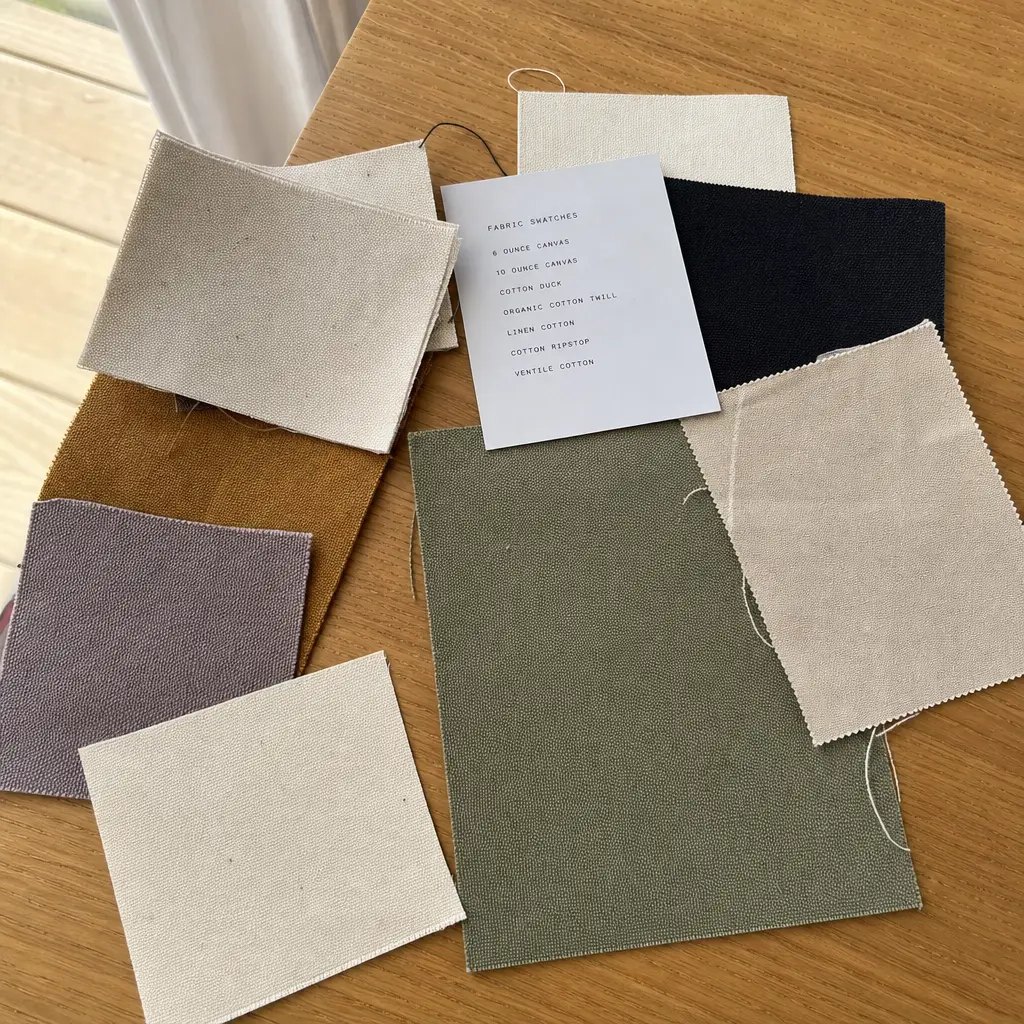
Cotton fabric weight affects more than price. It changes handfeel, opacity, sewing bulk, drawstring closure, carton weight, and perceived value. Many bakery gift pouch programs use 5 oz to 6 oz cotton, roughly 140-170 GSM. This range often works for wrapped cookies, small confectionery, granola packs, tea cakes, and lightweight gift items where the pouch should gather softly and ship efficiently.
Heavier 8 oz cotton, usually around 230-250 GSM, can make sense for premium reusable packaging, boxed assortments, jars, or corporate gifts where the pouch is part of the perceived value. It is not automatically the better choice. On small formats, heavy cotton can look bulky, resist gathering, add seam thickness, and increase freight cost. For heavier products, fabric GSM alone is not enough. Seam construction, cord strength, and filled fit need to be tested together.
Finish and appearance belong in the specification before sampling starts. Natural cotton may include flecks, seed marks, slubs, and shade variation. That can suit an artisan bakery look, but it may clash with a clean premium retail system. Bleached or dyed cotton can create a more controlled appearance, yet it may add lab dip approval, dye lot variation, minimum fabric quantities, and extra lead time. If organic cotton or another certification is required, request the documentation scope at quote stage rather than after the sample is approved.
- Use 140-170 GSM cotton for many lightweight bakery gift pouches.
- Consider 230-250 GSM cotton for premium reusable or heavier filled applications.
- Quote natural, bleached, dyed, and certified cotton as separate options.
- Define acceptable flecks, slubs, shade variation, shrinkage, and handfeel.
- Ask whether the quoted fabric is in stock or made to order.
Match drawcord construction to packing speed
Drawcord design has a direct labor impact. A double drawcord usually closes faster and presents more evenly than a single drawcord, especially for gift packaging. Cotton cord, flat cotton tape, braided cord, and dyed cord can all work, but the cord must suit the channel height, fabric weight, and filled pouch volume. Too thick, and it can jam or gather unevenly. Too thin, and it may slip into the channel or look weak beside heavier fabric.
Construction details need the same attention as fabric. Define folded top channel height, cord exit position, seam type, bottom style, gusset, overlock or enclosed finish, reinforcement points, side label, hangtag, barcode label, and loose-thread trimming expectations. A flat pouch may be right for light wrapped cookies. A gusset or reinforced bottom may work better for jars, rigid boxes, or dense gift bundles, but it can also change cost, MOQ, and lead time.
The practical test is simple: fill the pouch and pull the cords repeatedly. Watch for channel puckering, broken stitches, cord slippage, uneven cord ends, knots that loosen, and incomplete closure. If the pouch must close cleanly in one pull, write that into the spec. Otherwise, a sample can look good when empty and still slow the bakery packing bench.
- Specify single or double drawcord, material, color, diameter or tape width, length, and knot method.
- Match channel height to cord thickness and fabric bulk.
- Define seam construction, bottom shape, reinforcement, and label position.
- Test closure with filled pouches, not empty samples only.
- Treat construction changes after sample approval as price and lead time changes.
Set print requirements for woven cotton, not paper
Screen printing is often the most practical route for custom cotton drawstring pouches with simple bakery logos, short slogans, and one- to three-color artwork. It can deliver good opacity and repeatability when the artwork is built for textile printing. Still, cotton is not a smooth paper label. The weave can soften edges, reduce small text clarity, and shift perceived color, especially on natural or darker fabrics.
The RFQ should include vector artwork, print size, print location, color references, number of print colors, and minimum detail requirements. Fine serif type, hairline illustration, small trademark text, tight multicolor registration, pale ink on natural cotton, and QR codes all deserve extra review. If a QR code is required, approve a printed sample and scan it under realistic store or bakery lighting before bulk production.
Heat transfer or digital printing may be useful for gradients, many colors, or smaller runs, but those methods can affect handfeel, wash behavior, curing requirements, and cost. Ask which method is included in the quoted unit price and whether setup charges repeat on future orders. A digital artwork proof is not enough for approval. The print should be reviewed on the actual fabric color and GSM.
- Use screen print for solid one- to three-color bakery artwork when possible.
- Confirm minimum line thickness, minimum text height, and QR readability before screens are made.
- Specify print placement tolerance, commonly 5-10 mm depending on pouch size and process.
- Approve ink color on physical cotton, not only on screen or paper.
- Separate unit price from screen, setup, artwork, and sample printing charges.
Plan MOQ around the way production is actually split
MOQ is shaped by production efficiency, not only by a supplier’s sales policy. Fabric booking, cutting layout, sewing setup, screen setup, color changes, packing segregation, and carton marking all influence the minimum quantity a factory can run cleanly. A bakery buyer may see one total order. The factory may see ten small jobs if that order is split by size, fabric color, artwork, and destination.
Ask whether MOQ applies per order, per size, per fabric color, per artwork, per print color count, or per shipment. Then request price breaks that match the buyer’s realistic demand, such as 1,000, 3,000, 5,000, and 10,000 pieces. If several SKUs can share one base pouch, separate artwork may still require print setup, but shared fabric and cutting can reduce complexity.
Treat launch orders and repeat orders differently. A first seasonal program may need a cautious quantity, but the specification should still be repeatable. Archive the approved fabric, artwork, size, cord, packing count, and carton marks. That record lets future reorders move faster and reduces unnecessary re-sampling unless the fabric lot, color, print method, or construction changes.
- Clarify MOQ by size, color, artwork, print color, and shipment.
- Consolidate base sizes before adding artwork variants.
- Use a shared fabric booking when multiple bakery SKUs allow it.
- Request price breaks and quote validity dates.
- Archive approved specifications for faster repeat orders.
Turn the quote into a dated reverse calendar
After the specification is stable, convert the supplier’s quote into a dated reverse calendar. Start with the required warehouse date and work backward through domestic delivery, customs clearance, international freight, export handover, final inspection, export packing, trimming, print curing, sewing, cutting, fabric readiness, sample approval, sample courier time, artwork proof approval, and deposit. The exercise reveals the true last safe date for buyer approval.
Use working days instead of vague weeks whenever possible. A practical calendar may include separate blocks for artwork proof, lab dip if dyed fabric is needed, counter sample, pre-production sample, buyer review, bulk production, inspection, and shipment handover. The exact timing depends on supplier capacity, order quantity, fabric, artwork, and season. Ask the factory to populate each block instead of accepting one blended lead time estimate.
The calendar should also identify what can reset the clock. Revised artwork, a changed pouch size, a new cord color, added barcode labels, new carton marks, failed lab dip, or a revised packing method can all affect the ex-factory date. Use change-control emails that ask the supplier to confirm price impact, sample impact, and schedule impact before the change is accepted.
- Break lead time into proofing, sampling, approvals, production, inspection, packing, and freight handover.
- Record the latest approval date needed to keep the target shipment date.
- Add buffer for peak bakery seasons and origin-country holidays.
- Confirm whether revised samples reset production timing.
- Book inspection before goods leave the factory.
Approve samples with measurable QC criteria
A physical pre-production sample is the buyer’s strongest control point. It should use the intended fabric weight, fabric color, cord, print method, seam construction, size, and packing fold. For first orders, new artwork, changed GSM, dyed fabric, new pouch size, or fixed-date holiday programs, photo approval is too weak. Photos cannot confirm handfeel, odor, opacity, closure friction, seam strength, ink texture, or filled-product shape.
Sample approval should read like a measurable record, not a casual note that the pouch looks good. Record finished width, finished height, usable height, channel height, cord length, GSM reference, print size, print position, seam finish, odor result, closure feel, and packing fold. If the buyer accepts an exception, such as a natural cotton shade that is slightly darker than the swatch, document it so final inspection uses the same standard.
Final inspection should follow the approved sample and PO specification. Common checks include measurement, fabric shade, print placement, print rub, stitch quality, cord function, odor, contamination, inner packing count, carton count, carton marks, and SKU separation. Many consumer goods buyers use AQL sampling plans; the inspection level and acceptable quality limits should be selected by the buyer or inspection provider and written into the inspection instruction.
- Use the approved sample as the control sample for production and inspection.
- Measure size, channel, cord length, print position, and packing fold.
- Test the sample filled, closed, handled, and packed into cartons.
- Define critical defects such as mold, contamination, wrong artwork, wrong material, severe odor, and mixed SKUs.
- Document approved exceptions before bulk production starts.
Specification comparison for buyers
| Spec decision | Procurement-ready target | Where it fits | Quote or QC risk to control |
|---|---|---|---|
| Packaging role | Secondary packaging around sealed food-safe inner packs | Wrapped cookies, biscotti, granola, confectionery, small bakery gifts, retail bundles, corporate hampers | Do not describe cotton as direct food-contact packaging unless material, ink, dye, washing, and testing requirements are defined in writing |
| Common fabric weight | 5 oz to 6 oz cotton, typically about 140-170 GSM | Lightweight bakery gift pouches where soft gathering, low bulk, and efficient freight matter | Ask for the actual GSM tolerance or fabric report; a lower GSM substitute can reduce opacity, handfeel, and shelf shape |
| Premium fabric weight | 8 oz cotton, typically about 230-250 GSM | Reusable gift packaging, heavier boxed sets, jars, candles paired with baked goods, and premium seasonal programs | Higher GSM can increase unit price, carton weight, sewing bulk, and drawcord friction; approve filled samples before bulk production |
| Size specification | Finished width x finished height, plus usable height below channel and channel height | Any pouch that must fit a wrapped product, box, jar, or bundle without forcing | Do not rely on flat size only; the channel and gathered top reduce usable volume |
| Typical sewing tolerance | Plus/minus 5 mm for small pouches; plus/minus 8-10 mm for larger or gusseted pouches, unless agreed otherwise | Most cotton pouch programs where fabric cutting and sewing variation are normal | Put the tolerance in the PO and inspection checklist; otherwise size disputes become subjective |
| Drawstring system | Double drawcord with cotton cord or flat cotton tape matched to channel width | Bakery packing benches, gift presentation, and customer-friendly opening | Cord that is too thick slows closure; cord that is too thin can slip into the channel or look under-specified |
| Print method | Screen print for solid one- to three-color artwork; transfer or digital print only when artwork requires it | Logos, bakery illustrations, short slogans, seasonal marks, and repeat retail designs | Fine serif type, thin lines, pale ink, and QR codes must be tested on the actual fabric color and GSM |
| MOQ structure | Confirm MOQ per size, fabric color, artwork, print color count, and packing destination | Multi-store bakeries, distributors, wholesale programs, and seasonal SKU ranges | A total order of 10,000 pieces can still fail MOQ if it is split into many low-volume variants |
| Sample approval | Physical pre-production sample with production fabric, cord, print, seam, size, and packing fold | First orders, new artwork, new sizes, changed GSM, dyed fabric, and fixed-date holiday launches | Photo approval cannot verify odor, handfeel, closure friction, opacity, seam strength, or print rub |
Buyer checklist before sampling
- Confirm the pouch role: secondary packaging, gift wrap, retail shelf presentation, wholesale presentation, event favor, or reusable merchandise packaging.
- Confirm whether every bakery item will be sealed in food-safe inner packaging before insertion; if not, define direct food-contact compliance, testing, and responsibility before requesting price.
- Create a SKU matrix with finished width, finished height, usable height below channel, channel height, gusset if any, seam tolerance, print artwork, quantity, and destination.
- Measure the wrapped bakery item, box, jar, or bundle in width, height, depth, and diagonal; include the target filled weight per pouch.
- Specify fabric by cotton type, GSM or ounce weight, color, finish, acceptable slubs or flecks, shade tolerance, shrinkage expectation, and any certification requirement.
- Define drawcord material, cord diameter or tape width, cord length, color, knot style, channel height, and whether the pouch must close within a target packing speed when filled.
- Submit vector artwork with Pantone references, print size, print position from seams or bottom, color count, minimum line thickness, minimum text height, and QR code requirements if used.
- State whether the factory may adjust artwork for production, such as increasing line weight, enlarging small type, simplifying detail, or moving artwork away from seams.
- Request a pre-production sample for first orders, new fabric lots, changed artwork, revised size, dyed fabric, new cord, or any program tied to a fixed retail launch.
- Approve the sample against measured size, filled fit, closure speed, seam construction, print color and placement, odor, opacity, rub resistance, folding, and inner packing count.
Factory quote questions to send
- What exact cotton fabric weight are you quoting in GSM and ounces, and what tolerance applies to bulk fabric weight?
- Is the fabric stock natural cotton, greige fabric to be finished, bleached cotton, dyed-to-order cotton, organic cotton, or another specified material?
- What fabric color approval will be provided: stock swatch, lab dip, strike-off, bulk cutting, or production roll sample?
- What finished size tolerance applies after sewing, and does the quoted height include the drawstring channel or only the usable product area below the channel?
- What channel height, cord diameter or tape width, cord material, cord color, cord length, and knot method are included in the quoted construction?
- Which print method is included, how many colors are covered, what ink or transfer type is used, and what minimum printable line thickness do you recommend for this fabric?
- What print placement tolerance applies from the bottom edge, side seam, or pouch centerline, and how will multicolor registration be checked?
- Are screen charges, setup charges, artwork adjustment fees, sample charges, courier fees, lab dips, certification documents, barcode labels, or special packing charges excluded from the unit price?
- What MOQ applies per size, fabric color, artwork, print color count, and shipment, and what price breaks can you quote at 1,000, 3,000, 5,000, and 10,000 pieces?
- Can several bakery SKUs share one fabric booking or cutting batch while maintaining separate artwork, carton marks, inner packs, and PO lines?
Quality-control points to confirm
- Finished width, finished height, usable height below channel, channel height, gusset depth if applicable, and cord length match the approved specification; typical tolerances should be written, such as plus/minus 5 mm for small pouches and plus/minus 8-10 mm for larger pouches unless otherwise agreed.
- Fabric weight is checked against the approved swatch, fabric report, or buyer-agreed GSM range, with no unexpected thinness, wrong handfeel, excessive stiffness, mildew, dampness, contamination, or strong odor.
- Fabric shade is compared to the approved swatch or lab dip under consistent light; natural cotton flecks, seed marks, and slubs remain within the buyer-approved appearance standard.
- Drawstring channels are even, stitch lines are secure, openings are clean, cords are correctly inserted, knots are secure, and the pouch closes smoothly when filled to the intended bakery product volume.
- Cord length, cord color, cord diameter or tape width, and knot position are consistent across checked samples so retail displays do not look uneven and packing teams do not need to trim cords.
- Side seams, bottom seams, gussets, and labels are straight and secure, with no skipped stitches, open seams, broken threads, needle damage, loose ends, or visible raw edges outside the agreed construction.
- Print position, size, color, opacity, curing, edge sharpness, and rub resistance match the approved sample; inspection should include normal handling and a dry white-cloth rub check after curing.
- Fine text, QR codes, multicolor registration, small bakery illustrations, and trademark details are inspected against the approved artwork because woven cotton can soften edges and reduce readability.
- Pouches are free from oil stains, dirt, chalk marks, needle stains, insects, odor, damp cartons, mildew, and ink transfer from insufficient curing or contaminated packing surfaces.
- Inner packing quantity, carton quantity, SKU separation, assortment ratio, carton sequence, PO number, destination, and shipping marks match the approved packing instruction.