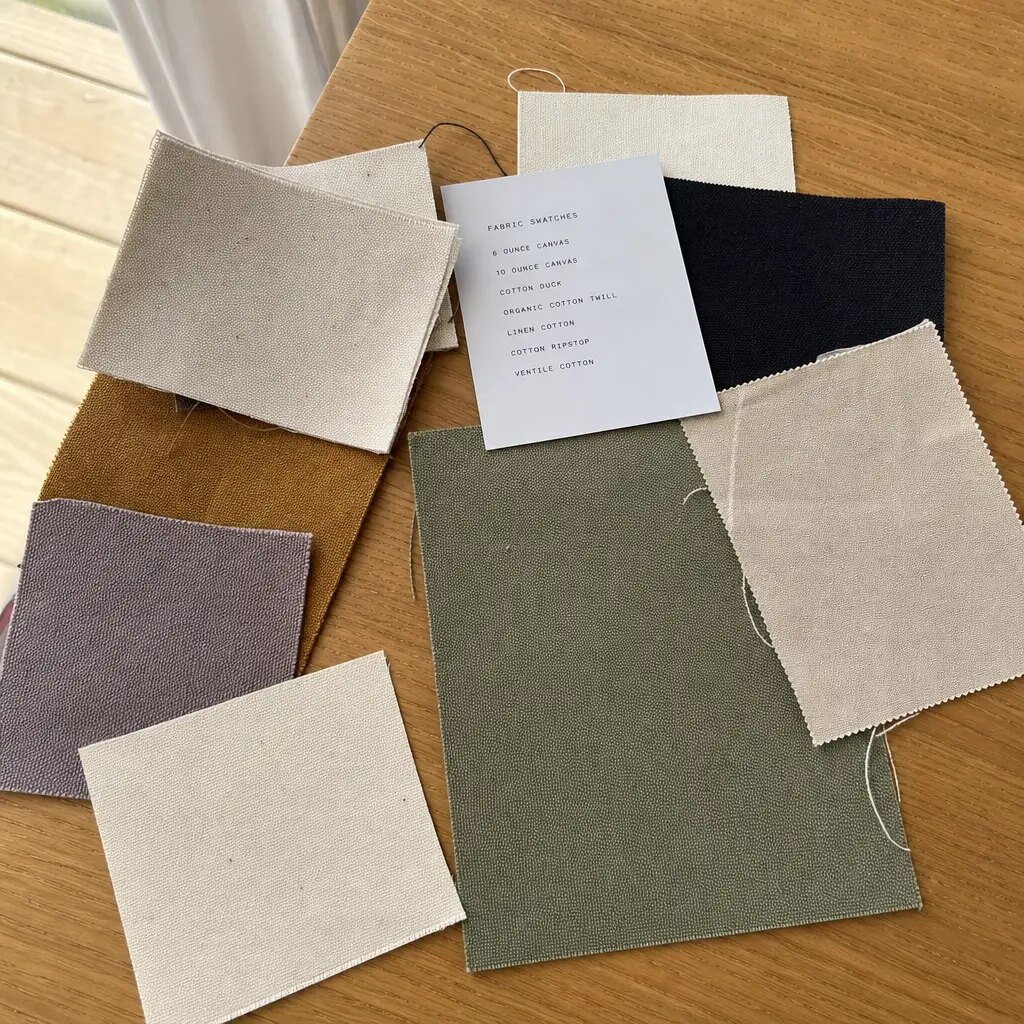
Lead Time Starts Before Sewing
For boutique wineries, custom cotton drawstring pouches usually sit inside a larger launch calendar. They might hold a tasting-room gift, a bottle accessory, a holiday club order, or a promotional set tied to harvest events. The mistake is to treat the pouch as a simple blank item and assume the sewing time is the whole schedule. In practice, most lead time slips come from decisions that happen before the first cut: the final pouch size, whether the fabric is stock or custom, the decoration method, the approval path, and how quickly the buyer signs off on the sample.
A usable schedule starts with fixed dates, not a vague need-by window. The factory needs to know when artwork is locked, when the pre-production sample is approved, when the PO is released, and when the ship date must land in the buyer's calendar. If those dates are not written down, the supplier will pad the schedule and the buyer will still lose time later when approval arrives late. For winery programs, build in extra room around harvest season, year-end gift activity, and any event that cannot slip.
- Lead time is driven by artwork approval, material booking, sample confirmation, and freight space.
- Holiday launches and harvest promotions need earlier lock dates than standard replenishment orders.
- A factory can only commit to a ship date after the spec and decoration method are frozen.
Choose The Spec That Controls The Schedule
The pouch spec that affects timing most is fabric weight. A lightweight 110 to 140 GSM cotton is common for simple promo pouches and can move quickly when the factory holds the fabric in stock. If you want a better handfeel for retail sets, 160 to 200 GSM is a safer range because the pouch hangs better, prints cleaner, and feels more aligned with a boutique winery presentation. If the buyer pushes above that, the pouch starts to behave more like a premium accessory than a low-cost giveaway, and cutting, stitching, and packing all take longer. The spec choice is not only aesthetic; it changes cutting efficiency, thread consumption, and the time needed to stabilize print quality.
Decoration also changes timing. A single-color screen print is usually the fastest route for a logo that must ship on a defined date. Two-color print adds setup and cure checks, while woven labels and embroidery are slower because they add a separate component or extra stitching steps. For wineries, the best practical balance is often a natural cotton pouch with a 140 to 180 GSM body, one-color screen print, and a simple drawcord in the same natural or off-white tone. That combination keeps the quote readable and gives the factory fewer ways to miss the date.
- Use 110 to 140 GSM for basic promo stock, 160 to 200 GSM for better retail presentation.
- Keep the first order to one decoration method if the ship date is tight.
- Ask the factory whether the cord, label, or print ink is already in stock before you confirm the spec.
MOQ Logic Changes With Decoration
MOQ is not just a factory minimum; it is usually the point where setup cost, labor efficiency, and material loss become acceptable to the supplier. A stock blank pouch with no decoration can often move at a lower MOQ because the factory is only cutting and sewing. Once you add a print screen, a woven label, or a custom dyed fabric, the supplier has to justify setup work, extra component purchase, and a line change. That is why two quotes for what looks like the same pouch can differ sharply in both unit price and lead time. The buyer needs to understand what the MOQ is protecting: fabric waste, screen setup, color lot management, or sewing efficiency.
The most useful quote is the one that breaks pricing into layers. Ask for blank pouch price, setup charge, decoration price, packaging charge, and repeat-order pricing. A supplier who only gives one number can hide the real cost in a high unit price or in a later change order. For planning, the key question is whether your order sits under or above the point where the factory can run without interruption. If you are below that point, expect the unit price to rise and the schedule to become more sensitive to sample changes.
- Stock blank pouches usually support lower MOQ than custom fabric or custom color orders.
- One print color is easier to scale than two-color art or stitched decoration.
- Ask for price breaks at 500, 1,000, 3,000, and 5,000 pieces so the quote shows the real breakpoints.
Use Samples To Protect The Schedule
The sample stage is where many buyers lose a week or more because they treat it as a formality. For a cotton drawstring pouch, the approval sample should do more than show the logo. It should confirm finished size, opening shape, cord length, seam quality, print placement, and the actual handfeel of the fabric. If the order is meant for boutique retail, a flat rough pouch that only looks correct from one angle is not enough. The buyer should hold the sample, fill it with a bottle-sized object or accessory set, and confirm that the opening closes smoothly and the pouch still looks premium when tied. This is the point where practical defects are cheapest to fix.
A good sample path has three parts: material swatch, decoration strikeoff, and sewn pre-production sample. The swatch confirms shade and texture, the strikeoff proves the print position and color, and the sewn sample proves the finished product behavior. If the supplier skips one of these steps, the first bulk pieces become the test. That is a poor way to run a retail program, especially when the pouch will sit beside wine bottles or tasting-room merchandise. Hold the supplier to written acceptance criteria so the approval is not based on memory or a vague photo.
- Approve a sample against a measurement sheet, not only a product photo.
- Test the drawcord action with repeated pulls so the channel and knot hold under use.
- Compare the approved swatch to the bulk fabric under normal indoor light, not only on a screen.
Build The Schedule Around The Slowest Step
A realistic production plan for custom cotton drawstring pouches breaks into material booking, cutting, printing, sewing, finishing, inspection, and packing. In a clean, stock-fabric, one-color print order, the total can be fairly short after sample approval. Once the order shifts to a custom fabric color, a second decoration method, or a special packing requirement, the schedule moves because every additional step creates a queue. The buyer should not use the factory's best-case line time as the promise. The promise should reflect the slowest dependency, usually a custom material or a late sample sign-off.
A useful way to plan is to separate internal factory time from external time. Internal time includes cutting, sewing, and packing. External time includes fabric dyeing, label sourcing, screen making, shipment booking, and customs clearance. If the buyer needs the pouches in time for a winery promotion, the safest plan is to back-schedule from the delivery date and then insert a buffer for sample revision, freight booking, and any inspection hold. That buffer is not wasted time; it is the difference between a controlled launch and a rushed air shipment.
- Typical stock-fabric, one-color orders move faster than custom-dyed or heavily decorated programs.
- Treat fabric sourcing and label sourcing as separate schedule risks, not as part of sewing time.
- Add extra cushion if the order lands near peak season or holiday freight congestion.
Packing Can Change Both Cartons And Lead Time
Packing is often treated as a shipping detail, but for pouches it affects labor, carton count, freight efficiency, and damage risk. A winery buyer may want the pouch to arrive retail-ready, with an inner bag count that matches shelf replenishment or a gift set build. If the packing spec is not set early, the factory can finish sewing and still stall while waiting for a carton count decision. The quote should state whether the pouches go loose in bulk bags, individually polybagged, bundled in set counts, or packed with inserts. Each choice changes how many people touch the product before it ships.
Packing also affects the finished appearance. Overpacked cartons can crease printed pouches, while loose cartons can shift and rub the decoration during transit. For a natural cotton pouch, the buyer should specify the inner pack count, carton dimensions, carton marking language, and whether the cartons need to be pallet-friendly. If the pouches are part of a wine gift bundle, a buyer may also need a consistent opening direction so the set looks correct when the retail team opens the carton. These details are small on paper but expensive to fix after the goods are boxed.
- State the inner pack count and master carton count in the RFQ.
- Ask for carton dimensions before confirming freight so you can estimate landed cost properly.
- Require a pack-out photo from the factory if the order is meant for shelf-ready retail use.
Compare Supplier Routes Before You Compare Unit Price
The cheapest unit price is not always the best route. A direct factory usually gives the strongest control over sewing quality, fabric source, and production timing, especially when the order will repeat. A trading company can be useful when the buyer wants one point of contact for mixed products, but that convenience can hide the actual factory capacity and slow down sample changes. A local decorator can win on short deadlines if the buyer already has blanks in hand, but the landed cost usually rises and the blank-pouch quality is outside the buyer's control. The right route depends on how much control the buyer needs over the fabric, decoration, and ship date.
For boutique wineries, the most rational sourcing split is often direct factory for the base pouch and local decoration only when the launch is genuinely urgent. If the artwork is stable and the pouch is part of a repeat program, a direct factory is usually the cleaner path because the supplier can quote material, sewing, print, and pack-out in one schedule. If the buyer is still testing the design, a trading company may be acceptable for the first lot, but the quote should still identify the actual maker and the real lead time for each stage. The buyer should compare routes on transparency, not just on price.
- Direct factory works best when the spec is stable and the order will repeat.
- Trading companies help with coordination, but the buyer should still demand the real production schedule.
- Local decoration is a speed tool, not a replacement for a controlled pouch spec.
Use QC Thresholds That Prevent Rework
Quality control for a cotton drawstring pouch should be written around acceptance thresholds, not general intentions. A buyer should specify finished size tolerance, seam allowance range, print position tolerance, and cord behavior. If the pouch is thin, the buyer should also look for puckering around the top channel and bottom corners after the drawcord is pulled. If the logo is printed, the buyer should inspect the first output of the run, because a clean first sample does not guarantee the same result after the screens heat up or the operator changes pace. The point is to catch a process drift early enough that it can be corrected without redoing the lot.
For winery buyers, I recommend checking the pouch under the same conditions it will be used in retail: open and closed several times, filled with a representative product, and viewed under normal indoor light. The quality standard should cover visual appearance and function together. If you only inspect the logo, you can still receive a pouch that closes poorly or sits unevenly on the shelf. If you only inspect dimensions, you can still receive a bag that looks cheap because the print is faint or the seam is crooked. The best QC language is specific enough for the factory to work to and simple enough for the inspector to apply quickly.
- Write size tolerance, print tolerance, and seam tolerance into the PO.
- Inspect the first run pieces, not only the final cartons.
- Tie the QC spec to how the pouch will be used, not only how it measures flat on a table.
Write The RFQ So Quotes Can Be Compared
A weak RFQ creates weak quotes. If one supplier thinks the order is a blank pouch and another thinks it is a printed retail pouch with a woven label, the prices are not comparable. The RFQ should define the pouch body material, GSM, size, cord type, logo method, decoration count, packing count, destination, and requested incoterm. It should also say whether the buyer wants a pre-production sample, a strikeoff, or both. For boutique wineries, the difference between a rough promotional pouch and a clean retail pouch is often the difference between a cheap quote and a useful quote. The supplier needs the same brief you need if you want a real comparison.
The best RFQs also ask for schedule detail, not only price. Ask the supplier to split the quote into artwork setup, sample lead time, production lead time, packing lead time, and shipping readiness. Then ask what can move the schedule: custom fabric, new label, multiple print colors, or packed sets. That information lets the buyer compare not just who is cheapest, but who can actually meet the launch date without shortcuts. A good quote should be specific enough that the buyer can hand it to procurement, marketing, and logistics without rewriting it.
- Attach artwork in vector format and state Pantone targets if the logo color matters.
- Give the destination port or delivery address so the schedule reflects real freight timing.
- Ask for separate line items for setup, sampling, decoration, packing, and freight assumptions.
Specification comparison for buyers
| Spec decision | Recommended option | When it fits | Buyer risk to check |
|---|---|---|---|
| Stock blank pouch from a direct factory | Choose a standard natural cotton pouch with no decoration | Best for urgent tasting-room giveaways, event kits, or simple replenishment | Stock shade and size can vary by lot, and you have limited branding control |
| Stock pouch with one-color screen print | Use a ready-made pouch and add a single spot-color logo | Good for most boutique winery retail programs and repeat orders | Confirm screen setup, print placement tolerance, and ink cure before approving mass production |
| Stock fabric with woven side label | Keep the pouch body standard and add a branded woven label | Fits premium retail positioning without moving into full custom fabric | Label sewing can shift the schedule if the label is not booked early |
| Custom size on stock natural cotton | Change dimensions but keep the base fabric standard | Works when the pouch must fit a bottle, sampler set, or accessory bundle | A new pattern and sample round can add time even when the fabric is unchanged |
| Full custom fabric weight and color | Specify a custom GSM and dyed fabric color | Use this for a branded line or long-term retail program | Dye approval and fabric MOQ are the main lead time and cash drivers |
| Digital print or transfer print for complex art | Use a small-run decoration method for detailed graphics | Fits multi-color art, gradients, or seasonal artwork | Decoration feel, wash resistance, and color drift need written acceptance limits |
| Embroidery or applique | Choose stitched branding for a premium look | Works for limited editions or higher-margin gift sets | Sewing time rises fast and thin fabric can pucker around dense stitches |
| Local decorator with imported blanks | Import blank pouches, then decorate locally near your market | Useful for very small replenishment runs or last-minute launches | Blank pouch consistency, split responsibility, and higher landed cost can erase the time advantage |
Buyer checklist before sampling
- Lock the final pouch size, fabric weight in GSM, cord type, and decoration method before you request pricing.
- Send vector artwork, Pantone targets, and logo placement dimensions with the RFQ.
- State whether you need stock natural cotton, custom dyed fabric, or a specific washed finish.
- Ask for a sample path: pre-production sample, print strikeoff, sewn approval sample, and shipment reference sample.
- Confirm MOQ by size, print color count, and any label or packing variation.
- Request separate pricing for blank pouch, decoration setup, packaging, and carton charges.
- Specify the packing count per inner bag and master carton, plus carton dimensions and gross weight.
- Write the target ship date, destination port or delivery address, and the incoterm you want quoted.
- Add your acceptance limits for size tolerance, print registration, seam quality, and cord pull strength.
- Reserve a buffer for harvest season, holiday retail launches, and any third-party inspection or rework time.
Factory quote questions to send
- What GSM and weave are you quoting, and is the fabric stock item or custom woven?
- What is the MOQ by size and by decoration method?
- How many days are needed for artwork setup, sample making, and mass production after approval?
- Is the quote for EXW, FOB, or delivered terms, and what exactly is included in the unit price?
- What are the setup charges for screens, labels, or embroidery, and are they one-time or per repeat order?
- What print method are you using, and what is the expected color tolerance on natural cotton?
- Can you provide a pre-production sample, a sewn reference sample, and a bulk material swatch before mass production?
- What carton pack count, carton size, and gross weight will you use for export packing?
- How do you handle size tolerance, stitch defects, and print misregistration if a lot is outside spec?
- What documents and photos will you provide before shipment so we can release the balance payment?
Quality-control points to confirm
- Measure finished pouch size against the approved spec, with a tighter tolerance on width and opening height than on overall body length.
- Inspect fabric GSM or handfeel against the approved swatch so a lighter substitute does not pass as acceptable stock.
- Check logo placement, print sharpness, and registration on the first production pieces, not only at final inspection.
- Pull the cord repeatedly to confirm smooth movement, secure knots, and no seam opening at the channel.
- Inspect top hems, side seams, and bottom corners for skipped stitches, broken threads, or uneven seam allowance.
- Verify that inner packing quantity and master carton count match the carton marking and packing list.
- Confirm that the sample reference, production lot, and shipment carton all match the same artwork version.
- If an AQL level is used, write it into the PO and inspection brief so the factory does not choose its own standard.