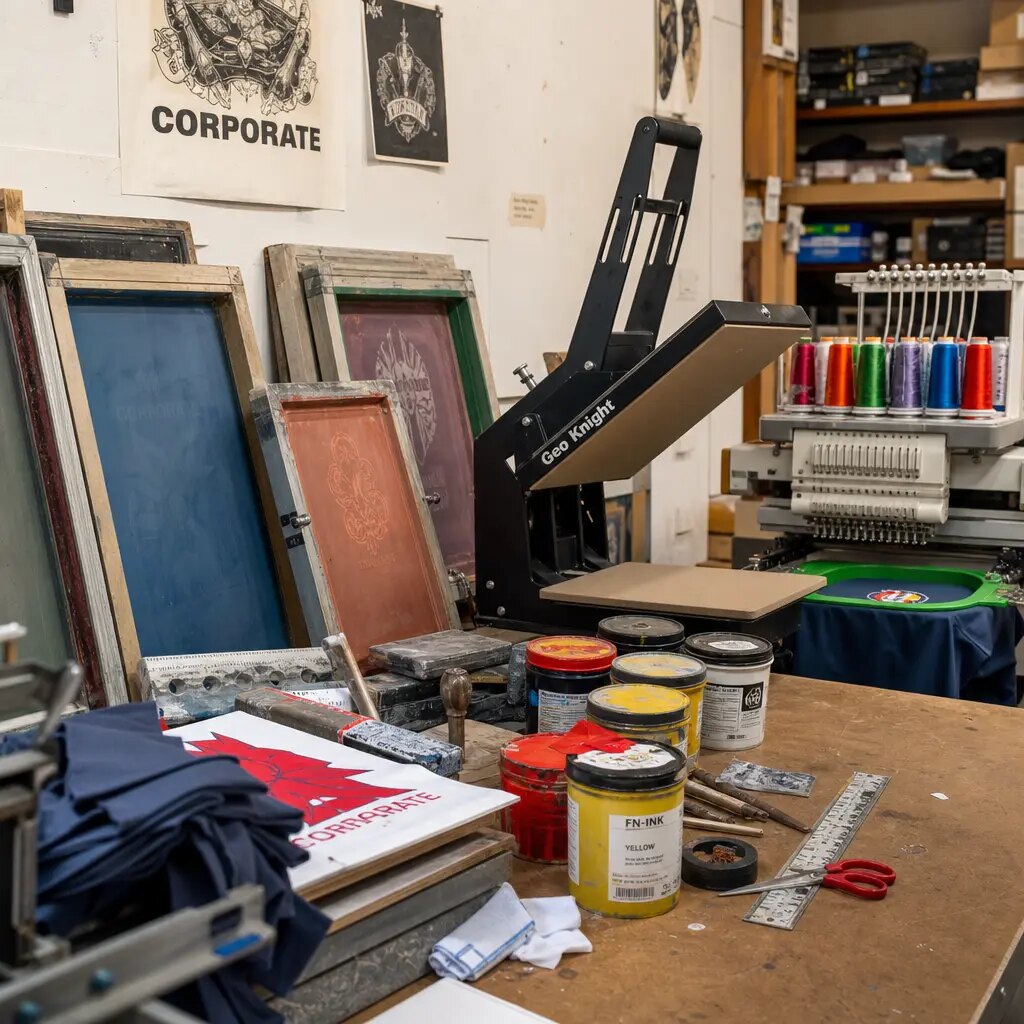
Why craft fair pouches need a stricter inspection standard
Custom cotton drawstring pouches for craft fairs are not treated like hidden transport packaging. They sit on tables, hang on display hooks, get opened by sellers, and are handled by shoppers at very close range. A defect that might be acceptable on an internal storage bag can damage the presentation of a handmade soap, candle, jewelry set, card deck, crystal kit, or small apparel accessory. For B2B buyers supplying event sellers, boutiques, subscription-kit teams, or branded merchandise programs, the pouch is part of the retail experience.
The inspection threshold therefore has to focus on visible consistency as much as basic function. A pouch can technically hold the item and still fail commercially if the logo is visibly off center, the natural cotton shade varies too much across the display, the drawcords look uneven, or the fabric feels thin compared with the product price point. Craft fair customers often compare several items side by side, so batch variation becomes obvious. If one logo is dark and crisp while another looks faded or skewed, the whole display looks less controlled.
The main procurement mistake is treating a cotton pouch as a generic commodity. Low-cost factories may quote a workable pouch but leave fabric weave, cord type, seam reinforcement, print tolerance, and packing format undefined. That creates room for a technically compliant but commercially weak result. A stronger quality inspection checklist starts before the purchase order: the specification, sample approval, and defect standards must tell the supplier what matters for a craft fair retail environment.
- Inspect for appearance consistency, not only whether the pouch can hold the product
- Treat the logo, fabric hand feel, cord finish, and seam cleanliness as retail-facing details
- Use the real inserted product when judging fit, closure, and display quality
- Expect small issues such as crooked print or long loose threads to matter more in craft fair selling than in warehouse packaging
- Document tolerances before production so the supplier cannot define acceptable quality after the batch is made
Build the pouch specification before inspecting production
Inspection only works when the original specification is complete. A purchase order that says natural cotton drawstring pouch with logo leaves too many decisions to the supplier. One factory may assume lightweight muslin, another may assume plain weave cotton, and another may quote a canvas-style fabric. Each may still call the product cotton. The same issue applies to drawcords, seam finishing, print placement, and packing. If the RFQ does not define these details, price comparisons become unreliable and final inspection becomes subjective.
For most craft fair programs, the practical starting point is a 170-230 GSM cotton pouch in plain weave or light canvas. This gives enough body for small retail goods without making the pouch too stiff or expensive. A lightweight pouch can be acceptable for very low-cost giveaway packaging, but it may feel weak beside premium handmade products. A heavier pouch can make sense for glass jars, hardware items, or premium gift sets, but it increases unit cost, shipping volume, and sewing bulk around the cord channel.
Size also needs more discipline than buyers often expect. The flat pouch size is not the same as usable product space. A 5x7 inch pouch may not comfortably hold a 5x7 inch card set once seam allowance, product thickness, and closure space are considered. For a rigid candle jar or boxed soap, the buyer should provide product dimensions and weight, not only a desired pouch size. The supplier can then recommend a finished pouch dimension with enough top clearance to close without straining the channel.
- Define fabric construction, GSM, color, finish, and acceptable visual variation
- State finished flat size and the actual inserted product dimensions
- Specify cord material, cord thickness, color, and knot or end finish
- Define print method, artwork size, color target, and placement tolerance
- Confirm seam construction, reinforcement, internal edge finishing, and packing method
- Include tolerance language in the PO, not only in email discussions
Fabric weight, weave, shade, and hand feel: what buyers should approve
GSM is important, but it is not the whole fabric decision. Two cotton fabrics can test at the same GSM and still behave differently in print, drape, shrinkage, and perceived value. Plain weave cotton usually feels softer and is suitable for economical handmade-style packaging. Light canvas gives a firmer body and a more structured table presentation. Cotton muslin may be cost-effective but can look too casual for some branded craft fair products. A buyer should approve a swatch for both number and hand feel, not rely on the GSM label alone.
Natural cotton requires a visual standard. Seed specks, slubs, and slight shade variation can be normal and even desirable for handmade or eco-style positioning. However, those same details may look like contamination if the brand expects a clean boutique finish. If the pouch is printed with fine lines, small text, or light ink, surface texture and natural specks can interfere with clarity. Buyers should decide whether natural, bleached, washed, or dyed fabric best matches the end use, then approve a reference swatch or photo standard.
Dyed pouches add another layer of quality control. Black, charcoal, cream, terracotta, forest green, and other brand colors can elevate the product, but they require dyelot control. The buyer should ask whether the fabric is piece-dyed, yarn-dyed, or purchased from stock, and how the supplier handles repeat orders. For dark pouches, print opacity must be checked carefully, especially if a light logo is screen printed. A white or light ink may require more ink coverage or an underbase, which affects cost and hand feel.
- Approve a physical fabric swatch for weave, shade, texture, and stiffness
- Set GSM tolerance, such as +/-5%, or ask the supplier for its standard tested range
- Define whether natural cotton specks and slubs are acceptable on the retail face
- For dyed cotton, request a lab dip or bulk shade approval process before production
- Check whether the fabric is pre-shrunk or washed if the pouch may be reused by customers
- Avoid comparing supplier quotes unless fabric construction and GSM are normalized
Print method, artwork placement, and logo QC for bulk orders
Most custom cotton drawstring pouches for craft fair use are best served by screen printing when the artwork is a solid logo, short text, simple icon, or one- to three-color design. Screen print usually gives a natural appearance on cotton and can be cost-effective at bulk quantities. Heat transfer or digital transfer may be appropriate for gradients, photographs, complex multi-color artwork, or very small order quantities, but buyers must check the film edge, flexibility, and long-term appearance on soft cotton.
The inspection focus should be specific. Common print failures include off-center logos, skewed artwork, inconsistent ink coverage, blurred edges, pinholes, ghosting, poor opacity on dark fabric, and color mismatch from the approved sample. On small pouches, placement errors are amplified. A quarter-inch shift on a 4x6 inch pouch can look obvious, especially when many pouches are displayed together. Placement tolerance should be measured from finished seams or the cord-channel line, not from an untrimmed or unstable fabric edge.
Artwork files should be production-ready before the quote is finalized. Buyers should supply vector files where possible, specify print size in inches or centimeters, identify Pantone or target colors when color matters, and confirm whether the print is front only or two-sided. If the logo contains small text, the supplier should confirm minimum line thickness and whether the weave can hold that detail cleanly. A proof on paper is not enough; a print strike-off or pre-production pouch shows how the artwork actually behaves on cotton.
- Use screen print for simple solid logos and repeatable bulk production
- Set print placement tolerance, such as +/-0.25 inch for small pouches when feasible
- Check logo skew by comparing the artwork baseline with the top seam or channel line
- Inspect ink for pinholes, blurred edges, smears, poor opacity, and inconsistent darkness
- Ask whether dark pouches require an underbase or extra print pass
- Perform a light rub test and a gentle bend test after curing or transfer application
Drawcord, channel, and seam construction are the first real failure points
Buyers often over-focus on logo appearance and under-specify the closure system. In daily craft fair use, the pouch is opened, closed, adjusted, refilled, and handled repeatedly. The stress concentrates at the cord-channel openings and upper side seams. If there is no reinforcement, the channel corners can tear or fray. If the cord is too thin, it may look cheap, cut into the fabric, or knot poorly. If the channel is too narrow, the cord may snag and frustrate sellers during fast transactions.
Cotton cord is usually the best visual match for natural cotton pouches, especially for handmade, organic-style, or boutique packaging. Herringbone tape can look premium on larger pouches and gift sets. Polyester cord can lower cost and may slide smoothly, but it can also appear shiny or inconsistent with a natural-fiber brand. The choice should be intentional, not simply whatever the supplier keeps in stock. Cord diameter or tape width should scale with pouch size: a large pouch with a very thin cord often looks underbuilt.
Seam construction should be visible in the approved sample. Ask for close-up photos of the side seam, bottom seam, cord channel, knot, and inside raw edge. A simple single-needle seam may be acceptable for light products, but heavy or frequently handled pouches benefit from reinforced backtacks at channel openings and cleaner internal finishing. Overlocking the raw edge can reduce loose threads and improve perceived quality, although it adds cost. If the pouch is sold with premium handmade goods, the cleaner finish may be worth specifying.
- Pull both cords several times to confirm smooth closure and balanced length
- Require backtacks or equivalent reinforcement at the cord-channel openings
- Reject twisted channels, blocked channels, skipped stitches, and loose top seam tension
- Check cord fraying, knot security, and whether the cord ends are even enough for display
- Confirm internal edge finishing: raw, folded, overlocked, or bound
- Use product-weight testing for heavier items such as candle jars or dense accessory kits
Sampling should mirror production, not just prove the concept
Sampling should be treated as a controlled approval process, not a casual preview. A concept sample can help confirm size, proportion, and basic logo layout, but it may be made by a sample-room worker using substitute fabric or extra-careful sewing. That sample is useful, but it does not prove that the factory can repeat the result in bulk. For custom cotton drawstring pouches, the more important approval is the pre-production sample made from production fabric, final cord, final thread, final print method, and the intended seam construction.
The buyer should evaluate the pre-production sample in the same way the goods will be used. Insert the real product, close the pouch, display it upright or flat as intended, and check how the logo appears when the pouch is filled. Some logos look centered on an empty flat pouch but shift visually when a box, candle, or soap bar expands the fabric. If the pouch will include a hangtag, jewelry card, instruction sheet, or tissue wrap, test the full packout. This is the point where a small size adjustment can prevent a bulk fit problem.
Sample approval should be documented with measurable references. A signed physical sample is ideal. If timing prevents that, use high-resolution photos with a ruler, print-position marks, and written approval notes. The approval should state what is fixed and what may vary. For example, natural cotton speck distribution may vary within the approved range, but logo size, cord color, and seam construction should not change. This prevents confusion when the factory shifts from sample handling to bulk production.
- Use a concept sample for size and appearance direction, then a pre-production sample for bulk approval
- Require the pre-production sample to use production fabric, print, cord, thread, and packing method
- Test the pouch with the exact product, including any box, card, tissue, label, or insert
- Measure the sample and record the approved tolerance, not just visual approval
- Keep signed samples or dated approval photos as the inspection reference
- Do not allow fabric substitution after sample approval without written buyer sign-off
MOQ and quote comparison: where pouch costs actually move
Cotton drawstring pouch cost is affected by more than sewing time. Fabric weight, weave, dyeing, cutting yield, print setup, cord material, seam finishing, labels, packing, and variant count all influence the price. When two supplier quotes are far apart, the difference often comes from hidden assumptions. One supplier may quote 120 GSM muslin with raw internal edges and polyester cord, while another quotes 220 GSM canvas with cotton cord and overlocked seams. Without a normalized RFQ, the lower price may not represent the same product.
MOQ is also shaped by fragmentation. Buyers often request several pouch sizes, several base colors, seasonal artwork, and different cords for each collection. Every variation can create separate fabric handling, cutting, printing, and packing requirements. If each version falls below efficient production quantities, the supplier may increase unit price or require separate MOQs. A more efficient strategy is to standardize the pouch body and vary only the print design where possible.
A good quote should show the cost logic clearly. Buyers should ask for price breaks at realistic tiers, separate setup charges from recurring unit costs, and clarify whether mixed artwork can share the same base pouch production. If the program is event-driven, ask how fast repeat orders can be made under the same spec. Replenishment reliability is often more valuable than saving a few cents on the first order, especially for distributors and brand owners serving multiple craft fair seasons.
- Request price tiers such as 500, 1000, 3000, and 5000 pieces per base specification
- Ask which cost items are one-time setup charges and which repeat on every order
- Compare quotes only after matching GSM, weave, cord, print, seam, packing, and tolerance
- Reduce cost by consolidating fabric color, pouch size, and cord type across multiple artworks
- Clarify whether each artwork has a separate MOQ or can run under one shared base production
- Ask for repeat-order lead time and whether the same fabric and cord can be sourced again
Bulk inspection checklist: critical, major, and minor defects
A useful quality inspection checklist for custom cotton drawstring pouches should separate defect severity. Critical defects are issues that make the pouch unsafe, unusable, or clearly wrong: mildew, strong chemical odor, wrong artwork, missing drawcord, severe staining, fabric holes, or dimensions that prevent the intended product from fitting. Major defects are commercially unacceptable but may not affect every function: off-center print beyond tolerance, seam splits, skipped stitches at stress points, visible oil marks, unacceptable shade mismatch, or cords that do not close smoothly. Minor defects are small issues that may be acceptable within limits, such as short internal loose threads, very slight natural shade variation, or minor internal seam irregularity not visible during normal retail use.
Inspection should not wait until all goods are packed. An early-line check can catch print placement, cord assembly, and measurement problems before the full run is completed. This is especially important for multi-size or multi-artwork orders. The inspector should pull samples from different cartons, sizes, and print versions rather than checking only the top layer of one carton. Measurement should be done on a flat table with the pouch lightly smoothed, not stretched, because stretching can hide cutting or sewing variation.
For buyers using AQL, the exact level depends on order size, product risk, and buyer policy. Even without a formal AQL program, the acceptance rule should be written. For example, no critical defects are allowed; major defects above the agreed limit require sorting or rework; minor defects are monitored within an agreed threshold. The key is to define the rule before shipment. If the buyer waits until after inspection to decide what is acceptable, disputes become slower and more expensive.
- Critical defects: mildew, wrong artwork, missing cord, unusable size, severe stain, fabric hole, or unsafe contamination
- Major defects: print misalignment beyond tolerance, seam split, skipped stress-point stitches, closure failure, or visible retail-face damage
- Minor defects: small internal loose threads, slight approved shade variation, or minor internal finishing issues
- Measure samples from different cartons and all SKUs, not only one easy-access carton
- Check product fit with actual inserted goods, especially rigid boxes, jars, and card sets
- Set the acceptance rule or AQL expectation before production starts
Packing, carton labels, and receiving accuracy
Packing quality affects both product condition and warehouse efficiency. Cotton pouches are soft, so factories may over-compress cartons to save space. That can crease printed faces, distort cord channels, tangle cords, and make the pouches look wrinkled when unpacked for a craft fair or kitting line. If printing is packed before it is fully cured or dry, blocking, odor, or ink transfer can occur. Packing should protect the retail face and keep SKUs separated without creating unnecessary handling waste.
Inner pack discipline is especially important for B2B buyers supplying multiple event sellers or retail locations. If a carton contains mixed sizes or mixed artwork without clear inner labels, receiving teams must recount manually. That adds labor and increases shortage claims. A carton label should show SKU, pouch size, fabric color, print version, quantity, carton number, purchase order, and gross and net weight where needed. Inner packs should also be labeled when the carton contains more than one design or when allocation is required.
The buyer should approve packing before bulk production closes. For some orders, bulk packing by SKU in polybags is enough. For others, paper banding, smaller inner packs, or individual packing may be needed for fulfillment. If the goods will travel by sea or sit in humid storage, dry packing conditions matter. Cotton can absorb moisture, so cartons should not be sealed while goods are damp from washing, dyeing, printing, or high-humidity storage.
- Specify pieces per inner pack and pieces per export carton
- Require clear carton marks: SKU, size, color, artwork, quantity, PO number, and carton sequence
- Avoid over-compression that permanently creases printed faces or twists drawcords
- Keep different sizes, colors, and artwork versions separated unless mixed cartons are approved
- Confirm print is dry and cured before packing to prevent blocking or ink transfer
- Consider desiccant or dry-storage controls when shipping through humid conditions
Lead time planning for event-driven craft fair programs
Craft fair supply is often tied to fixed selling windows: holiday markets, spring fairs, product launches, farmers market seasons, convention booths, and boutique gift events. A late pouch shipment can disrupt packaging, kitting, and merchandising even if the pouches themselves are simple. Buyers should plan backward from the required in-warehouse or in-hands date, not from the desired ship date. The schedule should include sample making, sample transit, approval time, fabric preparation, printing, sewing, packing, final inspection, export booking, customs clearance, and inland delivery.
Simple natural cotton pouches with one-color screen print can usually move faster than dyed, labeled, or multi-artwork programs, but buyers should not assume all cotton pouches share the same timeline. Dyed fabric may require lab dips and bulk shade approval. Woven labels or custom hangtags may have their own production lead times. Multiple artwork versions add proofing and setup coordination. Peak shipping seasons can also delay export booking and inland delivery.
The best way to reduce schedule risk is to freeze the specification early. Late changes to pouch size, logo placement, cord color, or fabric shade can restart sampling or require rework. Buyers should assign one decision owner for approvals, maintain a written change log, and set a final approval deadline. If the goods are for a named event, leave a buffer for receiving inspection and repacking. A pouch order that arrives the day before a fair leaves no room to sort, replace, or correct defects.
- Work backward from the required warehouse date or event date
- Separate the schedule into artwork approval, sampling, fabric prep, printing, sewing, packing, inspection, and freight
- Allow extra time for dyed fabric, custom labels, multiple artworks, or holiday-season shipping
- Freeze pouch size, fabric, cord, and artwork before bulk production starts
- Request early production photos or first-batch inspection results to catch problems sooner
- Keep arrival buffer for receiving count, QC spot checks, kitting, and distribution
Specification comparison for buyers
| Spec decision | Recommended option | When it fits | Buyer risk to check |
|---|---|---|---|
| Fabric weight | 6 oz to 8 oz cotton, about 170-230 GSM, with a written tolerance such as +/-5% | Best range for craft fair gift packaging, jewelry, candles, soaps, card decks, small apparel accessories, and handmade product bundles where the pouch must feel substantial but not overbuilt | Below 140 GSM can look limp, show product corners, and allow print-through; above 250 GSM increases cost, sewing bulk, carton volume, and cord-channel stiffness without benefiting many small goods |
| Fabric construction | Plain weave cotton for softer economical pouches; light cotton canvas for a firmer retail body | Plain weave works for lightweight handmade goods and simple logos; canvas works when the pouch must stand up better on a craft fair table or hold heavier inserts | Suppliers may quote only cotton without stating weave. Two 180 GSM fabrics can differ in drape, print sharpness, shrink behavior, and surface cleanliness |
| Color base | Natural cotton for lower MOQ and easier repeat orders; dyed black or brand colors only when visual impact justifies extra control | Natural cotton supports handmade, eco-style, and seasonal fair packaging; dyed base works for premium branding, dark product themes, or strong retail contrast | Dyelot variation, crocking, and print opacity on dark grounds can create reject risk; natural cotton may contain seed specks that need an approved visual limit |
| Print method | Screen print for solid logos and repeat production; heat transfer or digital transfer only for photo detail, gradients, or very small runs | Screen print usually gives the most balanced cost, appearance, and durability for simple one- to three-color pouch programs | Transfers can feel plastic, crack on a soft pouch, or lift at corners; screen print requires setup control, color approval, curing checks, and logo-position tolerance |
| Drawcord material | Cotton cord or cotton herringbone tape for a premium natural look; polyester cord only for budget or performance-led programs | Cotton cord matches craft, handmade, organic-style, and boutique retail positioning; tape can look more gift-ready on larger pouches | Cord fraying, knot pull-out, uneven length, cord snagging, and shiny low-grade polyester are common reasons buyers downgrade a batch |
| Seam construction | Single-needle side seam with secure backtacks at cord-channel openings; overlocked or folded internal raw edges when the budget allows | Suitable for repeated opening and closing at craft fairs where sellers and shoppers handle stock directly | Without reinforcement, channel corners split first. Some low-cost quotes omit inside edge finishing, which increases loose threads and reduces perceived quality |
| Size tolerance | Finished flat size tolerance within +/-0.5 inch for small pouches and +/-0.75 inch for larger pouches, unless product fit requires tighter control | Reasonable for hand-cut and sewn cotton pouches used for general craft fair packaging | If the pouch must hold a rigid candle jar, soap box, card deck, or boxed set, loose tolerance can cause fit failures. State usable insertion dimensions, not only nominal flat size |
| Logo placement | Centerline and vertical placement measured from finished seam and cord-channel references, not from untrimmed fabric edges | Important for small pouches where even a small shift looks obvious when multiple units are displayed together | A 0.25-0.5 inch logo shift can look severe on 4x6 inch or 5x7 inch pouches. Skewed printing is often more visible than slight size variation |
| Packing format | Bulk pack by SKU, size, color, and print version in inner PE bags or paper bundles inside export cartons, with inner count labels | Works for distributors, event merchandisers, kitting teams, and brand owners that need fast receiving and accurate allocation | Over-compressed cartons can crease printed faces and tangle cords; missing inner labels slow receiving, cause recount labor, and increase shortage disputes |
Buyer checklist before sampling
- State the filled product dimensions, product weight, and any insert card, tissue, tag, or box that must fit inside the pouch
- Specify fabric as cotton plain weave, cotton sheeting, or cotton canvas with target GSM and acceptable GSM tolerance
- Define whether natural cotton seed specks, slubs, and shade variation are acceptable, and approve a reference swatch
- Name the print method, artwork file format, print size, print colors, Pantone or color target, and logo-position tolerance
- Confirm whether print is front only, back only, both sides, or includes a sewn label, hangtag, or side tab
- Set drawcord material, thickness or width, color, knot style, end finishing, and whether both sides must pull evenly
- Approve seam construction, including channel width, side seam allowance, backtacks, and whether inside raw edges are overlocked or folded
- List finished size tolerance by pouch size category and specify whether tolerance is measured flat, empty, and lightly smoothed
- Request a concept sample first if needed, then a pre-production sample made in production fabric, production cord, and final print process
- Perform fit testing with the real retail product, including the final product box, soap sleeve, candle label, jewelry card, or gift insert
Factory quote questions to send
- What exact fabric construction are you quoting: plain weave cotton, cotton sheeting, muslin, twill, or canvas, and what is the tested GSM range?
- Is the quoted fabric greige, washed, bleached, natural, or dyed, and what level of natural specks or slubs should we expect?
- Can you provide fabric swatches or previous production references for the exact GSM and weave before we approve the order?
- What print method is included in the price, how many print colors are included, and what setup, screen, plate, or artwork charges apply?
- If printing on black or dyed cotton, is an underbase required, and how will print opacity and color consistency be checked?
- What is the finished size tolerance you can hold in bulk for each pouch size, and how do you measure it?
- What cord material, cord diameter or tape width, cord color, knot method, and cord-end finishing are included in the quote?
- Are the raw fabric edges inside the pouch left plain, folded, overlocked, or bound, and can we see a close-up photo of the inside seam?
- Do you reinforce the cord-channel openings with backtacks, bar tacks, or another method, and is that included in the quoted price?
- What is the MOQ by size, fabric color, cord color, and artwork, and how does the unit price change if we consolidate specifications?
Quality-control points to confirm
- Measure finished width and height on a flat table after light smoothing, not stretched, and record results by size and carton lot
- Verify GSM on incoming fabric with mill data or spot testing, and compare fabric hand feel against the approved swatch
- Check fabric shade, specks, slubs, stains, holes, weaving defects, and odor before printing begins
- Check print position against approved artwork with a ruler, seam reference, and centerline guide rather than by eye only
- Rub test the printed area for ink transfer and inspect for pinholes, blurred edges, ghosting, poor opacity, color mismatch, and curing issues
- Bend the printed pouch face lightly to identify cracking, lifting, or transfer-film edge problems where applicable
- Pull both drawcord ends repeatedly to confirm smooth closure, balanced cord length, and no channel tearing
- Inspect reinforcement stitches at channel openings, side seam backtacks, seam allowance, and thread tension
- Check that the pouch opens fully and that the cord channel is not twisted, too narrow, or blocked by excess stitching
- Count and trim loose threads, especially on the retail face, near the logo, around the channel exits, and inside the pouch opening