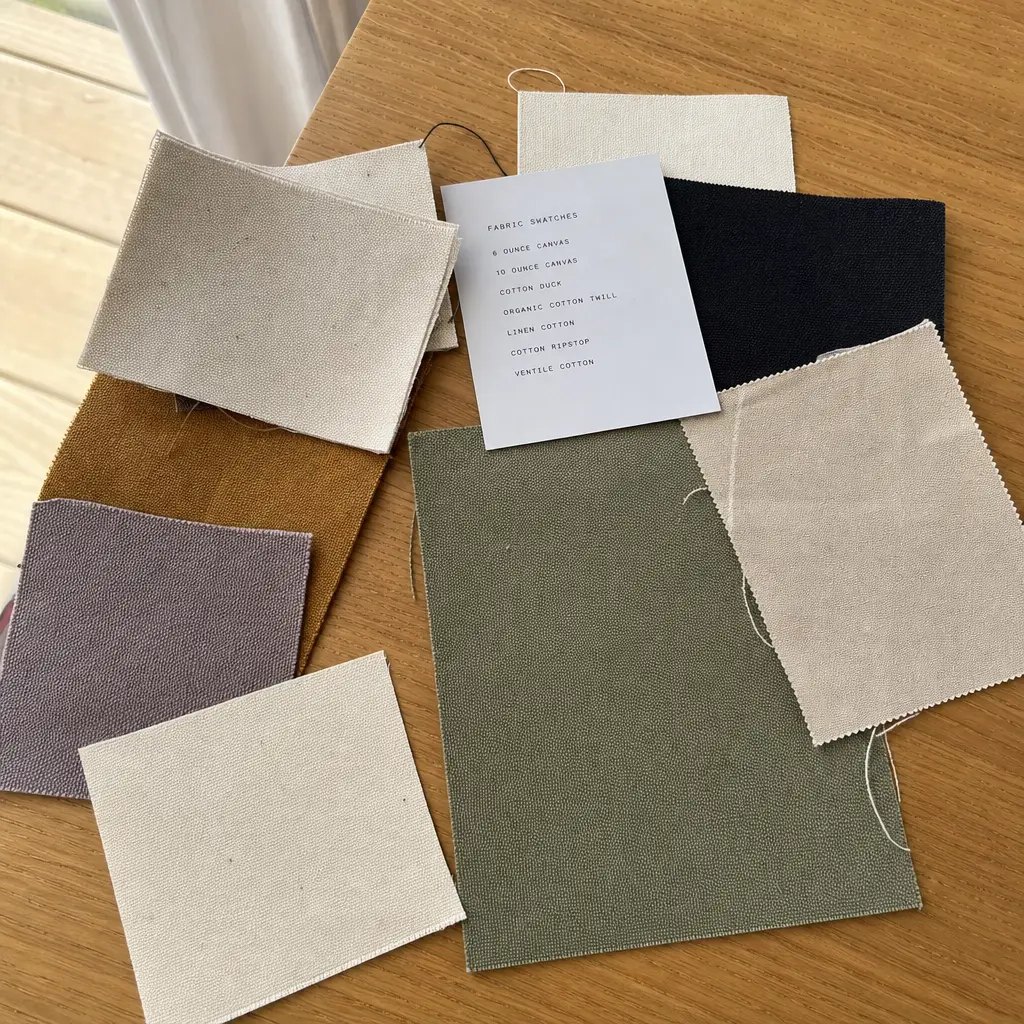
Start With the Loaded Product, Not the Pouch Catalog
The main buying mistake with custom cotton drawstring pouches for wellness studios is choosing fabric weight from a supplier catalog before defining what the pouch must hold. A 130 GSM cotton pouch can be perfectly acceptable for lavender sachets or a soap sample, but it can look weak around a glass roller bottle, massage tool, gua sha stone, candle tin, or refill jar. The buyer should begin with the loaded item dimensions, item weight, edge sharpness, oil risk, and whether the pouch must stand up in a retail display.
For RFQ purposes, write the pouch use in plain production language. A supplier can quote more accurately when they know whether the pouch is a disposable insert, reusable packaging, or a retail accessory. This affects not only GSM, but also seam allowance, drawstring thickness, top channel height, logo method, carton packing, and inspection requirements.
- For sachets, sample cards, and light soap bars, start comparison at 120-140 GSM.
- For normal retail kits and studio welcome sets, 160-180 GSM is usually the safest first quote.
- For reusable accessory pouches or heavier wellness tools, compare 200-220 GSM before moving to 240 GSM canvas.
- For bottles or items with hard corners, test the actual product inside the pouch before confirming bulk size.
How Cotton GSM Changes Handfeel, Cost, and Function
GSM means grams per square meter, but buyers should not treat it as a simple quality score. Higher GSM gives more opacity, better structure, and more perceived value, but it also increases fabric consumption cost, carton weight, and shipping volume. On small drawstring pouches, a jump from 140 GSM to 220 GSM may make the product feel premium, yet it can also make the top channel bulky and harder to close neatly.
For wellness studio buyers, the best GSM is the one that matches the customer touchpoint. A pouch used inside a larger gift box does not need the same fabric weight as a pouch sold as reusable retail packaging. A pouch for a refill program needs repeated opening, closing, and washing tolerance; a one-time event giveaway needs stable printing and low landed cost.
- 120-140 GSM: soft, light, economical, good for inserts, but limited opacity and structure.
- 160-180 GSM: balanced option for most branded cotton pouches with screen printing.
- 200-220 GSM: better reuse value and stronger retail feel, with higher freight and sewing cost.
- 240-280 GSM: canvas-like structure for heavier contents, but not ideal for every small pouch size.
Match Fabric Weight to Pouch Size
A fabric weight that works for a 20 x 30 cm pouch may not work for a 9 x 12 cm pouch. Small pouches have short drawstring channels, tight turning points, and less area for the fabric to drape. If the GSM is too high, the top can look bulky, the drawstring may not close fully, and the pouch may feel overbuilt compared with the item inside.
Medium and large pouches can carry heavier fabric better because the fabric has more surface area and the drawstring channel can be proportioned correctly. For a retail buyer, the practical rule is to size the pouch around the product first, then select GSM based on the final packed appearance. Do not approve fabric weight from a flat swatch only; a swatch cannot show closing performance.
- Small pouches under 10 x 15 cm often work better at 120-160 GSM unless the item is heavy.
- Common wellness retail sizes around 15 x 20 cm or 20 x 30 cm usually handle 160-220 GSM well.
- Large kit bags may need 220 GSM or above, especially if customers reuse them after purchase.
- Leave enough headspace above the product so the drawstring can close without pulling the seam out of shape.
Print Method Depends on GSM and Artwork Detail
Screen printing is usually the most practical option for cotton drawstring pouches when the artwork is a solid logo, wordmark, icon, or one-to-four-color design. It works best when the fabric surface is not too loose and the print area is not crossing heavy seams. On 160 GSM and above, screen print generally gives better coverage and cleaner edges than on very thin cotton, especially for dark ink on natural fabric.
Heat transfer can solve complex artwork, gradients, or photographic color requirements, but it changes the handfeel and may not match the natural wellness positioning of the pouch. Embroidery can look premium on heavier cotton or canvas, but it may distort lightweight fabric and increase cost. Woven labels or side labels are useful when the buyer wants subtle branding or when artwork is too small for reliable direct print.
- Use screen print for simple studio logos, solid icons, and repeat retail packaging.
- Use heat transfer only when artwork complexity justifies the different handfeel.
- Use embroidery mainly on 200 GSM and heavier fabric, with backing and distortion reviewed.
- Use a woven side label when the front panel must stay clean or the logo is very small.
Cost Drivers Buyers Often Miss
The unit price of a cotton drawstring pouch is not driven by GSM alone. Fabric width, cutting efficiency, seam construction, drawstring type, logo area, number of print colors, packing method, and order split all change the quote. A small increase in pouch dimensions can create more waste if it does not nest well on the fabric width. A simple pouch with a large solid ink print may cost more than a heavier pouch with a small one-color logo.
When comparing quotes, request a versioned cost comparison instead of one final number. Ask the supplier to quote the same size at 140 GSM, 180 GSM, and 220 GSM, using the same print size and packing method. This makes it easier to see whether the extra fabric weight is worth the landed-cost increase. For importers and distributors, the cheapest ex-factory price can become less attractive if carton CBM rises sharply.
- Fabric cost increases with GSM, but cutting waste can be just as important.
- Large ink coverage adds print cost and may increase drying or handling time.
- Dyed fabric usually has higher MOQ and longer lead time than natural stock cotton.
- Individual packing improves retail handling but increases labor, material, and carton space.
- Multiple pouch sizes or colors may reduce production efficiency even when total quantity is high.
MOQ Logic for Custom Cotton Pouches
MOQ is not only a supplier sales rule. In real production, MOQ depends on fabric availability, dyeing lot, printing setup, cutting efficiency, and sewing line changeover. If the buyer uses natural or bleached stock cotton, the MOQ can often be lower than a custom dyed fabric. If the buyer wants multiple sizes with the same print, the supplier may combine fabric purchasing but still treat each size as a separate sewing setup.
For wellness studio programs, the most practical MOQ strategy is to standardize the pouch body and vary the artwork or label only when necessary. Retail buyers with many scents, product types, or seasonal kits should avoid creating too many pouch dimensions. Standardizing size gives better repeat production control, easier warehouse packing, and lower sample approval workload.
- Natural stock cotton normally supports more flexible MOQ than custom dyed cotton.
- Custom fabric dyeing may require a minimum fabric roll quantity even if pouch quantity is small.
- Each print color and artwork version can create separate screen setup cost.
- Different sizes require separate cutting markers and may not share the same sewing efficiency.
- Repeat orders become easier when the buyer keeps fabric, size, cord, and packing unchanged.
Sample Approval Should Test Use, Not Just Appearance
A good sample approval process includes a blank size sample, a printed sample, and, for important retail programs, a pre-production sample made with bulk fabric. The blank sample confirms size, shape, drawstring function, seam allowance, and fit with the buyer's actual product. The printed sample confirms logo scale, ink coverage, placement, and fabric reaction. The pre-production sample confirms that the final factory setup matches the approved construction.
Do not approve a pouch only from a flat photo. The sample should be filled with the actual product or a weight-matched substitute, closed by the drawstring, and photographed from front, side, and top. For wellness items, also check whether oils, fragrances, powders, or sharp edges could mark the cotton. If the pouch will be sold as part of a premium kit, the sample should be reviewed under the same lighting used for product photography and retail display.
- Measure finished size after the pouch is sewn and pressed, not before sewing.
- Load the real product and check whether the pouch closes naturally without strain.
- Rub the print lightly with a dry white cloth after curing to check obvious ink transfer.
- Pull the drawstrings several times to confirm the channel is not too tight.
- Compare the sample fabric against the approved swatch before authorizing bulk cutting.
Set QC Thresholds Before Production Starts
Quality control for cotton drawstring pouches should be written in measurable language. General wording such as good stitching or nice printing leaves too much room for disagreement. Buyers should define acceptable size tolerance, logo position tolerance, thread color, stitch appearance, fabric defects, odor, stains, drawstring function, and carton packing. These standards should be shared before the factory starts bulk cutting, not during final inspection.
Natural cotton creates one extra QC issue: variation. Seed flecks, minor slubs, and shade changes are normal in unbleached cotton, but they must be controlled within an agreed appearance range. If the buyer wants a very clean, uniform retail look, bleached or dyed cotton may be more suitable. If the buyer wants a natural wellness appearance, the inspection standard should avoid rejecting normal fabric character while still rejecting stains, oil marks, mildew, and weaving holes.
- Finished size tolerance: set separate limits for small and medium pouch sizes.
- Print position tolerance: measure from sewn edges, not from the raw fabric panel.
- Seam strength: test with the agreed loaded product weight and normal drawstring pull.
- Fabric defects: separate natural flecks from unacceptable stains, holes, and heavy slubs.
- Odor control: reject mildew, chemical smell, or damp storage smell before packing.
Packing Choices Affect Freight and Retail Handling
Packing is often treated as an afterthought, but it changes landed cost and warehouse efficiency. Flat-packed pouches in bundles usually reduce carton volume and are suitable for distributors who will repack later. Individual polybags protect retail cleanliness but add plastic, labor, and carton space. Paper bands or bulk cartons with inner liners can support a lower-plastic positioning, but the buyer must accept more handling risk during receiving and distribution.
Heavier GSM pouches also change carton planning. A 220 GSM pouch may look better, but if the carton becomes too heavy or bulky, the warehouse may require smaller carton counts. For importers, request estimated carton dimensions and gross weight at quotation stage. A quote without carton CBM is incomplete because freight and destination handling can move the real cost difference between 160 GSM and 220 GSM.
- Use bulk bundles when pouches will be filled or repacked after import.
- Use individual packing when pouches are sold directly or must stay dust-free.
- Use paper bands or inner carton liners when reducing plastic is part of the brand brief.
- Limit carton gross weight to a practical handling level for the destination warehouse.
- Require carton marks with PO number, style, color, size, quantity, and destination.
Lead Time Risks in Studio and Retail Programs
The lead time for custom cotton drawstring pouches is built from several smaller steps: artwork review, fabric sourcing, sample making, sample approval, bulk cutting, printing, sewing, trimming, inspection, packing, and export booking. A simple natural cotton pouch with one-color print can move faster than a custom dyed pouch with multiple sizes and retail packing. Buyers should not compare lead times unless the same approval steps are included.
The biggest schedule risk is late decision-making after sampling. If the buyer changes GSM, pouch size, cord color, or print position after the printed sample, the factory may need to remake screens, recut fabric, or rebook sewing capacity. For seasonal wellness kits, confirm the critical approval date and work backward from the required delivery window. Buffer time is especially important when the pouch must match other packaging components such as boxes, labels, jars, or instruction cards.
- Approve fabric swatch before printed sample when shade and texture are important.
- Lock artwork size and position before screens or transfer films are made.
- Avoid changing pouch size after cutting approval because fabric consumption and delivery both change.
- Reserve extra time for dyed fabric, embroidery, individual packing, or multi-destination shipment.
- Track lead time from approved sample date, not only from deposit date.
Specification comparison for buyers
| Spec decision | Recommended option | When it fits | Buyer risk to check |
|---|---|---|---|
| Light wellness insert pouch | 120-140 GSM plain cotton, single drawstring or double cotton cord | Soap bars, sample sachets, incense, small retail inserts, or low-weight welcome kits where softness matters more than structure | Too much show-through if the item has dark print, oil marks, or sharp corners; request filled sample photos before bulk approval |
| General studio retail pouch | 160-180 GSM cotton, double drawstring, 1 cm folded top channel | Most branded yoga, spa, skincare, candle, and gift sets needing a better handfeel without heavy freight cost | Quote may vary if supplier substitutes thinner 145 GSM fabric; require finished GSM tolerance and fabric swatch approval |
| Premium reusable pouch | 200-220 GSM cotton or light canvas, reinforced side seams | Membership kits, refill packaging, travel accessories, crystal sets, or retail bundles expected to be reused | Heavier fabric reduces packing density and can make small pouches stiff; confirm carton quantity and drawstring closing ease |
| Structured canvas pouch | 240-280 GSM canvas with wider bottom fold or boxed base if needed | Heavier wellness tools, massage accessories, brushes, bottles, or higher-value retail items | Cord channel becomes bulky on small sizes; approve a pre-production sample with actual item loaded inside |
| Natural eco look | Unbleached cotton with small seed flecks, reactive or water-based print | Brands wanting a low-processed visual style for organic, refill, or natural wellness ranges | Fleck distribution changes by fabric lot; define acceptable shade and slub variation instead of expecting pure uniform color |
| Crisp logo result | 160 GSM or higher with screen print for solid logos under 4 colors | Studio logos, event names, retail icons, and simple line artwork requiring clean edges on cotton | Loose weave and low GSM can break fine text; set minimum line width and approve print on the actual fabric |
| Soft promotional pouch | 120-160 GSM cotton with heat transfer only when artwork needs gradients | Short campaigns, color illustrations, QR-like graphics, or complex promotional art | Transfer film can feel less natural and may crack if overloaded; run rub and fold checks before order release |
| Landed-cost control | Choose 160-180 GSM and optimize pouch dimensions before increasing fabric weight | Buyers balancing retail appearance, reusable value, carton volume, and sea or air freight cost | Over-specifying GSM may add more cost than value; compare fabric consumption, carton CBM, and usable fit together |
Buyer checklist before sampling
- Define pouch use first: sample packaging, retail protection, refill program, event giveaway, or premium kit.
- List the exact product dimensions and loaded weight, not only the desired pouch flat size.
- Specify cotton type, color, GSM target, acceptable GSM tolerance, drawstring material, and seam construction.
- Send logo artwork in vector format and note print size, print position, ink color, and whether PMS matching is required.
- Require one fabric swatch approval and one printed size sample before bulk cutting when the order is for retail sale.
- Set acceptance criteria for shade variation, print registration, seam strength, drawstring function, stains, odor, and carton labeling.
- Compare quotes using finished pouch size, GSM, fabric consumption, print method, packing quantity, carton CBM, and sample terms.
- Confirm whether MOQ is based on fabric dye lot, printing setup, pouch size, or total mixed styles.
- Include packing method: flat pack or bundled, individual polybag or plastic-free paper band, master carton weight, and export marks.
- Build lead time around artwork approval, sample approval, fabric preparation, bulk sewing, printing, inspection, and booking.
Factory quote questions to send
- What finished GSM range will you guarantee for this cotton pouch, and how will you measure it during incoming fabric inspection?
- Is the quoted fabric stock greige, natural, bleached, dyed, or custom dyed, and what MOQ applies to that fabric choice?
- For our logo size and line thickness, do you recommend screen print, heat transfer, embroidery, woven label, or another method on this GSM?
- What pouch size do you recommend for our loaded product dimensions, including closing clearance above the item?
- Can you quote the same pouch in 140 GSM, 180 GSM, and 220 GSM so we can compare unit cost, carton CBM, and sample feel?
- What seam construction, stitch density, and drawstring channel width are included in the quotation?
- How many pouches per inner bundle and export carton, and what are the estimated carton dimensions and gross weight?
- What sample types are included: blank size sample, printed sample, pre-production sample, or random production sample?
- What lead time starts after deposit, artwork approval, fabric approval, and sample approval, and which step is the current bottleneck?
- What defects are considered critical, major, and minor in your final inspection standard for cotton drawstring pouches?
Quality-control points to confirm
- Finished pouch size tolerance should normally be controlled within plus or minus 5 mm for small pouches and plus or minus 8 mm for medium pouches unless a looser tolerance is agreed.
- Fabric GSM should be checked from the approved fabric lot, not estimated from catalog descriptions or supplier memory.
- Logo placement should be measured from fixed edges after the pouch is sewn, because channel folding changes the visible print area.
- Drawstrings should slide smoothly after printing, pressing, and packing; stiff channel seams can make the pouch feel cheap.
- Side seams and bottom seams should not open when the pouch is filled to the agreed product weight and pulled by the cords.
- Natural cotton shade, black specks, slubs, and small seed marks need an agreed limit so inspectors do not reject normal unbleached cotton characteristics.
- Screen print should pass dry rub and light scratch checks with no obvious ink lift, cracking, or blurred fine strokes.
- Finished goods should be free from strong chemical odor, mildew smell, oil stains, loose thread clusters, and mixed-size packing.
- Cartons should stay below practical handling weight for the destination warehouse, especially when using 220 GSM or heavier canvas.
- Retail orders should include carton marks, PO number, style number, quantity, color, and destination details on the master carton label.