The Buying Problem This Checklist Solves
Custom cotton drawstring pouches look simple on a quote sheet, but weak specifications create very visible failures: torn drawstring channels, thin fabric that feels disposable, cracked logos, pouches that do not close around the product, and cartons that arrive crushed at a 3PL warehouse. For tech startups, the pouch is often part of a launch kit, influencer seeding box, retail accessory bundle, or customer onboarding pack. If the pouch fails, the buyer does not only lose packaging cost; the product presentation looks underdeveloped.
The correct durability checklist starts before the factory makes the sample. The buyer needs to define the item weight, expected reuse, print detail, packing route, and inspection thresholds. A pouch for a USB-C cable does not need the same fabric as a pouch for a power bank, but both need a clear seam and cord standard. The best RFQ is not the longest one; it is the one that removes guessing from fabric, sewing, printing, testing, and packing.
- Use a real product load, not only an estimated pouch size.
- Separate appearance requirements from functional durability requirements.
- Approve the construction before approving the logo print.
- Compare supplier quotes only after fabric GSM, seam type, print method, and packing are aligned.
Start With Product Load and Use Case
The first durability decision is not cotton color or logo position. It is what the pouch must hold and how often the user will handle it. A small adapter pouch may carry 60-120 g. A cable kit with manual and insert may reach 150-250 g. A power bank, small hardware device, or multi-accessory bundle can move beyond 300 g. If this weight is not stated in the RFQ, suppliers may quote the cheapest fabric and cord that can be sewn, not the construction that can survive repeated opening.
For procurement teams, the use case should be written in plain operational language. Is the pouch a disposable dust bag inside a carton? Is it a reusable storage pouch for the end user? Will it sit on a retail shelf, ship through ecommerce, or be inserted inside a launch box? Each route changes the acceptance criteria. Reusable pouches need stronger cord channels and better fabric handfeel. Retail pouches need cleaner print and fewer creases. Internal protective pouches can be simpler but still need accurate sizing and non-staining fabric.
- Light load: cables, dongles, lens cloths, sample cards, small adapters.
- Medium load: multi-cable kits, branded notebooks, small device accessories.
- Heavy load: compact hardware, power banks, chargers, retail bundles with inserts.
- Frequent reuse: require reinforced channel exits and repeated open-close testing.
- One-way packaging: keep construction simple but still control size, print, and fabric cleanliness.
Fabric GSM and Construction Choices
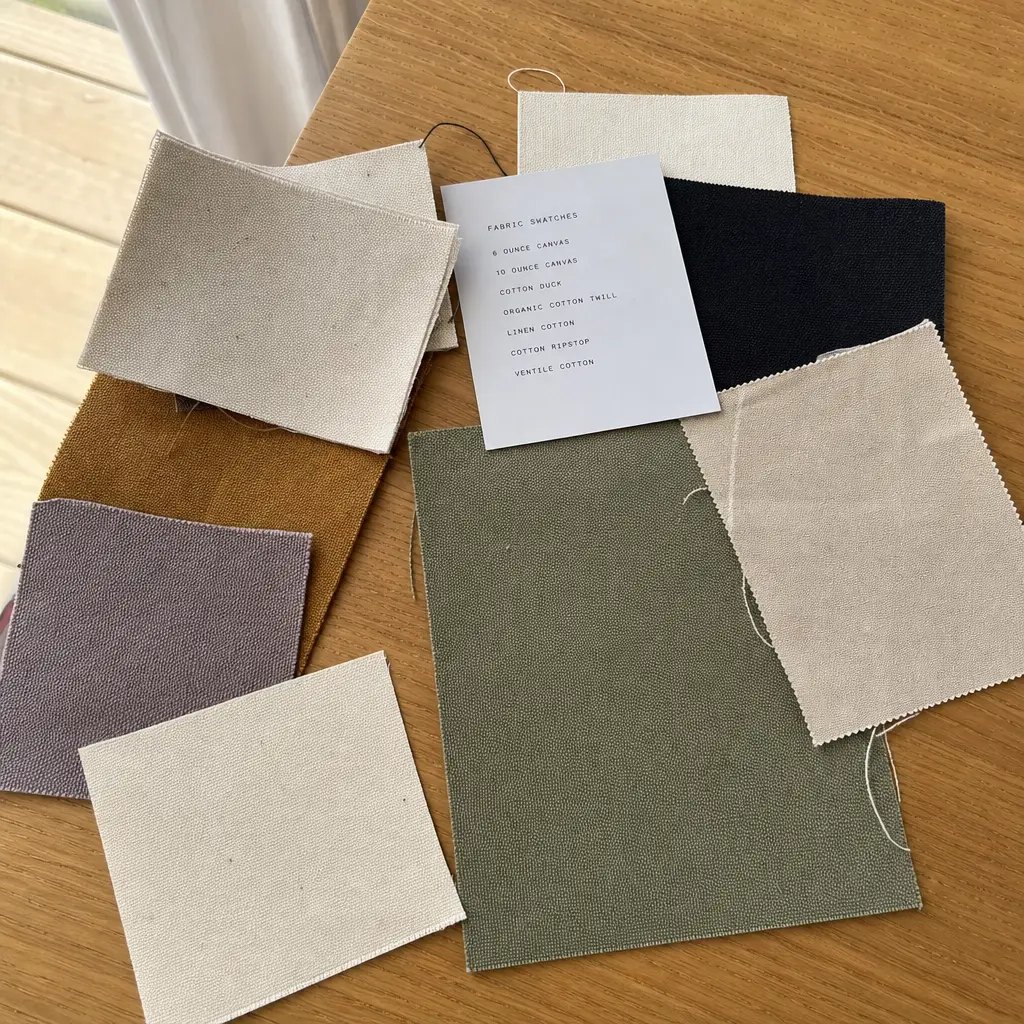
Cotton pouch fabric is commonly quoted by GSM or by ounce weight. For small custom cotton drawstring pouches, 140-160 GSM cotton can work for lightweight promotional packaging, but it often feels thin and may show the product shape. For tech accessory packaging with a better handfeel, 180-200 GSM cotton or about 6 oz cotton canvas is a safer starting point. For heavier kits or premium retail presentation, 240-270 GSM or around 8 oz canvas gives better structure but increases sewing thickness, carton weight, and material cost.
The RFQ should identify whether the fabric is plain weave cotton, cotton canvas, organic cotton, recycled cotton blend, or dyed cotton. Natural cotton may include cotton seed specks and shade variation. Dyed cotton improves brand color control but adds minimum quantity, lab dip approval, and colorfastness risk. Washed cotton feels softer but can change dimensions. If the pouch size must fit a fixed product tightly, sample after washing or finishing, not before.
- 140-160 GSM: acceptable for light, low-cost inserts but not ideal for a premium tech kit.
- 180-200 GSM: balanced option for cables, adapters, onboarding packs, and general accessory pouches.
- 240-270 GSM: stronger handfeel for heavier bundles, but test closure bulk and carton weight.
- Natural cotton: lower color control but suitable for clean startup branding.
- Dyed cotton: stronger brand match, but requires lab dip, colorfastness testing, and longer material preparation.
Seams, Drawstrings, and Failure Points
Most pouch failures happen at the side seam near the drawstring channel or at the cord exit. The fabric may be strong enough, but the stitching and channel construction are underbuilt. A basic single stitch can hold a light pouch, but repeated pulling puts stress on a small area. For better durability, specify overlock inside seams with lockstitch reinforcement, or request a cleaner seam finish if the inside will be visible to the buyer during unboxing.
Cord choice also affects durability. Cotton cords feel consistent with cotton fabric and work well for brand packaging, but very thin cords can dig into the channel. A 4-6 mm cord is common depending on pouch scale. Round cord closes smoothly, while flat cord can feel softer and lay better. For tech buyers, the cord does not need to be overdesigned, but it must pass a pull test and repeated opening test without tearing the fabric, slipping knots, or twisting the channel.
- Require reinforced backstitching or bar tack at channel exits for reusable pouches.
- Avoid oversized cords on small pouches because the channel becomes bulky and hard to close.
- Define knot finish and cord end length so bulk production looks consistent.
- Test the pouch with one-handed opening and closing if the end user will reuse it.
- Count torn channel openings as functional defects, not minor cosmetic defects.
Logo Printing and Durability Testing
A tech startup logo often uses fine lines, gradients, or tight color rules. The print method must match the artwork and the fabric texture. Screen printing is usually the most practical choice for solid one- to three-color logos on cotton pouches. It gives good coverage, stable cost at volume, and predictable placement. Heat transfer can handle gradients or small detail, but the film edge, handfeel, and long-term cracking risk should be reviewed. Digital printing can work for complex artwork, but color brightness on natural cotton is not the same as on coated paper.
Print durability needs simple, written acceptance rules. The factory should not only send a nice photo under bright light. Ask for physical samples and perform dry rub, damp rub if relevant, and light wash or wipe testing depending on the pouch use. For retail bundles, color consistency and placement matter more. For reusable storage pouches, adhesion and cracking matter more. A practical tolerance is to approve slight fabric texture show-through on natural cotton but reject broken logo edges, obvious pinholes, poor registration, and ink that transfers to the product.
- Screen print: best for solid logos, larger flat areas, and stable repeat orders.
- Heat transfer: useful for gradients, but test edge feel and cracking after flexing.
- Digital print: suitable for complex art, but color may look muted on natural cotton.
- Embroidery: premium look, but not ideal for very small pouches or fine logo detail.
- Print approval should include placement measurement, color target, rub result, and surface handfeel.
Sample Approval Workflow That Prevents Rework
For a new pouch program, a two-step sample process is usually more efficient than jumping directly into a printed sample. First approve a plain construction sample using the target fabric weight, finished size, cord, and seam type. Put the actual product inside, close the pouch, shake it lightly, and confirm whether it looks full, loose, or stressed. This catches sizing and construction problems before the factory spends time on screens, transfers, or artwork alignment.
After the construction is approved, move to a printed pre-production sample. This sample should represent the actual print method, logo size, print position, fabric color, cord color, and sewing finish. The buyer should record approval comments with photos and measurements. If the sample is approved with changes, state whether the factory must remake the sample or can proceed with written corrections. For first orders, remaking the sample is often cheaper than correcting thousands of pouches after inspection.
- Plain fit sample: confirms finished size, fabric weight, cord function, and product fit.
- Printed sample: confirms artwork scale, color, placement, ink feel, and logo durability.
- Pre-production sample: should be kept by both buyer and factory as the shipment standard.
- Approval record: include date, version, measurement, photo, and remaining corrections.
- Do not approve from flat photos only when the pouch must fit a real device or accessory.
MOQ Logic and Cost Drivers
MOQ for custom cotton drawstring pouches depends on fabric availability, dyeing, print setup, sewing line efficiency, and packing requirements. If the buyer uses natural cotton in a standard GSM and standard cord color, MOQ can be lower because the factory can source material more easily. Custom dyed fabric, custom cord color, unusual size, special inner labels, or retail barcode packing can raise MOQ because each step creates setup work and material minimums.
When comparing quotes, do not only look at unit price. Two suppliers may both quote a cotton pouch, but one may include 200 GSM fabric, overlock plus reinforced stitching, two-color screen print, individual polybag, and export carton marks, while another quotes 140 GSM fabric with basic stitching and bulk packing. The cheaper quote may fail inspection or require paid upgrades later. A clean comparison uses one shared specification sheet and asks each factory to identify exceptions line by line.
- Fabric GSM is a major cost driver because it changes material consumption and carton weight.
- Pouch size affects cutting yield; a small dimension change can improve or reduce fabric efficiency.
- More print colors add screen setup, alignment work, and inspection risk.
- Custom dyed fabric may require lab dip approval and higher material MOQ.
- Individual packing, barcode stickers, inserts, and carton labels add labor and warehouse compliance cost.
- Rush lead times can increase rejection risk if sampling, curing, or fabric preparation is compressed.
Inspection Thresholds for Durability
Durability inspection should be written as acceptance criteria, not vague wording such as good quality or strong stitching. For example, finished size can be checked against a plus or minus 5 mm tolerance for small pouches and plus or minus 8 mm for larger pouches. Cord channel function can be tested by opening and closing a sample multiple times, then checking for tearing, thread breakage, or cord slippage. Seams can be pulled by hand with the intended load inside, but for stricter programs the factory can perform a basic seam strength test.
The buyer should separate critical, major, and minor defects. Critical defects include contaminated fabric, unsafe sharp parts, wrong material, or ink transfer that can stain the tech product. Major defects include wrong size, broken seams, unusable drawstring, logo misprint, severe color mismatch, or missing packing labels. Minor defects include small loose threads or slight natural cotton specks within the approved standard. This separation helps procurement make a shipment decision without arguing over every cosmetic variation.
- Finished size: measure width, height, channel height, and usable inner space.
- Load test: use the real product weight plus a practical safety margin.
- Cord pull: test both drawstring ends and both channel exits.
- Open-close cycle: repeat enough times to reveal friction and weak stitching.
- Print rub: reject ink transfer, cracking, peeling, or obvious logo edge breakage.
- Carton check: verify quantity, carton strength, moisture control, marks, and gross weight.
Packing and Shipment Details Buyers Miss
Packing can undo good pouch production. Cotton pouches crease, absorb moisture, and pick up lint if handled badly. For bulk promotional orders, flat packing inside master cartons may be enough. For retail or distributor orders, inner polybags, paper bands, hang tags, barcode stickers, or set packing may be required. If the pouches are inserted into a tech kit later, the packing must support easy counting at the assembly point. If they ship directly to a 3PL, carton labeling must match the warehouse receiving rules.
Carton design affects landed cost and damage risk. Heavy GSM fabric increases gross weight quickly, and overfilled cartons can deform pouches or split during handling. Underfilled cartons waste freight volume. Ask for carton dimensions, units per carton, gross weight, net weight, and CBM before confirming the order. For sea freight or long storage, include moisture-control discussion, especially for natural cotton. The goal is not excessive packaging; it is predictable arrival condition and clean warehouse receiving.
- Bulk pack: lowest cost, suitable when pouches will be repacked by the buyer.
- Individual polybag: cleaner handling, but adds plastic use and packing labor.
- Paper band: useful for a more retail-friendly presentation with less plastic.
- Barcode label: necessary when pouches are SKUs or shipped to retail warehouses.
- Export carton marks: should include PO number, item code, quantity, carton number, and destination requirement.
- Moisture control: consider desiccants or dry storage rules for long ocean transit.
Lead Time, Quote Data, and Final RFQ Control
A realistic schedule includes artwork preparation, fabric sourcing, sample making, sample shipping, approval time, material preparation, printing, sewing, inspection, packing, and export documents. Standard natural cotton pouches with simple screen print move faster than dyed fabric, custom cord, complex artwork, or retail packing. Tech startups often compress schedules around product launches, but skipping sample approval or print curing time can create failure later. The RFQ should state the target ship date and ask the factory to show the critical path.
Quote data must be complete enough for landed-cost comparison. Request unit price by quantity break, sample cost, mold or screen charge if any, packing cost, carton details, lead time, payment terms, Incoterms, and quote validity. For importers and distributors, CBM and gross weight are not optional because freight and warehouse costs can change the true landed cost. For brand owners, the biggest control point is a signed specification sheet that links the quote, sample, inspection, and purchase order into one consistent standard.
- Include quantity breaks such as 500, 1,000, 3,000, and 5,000 pieces if demand is uncertain.
- State Incoterms clearly, such as EXW, FOB, CIF, or DDP, so quotes are comparable.
- Request sample lead time separately from bulk production lead time.
- Require carton CBM and weight before final landed-cost approval.
- Attach artwork files, Pantone references if applicable, and packing instructions with the RFQ.
- Use the approved pre-production sample as the benchmark for final inspection.
Specification comparison for buyers
| Spec decision | Recommended option | When it fits | Buyer risk to check |
|---|---|---|---|
| Fabric weight for small tech accessories | 6 oz cotton canvas or 180-200 GSM plain cotton | Cables, adapters, welcome-kit items, earbuds cases, small retail inserts | Below 160 GSM can feel limp and may show contents; require actual GSM test, not only supplier description |
| Fabric weight for heavier kits | 8 oz cotton canvas or 240-270 GSM cotton | Power banks, multi-item hardware bundles, premium customer gifts | Heavier fabric raises unit cost and carton weight; test drawstring closure bulk before approval |
| Drawstring material | Cotton cord, 4-6 mm flat or round depending on pouch size | Reusable packaging where the user opens and closes the pouch repeatedly | Thin cord can cut into fabric channel; require pull test on cord and channel after repeated cycles |
| Seam construction | Inside overlock plus lockstitch top reinforcement at channel ends | Most startup orders needing reliable but cost-controlled pouch construction | Channel-end tearing is common if bar tack or reinforced stitching is skipped |
| Logo decoration | Screen print for solid one- to three-color logos; heat transfer only for fine gradients | Brand logo on flat pouch face with moderate detail | Rub test and wash test must be approved; cheap ink can crack or bleed into natural cotton |
| Size tolerance | Finished size tolerance of plus or minus 5 mm for small pouches, plus or minus 8 mm for larger pouches | Orders where accessories must fit cleanly without extra empty space | Cutting shrinkage and sewing take-up can reduce usable internal size; test with real product |
| Sampling route | Plain size sample first, then printed pre-production sample | New pouch dimensions, new cord type, or first order with a factory | Skipping the plain fit sample can lock in a pouch that looks correct but does not close around the item |
| Packing method | Flat packed in inner polybags or paper bands, then export carton with moisture control | Retail buyers, distributors, and startups shipping to 3PL warehouses | Over-compression causes creasing; weak cartons can collapse during sea freight or warehouse stacking |
Buyer checklist before sampling
- Define the real product load in grams, including cables, inserts, manuals, and any retail sleeve.
- State finished pouch size, not only flat cutting size, and include tolerance by width, height, and drawstring channel position.
- Specify fabric composition and target GSM or ounce weight, with acceptable tolerance and testing method.
- Confirm whether the pouch must be washable, reusable, retail-ready, or only protective packaging for one shipment.
- Approve drawstring type, cord diameter, cord color, knot finish, and whether the ends need metal tips or simple knots.
- Require seam reinforcement at drawstring channel exits, especially for pouches opened frequently by end users.
- Match print method to artwork: screen print for solid logos, digital print for photo detail, heat transfer for tight gradients.
- Set print acceptance rules for registration, ink coverage, cracking, rubbing, and color variance under normal lighting.
- Request a fit sample using the actual tech item, not only a measurement photo from the factory.
- Define AQL or inspection sample size, with separate checks for fabric, stitching, print, cord function, and packing.
Factory quote questions to send
- What fabric construction and actual GSM are included in the quote, and what GSM tolerance will you control in bulk?
- Is the quoted size the finished size after sewing, and what tolerance do you apply to width, height, and drawstring channel?
- Which seam construction is quoted: single lockstitch, overlock, French seam, or overlock plus lockstitch reinforcement?
- How is the drawstring channel reinforced at the two exit points, and can you add bar tack or extra backstitching?
- Which print method is quoted, how many colors are included, and what artwork format do you need for clean production?
- What durability tests can you perform on samples: seam pull, cord pull, rub test, wash test, and load test?
- What is your MOQ for this pouch size and fabric, and how does MOQ change if we use dyed fabric or custom cord color?
- What sample stages do you recommend before bulk production, and how many days are needed for plain and printed samples?
- What packing is included in the unit price: bulk carton, individual polybag, paper band, barcode sticker, or retail insert?
- What is the estimated production lead time after sample approval, and which materials could extend the schedule?
Quality-control points to confirm
- Fabric GSM should be measured from actual bulk fabric rolls, not estimated from supplier catalog wording.
- Finished pouch size should be checked after sewing and pressing, with internal usable space verified using the buyer's product.
- Cord pull strength should be tested at both channel exits because tearing usually starts at the opening edge.
- Seam strength should be tested with the intended load plus a reasonable safety margin, especially for power banks or hardware kits.
- Print adhesion should pass dry rub and light wash or damp cloth testing according to the buyer's use case.
- Print placement should be measured from the finished pouch centerline, not only from the cut panel edge.
- Loose threads, skipped stitches, broken overlock, and twisted channels should be counted as workmanship defects.
- Cartons should be checked for correct quantity, moisture protection, readable marks, and acceptable stacking strength.
- Random bulk samples should be opened and closed repeatedly to reveal cord friction, channel tearing, and knot slippage.
- Final inspection should separate critical functional defects from minor cosmetic variation so shipment decisions are practical.