Why durability fails on coffee roaster pouches
Coffee roasters often treat cotton drawstring pouches as a packaging add-on, but the pouch is usually the part the end customer keeps. That changes the durability requirement. A pouch used once for a holiday gift can survive with lighter fabric and basic seams. A pouch sold with brew tools, sample packs, or merchandise will be opened, cinched, packed into travel bags, and reused for months. If the sourcing brief does not separate those use cases, suppliers quote against the cheapest interpretation and the pouch fails in the field.
The main failure points are predictable. Bottom corners split when the pouch carries dense items such as 250 g coffee bags, ceramic cups, or metal scoops without gusset support. Drawstring channels tear when the seam allowance is too narrow or the cord is too thin and abrasive. Large front logos crack because the print was cured for appearance, not rubbing and folding. Natural cotton also hides a common issue: fabric variation between rolls. Two pouches can look fine on the inspection table and behave very differently after transit compression or consumer use.
- Typical high-stress contents: coffee bean bags, drip bag assortments, cups, spoons, filters, gift sets, grinders, and tasting accessories
- Most common buyer mistake: approving visual samples without a loaded use test
- Most common supplier shortcut: substituting lower GSM fabric or reducing seam allowance to hit a target FOB
Choose the base spec before talking about testing
A useful durability checklist starts with the right baseline specification. For small accessory pouches holding coupons, pins, or lightweight sample sachets, 140 to 180 GSM plain cotton may be adequate. For most coffee roaster retail programs, that range is too light. A better starting point is 220 to 280 GSM cotton canvas or tightly woven cotton, especially for pouch sizes above 15 x 20 cm or any pouch expected to hold a bag of beans, a mug, or a bundled set. Below that range, the pouch may still pass a simple visual inspection, but seam distortion and fabric wrinkling increase quickly in transit.
Construction matters as much as fabric weight. A flat pouch works for slim products, but bulky items create a pressure point at the lower seam corners. If the pouch will hold boxed items, coffee tools, or round products, add a side gusset or box bottom. That changes the load path and extends usable life more effectively than adding logo decoration or changing cord color. Buyers sometimes spend more on print upgrades when the real need is structural support. If you want quotes that are actually comparable, lock the body shape and seam construction first.
- Practical starting spec for reusable coffee gift pouches: 8 oz to 10 oz cotton, roughly 220 to 280 GSM
- For heavier sets: consider box bottom construction and double drawstring
- For natural look programs: specify acceptable slub variation so fabric texture does not become a claim issue
Fabric and seam details that change real service life
Procurement teams often compare pouch quotes on size, print, and unit price while missing the seam variables that decide durability. A 1 cm seam allowance with stable lockstitch construction and around 8 to 10 stitches per inch is a practical commercial target for most cotton drawstring pouches. Too few stitches reduce seam integrity. Too many can perforate the fabric edge and create a tear line, especially on lighter cotton. On larger pouches, bartacks or backstitch reinforcement near the drawstring opening can prevent unraveling where the user repeatedly pulls the cord.
The drawstring itself is another hidden cost driver that affects complaints. Thin cotton cord may look elegant but cuts into the channel edge faster and frays sooner. A 4 mm to 6 mm cotton cord is a safer default for medium sizes, while narrow cords can still work on jewelry or sample pouches. Cord length also matters. If the cord barely clears the channel, the customer will pull harder and stress the seam. If it is too long, it tangles during packing and creates a messy retail presentation. Factories that understand pouch use will recommend channel width and cord length together rather than quoting them as disconnected parts.
- Useful seam spec: lockstitch, 8 to 10 SPI, minimum 1 cm seam allowance
- Useful cord spec: cotton cord 4 mm to 6 mm for medium roaster gift pouches
- Reinforce stress areas: channel openings, bottom corners, and gusset junctions
Print method should match abrasion, not just brand aesthetics
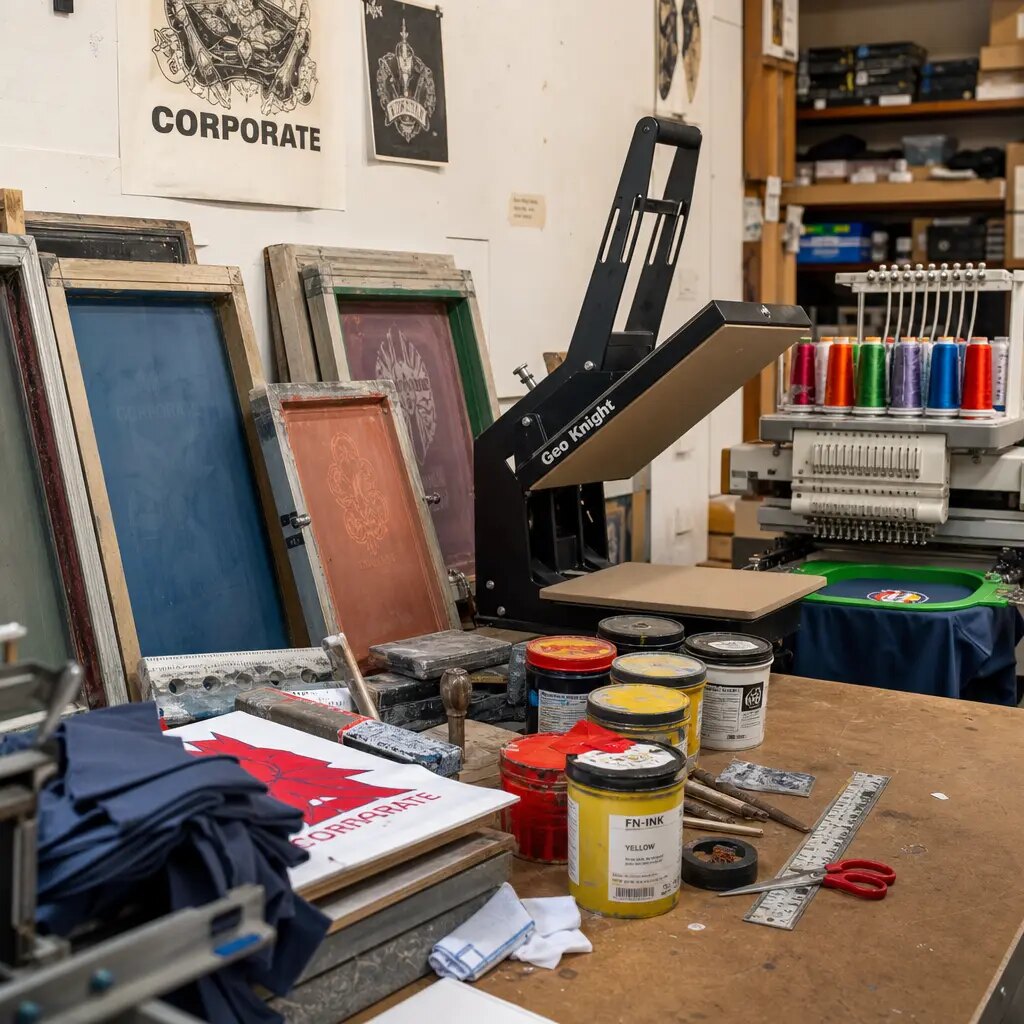
Coffee roasters often want natural cotton pouches with a simple one-color logo, and that usually points to screen printing. For durability, screen print is still the most practical choice if coverage is moderate and the factory cures it correctly. Water-based ink gives a softer hand and suits natural-brand positioning, but it still needs rub testing because under-cured prints can fade on coarse cotton. Plastisol prints are more opaque and stable on darker fabric, but heavy deposits can feel stiff and crack where the pouch folds sharply. The right decision depends on logo size, fabric texture, and how often the pouch will be handled.
If the logo area is small and long-term wear matters more than front-panel graphics, a woven side label often outperforms large surface printing. That is especially true for premium coffee accessory sets where the pouch will be reused as storage. Digital print can work for low-volume color artwork, but it is not the best default on textured cotton when repeated friction is expected. Embroidery gives a premium appearance, but it can pucker lighter fabrics and add labor cost that does not improve structural durability. Buyers should decide whether the pouch is a branded package or a reusable product, because the branding method changes accordingly.
- Best general-use option: one-color screen print on 220 to 280 GSM cotton
- Best low-wear minimalist option: woven side label
- Common risk: approving print color only, without cure and rub resistance testing
Build a sample test plan before bulk approval
A development sample is not enough for a durability decision unless it is made with the same fabric, same cord, and same print process intended for bulk production. For coffee roaster programs, request a pre-production sample after artwork approval and before final PO release. That sample should be loaded with the actual product or an equivalent dummy weight. If the pouch is meant to hold a 340 g bag of beans plus a scoop, do not test it empty. Many pouches look fine when flat and fail only when bulk density pushes against the bottom seam and channel opening.
The test plan does not need a lab to be useful, but it does need consistency. Define the load weight, number of drawstring pulls, drop height, and print rub cycles. A simple internal benchmark could include loading to intended weight, closing and opening the pouch 50 times, hanging it briefly by the cord, and performing several waist-height drops onto a hard floor while the product is inside. This kind of controlled sample abuse exposes weak seams, poor print curing, and cord slippage before the bulk fabric is cut.
- Load test example: 1.2 to 1.5 times intended product weight for short-duration seam stress
- Drawstring cycle example: 50 open-close cycles on the approved sample
- Drop test example: 3 to 5 drops from about 80 to 100 cm with actual contents or a matched dummy load
- Print test example: dry rub with white cloth for 20 cycles and inspect for unacceptable transfer or cracking
Set acceptance criteria that a factory can actually inspect
A durability checklist becomes commercially useful only when it turns into pass-fail language. 'Strong seams' is not inspectable. 'No open seams after 50 drawstring cycles and 3 loaded drops' is inspectable. 'Good print quality' invites arguments. 'No visible logo cracking from 50 cm viewing distance after dry rub and fold test' gives both sides a working standard. Factories and third-party inspectors need criteria they can evaluate on the floor, not general expectations copied from consumer-facing packaging briefs.
For cotton drawstring pouches, the most practical QC thresholds cover dimensions, GSM, seam integrity, cord function, print wear, and packing stability. Use tolerances that are strict enough to prevent bad deliveries but realistic for stitched cotton goods. For example, requiring zero size deviation on a sewn textile product is not useful and usually signals an inexperienced buyer. The better approach is to control what affects fit, appearance, and function while documenting reasonable manufacturing variation.
- Size tolerance guideline: plus or minus 0.5 cm on small pouches, plus or minus 1 cm on larger sizes
- GSM tolerance guideline: around plus or minus 5 percent if measured against approved spec
- Seam acceptance: no skipped stitches, no seam grin exposing gap under normal hand tension, no unraveling at channel ends
- Function acceptance: cord must move smoothly and close the opening without catching or pulling the seam inward
Quote comparison: where the low price usually hides
When suppliers quote custom cotton drawstring pouches, the cheapest line is often built on a lighter GSM, smaller actual dimensions, weaker drawstring, or reduced seam allowance. These differences are rarely obvious in the summary quote sheet. A supplier may price '20 x 30 cm cotton pouch' without stating whether the measurement is external cut size or finished internal usable size. Another may assume natural stock fabric and one-color print, while a competitor assumes dyed fabric, double drawstring, and individual polybag packing. Without a normalization sheet, price comparisons are mostly noise.
MOQ logic also affects apparent value. Small runs often carry setup-heavy costs for screen preparation, cutting loss, and manual sewing time. If one supplier offers an unusually low MOQ, confirm whether they are using leftover stock fabric, mixing production with another order, or charging a higher sample and repeat cost later. For coffee roaster buyers, the most useful way to compare quotes is to request price breaks at three volume levels and require the same structure in every response. That shows where the real cost curve improves and whether the supplier is stable on repeat replenishment.
- Normalize by: GSM, finished size, gusset yes or no, cord spec, print colors, packing, inspection level, and incoterm
- Useful quote breaks: 1,000 pieces, 3,000 pieces, and 5,000 pieces
- Example cost drivers: dyed fabric, large print area, woven labels, box bottom sewing, individual barcode stickers, export cartons with low weight limits
Packing decisions can create or prevent durability claims
Packing is not just a logistics detail. It affects how the pouch arrives and whether the buyer mistakes transit damage for poor production. Cotton pouches packed too tightly into oversized master cartons can develop deep print set-off, crushed channels, or permanent fold lines that make the product look weak even if the sewing is acceptable. Natural cotton also picks up carton dust and moisture odor more easily than synthetic bags, so inner protection matters if the goods move by sea or sit in a humid warehouse.
For most coffee roaster programs, the right packing plan depends on how the pouch will be used after arrival. If the importer will insert coffee products locally, pouches usually ship flat. In that case, define whether pieces are stacked loose, packed by bundle, or individually polybagged. Individual polybags improve cleanliness but add labor, plastic, and carton volume. Loose bundling saves cost but increases the chance of rub marks on dark prints. The right answer is rarely universal; it depends on the retail finish expectation and the receiving process.
- State carton limits clearly: target outer dimensions and maximum gross weight, often under 15 kg for easier warehouse handling
- Use moisture protection when needed: inner poly liner or bag-in-carton for long sea transit
- For printed dark pouches: test whether print surfaces scuff when compressed in export cartons
Lead time risk starts with approvals, not sewing capacity
Buyers often focus on factory production days and ignore the approval steps that actually delay pouch programs. Cotton drawstring pouches look simple, but delays usually come from artwork sizing, dyed fabric confirmation, print strike-off revisions, and late packing decisions. If the pouch color must match broader coffee gift packaging, lab dip approval can add several days or more depending on courier timing and revision cycles. If the buyer waits to define carton marks until goods are ready, shipment can slip for avoidable reasons.
A realistic schedule separates development, approval, production, and inspection. For a straightforward natural cotton pouch with one-color screen print, development can move quickly if the artwork and exact size are already defined. Dyed fabric, woven labels, or multiple size assortments increase coordination time more than many buyers expect. The safest schedule includes a pre-production sample checkpoint after all materials are fixed, then a clear booking window for final inspection before ex-factory release.
- Typical schedule blocks to request: sample lead time, material prep time, bulk sewing time, inspection booking window, and ex-factory date
- Common delay points: late logo placement approval, unresolved Pantone target, barcode changes, carton mark revisions
- Best prevention: freeze spec, artwork, and packing before bulk material purchasing starts
Use a landed-cost view, not only FOB pouch price
A stronger pouch is not always the more expensive landed option. If a 160 GSM pouch saves a few cents FOB but causes higher defect rates, rework at destination, or damaged gift presentation, the total program cost climbs quickly. Heavier cotton and better construction may increase the unit price while reducing claim exposure and lowering the need for backup stock. That matters for seasonal coffee gift programs where a late or inconsistent pouch can damage a higher-value finished set.
The landed-cost view should include more than freight. Factor in carton efficiency, reject risk, repacking labor, and the cost of quality failures after the coffee products are already inserted. A pouch with better shape retention may pack more consistently and reduce warehouse handling time. A print method with lower rub-off risk may prevent staining on neighboring pouches and save destination sorting labor. Procurement decisions improve when the pouch is treated as part of the finished retail system rather than a cheap accessory line.
- FOB savings can be offset by: higher rejects, slower local packing, retail presentation issues, and replacement freight
- Heavier GSM may raise unit price but improve stack shape and reduce seam failures
- For seasonal launches: stock-out risk often costs more than a modest upgrade in fabric or construction
Specification comparison for buyers
| Spec decision | Recommended option | When it fits | Buyer risk to check |
|---|---|---|---|
| Fabric weight | 8 oz to 10 oz cotton, roughly 220 to 280 GSM | Best for coffee bean packs, gift sets, mugs, or accessories where the pouch will be opened and reused often | Quotes using 140 to 180 GSM may look similar in photos but lose shape faster and show seam stress around the channel |
| Fabric type | Combed cotton canvas or tightly woven plain cotton with low slub variation | Fits retail gift programs where print clarity and repeatable shrinkage matter | Loose weave fabric can distort logo edges and produce variable size after washing or humidity exposure |
| Bottom construction | Box bottom or side gusset when carrying heavier coffee items | Use when the pouch holds 250 g to 500 g bags, cups, metal tools, or bundled gift items | Flat pouches overloaded with bulky items concentrate stress at bottom corners and fail earlier in drop tests |
| Seam allowance | Minimum 1 cm seam with 8 to 10 SPI lockstitch | Suitable for regular retail handling and repeated drawstring cycles | Narrow seam allowance saves fabric but raises seam opening risk after transit compression or consumer reuse |
| Drawstring material | Cotton cord 4 mm to 6 mm with heat-cut or knotted ends | Best for natural-brand presentation and moderate weight products | Thin cord frays quickly, slips into the channel, or cuts into the fabric edge under load |
| Print method | Water-based or plastisol screen print for bold logos; woven label for long-term abrasion resistance | Screen print fits larger front branding, woven label fits small side branding or minimalist programs | Heat transfer can crack on heavily folded pouches and digital print may rub off faster on coarse cotton if poorly cured |
| Closure design | Double drawstring for larger pouches, single drawstring for small accessory bags | Double drawstring closes faster and balances load on medium and large pouch sizes | Single drawstring on larger bags can distort the opening and increase channel wear after repeated pulling |
| Color route | Natural stock fabric for low MOQ, dyed black or Pantone-matched fabric for branded retail sets | Natural works for faster replenishment, dyed fabric works when shelf impact and brand consistency justify extra lead time | Dyed fabric adds colorfastness risk, shade tolerance disputes, and can delay production if lab dips are not approved quickly |
Buyer checklist before sampling
- Define actual use load by item weight, shape, and whether the pouch is for one-time gifting or repeat consumer reuse.
- Specify finished size tolerance, fabric weight tolerance, and whether dimensions are measured before or after washing and pressing.
- State cotton construction clearly: plain weave or canvas, target GSM, natural or dyed, and whether recycled content is acceptable.
- Confirm if the pouch needs a flat body, gusset, or box bottom based on the coffee product or gift set geometry.
- Set seam construction requirements including stitch type, stitches per inch, seam allowance, and bartack locations if used.
- List drawstring details: cotton cord diameter, color, knot or metal tip finish, single or double pull, and channel width.
- Choose the branding method by wear requirement, not only artwork appearance: screen print, woven label, embroidery, or patch.
- Approve a pre-production sample that includes actual fabric, actual cord, actual print curing, and final packing method.
- Require durability testing on the approved sample, including seam pull, drawstring cycle, print rub, drop, and packed compression tests.
- Define packing clearly: pieces per polybag, carton count, carton size limit, gross weight limit, and moisture protection if shipping by sea.
Factory quote questions to send
- What is the exact fabric specification in GSM, weave, yarn count if available, and tolerance allowed per batch?
- Is the quoted price based on natural stock fabric or custom-dyed fabric, and does it include fabric shrinkage and colorfastness testing?
- What seam construction do you use for this pouch size, including seam allowance, stitch density, and reinforcement at channel openings?
- What is the maximum recommended load weight for this pouch based on your prior production and internal test method?
- Which print method is included in the quote, and what rub resistance or wash resistance can you support on cotton fabric?
- Does the sample price include a pre-production sample made with bulk fabric and bulk print setup, or only a development sample?
- What is your MOQ by size, fabric color, and logo color count, and how does price change at 1,000, 3,000, and 5,000 pieces?
- What are the standard packing details per carton, and what carton size and gross weight are assumed in the quote?
- What lead time is needed for lab dip, pre-production sample, bulk production, and final inspection booking?
- What common failures do you see on cotton drawstring pouches and what preventive controls do you use before shipment?
Quality-control points to confirm
- Fabric GSM within agreed tolerance, typically plus or minus 5 percent against approved sample or spec sheet.
- Finished size within agreed tolerance, often plus or minus 0.5 cm for small pouches and plus or minus 1 cm for larger sizes.
- Seams straight, no skipped stitches, no open seams, and seam allowance maintained consistently at stress points.
- Drawstring channel width consistent so cord moves smoothly without twisting, snagging, or disappearing into the seam.
- Cord diameter, color, and length match the approved sample, with ends finished cleanly and no major fraying.
- Print registration, placement, opacity, and curing match approved artwork standard, with no visible cracking after rub test.
- No major fabric stains, oil marks, weaving defects, needle damage, or color contamination on natural cotton.
- Carton count, inner packing, carton markings, and gross weight match booking requirements and drop-test expectations.