Start With the Bakery Program, Not the Pouch Photo
A good RFQ for custom cotton drawstring pouches begins with the bakery program. A wrapped sourdough loaf, boxed cookie assortment, sealed granola refill, jam-and-coffee gift set, and holiday hamper may all sit under the same packaging category, but they do not need the same pouch. Size, fabric weight, gusset, cord, print method, packing, and inspection rules should follow the product and the workflow.
If the buyer sends only a reference photo and a target unit price, the factory has to fill in too many blanks. The safest quotation from the supplier’s side is usually the simplest version: standard natural cotton, flat construction, basic cord, one-color print, and loose bulk packing. That may be fine for a light promotional pouch. It may be wrong for a gift set that must hold jars, protect a printed logo, and arrive separated by store location.
For artisan bakeries, the pouch is often part of the customer experience. It might be loaded quickly at checkout, placed inside a subscription box, sold as a reusable add-on, or packed by a distributor for several stores. Each route changes the specification. Store staff need fast loading and smooth closure. Subscription teams care about wrinkles, odor, and SKU separation. Gift sets need stronger seams and a base that does not collapse around heavy items.
Write the brief in operational language. Describe what goes inside, who packs it, how it is displayed, where it ships, and whether the order will repeat. Suppliers can then quote the right construction instead of guessing. Buyers can also compare proposals on real specification, not only on a low unit price that may exclude samples, setup, packing, or tolerances.
- Wrapped bread: prioritize finished length, usable internal height, opacity, and easy closure above the primary wrap.
- Cookie boxes: prioritize width clearance, gusset depth, print placement, and carton protection against crushing or deformation.
- Granola or refill packs: prioritize seam strength, repeated drawcord use, dust visibility, and clean inner packing.
- Jars and gift sets: prioritize 6 oz to 8 oz cotton, gusset stability, stronger seams, and carton packing that prevents shifting.
- Retail add-ons: prioritize consistent folding, clean print, SKU labeling, barcode handling if needed, and fast store allocation.
Separate Secondary Packaging From Direct Food Contact
Put the food-contact position at the top of the quote request. A cotton pouch around wrapped bread or a boxed cookie set is secondary packaging. A pouch touching an unwrapped loaf, pastry, cookie, or confectionery directly is a different compliance question. Standard cotton promotional pouches may include sizing agents, dyes, inks, softeners, or finishing processes that were not chosen for direct food contact.
For most artisan bakery programs, the practical default is secondary packaging unless the supplier can provide suitable documentation for the destination market. That documentation may need to cover fabric, dye, ink, cord, printing, washing, finishing, labels, and trims. Avoid loose phrases such as food safe unless the supplier states which standard or regulation is being referenced and which components are covered.
Even secondary bakery packaging needs cleaner handling than a general promotional item. Cotton is absorbent. It can pick up printing odor, warehouse dust, moisture, carton smell, or container odor. Natural cotton also shows oil marks, water stains, and dark dust more easily than many synthetic materials. Include cleanliness, dryness, odor, and contamination requirements in the purchase order so the standard is clear before production starts.
This is not only a compliance point. It affects customer perception. A beautiful bakery pouch that smells of ink or arrives in damp cartons can damage a premium product launch. Ask how printed pouches are cured, aired, stored, and packed. If the pouches are going near food, even with a primary wrap in between, these steps matter.
- State whether the pouch touches food directly, touches primary packaging only, or functions as a gift or merchandise bag.
- Request fabric, dye, ink, cord, and finishing documentation before considering direct food contact.
- Avoid unwrapped oily, moist, sticky, or sugar-dusted bakery items unless the compliance route is confirmed.
- Specify that pouches must be clean, dry, odor-free, and protected from warehouse dust, damp cartons, and printing residue.
- Ask how printed pouches are cured, aired, stored, and packed before export to reduce odor transfer and ink blocking.
Specify Fabric Weight With Oz and GSM
Cotton drawstring pouch quotes should identify fabric basis weight clearly. Many suppliers use shorthand such as 4 oz, 5 oz, 6 oz, or 8 oz cotton. In a B2B purchase order, clarify that this means ounces per square yard and ask for the approximate GSM equivalent. As a working reference, 4 oz is about 136 GSM, 5 oz about 170 GSM, 6 oz about 203 GSM, and 8 oz about 271 GSM. The final approval should still come from the swatch and the production record, not from the description alone.
Fabric weight changes more than cost. It affects opacity, print coverage, handfeel, seam strength, wrinkle behavior, carton weight, and perceived value. A 4 oz pouch can work for a lightweight promotion, but it may look transparent over dark bakery packaging and twist at the seams. A 5 oz or 6 oz pouch is usually the best range for branded bakery packaging because it balances cost, durability, and a reusable feel. An 8 oz pouch belongs in heavier gift sets, jar packs, coffee bundles, or programs where customers are expected to keep the pouch.
Color adds another layer of risk. Natural cotton fits the craft look many bakeries want, but it is not a neutral white print base. It can contain seed specks, small slubs, and a warm undertone that changes ink appearance. Bleached cotton can look cleaner but may feel less rustic. Dyed cotton may help brand consistency, yet it can increase MOQ, lead time, and shade-control work.
For repeat wholesale programs, keep a signed fabric swatch. Record the weight, shade, handfeel, and acceptable natural-speck level. Reorders become easier when both buyer and supplier know whether the next lot must match the first production exactly or stay within a practical commercial range.
- 4 oz cotton, about 136 GSM: use only for very light, cost-sensitive promotions after opacity and seam tests.
- 5 oz cotton, about 170 GSM: suitable for many small to medium bakery retail pouches.
- 6 oz cotton, about 203 GSM: stronger choice for branded bakery packaging, cleaner print coverage, and reuse value.
- 8 oz cotton, about 271 GSM: use for jars, heavier gift sets, premium presentation, and higher durability expectations.
- Natural cotton: expect warm color tone, visible specks, and shade variation within reasonable commercial limits.
- Dyed cotton: confirm dye-lot MOQ, color approval method, shrinkage expectation, and whether reorders can match the first run.
Control Finished Size, Channel, and Fill Volume
Sizing problems are common because a simple size description can mean different things. A buyer may request a 20 x 30 cm pouch and assume that means finished external size. A factory may read it as cut-panel size, approximate catalog size, or nominal size before sewing loss. Side seams, bottom seams, gussets, top hems, and the drawcord channel all reduce usable space. The pouch may measure close to the quoted number and still be hard to load.
Separate the measurements in the RFQ. List finished external width, finished external height, gusset depth, drawcord-channel height, and usable internal height below the channel. For long bread sleeves, usable height is critical because the drawcord area cannot be filled tightly. For cookie boxes, width and gusset clearance matter because rigid corners need room. For jars, the base and side seams must hold weight without forcing the fabric into a distorted shape.
Measure the packaged bakery item, not the food by itself. Include the wrap, box flaps, labels, jar lid, seal, ribbon, tissue, insert, or retail band. Then add practical loading clearance. Store staff should not have to fight the pouch during a weekend rush, and co-packers should not have to slow down to adjust fabric corners by hand.
Treat a tight sample as a warning, not a success. If the sample only works when someone carefully angles the product into the pouch, bulk production will be risky. Normal fabric shrinkage, sewing variation, and packing wrinkles can remove the small clearance that made the sample pass.
- State finished size after sewing, not only cut size or catalog size.
- Define usable internal height below the drawcord channel, especially for bread and tall gift packs.
- Specify gusset type and depth for rigid boxes, jars, coffee bags, and multi-item bundles.
- Use millimeter tolerances, commonly plus or minus 5 mm for small pouches and plus or minus 10 mm for larger bags.
- Request a fill test using the actual bakery primary packaging and record the item used for sample approval.
- Check loading, closure, carrying, removal, and display appearance before approving bulk cutting.
Match Construction and Cord to Retail Handling
Most cotton drawstring pouches look similar in supplier photos. In use, the construction details decide whether they work. A flat pouch is economical and suitable for slim wrapped goods. A bottom or side gusset gives more usable volume for rigid boxes, jars, and gift sets. A single drawcord can be enough for small pouches, while a double drawcord usually feels better for gifts and reusable retail packaging.
Do not leave the cord to factory default. Specify material, diameter, color, length, knot style, and channel compatibility. Cotton cord supports a natural bakery look. Polyester cord can offer color consistency and abrasion resistance, though it may feel less craft-oriented. A thin cord may feel weak or slip into the channel. A thick cord may jam, pucker the top edge, or slow staff at checkout. The channel width, stitch line, cord diameter, and knot size have to work as a system.
Sampling should include real handling, not only a flat tabletop review. Open and close the pouch repeatedly. Fill it. Carry it. Remove the product. Watch for cord fray, loose knots, channel tearing, top-edge distortion, and drawcords that disappear into the channel. For store use, test with the speed and pressure staff will actually use. For subscription boxes, fold and pack the sample first, then test the drawcord again after it has been compressed.
Construction choices also affect freight and packing. Gusseted or heavier pouches may need more carton space. Double cords can add bulk. None of these are reasons to avoid better construction, but they should be priced and planned early.
- Flat pouch: best for wrapped bread, small cookie packs, simple merchandise, and cost-controlled promotions.
- Bottom gusset: useful for jars, boxes, and gift sets that need more volume and better shelf shape.
- Single drawcord: lower cost and simpler construction, acceptable for small or lightweight packs.
- Double drawcord: easier opening and closing, better gift presentation, and stronger reusable feel.
- Cotton cord: natural appearance for artisan bakery positioning, but check fray and knot security.
- Polyester cord: consider for color consistency or abrasion needs, but approve handfeel against the brand standard.
Approve Print on Actual Cotton, Not Only Artwork
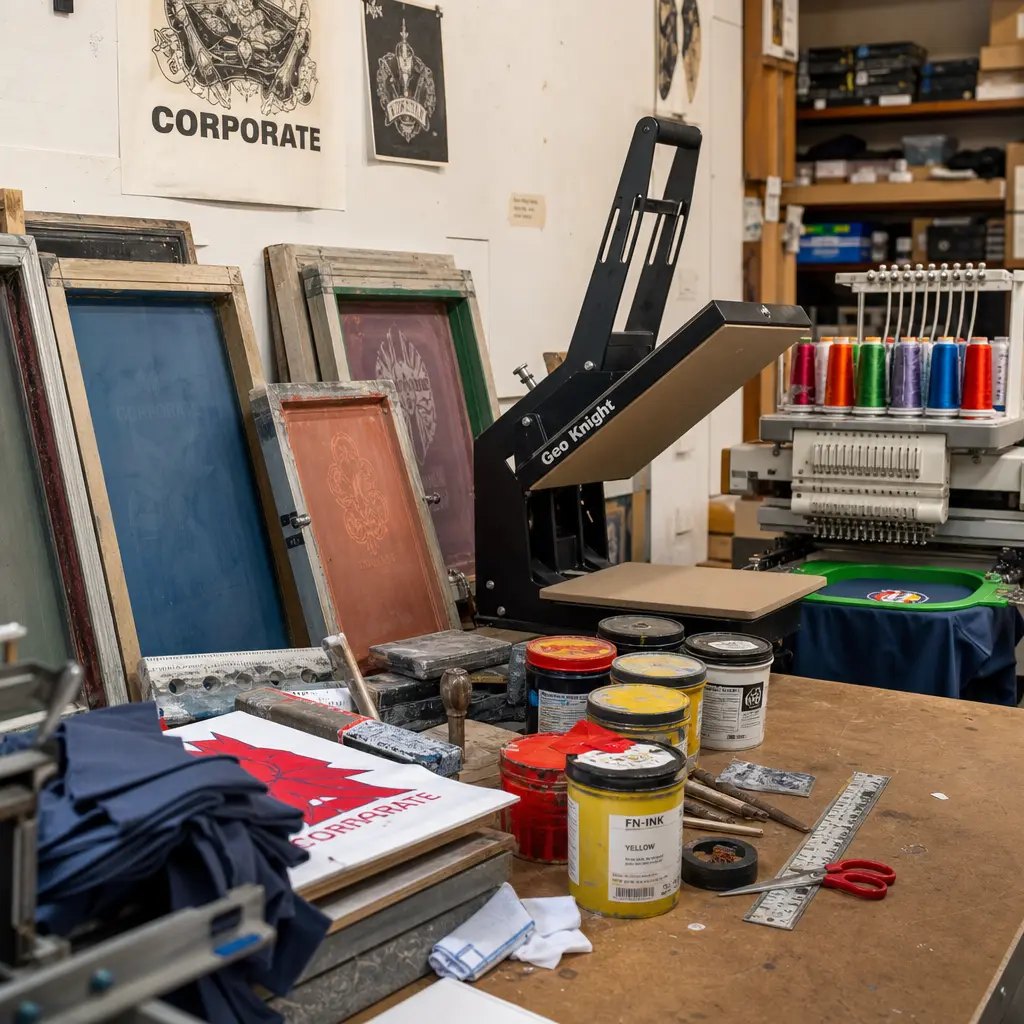
Most bakery pouch artwork is well suited to water-based screen printing. Simple logos, wheat icons, line drawings, ingredient marks, store names, and seasonal messages usually reproduce cleanly in one to three solid colors. Screen printing also works well for repeat wholesale programs because the artwork, screen notes, and placement standard can carry into reorders.
Heat transfer, digital print, or other methods may make sense for gradients, full-color illustrations, fine tonal detail, or small personalization runs. The tradeoff can be surface handfeel, edge appearance, flexibility, and durability on a soft cotton pouch. A glossy or stiff transfer may feel out of place on rustic bakery packaging. A soft water-based print may look more natural but may not hold every tiny line. Choose the process for the artwork and use case, not just for the quickest quote.
A digital proof is not enough for bulk approval. Natural cotton has texture, absorbency, and a warm base color. Ink can spread slightly along the weave, fine lines can close, and colors can shift from a Pantone book or screen display. Require a print strike-off on the same fabric planned for bulk production. Then check color direction, edge sharpness, opacity, registration, curing, odor, rub resistance, and the look after folding.
Print placement should also be written, not guessed. Give the print size in millimeters and define placement from the centerline, side seam, bottom seam, or top edge. If the pouch has a gusset, confirm whether the logo sits on the front panel only and how far it should stay from folds.
- Use water-based screen print for solid bakery logos, simple line art, and repeat programs with one to three colors.
- Use heat transfer or digital print only when artwork detail, gradients, or short-run personalization justify the different handfeel.
- Provide vector artwork, outlined fonts, print size in millimeters, and placement from edges, seams, or centerline.
- Set print-position tolerance, commonly plus or minus 3 mm to 5 mm depending on pouch size and print process.
- Approve color on actual cotton because natural fabric changes Pantone appearance and ink opacity.
- Check print after folding, cord pulling, and light rub to catch cracking, tackiness, transfer, or curing issues.
Compare MOQ and Cost by Specification
Wholesale MOQ for custom cotton drawstring pouches is rarely one clean number. It can depend on fabric purchasing, dyeing minimums, cutting efficiency, sewing setup, screen-print setup, cord availability, packing method, and carton planning. A 500-piece quote may look attractive until setup fees, sample charges, mixed-SKU packing, or stock-fabric limits are added. A 1,000 or 2,000 piece order may be more efficient if it uses standard fabric, one cord color, and consolidated production.
Bakery buyers often need several versions: bread pouches, cookie pouches, gift pouches, holiday artwork, distributor SKUs, or different store locations. Show quantity by size, fabric color, cord color, artwork, packing method, and destination. Then ask the supplier where the real MOQ sits. Is it per fabric lot, per pouch size, per artwork, per print color, or per delivery split?
One useful question is whether the factory can cut and sew one base pouch lot, then print separate artwork versions. This may reduce material variation across SKUs and improve production control when several bakery logos share the same construction. It does not remove print setup cost, but it can simplify fabric shade control and reorder planning.
Compare landed cost per usable pouch, not only ex-factory unit price. Cotton pouches are relatively low-value items, so setup, inspection, freight, warehouse receiving, and repacking can materially change the real cost. A quote that includes inner packs, carton labels, and clean SKU separation may cost slightly more per piece but save labor at the distributor or bakery chain warehouse.
- Separate MOQ by size, fabric color, cord color, print design, packing version, and delivery split.
- Clarify setup fees per artwork, per color, per screen, per sample, and per production run.
- Ask whether stock natural cotton has a lower MOQ than custom dyed cotton.
- Confirm whether screens, patterns, and production notes are retained for reorders.
- Compare carton CBM, gross weight, inner-pack quantities, and warehouse receiving needs.
- Evaluate total landed cost, including sampling, inspection, freight, duties if applicable, and repacking risk.
Use Sample Gates to Prevent Bulk Rework
Sampling should move in a sequence that controls risk before bulk production begins. Start with a fabric swatch to confirm weight, color, handfeel, opacity, and natural-speck level. Then approve a print strike-off on the actual cotton to understand ink behavior. Next, approve a construction sample for finished size, gusset, seam, cord, and loading performance. Finally, approve the pre-production sample as the control version for manufacturing and inspection.
Skipping a gate may save a few days, but it can create expensive rework. If the fabric is wrong, print approval is unreliable. If print is approved only from a digital proof, the buyer may discover color, edge, or opacity issues after bulk fabric is printed. If the construction sample is not filled with the real bakery pack, the pouch may look acceptable flat but fail during store loading.
The approved pre-production sample should be documented in writing. Record finished dimensions, fabric weight, fabric color, cord specification, print method, artwork file name, print size, print placement, gusset, label or tag details, packing method, and tolerance. Photograph the sample with a ruler, plus close-ups of stitching, drawcord channel, knots, and logo.
Keep one approved sample with the buyer and one with the factory. This sounds simple, but it prevents many disputes. When inspection happens weeks later, both sides need the same physical reference rather than relying on memory, screenshots, or a sample that was modified after comments.
- Approve fabric before print so the strike-off reflects the cotton planned for bulk.
- Approve print strike-off before final pre-production sample and before bulk printing.
- Fill the construction sample with the actual bakery item pack and test loading speed.
- Review color and print under store-like lighting as well as office or factory lighting.
- Fold and pack samples as they will ship to check wrinkles, ink transfer, and presentation.
- Write approval notes with dimensions, tolerances, and defect limits instead of relying on photos only.
Set Inspection Criteria That Are Measurable
Quality control becomes weak when the standard is subjective. Phrases such as good stitching, nice fabric, or clean print do not give a factory QC team or third-party inspector enough direction. The purchase order should define measurable or visible criteria: size tolerance, print-position tolerance, seam defects, cord function, fabric stains, odor, ink curing, packing count, carton marks, and major versus minor defects.
For first orders or imported programs, many buyers use an AQL-based inspection plan. A common structure is AQL 2.5 for major defects and AQL 4.0 for minor defects, but the buyer should choose the standard that fits brand risk, order value, and timeline. Major defects for bakery pouches may include wrong artwork, wrong size that prevents use, missing cords, open seams, severe stains, mildew odor, damp cartons, or short cartons. Minor defects may include small thread ends, slight shade variation within the approved range, or minor print irregularities that do not affect retail presentation.
Inspection should pull cartons from different positions, not only the top cartons that are easiest to access. Check top, middle, and bottom cartons for moisture, odor, count accuracy, shade consistency, and SKU separation. For mixed artwork orders, inspect against the packing list by SKU and carton mark.
Low-value packaging often gets counted late in receiving, which makes shortages painful. A missing carton of pouches can delay a seasonal bakery launch even if the baked goods, labels, and gift boxes are ready. Count control is not a small detail when the pouch is part of the selling unit.
- Measure finished width, height, gusset, channel height, and print placement with a ruler or template.
- Classify open seams, missing cords, wrong artwork, severe stains, odor, and unusable size as major defects.
- Separate normal natural cotton specks from oil marks, holes, dark contamination, mildew, or water damage.
- Pull cords repeatedly on sampled units to check smoothness, knot security, and channel strength.
- Check ink for tackiness, odor, transfer, cracking, rub resistance, and appearance after folding.
- Recount selected inner packs and cartons, especially for mixed logos, multiple destinations, or distributor orders.
Lock Packing, Labels, and Lead Time Early
Packing is part of the specification. A single-store bakery may accept simple cartons if staff have time to count and allocate pouches internally. A distributor, retail buyer, co-packer, or multi-location bakery usually needs inner packs, carton marks, SKU separation, and sometimes barcode labels. If the RFQ does not say otherwise, factories may pack loose bulk pouches to reduce cost. That can increase wrinkles, dust exposure, miscounts, and destination repacking.
A practical wholesale packing standard is 25 or 50 pieces per inner pack, with export cartons labeled by purchase order, SKU, size, artwork version, quantity, carton number, and destination. If pouches must stay clean for bakery-adjacent use, specify whether inner packs use paper bands, recyclable bags, or polybags according to the buyer’s packaging policy. Request carton dimensions, gross weight, net weight, and carton grade so the warehouse can plan receiving and storage.
Lead time should be broken into approval and production steps. Fabric sourcing, custom dyeing, sample making, print strike-off, pre-production sample approval, bulk cutting, printing, curing, sewing, trimming, inspection, packing, and export booking each take time. A holiday bakery program should not rely on one broad production lead-time number.
Put approval deadlines into the purchase order. Confirm what happens if artwork, sample comments, deposit payment, packing instructions, or destination splits arrive late. This protects both sides. The supplier can plan capacity, and the buyer can see which decisions are on the critical path.
- Specify pieces per inner pack, pieces per carton, carton dimensions, carton grade, gross weight, and net weight.
- Mark cartons by PO, SKU, artwork version, size, quantity, carton number, and destination.
- Keep mixed artwork versions in clearly labeled inner packs to avoid store allocation errors.
- Approve packing labels and carton marks before production finishes, not during final loading.
- Request timeline by step: fabric, strike-off, pre-production sample, bulk production, inspection, packing, and shipment.
- Build extra approval time for seasonal launches, custom dyed fabric, multiple artwork versions, or distributor routing rules.
Specification comparison for buyers
| Spec decision | Recommended procurement specification | When it fits | Buyer risk to check |
|---|---|---|---|
| Food-contact position | State whether the pouch is secondary packaging or direct food-contact packaging; request component documentation before any direct-contact use | Wrapped bread, boxed cookies, sealed granola, coffee bags, jars, gift sets, subscription boxes, and retail hampers | Unwrapped oily, moist, sticky, or flour-dusted items can stain cotton and may need food-contact compliance that standard promotional pouches do not include |
| Fabric basis weight | Quote 5 oz to 6 oz cotton for most bakery programs; use 8 oz for heavier gifts; keep 4 oz for light promotions only | 5 oz controls cost while still feeling reusable; 6 oz improves opacity and print coverage; 8 oz supports jars and premium sets | Basis weight must be stated as oz per square yard plus approximate GSM because supplier fabric names vary |
| Finished pouch size | Specify finished external size after sewing, usable internal height below the drawcord channel, gusset depth, and tolerance | Bread sleeves, cookie boxes, granola refills, jam jars, coffee bundles, and multi-item gift packs | A nominal or cut-panel size can finish 10 to 25 mm smaller in usable height after seams, hems, and channel sewing |
| Dimensional tolerance | Use plus or minus 5 mm for small pouches and plus or minus 10 mm for larger gift bags unless the product fit requires tighter control | Retail bakery packs where fit, loading speed, and shelf presentation matter | If the sample barely fits, normal bulk sewing tolerance can turn an approved pouch into a slow-loading pouch |
| Construction style | Use flat construction for slim wrapped goods; add a bottom or side gusset for boxes, jars, or gift sets; choose double drawcord for a stronger retail gift feel | Flat keeps cost down; gussets improve loading volume and shape; double cord improves opening and closing | Unspecified channel width, cord diameter, and knot size can cause jamming, pull-through, seam tearing, or slow checkout packing |
| Logo printing | Use water-based screen print for 1 to 3 solid colors; consider heat transfer or digital print only when artwork detail, gradients, or short-run personalization require it | Bakery logos, line drawings, wheat icons, ingredient marks, seasonal messages, and store-location marks | Natural cotton warms color and absorbs ink; approve a strike-off on actual fabric, not only a digital proof |
| MOQ structure | Break MOQ down by fabric, size, color, cord, print design, packing version, and delivery destination | Multi-location bakeries, wholesale distributors, holiday SKUs, and bakery chains with several artwork versions | A low headline MOQ can hide setup charges, mixed-SKU packing fees, stock-fabric restrictions, or higher reorder minimums |
| Packing specification | Pack 25 or 50 pieces per inner pack, then export cartons marked by PO, SKU, size, artwork, quantity, carton number, and destination | Distributors, retail buyers, subscription boxes, co-packers, and multi-store bakery rollouts | Loose bulk packing may save a small packing cost but increases wrinkles, dust exposure, miscounts, SKU mixing, and repacking labor |
| Inspection plan | Use the approved sample plus written QC limits for size, print placement, seams, cord function, odor, stains, count, and carton marks | First orders, seasonal launches, imported programs, and orders with multiple artwork versions | Without measurable QC criteria, defects can become subjective after goods are printed, sewn, packed, or shipped |
Buyer checklist before sampling
- Confirm whether the pouch is secondary packaging for wrapped bakery goods or intended for direct food contact, then request documentation that matches the destination market.
- Measure the bakery item in its final primary packaging, including wrap, box flaps, labels, jars, seals, ribbons, tissue, inserts, or retail bands.
- Specify finished pouch width, finished height, gusset type and depth, drawcord-channel height, usable internal height, seam allowance expectation, and dimensional tolerance in millimeters.
- Define cotton basis weight in oz per square yard and approximate GSM, such as 5 oz about 170 GSM or 6 oz about 203 GSM, and require the same fabric grade for samples and bulk.
- State natural, bleached, or dyed cotton; request a shade standard, acceptable shade variation, and confirmation of stock fabric or custom dye lot.
- Define cord material, diameter, color, single or double draw closure, channel width, knot style, cord length, and required pull smoothness.
- Provide vector logo artwork with print size, ink color direction, placement from edges or centerline, number of colors, and acceptable print-position tolerance.
- Separate order quantities by pouch size, fabric color, cord color, print design, bakery location, distributor SKU, packing method, and delivery destination.
- Ask the supplier to itemize fabric, cutting, sewing, cord, print setup, strike-off, sample, inner packing, carton labeling, inspection support, and freight-related costs.
- Require fabric swatch approval, print strike-off on production fabric, construction sample, and final pre-production sample before bulk cutting or printing.
Factory quote questions to send
- What cotton basis weight is included in the unit price, stated in oz per square yard and approximate GSM, and is the fabric greige, natural, bleached, dyed, washed, or otherwise finished?
- What yarn count, weave construction, fabric origin, shrinkage expectation, and shade-control method apply to the quoted cotton?
- Is the quoted size a finished external size after sewing or a cut-panel size before side seams, bottom seam, gusset, hem, and drawcord channel?
- What are the finished width, finished height, gusset depth, drawcord-channel height, and usable internal height below the channel?
- What dimensional tolerance do you apply to width, height, gusset, and channel height, and can you hold plus or minus 5 mm or plus or minus 10 mm where required?
- What is the MOQ per size, fabric color, cord color, print design, packing version, and delivery destination, and what surcharges apply below standard MOQ?
- Can blank pouches from one fabric lot be sewn together and printed in separate bakery logo versions to reduce material variation across SKUs?
- Which print method is quoted, how many colors are included, what ink type is used, and what setup, screen, artwork, or wash-test charges are separate?
- Can you provide a print strike-off on the actual bulk cotton before the pre-production sample, and how many calendar days does that add to approval?
- What print-position tolerance, color tolerance method, registration tolerance, and acceptable ink-coverage standard do you normally use on cotton pouches?
Quality-control points to confirm
- Finished pouch size should match the approved sample within the written tolerance, commonly plus or minus 5 mm for small pouches and plus or minus 10 mm for larger bakery gift bags unless the purchase order requires tighter control.
- Usable internal height below the drawcord channel should be checked separately from total height, because the channel and top hem cannot be treated as reliable fill volume.
- Fabric must match the approved swatch in basis weight, color tone, handfeel, visible weave density, opacity, and natural-speck level; mixed fabric lots should be separated for review.
- Reject obvious oil marks, dark contamination, water stains, holes, mildew odor, strong chemical odor, damp cartons, or fabric that feels tacky after printing or packing.
- Drawcord must pull smoothly from both sides without jamming, fraying, slipping into the channel, tearing the top seam, or creating excessive puckering under normal closure force.
- Cord length and knot size should match the approved sample, with no loose knots, missing cords, sharp melted ends on cotton-look cords, or cords short enough to disappear into the channel.
- Logo print should meet approved color direction, registration, edge sharpness, opacity, placement, and rub resistance after normal handling, folding, and cord pulling.
- Ink curing should be checked for tackiness, odor, transfer to adjacent pouches, cracking on folds, smearing under light rub, and color shift on natural or dyed cotton.
- Stitching should be straight at side seams, bottom seams, gussets, and channel seams, with no skipped stitches, open seams, broken threads, exposed raw edges outside the approved construction, or loose thread clusters.
- Trim quality should be inspected for loose threads longer than the agreed limit, uneven top hems, twisted side seams, inconsistent gussets, and bulky corners that affect retail presentation.