Start With the Bakery Use Case
A custom cotton drawstring pouch for an artisan bakery is not one generic packaging item. It may be used as a wrapped-cookie sleeve, a bread gift pouch, a seasonal hamper component, a counter giveaway, or a reusable retail package that the customer keeps using at home. Each use case changes the material target, the print method, the construction detail, and the acceptable unit price. Procurement teams should start by defining what the pouch must do in the real bakery workflow, not by asking for a cotton bag quote first.
The biggest sourcing mistake is treating every pouch as a simple size-and-logo exercise. A 15 x 20 cm pouch carrying two wrapped cookies can work in lighter cotton, while a 25 x 35 cm pouch holding a bread mix, a jar of jam, and a recipe card needs more structure, stronger seams, and a more controlled closure. If the pouch is part of the customer-facing gift experience, the buyer should also define how often it will be handled, whether it should stand up visually on shelf, and whether the packaging should feel reusable rather than disposable.
- Define the primary role: secondary packaging, gift packaging, reusable retail packaging, or promotional giveaway.
- Confirm the exact contents, including any box, jar, wrap, insert card, or hang tag that will go inside.
- Record the filled weight and the largest item dimension so the pouch is sized for the actual bundle.
- Decide whether the pouch will ever touch unwrapped food, because that changes compliance and testing questions.
- Set the brand intent early: rustic, premium, minimal, seasonal, or utility-focused.
Choose GSM Based on Load and Brand Positioning
Fabric GSM is the most practical starting point for a cotton drawstring pouch. It affects drape, opacity, hand feel, sewing behavior, print clarity, and shipping weight. For bakery programs, 120-140 GSM plain cotton is often the baseline for lightweight wrapped items, sample pouches, and moderate-cost gifting. It stays soft and foldable, which helps with packing efficiency, but it will show hard product corners more easily than heavier material.
For premium bakery packaging, 160-180 GSM is usually a better fit because it gives the pouch more structure and a more substantial feel in the customer hand. That matters when the pouch is part of the perceived value of the product set. Above that range, light canvas can be appropriate for reusable bread kits or merchandise-style packs, but buyers should expect a bulkier cord channel and a stiffer close. The right answer is not the heaviest cotton available; it is the lightest fabric that still performs with the intended load and presentation.
- 100-110 GSM: only for very light promotional use, where low cost matters more than structure.
- 120-140 GSM: common for wrapped cookies, pastry gifts, and general bakery add-ons.
- 160-180 GSM: better for reusable packaging, premium sets, and stronger shelf presentation.
- 180-200 GSM: consider only when the pouch needs to feel substantial or carry a heavier bundle.
- Always test the selected GSM with a filled sample, not just with an empty pouch in hand.
Weave, Color, and Surface Finish
Cotton is not one uniform material. Weave density, yarn consistency, and finishing all affect how the pouch looks and prints. For bakery use, a plain weave with a controlled, relatively smooth surface usually gives the best balance of cost and logo clarity. An overly open weave can make thin text fuzzy and can expose the fabric's natural variation more than the buyer expects. A tighter weave improves print sharpness but may feel a little less relaxed in hand, so the sample should be judged visually and tactually, not only on paper.
Natural unbleached cotton is popular with artisan bakeries because it supports a handmade, ingredient-led brand story. It also avoids the cleaner but less organic look of bright white packaging. The tradeoff is that natural cotton shade varies from lot to lot. Buyers should not ask for a perfect white when the chosen fabric is intentionally natural; they should approve a shade range against a sealed reference sample. Bleached cotton gives a cleaner print background, while dyed cotton offers stronger brand control but increases lab dip time, color approval work, and the chance of batch variation. Organic cotton can be used, but only when the buyer can define exactly which documents, labels, and transaction records are required by the channel.
- Use natural cotton when the brand wants a rustic, handmade look and slight shade variation is acceptable.
- Use bleached cotton when logo contrast and a cleaner retail appearance are more important than rustic tone.
- Use dyed cotton when the pouch color is part of the brand system and the MOQ can support color control.
- Ask for swatches from all quoted fabric options so the decision is based on real fabric, not a verbal description.
- Approve a shade window for repeat orders and keep a sealed master sample for future reorders.
Size, Pattern, and Closure Details
The correct pouch size is the usable interior space, not just the outside flat measurement. A drawstring channel, seam allowance, and bottom seam all reduce the room available for the bakery item. This matters more than many buyers expect, because a pouch that looks adequate in a drawing can become too tight once a wrapped loaf, cookie stack, or jar is inserted. For that reason, the best sampling process starts with the actual product bundle, a paper dummy, or a weight-equivalent insert before the final dimensions are frozen.
Construction should be specified as clearly as the fabric. Most bakery pouches are a flat pouch with side seams, a bottom seam, and a folded channel at the top. Some programs need a single drawcord pull for lower cost, while others need a double pull for better balance and a more premium feel. Cord diameter also matters: a thin cord can feel cheap or pull into the channel, while a thick cord can overpower a small pouch and make the opening awkward. If the pouch must hold a heavier item, ask whether the factory recommends a reinforced top hem, bar-tacked cord exits, or a slightly wider channel.
- State finished width and height after sewing, not fabric cutting size.
- Clarify whether the quoted size includes or excludes the drawstring channel.
- Choose single-pull or double-pull closure before quotation so the factory can price the real construction.
- Specify cord material, diameter, finished length, knot finish, and whether the cord color must match the pouch.
- If the bundle is thick or irregular, ask the factory to test a slightly wider pattern rather than forcing a standard pouch size.
Printing and Brand Marking
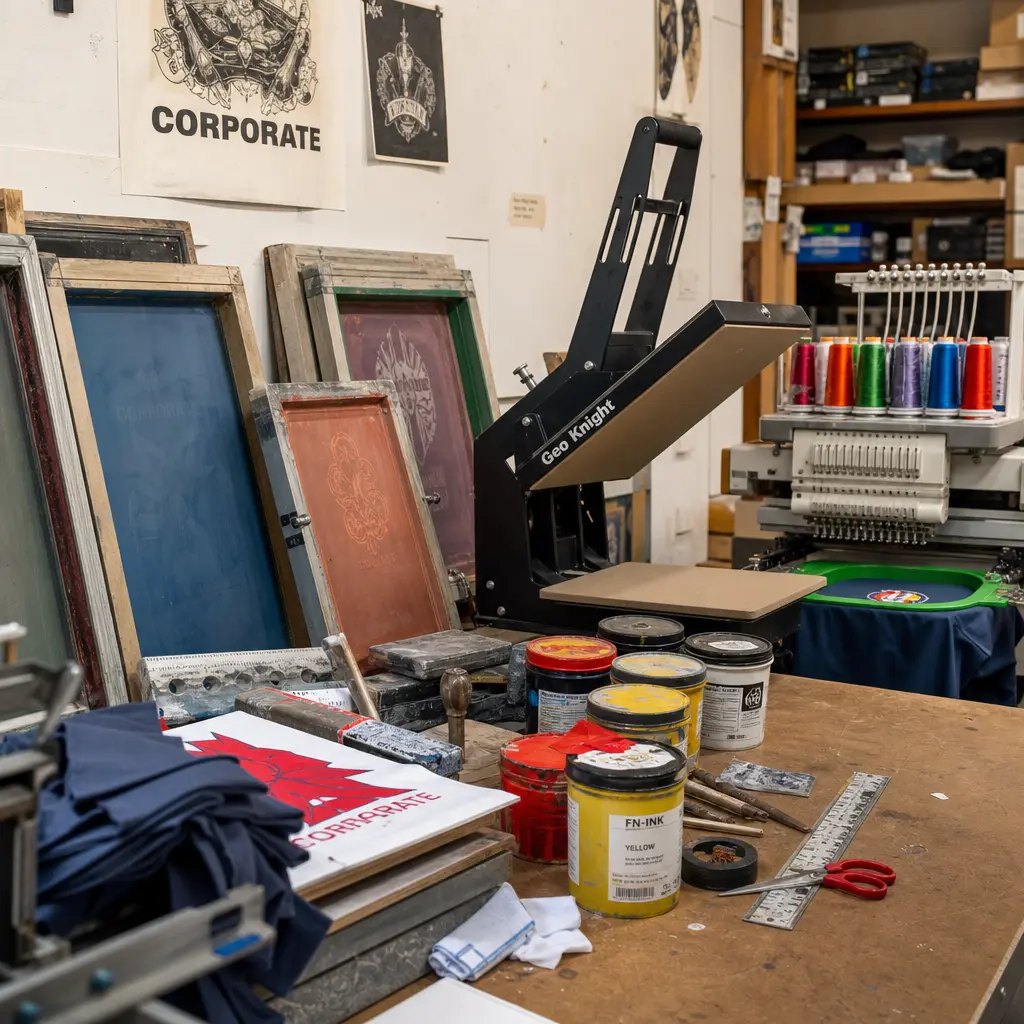
For most artisan bakery pouch programs, water-based screen printing is the most reliable option because it balances cost, coverage, and a soft cotton hand feel. It works well for one to three solid colors, simple logos, product names, bakery slogans, and short seasonal messages. On natural cotton, the print will always interact with the weave, so buyers should expect a softer result than they would get on coated paper or plastic packaging. That is not a defect; it is part of the material behavior that should be approved in advance.
Digital printing becomes useful when the artwork has many colors, gradients, or illustration detail, or when the run is small and a screen setup would be inefficient. Heat transfer can produce sharp detail, but it can feel less natural on cotton and may not suit an artisan bakery aesthetic. Embroidery is technically possible on some pouch styles, but it is usually heavier and more expensive than a bakery packaging buyer needs. The practical rule is simple: if the logo must stay crisp at small size, the fabric and artwork should be tested together at final dimensions before the bulk order is released.
- Screen print: best for simple logos, repeat orders, and one to three color artwork.
- Digital print: useful for seasonal art, illustration, or lower volumes with more complex graphics.
- Ask for a strike-off at actual print size, not a scaled image on paper.
- Set the minimum line thickness and minimum text height so the factory can tell you if the art is too fine.
- Define print position from a seam or bottom reference point and include the acceptable tolerance in writing.
Compliance and Food-Safety Boundaries
Most cotton drawstring pouches for bakeries are used as secondary packaging, which means they hold a wrapped product rather than touching unwrapped food. That distinction matters because it changes the compliance burden and the kind of questions a buyer should ask. If the pouch will only carry wrapped cookies, bread, tea, or a boxed bakery set, the focus is usually on clean materials, odor control, appearance, and consistent construction. If the pouch could touch unwrapped food directly, the buyer needs to define the destination market's food-contact requirements before the first quote is accepted.
Procurement teams should not assume that a cotton pouch is automatically suitable for direct food contact just because it is natural fiber. The factory may need to confirm the absence of restricted finishes, odor, and contamination risks, and the buyer may need documentation for fiber content, origin, and any requested testing. If organic cotton is required, that requirement needs to be written clearly so the factory understands whether the demand is for raw fiber, fabric, finished pouch, or documentation through the supply chain. The same applies to any labeling or traceability obligation imposed by a retailer or distributor. The safest approach is to define the compliance boundary in the RFQ rather than after samples are approved.
- State whether the pouch is secondary packaging or direct food contact.
- If direct contact is possible, specify the target market and the documents or testing required.
- Ask the factory to confirm there is no strong odor, visible contamination, or unapproved finishing treatment.
- If the channel requires organic claims, define exactly what certificate or transaction record is needed.
- For retail use, ask whether fiber content labeling, care labeling, or country-of-origin marking is required.
MOQ, Price Structure, and Quote Comparisons
MOQ is usually the result of several production constraints, not a random factory policy. Fabric buying, cutting efficiency, sewing line setup, printing screen setup, ink mixing, and packing labor all affect the minimum viable batch. A buyer who asks for five small pouch designs at low volume will usually pay more per unit than a buyer who consolidates the same pouch size across multiple seasonal artworks. The key procurement step is to separate the base pouch MOQ from the per-design MOQ so the real cost driver is visible.
The cheapest quote is often incomplete rather than truly cheaper. Some suppliers omit setup costs, sample charges, or carton packing assumptions from the initial price, which makes comparison difficult. A strong RFQ asks the factory to show the unit price and the one-time costs separately, then states the order structure by design. That allows the buyer to compare options like one shared pouch for several bakery branches, one pouch size with multiple print versions, or a premium reusable pouch program with fewer but higher-value items.
- Compare fabric GSM, fabric color, print method, cord type, packing method, and inspection scope line by line.
- Ask whether price changes with natural, bleached, dyed, or organic fabric.
- Separate total quantity from quantity per design and per size.
- Confirm whether sample fees are refundable, credited, or separate from bulk pricing.
- Use one base construction across several artwork versions when the goal is to reduce MOQ pressure.
Sampling and Pre-Production Approval
A bakery pouch sample should prove function, not only appearance. The sample should show the real fabric weight, the actual seam behavior, the final print size, the drawcord movement, and the way the pouch handles when filled. A flat sample photo cannot tell the buyer whether the pouch closes properly or whether the product corners make the pouch look distorted. For that reason, procurement should ask for three approval stages when the order is new or complex: fabric swatch, print strike-off, and full pre-production sample.
The filled sample matters because bakery packaging is often visually judged by how it behaves with weight and shape inside. A pouch that looks fine empty can bunch up, twist, or close awkwardly once the contents are inserted. The approval pack should include ruler measurements, photographs, and a clear note of any allowable variation. If the buyer later changes the size, GSM, cord color, or artwork, the affected sample should be re-approved rather than assumed to match the original reference. This keeps both sides aligned before the bulk run begins.
- Approve a fabric swatch for GSM, color, weave, thickness, and hand feel.
- Request a strike-off at final artwork size with the chosen print method and color.
- Test the full sample with the real bakery item or a weight-equivalent insert.
- Measure width, height, drawstring channel depth, and print position on the approved sample.
- Keep a signed or acknowledged master sample at both buyer and factory side.
Quality Control at Source and on Arrival
Quality control for cotton pouches should focus on the defects customers can see and touch. That means fabric appearance, seam integrity, print quality, closure function, and cleanliness. Natural cotton can have slight slubs or shade variation, but buyers should not confuse normal fiber character with avoidable defects such as stains, holes, mildew, strong odor, or poor sewing. The acceptance standard should define what is acceptable natural variation and what is not, especially for pouches that will appear in a premium bakery gift set.
The best inspection plan checks the fabric before and after sewing. Fabric issues can be hidden once the pouch is assembled, so buyers should ask for a fabric check at the roll stage and a finished-item check before carton sealing. On the production side, the factory should confirm the print registration, the cord movement, and the stitched top hem. On arrival, a receiving check should verify carton count, carton marks, and whether the items have remained clean and dry in transit.
- Inspect for stains, holes, mildew spots, dark slubs, and strong storage odor.
- Check seam strength, skipped stitches, loose threads, and open corners on finished pouches.
- Measure print placement from a fixed reference point so all cartons match the approved layout.
- Test the drawstring repeatedly to confirm it opens and closes without tearing the channel.
- Verify packing count, carton labeling, and moisture protection before accepting shipment.
Packing, Lead Time, and Logistics Planning
Packing needs to match how the bakery will use the pouches after delivery. If the pouches will go straight to a filling line, flat-packed inner packs with a clear count are usually more efficient than loose bulk cartons. If the pouches are for retail distribution, the packing must protect printed panels from hard creases and keep designs separated clearly enough to avoid sorting errors. Cotton is easy to compress, but over-compression can leave a visible fold line across the logo or create a rough look that the buyer does not want to clean up later.
Lead time is tied to the whole production chain, not just sewing. Fabric availability, print setup, sample approval, packing instructions, and export carton planning all affect the schedule. Seasonal bakery programs need more buffer than standard replenishment orders because artwork, launch dates, and shelf windows are usually fixed. The RFQ should therefore include the target delivery date, shipping method, and any latest acceptable ship date so the factory can quote a schedule that is actually achievable. A good logistics specification also states carton dimensions, gross weight, and any moisture or stacking limits needed for import handling.
- Define pieces per inner pack so the factory packs to your filling workflow.
- Separate designs by inner pack when multiple artworks are on the same order.
- Request estimated carton dimensions, gross weight, and CBM with the quote.
- Set carton weight and moisture protection requirements before production starts.
- Build buffer time for sample approval, carton labeling, and final inspection, not only sewing time.
Specification comparison for buyers
| Spec decision | Recommended option | When it fits | Buyer risk to check |
|---|---|---|---|
| Fabric weight for lightweight bakery gifting | 120-140 GSM plain cotton | Wrapped cookies, tea cakes, pastry samples, and low-cost seasonal gift sets | Too thin can show product edges and feel flimsy; approve a filled sample, not just a flat swatch |
| Fabric weight for premium reusable packaging | 160-180 GSM cotton or light canvas | Retail bakery packs, reusable bread kits, premium hampers, and merchandise-style packaging | Higher GSM adds cost and bulk; confirm the closure still runs smoothly after filling |
| Weave and surface for logo clarity | Plain weave with a smooth, tightly controlled finish | Simple logos, small text, and repeat orders where consistent print sharpness matters | Open weave can blur small text and create a rough hand feel; ask for print strike-offs at actual size |
| Fabric color for brand positioning | Natural unbleached cotton with approved shade range | Rustic, handmade, ingredient-led bakery brands and lower-complexity sourcing | Natural cotton varies by lot; set an acceptable shade window and keep a sealed master sample |
| Print method for one to three colors | Water-based screen print | Most bakery logos, product names, and simple ingredient messages | Fine text may fill in on textured fabric; approve line thickness and print position tolerance |
| Print method for seasonal artwork or many colors | Digital print on suitable cotton | Illustrations, limited seasonal graphics, and smaller runs with multiple designs | Color can look softer on natural cotton; require a strike-off on the actual fabric, not only on paper |
| Closure setup for easy handling | Cotton cord matched to pouch tone, with tested diameter and finished length | Gift packaging, counter bags, and retail sets that customers open and close themselves | Cord that is too thick can crowd the channel; cord that is too thin can slip or feel cheap |
| Packing method for import and store use | Flat-packed with counted inner packs and labeled export cartons | Programs that go to filling lines, retail distribution, or multiple bakery branches | Over-compression can crease printed panels and create sorting errors; define pack count, carton weight, and carton marks |
Buyer checklist before sampling
- Define the use case first: wrapped food only, secondary packaging, direct contact, reusable retail packaging, or a seasonal gift pouch.
- State the filled product weight, shape, and largest dimension so the factory can size the pouch for real contents instead of a flat guess.
- Specify finished width and height after sewing, plus whether the drawstring channel is included in the quoted dimensions.
- Choose the fabric by GSM and weave, not only by the word cotton; request swatches for the exact options being quoted.
- Confirm whether natural, bleached, dyed, or organic cotton is required, and set a shade tolerance for repeat orders.
- Provide artwork at final print size with the intended color references, minimum line thickness, and a clear print position diagram.
- Separate the order quantity by total volume and quantity per design so the quote reflects the real setup cost.
- Ask for a pre-production sample filled with the actual bakery item or a weight-equivalent insert before bulk approval.
- Record the approved drawcord material, diameter, finished length, knot style, and whether one-side or two-side pull is required.
- Set packing rules in advance: pieces per inner pack, carton count, carton weight limit, shipping marks, and any moisture protection.
Factory quote questions to send
- Which cotton fabric options can you offer for this pouch size, and what GSM range do you guarantee for each option?
- Is the quoted fabric natural, bleached, dyed, or organic cotton, and what documentation do you provide for the finished pouch and bulk fabric?
- What is the MOQ for the base pouch, and what is the MOQ or surcharge per artwork variation?
- Which print method do you recommend for our artwork, and what minimum line thickness can you hold on this fabric?
- Can you provide a fabric swatch, print strike-off, and full pre-production sample before bulk production?
- What finished-size tolerance do you apply after sewing, and how do you measure width, height, and the drawstring channel?
- What drawcord material, diameter, finished length, knot finish, and color are included in the quote?
- How many pouches are packed per inner pack and export carton, and what are the estimated carton dimensions, gross weight, and CBM?
- What is the sample lead time, bulk lead time after approval, and the latest material booking date after deposit?
- Which costs are included in the unit price: fabric, cutting, sewing, printing, drawcord, packing, export carton, inspection, and inland delivery to port?
Quality-control points to confirm
- Check fabric GSM from approved bulk fabric, not only from the sales swatch or sample card.
- Measure finished width and height after sewing and compare them to the agreed tolerance, especially on small pouches where a few millimeters matter.
- Inspect seam strength, skipped stitches, loose threads, open corners, and the consistency of the top hem and drawstring channel.
- Test the drawstring by opening and closing the pouch repeatedly to confirm it moves smoothly and does not pull out of the channel.
- Measure print position from a fixed seam or bottom reference point so placement is consistent across the batch.
- Reject major print defects such as smearing, pinholes, washed-out color, missing strokes, or obvious misregistration.
- Check dry rub performance on the printed area and verify that handling does not create unacceptable transfer or scuffing.
- Inspect for stains, mildew spots, oil marks, odor, excessive lint, and contaminated packing surfaces.
- Verify inner pack counts, carton marks, carton quantity, and carton weight before shipment release.
- Keep one approved sealed sample for the buyer and one for the factory so production can be compared against a fixed reference.