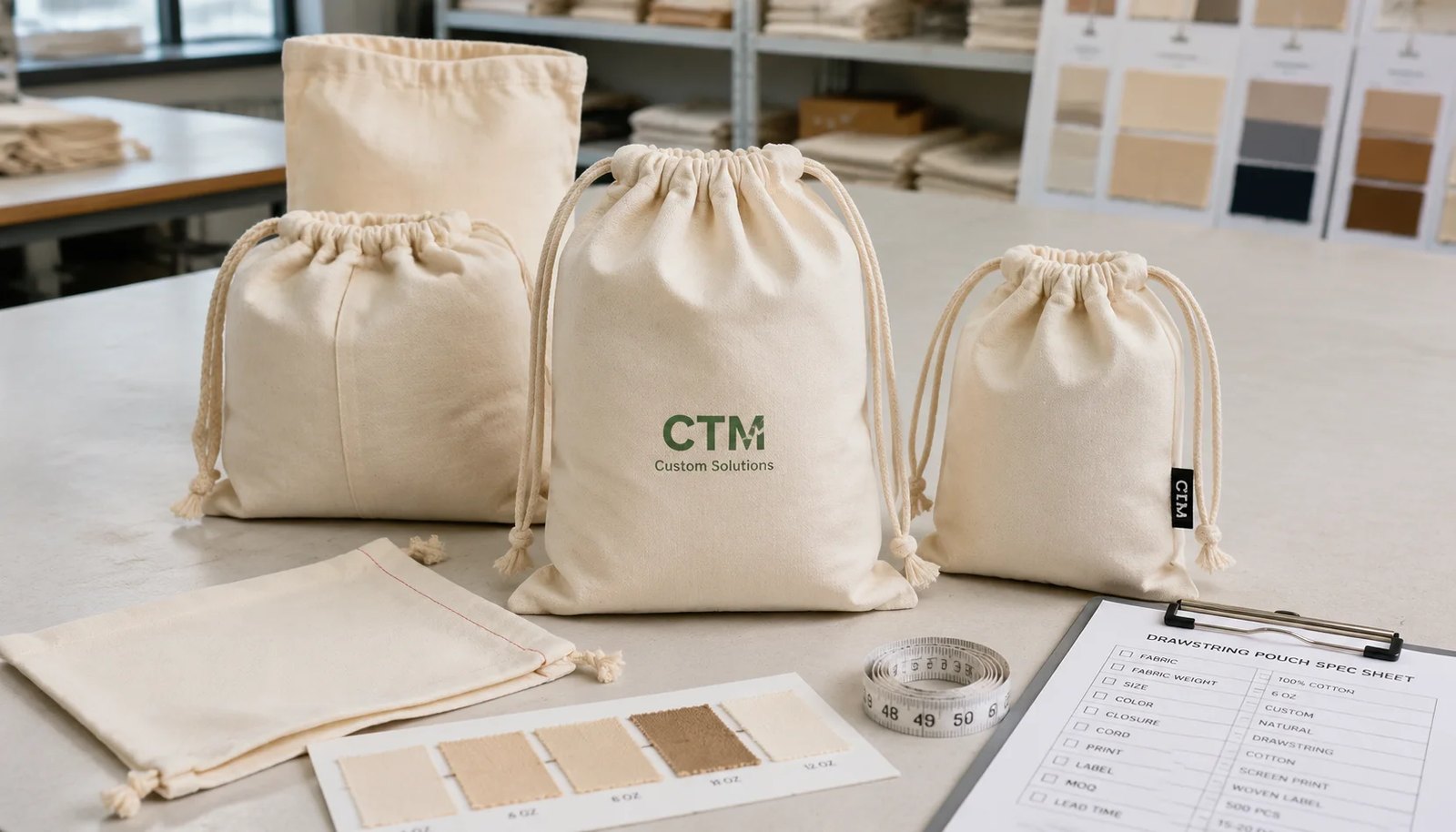
Why compliance is the real buying problem for natural grocer pouch programs
For natural grocers, the hard part is usually not finding a supplier that can sew a cotton drawstring pouch. The hard part is proving that the pouch spec, material claim, print chemistry, and production controls match the retailer's standards without slowing the launch. A quote can look competitive on unit price and still create risk if the supplier cannot connect fabric source documents, test evidence, and production records to the actual order.
That matters even more when the pouch supports wellness kits, produce accessories, gift packaging, refill programs, or private-label merchandising. Retail buyers may use broad terms such as natural, sustainable, or compliant, but procurement needs those translated into order-level requirements. If the RFQ stays vague, suppliers fill the gaps differently. One factory quotes 130 GSM conventional cotton with water-based print; another assumes heavier organic fabric with separate certification cost; a third prices the pouch without any evidence package at all. The result is not a true apples-to-apples comparison.
- Treat compliance as part of the product spec, not an afterthought after price approval.
- Separate retail claim requirements from general quality requirements before quoting.
- Make suppliers quote the evidence package they can actually provide with production, not marketing language from a website.
Start with the pouch use case before writing the RFQ
A natural grocer may buy the same-looking pouch for very different uses: loose herbal kit packaging, a produce accessory, a holiday gift bag, a loyalty promotion, or a refill companion item. Those uses change the right construction. A pouch meant to hold small dry goods samples can work in 120-140 GSM cotton sheeting with a simple channel top. A pouch used repeatedly by customers or filled with heavier items usually needs 160-220 GSM cotton, a tighter stitch line, and better cord reinforcement.
The use case also affects compliance expectations. If the pouch touches outer consumer packaging only, standard textile chemical restrictions may be enough. If there is a chance of closer contact with unpackaged food or the retailer has stricter material rules, procurement should define that early and request the supplier's supporting evidence route. This is where many projects lose time: the buyer asks for a simple cotton pouch, then later adds organic claim support, print restrictions, and separate carton labeling after the sample is already approved.
- For lightweight promo or gift use: 120-140 GSM cotton is often sufficient.
- For repeated-use or premium programs: 160-220 GSM gives better body and seam reliability.
- For a more structured look: canvas-style fabric at 200-240 GSM can justify higher cost but improves shelf presentation.
- State expected fill weight or use scenario so seam construction can be quoted correctly.
Material and claim choices that change supplier qualification
Natural grocer buyers often use terms like natural cotton, organic cotton, unbleached, azo-free, or low-impact print interchangeably, but suppliers cannot price or document these as the same thing. Conventional natural cotton sheeting may satisfy many store programs if there is no front-of-pack organic claim on the pouch itself. Once the retailer or brand wants to market the item as organic, the supplier qualification bar changes. It is no longer enough to show a general factory certificate or an old test report. The supplier needs lot-level or transaction-linked evidence that the fabric used for this order comes through the correct certified route.
Unbleached cotton also needs practical handling in the RFQ. The base cloth can vary slightly in tone from lot to lot, which affects print brightness and visual uniformity across batches. That is not a defect by itself, but it should be controlled by approving a physical material swatch and defining acceptable shade range. Buyers who skip this step often reject goods later because the natural fabric looks warmer or darker than a studio photo sample.
- If no organic retail claim is made, conventional cotton with proper chemical compliance may be the more commercial option.
- If organic messaging appears on product, packaging, or retailer listing, require transaction-linked support for the actual fabric used.
- Approve natural fabric tone from a physical swatch, especially when white or light ink will be printed.
Print method, logo durability, and why low-cost artwork can raise failure risk
For cotton drawstring pouches, one- or two-color water-based screen printing is usually the most stable route for natural grocer programs. It handles simple logos well, keeps setup predictable, and generally offers the best unit economics once quantity rises above sampling levels. Digital printing can make sense for small runs or artwork with tonal detail, but image sharpness and color consistency on absorbent natural cotton can vary more than buyers expect. Heat transfer can look clean on some artwork but may create a less natural hand feel and can crack or edge-lift if process control is weak.
Durability is where quote comparisons become misleading. A low-priced print quote may use less ink deposit, weaker curing control, or looser print registration standards. That can lead to rub-off, pinholes, fuzzy edges, or logo placement drift. Procurement should not only request the print method. The RFQ should define print area, position tolerance, acceptable edge quality, and whether the pouch must withstand light cleaning, repeated handling, or only a one-time presentation use.
- Screen print is usually the best value for 1-2 spot colors on natural cotton.
- Digital print is better for complex art at lower volume, but color consistency needs closer approval.
- Heat transfer can reduce setup complexity for some designs but should be evaluated for feel and adhesion.
- Useful tolerance example: print position within plus or minus 0.5 cm from approved seam references.
How MOQ logic really works on cotton pouches
Procurement teams often push for the lowest MOQ without realizing what drives it. For cotton drawstring pouches, MOQ is usually tied to fabric booking efficiency, cutting utilization, and print setup, not just sewing capacity. A supplier may quote 3,000 pieces for one size in one print to optimize fabric spreading and screen setup, but allow lower quantities if the buyer accepts mixed sizes in the same fabric or a surcharge for extra cutting loss and screen changeovers.
This is why a smart RFQ groups variants intentionally. If a natural grocer program needs three store-region artworks, the buyer should ask whether the total order can share one fabric lot and only split by print screen. If the program needs two sizes, the buyer should ask whether both sizes can be nested into one cutting plan. Suppliers that explain MOQ logic transparently are usually easier to work with later because they are not hiding inefficiency in vague overhead charges.
- MOQ is often set by fabric and print setup, not by sewing alone.
- Mixed-size or mixed-artwork orders can be efficient if fabric and construction remain the same.
- Very low MOQ quotes may exclude true compliance testing, pre-production sampling, or stable fabric sourcing.
Sample approval should test production reality, not just appearance
A sample only reduces risk if it matches the intended production route. Many buying teams approve a neat sample made from substitute cloth, hand-cut pieces, or a different print process because they are focused on layout and logo placement. Then the bulk order arrives with different fabric hand feel, weaker seams, or muted print. For natural grocer programs, the pre-production sample should be made in the actual bulk fabric or the nearest booked bulk substitute, using the same cord, channel construction, and print method planned for mass production.
The approval pack should also force alignment between merchandising, compliance, and warehouse needs. One signed pouch sample is not enough. Keep an approval sheet that records finished size, GSM target, print dimensions, cord specification, seam construction, packing method, and carton mark format. This sealed sample becomes the QC reference. Without it, the supplier may claim that a measured difference or print variation is commercially acceptable, while the buyer is judging against memory or an early prototype.
- Approve a blank material swatch before color-critical print approval.
- Use a pre-production sample in actual bulk process, not only a showroom proto sample.
- Retain a sealed reference sample with signed spec notes for final inspection comparison.
- If natural fabric tone matters, require photos of bulk fabric rolls under neutral lighting before cutting.
Quality thresholds that prevent the most common bulk claims
Most cotton pouch claims come from a short list of preventable issues: size inconsistency, seam opening, weak drawcord attachment, crooked print, and packing count errors. These do not require luxury-level inspection. They require clear acceptance thresholds before production starts. For example, buyers can define finished size tolerance, stitch density expectation, no skipped stitches on visible seams, secure backtack at seam ends, no visible oil marks, and print placement tolerance tied to seam reference points. If the supplier objects that these are too detailed, that is useful information before the PO is placed.
Grocer and distributor programs also need practical warehouse quality controls. Cartons should not mix SKUs casually. Pouch variants, sizes, and print versions should be packed in stable counts that receiving teams can verify quickly. Overly compressed packing saves carton volume but can create permanent fold marks, twisted cords, and print set-off in humid transit conditions. A low carton count error rate often matters more to distributors than tiny cosmetic differences on the pouch body.
- Finished size tolerance example: plus or minus 0.5 cm for small pouches, wider only if approved.
- Visual standard: no severe seam puckering, no broken stitches, no obvious print smudging on front panel.
- Reinforcement: bartack or equivalent at cord stress point for repeated-use pouches.
- Packing accuracy target should be defined by SKU and carton, not only by total shipment quantity.
Packing, labeling, and carton planning affect landed cost more than many buyers expect
Cotton drawstring pouches look simple, but packing choices can quietly change the landed cost and receiving cost. Individual polybags add labor and material, and some natural grocer programs may prefer reduced plastic. Bulk packing lowers unit cost, but if cartons mix artwork versions or sizes, the distributor may spend more sorting than the buyer saved on factory handling. Procurement should define whether the priority is lowest ex-factory cost, easiest retail allocation, or the cleanest shelf-ready presentation.
Carton planning also matters because pouches are compressible. That sounds like a freight advantage, but over-compression can flatten the top channel, distort the print, and crease cords. Suppliers should provide approximate carton dimensions, gross weight, and units per carton based on the actual fabric weight and pouch size. This lets buyers compare not only the unit price but the shipping cube and handling efficiency. Two similar quotes can produce very different freight outcomes if one uses 220 GSM canvas and the other uses 130 GSM sheeting.
- Define whether no polybag, bulk inner bag, or individual unit bag is required.
- Request carton dimensions and gross weight with the quote, not after PO.
- Keep carton assortment simple if goods will go through a distributor or DC.
- Avoid excessive compression where print set-off or cord deformation is likely.
Lead time risk sits in approvals and materials, not only in sewing capacity
Buyers often hear a headline lead time such as 25 to 35 days and treat it as fixed. In practice, pouch lead time depends on how quickly artwork, compliance evidence, sample approval, and bulk fabric booking move. Sewing itself is rarely the slowest stage. If the fabric must be specially sourced, tested, or reserved under an organic route, the critical path starts earlier than many teams assume. If the buyer delays print approval while expecting the factory to hold the shipment week, the quoted delivery can slip without any obvious factory failure.
A better way to compare suppliers is to request a milestone schedule. This should show days for artwork confirmation, fabric booking, sample making, sample transit, approval, bulk cutting, sewing, printing, final inspection, and cargo readiness. With that format, procurement can see whether one supplier is genuinely faster or simply excluding approval time from the promise. This is especially useful for natural grocer promotions tied to reset dates or seasonal campaigns.
- Clarify whether lead time starts from PO, deposit, artwork approval, or pre-production sample approval.
- Request milestone dates by process stage, not only one total day count.
- If claim documentation is required, include review time for that evidence before bulk release.
- Build buffer for sample courier transit and retailer signoff, which often takes longer than factory sewing.
How to compare supplier quotes on total commercial value, not piece price alone
A useful quote comparison should separate direct pouch cost from compliance, sampling, print setup, and packing. Otherwise the cheapest price may simply omit what another supplier included. For example, Supplier A may quote a lower unit price on 120 GSM conventional cotton with one-color print but exclude pre-production sample cost, no carton assortment control, and no current chemical test evidence. Supplier B may be higher on unit price because it includes stronger 140 GSM fabric, a real bulk-process sample, and a documented evidence package. Depending on the retailer's requirements, Supplier B can be the lower-risk and lower-total-cost choice.
Buyers should also estimate the cost of failure. One delayed retail launch, one rejected carton batch, or one reprint request can wipe out the savings from a weak quote. That does not mean overbuying premium specs. It means paying only for the controls the program actually needs and making every supplier quote those same controls on the same basis. The result is a cleaner negotiation because differences are visible: material route, evidence package, sample path, reinforcement detail, and packing accuracy.
- Compare ex-factory price together with sample cost, setup cost, compliance evidence scope, and packing inclusions.
- Normalize fabric GSM and finished size before comparing unit prices across suppliers.
- Flag any quote that uses broad wording such as eco cotton or compliant print without attached detail.
- Use landed-cost thinking: freight cube, receiving labor, and claim risk count alongside the unit cost.
Specification comparison for buyers
| Supplier option | What to verify | Commercial advantage | Buyer risk to control |
|---|---|---|---|
| Direct sewing factory | cord material proof, reinforcement close-ups, load-test photos, approved sample tag, and bulk-line first-piece record | Better sample-to-bulk control and faster production feedback | May be weaker on export paperwork or branded packing unless checked early |
| Trading company | Factory name, production photos, trim-source proof, and who owns QC decisions | Can coordinate small mixed orders and extra services | Markup can hide real factory capability and slow defect decisions |
| Specialized bag workshop | cord diameter, eyelet or reinforced channel, bottom corner reinforcement, seam allowance, bar-tack position, and load target | More practical for detailed construction, trims, and repeat programs | Capacity may be limited during peak seasons |
| Low-price general supplier | 6-10 oz cotton canvas, 210D polyester, rPET, or blended cotton with shrinkage and colorfastness expectations set before sampling | Useful for simple promotional runs with loose specs | Material downgrades, weak packing, and vague inspection scope can erase savings |
| Retail-ready supplier | fold direction, cord protection, bundle count, carton compression, moisture bag, and retail label position | Can handle labels, SKU separation, carton marks, and receiving rules | Higher unit cost must be compared against reduced warehouse work |
| Compliance-focused supplier | Fabric records, labeling review, test plan, and production traceability | Safer for retail programs and repeat brand orders | Documentation claims need evidence, not only sales language |
| Local sample room plus bulk factory | Signed sample, bulk factory handoff, first-piece photos, and deviation owner | Good for complex branding before large production | Sample room quality may not match bulk line unless handoff is controlled |
Buyer checklist before sampling
- Define whether the pouch is for produce, gift-with-purchase, wellness kits, dry-goods merchandising, or refill accessory use before requesting quotes; this changes GSM, closure strength, and packing logic.
- State finished size in centimeters and whether tolerance is measured before or after stitching; for example, 15 x 20 cm finished size with plus or minus 0.5 cm.
- Specify fabric weight range, not just cotton pouch; a workable RFQ line is natural cotton sheeting 120-140 GSM or canvas 200-240 GSM depending on load.
- Clarify whether the natural grocer program needs organic claim support, recycled content, azo-free dye limits, heavy metal restrictions, or additional retailer restricted substance requirements.
- Describe the intended logo coverage and print colors so the supplier can choose screen print, heat transfer, or digital options based on quantity and artwork detail.
- Request seam construction details for load-bearing use: side seam allowance, backtack at drawcord channel, and bartack reinforcement at cord exit if applicable.
- List sample stages required: digital artwork layout, blank material swatch, pre-production sample in bulk fabric, and sealed production sample retained for QC reference.
- Define packing by inner pack and carton count, including whether sizes or print versions must be separated for DC receiving.
- Require carton dimensions and gross weight targets if shipping by courier, LCL, or Amazon-style receiving standards through a distributor.
- Ask for a quote validity period tied to cotton fabric and freight volatility, especially if approval may take more than two weeks.
Factory quote questions to send
- Is your quotation based on greige natural cotton, bleached cotton, or dyed fabric, and what GSM tolerance do you allow in bulk?
- Do you cut and sew in-house, and if printing is outsourced, which process stays under your QC control before packing?
- What is the MOQ by size, fabric color, and artwork version, and how are screen charges or setup charges handled for split designs?
- What print method are you quoting, and what are the practical limits on line thickness, halftones, print area, and color variation on natural cotton?
- Can you provide a pre-production sample using the same bulk fabric, cord, and print process as mass production rather than substitute sample materials?
- What compliance documents can you provide for the fabric and print chemistry used on this order, and do they relate to the actual production lot or only a previous test?
- What are your standard inspection points for seam strength, measurement tolerance, print position, needle control, and carton count accuracy?
- How many days are needed for lab dips or print strike-offs, sample sewing, bulk fabric booking, cutting, sewing, printing, final inspection, and booking shipment?
- What packing is included in the unit price: individual polybag, bundle pack, barcode sticker, carton marks, desiccant, or only master export carton?
- How do you handle replacement or credit if bulk fabric GSM, print curing, or final size falls outside approved tolerances?
Quality-control points to confirm
- Fabric GSM should stay within the approved tolerance range; many buyers use plus or minus 5 percent if the base fabric is stable and tested from bulk roll sampling.
- Finished size must match approved tolerance after sewing and pressing; record whether measurement is taken laid flat at the widest points.
- Print position should be measured from top seam and side seam reference points, not judged by eye alone.
- Print color on natural cotton should be approved against a physical sample because unbleached fabric tone can mute white and bright inks.
- Drawcord thickness, material, and end finishing should match the sealed sample; loose fraying ends create a poor retail appearance.
- Channel seam should run smoothly without severe puckering, skipped stitches, or twisted cord passage.
- Side and bottom seams need consistent stitch density and secure backtacking; weak seam closure is a common bulk failure on low-cost quotes.
- Needle detection or broken needle control procedure should be documented if retailer policy requires it.
- Carton count, size assortment, and print version assortment must match packing list exactly to avoid distributor receiving claims.
- Moisture protection should suit the shipping season; if shipping in humid months, carton lining or sealed inner bags may be justified.