Start With the Job the Pouch Must Do
A custom cotton drawstring pouch at a farmers market is not just a decorative sleeve. Staff may fill it in the morning, stack it in a crate, open it for a shopper, close it again at checkout, and hand it over with produce, jars, soap, or bakery items. The pouch has to look good when empty and still behave well when filled. Fabric weight affects drape, opacity, closure feel, print appearance, seam stress, carton weight, and the customer’s perception of reuse.
GSM means grams per square meter. It is a helpful number, but it is not a quality grade by itself. A 160 GSM plain-weave cotton pouch can feel softer and looser than a 160 GSM cotton canvas pouch. A 240 GSM canvas pouch may be right for a premium refill kit, yet too stiff for tea samples or lavender sachets. A 120 GSM pouch can be economical and pleasant in the hand, but it may show a dark product through the fabric or strain at the corners when overfilled.
Good procurement starts by connecting fabric weight to the product, not to a generic catalog tier. Decide whether the pouch is a low-cost giveaway, standard branded packaging, reusable retail packaging, or part of a premium gift set. Then match GSM, weave, cord, stitching, and printing to that job. The best specification is usually not the heaviest pouch. It is the lightest pouch that still meets the appearance, durability, handling, and reuse standard your vendors are promising.
- Use 120-140 GSM for light, dry, low-bulk products where softness and cost control matter more than structure.
- Use 150-180 GSM for most branded farmers market retail pouches that need better opacity, print appearance, and seam reliability.
- Use 180-220 GSM when the pouch must carry denser products, tolerate repeated opening, or support a stronger reusable claim.
- Use 200-240 GSM for premium gift pouches, refill programs, and multi-item kits where the pouch is part of the perceived value.
- Use 250 GSM and above only when the product, display, or reuse case justifies extra sewing cost, stiffness, and freight weight.
- Approve fabric by physical swatch and filled sample, not by catalog photo or GSM number alone.
Match Fabric Weight to Product Risk
Farmers market vendors sell products with very different pouch demands. Seed packets, dried herbs, tea bags, and lavender sachets are light and usually need softness, clean printing, and acceptable opacity. Soap bars need better fabric coverage and seams that do not twist around square corners. Coffee, granola, and pantry items often need more body so the pouch stands or stacks neatly in a crate. Small jars and candles create point pressure, which means bottom corners, gussets, and channel strength become as important as GSM.
Before collecting prices, group products by handling risk. A lean program may need only two or three pouch tiers: one 130 GSM pouch for light dry goods, one 160 GSM pouch for standard branded retail items, and one 220 GSM pouch for gift or refill sets. That approach keeps SKU count manageable without forcing every vendor into the same fabric weight. It also avoids the common mistake of using thin cotton for dense products or heavy canvas for low-value giveaways.
State filled weight in the RFQ. A pouch that looks fine when empty can sag, twist, become transparent, or pull hard at the drawcord channel after loading. Product shape matters too. A round jar, square soap bar, folded bakery favor, and loose refill pack all push against fabric differently. Products with fragrance, oils, dust, dirt, or moisture need a real filled-use test, because cotton can absorb odor, show staining, collect particles, or weaken if the product is not packed properly.
- Seeds, dried herbs, tea, lavender, and sachets: 120-140 GSM is often workable if transparency and seam stress are acceptable.
- Soap bars, bakery favors, small candles, coffee packs, and pantry gifts: 150-180 GSM usually balances cost, opacity, and retail presentation.
- Small jars, refill packs, bundled goods, and gift sets: 180-240 GSM is safer when filled weight and corner pressure are higher.
- Fresh produce: specify breathability, washability, drying time, seam cleanliness, and whether the pouch may contact dirt or moisture.
- Oily, dusty, fragrant, or sharp-edged goods: require a filled sample because cotton can stain, absorb odor, show dust, or puncture under pressure.
- Mixed vendor programs: build two or three pouch tiers rather than pushing every product into one fabric weight.
Define GSM, Weave, and Finish
A supplier quote that says custom cotton drawstring pouch, 160 GSM leaves too much room for interpretation. The buyer needs fabric composition, weave, finished GSM, color, finishing process, and GSM tolerance. Finished GSM is the figure that matters for the product received. Greige fabric weight can change after bleaching, dyeing, washing, softening, or compacting, so the purchase order should say whether the weight is measured before or after finishing.
Weave changes performance even when GSM is the same. Plain cotton is flexible and economical, which makes it useful for lighter pouches and softer packing. Cotton canvas is denser and can provide better perceived value, opacity, and print surface, but it may close with more bulk. Twill can add texture and strength, though it is not automatically required for ordinary farmers market packaging. Compare actual swatches, because yarn count, cotton source, weave density, and finishing can make two fabrics with the same GSM feel noticeably different.
Natural unbleached cotton is popular for farm brands because it fits a rustic, low-waste look. It can also include seed flecks, shade variation, and small slubs. Those are not problems if the buyer approves them in advance. Bleached cotton gives a cleaner background for fine artwork. Dyed cotton supports brand colors but adds dye-lot, crocking, and shade-matching risk. Keep a sealed approved swatch for inspection and define what counts as an acceptable natural cotton characteristic versus a defect.
- Ask for finished GSM and an agreed tolerance; many programs use about +/-5% if both buyer and supplier accept it in writing.
- Separate plain cotton, cotton canvas, and twill in the RFQ because cost, drape, opacity, print behavior, and closure feel differ.
- Define natural, bleached, dyed, washed, or softened fabric instead of using cotton as a broad description.
- Keep one sealed approved swatch for final inspection and one working swatch for internal development comparison.
- Record shade reference, fabric source where available, weave, finish, and GSM for repeat orders.
- Do not approve a lower price unless the quoted GSM, weave, finish, and construction match the tested sample.
Specify Size, Construction, and Tolerances
Cotton drawstring pouches are sewn soft goods, not rigid boxes. Fabric shifts during cutting, sewing, pressing, cord insertion, and packing. The RFQ should state finished pouch size after sewing, not only the cutting size or a catalog label. It should also say whether measurements are external flat dimensions or usable internal dimensions, and whether the pouch has a bottom gusset. That distinction matters when staff need to slide in jars, candles, boxed soap, or multi-item kits quickly during market setup.
Write tolerances before sampling. For many small cotton pouches, +/-5 mm on finished width or height is a practical starting point. Larger pouches often use +/-10 mm. Tighter tolerances may be possible, but they can increase sorting, rejects, and cost. Print position needs its own tolerance because the fabric can stretch and move independently of the sewn size. If the product has little clearance, allow for seam allowance, drawcord channel depth, gusset shape, and the way the pouch closes around the contents.
Construction should match GSM. Heavier canvas may need a wider channel, adjusted needle size, different folding method, and stronger thread control. Lightweight cotton may need careful seam finishing to reduce fraying or seam slippage. Stitch density should be approved against a physical sample or written target; many cotton pouch programs fall around 8-12 stitches per inch depending on the fabric and sewing equipment. Also specify single or double drawcord, cord diameter, cord material, knot style, label placement, and any reinforced corners.
- State finished width and height after sewing, not only fabric cut size or approximate catalog size.
- Define external flat size, usable internal size, gusset depth, drawcord channel height, seam allowance, and cord length.
- Use written tolerances such as +/-5 mm for small pouches and +/-10 mm for larger pouches unless another standard is approved.
- Specify seam type, stitch density target, thread color, bottom corner expectations, and whether backstitching or bartack reinforcement is required.
- Match channel width to cord diameter so the pouch closes smoothly without jamming or excessive fabric bunching.
- Require a filled-fit check when the pouch is used for jars, candles, boxed goods, or multi-item kits.
Choose Printing for Artwork and Use
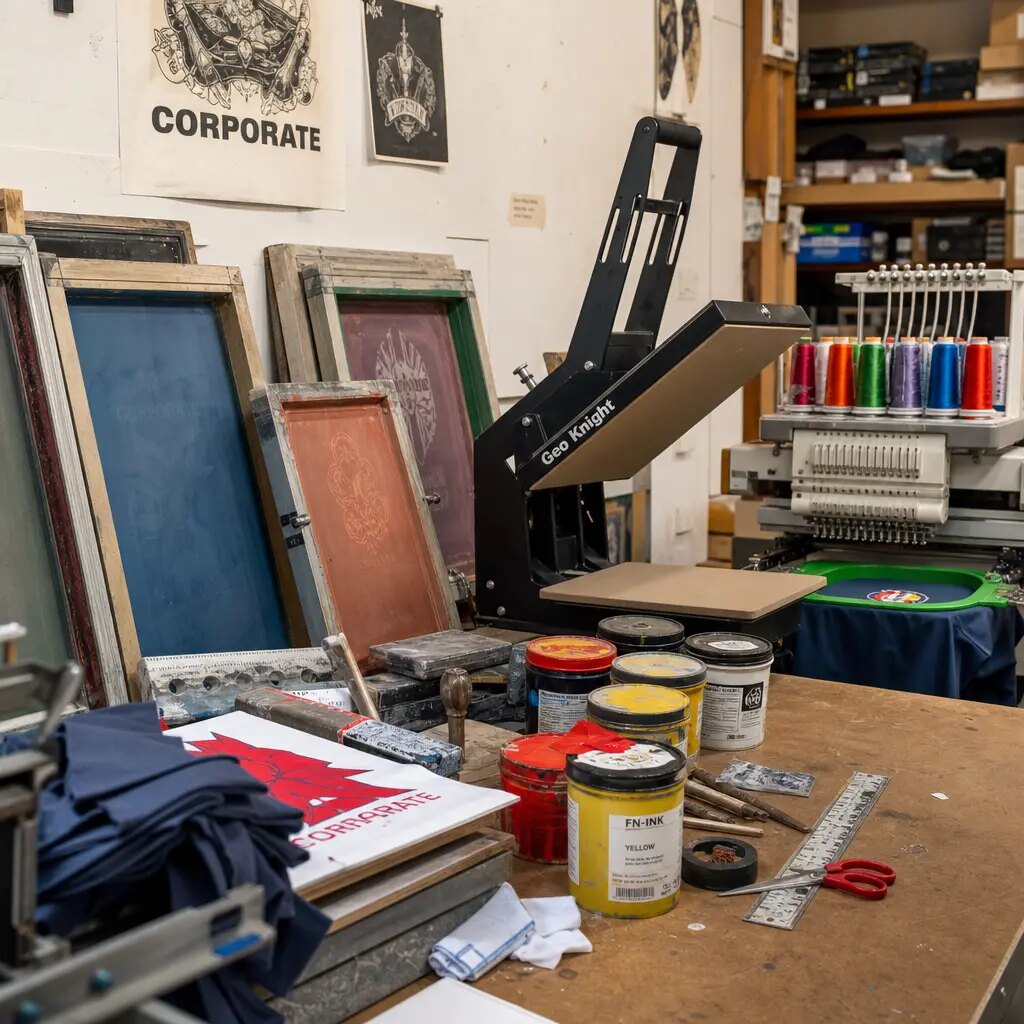
Many farmers market pouches carry simple branding: a farm name, market logo, refill message, product icon, website, or one-color illustration. Screen printing is often practical for this work because it is repeatable and efficient when the same artwork runs across a meaningful quantity. Water-based or pigment ink can keep the hand-feel softer than thick, plastic-feeling prints, but the final result depends on fabric color, ink coverage, curing, print size, and how the pouch is handled after printing.
Complex artwork changes the sourcing decision. Multi-color seasonal graphics, gradients, photographic illustrations, and many small logo versions may require DTF, heat transfer, digital, or multi-screen printing. These methods can solve artwork problems, but they introduce other risks. Transfers may feel stiff on soft cotton, crack at fold points, or make a small pouch harder to close if the print area is large. A digital proof can confirm layout, but it does not prove opacity, rub resistance, hand-feel, or closure performance.
Print placement should be measured in millimeters from clear reference points. Avoid placing tiny text, QR codes, borders, or critical artwork too close to seams, gussets, bottom folds, or the drawcord channel. For many small pouches, +/-5 mm print position tolerance may be realistic, but the right tolerance depends on pouch size, fabric stretch, and artwork size. Test QR codes, barcodes, and small text on the actual sewn pouch after filling and closing, not only on a flat artwork proof.
- Use screen printing for one-color or two-color logos, repeat orders, and stable vendor packaging programs.
- Use DTF, heat transfer, digital, or multi-screen printing only after sampling on the actual fabric and GSM.
- Provide vector artwork, print dimensions, placement from edges or seams, ink reference, and number of colors.
- Keep heavy ink away from drawcord channels, bottom folds, and high-flex areas where stiffness or cracking is more likely.
- Set print tolerance in writing and confirm whether the factory measures from the side seam, bottom edge, or pouch centerline.
- Require curing confirmation and dry rub checks before packing to reduce ink transfer in cartons.
Plan MOQ Around Production Setups
MOQ is not only the grand total on the purchase order. For custom cotton drawstring pouches, MOQ can change by fabric weight, fabric color, pouch size, print design, ink color, cord color, label, and packing style. An order for 5,000 pieces may look simple until it is split across ten sizes, five dyed fabrics, and twenty farm logos. At that point the factory is managing many small production lots, each with its own cutting, printing, sorting, inspection, and packing risk.
A stronger B2B plan is to consolidate the base pouch before splitting artwork. A distributor, co-op, or market event organizer might use one natural 160 GSM pouch in two sizes, then apply different one-color logos in controlled print batches. That keeps fabric buying, cutting, sewing, and packing more efficient while still giving vendors custom branding. If dyed cotton is required, separate core colors from seasonal colors because dyeing and color matching can create independent MOQs and lead times.
Ask the factory to break out setup charges. Screen fees, artwork separation, sample printing, color matching, special packing, barcode labels, SKU sorting, and repeat-order screen storage can all change landed cost. A slightly higher unit price with clear assumptions may be safer than a low quote that later adds fees. Procurement should ask which variables can be combined and which require separate setup, especially when many farms, markets, or product lines share one ordering program.
- Ask MOQ by fabric purchase, pouch size, fabric color, GSM, print design, ink color, cord color, label, and packing style.
- Group small vendor logo runs on the same pouch base when print size, print color, and placement allow it.
- Expect extra setup when changing screens, ink colors, dyed fabric, custom cords, woven labels, gussets, or inner packing.
- Compare total landed cost, not only unit price, because screen fees and SKU sorting can change the real order cost.
- Reduce SKU complexity on first production runs before negotiating aggressive low MOQs.
- Confirm whether repeat orders can reuse screens or whether new artwork changes trigger new setup charges.
Approve Samples Under Real Use
Sample approval should feel like a market-day rehearsal. A flat empty pouch can look clean, then sag, twist, jam at the drawcord, or show product shadowing once it is filled. Review a fabric swatch, blank construction sample, printed pre-production sample, and filled-use sample when the product weight or shape creates risk. If the pouch carries a jar, candle, soap bundle, coffee pack, or refill kit, test the sample with the real item or a close substitute.
Simple checks catch many problems early. Fill the pouch to the expected weight, close and open it repeatedly, tie and untie the cord, rub the print with a clean white cloth, stack the pouch as it will be packed, and leave it filled long enough to see whether corners distort. For reusable or washable claims, add a light hand-wash, wet rub, or fold-flex check if that performance is part of the promise to the shopper.
Approval records should be specific enough for bulk inspection. Photos in a chat thread are not a control standard. The final spec should list fabric composition, weave, finished GSM, shade, size, tolerance, cord material, cord diameter, print method, print size, placement, ink reference, packing method, carton quantity, and accepted natural-cotton characteristics. If any of these details changes after approval, ask whether a revised sample is needed before bulk production begins.
- Approve a fabric swatch before sampling if GSM, shade, natural specks, texture, or opacity are important.
- Approve a blank construction sample before printing when the size, gusset, cord, seam, or fabric is new.
- Approve a printed pre-production sample before mass printing or bulk cutting for artwork-sensitive orders.
- Fill the pouch to expected weight and check seam stress, corner pressure, closure shape, cord pull, and distortion.
- Fold, stack, and pack the sample to check print transfer, creasing, stiffness, and carton appearance.
- Document approved specifications and photos in a spec sheet, not only in email threads.
Build Quotes Buyers Can Compare
The cheapest pouch quote is often the one with the fewest assumptions written down. Fabric weight is important, but cost also depends on pouch dimensions, fabric width utilization, cutting loss, weave, dyeing, washing, drawcord type, print method, number of colors, print area, sample stages, packing labor, carton quantity, and inspection standard. A large 140 GSM pouch can use more cotton than a smaller 180 GSM pouch, so GSM alone is a poor comparison tool.
A procurement-ready quote separates the base pouch, printing, setup, sampling, packing, and logistics assumptions. Request unit price, screen or plate charges, artwork separation cost, sample cost, special packing cost, carton quantity, carton dimensions, net weight, gross weight, production lead time, payment terms, Incoterm, and quote validity. Lead time should state whether the clock starts from deposit, final artwork approval, fabric approval, or printed pre-production sample approval.
Landed cost matters because farmers market pouches often move through warehouses, co-ops, event teams, and vendor distribution points before use. Heavier canvas increases carton weight and can raise freight cost. Loose packing wastes carton cube. Individual polybags may protect retail presentation but add labor, material, and volume. For pouches issued to vendors instead of sold individually, fixed-count inner packs of 25, 50, or 100 pieces often make receiving and issuing easier.
- Request itemized costs for base pouch, printing, setup, sampling, special packing, labels, and inspection where applicable.
- Require carton data: pieces per carton, carton dimensions, net weight, gross weight, and estimated cubic volume.
- Ask whether the price is EXW, FOB, CIF, DAP, or another Incoterm so freight and duty comparisons are consistent.
- Confirm whether natural cotton, bleached cotton, dyed cotton, or washed cotton is included in the quoted price.
- Ask whether lead time starts from deposit, artwork approval, fabric approval, or pre-production sample approval.
- Compare quotes only after GSM, weave, size, print method, packing, and carton assumptions are aligned.
Control Packing and Distribution Risk
Farmers market vendors may receive pouches through a distributor warehouse, farm co-op, subscription box packing line, direct farm shipment, or regional event team. Packing should make the order easy to count, protect the printed surface, and reduce SKU errors. Flat packing is common because it limits creasing, improves carton efficiency, and makes receiving inspection faster. Inner packs of 25, 50, or 100 pieces help teams issue stock without counting every pouch one by one.
Carton planning changes with fabric weight and pouch size. Heavy cotton canvas can create dense cartons that are hard to lift. Large lightweight pouches can create oversized cartons with poor cube efficiency. Request carton quantity, dimensions, net weight, gross weight, and carton marks before purchase order approval. If manual handling matters, state a maximum carton gross weight in the RFQ; many buyers try to keep cartons around 15-18 kg where practical, but the right limit depends on the receiving operation.
Mixed-SKU packing deserves its own QC checkpoint. If the program includes many farm logos, seasonal designs, pouch sizes, or fabric colors, carton labels must match the purchase order and packing list. Define whether mixed cartons are allowed, whether each SKU needs a separate inner pack, and where barcode or SKU labels should be placed. A packing photo, carton label proof, or packing sample can prevent receiving delays and vendor complaints.
- Use flat packing when print appearance, carton efficiency, and quick receiving inspection matter.
- Use fixed-count inner packs, paper bands, or kraft wraps when teams need fast counting with less plastic.
- Mark cartons with SKU, pouch size, fabric color, logo design, PO number, quantity, carton sequence, and gross weight.
- Define mixed-carton rules and require clear separation of designs inside cartons when mixed packing is approved.
- Request carton dimensions and weights before shipment so freight, storage, and manual handling can be planned.
- Check that packing lists match buyer SKU structure, not only the factory’s internal production codes.
Set Lead Time and QC Gates Early
Lead time does not really start until the factory has complete artwork, confirmed specifications, approved sample requirements, packing instructions, and the agreed payment or deposit. Many delays happen before sewing begins: artwork is not vectorized, print colors are unclear, pouch size changes after sampling, or several stakeholders need to approve the same sample. Read the supplier’s production lead time together with sample approval time and export booking time.
Common schedule risks include fabric availability, custom dyeing, cord sourcing, label production, sample correction, screen setup, print curing, final inspection, carton marking, and vessel or courier booking. Standard natural cotton in a common GSM is usually simpler than custom-dyed cotton with matching cords and many logo versions. Heavy canvas can also slow sewing if the factory needs different needles, folding methods, or channel adjustments. For spring market launches, harvest events, or holiday gift sets, lock the specification well before peak season.
QC gates should be planned before the purchase order is placed. Incoming fabric inspection should confirm GSM, shade, width, and visible defects. Inline sewing checks should confirm size, seam quality, channel width, stitch consistency, and drawcord function. Printing checks should confirm placement, ink color, opacity, curing, and rub performance before large quantities are packed. Final inspection should include carton count, SKU separation, labeling, moisture or odor issues, loose threads, stains, and filled-use spot checks for the highest-risk pouch sizes.
- Confirm whether lead time is counted from deposit, final artwork approval, fabric approval, or printed sample approval.
- Treat custom dyeing, custom cords, labels, heavy canvas, many logo splits, and strict packing rules as schedule risks.
- Use incoming fabric, inline sewing, print approval, and final packing inspection as separate QC gates.
- Do not approve mass production from a digital proof only when print feel, opacity, placement, or QR-code scannability matters.
- Build in time for ink curing, final inspection, carton relabeling if needed, and export booking before the requested ship date.
- For repeat seasonal programs, preserve approved swatches, print samples, and packing standards to reduce re-sampling time.
Specification comparison for buyers
| Procurement decision | Typical specification range | Best fit at farmers markets | Quote and QC risk to control |
|---|---|---|---|
| Light dry-goods pouch | 120-140 GSM plain-weave cotton, single or double drawcord, simple lockstitch seams | Seed packets, dried herbs, tea samples, lavender sachets, soap samples, light promotional bundles, and low-fill-weight dry goods | Confirm finished GSM tolerance, opacity with product inside, seam slippage after filling, print show-through, and whether natural cotton specks are acceptable |
| Standard branded retail pouch | 150-180 GSM cotton or light cotton canvas, finished size tolerance commonly +/-5 mm for small bags and +/-10 mm for larger bags | Farm logos, soap bars, coffee packs, small candles, bakery favors, pantry items, and reusable vendor packaging | Do not accept a quote that says only cotton pouch; require weave, finished GSM, size tolerance, stitch density target, cord type, print method, and packing count |
| Reusable or denser-fill pouch | 180-220 GSM cotton canvas or heavier plain cotton, reinforced bottom corners where needed | Small refill packs, denser coffee or grain products, bundled soap, condiment sets, higher-touch retail pouches, and repeated opening at the stall | Check drawcord channel bulk, closure ease, seam strength under filled weight, carton gross weight, and whether heavier fabric makes the pouch feel stiff for the product size |
| Premium gift or kit pouch | 200-240 GSM cotton canvas, heavier cord, optional label or gusset | Gift bundles, holiday market sets, premium refill programs, multi-item kits, and pouches the shopper is expected to keep | Approve a filled pre-production sample; heavier GSM increases material cost, sewing time, carton cube, and freight weight without automatically improving usability |
| Very heavy canvas option | 250 GSM and above only with product-specific justification | Merchandise pouches, sturdy accessory bags, heavy kit packaging, or display pouches that need extra body | Heavy canvas can be slow to sew, bulky at seams, harder to cinch, and costly to ship; test channel folding, needle holes, pull force, and carton handling before approval |
| One-color vendor branding | Screen print with water-based or pigment ink, artwork supplied as vector file, print position tolerance stated in mm | Farm names, market logos, refill messages, product icons, simple illustrations, and repeat designs across many pouches | Require ink reference, print size, placement from seam or bottom edge, curing confirmation, dry rub check, and approved printed pre-production sample |
| Complex or split artwork | DTF, heat transfer, digital, or multi-screen print after testing on the actual fabric | Seasonal market merchandise, many small logo splits, gradients, full-color illustrations, and lower quantities per design | Transfers can add plastic hand-feel or crack on folds; test rubbing, folding, washing if relevant, scannability for QR codes, and stiffness after closing the pouch |
| Drawcord choice | Cotton cord for a natural look; polyester cord for smoother pull and stronger shade consistency; cord diameter commonly 3-5 mm depending on pouch size | Rustic farm packaging, dyed brand-color pouches, frequent opening, gift closure, and staff-packed market orders | Check cord fraying, knot security, channel width, pull smoothness, color bleeding, and whether double drawcord is included or quoted separately |
| MOQ and SKU planning | Consolidate by fabric, size, color, and construction; split logos only where order volume supports setup | Distributors, co-ops, farm groups, event organizers, and brands ordering multiple vendor logos or product lines | Ask MOQ by fabric color, GSM, pouch size, print design, ink color, cord color, label, and packing method; setup charges can matter more than small unit-price differences |
Buyer checklist before sampling
- Define the product carried inside each pouch: filled weight in grams, product dimensions, sharp corners, oil or fragrance exposure, dust transfer, moisture risk, and whether the customer is expected to reuse the pouch.
- Group SKUs before quoting: light dry goods, soap and candles, coffee and pantry items, gift bundles, produce or washable uses, and heavier jars or refill packs should not automatically share one GSM.
- Select an initial fabric range by use: 120-140 GSM for light dry goods, 150-180 GSM for standard branded retail pouches, 180-220 GSM for stronger reusable pouches, and 200-240 GSM for premium gift or kit pouches.
- Specify finished pouch size after sewing, not only cut size; state whether dimensions are external flat dimensions or usable internal dimensions after drawcord channel and gusset construction.
- Set practical tolerances in the RFQ: common starting points are +/-5 mm for small pouches, +/-10 mm for larger pouches, and a separately agreed tolerance for print placement from the top, bottom, or side seam.
- Define construction: fabric composition, weave, finished GSM, color or natural shade standard, drawcord type and diameter, single or double cord, seam type, stitch density target, gusset, label, and channel width.
- Send final vector artwork with print size, print location, ink color standard, number of colors, required opacity, QR-code or small-text requirements, and whether printing crosses folds, gussets, or seam areas.
- Request staged approvals: fabric swatch, blank construction sample, printed pre-production sample, filled-use sample where relevant, and packing sample or packing photo before shipment.
- Require quote data for unit price, setup or screen charges, artwork separation, sample cost, packing cost, carton quantity, carton dimensions, net/gross weight, production lead time, payment terms, Incoterm, and validity date.
- Set acceptance criteria for GSM, shade, size, seam strength, drawcord function, print curing, print position, rub performance, stains, odor, moisture, loose threads, mixed-SKU packing, and carton markings.
Factory quote questions to send
- What is the exact fabric composition, weave, finished GSM, and agreed GSM tolerance for bulk production?
- Is the fabric greige, bleached, unbleached natural, dyed, washed, softened, or compacted, and is the quoted weight measured before or after finishing?
- Is the fabric from stock or made to order, and does MOQ change by fabric color, fabric width, weave, or GSM?
- Can you send a physical swatch from the same fabric source planned for production, and how will bulk shade be compared to the approved swatch?
- What finished pouch size tolerance do you recommend after cutting, sewing, pressing, drawcord insertion, and packing for this pouch size and GSM?
- Which seam construction, stitch density target, thread type, drawcord channel width, cord diameter, cord material, and knot or end finish are included?
- Which print method do you recommend for our artwork, and what is the maximum practical print area before stiffness, bleeding, opacity loss, or distortion becomes a concern?
- Are screen setup, artwork separation, sample printing, color matching, curing checks, and re-sampling included in the unit price or charged separately?
- What is the MOQ by fabric weight, fabric color, pouch size, print design, ink color, cord color, label option, and packing style?
- How many pieces fit per inner pack and export carton, and what are the estimated carton dimensions, net weight, gross weight, and cubic volume?
Quality-control points to confirm
- Finished GSM should match the approved swatch within the written tolerance; many buyers use a tolerance around +/-5% when agreed with the supplier, but the final standard should be stated in the purchase order.
- Fabric must match the approved weave, shade, and finish, with no unapproved thin areas, oil marks, weaving faults, heavy contamination, excessive slubs beyond the accepted natural-cotton standard, mildew odor, or panels that feel weaker than the approval sample.
- Finished pouch dimensions should be measured flat after sewing and packing; common tolerances are +/-5 mm for small pouches and +/-10 mm for larger drawstring bags unless the buyer and factory approve a tighter or looser standard in writing.
- Seams should be straight, locked, and consistent, with no skipped stitches, open seams, broken threads, major puckering, loose thread tails, needle damage, or weak corners at the bottom and drawcord channel openings.
- Stitch density should be checked against the approved sample or written target; a practical reference is often 8-12 stitches per inch depending on fabric weight, seam type, and supplier equipment.
- Drawcords should pull smoothly from both sides where double cord is specified, sit securely in the channel, have controlled knots or end finishing, and not fray, slip out, jam, or bleed color during normal opening and closing.
- Print should match the approved sample for position, color, coverage, edge sharpness, opacity, curing, hand-feel, and alignment on the sewn pouch, not only on a flat fabric panel.
- Printed areas should pass an agreed dry rub check with a clean white cloth; wet rub, light hand-wash, or fold-flex checks should be added when the pouch is sold as reusable or washable.
- Pouches should be dry, clean, and packed only after ink curing and fabric moisture are stable enough to reduce risks of mildew, odor, ink transfer, carton staining, or blocking between printed faces.
- Inner packs, carton quantities, mixed-SKU separation, barcode labels, carton marks, and packing lists should match the purchase order exactly, especially for programs with many farm logos or seasonal designs.